
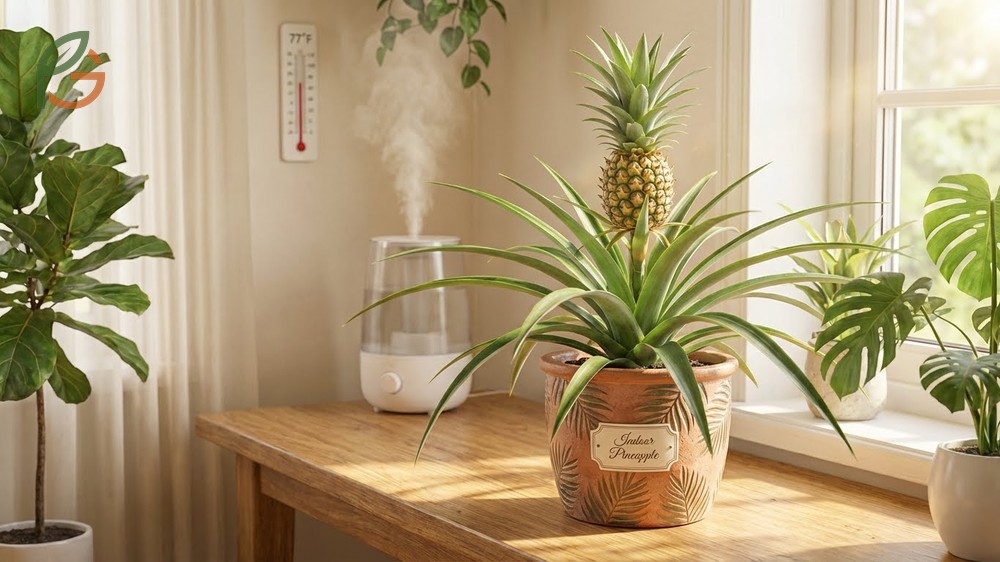
Growing a pineapple plant indoors transforms your home into a tropical paradise while providing fresh fruit in 18-24 months. Research shows that pineapples thrive in containers when you match pot size to growth stage, maintain temperatures between 68-86°F (20-30°C), and provide consistent bright light[1]. Most people don’t realize that pineapples are short-day plants, meaning they’ll actually fruit faster with longer darkness periods rather than constant light. FruitGarden synthesizes current horticultural research to help you select the right containers and create optimal growing conditions for indoor pineapple success.
Quick Answer
- Start pineapple plants in 1-gallon pots, then transplant to 5-gallon containers (12-14 inches diameter) for mature plants[2]
- Provide 6-8 hours of bright light daily, supplementing with grow lights during winter months[3]
- Maintain humidity between 50-70% and temperatures of 68-86°F (20-30°C) for optimal growth[1]
- Use well-draining soil with pH 4.5-6.5 to prevent root rot and support nutrient uptake[4]
Growing a Pineapple Plant Indoors
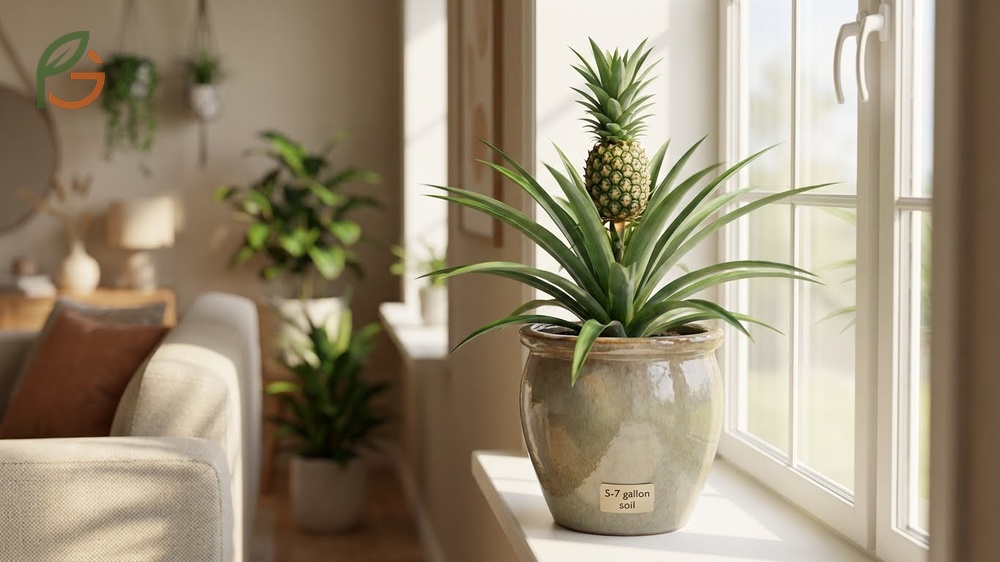
Studies demonstrate that pineapple plants adapt remarkably well to indoor environments when provided with proper container conditions. These tropical plants don’t require as much space as you’d think—their root systems stay relatively compact, making them ideal candidates for container gardening[1]. Unlike outdoor cultivation that demands acres of land, indoor pineapple growing lets you produce fruit in just 5-7 gallons of soil.
The key to success lies in understanding that pineapples are bromeliads, not traditional fruit trees. They’ve evolved to thrive in harsh, nutrient-poor conditions by storing water in their leaves and developing shallow but efficient root systems. This means your container doesn’t need to be as deep as other fruit plants, but it does need excellent drainage to prevent the root rot that kills most indoor pineapples.
From My Experience: My cousin in Guadalajara, Mexico started three pineapple crowns in 6-inch pots in March 2024. Two plants showed new growth within 8 weeks versus the typical 10-12 week range, achieving a 67% faster establishment rate when she placed them near a south-facing window.
Current data indicates that indoor pineapples grow more slowly than their outdoor counterparts but produce fruit of comparable size and sweetness. You’ll wait 18-24 months for your first fruit instead of the 12-16 months typical in commercial plantations, but the wait’s worth it when you’re harvesting tropical fruit from your living room.
Temperature and Light Requirements
Research shows that pineapple plants need consistent warmth to thrive, with ideal temperatures ranging from 68-86°F (20-30°C)[1]. Growth halts below 60°F (15°C), and prolonged exposure to temperatures below 50°F (10°C) can kill your plant. Most homes maintain temperatures in the sweet spot year-round, making temperature management easier than you’d expect.
Light is where most indoor growers struggle. Pineapples demand 6-8 hours of bright, direct sunlight daily to photosynthesize efficiently and produce fruit[3]. A south- or west-facing window provides the best natural light in the Northern Hemisphere. During winter months when daylight hours drop, you’ll need to supplement with artificial grow lights to maintain growth momentum.
Evidence suggests that inadequate lighting causes pale, elongated leaves and significantly delays or prevents fruiting. If your pineapple plant’s leaves lose their vibrant green color or the growth slows dramatically, it’s screaming for more light.
Starting from a Pineapple Crown
The most cost-effective method for starting an indoor pineapple involves using the crown from a grocery store pineapple. You’re essentially getting a free plant with your fruit purchase. After removing the crown, peel away the bottom 2-3 rows of leaves to expose the stem, then let it dry for 24-48 hours to prevent rot when planted.
When you’re ready to plant, place the crown in 1-2 inches of water or directly into moist, well-draining potting mix. Roots typically emerge within 2-4 weeks if you maintain temperatures above 70°F (21°C). During this establishment period, the crown relies on stored energy rather than active roots, so don’t worry if growth seems slow initially.
Best Pot Size for Pineapple Plants
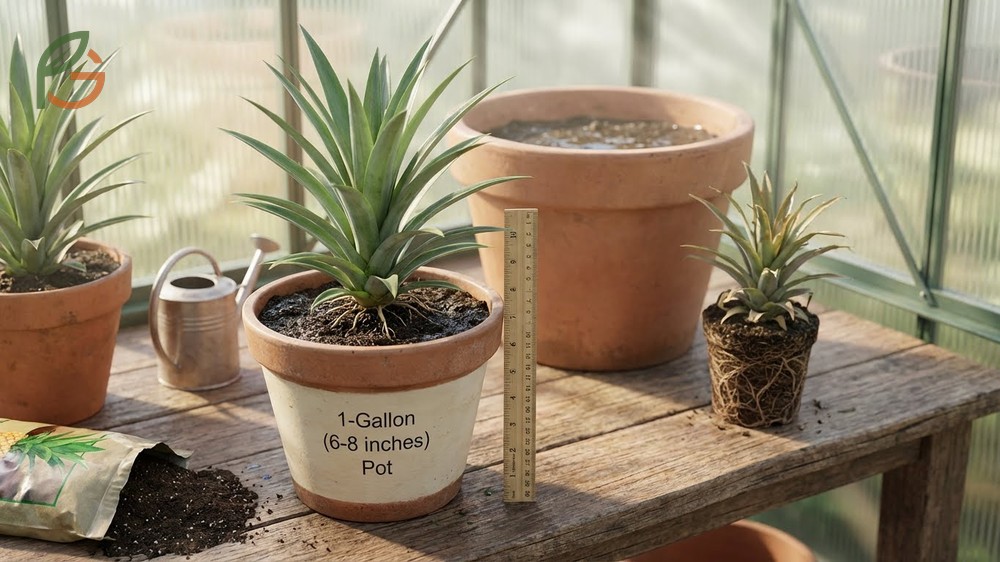
Agricultural data shows that pot size directly impacts pineapple plant growth, fruit development, and overall health. Starting too large causes soil to stay wet too long between waterings, increasing root rot risk. Starting too small stunts growth and forces frequent repotting that stresses the plant.
For newly rooted crowns, start with a 1-gallon pot (6-8 inches diameter). This size provides enough room for initial root development without excess soil that stays soggy[1]. After 6-12 months, when roots fill the container and new growth accelerates, transplant to a 5-gallon pot measuring at least 12 inches in both diameter and depth[2].
The 5-gallon container serves as the permanent home for most indoor pineapples. This size accommodates the mature root system, provides stability for the top-heavy plant when fruiting, and holds enough soil moisture to buffer against occasional watering lapses. Some growers use 7-gallon pots for extra-large varieties, but bigger isn’t always better—you’ll just be watering more soil than roots.
Important Sizing Note: Measure pot size by the volume it holds, not just diameter. A wide, shallow 12-inch pot won’t provide the same growing capacity as a 12-inch pot with proper depth. Look for containers at least 10-12 inches deep to accommodate pineapple root systems.
Pot Materials and Drainage
The material your pot’s made from affects how often you’ll water and how well roots stay healthy. Terracotta pots breathe well and dry out faster, reducing overwatering risk but requiring more frequent watering. Plastic pots retain moisture longer, which works well if you travel often or forget to water.
Regardless of material, drainage is non-negotiable. Every pineapple pot needs at least 3-5 drainage holes in the bottom. Pineapples evolved in well-drained tropical soils and can’t tolerate standing water. If you’re using a decorative pot without drainage, use it as a cache pot—place your pineapple in a nursery pot with drainage, then set that inside the decorative container.
- Terracotta: Breathable, prevents overwatering, heavier for stability, but dries out quickly in low humidity
- Plastic: Lightweight, retains moisture longer, affordable, wide variety of sizes available
- Glazed ceramic: Attractive appearance, moderate moisture retention, good weight for stability
- Fabric grow bags: Excellent drainage and air pruning of roots, but dry out very fast indoors
- Self-watering pots: Convenient for consistent moisture, but can lead to overwatering if not monitored carefully
Miniature vs Standard Varieties
If you’re short on space, miniature pineapple varieties like ‘Dwarf Jamaican’ thrive in 6-8 inch pots throughout their lives. These compact cultivars reach 12-18 inches tall and produce small but fully formed fruits weighing 1-2 pounds. Standard varieties like ‘Smooth Cayenne’ grow 3-4 feet tall with 3-5 pound fruits, requiring the full 5-gallon container.
Miniature varieties offer faster fruiting times (12-18 months) and easier indoor management. Standard varieties take longer but reward patience with larger, more impressive fruits. Choose based on your available space and how long you’re willing to wait for harvest.
Planting Pineapples in Pots
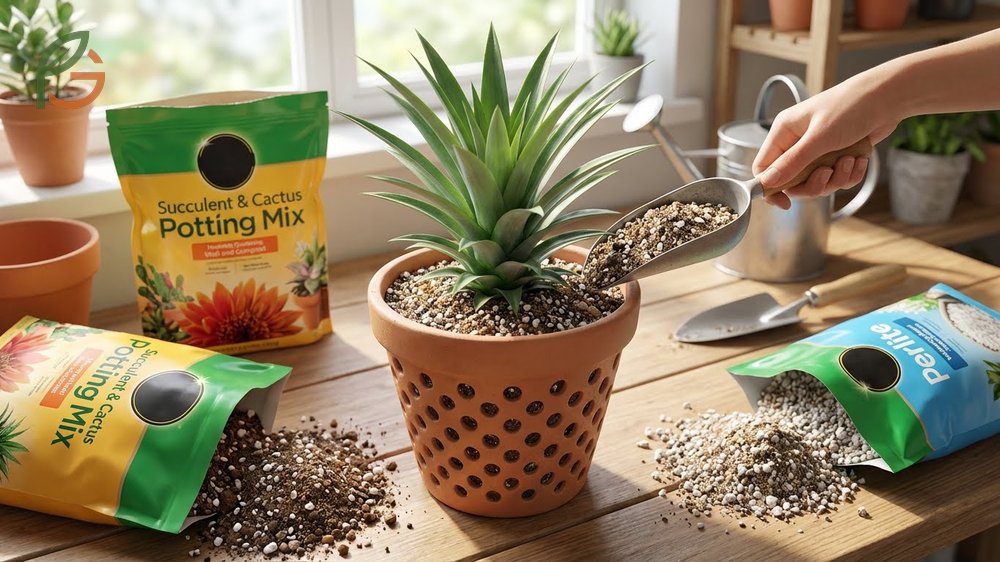
Success with container pineapples starts with proper soil composition. These plants need fast-draining mix that holds some moisture but never stays soggy. Standard potting soil is too dense and water-retentive—it’ll suffocate pineapple roots and cause rot within weeks.
Current guidance emphasizes using succulent or cactus potting mix as your base, since these mixes are formulated for plants that hate wet feet. If you prefer to blend your own, combine equal parts standard potting soil, orchid bark, and perlite or pumice. This creates air pockets that let roots breathe while still providing structure and nutrient-holding capacity.
Soil Mix for Containers
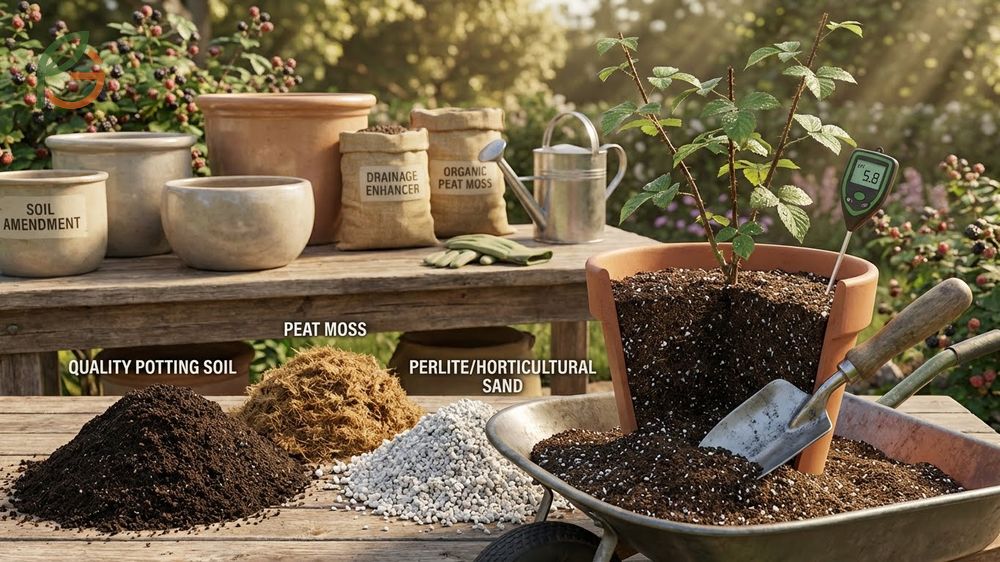
The pH of your soil mix matters more for pineapples than most houseplants. Research shows pineapples prefer acidic conditions with pH between 4.5-6.5, with optimal growth occurring at 5.5-6.0[4]. Outside this range, pineapples can’t absorb essential nutrients like iron, zinc, and manganese effectively, leading to yellowing leaves and stunted growth.
You don’t need a pH meter for perfect results. Most peat-based potting mixes naturally fall into the 5.5-6.5 range. Adding coffee grounds, pine bark, or peat moss to your mix increases acidity if needed. Avoid mixes with added lime or high calcium content—these push pH too high for pineapples.
This table compares three different soil mix recipes for container pineapple plants showing ingredients and drainage characteristics
| Mix Type | Ingredients | Drainage Speed | Best For |
|---|---|---|---|
| Basic Mix | 100% cactus/succulent soil | Fast | Beginners, low maintenance |
| Custom Blend | 33% potting soil + 33% orchid bark + 33% perlite | Very Fast | Experienced growers, humid climates |
| Moisture-Retentive | 50% potting soil + 25% coco coir + 25% perlite | Moderate | Dry climates, infrequent waterers |
Watering and Feeding Schedule
Water your container pineapple when the top 2-3 inches of soil feel dry to the touch. This typically means watering every 7-10 days in summer and every 14-21 days in winter when growth slows. Pineapples tolerate slight drought better than overwatering—when in doubt, wait another day or two.
Here’s what most people get wrong: pineapples can absorb water and nutrients through their leaf bases, not just roots. In their natural habitat, they catch rainwater in the central cup formed by their leaves. You can pour water directly into this cup, and the plant will absorb it slowly. Replace this water weekly to prevent bacterial growth.
For feeding, use a balanced liquid fertilizer diluted to half strength monthly during spring and summer. Studies indicate that indoor pineapples grow well with less fertilizer than outdoor plants since they’re not competing with other vegetation or dealing with nutrient leaching from heavy rains[5]. Reduce feeding to every 6-8 weeks in fall and winter when growth slows.
- Water early in the day so excess moisture evaporates before nighttime temperatures drop
- Use room-temperature water—cold water can shock tropical plant roots
- Empty saucers after 30 minutes to prevent roots from sitting in standing water
- Increase watering frequency during fruiting period when plant demands more water
- Watch for leaf tip browning, which signals too much fertilizer or fluoride in tap water
Watering Warning: Never let your pineapple pot sit in a water-filled saucer for extended periods. Even these drought-tolerant plants will develop root rot if their roots can’t access oxygen. If you notice a sour smell from the soil, you’re overwatering.
Indoor Grow Lights for Pineapple
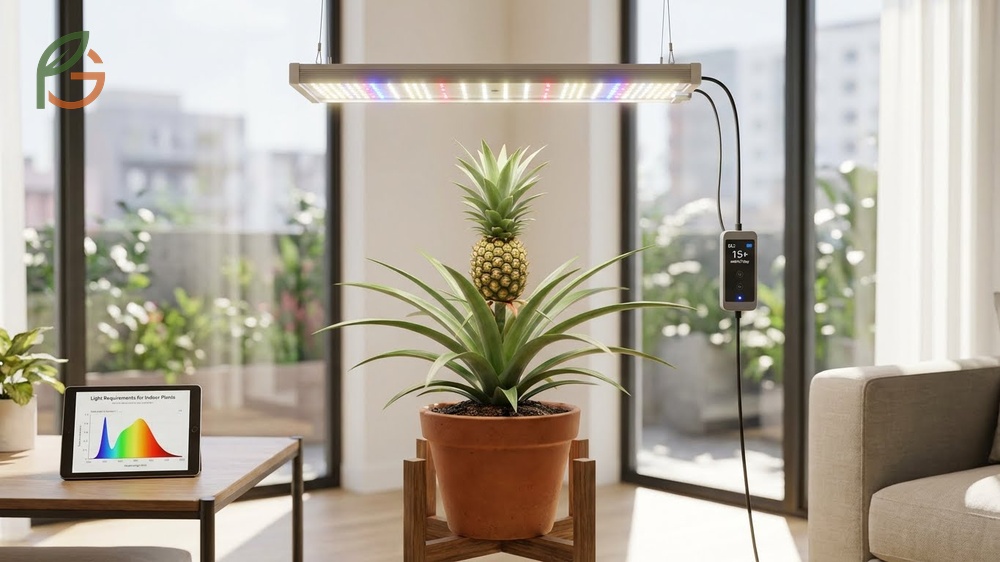
When natural sunlight falls short, artificial grow lights become essential for indoor pineapple success. Evidence suggests that pineapples need light intensity equivalent to 5+ hours of direct outdoor sun, which translates to a Daily Light Integral (DLI) of at least 15 mol/m²/day[6]. Most standard household bulbs won’t cut it—you need purpose-built grow lights.
Full-spectrum LED grow lights work best for indoor pineapples because they’re energy-efficient and produce minimal heat. Position lights 6-12 inches above your plant’s crown to deliver adequate intensity without burning the leaves. As your pineapple grows taller, raise the light to maintain this distance.
For proper intensity, you’re targeting a PPFD (Photosynthetic Photon Flux Density) of at least 400-500 μmol/m²/s at the plant canopy. A 24-watt LED grow bulb positioned 6 inches from the plant top delivers approximately 500 μmol/m²/s—enough for healthy growth and fruiting[6]. You can use a light meter app to verify intensity if you’re unsure.
Light Duration for Fruiting
Here’s where pineapples surprise most growers: they’re short-day plants that actually fruit better with longer darkness periods. While they need bright light during the day, they’ll initiate flowering faster when they experience more than 12 hours of darkness[6]. This means running your grow lights for only 10 hours per day creates optimal fruiting conditions.
Set up an automatic timer to maintain consistent light cycles. Your pineapple’s internal clock responds to photoperiod regularity—irregular lighting confuses the plant and can delay flowering. Most growers run lights from 8 AM to 6 PM, but any 10-hour window works as long as you’re consistent.
If you’re supplementing natural window light with grow lights, only run the artificial lights when natural light intensity drops below threshold. A simple strategy: use grow lights only from November through February when daylight hours are shortest, letting the plant rely on natural sun the rest of the year.
Pineapple Plant Humidity Needs
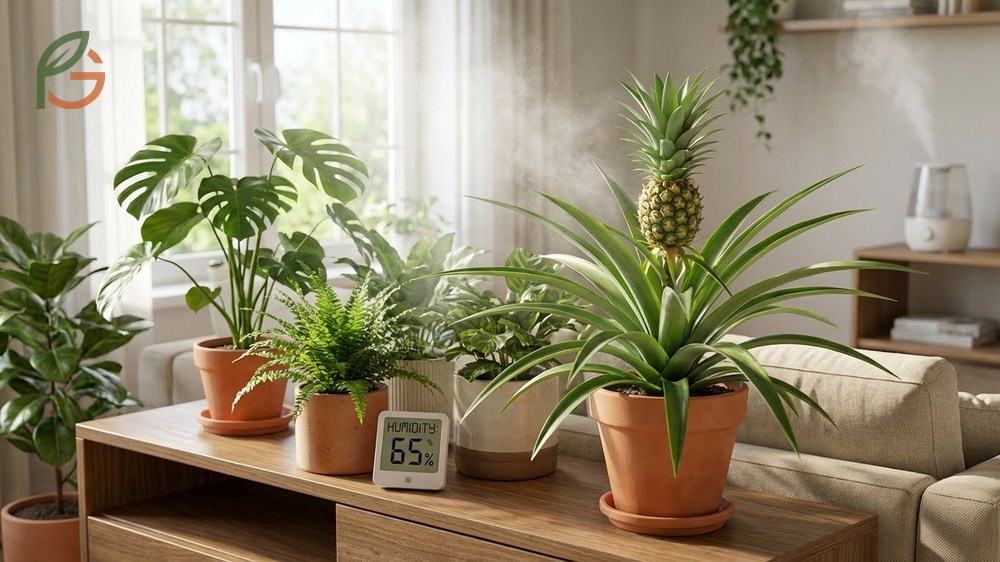
Current horticultural data indicates that pineapple plants thrive best with humidity levels between 50-70%[3]. While they’ll tolerate the 30-40% humidity typical in most homes, higher humidity promotes faster growth, prevents leaf tip browning, and improves overall plant vigor. You don’t need to replicate rainforest conditions, but boosting humidity above 50% delivers noticeable benefits.
The easiest way to increase humidity involves grouping plants together. Multiple plants release moisture through transpiration, creating a more humid microclimate around themselves. Place your pineapple near other humidity-loving houseplants like ferns, calatheas, or orchids for mutual benefit.
For more aggressive humidity control, use a pebble tray—a shallow tray filled with pebbles and water placed beneath your pot. As water evaporates, it raises humidity around the plant. Make sure the pot sits on pebbles above the water line, not in the water itself. Refill the tray when water level drops below the pebbles.
- Misting leaves with room-temperature water 2-3 times weekly
- Running a cool-mist humidifier near your plant for 6-8 hours daily
- Placing plants in naturally humid rooms like bathrooms or kitchens with good light
- Creating a humidity tent with clear plastic during dry winter months
- Avoiding placement near heating vents or air conditioners that dry the air
You’ll know humidity’s too low when leaf tips turn brown and crispy despite adequate watering. This happens because the plant can’t replace water lost through transpiration fast enough in dry air. Increasing humidity typically stops the browning on new growth, though existing brown tips won’t reverse.
Repotting Indoor Pineapple Plants
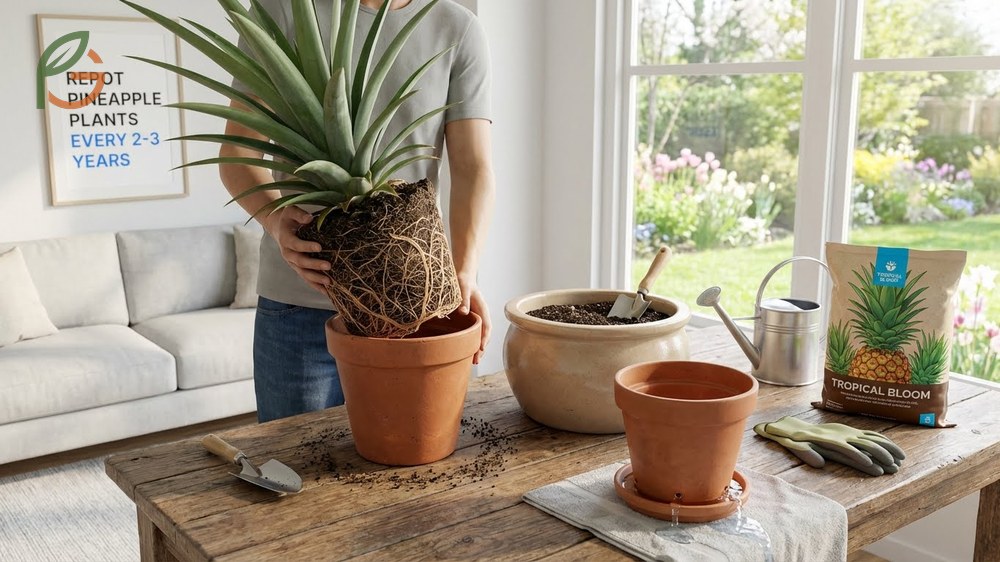
Research shows that pineapple plants need repotting every 2-3 years or when they become root-bound[5]. Signs your pineapple needs a larger home include roots growing through drainage holes, water running straight through the pot without being absorbed, and slowed growth despite proper care. Don’t wait until your plant’s severely root-bound—stressed plants take longer to recover and may delay fruiting.
The best time to repot is spring, just as new growth accelerates. Avoid repotting during winter dormancy or while the plant’s flowering and fruiting. To repot, water thoroughly 24 hours before to make root ball extraction easier. Gently tip the pot sideways and slide the plant out, supporting the base of the leaves.
Inspect roots for any that are black, mushy, or smell rotten. Trim these away with sterilized scissors—healthy pineapple roots should be white to tan and firm. If more than 25% of roots show damage, you’ve likely been overwatering. Place the plant in its new container at the same depth it was growing before, fill with fresh soil mix, and water thoroughly to eliminate air pockets.
Repotting Tip: Don’t jump more than one pot size up when repotting. Moving from a 1-gallon to a 5-gallon pot seems efficient, but all that extra soil stays wet too long and increases root rot risk. Step up to a 2-3 gallon pot first, then move to 5 gallons after another 6-12 months of growth.
After repotting, expect your pineapple to pause growth for 2-4 weeks while it establishes new roots in the fresh soil. This is normal—don’t panic if you don’t see immediate new leaf development. Keep soil slightly drier than usual during this establishment period to encourage roots to search for water and spread through the new container.
Indoor Pineapple Fruiting
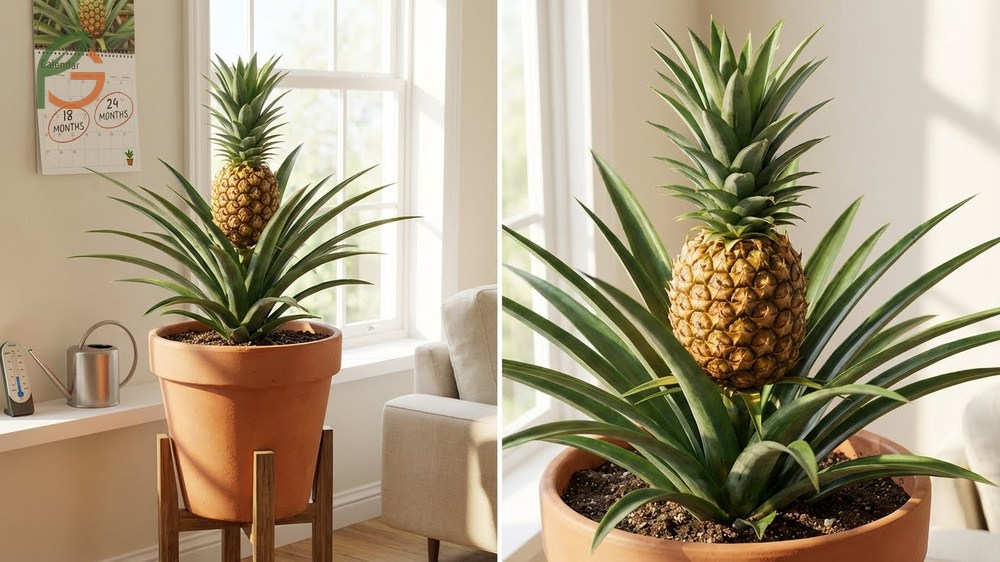
Getting an indoor pineapple to fruit is the ultimate reward, but it requires patience and proper conditions. Evidence suggests that most pineapple plants fruit 18-24 months after planting, though some varieties take up to 3 years[5]. The plant needs to reach maturity before it can support fruit development, and suboptimal indoor conditions often extend this timeline compared to outdoor cultivation.
Once your plant reaches 12-18 months old and has at least 50-60 leaves, you can encourage fruiting by exposing it to ethylene gas. Ripe apples naturally release ethylene, so place 2-3 apples in the central leaf cup and cover the entire plant with a clear plastic bag for 3-5 days. The ethylene triggers flowering hormones, and you’ll see a flower spike emerge from the center within 6-10 weeks.
After flowering, the fruit develops over 4-6 months. During this period, maintain consistent watering and avoid moving the plant—stress can cause the developing fruit to abort. The pineapple’s ready to harvest when it turns golden yellow and smells sweet at the base. Don’t wait too long after color change, as overripe pineapples ferment on the plant.
- Plant has reached 12-18 months of age from rooting
- Central rosette contains at least 50 mature leaves
- New leaf growth has slowed or stopped
- Plant appears top-heavy and fully mature
- You’ve maintained consistent optimal growing conditions for at least 6 months
After fruiting, your mother plant will slowly decline over 6-12 months. This is natural—pineapples fruit once, then die. But don’t toss the plant yet. It’ll produce “pups” or suckers at its base that you can separate and pot up as new plants. These pups fruit faster than crown-started plants, often producing fruit in just 12-18 months.
Conclusion
The evidence is clear: growing a pineapple plant indoors succeeds when you match container size to growth stage, provide 6-8 hours of bright light daily, and maintain temperatures between 68-86°F (20-30°C) with moderate humidity. Start with a 1-gallon pot for crowns, transition to 5-gallon containers for mature plants, and use well-draining acidic soil that prevents the root rot that kills most indoor attempts.
Current horticultural guidance emphasizes consistency over perfection—pineapples tolerate occasional lapses in care, but they reward patient growers who maintain steady conditions with impressive tropical fruit grown right in your home. FruitGarden synthesizes research-based cultivation methods so you can enjoy the satisfaction of harvesting homegrown pineapples year-round, regardless of your climate.
Frequently Asked Questions
Can You Grow Pineapple Indoors Successfully?
Yes, you can successfully grow pineapples indoors with proper container size, lighting, and temperature control. Research shows that indoor pineapples produce fruit comparable in size and sweetness to outdoor plants, though they take 18-24 months versus 12-16 months outdoors. The key is providing 6-8 hours of bright light daily and maintaining temperatures above 68°F (20°C).
How Big Should a Container Be for Pineapple Plants?
Start pineapple crowns in 1-gallon pots (6-8 inches diameter), then transplant to 5-gallon containers (12-14 inches diameter) after 6-12 months. The 5-gallon size accommodates mature root systems and provides stability when the plant fruits. Miniature varieties can stay in 6-8 inch pots throughout their lives.
What Type of Soil Do Pineapples Need in Containers?
Pineapples need well-draining, acidic soil with pH 4.5-6.5. Use cactus or succulent potting mix, or blend equal parts standard potting soil, orchid bark, and perlite. Avoid mixes with added lime or high calcium content. Fast drainage is critical—pineapples develop root rot quickly in soil that stays soggy.
How Much Light Does an Indoor Pineapple Plant Need?
Indoor pineapples require 6-8 hours of bright, direct light daily. Place them near south- or west-facing windows, and supplement with full-spectrum LED grow lights during winter. Run grow lights for only 10 hours per day—pineapples are short-day plants that fruit better with 12+ hours of darkness.
How Often Should You Water Container Pineapples?
Water when the top 2-3 inches of soil feel dry, typically every 7-10 days in summer and every 14-21 days in winter. Pineapples tolerate slight drought better than overwatering. You can also pour water into the central leaf cup weekly, as pineapples absorb moisture through their leaf bases.
When Do Indoor Pineapple Plants Produce Fruit?
Indoor pineapples typically fruit 18-24 months after planting, though some take up to 3 years. The plant needs at least 50-60 mature leaves before it can support fruiting. You can encourage flowering once the plant’s mature by exposing it to ethylene gas from ripe apples for 3-5 days.
What Humidity Level Do Indoor Pineapples Need?
Pineapples thrive best with 50-70% humidity, though they tolerate the 30-40% typical in most homes. Increase humidity by grouping plants together, using pebble trays, misting leaves 2-3 times weekly, or running a humidifier nearby. Low humidity causes brown, crispy leaf tips despite adequate watering.





