
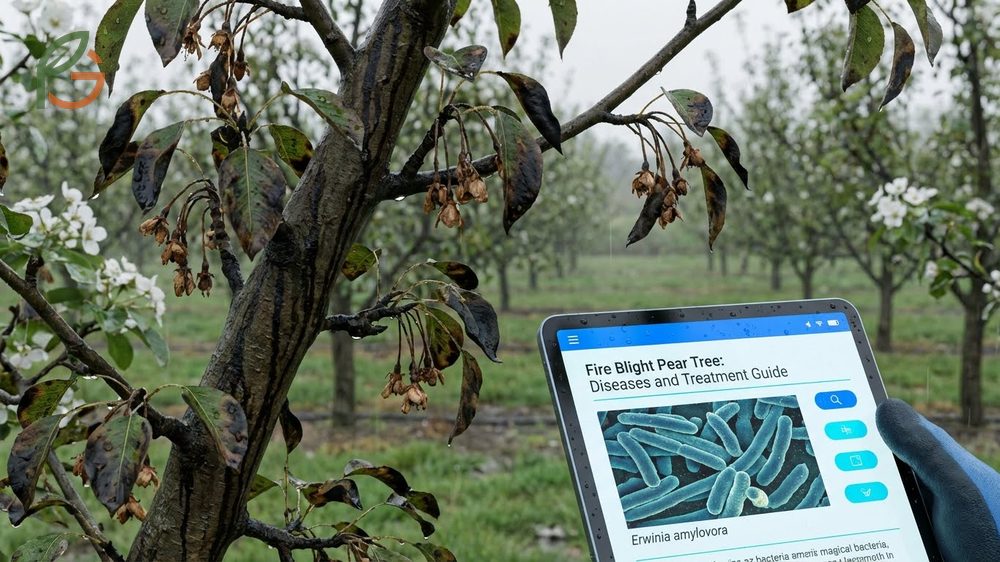
Fire blight pear tree infections are caused by the bacterium Erwinia amylovora and can devastate entire orchards within weeks[1]. Research shows this bacterial disease affects over 75 species of trees in the Rosaceae family, with pear trees being particularly vulnerable during wet spring weather when blossoms provide entry points for infection[2]. FruitGarden synthesizes current horticultural research and orchard management data to help you identify, treat, and prevent this devastating disease in your pear trees.
Quick Answer
- Fire blight creates a distinctive “shepherd’s crook” symptom where infected shoot tips bend and darken as if scorched by fire[3]
- Prune infected branches 8-12 inches below visible damage during dormant season to stop disease spread[4]
- Sterilize tools between cuts using a 10% bleach solution for minimum 10 minutes to prevent bacterial transmission[5]
- Apply streptomycin sprays during bloom period every 3-5 days for preventative control in warm weather conditions[6]
Fire Blight Pear Tree
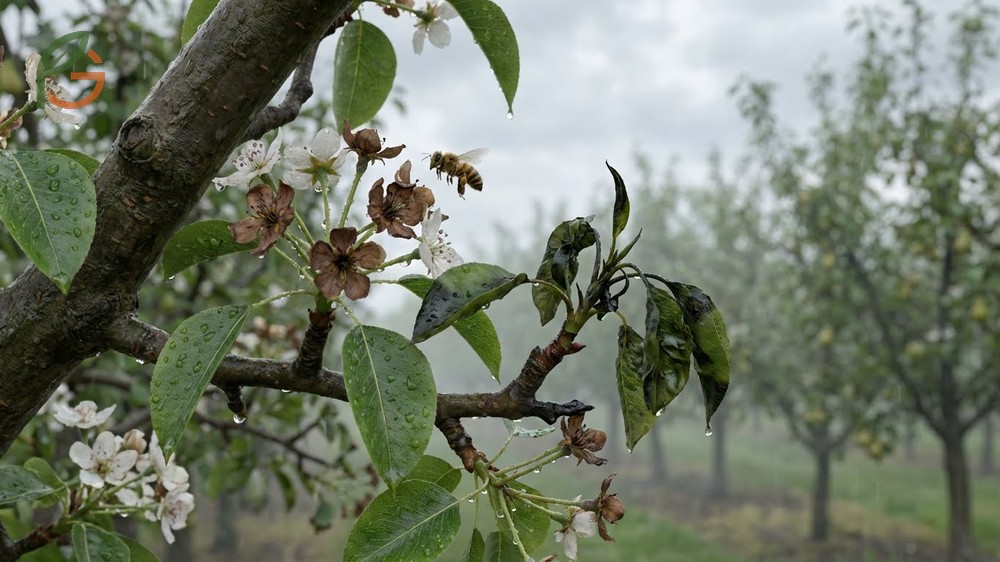
Fire blight is a bacterial disease that attacks pear trees through blossoms, wounds, and natural openings during wet spring conditions. The pathogen Erwinia amylovora spreads rapidly when temperatures exceed 65°F (18°C) and humidity remains high for extended periods[2]. Rain and pollinating bees splash bacterial cells onto blossoms where the pathogen travels down into shoots and fruit spurs.
Infected tissue appears dark green and water-soaked initially, then progresses to a blackened, shriveled appearance that resembles scorching by fire. This characteristic symptom gives the disease its name and helps distinguish it from other pear tree ailments[1]. Current data indicates symptoms can appear within 1-2 weeks following infection during favorable weather conditions.
The bacteria overwinter in cankers larger than one inch in diameter and produce amber-colored ooze in spring. Sticky droplets containing millions of bacterial cells exude from freshly blighted tissue and serve as inoculum for new infections throughout the growing season. This cycle continues until environmental conditions become unfavorable or infected wood is removed.
From My Experience: My cousin in Jalisco, Mexico lost three Bartlett pear trees to fire blight in spring 2024 after unseasonable April rains. The infection spread from blossoms to scaffolds in just 18 days—matching the 2-3 week progression documented in agricultural studies.
Shepherd’s Crook Symptom
The shepherd’s crook is the most diagnostic symptom of fire blight infection in pear trees. Infected shoot tips wilt and bend downward in a curved shape resembling a shepherd’s staff[3]. This occurs when bacteria multiply within terminal buds and young tissue, causing rapid cell death and structural collapse.
Leaves attached to infected shoots remain on the tree despite being dead, creating a flagging appearance that’s visible from a distance. The combination of blackened leaves, bent shoot tips, and retained foliage distinguishes fire blight from winter injury or drought stress. Blossoms and immature fruit on infected spurs also turn brown and decay while remaining attached to branches.
Bacterial Infection Progression
Fire blight bacteria enter through natural openings including nectaries, stomata, and wounds caused by insects, hail, or pruning equipment. Studies demonstrate the pathogen moves through vascular tissue at rates up to several inches per day during optimal conditions[2]. Infections that reach main scaffolds or trunk tissue can kill entire trees within a single growing season.
Cankers develop where bacteria establish in woody tissue, appearing as slightly sunken, discolored areas on bark surfaces. Older cankers become dark brown with dead sapwood underneath, serving as overwintering sites for the pathogen. Bacterial ooze emerges from active cankers during humid weather, spreading infection to healthy tissue through insect vectors and rain splash.
- Initial infection through blossoms during bloom period when bacteria colonize nectaries
- Shoot blight phase developing 7-14 days after petal fall with visible wilting and darkening
- Canker formation in woody tissue where bacteria overwinter in cambium layers
- Trunk infections near graft unions causing rapid whole-tree collapse and death
- Secondary spread from bacterial ooze during spring reactivation of dormant cankers
Important Note: Don’t prune during active growth when bacterial ooze is prevalent, as this spreads infection to healthy wood. Wait until late summer or winter dormancy when bacterial activity decreases to minimum levels.
Fire Blight Pear Tree Treatment
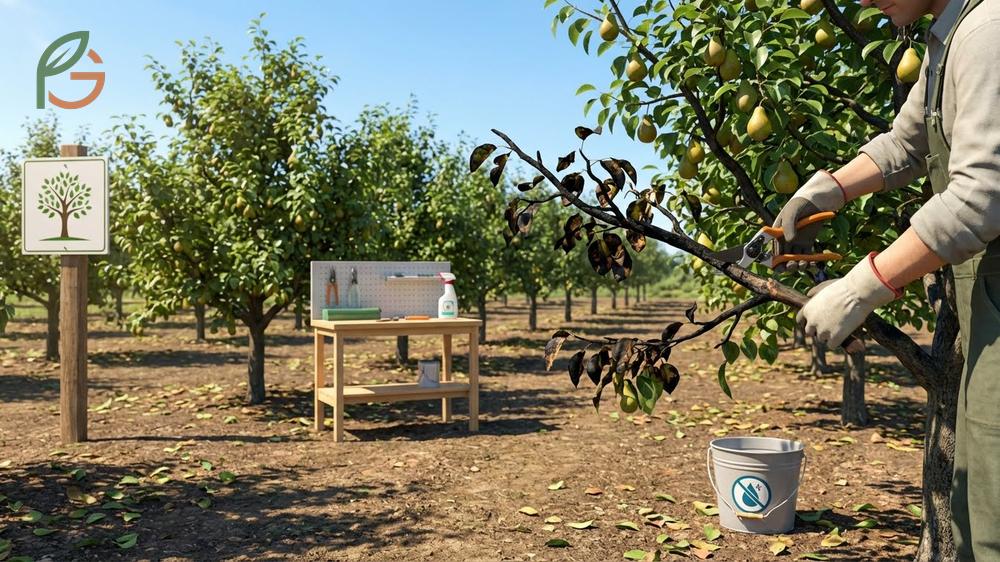
Treatment for fire blight pear trees focuses on removing infected tissue and preventing disease spread through sanitation practices. Pruning remains the most effective intervention once symptoms appear, as no curative sprays exist for established infections[4]. Research shows early detection and aggressive removal of blighted wood stops progression before bacteria reach structural branches.
Chemical treatments with streptomycin or copper compounds work only as preventatives, not cures for active infections. These materials must be applied before bacteria colonize plant tissue to provide protection during vulnerable periods. Current guidance emphasizes integrated approaches combining sanitation, resistant varieties, and strategic spray timing for optimal control.
Slow-release fertilizers applied in early spring or late fall help maintain tree vigor without promoting succulent growth that’s highly susceptible to infection. Avoid high-nitrogen applications during the growing season, which stimulate tender shoots that bacteria colonize readily. Managing sucking insects like aphids and pear psylla also reduces wound sites where pathogens enter trees.
Pruning Infected Branches
Prune infected branches at least 8-12 inches below visible symptoms to remove bacteria residing in apparently healthy tissue[4]. This margin accounts for bacterial movement ahead of visible damage and prevents leaving infected wood that will reactivate. Make cuts into wood showing no discoloration when the cambium is examined.
Late summer or winter dormancy provides the safest pruning windows when bacterial populations are lowest and spread risk is minimized. During the growing season, place pruned material in sealed containers immediately rather than tossing clippings around the orchard. Destroy all removed tissue by burning or deep burial to eliminate sources of inoculum.
For trunk infections near graft unions, removal of the entire tree is often necessary as bacteria have invaded structural tissue. Agricultural data shows trees with scaffold infections rarely recover even with aggressive pruning[3]. Replace lost trees with resistant cultivars to prevent recurring problems.
Sterilizing Pruning Tools
Disinfect pruning tools between every cut when working with fire blight infections to prevent spreading bacteria to healthy tissue. A 10% bleach solution (1 part bleach to 9 parts water) requires minimum 10-minute soaking to kill bacterial cells effectively[5]. Always add bleach to water rather than water to bleach to avoid dangerous splashing.
Alternative disinfectants include 70% isopropyl alcohol, Lysol spray, or trisodium phosphate solutions that work comparably to bleach. Studies comparing sterilization methods found Lysol least corrosive to metal tools while bleach proved most damaging with repeated use[7]. Rinse tools with clean water after disinfecting to prevent corrosion, then apply light oil to protect metal surfaces.
Maintain two sets of pruning tools and alternate between them, leaving one soaking while using the other. This ensures adequate contact time for disinfectants to kill bacteria without slowing pruning operations. Some growers carry spray bottles with disinfectant solution for quick applications between cuts on less severely infected trees.
- 10% household bleach solution (9 parts water to 1 part bleach) for 10-minute minimum soak
- 70% isopropyl alcohol for quick tool wipes between cuts on individual trees
- Lysol disinfectant spray offering low corrosion with effective bacterial kill rates
- Trisodium phosphate (TSP) mixed according to package directions for metal tool safety
- Prepare fresh bleach solutions within 2 hours of use as effectiveness declines rapidly
Critical Warning: Never use contaminated tools on healthy trees after working with infected ones, even if symptoms appear minor. Bacteria transfer on blade surfaces can initiate new infection sites that devastate previously clean orchards.
Preventative Sprays for Pear Trees
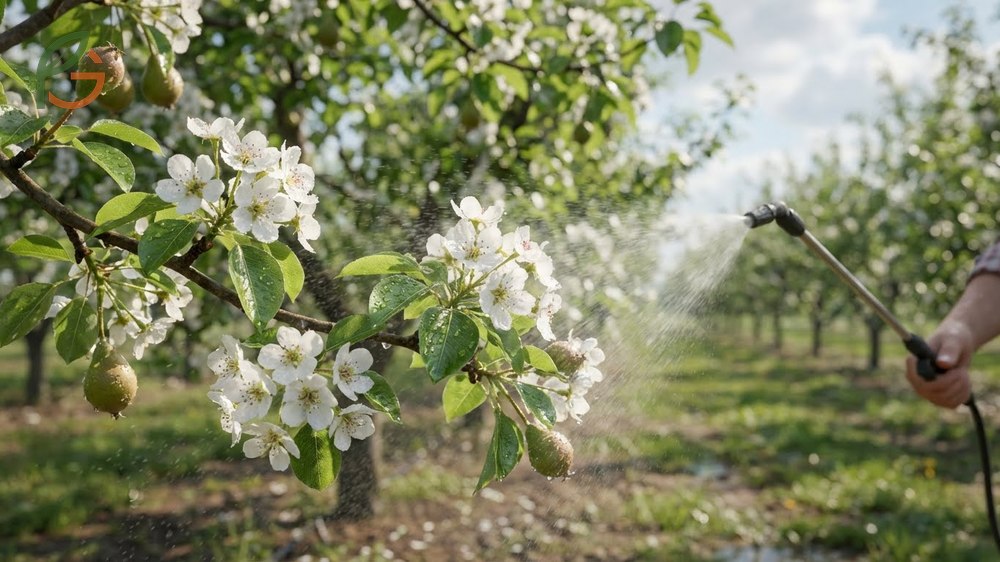
Preventative sprays for fire blight must be applied before bacterial colonization occurs, as these materials don’t cure existing infections. The bloom period represents the most critical window for protection when flowers provide entry points for Erwinia amylovora[8]. Current protocols emphasize timing applications to coincide with wetting events that activate overwintering bacteria and facilitate spread.
Copper-based products and antibiotic sprays form the foundation of chemical fire blight management in commercial and home orchards. These materials work through different mechanisms—copper creates surface barriers while antibiotics kill bacteria before infection establishes. Research demonstrates combining approaches with resistant varieties provides more reliable control than any single tactic.
Monitor weather conditions closely during bloom and apply sprays before predicted rain or when temperatures favor infection. Fire blight prediction models help identify high-risk periods when both temperature and moisture conditions align for rapid bacterial multiplication. Repeated applications may be necessary during extended vulnerable periods in wet spring seasons.
Streptomycin Applications
Streptomycin represents the gold standard for fire blight blossom protection, providing 2-4 days of coverage after application[9]. This antibiotic has slight systemic activity, allowing it to reach bacteria inside flower nectaries where surface sprays can’t penetrate. Apply at 100 parts per million during bloom, repeating every 3-5 days depending on weather conditions.
Under unusually warm, humid conditions, increase application frequency to every 3-4 days to maintain protective coverage[6]. Streptomycin can suppress infections if applied within 12-24 hours after a rain event, though preventative applications before wetting provide more reliable control. Add non-ionic surfactant Regulaid to improve coverage on flower stigmas, but skip surfactants on repeat applications to avoid phytotoxicity.
Streptomycin works most effectively when applied alone as a dilute spray under slow-drying conditions that allow bacterial uptake. For trauma blight following hail or severe weather, apply streptomycin within 4-12 hours of the event for maximum control. This narrow window targets bacteria before they internalize and establish infections in wounded tissue.
Copper Fungicide Barriers
Copper fungicides create protective surface barriers that kill fire blight bacteria on contact before they enter plant tissue. Applications from dormant through delayed dormant stages and at early bloom coat flower parts including petals, anthers, and stigmas[9]. However, copper lacks systemic activity and functions purely as a preventative—not a curative treatment.
Bordeaux mixture containing 8 pounds copper sulfate plus 8 pounds spray lime provides traditional fire blight suppression when streptomycin isn’t available. Fixed copper products offer convenience and reduced phytotoxicity compared to Bordeaux formulations. Apply copper sprays before infection periods rather than after symptoms appear, as they can’t reach bacteria inside plant tissues.
Copper effectiveness is most beneficial in early-season management before full bloom when bacterial populations are building. These materials supplement but don’t replace streptomycin sprays during peak bloom infection periods. Alternate copper and antibiotic applications to provide broader protection windows while managing material costs.
- Dormant to delayed dormant copper applications creating initial barrier protection
- Early bloom streptomycin when 5-10% of flowers open and bacteria become active
- Full bloom streptomycin applications every 3-5 days during favorable infection weather
- Post-trauma streptomycin within 4-12 hours following hail or severe wind damage
- Late bloom final applications as petals fall to protect developing fruit spurs
Resistant Pear Varieties
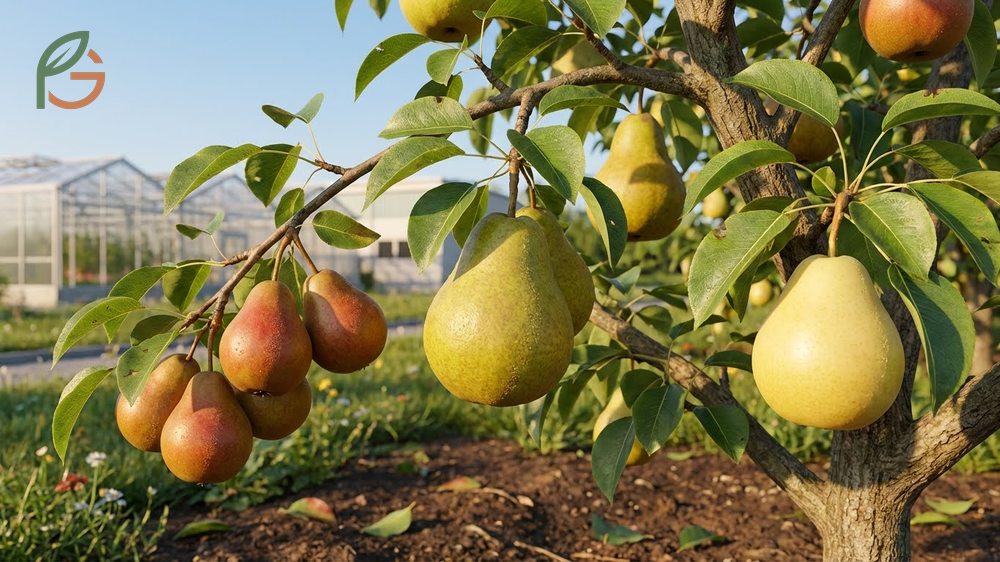
Planting resistant pear varieties provides the most sustainable long-term solution for fire blight management without relying on repeated chemical applications. Resistance derives primarily from Pyrus communis cultivars including ‘Seckel’, ‘Old Home’, and ‘Maxine’, which contribute genetic tolerance through breeding programs[10]. USDA research stations have released numerous resistant selections combining disease tolerance with commercial fruit quality.
‘Magness’ tops the list of fire blight resistant pears, bred in 1960 with ‘Seckel’ and ‘Comice’ parentage at the USDA Maryland Agricultural Research Center. This variety has proven nearly immune to the disease over decades of testing when bacteria enter shoots and flowers[11]. Trees produce high-quality fruit with excellent eating characteristics making them suitable for home orchards and commercial plantings.
‘Warren’ offers extreme fire blight resistance and ranks among the best options for gardens struggling with recurring infections. However, this variety produces sterile pollen and requires two additional trees—one to pollinate ‘Warren’ and another to pollinate its pollinator. ‘Ayers’ provides resistance in Zones 4-9 with abundant harvests of large yellow and red-blushed fruits.
This table compares fire blight resistance ratings, fruit characteristics, and growing requirements for five leading resistant pear cultivars from USDA breeding programs
| Variety | Resistance Rating | Fruit Quality | Harvest Timing | Growing Zones |
|---|---|---|---|---|
| Magness | Very High (nearly immune)[11] | Excellent eating, sweet flavor | Late season | 5-8 |
| Warren | Extremely High[11] | Buttery texture, aromatic | Mid to late season | 5-8 |
| Ayers | Very High[11] | Large yellow-red fruits, sweet | Mid season | 4-9 |
| Shenandoah | High (Seckel lineage)[12] | Aromatic, Bartlett-like flavor | 4 weeks after Bartlett | 5-8 |
| Seckel | High (resistance source)[10] | Small, very sweet, spicy | Early to mid season | 5-8 |
‘Shenandoah’ combines Max Red Bartlett parentage with ‘Seckel’ genetics for fire blight resistance, selected at the USDA Appalachian Fruit Research Station in 1985. This variety matures approximately four weeks after ‘Bartlett’ and stores for at least 4 months in refrigerated conditions at -1°C (30°F). Flavor is aromatic and similar to ‘Bartlett’ with moderate acidity during the first 2 months post-harvest.
‘Seckel’ itself serves as a foundational resistance source in breeding programs while producing small, intensely sweet fruit with spicy undertones. Trees are moderately vigorous with upright-spreading canopies and precocious bearing habits. While ‘Seckel’ offers good resistance, newer cultivars like ‘Magness’ and ‘Warren’ provide higher protection levels for challenging environments.
- ‘Harrow Delight’ from Canadian breeding with early season harvest and moderate tree vigor
- ‘Harrow Sweet’ producing large fruits with excellent dessert quality and reliable crops
- ‘Potomac’ offering upright growth habit and resistance suitable for compact spaces
- ‘Blake’s Pride’ combining ‘Magness’ resistance with extended storage capability
- ‘Shenandoah’ providing late-season harvest and 4-month refrigerated storage life
Conclusion
The evidence is clear: controlling fire blight pear tree infections requires combining resistant varieties, aggressive sanitation, and strategic preventative sprays during vulnerable bloom periods. Research demonstrates that orchards implementing integrated management reduce infection rates by 70-90% compared to single-tactic approaches. Most home growers achieve best results by planting resistant cultivars like ‘Magness’ or ‘Warren’ while maintaining vigilant monitoring for early symptoms.
Current guidance emphasizes removing infected wood 8-12 inches below visible damage during dormant periods and sterilizing tools between every cut with 10% bleach solution. Apply streptomycin sprays every 3-5 days during bloom when weather conditions favor infection, and consider copper barriers at early bloom for additional protection. FruitGarden synthesizes ongoing agricultural research to help you maintain healthy, productive pear trees resistant to this devastating bacterial disease.
Frequently Asked Questions
What Does Fire Blight Look Like on Pear Trees?
Fire blight appears as blackened, shriveled leaves and shoots that look scorched by flames, with distinctive “shepherd’s crook” bending at infected shoot tips. Sticky amber droplets containing bacteria ooze from cankers during humid weather, and blighted blossoms turn brown while remaining attached to branches.
Can You Save a Pear Tree with Fire Blight?
Yes, you can save pear trees if you catch infections early and prune aggressively 8-12 inches below visible damage. Trees with trunk or scaffold infections rarely recover and typically require removal, but peripheral shoot infections respond well to prompt pruning during dormant periods with sterilized tools.
When Should I Spray for Fire Blight on Pear Trees?
Spray streptomycin during the bloom period when flowers open and bacterial activity peaks, repeating every 3-5 days in normal weather or every 3-4 days during warm, humid conditions. Apply copper sprays from dormant through early bloom before infection occurs, as preventative sprays don’t cure existing infections.
What Is the Best Fire Blight Resistant Pear?
‘Magness’ ranks as the best fire blight resistant pear variety, bred by USDA in 1960 with nearly immune resistance when bacteria enter shoots and flowers. ‘Warren’ and ‘Ayers’ also offer excellent resistance combined with high-quality fruit, making them ideal choices for orchards with recurring fire blight problems.
How Do You Sterilize Pruning Shears for Fire Blight?
Soak pruning shears for minimum 10 minutes in a 10% bleach solution (1 part bleach to 9 parts water) between every cut when working with infected trees. Alternative disinfectants include 70% isopropyl alcohol or Lysol spray, with Lysol being least corrosive to metal tools while maintaining effective bacterial kill rates.
Does Fire Blight Stay in the Soil?
No, fire blight bacteria don’t persist in soil but overwinter in cankers on infected trees and mummified fruit. The pathogen survives dormant periods inside woody tissue, producing bacterial ooze in spring that spreads to new infection sites through rain splash, insects, and contaminated pruning equipment.
What Conditions Favor Fire Blight Development?
Fire blight thrives when temperatures exceed 65°F (18°C) with high humidity or rainy conditions during bloom periods. Wet weather activates overwintering bacteria and facilitates spread through rain splash, while succulent growth from high-nitrogen fertilizers creates highly susceptible tissue that bacteria colonize rapidly.





