
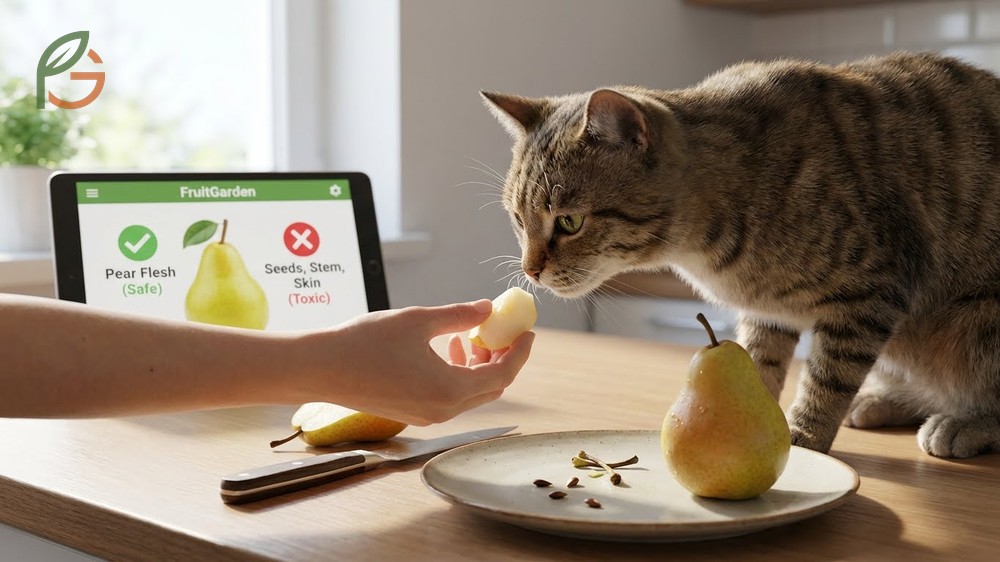
Can cats eat pears? Yes, cats can safely eat pears in small amounts, but only the flesh.[1] Research shows that pear seeds, stems, and skin contain cyanogenic compounds that release cyanide when digested, which is toxic to felines.[2] FruitGarden provides evidence-based guidance on safe fruit consumption for cats, helping pet owners make informed decisions about treats and nutrition.
Quick Answer
- Pears are safe for cats when properly prepared—remove all seeds, stem, and skin before serving[1]
- Offer only small pieces of flesh as an occasional treat, not exceeding 10% of daily caloric intake[3]
- Pears provide 6g fiber per medium fruit, but cats only need 2-4% fiber in their diet[4][5]
- Watch for digestive upset—excessive fiber can cause diarrhea and vomiting in cats with sensitive stomachs[6]
Can Cats Eat Pears
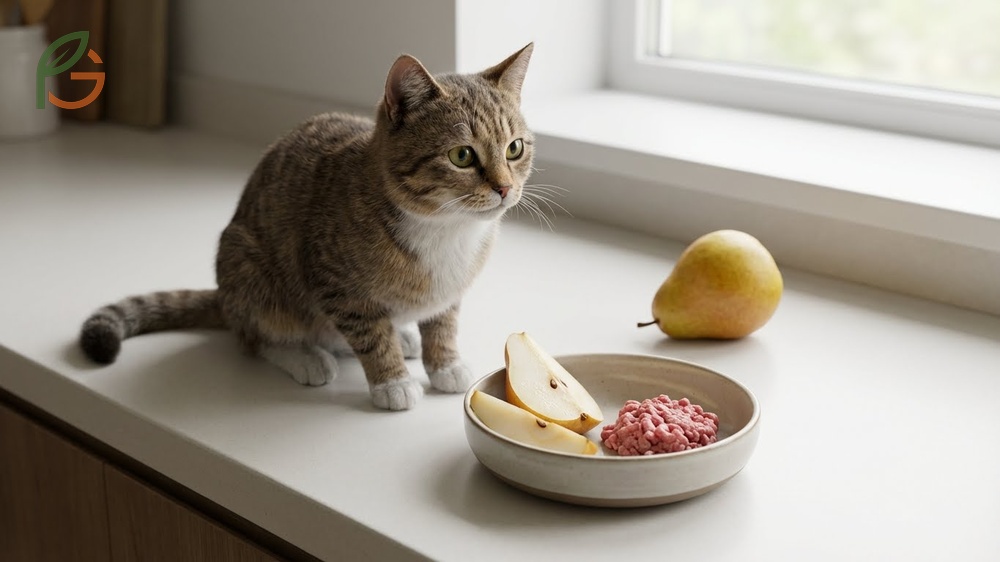
Pears aren’t toxic to cats, but they’re not necessary either. Studies demonstrate that cats are obligate carnivores with digestive systems designed for meat-based diets, not plant matter.[7] While the flesh of pears provides vitamins C, A, and K along with fiber, cats synthesize their own vitamin C in their livers and don’t require plant-based nutrients to thrive.[8]
The key benefit pears offer is hydration and a small amount of dietary fiber. Most people don’t realize that timing and preparation matter more than the nutritional content when offering pears to cats. Current veterinary guidance emphasizes that treats should complement, not replace, AAFCO-approved cat food formulated for their life stage.[9]
Why Pear Seeds Are Dangerous
Pear seeds contain amygdalin, a cyanogenic glycoside that breaks down into hydrogen cyanide when chewed or digested.[2] Cyanide interferes with cells’ ability to use oxygen, which can be fatal if a cat ingests enough seeds. Because cats are small, even tiny amounts of toxin can overwhelm their system faster than in larger animals.
The same compound exists in apple seeds, cherry pits, and apricot pits. What often gets overlooked is that pear skin and stems also contain trace amounts of cyanogenic compounds, making complete removal essential for safe consumption.[1]
Critical Warning: If your cat shows signs of cyanide poisoning—bright red gums, difficulty breathing, seizures, or weakness—contact your veterinarian or emergency animal hospital immediately. Cyanide toxicity requires urgent medical intervention.[10]
Nutritional Benefits
A medium pear contains 6g of fiber, which is 21% of human daily needs but far exceeds what cats require.[4] Pears also provide vitamin C (6% DV for humans) and potassium (4% DV), though these percentages don’t translate directly to feline needs. Research across feline nutrition studies shows cats thrive on 2-4% fiber content in their total diet, with excessive amounts causing digestive problems.[5]
The fiber in pears is both soluble and insoluble. Soluble fiber can help slow digestion and stabilize blood sugar, while insoluble fiber adds bulk to stools. For cats dealing with mild constipation or hairballs, a tiny amount of pear might help, but specialized cat foods designed for these issues work better.
Can Cats Have Pears
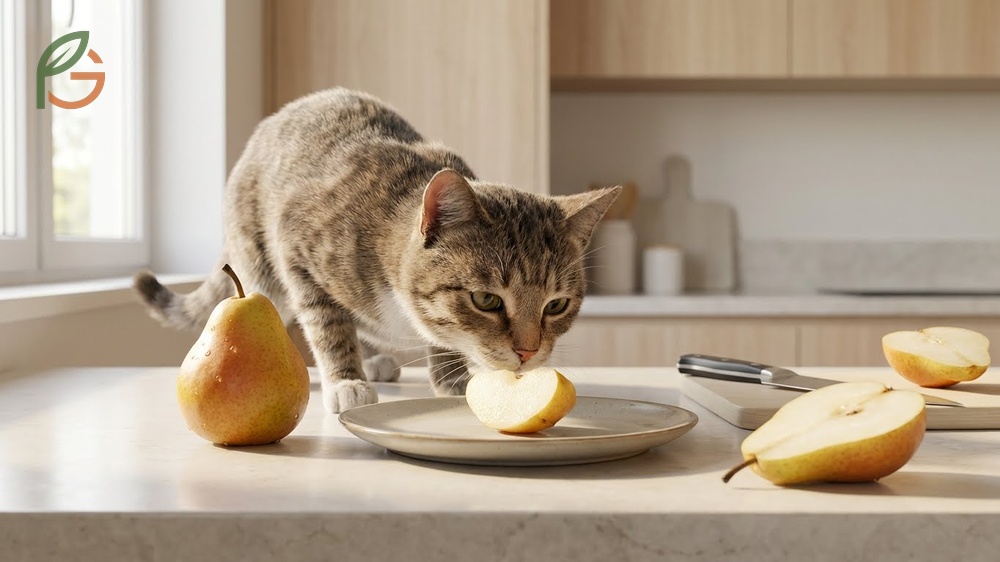
Yes, cats can have pears occasionally if you’re looking for a low-calorie treat option. Evidence indicates that the natural sugars in pears don’t provide palatability benefits since cats lack taste receptors for sweetness.[11] This means your cat won’t actually find pears appealing based on taste—any interest stems from texture, moisture content, or curiosity rather than flavor preference.
The texture of ripe pears can pose a choking hazard if pieces are too large, while unripe pears are too hard for cats to chew safely. Current veterinary data suggests offering pears no more than once or twice per week, with portion sizes limited to prevent gastrointestinal distress.[6]
Proper Serving Sizes
Treats shouldn’t exceed 10% of your cat’s daily caloric intake, which typically ranges from 200-300 calories for an average adult cat.[3] For pears, this translates to approximately one or two small cubes (about 1 cubic centimeter each) per serving. If you’re offering pears alongside other treats, reduce the portion accordingly to stay within the 10% limit.
Different cat sizes require different portions. A 10-pound adult cat can handle slightly more than a 5-pound kitten, but neither should receive more than a teaspoon of pear flesh at once. Watch your cat’s response during the first serving—some cats tolerate fruit better than others based on their individual digestive sensitivity.
- Kittens under 6 months: Avoid fruits entirely; focus on kitten-formulated food
- Cats 5-8 pounds: Maximum 2-3 small cubes (½ teaspoon) once weekly
- Cats 9-12 pounds: Maximum 3-4 small cubes (1 teaspoon) once or twice weekly
- Cats over 12 pounds: Maximum 4-5 small cubes (1-1.5 teaspoons) twice weekly
- Senior cats (10+ years): Start with smaller portions and monitor closely for digestive changes
Preparation Methods
Proper preparation reduces risks significantly. Wash the pear thoroughly under running water to remove pesticide residue that can cause gastrointestinal distress.[9] Use a sharp knife to cut away all skin, then slice the pear in half and remove the entire core, including every seed. Cut the remaining flesh into tiny, bite-sized pieces appropriate for your cat’s size.
Serve pears at room temperature rather than cold from the refrigerator, as cold fruit can cause stomach upset in some cats. Don’t add any sweeteners, spices, or toppings—plain pear flesh only. If you’re making homemade treats, you can blend small amounts of pear with cat-safe proteins like chicken or fish.
From My Experience: My cousin in Guadalajara, Mexico makes frozen cat treats by blending tiny amounts of pear (seeds removed) with canned tuna and freezing them in silicone molds. Her two cats love the texture, and she’s found it’s a great way to keep portions controlled—each frozen cube is exactly the right size for a single treat.
Digestive Upset in Cats
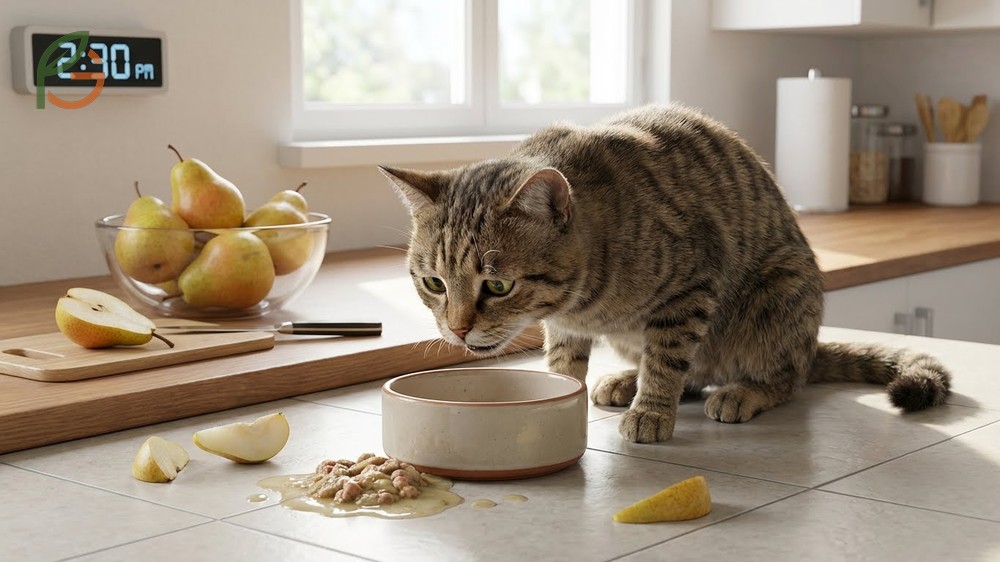
Cats have sensitive digestive systems that can react negatively to excess fiber or unfamiliar foods. Research demonstrates that fiber intake above 8% in a cat’s diet interferes with nutrient absorption and causes diarrhea, vomiting, or bloating.[5] Since pears are fiber-dense, even small amounts can trigger these symptoms in cats unaccustomed to plant matter.
The signs of digestive upset typically appear within 2-6 hours after eating pears. You might notice increased gas, straining in the litter box, or softer-than-normal stools. If symptoms persist beyond 24 hours or your cat refuses food, contact your veterinarian—prolonged diarrhea leads to dehydration, which is dangerous for felines.
Some cats handle fiber better than others based on their existing diet composition. Cats already eating high-fiber therapeutic foods for hairball control may tolerate pears better than those on standard diets. Agricultural data shows that cats eating primarily wet food (high moisture, lower fiber) experience more digestive upset from fruits than cats on mixed feeding schedules.[12]
- Diarrhea or loose stools within 2-12 hours of consumption
- Vomiting, especially if your cat ate pear on an empty stomach
- Excessive gas or visible abdominal discomfort
- Loss of appetite for 12-24 hours following pear consumption
- Lethargy or reluctance to play or move around normally
- Straining or spending extra time in the litter box
Important Note: If your cat has diabetes, kidney disease, or inflammatory bowel disease, consult your veterinarian before introducing any new foods. The sugar and fiber content in pears can affect blood glucose levels and exacerbate existing digestive conditions.
Cats Sugar Sensitivity
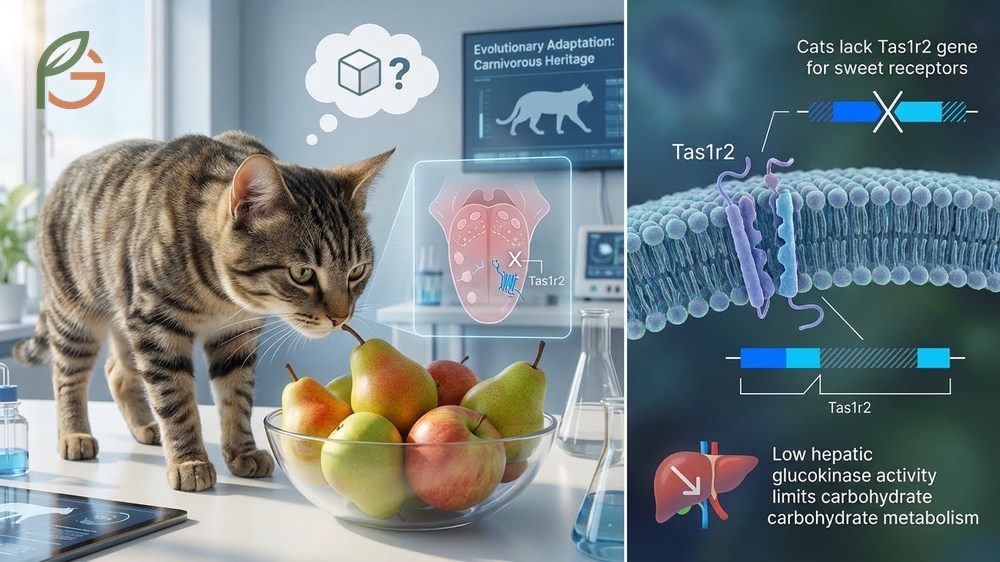
Cats can’t taste sweetness because they lack the Tas1r2 gene responsible for sweet taste receptors. Studies show that cats have very low hepatic glucokinase activity, which limits their ability to metabolize large amounts of simple carbohydrates efficiently.[7] This evolutionary adaptation stems from their carnivorous heritage—wild cats rarely encountered dietary sugars, so they didn’t develop robust systems to process them.
A medium pear contains approximately 17g of natural sugars, which is substantial relative to a cat’s metabolic capacity. While observation studies show that carbohydrate-rich diets don’t directly cause diabetes in cats, excessive sugar intake contributes to weight gain and obesity, which are risk factors for type-2 diabetes.[11] Blood glucose levels in carnivores remain more stable with protein-based diets because glucose is released gradually through gluconeogenic catabolism rather than in spikes from carbohydrate digestion.
The pancreatic amylase activity in cats is only 5% of that found in dogs, and their disaccharide activity is about 40% of canine levels. These enzymes help break down sugars and starches, but cats’ lower enzyme levels make them less efficient at processing fruit sugars. Despite these limitations, cats can digest sugars at about 94% efficiency—they just don’t handle large quantities well.[7]
Fruits Cats Can Eat
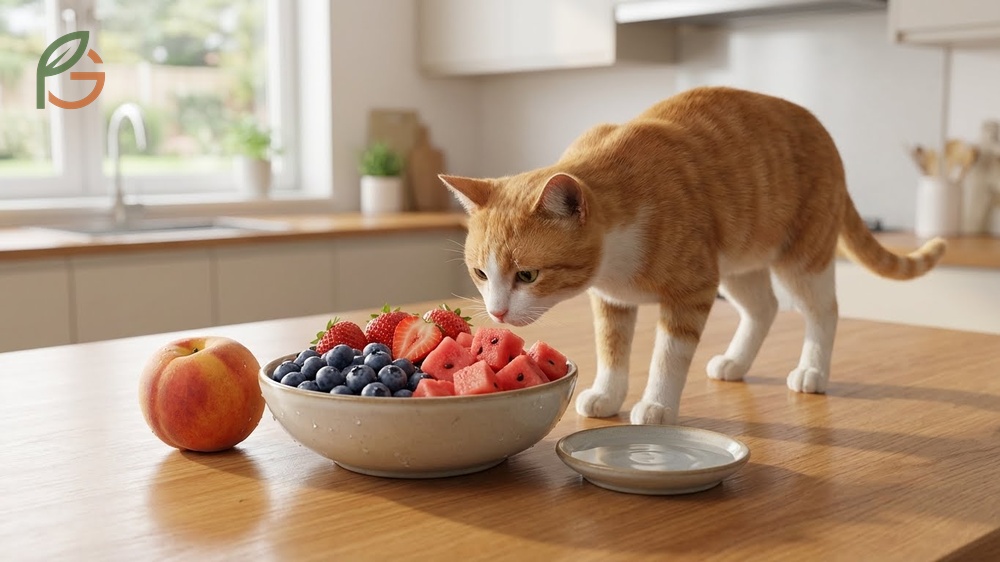
Several fruits are safe for cats when prepared properly and offered in moderation. Current veterinary guidance shows that fruits like blueberries, strawberries, and watermelon (seedless) provide hydration and antioxidants without high sugar loads.[13] These options work better than pears for some cats because they’re easier to portion and contain less fiber per serving.
Peaches offer vitamins A and C along with digestive-supporting fiber, though you must remove the pit entirely—it contains cyanogenic compounds just like pear seeds. Bananas are popular among cats who enjoy fruit, but they’re high in sugar and should be limited to tiny portions. Evidence suggests that frozen fruit treats work well during warm weather, providing both entertainment and hydration for indoor cats.
- Blueberries: Rich in antioxidants; serve whole or mashed, 2-3 berries maximum per serving
- Strawberries: High in vitamin C and fiber; remove tops, cut into small pieces, limit to 1 small berry
- Watermelon: Excellent hydration source; remove all seeds and rind, offer small cubes only
- Cantaloupe: Provides vitamins A and C; remove seeds and rind, serve tiny pieces occasionally
- Apples: Good fiber source; remove all seeds, core, and stem—same cyanide risk as pears
- Bananas: High in potassium but very high sugar; mash or slice, maximum ½ teaspoon per serving
- Peaches: Vitamins A and C; remove pit completely, peel skin, offer small amounts infrequently
This table compares fiber content, sugar levels, and key nutrients across seven cat-safe fruits with recommended serving sizes
| Fruit | Fiber (per 100g) | Sugar (per 100g) | Key Nutrients | Max Serving |
|---|---|---|---|---|
| Pears | 3.1g[4] | 10g | Vitamin C, K, Potassium | 1 teaspoon |
| Blueberries | 2.4g | 10g | Antioxidants, Vitamin K | 2-3 berries |
| Strawberries | 2.0g | 4.9g | Vitamin C, Manganese | 1 small berry |
| Watermelon | 0.4g | 6.2g | Vitamin A, C, Lycopene | 2-3 small cubes |
| Bananas | 2.6g | 12g | Potassium, Vitamin B6 | ½ teaspoon |
Toxic Foods for Cats
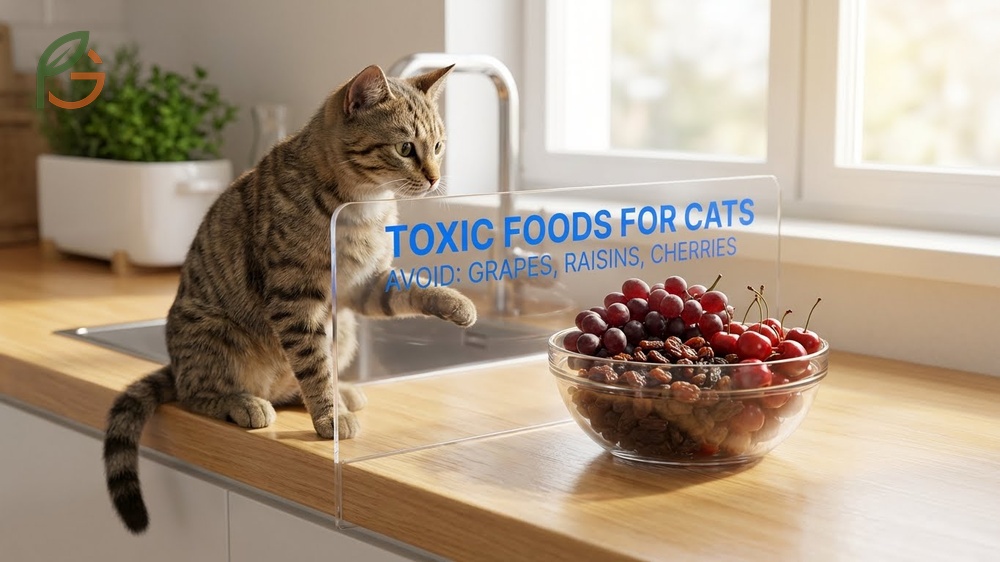
Several common fruits and foods pose serious health risks to cats and should never be offered. Grapes and raisins contain active substances that target kidney function, potentially causing acute kidney failure even in small amounts.[14] While reports of grape toxicity in cats are less common than in dogs—possibly because cats instinctively avoid them—the risk is severe enough to warrant complete avoidance.
Cherries are particularly dangerous because the entire plant contains cyanide, not just the pit. Signs of cyanide poisoning include bright red gums, difficulty breathing, and dilated pupils.[15] Avocados contain persin, which causes vomiting and diarrhea in cats. What often surprises people is that tomatoes—while technically safe when fully ripe—contain solanine in their green, unripe parts and stems, making them risky to offer.
Allium family vegetables like onions, garlic, leeks, and chives cause severe gastric upset and damage red blood cells in cats, leading to anemia. Mushrooms vary widely in toxicity by species, but certain varieties cause permanent organ damage or death. The safest approach is avoiding all mushrooms unless you’re absolutely certain of the variety and its safety profile.
- Grapes and raisins: Cause acute kidney failure; even one grape can be dangerous for small cats
- Cherries: Entire plant contains cyanide; causes respiratory distress and neurological symptoms
- Avocados: Persin toxicity leads to vomiting, diarrhea, and cardiac issues in severe cases
- Onions and garlic: Damage red blood cells causing hemolytic anemia; symptoms appear days later
- Chocolate: Contains theobromine; causes vomiting, tremors, seizures, and cardiac problems
- Citrus fruits: Essential oils cause gastrointestinal upset; cats dislike the smell naturally
- Xylitol: Artificial sweetener causes rapid insulin release and liver failure in cats
- Macadamia nuts: Cause weakness, vomiting, tremors, and hyperthermia in cats
Emergency Action: If your cat ingests any toxic food, contact the ASPCA Animal Poison Control Center (888-426-4435) or Pet Poison Helpline (855-764-7661) immediately. Have the product packaging available if possible, and note the approximate amount consumed and time of ingestion.
Conclusion
The evidence is clear: cats can eat pears safely when you follow three essential principles—remove all seeds, stem, and skin; limit portions to 1 teaspoon or less; and offer only as an occasional treat, not a dietary staple. Research demonstrates that while pears provide fiber and vitamins, cats obtain complete nutrition from high-quality, AAFCO-approved cat food formulated for their carnivorous physiology.[9]
Current veterinary guidance emphasizes that treats complement rather than replace species-appropriate nutrition. If you’re introducing pears or any new food to your cat’s diet, start with tiny portions and monitor closely for digestive changes over 24 hours. FruitGarden synthesizes current veterinary research and nutritional data to help pet owners make evidence-based decisions about safe, healthy treats for their feline companions.
Medical Disclaimer
Important Medical Disclaimer: This content is for informational and educational purposes only. It’s not intended as a substitute for professional veterinary advice, diagnosis, or treatment. Always consult a qualified veterinarian before making any changes to your cat’s diet, especially if your cat has diabetes, kidney disease, inflammatory bowel disease, or other medical conditions. The information provided here doesn’t replace personalized guidance from your cat’s healthcare provider.
Frequently Asked Questions
Can cats eat pear skin?
No, cats shouldn’t eat pear skin. The skin contains trace amounts of cyanogenic compounds that can release cyanide when digested, which is toxic to cats.[1] Always peel pears completely before offering them to your cat to eliminate this risk. Additionally, the skin’s tough texture can be difficult for cats to digest and may cause choking.
How much pear can I give my cat?
Limit pear portions to 1 teaspoon or less per serving, offered no more than twice weekly. Current veterinary guidelines recommend that treats comprise no more than 10% of your cat’s daily caloric intake.[3] For a 10-pound cat consuming approximately 250 calories daily, this translates to 25 calories from treats—about 3-4 small cubes of pear flesh.
Can kittens eat pears?
Kittens under 6 months old shouldn’t eat pears or other fruits. Research shows that kittens require nutrient-dense, protein-rich diets specifically formulated for growth, and their digestive systems are more sensitive than adult cats. Wait until your kitten reaches at least 6 months of age before introducing any fruits, and even then, start with extremely small amounts to test tolerance.
Are Asian pears safe for cats?
Yes, Asian pears are safe for cats following the same preparation rules as regular pears—remove all seeds, core, and skin before serving.[1] Asian pears have similar nutritional profiles with comparable fiber and vitamin C content. The main difference is their crunchier texture, which some cats may find easier to chew than the softer flesh of regular pears.
Can cats eat canned pears?
Avoid canned pears for cats because they typically contain added sugars, syrups, or preservatives that aren’t suitable for feline consumption. If you must use canned pears, choose varieties packed in water with no added ingredients, drain and rinse thoroughly, and offer only tiny portions. Fresh pears are always the safer, healthier choice for cats.
What should I do if my cat ate pear seeds?
Contact your veterinarian immediately if your cat ate pear seeds, especially if they consumed multiple seeds or chewed them. Watch for symptoms of cyanide poisoning including bright red gums, difficulty breathing, dilated pupils, vomiting, weakness, or seizures.[2] While one or two seeds may not cause immediate harm, cyanide toxicity is serious and requires professional evaluation.
Can diabetic cats eat pears?
Diabetic cats shouldn’t eat pears without explicit veterinary approval. Pears contain approximately 17g of natural sugars per medium fruit, which can affect blood glucose levels even in small portions. Studies show that cats with diabetes require carefully controlled carbohydrate intake to maintain stable glucose levels.[7] Your veterinarian can advise whether pears fit within your cat’s specific dietary management plan.





