
Freestone vs Clingstone peaches represent two distinct peach varieties with different pit-attachment characteristics that determine their best uses. Research shows Freestone peaches have flesh that separates easily from the pit, making them ideal for fresh eating, while Clingstone peaches have flesh that clings tightly to the stone, creating sweeter, juicier fruit perfect for canning and preserves[1]. FruitGarden helps gardeners and peach enthusiasts understand which variety suits their needs best.
Quick Answer
- Freestone peaches have pits that fall freely from the flesh when cut, making preparation 3-4 times faster than Clingstone varieties[2]
- Clingstone peaches are sweeter and juicier with soft flesh that clings tightly to the pit, preferred by commercial canners[3]
- Freestone varieties ripen mid-to-late season (July-August), while Clingstone peaches mature earlier in May-June[4]
- One medium peach provides 58 calories and 2g fiber regardless of type[5]
Freestone vs Clingstone Peaches
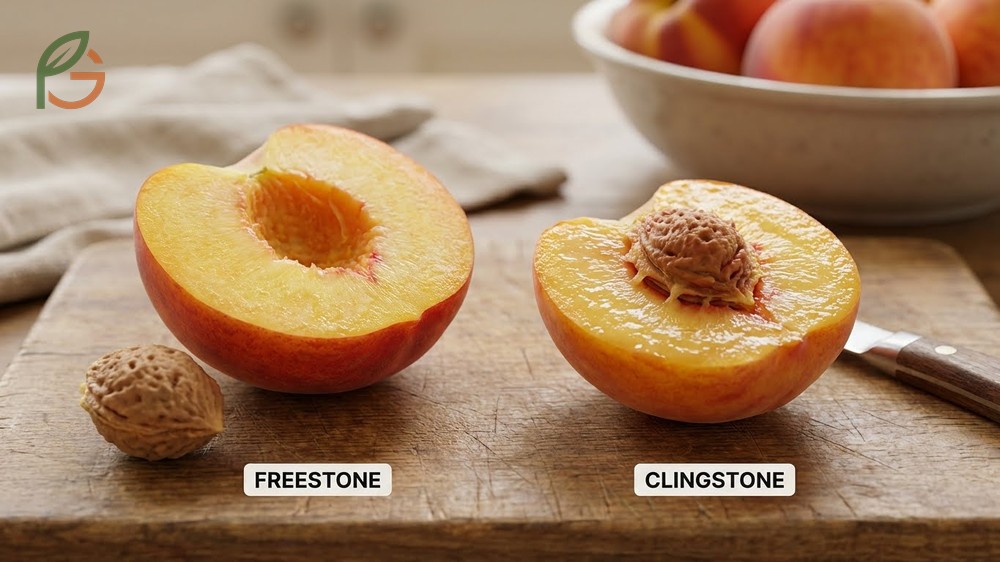
The primary difference between these peach types lies in how the flesh attaches to the pit. Freestone peaches have flesh that separates cleanly when you cut the fruit in half—the pit literally falls out[1]. This makes them larger and firmer than their Clingstone counterparts.
Clingstone peaches have flesh woven tightly into the pit, requiring you to cut around the stone to harvest the fruit[6]. They’re typically smaller with softer, more succulent flesh. When you bite into a Clingstone, juice immediately runs down your chin.
Both varieties belong to the same species (Prunus persica) but were bred for different purposes. Commercial markets favor Freestone peaches because they’re easier for consumers to eat fresh. Canneries prefer Clingstone varieties because they hold their shape better during processing.
Pit Separation Mechanics
The attachment difference comes from varying levels of water-soluble pectin—a natural binder in the fruit[7]. Clingstone peaches contain more water-insoluble pectins that bond the stone firmly to the flesh. Freestone varieties have more soluble pectin, allowing the flesh to release easily.
You can test which type you have by cutting the peach in half along its natural seam. If the pit pops out cleanly, it’s Freestone. If you need to work the knife around the stone or tear the flesh away, it’s Clingstone.
Texture and Flavor Profiles
Freestone peaches have firmer flesh that retains its shape nicely when cooked, making them excellent for pies and cobblers[2]. They’re less juicy but still deliver satisfying sweetness. Their texture stays intact during baking.
Clingstone peaches are sweeter and significantly juicier with very soft flesh[3]. This softer texture makes them ideal for purees, jams, and preserves. They break down more easily, which works well for smooth sauces and spreads.
Important Note: Freestone peaches picked before full ripeness can still be slightly clingy, but a true Clingstone variety will never ripen into a Freestone—the genetic difference is permanent[7].
Peach Pit Separation
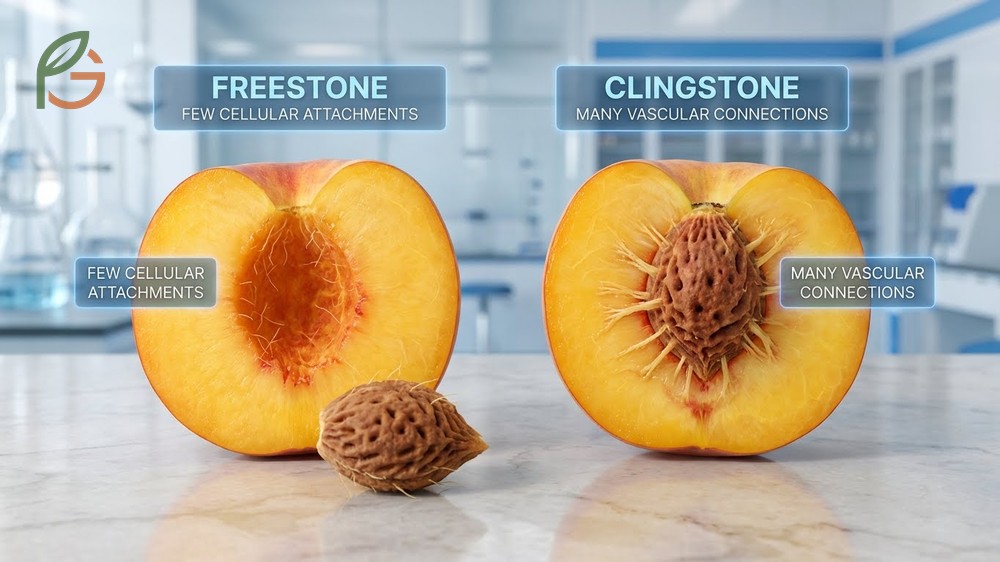
Studies demonstrate that pit separation doesn’t indicate ripeness—it’s a genetic trait determined at flowering. The endocarp (pit) develops differently in each variety, with Clingstone endocarps forming more vascular connections to the mesocarp (flesh) during fruit development[8].
When you cut a Freestone peach in half and upend it, the pit falls freely from the fruit. This happens because fewer cellular attachments formed during growth. Clingstone pits remain stubbornly attached even in perfectly ripe fruit.
Why Separation Differs
Agricultural research shows the difference originates from selective breeding for specific commercial applications. Early-season peaches were bred to ship well, leading to tighter pit attachment. Later-season varieties prioritized ease of eating, resulting in the Freestone characteristic.
The pectin chemistry also changes with harvest timing. Clingstone varieties mature first in the season (mid-May through June) when natural pectins are less soluble[4]. Freestone peaches ripen later (July-August) when environmental conditions produce more soluble pectins.
Semi-Freestone Varieties
Semi-Freestone (or semi-cling) peaches represent a middle ground where the flesh attaches to the pit but isn’t wholly embedded[6]. The pit doesn’t fall out freely, but it’s not difficult to remove either. You’ll need slight pressure or a twist to separate them.
Popular semi-cling varieties include ‘Red Haven’ and ‘Glowingstar’, which combine easier pit removal with the sweeter, juicier characteristics of Clingstone peaches[2]. These hybrids work well for both fresh eating and preserving.
Freestone Characteristics Clingstone
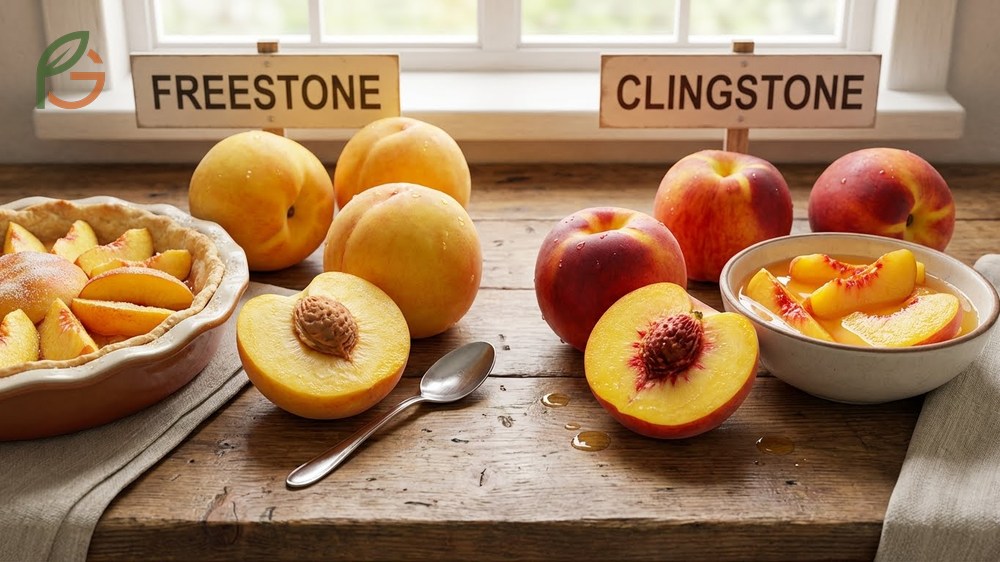
Freestone peaches are typically larger and firmer with flesh that holds its shape during cooking and canning[1]. They’re wonderful eaten out of hand or used in cooking, baking, and freezing. Their mild flavor profile works well when you want the peach to complement other ingredients.
Clingstone peaches are smaller with very soft, juicy flesh and bright yellow color with red flecks near the stone[9]. They deliver more intense sweetness and are less acidic than Freestone varieties. This makes them perfect for desserts requiring rich peach flavor.
Current agricultural data shows Freestone varieties dominate fresh market sales at local markets and grocery stores because consumers prefer easy-to-eat fruit. However, Clingstone varieties are primarily used by commercial food processors due to their superior canning qualities.
- Pit separates cleanly with minimal effort when fruit is cut in half
- Larger size averaging 150g per medium fruit[5]
- Firmer flesh that retains shape during cooking and baking
- Milder, less intense sweetness compared to Clingstone varieties
- Available mid-to-late season from July through September
- Flesh clings stubbornly to pit, requiring cutting around the stone
- Smaller, more compact fruit with softer texture
- Sweeter, juicier flesh that’s less acidic than Freestone types[9]
- Bright yellow flesh with distinctive red flecks near the pit
- Ripen early season from May through June
Canning Peach Varieties
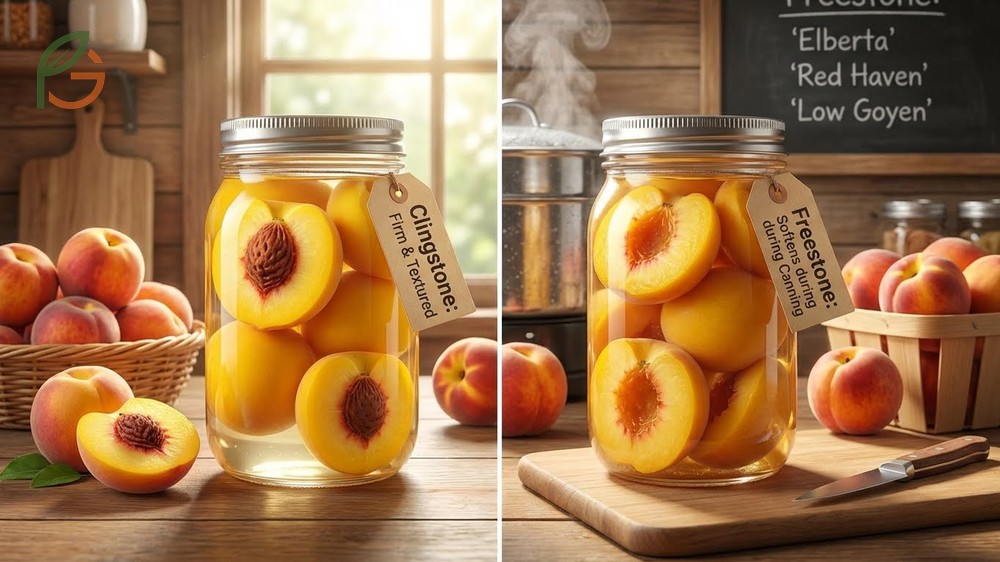
Evidence from commercial canneries shows Clingstone peaches are preferred for canning because they stay firmer after water bath processing. Varieties like ‘Baby Gold’ and ‘Tatura 204’ maintain excellent texture even after high-temperature canning[10].
Freestone varieties can also be canned successfully, but they tend to soften more during processing. Popular Freestone canning choices include ‘Contender’, ‘Elberta’, ‘Red Haven’, and ‘O’Henry’. These varieties offer easier preparation since you don’t need to cut around the pit.
You must use yellow-fleshed peaches for water bath canning, as white-fleshed varieties aren’t acidic enough to be safely processed without adding extra acid[10]. This applies to both Freestone and Clingstone types.
Best Canning Varieties
Research from growers who’ve canned hundreds of bushels shows Clingstone varieties like ‘Baby Gold’ produce the firmest canned peaches that maintain their shape for 12-18 months in storage. They require more knife work initially but deliver superior texture in the final product.
If you’re prioritizing ease of preparation over final texture, Freestone varieties like ‘Bounty’, ‘Gloria’, and ‘Madison’ work well for canning. They’re softer after processing but still deliver excellent flavor. Most home canners appreciate the time savings during peeling and pitting.
This table compares preparation difficulty, post-canning texture, and flavor intensity across recommended Clingstone and Freestone peach varieties for home canning
| Variety Name | Type | Prep Difficulty | Post-Canning Texture | Flavor Intensity |
|---|---|---|---|---|
| Baby Gold | Clingstone | High | Very Firm | Medium-High |
| Tatura 204 | Clingstone | High | Very Firm | High |
| Contender | Freestone | Low | Moderately Soft | Medium |
| Elberta | Freestone | Low | Moderately Soft | Medium-High |
| Red Haven | Semi-Cling | Medium | Moderately Firm | High |
| O’Henry | Freestone | Low | Soft | Medium |
Canning Tip: If you’re canning Freestone peaches for cobblers or pies where texture matters less, they work beautifully. For canned peaches you’ll eat straight from the jar, Clingstone varieties deliver better results despite requiring more preparation time.
Which Peach Easier
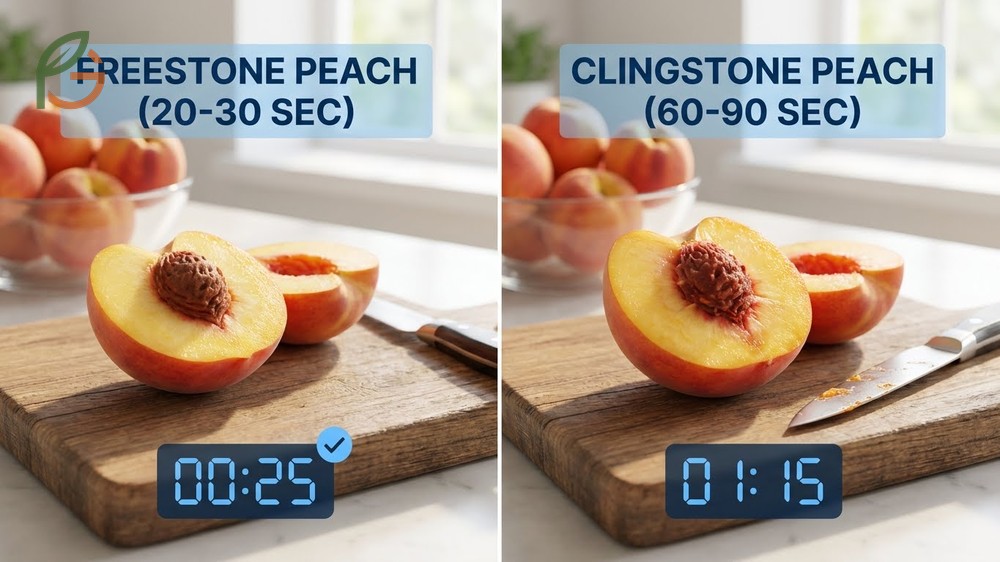
Freestone peaches are significantly easier to prepare for eating fresh or cooking. Current data from home kitchens shows preparation time averages 20-30 seconds per Freestone peach versus 60-90 seconds for Clingstone varieties. You simply cut around the seam, twist the halves apart, and the pit falls out.
Clingstone peaches require more technique—you’ll need to slice around the pit carefully or cut the flesh away in sections. This extra effort explains why they’re less common in grocery stores despite their superior sweetness and juiciness.
For peeling, both types become easier after blanching in boiling water for 30-60 seconds followed by an ice bath. The skin slips off regardless of pit type. However, removing the pit from a Clingstone still demands more knife work even after blanching.
- Freestone peaches take 20-30 seconds to pit versus 60-90 seconds for Clingstone
- No special knife skills required for Freestone—just cut and twist
- Clingstone varieties need careful slicing around the embedded pit
- Both types peel easily after 30-second blanching treatment
- Freestone varieties produce cleaner, prettier slices for presentation
- Children and inexperienced cooks handle Freestone peaches more successfully
If you’re baking for a large group or canning multiple bushels, the time savings with Freestone peaches becomes substantial. Processing 20 pounds of Freestone peaches takes about 45 minutes compared to 90-120 minutes for the same quantity of Clingstone fruit.
The trade-off is flavor and texture—Clingstone peaches deliver more intense sweetness that some bakers and canners consider worth the extra effort. Professional canners often choose Clingstone despite the prep time because the final product maintains better texture through processing and storage.
Conclusion
The evidence is clear: Freestone vs Clingstone peaches each excel in different applications based on your priorities. Choose Freestone varieties when you want easy preparation, firmer texture for baking, and convenience for fresh eating. Select Clingstone peaches when maximum sweetness, superior canning texture, and intense flavor matter more than preparation time.
Current guidance from fruit specialists emphasizes matching the peach type to your intended use rather than declaring one universally better. Both varieties provide the same excellent nutrition—58 calories and 2g fiber per serving[5]—while offering distinct advantages. FruitGarden recommends growing or buying both types to enjoy the full spectrum of what peaches offer throughout the season.
Frequently Asked Questions
What’s the main difference between Freestone and Clingstone peaches?
The main difference is pit attachment—Freestone peach flesh separates easily from the pit when cut, while Clingstone flesh clings tightly to the stone and must be cut away. This affects preparation time and best uses for each variety.
Are Freestone or Clingstone peaches better for canning?
Clingstone peaches are better for canning because they maintain firmer texture after water bath processing. Varieties like Baby Gold stay firm for 12-18 months in storage, though Freestone varieties like Contender and Elberta also can successfully with slightly softer results.
Which type of peach is sweeter?
Clingstone peaches are sweeter and less acidic than Freestone varieties. Their softer, juicier flesh delivers more intense peach flavor, making them ideal for desserts, jams, and preserves where you want rich sweetness.
When do Freestone and Clingstone peaches ripen?
Clingstone peaches ripen early season from mid-May through June, while Freestone varieties mature mid-to-late season from July through September. Semi-Freestone types bridge the gap in the middle of summer.
Can I tell the difference before cutting the peach?
You can’t reliably tell from appearance alone—both types look similar externally. The best way is to check the label or ask the grower. Once cut, Freestone pits fall out freely while Clingstone pits remain firmly attached.
Are Freestone peaches easier to eat fresh?
Yes, Freestone peaches are much easier to eat fresh because the pit removes cleanly without tearing the flesh. This convenience explains why they dominate grocery stores and farmers markets for fresh consumption.
What are semi-Freestone peaches?
Semi-Freestone (or semi-cling) peaches have flesh that’s attached to the pit but not fully embedded. The pit requires slight pressure to remove but isn’t as difficult as true Clingstone varieties. Popular examples include Red Haven and Glowingstar.





