
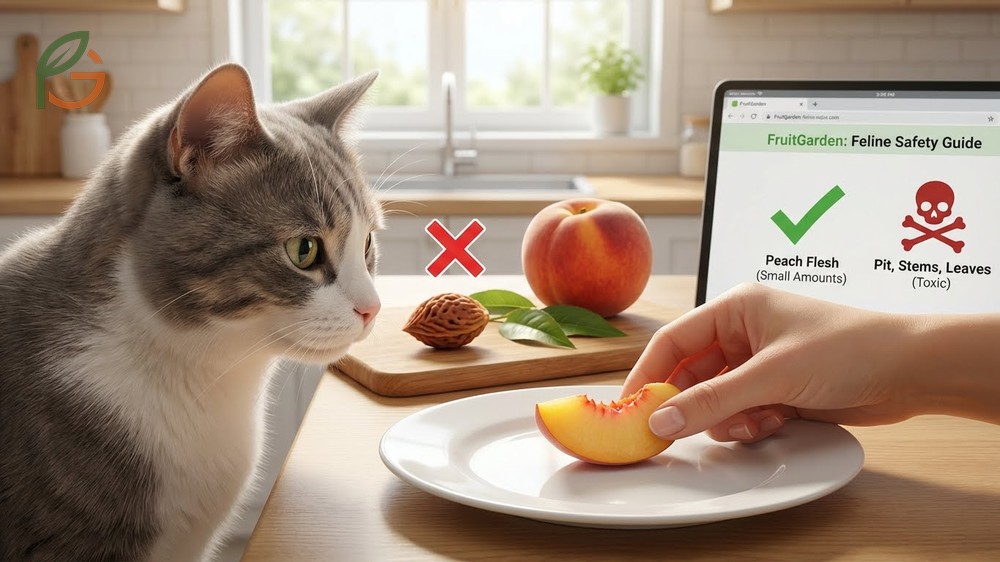
Can cats eat peaches? Yes, cats can eat small amounts of peach flesh as an occasional treat, but the pit, stems, and leaves contain cyanide and are toxic. Research shows that peach pits contain amygdalin, which breaks down into hydrogen cyanide when ingested—a substance that’s extremely dangerous for feline health[1]. FruitGarden provides evidence-based guidance to help cat owners make informed decisions about sharing fruits with their feline companions.
Quick Answer
- Cats can safely eat small pieces of peeled peach flesh only—never the pit, skin, stems, or leaves
- One medium peach contains 13g of sugar, which can contribute to obesity and diabetes in cats
- Peach pits contain amygdalin that converts to hydrogen cyanide—a potentially fatal toxin for cats[1]
- Treats should represent less than 10% of your cat’s daily calorie intake[3]
Can Cats Eat Peaches
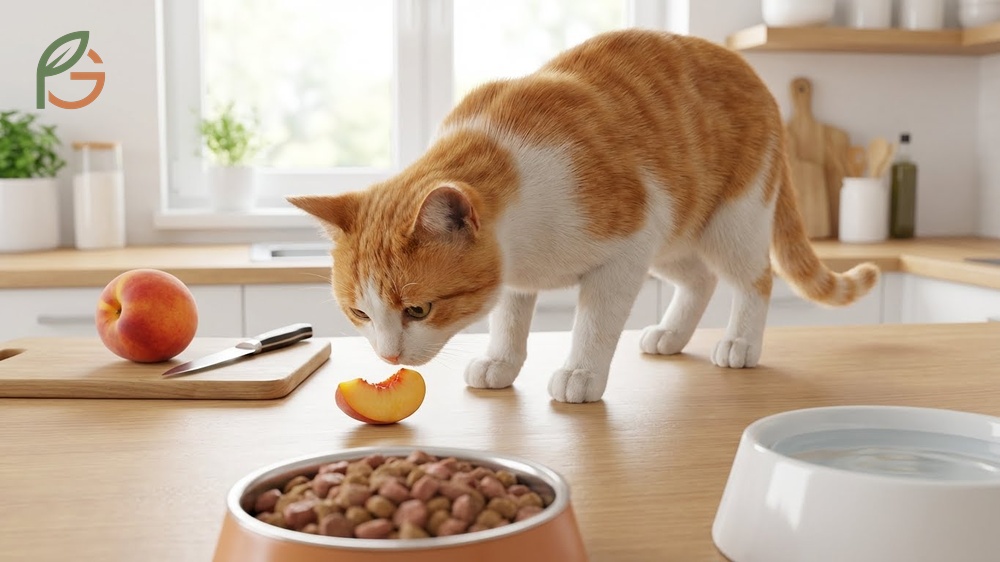
Cats can consume small amounts of peach flesh without immediate danger, but this fruit offers no nutritional benefits that felines need. Studies demonstrate that cats are obligate carnivores who obtain all essential nutrients from meat-based proteins[4]. The high sugar content in peaches—13 grams per medium fruit—can lead to weight gain and increase diabetes risk when fed regularly.
What often gets overlooked is that timing and portion size matter significantly more than the fruit itself. Veterinary guidelines emphasize that all treats—including fruits—should account for less than 10% of a cat’s daily caloric intake[3]. For an average 10-pound cat requiring 200 calories daily, this translates to just 20 calories from treats, roughly equivalent to two small peach cubes.
Most cat owners don’t realize that peaches provide vitamins A and C, along with fiber and potassium. However, cats synthesize their own vitamin C and derive superior nutrition from species-appropriate foods. Unlike dogs or humans, felines lack the digestive enzymes needed to efficiently process plant-based sugars and fibers.
Safe Parts of Peaches
Only the soft, inner flesh of a ripe peach is safe for cats in minimal quantities. Remove all skin, as it can harbor pesticide residues and is difficult for cats to digest. Cut the flesh into pea-sized pieces to prevent choking hazards.
Fresh, raw peaches are preferable to canned or processed varieties. Canned peaches contain added sugars, syrups, and preservatives that can cause gastrointestinal upset in cats. Never offer frozen peaches without thawing them first, as the hard texture poses additional choking risks.
Dangerous Parts to Avoid
The peach pit represents the most serious danger to cats. Current veterinary data indicates that peach pits contain amygdalin, a compound that releases hydrogen cyanide when chewed or digested[1]. Even small amounts of cyanide interfere with cellular oxygen absorption, potentially causing respiratory failure and death.
Peach stems and leaves also contain cyanogenic compounds and should be kept away from cats. The hard pit poses additional mechanical dangers—it can lodge in a cat’s throat or digestive tract, creating life-threatening obstructions that require emergency surgical intervention.
- Peach pits containing amygdalin that converts to cyanide
- Stems and leaves with cyanogenic glycosides
- Peach skin that may contain pesticide residues
- Canned peaches with added sugars and preservatives
- Broken pit fragments that can cause internal damage
Emergency Warning: If your cat swallows a peach pit or chews on stems and leaves, contact your veterinarian immediately. Don’t wait for symptoms to appear—cyanide poisoning can progress rapidly and requires urgent medical intervention.
Are Peaches Safe for Cats
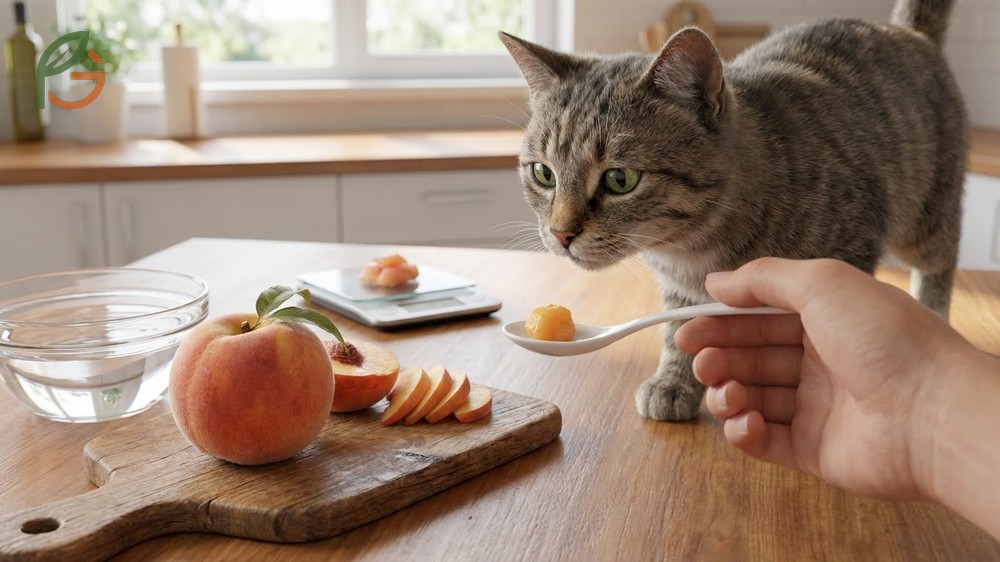
Peaches are conditionally safe for cats when prepared correctly and offered in minimal amounts. Research shows that the fruit’s high sugar content poses greater health risks than benefits for feline consumers. Evidence suggests that repeated exposure to high-sugar treats can alter a cat’s taste preferences and reduce their interest in nutritionally complete cat food.
The concept of “safe” depends entirely on quantity and preparation. A single pea-sized piece of peach flesh once per week is unlikely to harm a healthy adult cat. However, daily feeding or larger portions can contribute to obesity, dental problems, and metabolic disorders over time.
Agricultural data shows that modern peach varieties have been selectively bred for increased sweetness, making them even less suitable for cats than historical varieties. Commercial peaches contain nearly twice the sugar content of their wild ancestors, amplifying the potential for negative health impacts.
Sugar Content Concerns
One medium peach delivers 13 grams of natural sugar and 14 grams of total carbohydrates[2]. Cats lack significant amounts of taste receptors for sweetness and derive no evolutionary benefit from consuming sugary foods. Their bodies are optimized to metabolize proteins and fats, not carbohydrates.
Excessive sugar intake can trigger insulin resistance in cats, a precursor to feline diabetes. Current veterinary guidance emphasizes that diabetic cats should avoid high-carbohydrate foods entirely, with diets containing less than 10% of calories from carbs[5]. Even healthy cats benefit from low-carbohydrate diets that mirror their natural prey-based nutrition.
This table compares nutritional content between different serving sizes of raw peaches including calories, sugars, and fiber based on USDA data
| Serving Size | Calories | Total Sugar | Dietary Fiber | Carbohydrates |
|---|---|---|---|---|
| 1 medium peach (150g) | 58 kcal[2] | 13g[2] | 2g | 14g |
| 1 cup sliced (154g) | 60 kcal | 13g | 2g | 15g |
| 1 small piece (10g) | 4 kcal | 0.9g | 0.1g | 0.9g |
| Safe cat portion (5g) | 2 kcal | 0.4g | 0.07g | 0.5g |
Cyanide Poisoning Symptoms
Cyanide poisoning from peach pits manifests within minutes to hours after ingestion. Veterinary emergency protocols identify bright red gums as one of the earliest visible signs, occurring when cyanide prevents tissues from utilizing oxygen effectively[1]. This symptom differs from typical illness presentations and requires immediate recognition.
Respiratory distress develops rapidly as cyanide disrupts cellular respiration. Affected cats may pant excessively, gasp for air, or display open-mouth breathing. Neurological symptoms including tremors, seizures, and dilated pupils indicate severe poisoning requiring emergency intervention.
- Bright red gums and mucous membranes indicating oxygen utilization problems
- Difficulty breathing, panting, or rapid respiratory rate
- Excessive drooling and loss of appetite
- Vomiting, diarrhea, and abdominal pain
- Lethargy, weakness, or collapse
- Dilated pupils and neurological signs including tremors or seizures
- Increased heart rate followed by cardiac depression
Critical Action Steps: If you suspect peach pit ingestion, check whether the pit is intact or broken. Locate any pit fragments and bring them to your veterinarian. Cyanide antidotes are most effective when administered within 30 minutes of exposure.
Fruits Safe for Cats
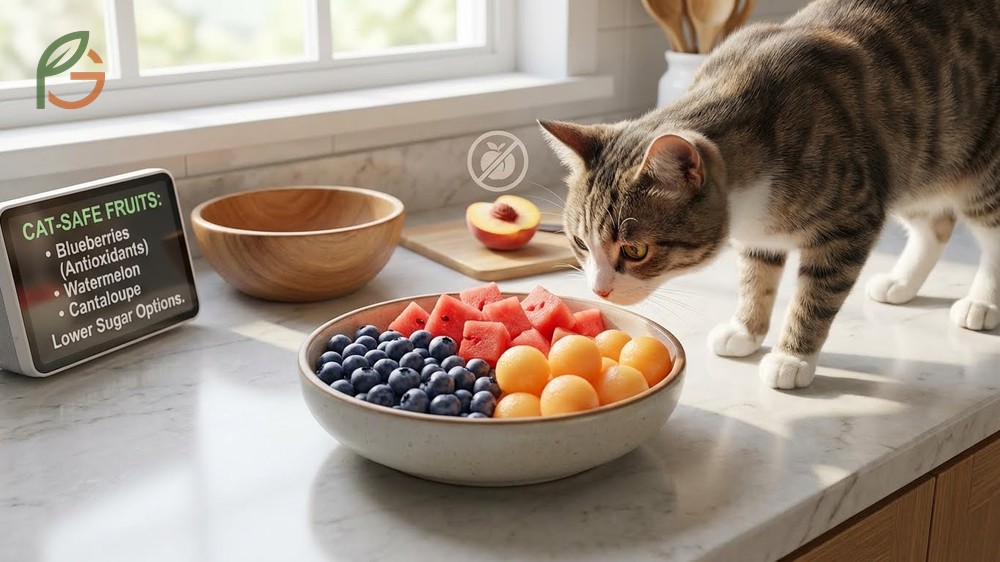
Several fruits are safer alternatives to peaches for cats who enjoy occasional produce treats. Research across veterinary nutrition sources identifies blueberries, seedless watermelon, and cantaloupe as lower-risk options[4]. These fruits contain fewer natural sugars per serving compared to peaches and lack toxic compounds like cyanogenic glycosides.
Blueberries offer the highest antioxidant content with relatively low sugar—just 10 grams per cup compared to peach’s 13 grams per medium fruit. Their small size eliminates choking hazards, and they can be offered fresh or frozen. Seedless watermelon provides hydration with minimal calories, though it should be limited due to its sugar content.
Evidence indicates that cats show little natural interest in fruit flavors due to their carnivorous biology. Pet owners should question whether fruit treats serve the cat’s needs or the owner’s desire to share human foods. Species-appropriate treats like small pieces of cooked chicken or commercial freeze-dried meat provide superior nutrition.
| Fruit | Safety Level | Key Benefits |
|---|---|---|
| Blueberries | High | High antioxidants, low sugar, no choking hazard |
| Seedless Watermelon | High | Hydrating, low calorie, vitamins A and C |
| Cantaloupe | Moderate | Beta-carotene, fiber, refreshing texture |
| Banana (small pieces) | Moderate | Potassium, vitamin B6, soft texture |
| Strawberries | Moderate | Vitamin C, fiber, antioxidants |
- Grapes and raisins can cause acute kidney failure in cats
- Citrus fruits contain essential oils toxic to feline nervous systems
- Cherries, plums, and apricots have cyanide-containing pits like peaches
- Avocados contain persin, which causes vomiting and diarrhea
- Unripe tomatoes and tomato plants contain toxic solanine
Healthy Treats for Cats

The healthiest treats for cats mirror their evolutionary diet as obligate carnivores. Current veterinary guidance emphasizes protein-based treats over fruits or vegetables. Small pieces of cooked chicken, turkey, or salmon provide essential amino acids without the sugar load that fruits deliver.
Commercial freeze-dried meat treats offer convenience with optimal nutrition. These products contain single-ingredient proteins—typically chicken, fish, or organ meats—that preserve nutritional integrity without additives. They’re shelf-stable, portion-controlled, and appeal to cats’ natural preferences.
Interactive feeding methods can enhance the value of treats beyond mere nutrition. Puzzle feeders that dispense small meat pieces encourage natural hunting behaviors and provide mental stimulation. This approach addresses both nutritional needs and behavioral enrichment, resulting in better overall feline welfare.
Treat frequency matters as much as treat type. The 10% rule—limiting treats to 10% of daily calories—prevents nutritional imbalances regardless of treat quality[3]. Even healthy treats can displace essential nutrients from complete cat food when overfed.
- Freeze-dried raw chicken or fish containing 95%+ protein
- Small pieces of cooked, unseasoned poultry or seafood
- Commercial cat treats formulated by veterinary nutritionists
- Plain cooked egg whites for low-fat protein
- Small amounts of plain, cooked pumpkin for digestive support
- Interactive treat-dispensing toys promoting natural behaviors
Portion Control Tip: For an average 10-pound cat needing 200 calories daily, the 10% rule allows just 20 calories from treats. This equals approximately 1 tablespoon of cooked chicken or 5-6 freeze-dried meat treats—far more satisfying for cats than sugary fruit pieces.
Conclusion
The evidence is clear: can cats eat peaches has a nuanced answer requiring careful consideration. While small amounts of peach flesh won’t immediately harm healthy adult cats, the fruit offers no nutritional advantages and presents multiple risks. The cyanide-containing pit, high sugar content, and lack of species-appropriate nutrients make peaches a suboptimal choice for feline treats.
Current veterinary guidance emphasizes protein-based treats that align with cats’ evolutionary needs as obligate carnivores. Cat owners seeking to diversify their pet’s diet should prioritize meat-based options or consult veterinary nutritionists for personalized recommendations. When in doubt, stick with foods specifically formulated for feline health rather than experimenting with human produce.
Medical Disclaimer
Important Medical Disclaimer: This content is for informational and educational purposes only. It is not intended as a substitute for professional veterinary advice, diagnosis, or treatment. Always consult a qualified veterinarian before making any changes to your cat’s diet or health routine, especially if your cat has diabetes, obesity, or other medical conditions. If you suspect your cat has consumed a peach pit or is experiencing poisoning symptoms, seek emergency veterinary care immediately.
Frequently Asked Questions
Can Cats Have Peaches Daily?
No, cats shouldn’t have peaches daily. Research shows that the high sugar content—13 grams per medium peach—can contribute to obesity, dental problems, and diabetes when fed regularly. If you choose to offer peaches, limit them to a pea-sized piece once weekly at most, ensuring treats don’t exceed 10% of daily calorie intake.
Are Peaches Toxic to Cats?
Peach flesh isn’t toxic, but peach pits, stems, and leaves are dangerous. These parts contain amygdalin, which converts to hydrogen cyanide when ingested—a potentially fatal toxin that interferes with cellular oxygen absorption. Even small amounts of chewed pit fragments can cause cyanide poisoning requiring emergency veterinary intervention.
What Should I Do If My Cat Ate a Peach Pit?
Contact your veterinarian or emergency animal hospital immediately. Check whether the pit is intact or broken—broken pits pose higher cyanide risk. Watch for symptoms including bright red gums, difficulty breathing, vomiting, tremors, or lethargy. Don’t wait for symptoms to appear, as cyanide poisoning progresses rapidly and antidotes work best within 30 minutes of exposure.
Can Cats Eat Peach Skin?
No, cats shouldn’t eat peach skin. The skin is difficult for cats to digest and can harbor pesticide residues even after washing. Additionally, the fuzzy texture can cause gastrointestinal irritation. Always remove all skin and offer only small pieces of the soft, inner flesh if you choose to share peaches with your cat.
Are Canned Peaches Safe for Cats?
No, canned peaches aren’t safe for cats. They contain added sugars, syrups, and preservatives that can upset your cat’s digestive system. These additives significantly increase the sugar content beyond fresh peaches and may include ingredients toxic to cats. If you offer peaches at all, use only fresh, raw fruit with skin and pit completely removed.
What Fruits Are Safer Than Peaches for Cats?
Blueberries, seedless watermelon, and small pieces of cantaloupe are safer alternatives. Blueberries contain high antioxidants with lower sugar and no choking hazard. Watermelon provides hydration with minimal calories. However, protein-based treats like cooked chicken or freeze-dried meat align better with cats’ nutritional needs as obligate carnivores.
Can Diabetic Cats Eat Peaches?
No, diabetic cats should avoid peaches entirely. Veterinary guidelines recommend that diabetic cats consume diets with less than 10% of calories from carbohydrates. One medium peach contains 14 grams of carbohydrates and 13 grams of sugar, which can cause dangerous blood glucose spikes. Diabetic cats require strict low-carb diets formulated by veterinarians.





