
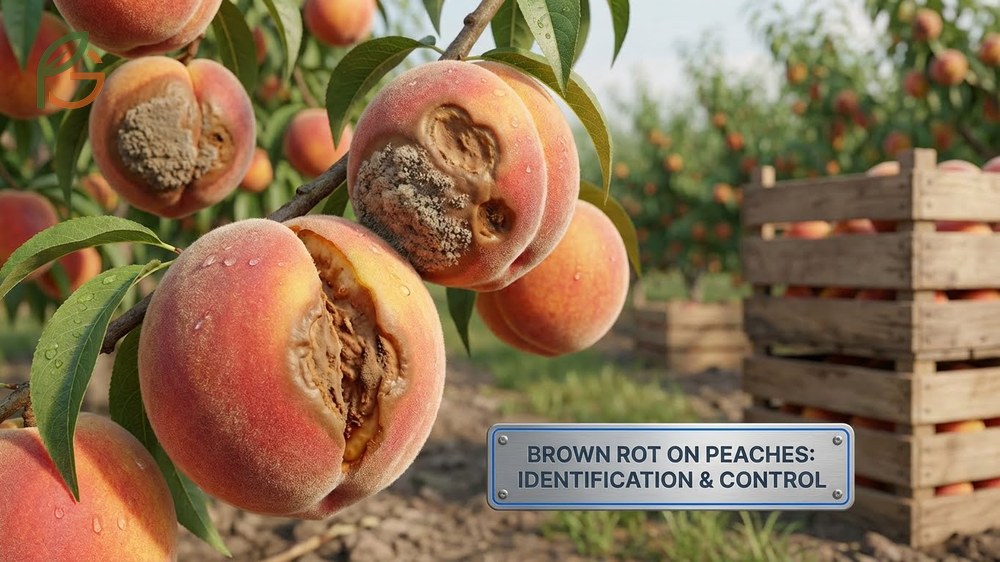
Brown rot on peaches causes more than 50% of global postharvest losses and costs U.S. growers approximately $170 million annually[1][2]. Studies demonstrate that this fungal disease, caused by Monilinia fructicola, attacks blossoms, twigs, and fruit throughout the growing season. FruitGarden synthesizes university extension research and field data to help you recognize symptoms early and implement effective control strategies.
Quick Answer
- Brown rot appears as soft, brown spots on fruit that expand rapidly with buff-colored spore masses[3]
- The fungus causes up to 80% yield losses under favorable conditions (warm, wet weather)[2]
- Start fungicide sprays when flower petals fall and continue every 7-10 days through harvest[4]
- Sanitation removes 90% of overwintering inoculum when mummies and infected twigs are destroyed[5]
Brown Rot on Peaches
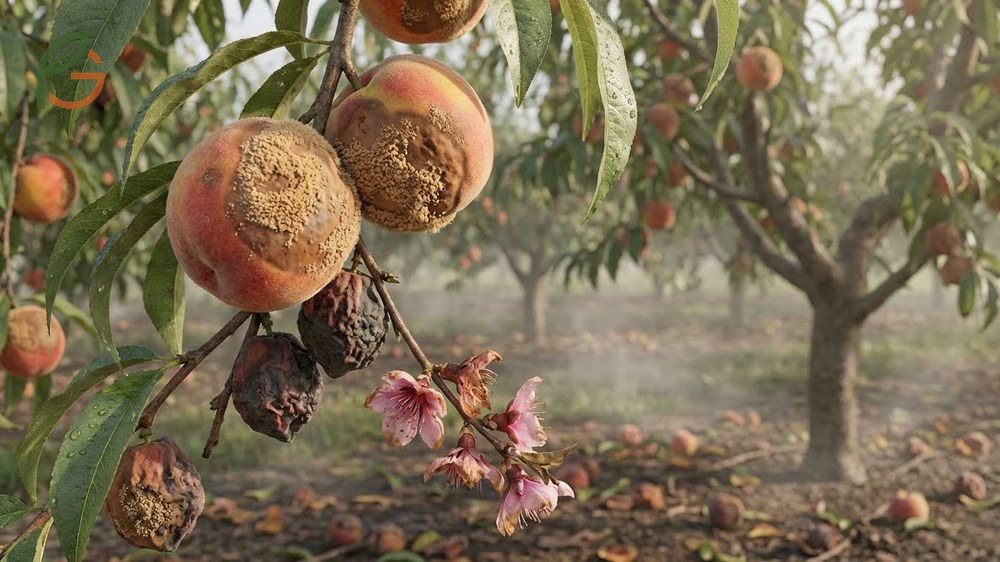
Brown rot ranks as the most destructive fungal disease affecting peach orchards worldwide. The pathogen Monilinia fructicola thrives in warm, humid conditions between 68-77°F (20-25°C) with extended wetness periods. Research shows the fungus survives winter in mummified fruit and infected twigs, releasing spores that initiate new infections when temperatures rise in spring[3].
The disease progresses through three distinct phases during the growing season. Blossom blight occurs first in early spring, followed by twig dieback, and culminating in fruit rot as peaches approach maturity. Each infection stage produces thousands of spores that spread via wind, rain splash, and insect activity.
Most growers don’t realize that latent infections establish early in fruit development but remain invisible until 7-14 days before harvest. Studies tracking infection dynamics found strong correlations between early-season blossom blight and eventual fruit rot at harvest[2]. This hidden infection period explains why seemingly healthy fruit suddenly rot just before picking.
From My Experience: My cousin in Guadalajara, Mexico grows RedHaven peaches commercially and lost 35% of her crop to brown rot in June 2024 during an unusually wet spring. The infection spread matched the 30-40% loss range documented in high-humidity seasons, reinforcing how critical spray timing is during bloom.
Identifying Blossom Blight
Blossom blight symptoms appear when flowers first open in early spring. Infected petals turn light brown and develop water-soaked appearances that resemble frost damage. Within 24-48 hours, tan-gray tufts of fungal spores emerge on flower surfaces[3].
Diseased blossoms wilt but remain attached to twigs instead of falling naturally. You’ll often notice amber-colored sap oozing from infection sites. The fungus moves from blossoms into flower stems (peduncles) and branches, creating entry points for twig cankers.
Fruit Rot Symptoms
Fruit infections begin as small, circular brown spots that can engulf an entire peach within 48-72 hours under favorable conditions. Unlike watery Rhizopus rot, brown rot keeps fruit relatively firm even as decay spreads. The diagnostic feature is buff-colored spore masses that form in concentric rings across the rotted surface[6].
Infected fruit either drops prematurely or shrivels into mummies that cling to branches through winter. A single mummy can harbor millions of overwintering spores. Under laboratory conditions, brown rot can destroy over 60% of harvested peaches within five days at room temperature[2].
Twig Canker Development
Twig cankers form when blossom infections advance into woody tissue. Affected branches show sunken, discolored bark that may ooze gum. These cankers serve as primary inoculum sources, producing spores throughout the growing season whenever conditions turn wet and warm.
Pruning out cankered wood during dormancy removes significant spore reservoirs. Extension specialists recommend cutting at least 4-6 inches below visible damage to ensure complete removal of infected tissue.
Brown Rot Treatment
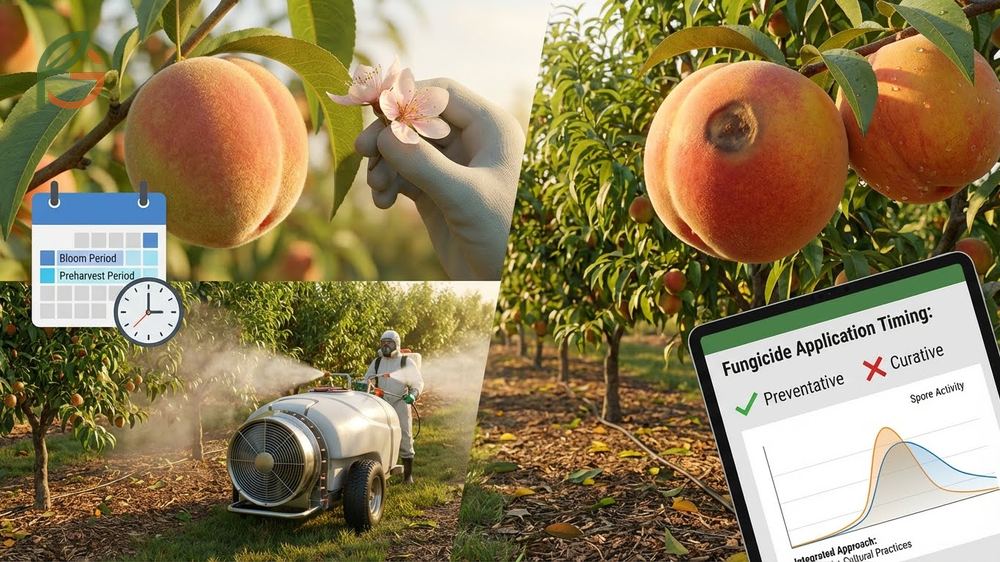
Effective brown rot management requires integrated approaches combining chemical controls with cultural practices. Research demonstrates that fungicides prevent new infections but can’t cure existing ones, making proper timing essential. Applications must protect susceptible tissue before spores germinate and penetrate fruit surfaces[4].
The two critical spray periods are bloom (protecting flowers and preventing twig cankers) and preharvest (safeguarding ripening fruit). Studies tracking disease development show that delaying fungicide programs until visible fruit rot appears drastically reduces control effectiveness. Most infections establish 2-3 weeks before symptoms become obvious.
Resistance management is crucial because Monilinia fructicola rapidly develops tolerance to repeated fungicide classes. University trials document resistance to benzimidazoles and demethylation inhibitors in commercial orchards with intensive spray programs. Rotating between different chemical groups prevents resistance buildup while maintaining control.
Fungicide Options
Home orchardists have access to several effective fungicide active ingredients. Captan (a broad-spectrum protectant), myclobutanil (Immunox), and propiconazole provide reliable brown rot suppression when applied according to label directions[5].
Sulfur-based products work best as summer cover sprays during low disease pressure. They’re less effective than synthetic fungicides during wet springs or humid preharvest periods. Always check product labels for peach-specific uses and observe preharvest intervals (PHI)—the minimum days between last spray and harvest.
- Captan 50WP: broad-spectrum protectant, apply every 7-10 days, 0-day PHI on some formulations
- Myclobutanil (Immunox): systemic DMI fungicide, reserve for preharvest period, 14-day PHI
- Propiconazole: systemic DMI, effective on blossoms and fruit, check label for PHI
- Sulfur: organic-approved, use every 14-21 days in dry weather, 0-day PHI
- Luna Sensation (fluopyram + trifloxystrobin): preventative and curative properties, rotation partner
Important Note: Don’t use combination insecticide-fungicide sprays during bloom. These products harm pollinators and reduce fruit set. Apply fungicides alone when bees are actively working flowers, typically early morning or evening.
Application Timing
Begin fungicide applications when flower petals start falling (shuck-fall stage). This timing protects newly exposed fruit and prevents twig canker development. Continue sprays every 7-10 days through the growing season, intensifying to 5-7 day intervals during the three weeks before harvest[4].
Weather conditions dictate spray frequency. Rain within 24 hours of application washes off protectant fungicides, requiring reapplication. Extend intervals to 10-14 days during hot, dry periods when infection risk drops. Humid, overcast weather demands more frequent coverage.
Preventing Brown Rot
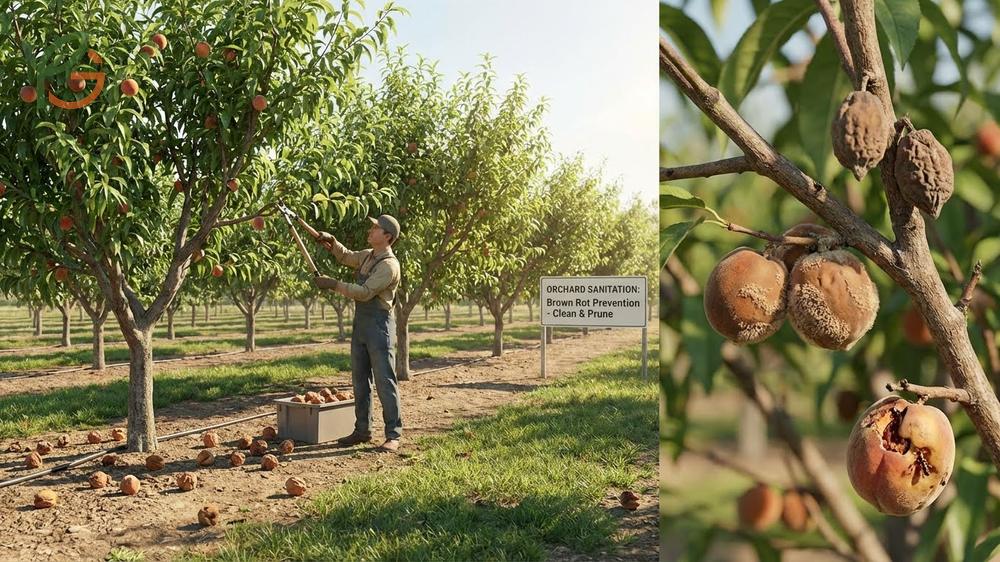
Prevention strategies reduce disease pressure before fungicides are needed. Current data indicates that orchards implementing comprehensive sanitation programs cut brown rot incidence by 60-70% compared to fungicide-only approaches. The most effective prevention combines removing inoculum sources, improving airflow, and managing insect damage.
Evidence suggests that environmental manipulation through pruning and spacing significantly impacts disease development. Open tree canopies dry faster after rain or dew, shortening the wetness periods that fungal spores require for germination. Commercial orchards with proper tree architecture consistently show lower infection rates.
Sanitation Practices
Removing mummified fruit eliminates up to 90% of overwintering spores. Collect all ground-fallen and tree-hanging mummies during dormant pruning in late winter. Destroy them by burning, deep burial (at least 12 inches), or hot composting at temperatures exceeding 140°F (60°C)[5].
During the growing season, promptly remove any fruit showing rot symptoms. Don’t leave infected fruit under trees where spores continue multiplying. Scout orchards twice weekly from pit hardening through harvest, removing diseased fruit immediately.
- Late winter (dormant season): Remove all mummies from trees and ground, prune out cankered twigs
- Early spring (bloom to petal fall): Remove blighted blossoms and wilted shoots promptly
- Late spring through summer: Collect and destroy dropped fruit weekly
- Preharvest period: Scout twice weekly, remove rotting fruit before spores form
- Post-harvest: Clean up all unharvested and dropped fruit within 48 hours
Cultural Controls
Proper pruning opens tree canopies to sunlight and air movement. Aim for vase-shaped or open-center structures that allow wind to pass through branches. Remove crowded, crossing, or inward-growing limbs during dormancy. Better airflow reduces leaf wetness duration by 30-50%.
Thin fruit early so peaches don’t touch each other at maturity. Contact between fruit creates microclimates with extended moisture retention, allowing brown rot to jump from infected to healthy fruit. Space peaches 6-8 inches apart by late May.
Managing insects and birds prevents entry wounds that brown rot exploits. Plum curculio, oriental fruit moth, and bird pecks create openings for fungal invasion. Use appropriate insecticides (avoiding bloom period) and netting to minimize damage.
Timing Tip: Fruit become most susceptible to brown rot during the final 21 days before harvest as sugars accumulate and skin softens. Intensify monitoring and fungicide protection during this critical window when infection spreads most rapidly.
Organic Peach Fungicide Options
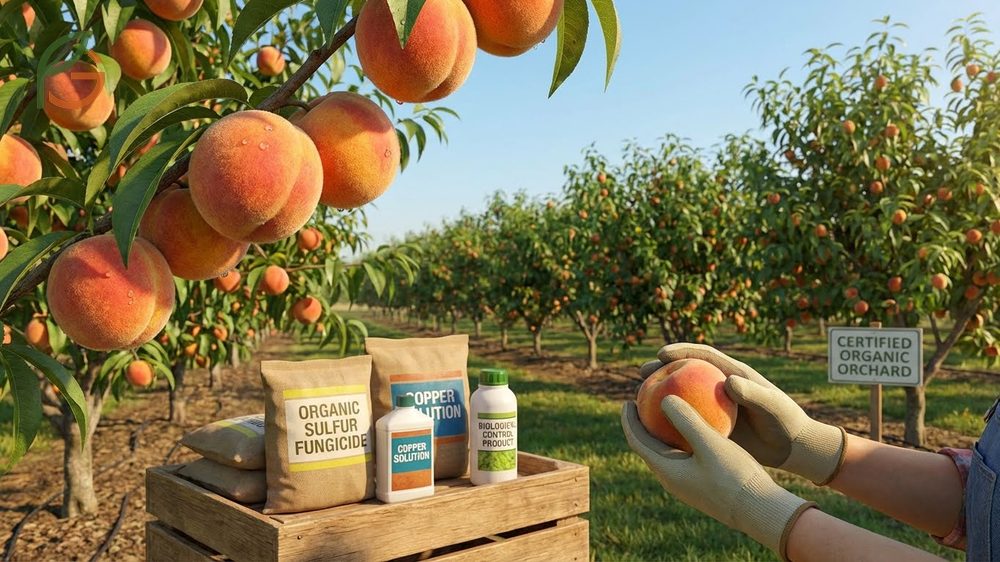
Organic brown rot control relies heavily on sulfur, copper, and biological products. While less effective than synthetic fungicides under high disease pressure, organic materials provide acceptable protection when combined with rigorous sanitation and cultural practices. Studies show organic orchards maintain profitable yields by emphasizing prevention over reactive spraying.
Sulfur-based fungicides serve as the foundation of organic brown rot programs. Lime sulfur applied during dormancy reduces overwintering inoculum on bark and twigs. Switch to wettable sulfur or micronized sulfur formulations from bloom through harvest[5].
Copper fungicides work best during dormancy and at bud swell. Don’t apply copper after bloom because it can damage fruit finish and cause russeting. Copper hydroxide formulations cause less phytotoxicity than copper sulfate on peaches.
Biological fungicides containing Bacillus subtilis show promise for postharvest brown rot suppression. Research demonstrates that B. subtilis strains colonize fruit surfaces and compete with Monilinia fructicola, reducing infection by 40-60% in trials. However, biological products work best as supplements to sulfur programs rather than standalone treatments.
- Lime sulfur: dormant season application, 3-5% solution, spray all bark and twigs thoroughly
- Wettable sulfur: bloom through harvest, every 7-14 days, don’t apply above 85°F (29°C)
- Copper hydroxide: dormant to bud swell only, stop before bloom to avoid fruit damage
- Bacillus subtilis: preharvest and postharvest, apply 1-2 days before expected harvest
- Potassium bicarbonate: contact fungicide, mix with horticultural oil, weekly applications
Temperature Warning: Don’t apply sulfur when temperatures exceed 85°F (29°C) or within 2 weeks of oil sprays. High heat causes phytotoxic reactions that burn foliage and damage fruit. Check 3-day forecasts before sulfur applications.
Peach Brown Rot Treatment Schedule
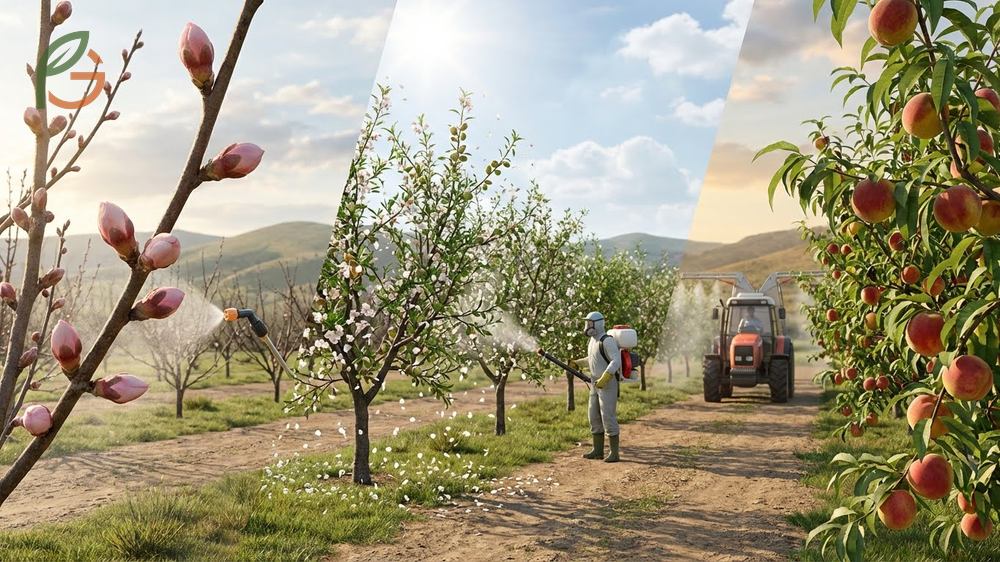
A season-long treatment schedule coordinates fungicide applications with peach phenology and infection risk periods. The schedule below represents a typical program for home orchards, adjusting spray intervals based on rainfall and disease pressure.
Start at pink bud stage when flower buds show color but haven’t opened. This protects blossoms from primary infections. The most critical sprays occur at petal fall (shuck-split) and during the three weeks before harvest when fruit sugars increase susceptibility.
This table outlines fungicide application timing from dormancy through harvest, showing growth stage, infection risk level, recommended products, and spray intervals for effective brown rot management on peaches
| Growth Stage | Timing | Infection Risk | Recommended Product | Spray Interval |
|---|---|---|---|---|
| Dormant | Late winter | Low | Lime sulfur or copper | Single application |
| Pink bud | Buds show color | Moderate | Captan or sulfur | 7-10 days |
| Bloom | 25-75% open flowers | High | Captan (no insecticides) | 5-7 days if wet |
| Petal fall | Shuck-split stage | Very High | Propiconazole or captan | 7 days |
| Fruit development | Pit hardening to sizing | Moderate | Sulfur or captan | 10-14 days |
| Preharvest | 21 days before picking | Very High | Myclobutanil or captan | 5-7 days |
| Final spray | 1-3 days before harvest | Extreme | Product with 0-1 day PHI | Single application |
Adjust this schedule based on weather patterns. Rainy springs require more frequent bloom sprays (every 5 days) to maintain protection. Dry summers allow extending mid-season intervals to 14-21 days. Always reapply if rain falls within 24 hours of spraying.
For organic programs, substitute sulfur for captan and eliminate synthetic products like propiconazole and myclobutanil. Organic schedules demand stricter adherence to sanitation since fungicide options are less effective under heavy disease pressure.
Conclusion
The evidence is clear: brown rot on peaches requires integrated management combining sanitation, cultural practices, and timely fungicide applications to prevent the devastating losses this disease causes. Research across university extension programs demonstrates that orchards implementing comprehensive strategies maintain brown rot below economically damaging thresholds even during wet seasons. Success depends on starting fungicide programs at bloom rather than waiting for visible fruit symptoms, removing all mummified fruit and cankered wood during winter, and intensifying spray coverage during the critical 21-day preharvest period.
Current guidance emphasizes resistance management through fungicide rotation and maximizing non-chemical controls to reduce spray dependence. FruitGarden encourages home orchardists to prioritize sanitation and pruning as foundation practices, using fungicides strategically during high-risk periods rather than calendar-based schedules. With proper timing and attention to cultural details, you can grow high-quality peaches while minimizing both disease losses and chemical inputs.
Frequently Asked Questions
What causes brown rot on peach trees?
Brown rot is caused by the fungus Monilinia fructicola, which survives winter in mummified fruit and infected twigs. Spores spread via wind and rain to infect blossoms, shoots, and fruit during warm, wet weather between 68-77°F (20-25°C). The pathogen requires 4-6 hours of continuous moisture on plant surfaces to germinate and establish infections.
Can you eat peaches with brown rot?
No, don’t eat peaches affected by brown rot. While Monilinia fructicola isn’t known to produce toxins harmful to humans, the rotted tissue harbors secondary bacteria and molds that can cause digestive issues. Additionally, the fungus rapidly breaks down fruit tissue, creating off-flavors and unpleasant textures. Remove and destroy infected fruit to prevent disease spread.
How do you treat brown rot on peach trees organically?
Organic brown rot treatment relies on sulfur fungicides combined with excellent sanitation. Apply lime sulfur during dormancy, then switch to wettable sulfur from bloom through harvest at 7-14 day intervals. Remove all mummified fruit and prune out infected twigs in winter. Thin fruit so peaches don’t touch, and maintain open canopy structure for rapid drying after rain or dew.
When should I spray for brown rot on peaches?
Start spraying when flower petals begin falling (shuck-split stage) and continue every 7-10 days through harvest. The two most critical periods are bloom (to prevent blossom blight and twig cankers) and the 21 days before harvest when ripening fruit becomes highly susceptible. Increase spray frequency to 5-7 days during wet weather or humid conditions.
What’s the best fungicide for peach brown rot?
Captan provides excellent broad-spectrum protection throughout the season for home orchards. For organic growers, sulfur-based products work best when applied preventatively. Reserve systemic fungicides like myclobutanil (Immunox) or propiconazole for high-pressure periods, especially the preharvest window. Rotate between different chemical classes to prevent resistance development.
Does brown rot spread after harvest?
Yes, brown rot spreads aggressively after harvest, especially when peaches are stored at room temperature. Research shows over 60% of harvested fruit can rot within 5 days under favorable conditions. Refrigerate peaches immediately at 32-35°F (0-2°C) to slow fungal growth. Don’t store damaged or symptomatic fruit with healthy peaches since the disease jumps between touching fruit.
How do you prevent brown rot from overwintering?
Remove all mummified fruit from trees and the ground during dormant season pruning (late winter). Prune out cankered or dead twigs, cutting at least 4-6 inches below visible damage. Destroy collected mummies by burning, deep burial, or hot composting above 140°F (60°C). Apply dormant lime sulfur spray to kill overwintering spores on bark. These sanitation practices eliminate up to 90% of spring inoculum.





