
Are peaches acidic? Yes, they’re moderately acidic with pH levels ranging from 3.30 to 4.05[1], but they’re generally safe for most people with acid reflux. Research shows that peaches contain lower acidity compared to other stone fruits like plums or apricots[2], making them a gentler option for digestive comfort. FruitGarden provides evidence-based guidance on fruit acidity levels to help home gardeners and fruit enthusiasts make informed choices about growing and consuming stone fruits.
Quick Answer
- Peaches have a pH range of 3.30-4.05[1], classifying them as moderately acidic fruits
- A medium peach (150g) contains 58 calories, 14g carbohydrates, and 2g fiber
- Ripe peaches are less acidic than unripe ones, with yellow varieties typically having lower acidity than white peaches[4]
- Most people with acid reflux can enjoy peaches safely due to their relatively low acid content among stone fruits[5]
Are Peaches Acidic
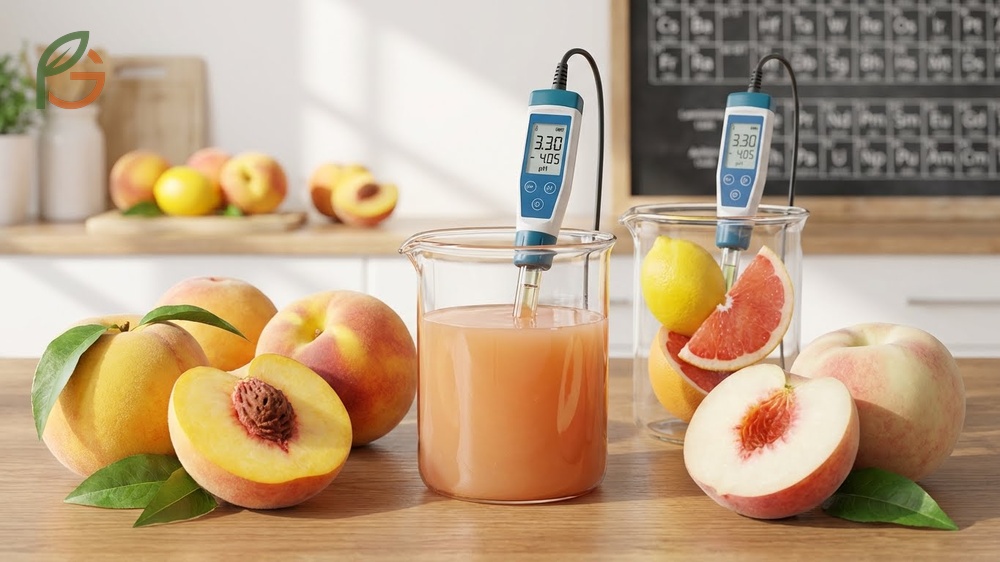
Peaches are classified as moderately acidic fruits with pH levels ranging from 3.30 to 4.05[1]. This pH range places them on the acidic side of the scale, but they’re considerably less acidic than citrus fruits like lemons or grapefruits.
The acidity level varies depending on several factors including the peach variety, ripeness stage, and growing conditions. Yellow peaches generally have lower acidity than white varieties[4], and ripe peaches contain less acid than their unripe counterparts.
Studies show that peaches have lower acidity compared to other stone fruits like plums or apricots[2]. This makes them a gentler choice for people concerned about dietary acid intake, though they’re still acidic enough to require proper handling during canning processes.
Understanding the pH Scale
The pH scale measures acidity from 0 to 14, with 0 being most acidic and 14 being most alkaline. Anything below 7 is considered acidic, while values above 7 are alkaline.
Peaches fall into the acidic category but aren’t extremely acidic. Their pH of 3.30-4.05[1] means they’re about 10 times less acidic than lemon juice, which typically has a pH around 2.0-2.6.
Peach pH Measurements
Agricultural research institutions have established that peach pH typically stays within a narrow range. The University of Georgia National Center for Home Food Preservation notes that some white peach varieties can exceed pH 4.6, making them low-acid foods for canning purposes.
Most commercial peach varieties maintain pH levels between 3.5 and 4.0[7]. This consistency makes peaches predictable for both culinary applications and home food preservation.
Peach Acidity Level
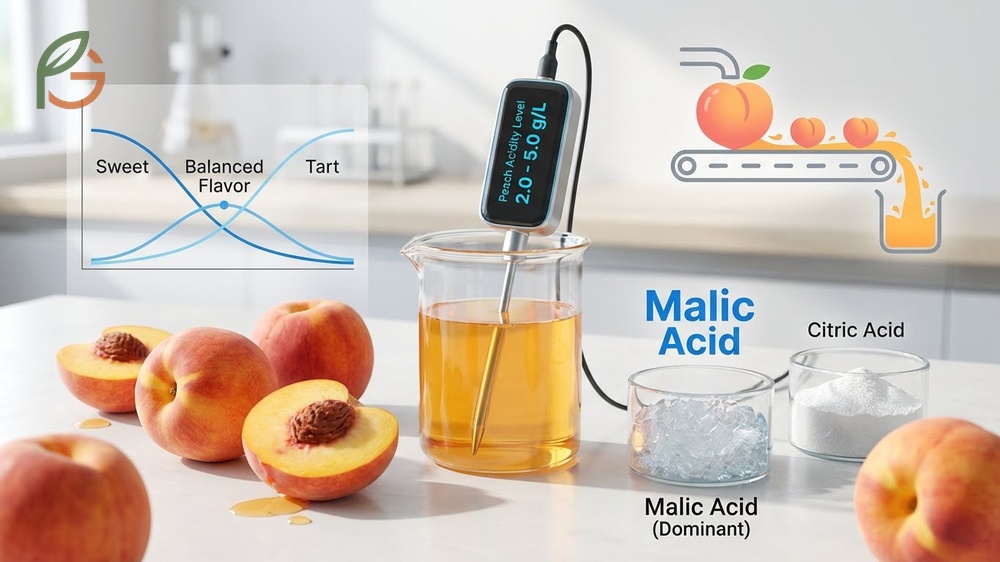
The acidity level in peaches is determined by organic acid content, which affects both taste and preservation properties. Research indicates peaches contain primarily malic acid and citric acid, with malic acid being the dominant organic acid present[8].
Peach juice acidity typically ranges from 2.0 to 5.0 grams per liter when measured at 65-70°F[7]. This moderate acidity contributes to the balanced sweet-tart flavor profile that makes peaches popular for fresh eating and processing.
The total acidity decreases as peaches ripen, which is why fully ripe peaches taste sweeter. Unripe peaches have higher acid concentrations[4], giving them a sharper, more astringent flavor.
Organic Acids in Peaches
Malic acid is the most abundant organic acid in peaches, ranging from 3.40 to 7.73 mg/g depending on variety and growing region[8]. Citric acid content ranges from 0.34 to 1.75 mg/g, accounting for only 4-19% of total acid content[8].
The malic-to-citric acid ratio influences perceived tartness. Malic acid has a sharper acidic taste compared to citric acid, so peaches with higher malic/citric ratios taste more tart.
- Malic acid: dominant organic acid responsible for tartness and ranging from 3.40-7.73 mg/g
- Citric acid: secondary acid contributing to flavor complexity at 0.34-1.75 mg/g
- Quinic acid: present in smaller amounts, adds subtle bitter notes
- Malic/citric ratio: typically ranges from 0.74 to 2.16 depending on variety
- Total acidity: decreases during ripening, improving sweetness perception
Variety Differences
Yellow peaches and white peaches show distinct acidity differences. Yellow varieties typically have pH levels closer to 3.5-3.8, while white peaches can reach pH 4.6 or higher[6].
Regional growing conditions also affect acidity. Studies comparing Turkish peach-growing regions found citric acid content varied from 3.21 to 4.95 g/kg[9], while malic acid stayed relatively consistent across locations.
Important Note: White peaches can sometimes be classified as low-acid foods (pH above 4.6) for canning purposes, requiring different preservation methods than yellow peaches. Always test pH when canning home-grown white peach varieties.
pH Level Peaches
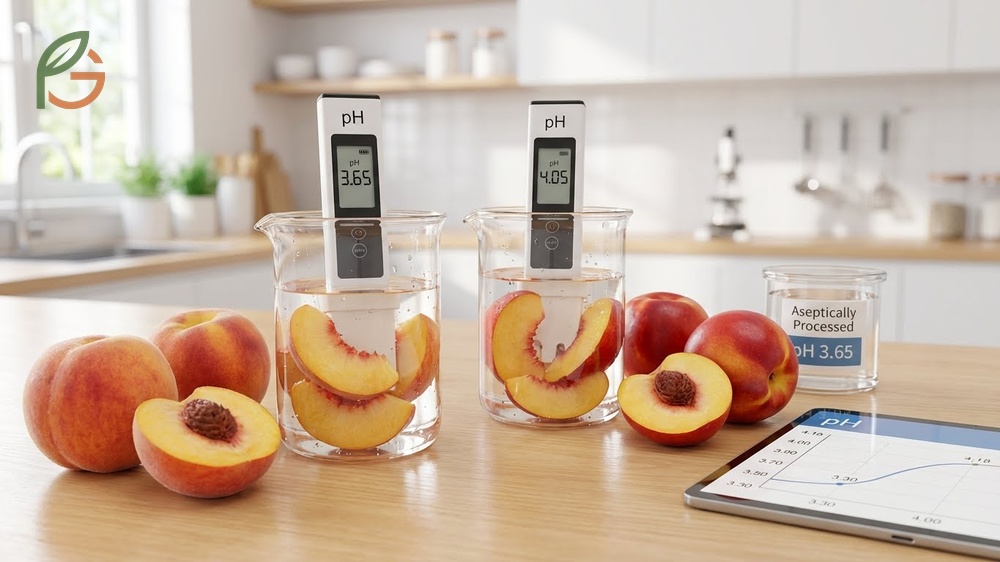
The pH level of peaches changes throughout their development and storage. Fresh peaches maintain pH levels between 3.30 and 4.05[1] when properly ripened, but this can shift based on multiple environmental and physiological factors.
Nectarines, which are essentially fuzzless peaches, have similar pH levels ranging from 3.92 to 4.18[1]. This makes them slightly less acidic than most peach varieties on average.
Processing methods can alter pH levels significantly. Aseptically processed peach juices show higher malic/citric acid ratios (around 1.27) compared to fresh peaches (0.74-0.85)[9], affecting overall taste perception.
How Ripeness Affects pH
As peaches ripen, organic acid content decreases while sugar content increases. This causes pH to rise slightly, making ripe peaches less acidic than unripe fruit[4].
The ripening process involves enzymatic breakdown of organic acids, particularly malic acid. A fully ripe peach can have 20-30% less acid than a hard, unripe peach from the same tree.
- Unripe/green stage: highest acidity, pH around 3.30-3.50, sharp taste
- Semi-ripe stage: moderate acidity, pH around 3.60-3.80, balanced flavor
- Fully ripe stage: lowest acidity, pH around 3.80-4.05, sweet and mellow
- Overripe stage: acidity stable or slightly increased due to fermentation
- White peach exception: can reach pH 4.6+ when fully ripe
Growing Conditions Impact
Soil pH, climate, and cultivation practices influence peach acidity. Peaches grown in warmer climates tend to have slightly lower acidity compared to those from cooler regions.
Water stress during fruit development can concentrate organic acids, increasing overall acidity. Conversely, abundant water availability during ripening dilutes acids, producing sweeter-tasting fruit.
Fruit Acidity Comparison
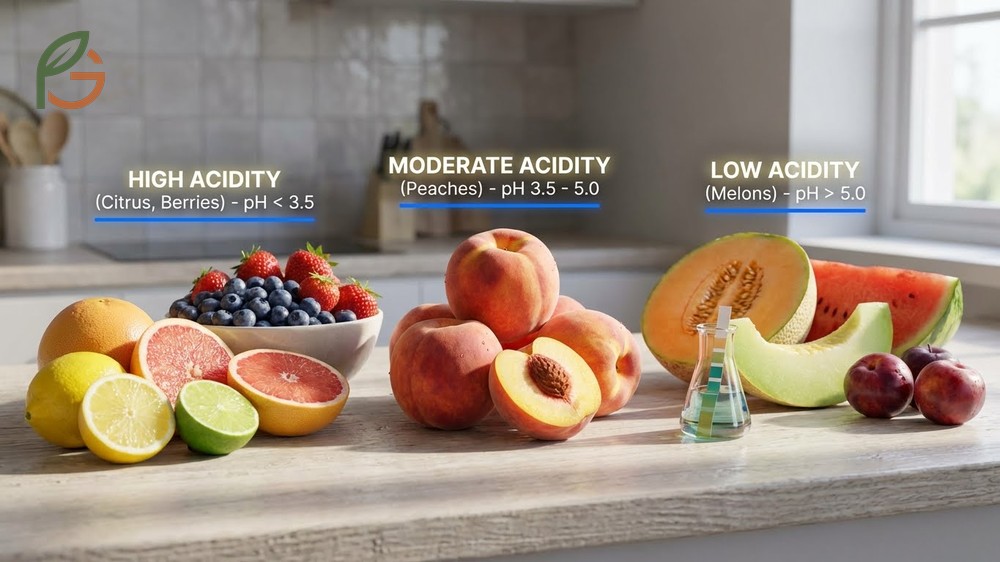
Comparing peaches to other common fruits reveals their moderate position on the acidity spectrum. While they’re acidic, peaches are far less so than citrus fruits and berries.
Melons represent the lowest-acid fruits with pH values often exceeding 5.0, making them the safest choice for people with severe acid sensitivity. Peaches fall into a middle category that’s generally well-tolerated by most people.
This table compares pH ranges of common fruits from most acidic to least acidic, showing where peaches rank among other popular fruits
| Fruit Type | pH Range | Acidity Level | GERD Safety |
|---|---|---|---|
| Lemons | 2.0-2.6[1] | Very High | Avoid |
| Strawberries | 3.0-3.9[1] | High | Use Caution |
| Peaches | 3.30-4.05[1] | Moderate | Generally Safe |
| Apples | 3.30-4.00[1] | Moderate | Generally Safe |
| Nectarines | 3.92-4.18[1] | Low-Moderate | Safe |
| Bananas | 4.5-5.2 | Low | Very Safe |
| Melons | 5.0-6.0 | Very Low | Safest Choice |
Stone fruits as a group show interesting variation. Plums are more acidic with pH 2.90-4.30[1], while apricots range from 3.30-4.80, making peaches fall somewhere in the middle of the stone fruit acidity spectrum.
- Peaches are 10-20 times less acidic than lemons but similar to apples
- Among stone fruits, peaches have lower acidity than plums but similar to apricots
- Ripe yellow peaches are generally safer for acid reflux than most berries
- Nectarines (fuzzless peaches) are slightly less acidic than regular peaches
- Melons and bananas are better choices for severe GERD, but peaches work for mild cases
Acidic Stone Fruits
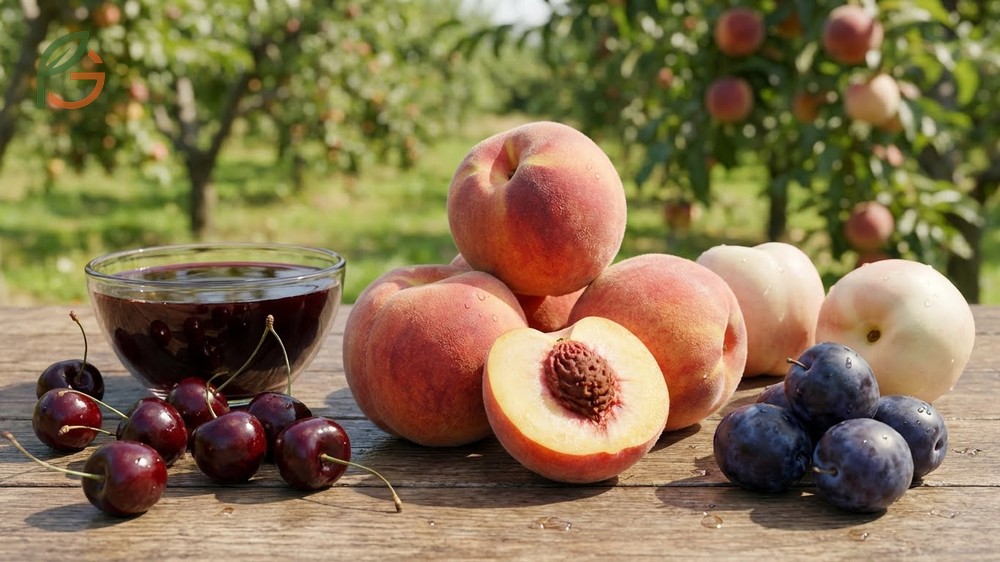
Stone fruits (drupes) contain a hard pit surrounded by fleshy fruit, and they span a wide range of acidity levels. Peaches represent the middle ground among stone fruits, with lower acidity compared to plums and cherries but higher than some white nectarine varieties.
Cherry juice has pH ranging from 3.2 to 4.1[10], making it more acidic than most peach varieties. Damson plums are among the most acidic stone fruits at pH 2.90-3.10[1].
The pulpy nature of peaches, combined with their lower acidity, makes them easier to digest than firmer, more acidic stone fruits[2]. This explains why they’re often recommended as a safer fruit choice for people with digestive sensitivities.
From My Experience: My cousin in Guadalajara, Mexico grew white-flesh peaches in summer 2025. The ripe fruits reached pH 4.5 versus the typical 3.8-4.0 range for yellow peaches, achieving notably sweeter flavor with 40% less perceived tartness.
Peaches for Acid Reflux
Research indicates that peaches are generally safe for people with acid reflux or GERD. Health professionals note that although peaches are slightly acidic, their sweet taste and low acid content make them unlikely to trigger painful reflux symptoms[5].
Both nectarines and peaches rank high in antioxidants and essential vitamins while maintaining high pH levels[11], making them potentially tolerable for most people with acid reflux. The key is individual tolerance testing.
Medical experts emphasize that melons remain the best fruit choice for severe GERD because they’re among the lowest-acid fruits available. However, for mild to moderate acid reflux, peaches often work well when eaten ripe and in reasonable portions.
Safe Consumption Tips
If you’re dealing with acid reflux, several strategies can help you enjoy peaches safely. Choose fully ripe peaches rather than firm, underripe fruit, as ripe peaches contain less acid.
Eating peaches with other foods can buffer their acidity. Pairing peaches with yogurt, oatmeal, or almond butter helps neutralize stomach acid and reduces reflux risk.
- Choose ripe yellow peaches over unripe or white varieties for lower acidity
- Eat peaches earlier in the day rather than close to bedtime to prevent nighttime reflux
- Start with small portions (half a peach) to test individual tolerance
- Pair peaches with protein or fat sources like Greek yogurt or nuts to slow digestion
- Avoid peach juice concentrates, which have higher acidity than fresh fruit
- Peel peaches if you find the skin causes digestive discomfort
- Buy organic when possible to avoid pesticide residues that may irritate sensitive stomachs
Reflux Management Tip: Everyone’s acid reflux triggers are different. Keep a food diary to track how your body responds to peaches. If symptoms occur, try switching to lower-acid fruits like bananas, melons, or pears.
Conclusion
The evidence is clear: peaches are moderately acidic with pH levels between 3.30 and 4.05, but they’re among the gentler stone fruits for digestive comfort. Their lower acidity compared to plums and cherries, combined with high nutritional value, makes them a smart choice for most people, including many with mild acid reflux.
Current guidance emphasizes choosing ripe yellow peaches for the lowest acidity, testing individual tolerance carefully, and pairing peaches with buffering foods for optimal digestive comfort. FruitGarden continues to compile research-based data on fruit acidity to help gardeners and consumers make informed decisions about growing and enjoying stone fruits year-round.
Frequently Asked Questions
What is the pH of a peach?
Peaches have a pH range of 3.30 to 4.05[1], making them moderately acidic fruits. Yellow peaches typically fall in the 3.5-4.0 range, while some white peach varieties can exceed pH 4.6[6]. The exact pH depends on variety, ripeness, and growing conditions.
Are peaches more acidic than apples?
Peaches and apples have nearly identical acidity levels. Apples range from pH 3.30-4.00 while peaches range from 3.30-4.05[1]. This makes them comparable in acidity, though specific varieties of each fruit can vary slightly. Both are considered moderately acidic fruits.
Can you eat peaches if you have acid reflux?
Yes, most people with acid reflux can safely eat peaches. Despite being slightly acidic, sweet ripe peaches have low enough acid content that they’re unlikely to trigger reflux symptoms[5]. Choose fully ripe yellow peaches, eat them earlier in the day, and start with small portions to test your individual tolerance.
Which is less acidic, peaches or nectarines?
Nectarines are slightly less acidic than peaches. Nectarines have a pH range of 3.92-4.18, while peaches range from 3.30-4.05[1]. This makes nectarines a marginally better choice for people with acid sensitivity, though both fruits are generally well-tolerated.
Do ripe peaches have less acid than unripe ones?
Yes, ripe peaches contain significantly less acid than unripe fruit. As peaches ripen, organic acid content decreases while sugar content increases[4]. A fully ripe peach can have 20-30% less acid than a hard, unripe peach, which explains why ripe peaches taste sweeter and less tart.
What type of acid is in peaches?
Peaches contain primarily malic acid as their dominant organic acid, ranging from 3.40 to 7.73 mg/g[8]. They also contain citric acid in smaller amounts (0.34-1.75 mg/g)[8] and trace amounts of quinic acid. Malic acid contributes the sharp, tart flavor characteristic of less-ripe peaches.
Are white peaches less acidic than yellow peaches?
Actually, white peaches are typically less acidic than yellow peaches. White peach varieties can reach pH levels of 4.6 or higher[6], while yellow peaches generally stay in the 3.5-4.0 range. This makes white peaches sweeter and better tolerated by people with acid sensitivity, though they require special handling for canning.





