
How to eat passion fruit? Simply cut it in half with a sharp knife and scoop out the juicy flesh and edible seeds with a spoon.[1] The seeds are completely safe to eat and provide valuable fiber and healthy fats that boost the fruit’s nutritional benefits.[2] FruitGarden brings you evidence-based guidance on selecting, preparing, and enjoying this tropical fruit like a pro.
Quick Answer
- Cut passion fruit crosswise along its equator with a sharp knife
- One fruit contains just 17 calories and 2g fiber[3]
- Scoop pulp and seeds together—don’t separate them
- Wrinkled skin signals peak ripeness and sweetness[4]
How to Eat Passion Fruit
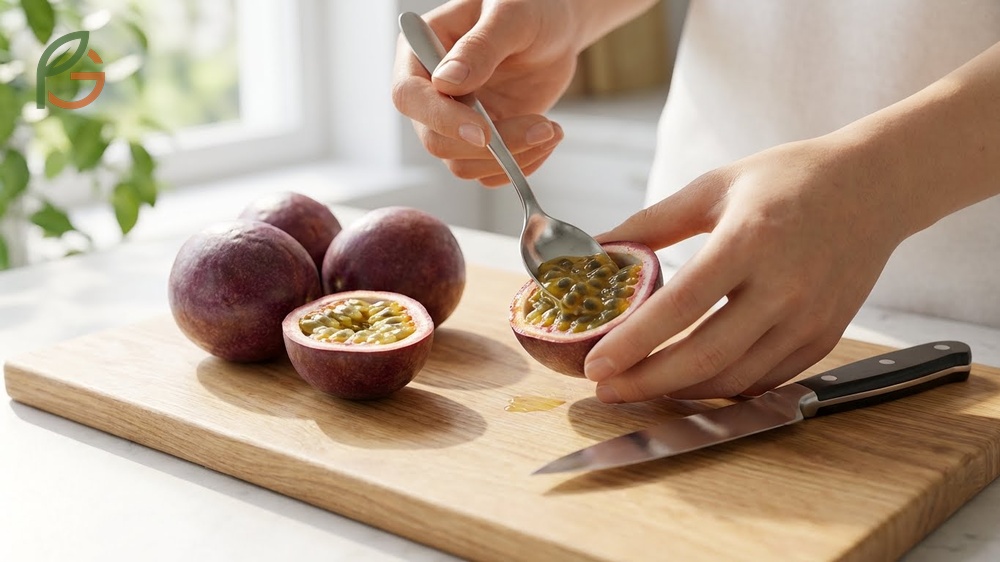
Research shows the simplest approach delivers the best experience—no fancy tools needed. You’ll cut the fruit in half and eat everything inside with a spoon. The entire process takes less than a minute once you know the technique.
Studies demonstrate that eating passion fruit with its seeds provides 55% dietary fiber content from the seeds alone.[5] This combination supports digestive health better than straining the juice. Most people find the crunchy texture adds an enjoyable contrast to the juicy pulp.
Current guidance emphasizes keeping preparation minimal to preserve nutrients. Vitamin C content reaches 30mg per 100g,[6] but it degrades quickly when exposed to air. You’re better off eating it fresh rather than processing it.
Cutting Technique
Position the fruit on a cutting board with the stem end facing up. Use a sharp knife to slice straight through the middle, cutting perpendicular to the stem—this is called cutting along the equator.[1] A serrated knife works best for the tough outer skin.
You’ll see the golden-yellow pulp and black seeds immediately. Don’t worry if some juice drips—it’s perfectly normal. What often gets overlooked is that wrinkled skin actually makes cutting easier since the fruit’s softer at peak ripeness.
Spoon Method
Grab a small spoon and scoop straight from the skin into your mouth. The entire contents—pulp, juice, and seeds—come out together in one satisfying bite. This traditional method lets you control portion size and enjoy the fruit’s natural presentation.
For recipes requiring just the juice, scoop the contents into a fine mesh strainer over a bowl. Press gently with the back of a spoon to extract liquid while leaving seeds behind. However, you’ll lose valuable nutrients this way—the seeds contain heart-healthy polyunsaturated fatty acids.[5]
Alternative Straw Method
Push a wide straw into the uncut fruit and wiggle it to ensure proper placement. Suck through the straw to draw up the pulp and seeds together. This technique reduces mess considerably compared to cutting, especially when you’re eating on the go.
The straw needs adequate diameter—standard cocktail straws work better than regular drinking straws. You’ll get the full nutritional benefit since everything comes up through the straw. What matters here is that you’re consuming the whole fruit without leaving nutrients behind.
Important Note: Don’t eat the outer skin or the white pith underneath. Only the yellow-orange pulp and black seeds inside are edible.
Eating Passion Fruit Guide
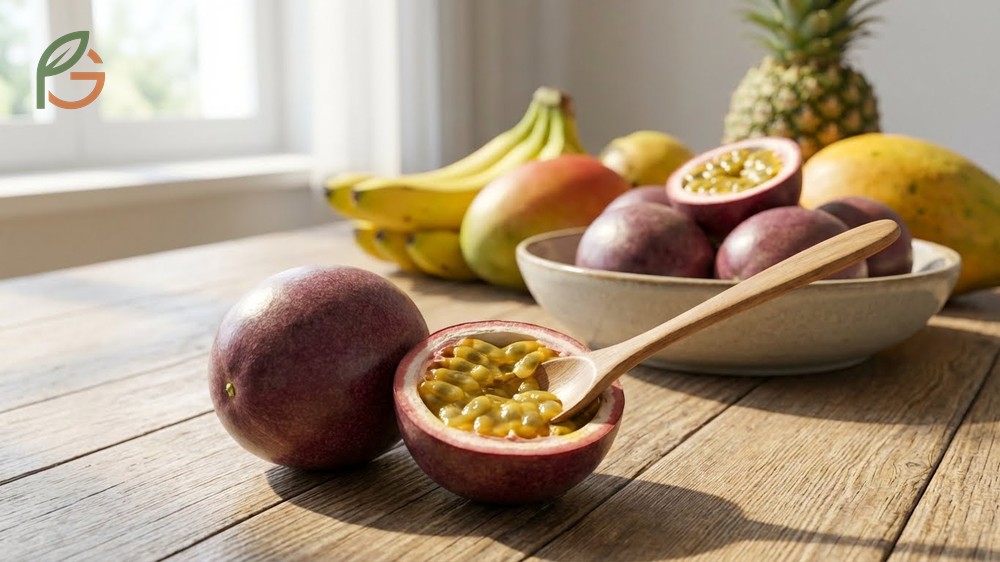
Evidence indicates that consuming the whole fruit maximizes health benefits. Research from multiple studies confirms passion fruit ranks higher in polyphenol content than bananas, lychees, mangoes, papayas, and pineapples.[7] You’re getting antioxidant protection that rivals much more expensive superfoods.
Current data indicates one fruit provides multiple essential nutrients in a low-calorie package. The 97 calories per 100g[8] makes it suitable for weight management. The glycemic index of 30[8] classifies it as low-GI, meaning it won’t spike blood sugar levels rapidly.
Most people don’t realize timing matters for maximum nutrient absorption. Vitamin C works synergistically with iron, so pairing passion fruit with iron-rich foods enhances absorption. You’ll get better results eating it with breakfast alongside eggs or fortified cereals.
Eating the Seeds
The seeds are completely safe and highly nutritious. They contain protein, minerals, and healthy fats that support cardiovascular function.[2] Research suggests compounds in passion fruit seeds help relax and widen blood vessels, adding cardiovascular benefits beyond basic nutrition.
You can chew them or swallow them whole—both approaches work fine. The crunchy texture provides satisfying contrast to the slippery pulp. If you’re making juice or smoothies, blending the seeds releases their nutritional content more effectively.
- Seeds provide dietary fiber that promotes healthy digestion and regular bowel movements
- Polyunsaturated fatty acids in seeds support heart health and reduce inflammation
- Chewing seeds releases oils and maximizes nutrient absorption
- Swallowing whole still delivers fiber benefits through digestive action
- Blending breaks down seed walls, making nutrients more bioavailable
Nutritional Benefits
Agricultural data shows passion fruit delivers impressive nutrition density. Every 100g provides 10g fiber,[9] which is 42% of daily value.[9] This fiber content exceeds most common fruits by a wide margin.
Vitamin A content reaches 8% of daily needs in a single serving,[2] supporting eye health and immune function. The fruit also provides potassium, calcium, magnesium, phosphorus, and folate—all essential for kidney, nerve, muscle, and heart health.
This table compares key nutrients in passion fruit per 100g serving including calories, macronutrients, fiber, and select vitamins with their daily value percentages
| Nutrient | Amount per 100g | Daily Value % | Primary Benefits |
|---|---|---|---|
| Calories | 97 kcal[8] | 5% | Low-calorie snack option |
| Dietary Fiber | 10g[9] | 42% | Digestive health, satiety |
| Vitamin C | 30mg[6] | 33% | Immune support, antioxidant |
| Vitamin A | 1274 IU | 15% | Eye health, immunity |
| Potassium | 348mg[9] | 10% | Heart function, blood pressure |
Prepare Passion Fruit
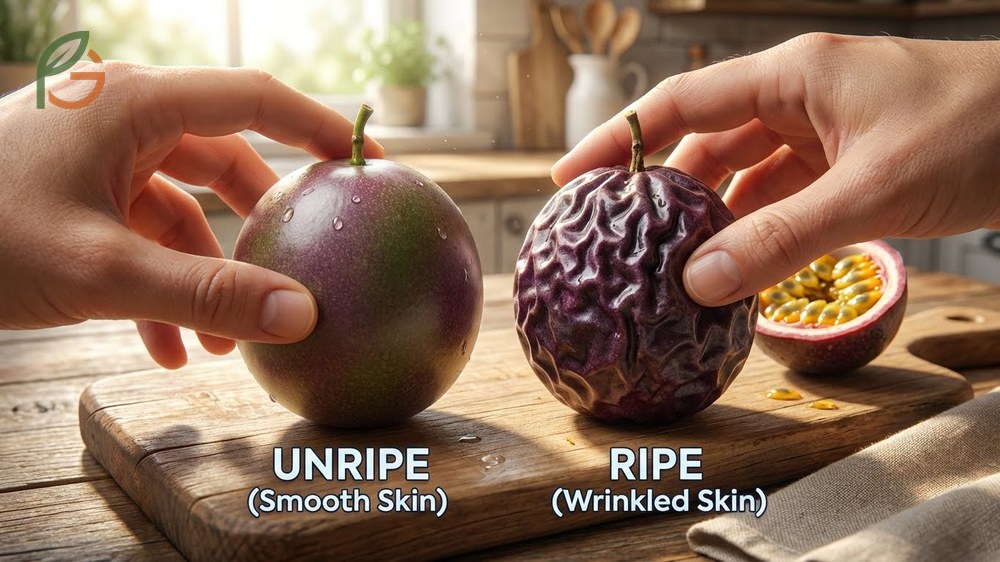
Proper selection makes the difference between disappointing and delicious. Unlike most fruits, smooth skin indicates unripeness in passion fruit. You want the opposite—heavily wrinkled, almost shriveled appearance signals optimal flavor and sweetness.[4]
Post-harvest dehydration causes the skin to wrinkle naturally. This process concentrates sugars and intensifies flavor, making wrinkled fruit sweeter than smooth specimens. The skin should feel slightly soft when you press it gently.
Weight matters more than you’d think. Pick up several fruits and compare—heavier ones contain more juice and pulp. Light fruits have dried out too much or weren’t harvested at the right time.
Selecting Ripe Fruit
Purple and yellow varieties ripen differently, but both follow similar visual cues. Purple passion fruit should display deep, dark coloring with extensive wrinkling. Yellow types show golden hues with wrinkled texture when ready to eat.
Avoid fruits with dark spots, mold, or cracked skin—these indicate overripeness or improper storage. The wrinkles should be natural dehydration lines, not rot-related damage. Fresh passion fruit emits a sweet, tropical aroma when you hold it near your nose.
- Heavily wrinkled skin indicates peak sweetness and readiness to eat[4]
- Smooth, firm skin means the fruit needs more time to ripen
- Heavy weight relative to size suggests high juice content
- Sweet tropical fragrance signals proper ripeness
- Dark purple or golden yellow color depending on variety
- Skin gives slightly when pressed gently
Storage Tips
Store unripe passion fruit at room temperature until wrinkles appear—this takes 3-5 days typically. Once wrinkled, refrigerate them to extend shelf life. Proper storage at 45-50°F (7-10°C) with 85-95% humidity maintains quality for 21-28 days.[4]
You can freeze the pulp for long-term storage. Scoop it into ice cube trays, freeze solid, then transfer to freezer bags. Frozen passion fruit maintains flavor and nutrients for up to 12 months, perfect for smoothies or recipes year-round.
Storage Tip: Don’t refrigerate unripe passion fruit—cold temperatures prevent proper ripening. Keep them on the counter until wrinkled, then move to the fridge.
Best Way Eat
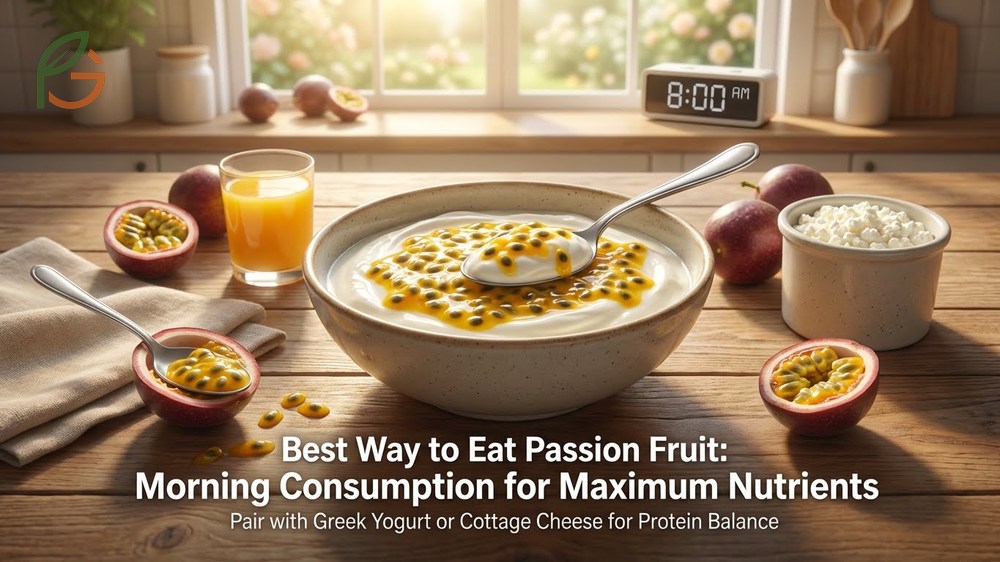
The best consumption method depends on your preference and situation. For maximum nutrient retention and minimal effort, eating fresh with a spoon can’t be beaten. You’re consuming everything the fruit offers without processing losses.
Morning consumption provides the most benefits—vitamin C absorption peaks when taken with breakfast. Pair passion fruit with Greek yogurt or cottage cheese for protein balance. The combination keeps you satisfied for 3-4 hours while delivering complementary nutrients.
For smoothies, blend the whole contents—pulp, seeds, and juice—with frozen bananas and spinach. The seeds add thickness and nutritional density without affecting flavor. If you’re making dessert toppings, scoop the pulp over ice cream, cheesecake, or pavlova. The tart flavor cuts through rich, creamy bases perfectly.
- Mix pulp into morning yogurt or oatmeal for tropical breakfast flavor
- Blend with coconut milk and mango for refreshing smoothies
- Drizzle over vanilla ice cream or panna cotta as elegant dessert sauce
- Stir into cocktails or mocktails for tangy, aromatic complexity
- Spoon over grilled fish or chicken for unexpected sweet-tart glaze
- Add to salad dressings with olive oil and honey for fruity vinaigrette
- Freeze pulp in ice cube trays for convenient smoothie additions
When serving guests, present halved fruits with small spoons on a platter. It creates an interactive experience and looks impressive with minimal effort. For charcuterie boards, passion fruit adds tropical contrast to cured meats, aged cheeses, and pickled vegetables.
Baking applications work well too—strain the juice and reduce it with sugar to create passion fruit curd. Use this spread on toast, fill pastries, or layer in cakes. The concentrated flavor stands up to butter and cream better than fresh pulp.
Conclusion
The evidence is clear: how to eat passion fruit comes down to simple techniques that preserve maximum nutrition. Cut it in half, scoop with a spoon, and eat the seeds alongside the pulp for complete benefits. Wrinkled skin signals peak ripeness, not spoilage—this counterintuitive marker ensures you’re getting the sweetest, most flavorful fruit.
Current guidance emphasizes whole-fruit consumption over juicing to retain fiber and seed nutrients. FruitGarden’s research synthesis shows that passion fruit delivers exceptional vitamin C, fiber, and antioxidants in a low-calorie package that fits any healthy eating pattern.
Frequently Asked Questions
Do you eat the seeds in passion fruit?
Yes, you eat the seeds—they’re completely edible and provide valuable fiber, healthy fats, and minerals. Research shows the seeds contain high levels of polyunsaturated fatty acids that support heart health. You can chew them for a crunchy texture or swallow them whole, and both methods deliver nutritional benefits.
How do you know when passion fruit is ripe?
Ripe passion fruit has heavily wrinkled, almost shriveled skin—the opposite of most fruits. The skin should feel slightly soft when pressed, and the fruit should feel heavy for its size, indicating high juice content. Color should be deep purple or golden yellow depending on variety, with a sweet tropical aroma.
Can you eat passion fruit skin?
No, don’t eat the outer skin or white pith—only the yellow-orange pulp and black seeds inside are edible. The skin is tough, bitter, and indigestible. Simply cut the fruit in half and scoop out only the contents, discarding the skin.
What’s the easiest way to eat passion fruit?
The easiest method is cutting it in half crosswise and scooping the contents directly into your mouth with a small spoon. This takes less than a minute and requires no special equipment. Alternatively, push a wide straw into the uncut fruit and suck out the pulp for a mess-free option.
How many passion fruits should you eat per day?
Two to three passion fruits daily provides excellent nutrition without excessive calories—each fruit contains only 17 calories. This amount delivers substantial vitamin C, fiber, and antioxidants while fitting easily into balanced diets. Listen to your body and adjust based on your calorie needs and dietary goals.
Should you refrigerate passion fruit?
Refrigerate passion fruit only after it becomes wrinkled and ripe. Store ripe fruit at 45-50°F (7-10°C) for up to 3-4 weeks. Unripe passion fruit with smooth skin should stay at room temperature until wrinkles appear, as cold prevents proper ripening.
What does passion fruit taste like?
Passion fruit tastes tart and tangy with subtle tropical sweetness, similar to a blend of citrus, pineapple, and guava. The flavor is complex and aromatic, with natural acidity that balances the sweetness. Ripe, wrinkled fruits taste noticeably sweeter than smooth, unripe specimens.





