
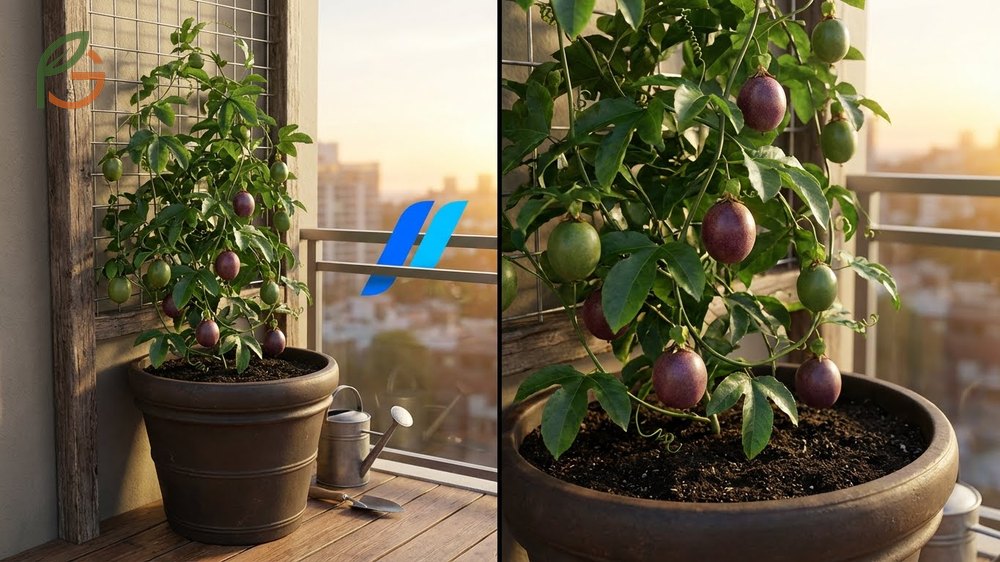
Growing passion fruit in pots isn’t just possible—it’s a practical way to cultivate this tropical vine even in limited spaces. Research shows that container-grown passion fruit thrives when you provide containers at least 20 inches deep, well-draining acidic soil, and sturdy vertical support structures[1]. Most home gardeners don’t realize that these vines can gain 15 to 20 feet of growth in a single year, making trellis planning essential from day one[1]. FruitGarden synthesizes current horticultural research and climate data to help you succeed with potted tropical fruits.
Quick Answer
- Use containers at least 20 inches (50cm) deep and wide with excellent drainage[2]
- Plant in acidic soil with pH 4.5-6.5, mixing potting soil with perlite and compost[1]
- Expect seed germination in 10-20 days at 77-86°F (25-30°C)[3]
- Provide full sun (6+ hours daily) and temperatures of 68-82°F (20-28°C)[4]
Growing Passion Fruit in Pots
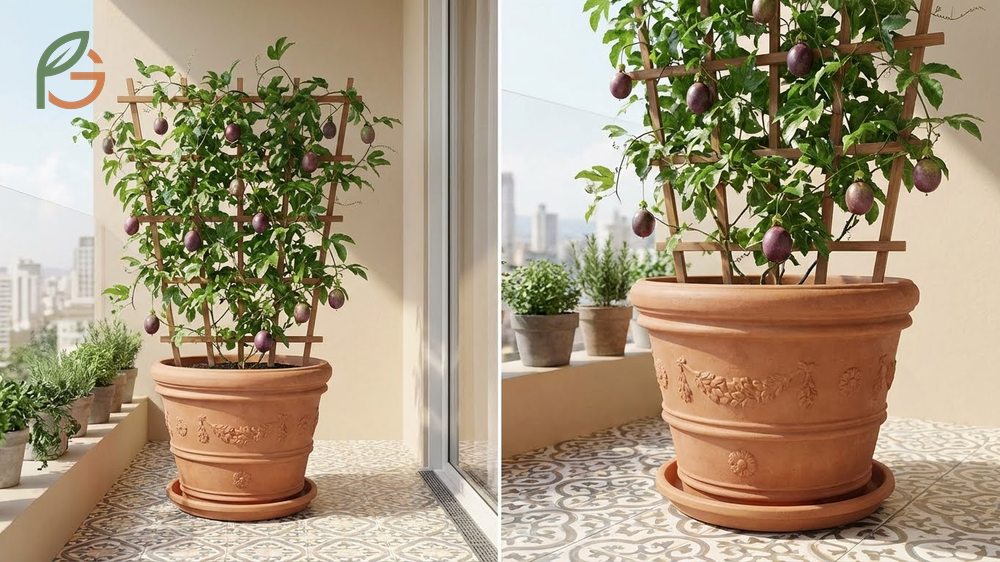
Container cultivation transforms passion fruit growing from a space-intensive project into something manageable for balconies and patios. These vigorous vines adapt remarkably well to pot life when you meet their basic needs for root space and vertical support. The key difference between struggling plants and thriving ones often comes down to container size and drainage quality.
You’ll want to think vertically from the start. Passion fruit vines grow rapidly once established, and they’re natural climbers that need something substantial to grip. Planning your trellis setup before planting saves you from wrestling with established vines later.
From My Experience: My cousin in Guadalajara, Mexico planted a purple passion fruit vine in a 15-gallon pot last March. The vine reached 12 feet by September—hitting the typical 15-20 foot annual growth range[1]—and produced 18 fruits in its first year.
Choosing the Right Container
Container size directly impacts your harvest potential. Studies show that passion fruit develops extensive root systems that need adequate space to support vigorous vine growth and fruit production. A minimum of 20 inches in both depth and width provides the baseline your plant needs[2].
Larger containers generally perform better. Many experienced growers prefer 15 to 20-gallon pots, which hold more soil moisture and buffer temperature fluctuations. Don’t skimp on drainage holes—passion fruit roots rot quickly in waterlogged soil.
- Minimum dimensions of 20 inches deep by 20 inches wide (50cm x 50cm)
- Multiple drainage holes across the container bottom
- Sturdy construction to support 30+ pounds of soil when wet
- Material that won’t overheat roots (avoid black plastic in full sun)
- Placement on pot feet or blocks to ensure water drains freely
Optimal Growing Conditions
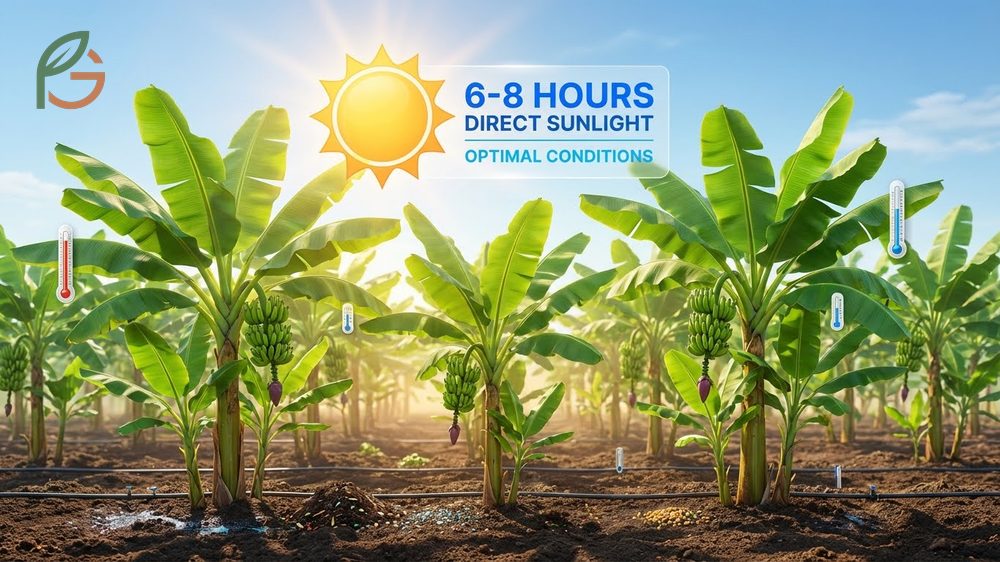
Temperature control becomes critical for container growers. Passion fruit thrives in a narrow temperature band of 68-82°F (20-28°C), and it’s highly sensitive to frost[4]. Container growing offers a major advantage here—you can move plants indoors when temperatures drop below 50°F (10°C).
Light requirements aren’t negotiable. Your passion fruit needs at least 6 hours of direct sunlight daily for healthy flowering and fruit set. Position containers where they’ll receive full morning sun, with some afternoon protection in regions where temperatures regularly exceed 95°F (35°C).
Important Note: Young passion fruit vines are extremely frost-sensitive. Even a light freeze below 32°F (0°C) can kill immature plants, so have a plan to protect or relocate containers during cold snaps.
Growing Passion Fruit from Seed
Starting passion fruit from seed costs considerably less than buying grafted plants, though it adds several months to your timeline. Fresh seeds from healthy fruits germinate most reliably, giving you success rates above 70% when handled properly. The process isn’t complicated, but it requires attention to detail at each stage.
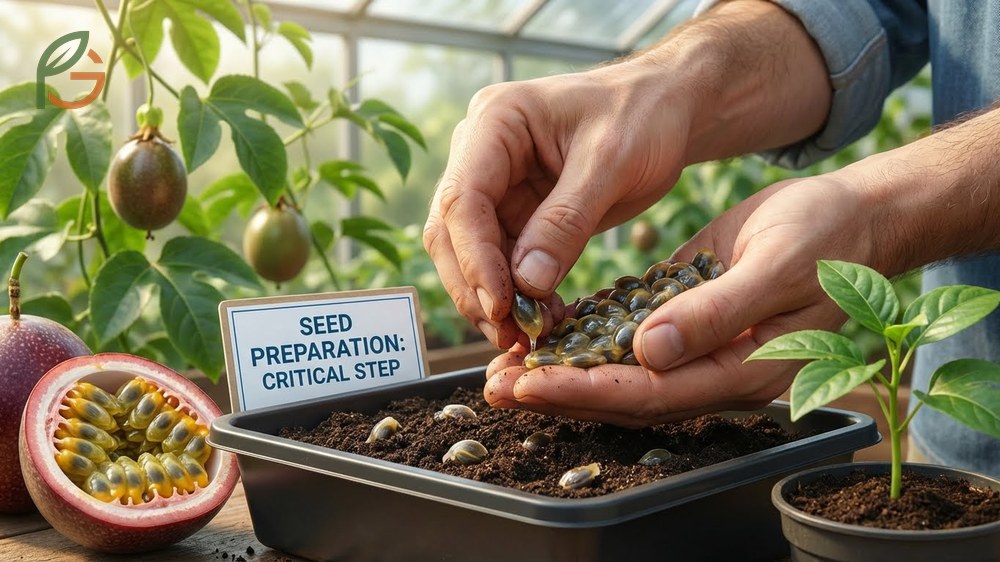
Current propagation research emphasizes seed preparation as the make-or-break factor. Seeds straight from the fruit carry a mucilage coating that inhibits germination. Removing this coating and scarifying the seed coat dramatically improves both germination speed and success rates.
Seed Preparation and Scarification
Extract seeds from ripe, healthy passion fruits and rinse them thoroughly through a fine sieve. The goal is removing all pulp residue while keeping seeds intact. After rinsing, you’ll need to scarify the seed coat—this means carefully rubbing seeds on fine-grit sandpaper or concrete until you see a slight dull patch on the hard outer shell.
Scarification breaks seed dormancy by allowing water to penetrate the protective coating. Research from the University of Florida demonstrates that scarified seeds soaked in water for 24 hours before planting germinate in 10-20 days, compared to 30-60 days for untreated seeds[3].
- Extract seeds from ripe passion fruit and remove all pulp
- Gently rub seeds on fine sandpaper to scarify the seed coat
- Soak scarified seeds in room temperature water for 24 hours
- Plant seeds 1/4 inch deep in seed-starting mix
- Maintain consistent moisture without waterlogging the soil
- Keep trays between 77-86°F (25-30°C) for optimal germination[3]
Germination Timeline
Temperature drives germination speed more than any other factor. Seeds kept at 77-86°F (25-30°C) typically sprout within 10-20 days when properly scarified[3]. Temperatures below 70°F (21°C) slow germination significantly, sometimes extending the wait to 6 weeks or more.
Once seedlings emerge, they need bright indirect light immediately. Position them near a south-facing window or under grow lights for 12-14 hours daily. The transition from seedling to vegetative growth takes 2-6 months depending on growing conditions and care quality.
Pro Tip: Don’t discard trays too early. Some passion fruit seeds germinate erratically, with stragglers appearing up to 8 weeks after the first sprouts. Keep trays moist and warm for at least 6 weeks before giving up.
Passion Fruit Flower to Fruit
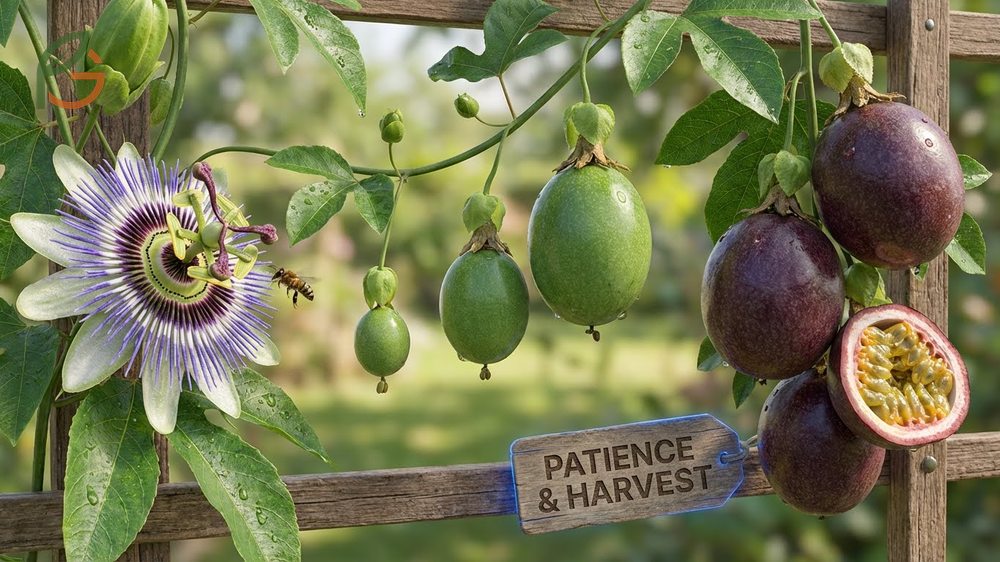
The journey from bloom to harvest tests every grower’s patience. Passion fruit flowers are spectacular—intricate purple and white structures that look almost alien—but they don’t guarantee fruit set. Understanding the flowering cycle and fruit development timeline helps you troubleshoot problems and manage expectations.
Container-grown passion fruit typically takes longer to flower than in-ground plants. You’re looking at 6-18 months from planting to first flowers, with most potted vines flowering around the 12-month mark under optimal conditions[5].
Flowering Stage
Passion fruit vines produce flowers on new growth, which means vigorous vegetative growth during the first year actually sets you up for better fruiting later. Purple passion fruit varieties flower from March through April in temperate zones, while yellow types bloom continuously from April through November. Each flower opens for just one day, making pollination timing critical.
The good news is that passion fruit is self-fertile in most cases. Large carpenter bees are the most effective natural pollinators, but you can hand-pollinate by transferring pollen from the anthers to the stigmas using a small paintbrush. Morning hours work best when pollen is fresh and sticky.
- Plant maturity of at least 6-12 months from planting
- Adequate nitrogen during vegetative growth followed by higher potassium during flowering
- Consistent temperatures between 68-82°F (20-28°C) during bloom period
- Regular watering without drought stress
- Presence of pollinators or manual pollination assistance
Fruit Development Timeline
After successful pollination, the clock starts on fruit development. Research shows that passion fruits ripen 70-80 days after pollination, though this varies by variety and climate conditions[6]. You’ll see the fruit swell rapidly during the first month, then slowly change color as it approaches maturity.
Don’t pick fruits too early—they won’t ripen further off the vine. Wait until fruits naturally drop from the vine or the skin becomes deeply wrinkled. This indicates peak sugar development and optimal flavor. Purple varieties should be deep purple to nearly black, while yellow types turn bright golden yellow.
Best Soil for Passion Fruit in Containers
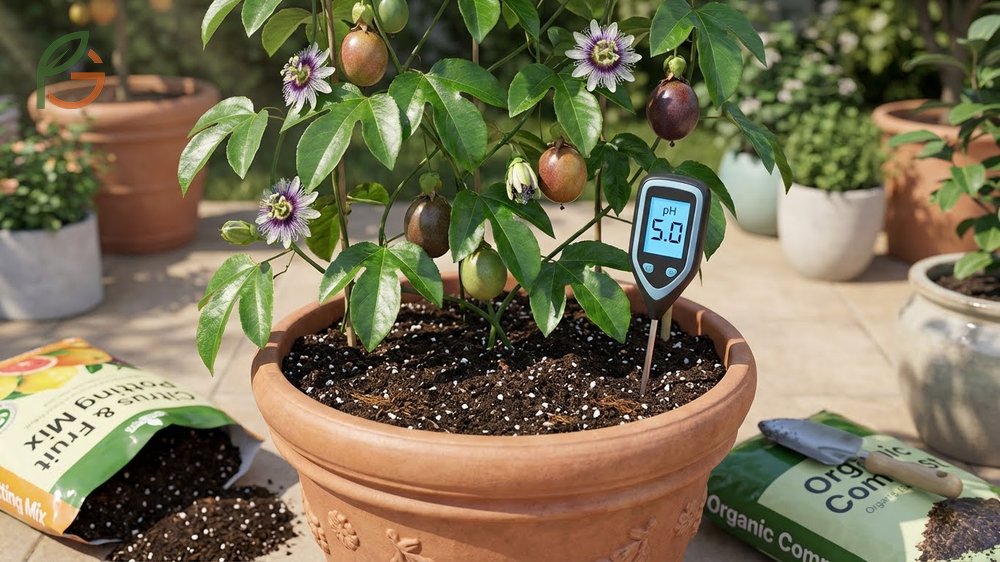
Soil composition makes or breaks container passion fruit cultivation. These vines demand fast-draining soil with high organic content, preferring acidic conditions that most general potting mixes don’t provide. Agricultural research consistently identifies pH 4.5-6.5 as the optimal range, with the sweet spot around pH 5.0 for maximum fruit quality[1].
Commercial citrus and fruit potting mixes work well as a base since they’re formulated for acid-loving plants. You’ll want to customize the mix by adding about 30% perlite or coarse sand to improve drainage. Passion fruit roots need oxygen, and compacted or water-saturated soil leads to root rot faster than almost any other problem.
Incorporating organic matter pays dividends throughout the growing season. Mix in 20-30% well-aged compost or composted manure at planting time. This provides slow-release nutrients and improves the soil’s water-holding capacity without sacrificing drainage. The organic matter also buffers pH changes and feeds beneficial soil microorganisms.
This table compares three soil mix recipes for container-grown passion fruit, showing ingredients and their proportions by volume
| Mix Type | Base Ingredient | Drainage Amendment | Organic Matter |
|---|---|---|---|
| Basic Mix | 50% citrus potting soil | 30% perlite | 20% aged compost |
| Premium Mix | 40% citrus potting soil | 25% perlite + 10% coarse sand | 25% composted manure |
| Budget Mix | 60% standard potting soil | 20% perlite | 20% compost (add sulfur to lower pH) |
- pH level between 4.5 and 6.5, tested with a reliable soil pH meter
- Excellent drainage that prevents water from pooling at the bottom
- High organic matter content (20-30% by volume)
- Loose, friable texture that roots can easily penetrate
- Good water retention without becoming waterlogged
- Initial fertilizer charge if using commercial potting mix
Passion Fruit Trellis Ideas for Potted Vines
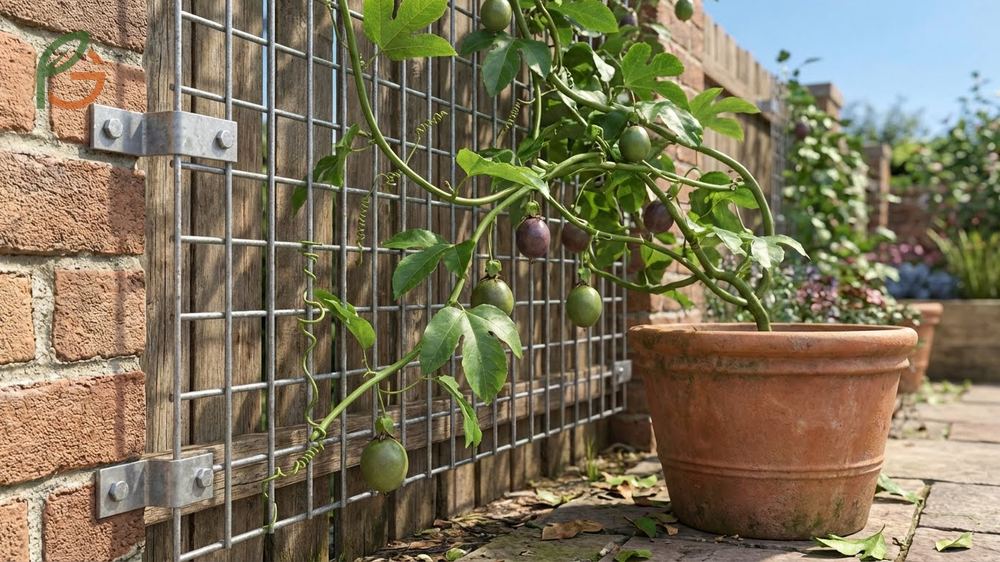
Vertical support isn’t optional for passion fruit—it’s essential infrastructure. These vines climb using tendrils that wrap around anything they touch, and they’ll quickly overwhelm flimsy structures. Your trellis needs to handle 20+ feet of vine growth plus the weight of developing fruit, all while standing up to wind and weather.
The simplest approach for container growers is a sturdy wire mesh panel attached to a wall or fence. Choose mesh with 4-6 inch openings that give tendrils plenty of grip points. Position the container 6-12 inches from the support structure, then train young vines toward the trellis using soft plant ties.
Freestanding trellises work when you can’t mount to an existing structure. Options include A-frame designs, spiral supports, and vertical pole systems with horizontal wires. Whatever design you choose, anchor it securely—passion fruit vines act like sails in strong winds, creating surprising leverage on the support structure.
- Wire mesh panels (4-6 inch openings) mounted to walls or fences
- Vertical wooden trellis with horizontal slats spaced 8-12 inches apart
- A-frame or teepee structures made from sturdy bamboo or metal poles
- Spiral wire trellises that create vertical growing space in small areas
- Chain-link fence sections for maximum climbing surface
- Cattle panels or hog wire panels for durable, long-lasting support
Builder’s Tip: Install your trellis before planting or immediately after. Driving posts or mounting hardware near established vines risks damaging the root system and disrupting vine growth patterns you’ve already trained.
Fertilizing Passion Fruit in Pots
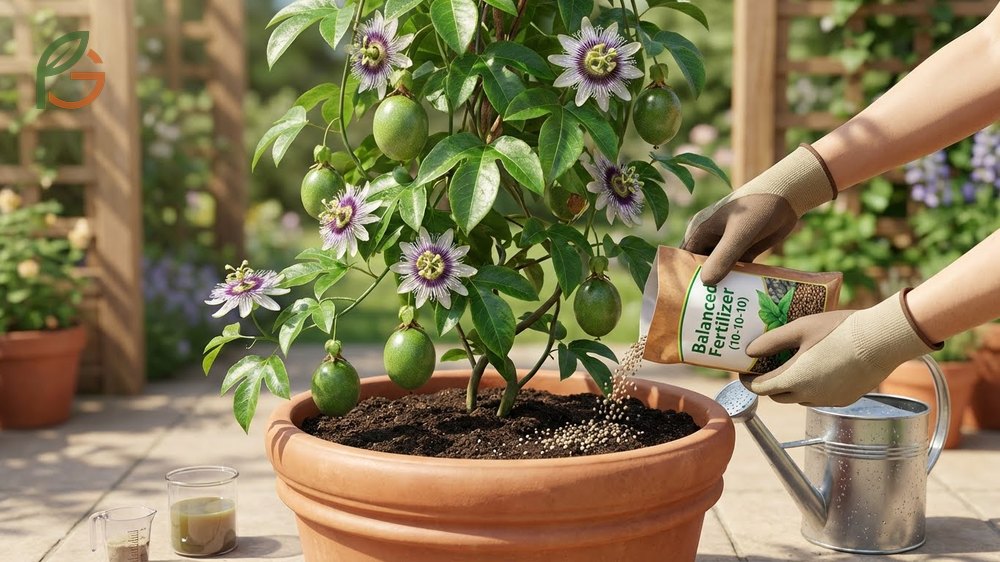
Container-grown passion fruit needs more frequent fertilizing than in-ground plants because nutrients wash through potting soil quickly. These vines are heavy feeders, especially during active growth and fruiting periods. Evidence suggests that nitrogen supports vigorous vine growth, while potassium enhances flowering and fruit quality.
Start fertilizing about 4-6 weeks after planting to avoid burning tender roots. During the spring growing season, apply a balanced fertilizer with an NPK ratio like 10-10-10 or 10-5-20 every 4 weeks. The higher potassium in a 10-5-20 blend supports better flower and fruit development once plants reach maturity.
Application method matters. Spread granular fertilizer in a ring 4-6 inches from the main stem, then water thoroughly to dissolve and carry nutrients into the root zone. Alternatively, use diluted liquid fertilizer every 2 weeks at half-strength during the growing season. This approach provides steadier nutrient availability without the risk of fertilizer burn.
- Early spring: Apply balanced 10-10-10 as new growth emerges
- Late spring through summer: Feed every 4 weeks with higher potassium formula (10-5-20)
- During flowering: Continue 4-week schedule to support fruit development
- Fall: Reduce feeding frequency to every 6-8 weeks as growth slows
- Winter: Stop fertilizing when vines go dormant in cold climates
- Container plants: Consider supplementing with diluted liquid fertilizer between granular applications
Organic options like fish emulsion, composted manure tea, or seaweed extract provide gentler nutrition with lower burn risk. These release nutrients slowly over time and improve soil biology in containers. You can alternate between organic and synthetic fertilizers, or commit to one approach based on your gardening philosophy.
Watering and Indoor Passion Fruit Care
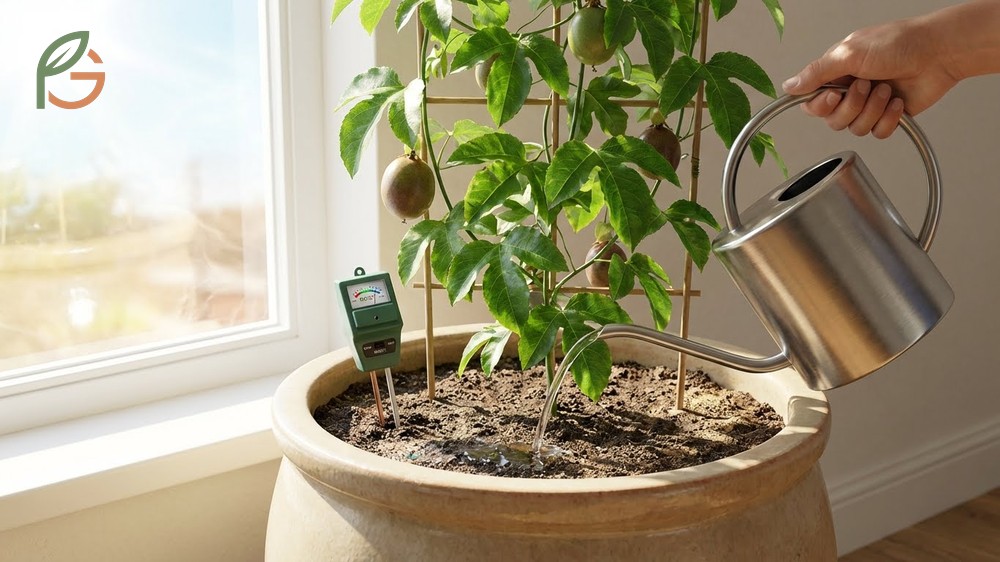
Watering strategy directly impacts both vine health and fruit production. Passion fruit needs consistent moisture during active growth but suffers quickly in waterlogged soil. The challenge for container growers is maintaining that balance, especially during hot weather when pots dry out rapidly.
Water deeply 1-2 times per week during the growing season, allowing the top 2 inches of soil to dry between waterings. In hot summer conditions, daily watering may be necessary for containers exposed to full sun. Check soil moisture by inserting your finger 2-3 inches deep—if it feels dry at that depth, it’s time to water.
Indoor growing extends your season in cold climates but requires environmental control. Passion fruit struggles indoors without adequate light, so position plants in south-facing windows or supplement with grow lights providing 12-14 hours of bright light daily. Indoor temperatures between 65-75°F (18-24°C) work well, though slightly warmer conditions encourage better growth.
Winter Care Warning: Indoor air tends to be dry, especially with heating systems running. Increase humidity around your passion fruit by placing containers on pebble trays filled with water or running a humidifier nearby. Target 50-60% relative humidity.
- Water deeply until excess drains from bottom holes, then allow top soil to dry
- Increase watering frequency during hot weather and fruiting periods
- Reduce watering in fall as growth slows, but don’t let soil completely dry out
- Use room-temperature water to avoid shocking roots
- Provide bright south-facing windows or grow lights for indoor plants
- Maintain indoor temperatures between 65-75°F (18-24°C)
- Monitor for spider mites and aphids, which multiply quickly in dry indoor conditions
Conclusion
The evidence is clear: growing passion fruit in pots succeeds when you provide three critical elements—adequate container size with excellent drainage, acidic well-amended soil, and robust vertical support structures. Container cultivation offers flexibility that in-ground planting can’t match, especially for gardeners in zones where frost threatens these tropical vines.
Current horticultural guidance emphasizes consistent care over complicated techniques. Start with quality soil, maintain regular watering and feeding schedules, and provide the support structure your vines need to climb vigorously. Your patience during the 6-18 month wait for first flowers will be rewarded with exotic blooms and delicious fruits that few home gardeners successfully cultivate. FruitGarden remains your resource for research-backed growing strategies that transform tropical gardening challenges into achievable projects.
Frequently Asked Questions
How long does it take for passion fruit to bear fruit in pots?
Passion fruit vines typically begin flowering 6-18 months after planting, with most container-grown plants producing their first blooms around the 12-month mark[5]. After successful pollination, fruits ripen in 70-80 days[6]. This means you’re looking at roughly 14-20 months from planting to harvest, depending on growing conditions and care quality.
What size pot is best for growing passion fruit?
Use containers at least 20 inches (50cm) deep and wide with multiple drainage holes[2]. Many experienced growers prefer 15-20 gallon pots because they hold more soil volume, which buffers temperature fluctuations and maintains more consistent moisture levels. Larger containers generally support better vine growth and higher fruit production than minimum-sized pots.
Can passion fruit survive winter indoors?
Yes, passion fruit can overwinter indoors if you provide adequate light and maintain temperatures between 65-75°F (18-24°C). Position containers in south-facing windows or use grow lights for 12-14 hours daily. The main challenges are insufficient light and dry indoor air—supplement with humidity trays or humidifiers targeting 50-60% relative humidity. Growth slows considerably indoors, but plants survive and resume vigorous growth when moved back outside after frost danger passes.
Why isn’t my potted passion fruit flowering?
Common causes include plant immaturity (vines need 6-18 months to reach flowering stage), insufficient sunlight (minimum 6 hours daily), nitrogen-heavy fertilization that promotes leaves over flowers, or temperature stress outside the 68-82°F (20-28°C) range[4]. Switch to a higher potassium fertilizer ratio like 10-5-20 to encourage bloom formation, and ensure your vine receives full sun exposure.
How often should I water passion fruit in containers?
Water deeply 1-2 times per week during the growing season, allowing the top 2 inches of soil to dry between waterings. Container-grown passion fruit may need daily watering in hot summer weather, especially in full sun locations. Always check soil moisture before watering—insert your finger 2-3 inches deep, and water only when soil feels dry at that depth. Overwatering causes root rot faster than underwatering harms these vines.
Do I need two passion fruit plants for pollination?
No, passion fruit is self-fertile and doesn’t require a second plant for pollination. A single vine can produce fruit on its own, though having multiple plants may increase pollination success rates. Large carpenter bees are the most effective natural pollinators, but you can hand-pollinate by transferring pollen between flowers using a small paintbrush during morning hours when pollen is fresh.
What’s the ideal soil pH for container-grown passion fruit?
Research shows passion fruit thrives in acidic soil with pH 4.5-6.5, with the sweet spot around pH 5.0 for optimal fruit quality[1]. Use citrus or acid-loving plant potting mixes as your base, and test pH annually with a reliable soil meter. If pH drifts too high, amend with elemental sulfur or use fertilizers formulated for acid-loving plants to gradually lower it.





