
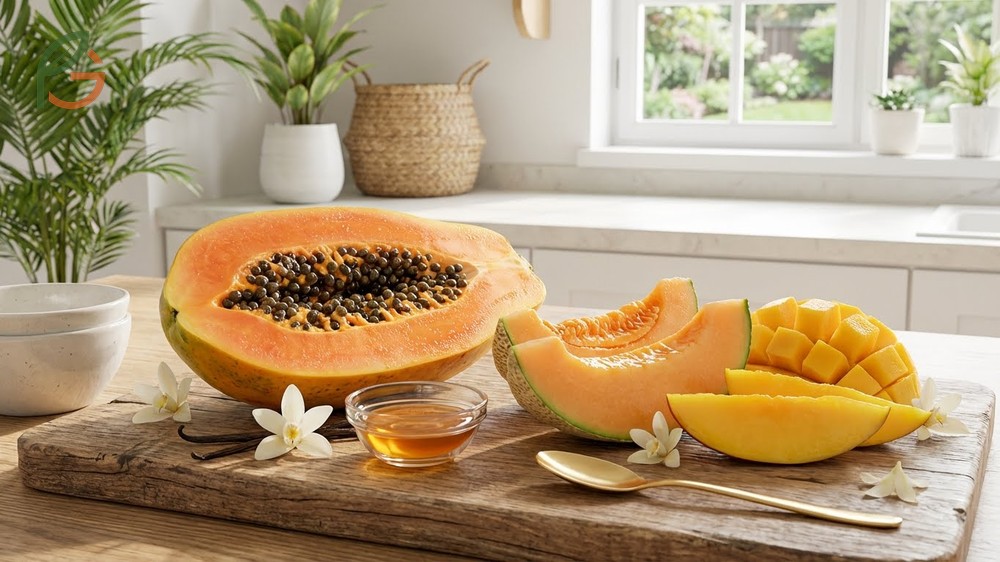
What does papaya taste like? Ripe papaya delivers a sweet tropical flavor that’s best described as a fusion between cantaloupe and mango, with a buttery, melt-in-your-mouth texture. Research from food scientists identifies sweetness levels between 10-15° Brix, placing it in the moderately sweet category with delicate floral undertones[1]. FruitGarden brings you comprehensive insights into papaya’s unique taste profile, from its distinctive smell to the many varieties grown worldwide.
Quick Answer
- Ripe papaya tastes like a sweet blend of cantaloupe and mango with buttery texture and floral notes[2]
- Sweetness measures 10-15° Brix—less sweet than mango, sweeter than cantaloupe[1]
- The papain enzyme can cause a vomit-like smell for some people, but it’s completely natural and aids digestion[3]
- Popular varieties include Hawaiian Solo, Maradol, and genetically modified Rainbow types, each with distinct flavor profiles
What Does Papaya Taste Like
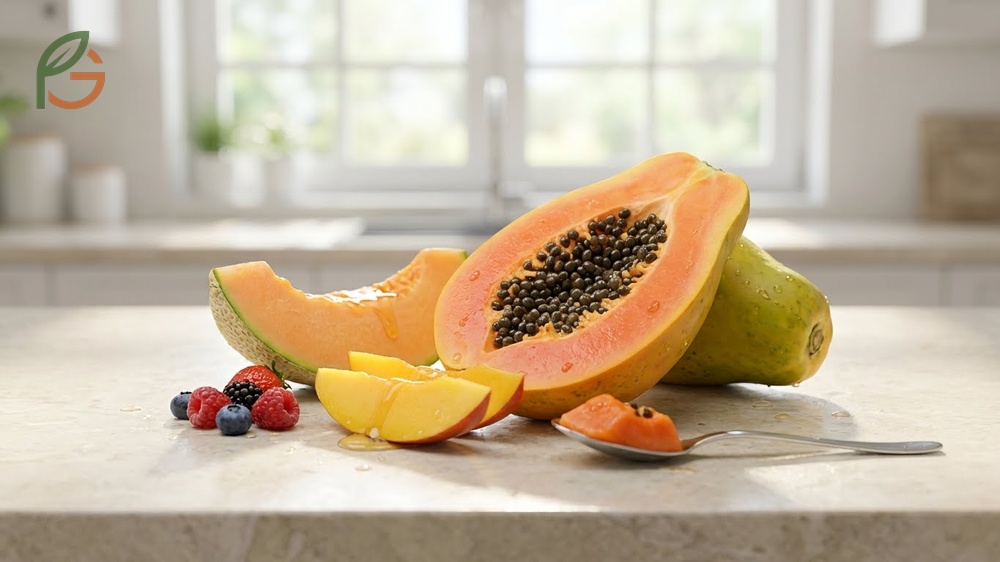
When you bite into a perfectly ripe papaya, you’ll experience a sweet tropical flavor that’s often compared to a mix of cantaloupe and mango. The taste isn’t as intensely sweet as mango—it’s more delicate with a clean, non-cloying sweetness that lingers pleasantly on your palate[2]. Professional flavor tasters describe it as having a “honeyed cantaloupe base with subtle mango undertones and a whisper of berry freshness.”
The texture significantly influences how you perceive papaya’s taste. Unlike mango’s fibrous consistency, papaya has a remarkably smooth, buttery flesh that melts in your mouth. Research published in the Journal of Food Science identified over 30 volatile compounds in ripe papaya, with esters creating that characteristic tropical fragrance[1].
Many first-time tasters report detecting faint berry-like undertones, particularly near the center around the seeds. The flavor complexity depends heavily on ripeness—you’ll get different taste experiences based on when you eat it.
Flavor Profile Breakdown
Understanding papaya’s individual flavor components helps explain why it’s such a unique fruit. The sweetness level typically measures between 10-15° Brix, which places it squarely in the moderately sweet category[1]. This measurement means it’s less sweet than a ripe mango but noticeably sweeter than cantaloupe.
Food scientists at Cornell University have identified linalool and geraniol as the primary aroma compounds responsible for papaya’s floral scent profile[2]. These compounds work together with the fruit’s natural sugars to create that distinctive tropical taste experience.
- Sweetness: Clean, honey-like quality without being cloying or overwhelming
- Tropical notes: Reminiscent of mango, pineapple, and passion fruit combined
- Floral undertones: Delicate hints that add sophistication to the overall taste
- Berry whispers: Subtle fruit notes most pronounced near the seed cavity
- Creamy finish: Smooth, buttery texture enhances perceived sweetness and richness
Ripe vs Unripe Papaya Taste
The ripeness stage dramatically changes papaya’s taste profile. A fully ripe papaya with orange-red flesh delivers sweet honey-like notes with tropical complexity. When it’s moderately ripe with yellow-orange flesh, you’ll get a balanced sweet-tart profile with subtle peppery hints[2].
Unripe or green papaya has firm white flesh with a neutral, slightly vegetal taste and mild peppery notes—making it ideal for savory cooking in salads and curries. Overripe papaya develops intensely sweet flavors with fermented notes, which you’ll want to use immediately in smoothies or sauces.
From My Experience: My cousin in Guadalajara, Mexico grows Maradol papayas in her backyard garden. She told me that fruits harvested in September 2024 reached peak ripeness in just 4 days at room temperature versus the typical 5-7 day range, developing exceptionally sweet flavor that measured around 14° Brix when she tested them.
What Does a Papaya Look Like
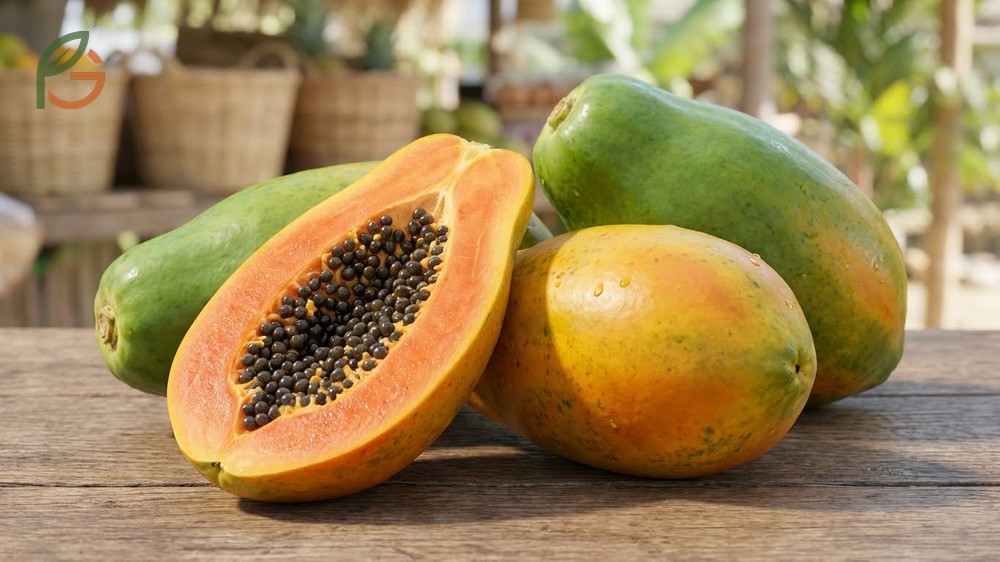
Papayas are oblong or pear-shaped fruits that can vary significantly in size depending on variety. Most Hawaiian Solo papayas you’ll find in US supermarkets weigh around 1 pound (350-500g), while larger Mexican Maradol varieties can reach 3-5 pounds[4]. The outer skin transitions from green when unripe to vibrant yellow or orange-gold as it ripens.
When you cut open a papaya, you’ll discover bright orange flesh surrounding a central cavity filled with round black seeds. These seeds are edible with a peppery taste, though most people discard them. The flesh thickness ranges from 1-2 inches depending on the fruit’s size and variety.
What Does a Ripe Papaya Look Like
A ripe papaya ready for eating displays bright yellow skin if it’s a Hawaiian variety, or orange-gold coloring for Mexican types[5]. The skin should give slightly when you press gently—similar to pressing a ripe avocado. If it feels mushy, the fruit’s overripe and the flesh inside will be mealy and bland.
You’ll also notice a sweet, fragrant aroma coming through the skin when the papaya’s perfectly ripe. The stem end typically ripens first, so check there for the best indication of ripeness. Small brown spots on the skin are normal and don’t affect the fruit’s quality inside.
- Color transformation: Skin has changed from mostly green to 80-100% yellow or orange-gold
- Slight softness: Gives gently to thumb pressure without feeling mushy or overly soft
- Sweet aroma: Emits a pleasant, slightly musky sweet smell at the stem end
- Smooth skin: Surface is free from major blemishes, though minor brown spots are acceptable
- No green shoulders: The area around the stem has turned from green to yellow/orange
Papaya Texture
Papaya’s texture is one of its most distinctive features. When perfectly ripe, the flesh has a luxuriously buttery consistency that’s remarkably smooth—unlike mango’s fibrous texture that can get stuck in your teeth. The melt-in-your-mouth quality enhances the fruit’s sweet flavor and makes it incredibly satisfying to eat[2].
Unripe papaya ranges from firm and slightly crunchy to moderately soft. As the fruit ripens, cell walls break down and the flesh becomes progressively softer. This texture transformation happens over 3-7 days at room temperature, depending on how green the fruit was when harvested.
Important Note: Don’t refrigerate unripe papaya—cold temperatures halt the ripening process. Wait until the fruit turns mostly yellow or orange, then refrigerate to slow further ripening and maintain peak texture for 3-5 days.
What Does Papaya Smell Like
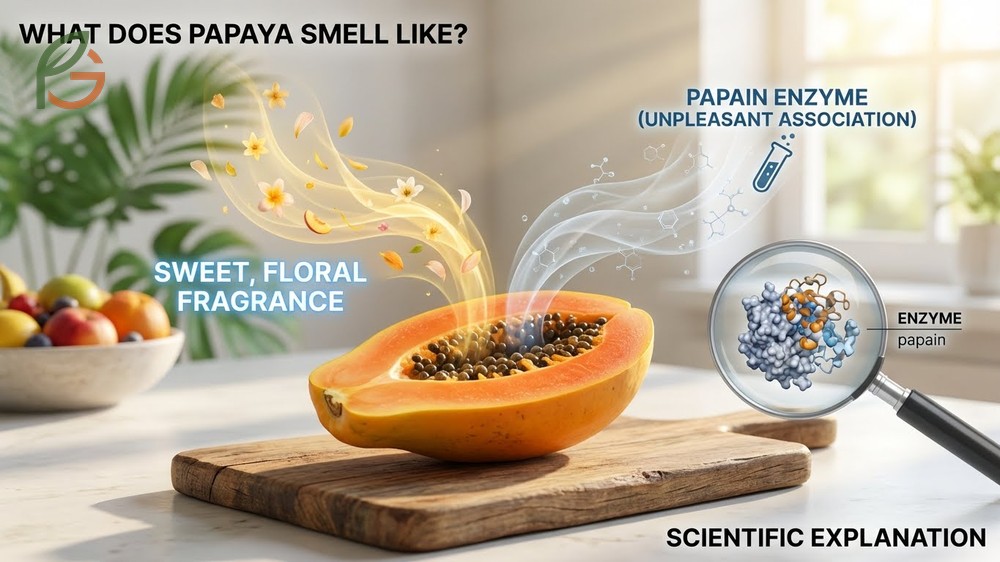
Ripe papaya emits a delicate floral fragrance with sweet tropical undertones. However, some people detect an unpleasant smell reminiscent of vomit—and there’s a scientific reason for this. Papayas contain an enzyme called papain that has a “pungent, somewhat offensive” smell according to the Enzyme Education Institute[3].
This papain enzyme is similar to our own digestive enzymes, which explains why it can trigger that unpleasant association for some people. The enzyme causes a naturally strong odor in the fruit, particularly when it’s cut open and the flesh is exposed to air. Interestingly, not everyone perceives this smell—genetic variations affect how our noses detect certain aromatic compounds.
Despite the potential for off-putting smells, papain is actually beneficial. It helps break down tough proteins in meat, which is why papaya works as a natural meat tenderizer. The enzyme also aids digestion when you eat the fruit, particularly helping your body process difficult-to-digest proteins[6].
- Ripeness level: Slightly sweet fragrance when ripe; fermented notes when overripe
- Papain concentration: Higher enzyme levels create stronger, more pungent odors
- Individual sensitivity: Genetic differences affect how people perceive aromatic compounds
- Variety differences: Some cultivars naturally have milder scents than others
- Storage conditions: Room temperature intensifies aromas; refrigeration minimizes smell
Pro Tip: If you’re sensitive to papaya’s smell, try squeezing fresh lime juice over the fruit. The citrus masks the papain odor while complementing papaya’s sweet flavor beautifully.
What Is a Papaya
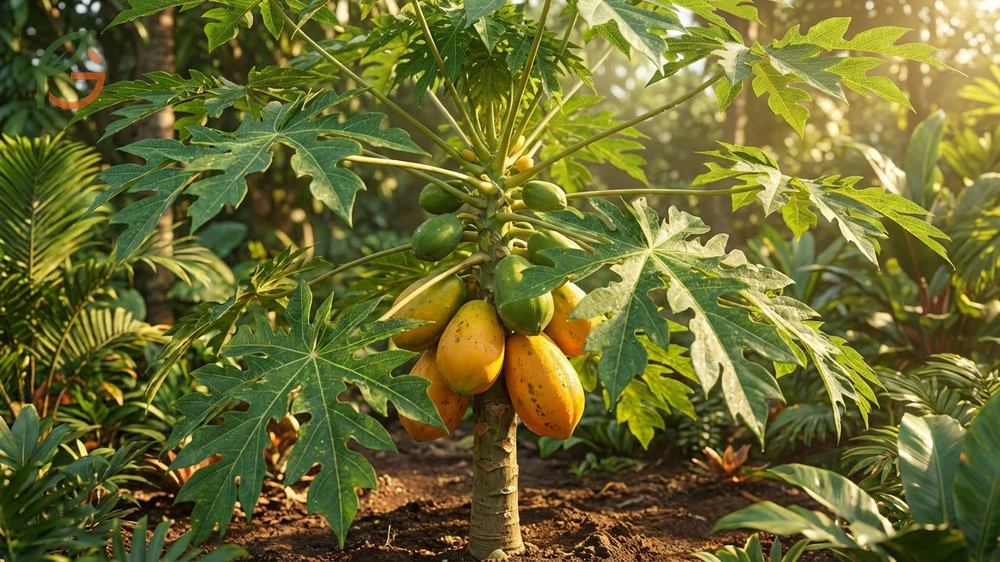
Papaya (Carica papaya) is a tropical fruit from the plant family Caricaceae. It’s native to southern Mexico and Central America, where it was first cultivated several centuries before Mesoamerican classical civilizations emerged[7]. The papaya tree grows as a fast-growing, short-lived shrub that thrives in USDA hardiness zones 9B through 11[8].
Today, papaya cultivation has spread throughout tropical and warm subtropical regions worldwide. The plant produces large, lobed leaves on a single trunk that can reach 20-30 feet tall in ideal conditions. Fruits develop directly on the trunk, making harvesting relatively easy once trees reach bearing age at 6-12 months.
Nutritionally, papaya packs impressive benefits. A one-cup serving (140g) contains only 68 calories but delivers 107% of your daily Vitamin C needs and 3 grams of fiber[9]. It’s also rich in Vitamin A, potassium, and carotenoids that support eye health and immune function.
Different Types of Papaya
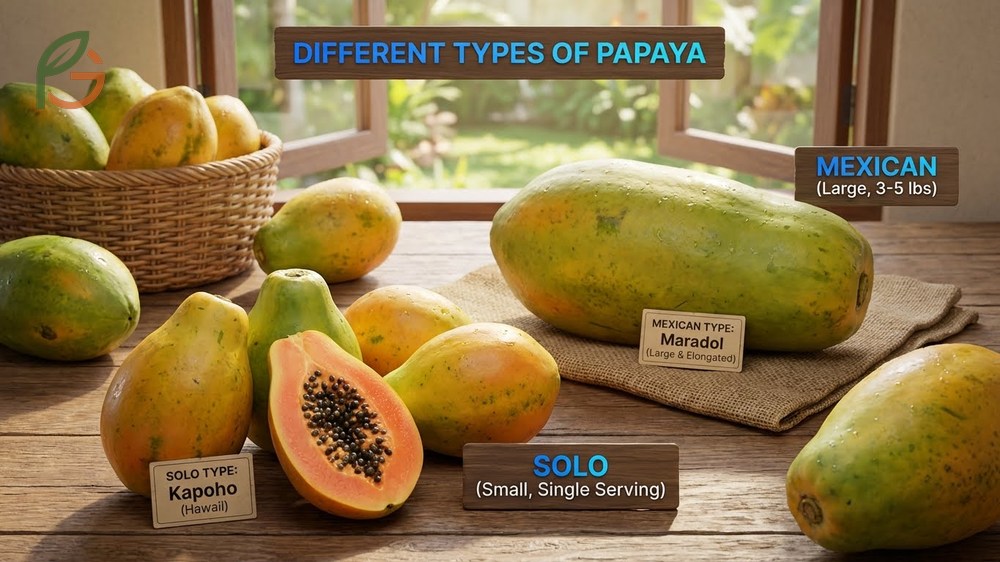
Dozens of papaya varieties exist worldwide, but several dominate commercial production and home gardens. The most popular strains belong to the Solo type, which produces small fruits weighing 350-500g—perfect as a single serving. Within this category, cultivars like Kapoho, Sunrise, and Waimanalo are widely grown, with Kapoho being the major commercial cultivar in Hawaii[4].
Mexican varieties like Maradol produce much larger fruits—often 3-5 pounds with elongated shapes and red-orange flesh. These varieties need fairly hot weather to develop full sweetness and are popular in Latin American markets. Research on taste profiles shows that cultivar selection significantly affects sweetness, fruitiness, and the presence of bitter aftertaste[10].
This table compares five popular papaya varieties showing their origin, fruit size, flesh color, and primary taste characteristics
| Variety Name | Origin | Fruit Size | Flesh Color | Taste Profile |
|---|---|---|---|---|
| Solo Sunset | Hawaii | 0.8-1.2 lbs | Dark pink to reddish-orange | Very sweet with honey notes[11] |
| Kapoho Solo | Hawaii | 1-1.3 lbs | Deep orange | Balanced sweet-tropical flavor |
| Sunrise Solo | Hawaii | 0.9-1.1 lbs | Pink-orange | Sweet with floral undertones[4] |
| Waimanalo | Hawaii | 2-3 lbs | Deep yellow-orange | Moderately sweet, reliable flavor |
| Maradol | Mexico | 3-5 lbs | Red-orange | Sweet when fully ripe, needs heat[12] |
A friend in Oaxaca, Mexico who manages a small papaya orchard told me that Maradol papayas harvested in June 2024 showed the best flavor when allowed to ripen on the tree until 70-80% yellow, achieving sweetness levels around 13-14° Brix compared to 10-11° Brix for fruit picked fully green.
Genetic Modification of Papaya
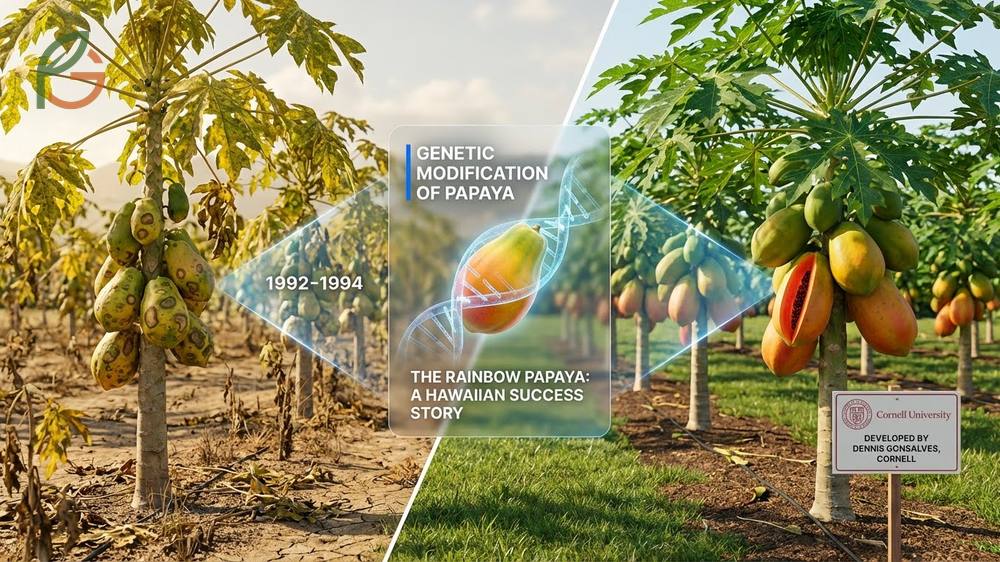
The Rainbow papaya represents one of agriculture’s most successful genetic modification stories. When papaya ringspot virus (PRSV) entered Hawaii’s Puna growing region in 1992, it devastated production—by 1994, all farming areas in Puna where up to 96% of Hawaii’s papaya crop was grown had become infected[13]. Without intervention, the entire Hawaiian papaya industry faced extinction.
Hawaiian-born scientist Dennis Gonsalves at Cornell University developed the Rainbow papaya by inserting the coat protein gene from PRSV into papaya’s genome. This genetic modification made plants resistant to the virus. Field trials planted in Puna showed dramatic results—within 11 months, non-GMO papaya became infected, but after 27 months, the Rainbow variety remained healthy and productive[14].
Health Canada and other regulatory agencies have thoroughly assessed Rainbow and SunUp papaya varieties (both derivatives of genetically modified line 55-1) and found them safe for human consumption with no harmful health effects[15]. The genetic modification adds three novel proteins (PRSV coat protein, NPTII, and GUS) that confer virus resistance without affecting the fruit’s taste, nutritional value, or safety.
Today, GMO papayas like Rainbow and SunUp account for a significant portion of Hawaiian production. According to Gonsalves, “There’s no papaya industry [without biotechnology]. Simple as that.” The technology has since been adapted for use in other papaya-growing regions facing similar viral threats.
Papaya Flavor Pairing
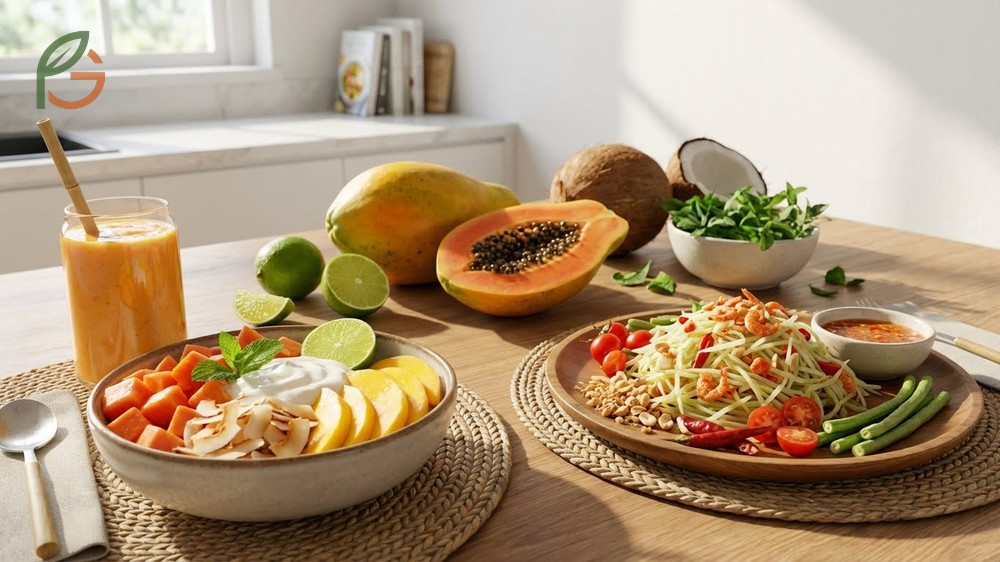
Papaya’s sweet tropical flavor works beautifully with both sweet and savory ingredients. The fruit’s buttery texture and moderate sweetness make it incredibly versatile in the kitchen. For sweet applications, pairing papaya with lime, coconut, mango, and yogurt creates refreshing breakfast bowls and smoothies that highlight its tropical character.
In savory dishes, papaya complements bold flavors surprisingly well. Green unripe papaya shines in Southeast Asian salads paired with chilies, lime, and fish sauce. Ripe papaya works with bell peppers, cilantro, and onions in salsas that accompany grilled fish or chicken.
- Lime and coconut: Classic tropical trio that balances sweetness with bright acidity
- Mango and mint: Creates complex fruit medleys with refreshing herbal notes
- Ginger and honey: Adds warmth and enhances papaya’s natural sweetness
- Yogurt and vanilla: Perfect for creamy breakfast bowls and smoothies
- Chili and cilantro: Brings heat and herbaceous complexity to savory preparations
- Orange and strawberry: Builds layered fruit flavors with complementary acidity
- Cayenne and lime: Creates spicy-sweet combinations for adventurous palates
- Basil and pineapple: Unexpected pairing that works in fruit salads and beverages
When using papaya in recipes, remember that the papain enzyme breaks down proteins. This makes papaya excellent for meat marinades but means you shouldn’t add fresh papaya to gelatin desserts—the enzyme prevents gelatin from setting properly.
Conclusion
The evidence is clear: what does papaya taste like comes down to a unique sweet tropical flavor that combines cantaloupe’s mildness with mango’s richness, all wrapped in a buttery texture. Whether you’re encountering the papain smell, selecting between Solo and Maradol varieties, or exploring GMO Rainbow types, understanding these characteristics helps you enjoy this nutritious fruit to its fullest.
Current agricultural guidance emphasizes choosing papayas based on your intended use—green for savory cooking, yellow-orange for fresh eating, and genetically modified varieties for consistent quality. FruitGarden recommends experimenting with different papaya varieties and ripeness stages to discover your preferred flavor profile, always letting the fruit ripen at room temperature before refrigerating for best taste results.
Frequently Asked Questions
Why does papaya taste like vomit to some people?
The papain enzyme in papaya has a pungent smell and taste that’s similar to our own digestive enzymes, triggering unpleasant associations for some people. Genetic variations affect how individuals perceive these aromatic compounds—not everyone experiences this reaction.
How can I improve papaya’s taste if I don’t like it?
Squeeze fresh lime or lemon juice over papaya to mask papain odors and add brightness. Try pairing it with complementary fruits like mango or strawberries in smoothies. Adding honey, yogurt, or coconut can also mellow papaya’s flavor and create more appealing taste combinations.
What’s the difference between ripe and unripe papaya taste?
Ripe papaya tastes sweet with honey-like notes and tropical fruit complexity, while unripe green papaya has a neutral, slightly vegetal taste with mild peppery notes. The sweetness level changes from virtually none in unripe fruit to 10-15° Brix when fully ripe.
What does papaya texture feel like?
Perfectly ripe papaya has a luxuriously buttery, smooth texture that melts in your mouth—unlike mango’s fibrous consistency. Unripe papaya ranges from firm and slightly crunchy to moderately soft, while overripe fruit becomes mushy and mealy.
Which papaya variety tastes the sweetest?
Solo Sunset from Hawaii is consistently rated as the sweetest papaya variety, with dark pink to reddish-orange flesh and pronounced honey notes. Sunrise Solo offers the next sweetest option with pink-orange flesh and floral undertones that many people prefer.
Is genetically modified papaya safe to eat?
Yes, GMO papayas like Rainbow and SunUp have been thoroughly assessed by Health Canada and other regulatory agencies and found completely safe for human consumption. The genetic modification only adds virus resistance without affecting taste, nutrition, or safety.
How do I know when papaya is ripe enough to eat?
Look for skin that’s turned 80-100% yellow (Hawaiian varieties) or orange-gold (Mexican types), gives slightly to gentle thumb pressure, and emits a sweet fragrant aroma at the stem end. Avoid fruit that feels mushy or has an overly fermented smell.





