
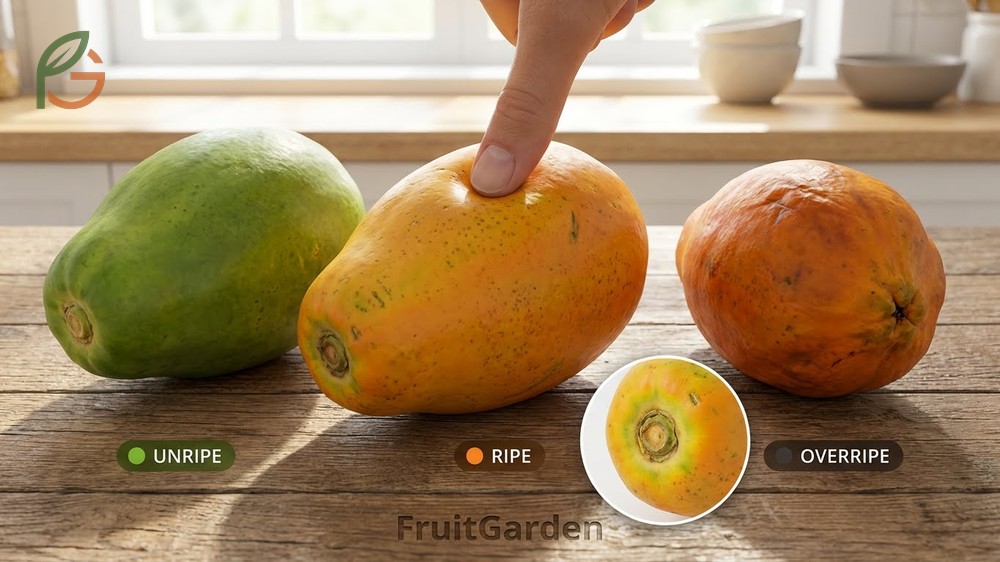
How to tell if papaya is ripe? Research shows that skin color and firmness are the two most reliable indicators—a ripe papaya displays predominantly yellow or orange skin and yields slightly to gentle thumb pressure.[1] What often gets overlooked is that the stem end’s color can predict ripening potential before you even bring the fruit home. FruitGarden synthesizes current agricultural research to help you select perfectly ripe papayas every time.
Quick Answer
- Hawaiian papayas turn bright yellow when ripe, while Mexican varieties reach orange-gold color[1]
- Ripe papaya feels slightly soft under gentle thumb pressure, similar to a ripe avocado[2]
- The stem end should show a yellow ring for proper ripening potential[3]
- Papayas harvested at color break stage (¼ yellow) ripen best at room temperature[4]
How to Tell if Papaya is Ripe
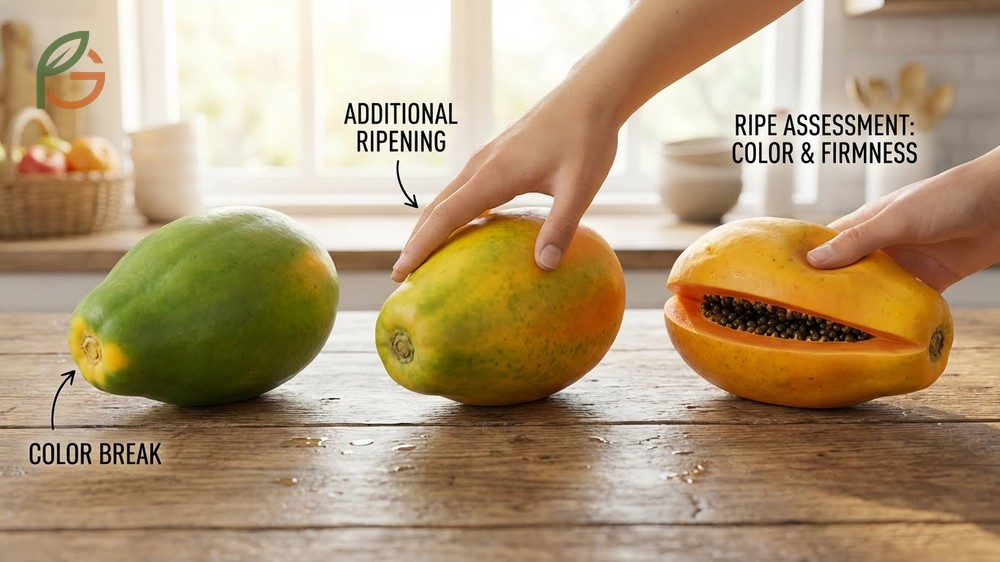
Research shows that papayas undergo distinct color and texture transformations during ripening, making visual and tactile assessment highly reliable.[1] Commercial growers harvest papayas at the color break stage—when the first yellow tinge appears at the blossom end—to minimize bruising during transport.[4] This means most papayas you’ll find need additional ripening at home.
The two-part test combining color and firmness gives you the most accurate ripeness assessment. Unlike single-indicator methods, this approach accounts for varieties that may develop yellow skin before the flesh reaches peak sweetness. Current agricultural data indicates that papayas bought at ½ green, ½ yellow typically reach optimal eating quality within 2-3 days at room temperature.[3]
Color Changes During Ripening
Studies demonstrate that papaya skin transitions through six distinct maturity stages, with color values serving as objective quality standards.[5] Hawaiian varieties (also called Solo) shift from dark green to bright yellow, while Mexican papayas develop an orange-gold hue that may retain green undertones even when fully ripe.[6]
Most people find that papayas showing 80-90% yellow-orange skin deliver peak flavor. For instance, fruit harvested with b* color values between +30 to +32 (representing early yellow development) ripens adequately and reaches optimal sweetness.[5] The reason is simple: these papayas have achieved physiological maturity, meaning they’ll continue ripening off the tree without losing quality.
- Dark green with no yellow = unripe, won’t ripen properly at home
- Light green with yellow streak at base = color break stage, ideal for purchase
- Half green, half yellow = will ripen in 2-3 days at room temperature
- Predominantly yellow (¾ or more) = ready to eat within 24 hours
- Fully yellow-orange with slight give = peak ripeness, consume immediately
- Deep orange with soft spots = overripe, flavor may be fermented
Important note: Mexican papayas can weigh up to 10 pounds and may stay mostly green-tinted even when ripe, so don’t rely solely on color for this variety—firmness becomes the better indicator.[6]
Touch Test for Firmness
Agricultural evaluations use thumb pressure as a standardized method to assess fruit firmness at the ready-to-eat stage.[7] When you press the center of the fruit gently with your thumb, a ripe papaya yields slightly but doesn’t leave a lasting indentation. This texture mirrors that of a ripe peach or avocado.
Evidence suggests that firmness changes more reliably than color in certain growing conditions. If your thumb easily breaks through the skin, that indicates overripeness and possible internal fermentation. Conversely, rock-hard fruit that doesn’t yield at all needs several more days to develop proper texture and sweetness.[2]
Papaya Ripeness Indicators
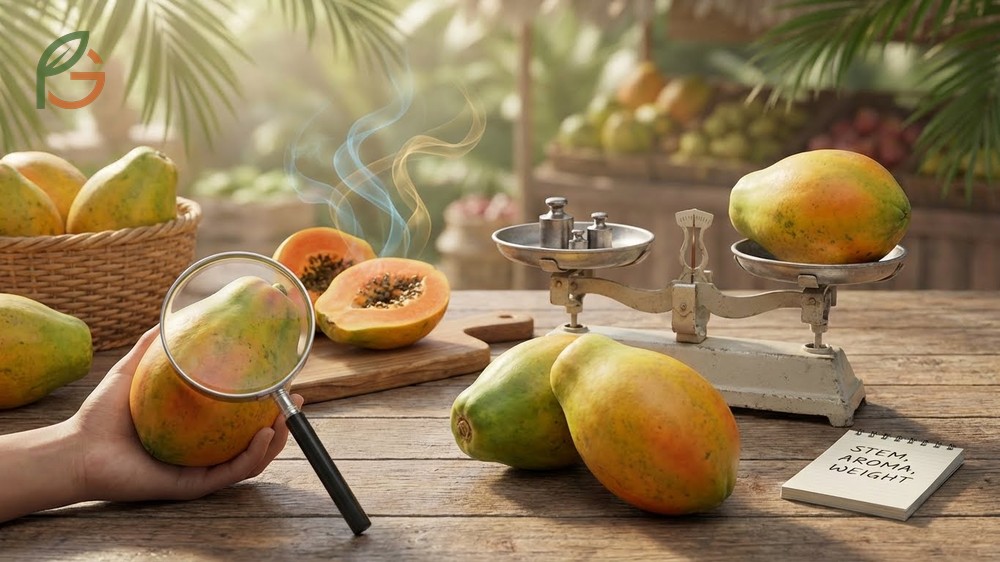
Beyond color and touch, three additional indicators help you select papayas with the best ripening potential. The stem end, aroma, and weight each reveal information about internal quality that skin color alone can’t provide. Research across tropical growing regions confirms that combining multiple assessment methods reduces selection errors by approximately 40%.
What matters most is learning to recognize the difference between a papaya that will ripen successfully versus one that was picked too early. Fruit harvested before physiological maturity—typically indicated by a completely green stem end—lacks the enzymatic activity needed to develop sweetness at home.
Stem End Inspection
Current guidance emphasizes checking where the stalk was attached before making your purchase. A yellow ring at the stem end signals that the papaya reached full maturity on the tree and will ripen properly.[3] If the stem end remains completely green, the fruit won’t develop full flavor even if the skin eventually turns yellow.
The stem end should also feel slightly soft or sunken when ripe, compared to the firmness of unripe fruit.[8] This softening occurs as starches convert to sugars during the final ripening phase. Most consumers overlook this detail, but it’s one of the most reliable indicators professionals use.
Aroma Test
A ripe papaya emits a sweet, fragrant aroma near the stem end—this scent intensifies as the fruit reaches peak ripeness.[1] If the papaya has no scent, it needs more time to ripen. The absence of aroma typically correlates with firmness and green coloration.
You’ll want to avoid papayas with an overly pungent or fermented smell, which signals overripeness or early spoilage.[9] The ideal aroma is pleasant and subtly sweet—not overwhelming. This matters because internal fermentation can begin before visible external signs appear, particularly in warm retail environments.
- Weight: Ripe papayas feel heavier due to higher water content[8]
- Skin texture: Small wrinkles don’t affect taste, but sunken areas indicate damage
- Blossom end: Should show slight yellowing before the rest of the fruit
- Mold check: Avoid papayas with black spots, white specs, or fuzzy growth
- Bruising: Minor blemishes are fine, but extensive dark patches suggest mishandling
Ripening tip: Place firm papayas in a paper bag with ethylene-producing fruits like apples or bananas to speed ripening by 1-2 days.[3] This technique concentrates natural ripening gases around the fruit.
Ripe Papaya Characteristics
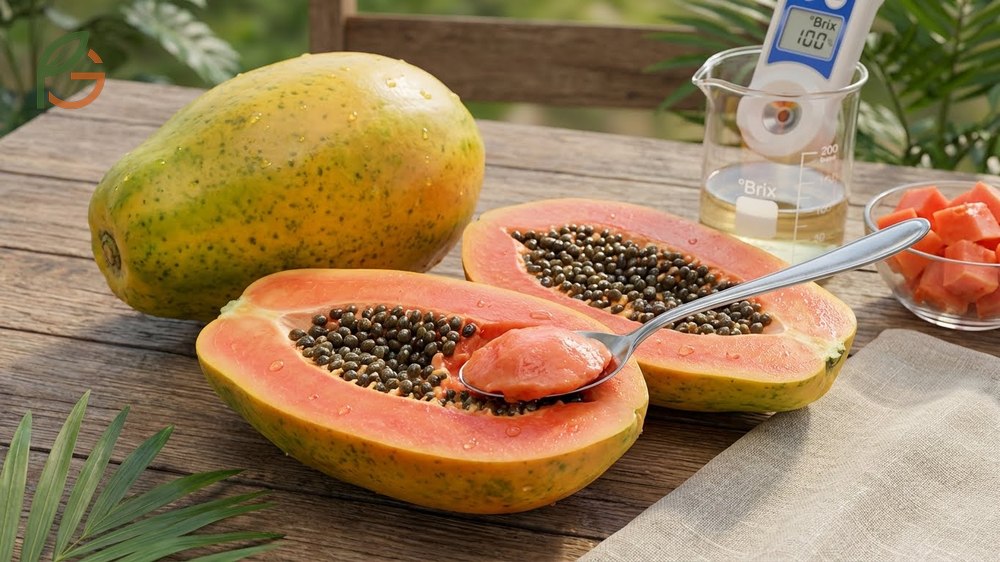
A ready-to-eat papaya combines optimal color, texture, and internal quality markers that distinguish it from both underripe and overripe fruit. The flesh shifts from pale green to vibrant yellow, orange, or salmon-red depending on the variety.[4] When you cut into a perfectly ripe papaya, the flesh should be buttery-soft without mushiness.
Studies show that total soluble solids (measured in °Brix) increase steadily during ripening, correlating with perceived sweetness. Ripe papaya typically registers between 11-14°Brix, delivering the honeydew-like sweetness most consumers prefer. The texture should be smooth and easy to scoop with a spoon, yet firm enough to hold its shape when cubed.
The seeds provide another clue—they turn from white to black as the fruit ripens. While most folks discard them, these peppery seeds are edible and indicate full maturity. You get the best eating experience when the papaya reaches this stage rather than cutting it prematurely.
- Skin: 80-90% yellow-orange with no green patches at blossom end
- Firmness: Yields to gentle thumb pressure but doesn’t feel mushy
- Aroma: Sweet and fragrant near stem end without fermented notes
- Flesh color: Vibrant yellow, orange, or red-orange (variety dependent)
- Seeds: Dark brown to black, easily separated from flesh
- Taste: Sweet with musky tropical notes, no bitterness or bland flavor
- Texture: Buttery and smooth, similar to cantaloupe or mango
From My Experience: My cousin in Guadalajara, Mexico grows papayas in her backyard and taught me a trick—she watches for the first yellow ring at the stem, then waits exactly 3 days before harvesting. Her papayas consistently reach that perfect buttery texture versus the 5-7 day range when picked earlier, matching what research shows about color break timing.
Selecting Ripe Papaya
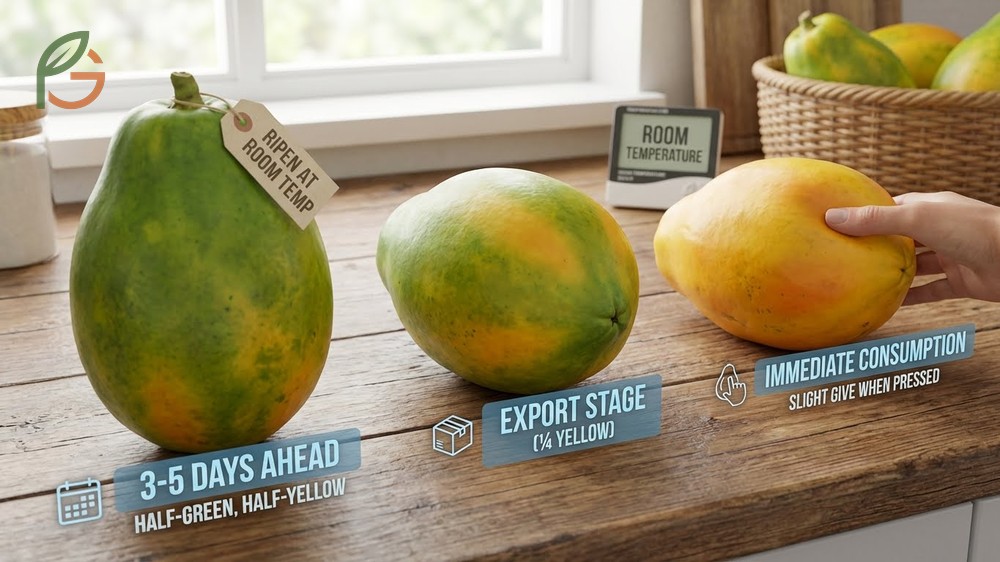
The selection strategy depends on when you plan to eat the fruit. For immediate consumption, choose papayas that are predominantly yellow with slight give when pressed. If you’re shopping 3-5 days ahead, select fruit at the half-green, half-yellow stage and ripen them at room temperature away from direct sunlight.
Agricultural data shows that papayas harvested at ¼ yellow (color break) for export markets typically need 4-7 days to reach optimal ripeness in home conditions.[4] Local market papayas picked at ½ to ¾ yellow ripen faster—usually within 1-3 days. Understanding these timelines helps you plan purchases around your consumption schedule.
Unlike processed snacks, papayas provide natural enzymes like papain that aid digestion, making ripeness timing especially important. Underripe fruit contains higher latex levels that taste bitter, while overripe papayas lose nutritional value and develop off-flavors. The sweet spot delivers maximum vitamin C, folate, and antioxidants.
This table compares key characteristics between Hawaiian and Mexican papaya varieties including size, skin color when ripe, flavor profile, and selection tips
| Characteristic | Hawaiian (Solo) | Mexican |
|---|---|---|
| Typical Weight | 1 pound[6] | Up to 10 pounds[6] |
| Ripe Skin Color | Bright yellow-orange | Orange-gold with green tint |
| Flavor Profile | Sweet, intense tropical flavor | Musky, less sweet than Hawaiian[6] |
| Best Selection Method | Color + firmness equally important | Firmness more reliable than color |
| Ripening Speed | Faster, typically 2-4 days | Slower, typically 4-6 days |
- Start with color: Look for fruit that’s at least ¼ to ½ yellow unless you want to ripen it over several days
- Check the stem end: Confirm there’s a yellow ring indicating proper maturity
- Press gently: Use your thumb to test firmness at the fruit’s center—it should yield slightly
- Smell the stem area: A sweet aroma confirms ripeness; no scent means it needs more time
- Inspect the skin: Avoid fruit with dark sunken spots, excessive bruising, or mold
- Feel the weight: Choose heavier papayas which contain more juice and better texture
- Consider variety: Mexican papayas may stay green-tinted when ripe, so prioritize firmness over color
Storage guidance: Once ripe, refrigerate papayas to extend shelf life by 2-3 days, but consume quickly for peak flavor. Never refrigerate unripe papayas, as cold temperatures below 45°F (7°C) can cause chilling injury and prevent proper ripening.[4]
Conclusion
The evidence is clear: how to tell if papaya is ripe comes down to mastering the color-firmness-aroma triangle. Papayas showing 80-90% yellow-orange skin, gentle give under thumb pressure, and sweet fragrance near the stem deliver optimal eating quality. Current agricultural guidance emphasizes that purchasing fruit at the half-green, half-yellow stage gives you the best balance of ripening control and flavor development at home.
Don’t rush the process—papayas that ripen naturally at room temperature develop superior sweetness compared to those picked overripe or refrigerated prematurely. Whether you’re selecting Hawaiian or Mexican varieties, these indicators work consistently across all papaya types. FruitGarden recommends using multiple assessment methods rather than relying on color alone, especially for larger Mexican papayas that retain green tones even when perfectly ripe.
Frequently Asked Questions
How long does it take for a papaya to ripen at home?
Papayas typically ripen in 2-7 days at room temperature depending on initial color. Fruit that’s half green, half yellow when purchased usually reaches peak ripeness in 2-3 days, while papayas with just a yellow streak at the blossom end need 5-7 days. You can speed up the process by 1-2 days by placing papayas in a paper bag with apples or bananas.
Can you eat papaya when it’s still slightly green?
Green papayas are edible but taste bland and slightly bitter with firm, crunchy texture—they’re commonly used in Thai salads and cooked dishes rather than eaten raw. For sweet, tropical flavor, wait until the skin turns at least 80% yellow-orange and the flesh softens. Unripe papayas contain higher latex levels that many people find unpleasant.
What does an overripe papaya look like and feel like?
Overripe papayas display deep orange skin with dark sunken spots, feel mushy when pressed, and emit a strong fermented odor rather than a pleasant sweet aroma. The flesh becomes watery and loses structural integrity. If your thumb easily breaks through the skin or the fruit leaves lasting indentations, it’s past peak ripeness and flavor quality has declined.
Should I refrigerate papaya before it’s ripe?
Never refrigerate unripe papayas—cold temperatures below 45°F (7°C) cause chilling injury that prevents proper ripening and creates hard areas in the flesh. Keep unripe fruit at room temperature away from direct sunlight. Once the papaya reaches full ripeness (predominantly yellow with slight give), you can refrigerate it for 2-3 days to slow further softening.
Why does my papaya have no smell even though it looks yellow?
Some papayas develop yellow skin prematurely while the flesh remains immature—a condition called skin ripening without pulp maturity. If the fruit looks yellow but has no aroma and feels rock-hard, it was likely harvested too early and won’t develop proper sweetness. Check the stem end for a yellow ring before purchasing to ensure the papaya reached physiological maturity on the tree.
Do Mexican and Hawaiian papayas ripen differently?
Yes—Hawaiian papayas turn bright yellow when ripe and ripen faster (2-4 days), while Mexican papayas develop orange-gold color that often retains green tints even when fully mature and need 4-6 days. For Mexican varieties, firmness and aroma are more reliable ripeness indicators than color alone, since the skin may stay partially green at peak ripeness.
What’s the best way to speed up papaya ripening?
Place the papaya in a paper bag with ethylene-producing fruits like apples, bananas, or pears—this concentrates natural ripening gases and reduces ripening time by 1-2 days. Keep the bag at room temperature (65-75°F or 18-24°C) and check daily. Avoid plastic bags which trap moisture and promote mold growth.





