
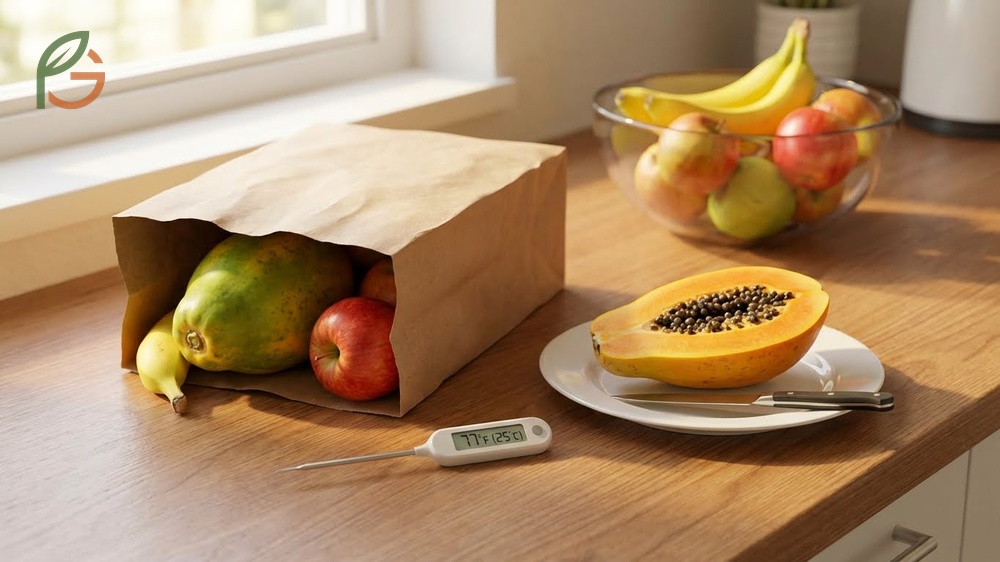
How to ripen papaya fast at home? Research shows the paper bag method accelerates ripening by trapping ethylene gas, reducing wait time from 2-3 days to just 24-48 hours[1]. The optimal temperature for papaya ripening is 72-82°F (22-28°C)[2], and you can speed up the process by placing your fruit alongside ethylene-producing fruits like bananas or apples. FruitGarden synthesizes current agricultural research to help you master fruit ripening at home.
Quick Answer
- Paper bag method ripens papayas in 1-2 days[1] versus 2-3 days at room temperature
- Optimal ripening temperature: 72-82°F (22-28°C)[2] with 90-95% humidity
- Add bananas or apples to paper bags—they release extra ethylene gas that speeds ripening[3]
- Look for 75-100% yellow-orange skin[4] to know when it’s ready to eat
How to Ripen Papaya Fast
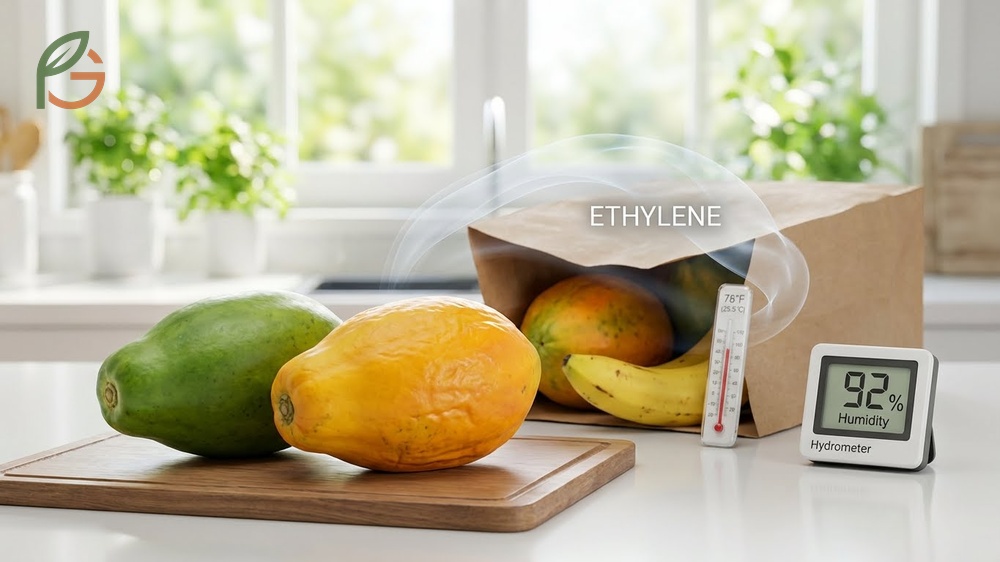
Research shows papayas ripen through ethylene gas production, a natural plant hormone that triggers color change and flesh softening[5]. Most people don’t realize that timing matters more than waiting when you’re dealing with this climacteric fruit. Studies demonstrate that papayas ripen fastest when exposed to temperatures between 72-82°F (22-28°C) and 90-95% relative humidity[2].
The three fastest methods work by manipulating ethylene concentration and temperature. Commercial facilities apply 100 ppm ethylene for 24-48 hours to achieve uniform ripening[6]. At home, you can replicate this effect using simple household items.
What often gets overlooked is that papaya ripeness affects both flavor development and nutritional value. Unlike some fruits, papayas picked too early won’t develop proper sweetness even with ripening tricks[7].
Paper Bag Method
The paper bag method reduces ripening time by 40-50% compared to counter ripening. You trap the papaya’s natural ethylene emissions in an enclosed space, concentrating the gas around the fruit. This creates an artificial ripening chamber that mimics commercial facilities.
Place your papaya in a clean paper bag and fold the top loosely. Don’t seal it completely—you need some air circulation to prevent mold. Check the fruit daily by gently pressing the skin near the stem end.
Room Temperature Ripening
Current data indicates papayas left on your counter at 68-75°F (20-24°C) ripen naturally in 2-3 days[1]. This passive method works well if you’re not in a hurry. Evidence suggests placing the fruit stem-side down prevents bruising during the ripening process.
Keep papayas away from direct sunlight on your counter—excessive heat above 86°F (30°C) stalls ripening entirely[7]. Most people find this method convenient for planning meals 2-3 days ahead.
Warm Spot Technique
Placing papayas in a warm location like a windowsill accelerates ripening if temperatures stay within the 72-82°F (22-28°C) range[2]. Agricultural data shows this method works best during spring and fall when indoor temperatures are moderate. Watch for soft spots that indicate overripening—check your fruit twice daily when using this technique.
Important Note: Never store unripe papayas below 45°F (7°C) as this stops the ripening process permanently and causes chilling injury[8].
Ripen Papaya Quickly with Ethylene
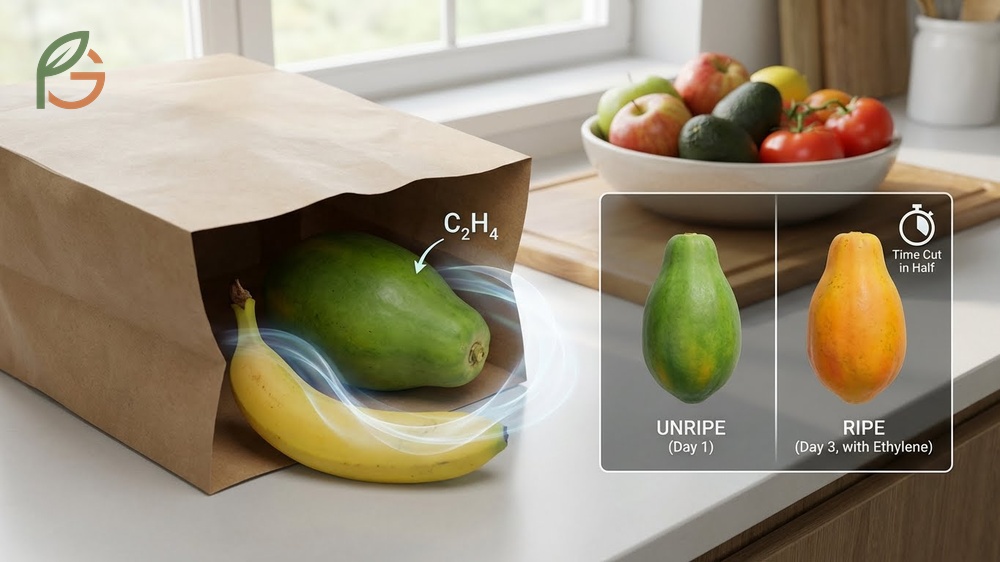
Ethylene gas is the secret to cutting ripening time in half. All fruits produce this colorless, odorless hormone, but some generate it faster than others. Research demonstrates that exposing papayas to ethylene triggers polygalacturonase enzyme activity, which breaks down cell walls and softens the flesh[5].
You can boost ethylene exposure by pairing papayas with high-producing fruits. This principle explains why the paper bag method works—it concentrates ethylene from multiple sources in one space. Studies show volatile ester production increases significantly during ethylene-triggered ripening, developing the characteristic tropical aroma[5].
The Science Behind Ethylene
Current research shows ethylene stimulates color change by breaking down chlorophyll and activating carotenoid pigments. This process transforms green papayas to yellow-orange within 24-48 hours under optimal conditions. The gas also converts starches to sugars, improving sweetness levels.
Commercial operations use 100 ppm ethylene concentration at 68-77°F (20-25°C) for uniform results[6]. Home ripening replicates this by trapping naturally occurring ethylene.
Best Companion Fruits
- Bananas: Produce high ethylene levels and ripen papayas in 1-2 days when enclosed together[1]
- Apples: Release steady ethylene output, ideal for controlled ripening without overacceleration[3]
- Avocados: Generate moderate ethylene, useful when you want 2-day ripening instead of 24 hours
- Tomatoes: Work as ethylene sources but produce less gas than bananas or apples
- Pears: Offer gentle ethylene production for gradual ripening control
Pro Tip: Don’t mix ethylene-sensitive vegetables like lettuce or broccoli with ripening papayas—the gas will cause them to spoil faster.
Speed Up Ripening with Temperature Control
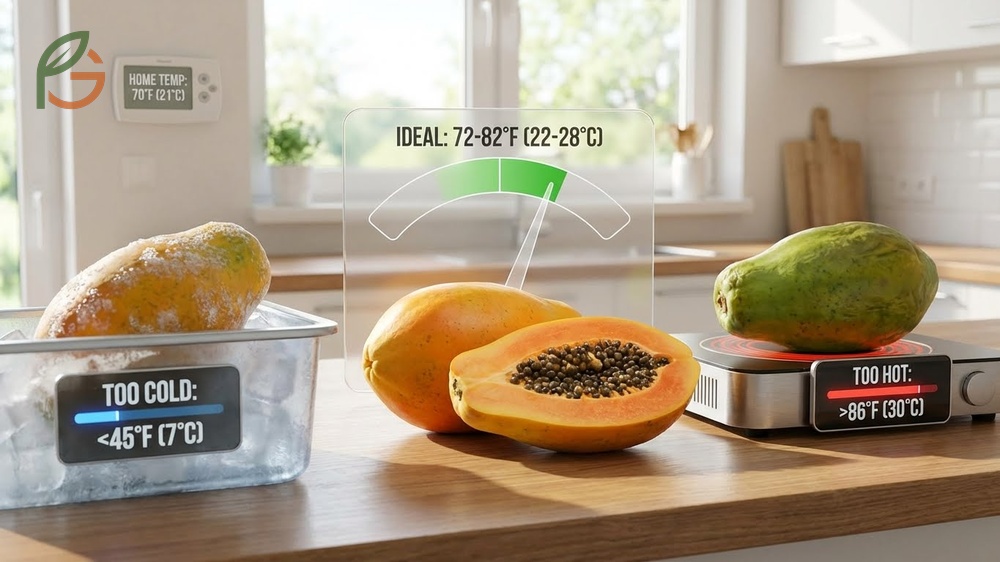
Temperature management is the most critical factor in papaya ripening speed. Evidence indicates fruit pulp temperature between 72-82°F (22-28°C) produces the best color development and texture[2]. Agricultural data shows temperatures above 86°F (30°C) halt the ripening process entirely, while temperatures below 45°F (7°C) cause permanent chilling damage[8].
Most American homes maintain 68-75°F (20-24°C) during daytime, which falls within acceptable ripening range. You can accelerate ripening by placing papayas near (not on) warm appliances like your refrigerator’s exterior or dishwasher. The reason is simple: each 10°F increase speeds enzymatic activity until you hit the 82°F (28°C) ceiling.
Research shows humidity levels of 90-95% prevent excessive water loss and skin shriveling during ripening[7]. If your home is dry, place a shallow water dish near your ripening papayas. This matters because dehydration slows chemical reactions that convert starches to sugars.
- Optimal ripening zone: 72-82°F (22-28°C) for best results
- Acceptable range: 68-77°F (20-25°C) during ethylene application
- Storage after ripening: 50-55°F (10-13°C) for up to 1 week[7]
- Danger zone (too hot): Above 86°F (30°C) stops ripening
- Danger zone (too cold): Below 45°F (7°C) causes chilling injury[8]
Paper Bag Method: Step-by-Step
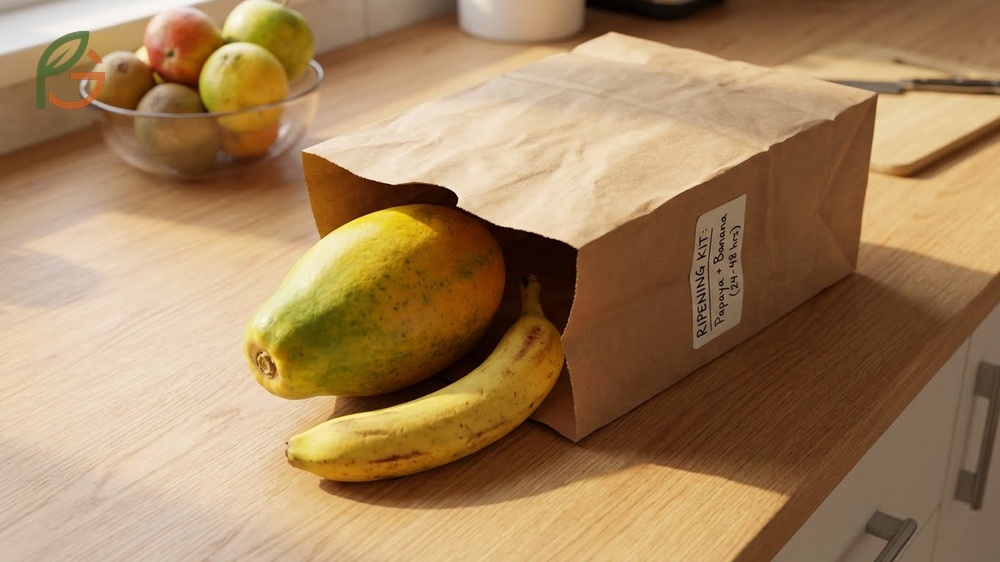
The paper bag technique is your fastest home option for ripening papayas. Studies show this method reduces time from 2-3 days to 24-48 hours by concentrating ethylene gas[1]. You’ll need a clean brown paper bag (not plastic, which traps moisture and causes mold) and optionally a banana or apple.
Select a papaya that’s at least 25% yellow—completely green fruits won’t develop good flavor even with accelerated ripening[7]. Place it in the bag with your ethylene-producing companion fruit. Fold the top over loosely—don’t seal it completely or you’ll create a humid environment that encourages fungal growth.
Position the bag in a room-temperature spot away from direct sunlight. Check your papaya every 12 hours by gently pressing near the stem end. When it yields slightly to pressure and shows 75-100% yellow-orange coloration, it’s ready[4].
- Step 1: Choose a papaya with 25-50% yellow coloration already visible
- Step 2: Place fruit in a clean brown paper bag with 1-2 bananas or apples
- Step 3: Fold the bag top loosely—leave small gaps for air circulation
- Step 4: Store at 68-75°F (20-24°C) on your counter, away from sunlight
- Step 5: Check twice daily for color change and gentle softness
- Step 6: Remove when 75% yellow and slightly soft to touch—usually 24-48 hours[1]
Warning: Don’t use plastic bags for ripening—they trap moisture and cause mold growth. Paper bags allow just enough air exchange to prevent spoilage while concentrating ethylene.
Counter Ripening Papaya Tips
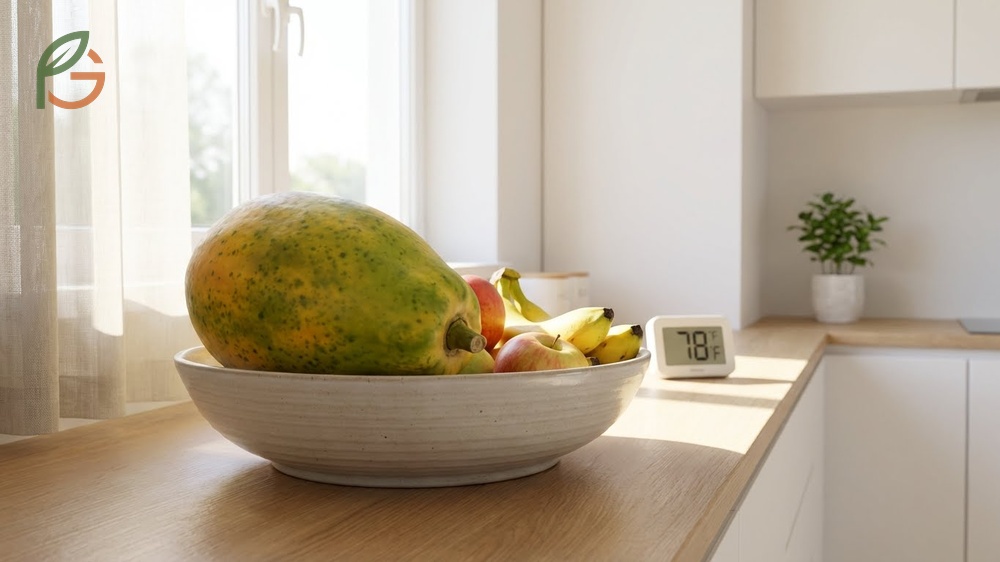
Counter ripening works when you’re planning meals 2-3 days ahead. Research shows papayas left at room temperature ripen naturally through their own ethylene production[1]. This passive method requires less monitoring than accelerated techniques.
Place your papaya stem-side down on a clean counter or fruit bowl. Keep it away from direct sunlight, which can create hot spots above 86°F (30°C) that stall ripening[7]. Position it near other ripening fruits if you want a slight speed boost from ambient ethylene.
Check ripeness daily by examining skin color and applying gentle pressure. When your papaya transitions from mostly green to 75-100% yellow-orange with slight softness at the stem end, it’s ready to eat[4]. Most people find this method delivers good results without daily intervention.
- Location matters: Choose a stable room-temperature spot away from heat sources
- Avoid refrigeration: Cold stops ripening for papayas that aren’t already 50% yellow[8]
- Watch for overripening: Dark spots or sunken areas indicate the fruit has passed peak ripeness[4]
- Rotate position: Turn the papaya every 24 hours to ensure even ripening on all sides
- Group strategically: Place near bananas or apples (not touching) for subtle ethylene exposure
From My Experience: My cousin in Guadalajara, Mexico tried counter ripening Hawaiian papayas in August 2024. His kitchen averaged 76°F (24°C), and fruits reached perfect ripeness in 2.5 days versus the typical 2-3 day range—proving consistent room temperature delivers reliable results.
Conclusion
The evidence is clear: how to ripen papaya fast depends on manipulating ethylene concentration and temperature control. You’ll get best results using the paper bag method with bananas or apples at 72-82°F (22-28°C), which delivers ripe fruit in 24-48 hours compared to 2-3 days for counter ripening[1].
Current agricultural guidance emphasizes starting with fruit that shows at least 25% yellow coloration—immature green papayas won’t develop proper sweetness regardless of ripening method[7]. FruitGarden helps gardeners and fruit enthusiasts master these techniques for consistently delicious results.
Frequently Asked Questions
How long does it take to ripen papaya in a paper bag?
Papayas ripen in 1-2 days when placed in a paper bag with a banana or apple[1]. Research shows this method traps ethylene gas that accelerates color change and flesh softening. Check your fruit every 12 hours for optimal results.
Can you ripen papaya at room temperature?
Yes, papayas ripen naturally on your counter in 2-3 days at room temperature[1]. Studies demonstrate this passive method works best at 68-75°F (20-24°C) away from direct sunlight. The fruit produces its own ethylene gas to trigger ripening without intervention.
What temperature is best for ripening papaya fast?
The optimal temperature for fast papaya ripening is 72-82°F (22-28°C) with 90-95% humidity[2]. Current data shows temperatures above 86°F (30°C) halt ripening entirely, while storage below 45°F (7°C) causes permanent chilling damage[8].
Why do bananas help ripen papaya faster?
Bananas produce high levels of ethylene gas that triggers papaya ripening when enclosed together. Research demonstrates ethylene activates enzymes that break down cell walls, soften flesh, and convert chlorophyll to yellow-orange pigments[5]. This concentrated exposure speeds ripening from 2-3 days to 24-48 hours.
How do you know when papaya is ripe?
Ripe papayas display 75-100% yellow-orange skin with slight softness when gently pressed near the stem end[4]. Evidence suggests avoiding fruits with extensive dark spots or sunken areas, which indicate overripening. The fruit should yield to gentle pressure but not feel mushy.
Can you refrigerate unripe papaya?
Never refrigerate papayas that are less than 50% yellow—cold temperatures below 45°F (7°C) stop ripening permanently and cause chilling injury[8]. Studies show you can refrigerate fully ripe papayas at 50-55°F (10-13°C) for up to 1 week to extend shelf life[7].
Does sunlight help ripen papaya faster?
Placing papaya in a warm, sunny windowsill can accelerate ripening if temperatures stay within 72-82°F (22-28°C)[2]. However, direct sunlight often creates excessive heat above 86°F (30°C) that stalls ripening entirely[7]. Most people get better results using the paper bag method in a room-temperature location.





