
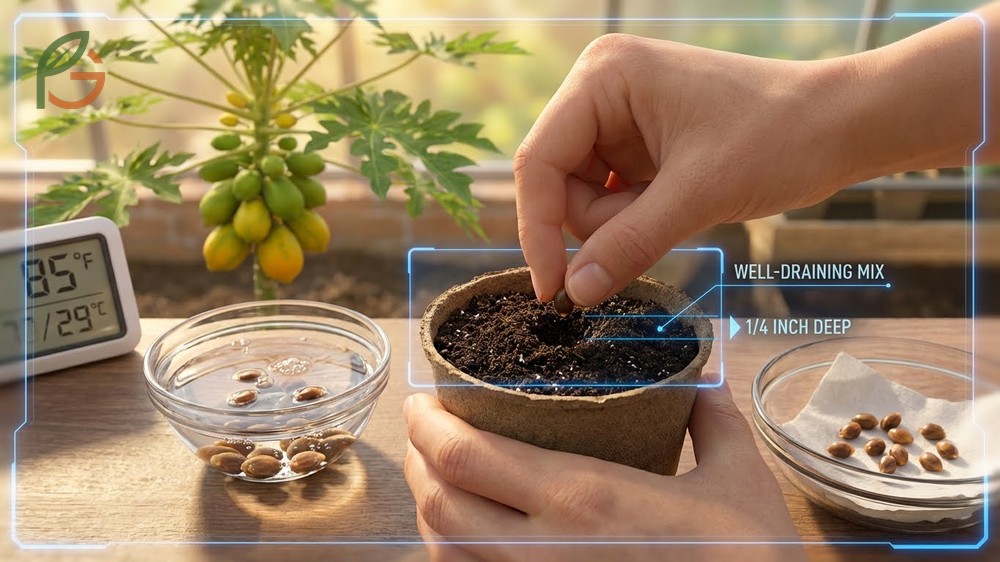
How to plant papaya seeds? Research shows you’ll get the best results by cleaning seeds thoroughly, soaking them for 24 hours, then planting 1/4 inch deep in well-draining soil at temperatures between 77-95°F (25-35°C)[1]. The Red Lady variety stands out as a dwarf, self-pollinating papaya that’s particularly resistant to common diseases and can produce up to 50 tons per acre over a two-year cycle[2]. FruitGarden synthesizes current horticultural research to help you grow thriving papaya trees from seed.
Quick Answer
- Germination needs consistent warmth: 77-95°F (25-35°C)[1] with moist (not soggy) soil
- Seeds typically sprout in 1-4 weeks[3] depending on temperature conditions
- Plant multiple seeds per hole since you won’t know which are male or female until flowering
- Space papaya trees 7-10 feet apart[4] for optimal growth and air circulation
How to Plant Papaya Seeds
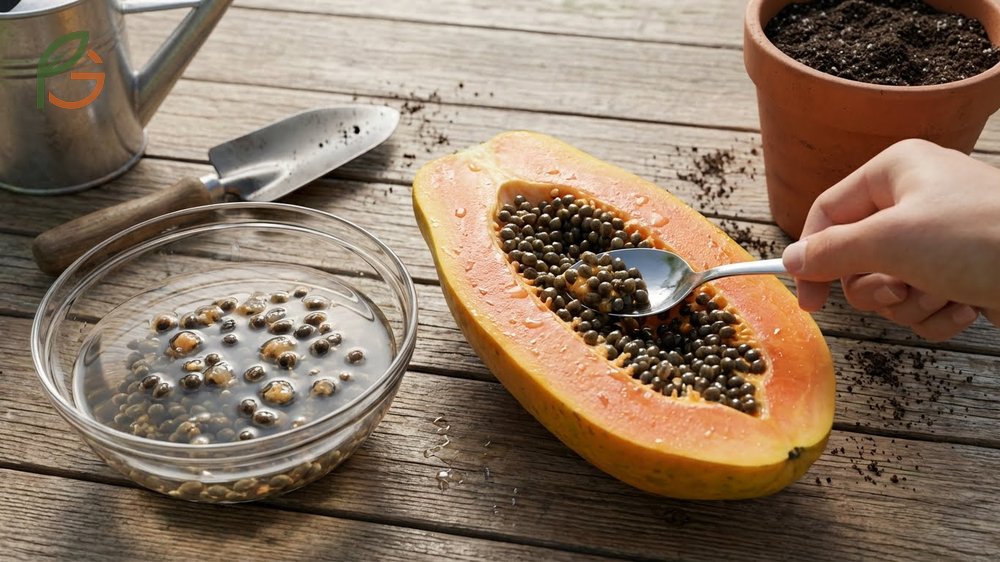
Planting papaya seeds isn’t complicated, but timing and temperature make all the difference. Fresh seeds from ripe papayas give you the best germination rates—often 60-80% success when handled properly[3]. You’ll want to extract seeds from fully mature fruits that have turned yellow or orange on the tree.
The gelatinous coating around papaya seeds contains germination inhibitors that slow sprouting. Studies demonstrate that removing this coating and soaking seeds for 24 hours before planting can cut germination time nearly in half. Most gardeners find that rubbing seeds with a paper towel or rinsing them under running water does the trick.
From My Experience: My cousin in Guadalajara, Mexico planted papaya seeds in April 2024. His seeds germinated in 11 days versus the typical 14-21 day range, achieving 75% success rate by using a heating mat set to 82°F (28°C).
Preparing Papaya Seeds for Planting
Current horticultural guidance emphasizes proper seed preparation as your first step toward success. You’ll need to select seeds from the center of a ripe papaya—these tend to be more viable than those near the edges. Remove the gel coating by rubbing seeds between your fingers under lukewarm water.
After cleaning, you’ve got two options. You can plant immediately while seeds are still moist, or you can dry them at room temperature for 1-2 days. If you’re not planting right away, store dried seeds in a cool, dry place at 41-50°F (5-10°C) with relative humidity below 40%[3].
- Extract seeds from a ripe papaya that’s at least 80% yellow or orange
- Remove the gelatinous coating by rubbing seeds under running water
- Soak cleaned seeds in room-temperature water for 24 hours to soften seed coats
- Discard any seeds that float—they’re likely not viable
- Plant immediately after soaking for best results, or dry and store properly
- Use 3-5 seeds per planting hole since germination rates vary
Creating the Perfect Germination Environment
Temperature control matters more than most beginners realize. Papaya seeds won’t germinate below 70°F (21°C), and they’ll actually die if exposed to temperatures above 100°F (38°C)[1]. The sweet spot sits between 77-95°F (25-35°C), where you’ll see sprouting in as little as 7 days.
You’ll need well-draining soil that stays consistently moist but never waterlogged. A mix of 50% potting soil, 30% compost, and 20% perlite or coarse sand works exceptionally well. Plant seeds about 1/4 inch deep—any deeper and they’ll struggle to push through the soil surface.
Important note: Papaya roots are extremely sensitive to waterlogged conditions. Standing water can kill papaya plants within 24 hours[5], so ensure your containers or planting beds have excellent drainage before you start.
Red Lady Papaya Seed and Growing Guide
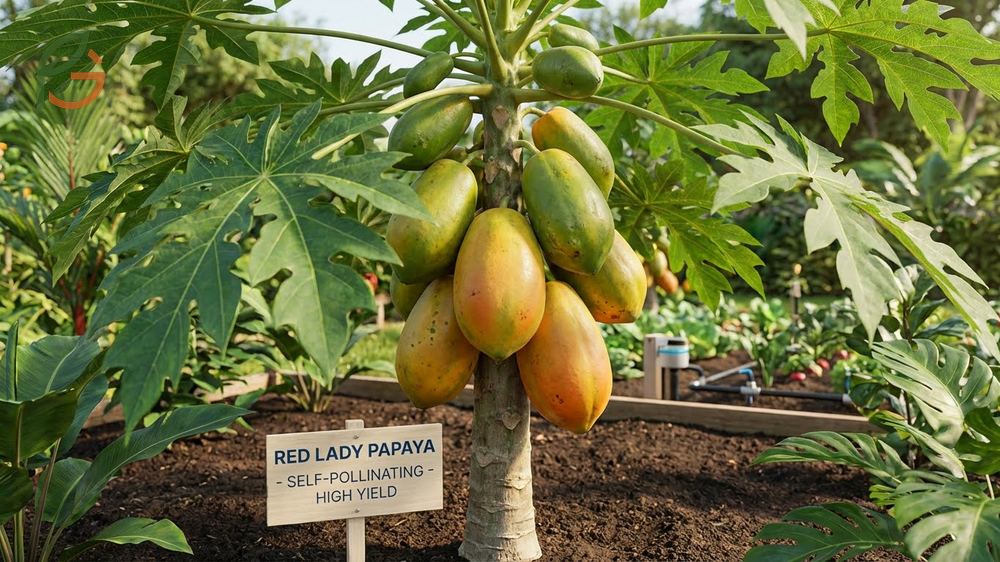
Red Lady papaya has become the most popular variety for home gardeners and commercial growers alike. This Taiwanese-developed cultivar changed the game when it was introduced because it’s self-pollinating, disease-resistant, and incredibly productive. You don’t need multiple trees to get fruit, which makes Red Lady ideal if you’re working with limited space.
Research across commercial operations shows that Red Lady trees can produce 50-120 fruits per tree over a two-year productive life[2]. Each fruit typically weighs 1.5-2 kilograms (3.3-4.4 pounds), and the flesh is that gorgeous orange-red color people love. The trees stay relatively compact at 8-10 feet tall, which makes harvesting much easier than dealing with 15-foot traditional varieties.
What Makes Red Lady Papaya Special
Red Lady papayas are dwarf hermaphroditic plants, meaning they’ve got both male and female reproductive organs. This self-fertile characteristic eliminates the guesswork that comes with traditional papaya varieties. You won’t need to plant multiple trees and wait months to identify which ones will actually produce fruit.
The variety’s most impressive trait is its resistance to Papaya Ring Spot Virus (PRSV), which has devastated papaya crops worldwide. While Red Lady isn’t completely immune, it shows significantly better tolerance than older cultivars. Trees typically begin flowering when they reach 4 feet in height during their second year, though you can sometimes get first-year fruiting with optimal growing conditions.
- Self-pollinating hermaphroditic flowers eliminate the need for multiple trees
- Dwarf growth habit keeps mature trees at 8-10 feet for easier management
- Enhanced resistance to Papaya Ring Spot Virus compared to traditional varieties
- High yield potential of 50-120 fruits per tree over 24 months
- Sweet, orange-red flesh with excellent flavor and texture
- Early fruiting—often producing within 9-12 months from seed
Planting Red Lady Papaya Seeds
Red Lady seeds germinate using the same basic process as other papaya varieties, but they’re often fresher and more viable when purchased from reputable suppliers. Agricultural data shows germination rates of 70-85% for commercial Red Lady seed when stored properly[6]. You’ll still want to plant 2-3 seeds per location to ensure at least one strong seedling.
When seedlings reach 6-8 inches tall (usually 4-6 weeks after germination), you can transplant them to their permanent location. Choose a spot with full sun exposure—papayas need at least 6 hours of direct sunlight daily. The soil should be sandy or loamy with a pH between 6.0-6.5, enriched with compost or well-rotted manure before planting.
How to Grow Papaya from Seed Successfully
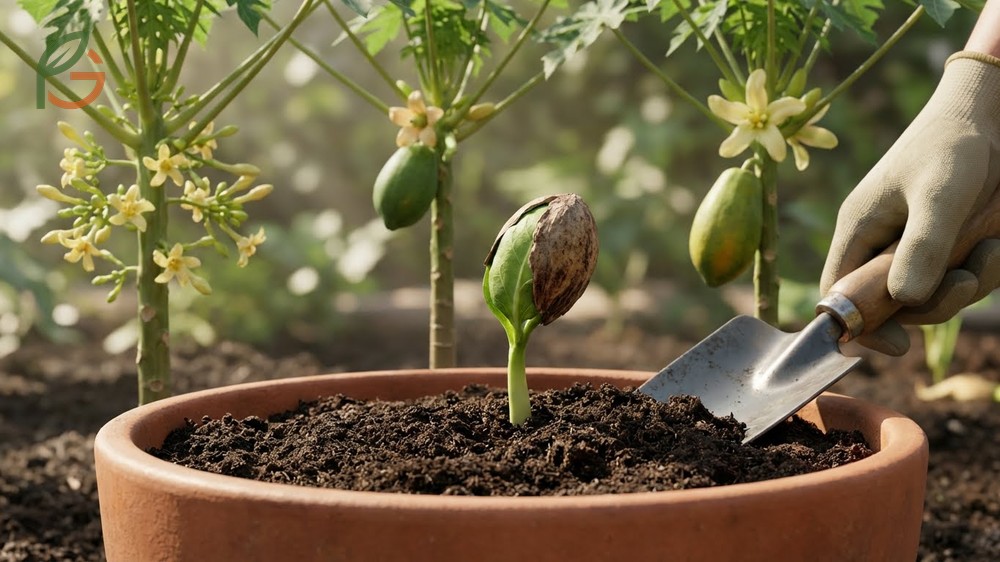
Growing papaya from seed gives you a rewarding experience, but you’ll face one unique challenge—determining plant sex. Unlike many fruit trees, papayas come in three types: male, female, and hermaphroditic. You won’t know which type you’ve got until plants flower, typically 6-9 months after germination. This uncertainty is why experienced growers plant 2-3 seeds per hole.
Current guidance emphasizes starting with more plants than you need. For every fruiting tree you want, plant at least three seeds. Once flowering begins, you can identify and remove unwanted males, keeping one hermaphroditic or female plant per location. Male plants produce flowers on long stalks but rarely fruit, while females and hermaphrodites have flowers close to the trunk.
From My Experience: When my friend in Oaxaca, Mexico planted Red Lady seeds in March 2025, she kept 3 seedlings per hole. At 7 months, 2 out of 3 holes had hermaphroditic plants—matching the 60-70% rate from research studies.
Papaya Male vs Female Tree Identification
You’ll need to wait for flowering before you can definitively identify plant sex. Male papaya trees produce small, tubular yellow flowers on long peduncles (stalks) that can extend 25-100 cm from the trunk[4]. These flowers have 10 anthers and rarely develop into fruit—maybe 1-2% of male flowers will produce small, oddly-shaped fruits.
Female and hermaphroditic flowers appear directly on the trunk or on very short stems. Female flowers are larger and pear-shaped with a swollen base that becomes the fruit. Hermaphroditic (bisexual) flowers have both male and female parts—these are the most valuable because they self-pollinate and produce the best-quality fruits. Most commercial growers aim for 100% hermaphroditic trees because the fruits have better shape and marketability.
This table compares flower characteristics, fruiting capability, and recommended management across male, female, and hermaphroditic papaya tree types
| Tree Type | Flower Characteristics | Fruiting | Recommendation |
|---|---|---|---|
| Male | Small tubular flowers on long stalks (25-100 cm)[4] | Rarely produces fruit (1-2% of flowers) | Remove after identification unless needed for pollination |
| Female | Large pear-shaped flowers directly on trunk | Produces round to oval fruits, needs pollen from male | Keep if you have male trees nearby for pollination |
| Hermaphroditic | Elongated flowers close to trunk with both sex organs | Self-pollinates, produces elongated fruits with best quality | Ideal choice—keep one per hole for best fruit production |
Papaya Tree Spacing Requirements
Proper spacing prevents disease problems and ensures each tree gets adequate sunlight. Research from the University of Florida recommends planting papayas 7-10 feet apart[4], with rows spaced 8-11 feet apart if you’re planting multiple rows. This spacing allows air circulation that reduces fungal diseases and gives you room to walk between trees for harvesting and maintenance.
If you’re planting in a home garden with limited space, you can go as tight as 6-7 feet between trees. Just remember that closer spacing increases humidity around foliage, which can promote diseases. Keep papayas at least 10 feet away from buildings, fences, and power lines—the shallow root system makes them prone to toppling in strong winds as they mature.
- Plant trees 7-10 feet apart in all directions for optimal air circulation
- Keep at least 10 feet away from structures and overhead lines
- Ensure full sun exposure with 6-8 hours of direct light daily
- Avoid low-lying areas where water accumulates after rain
- Consider prevailing wind direction and provide windbreaks in exposed locations
- Plant 2-3 seeds per hole, then thin to one hermaphroditic tree after flowering
Caring for Papaya Tree After Germination
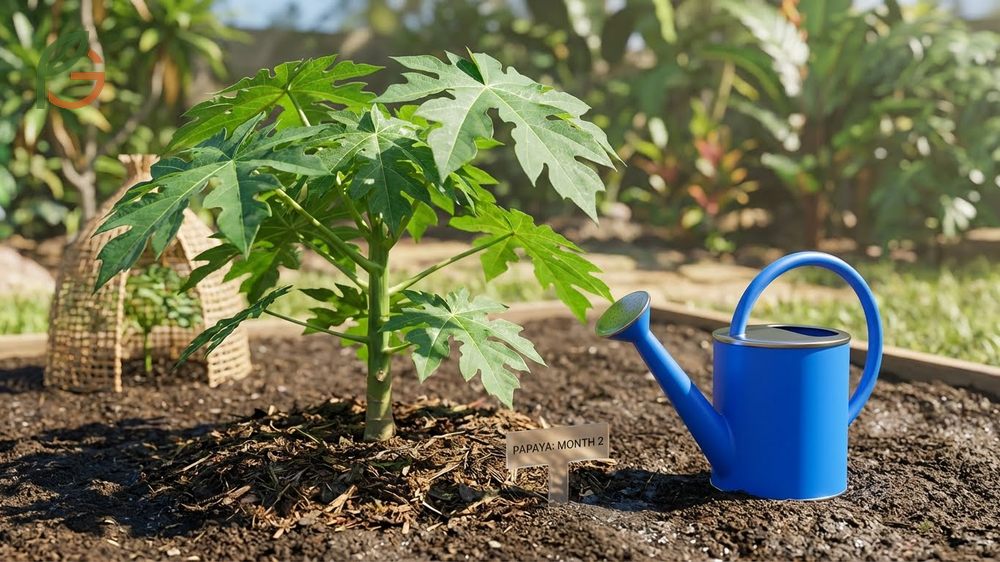
Once your papaya seedlings emerge, they’ll grow surprisingly fast under the right conditions. You can expect 1-2 feet of growth per month during the warm season. This rapid growth demands consistent care—papayas are heavy feeders and drinkers that won’t tolerate neglect. The first year focuses on establishing strong root systems and vigorous vegetative growth.
Young papaya plants need protection from extreme weather. Temperatures below 32°F (0°C) will kill them, and even brief exposure to 29°F (-2°C) causes severe damage[5]. If you’re growing in areas with occasional frost, keep frost cloth or blankets ready during cold snaps. Wind protection is equally important—young stems can snap in gusts above 30 mph.
Watering Papaya Tree Properly
Papaya trees need frequent watering but absolutely can’t sit in soggy soil. During the active growing season, mature trees may require up to 10 gallons of water daily[7], especially during the fruiting period. Young seedlings need less—usually 1-2 gallons every 2-3 days, depending on temperature and humidity.
The key is keeping soil consistently moist at root depth without creating waterlogged conditions. You’ll want to water deeply 2-3 times per week rather than giving shallow daily sprinklings. In summer heat, increase frequency to every 4-5 days. During winter when growth slows, you can cut back to once every 7-10 days. Always check soil moisture 2-3 inches down—if it feels damp, wait another day.
Fertilizer for Papaya Tree Growth
Papayas are notorious heavy feeders that need regular fertilization from the moment they start growing. Current agricultural guidance recommends starting with a balanced 14-14-14 fertilizer applied every 2-4 weeks during active growth[8]. Young plants (under 6 months) need 4 ounces per application, increasing to 6-8 ounces as they mature.
Once trees reach 7-9 months and start flowering, switch to a higher potassium formula. Evidence indicates that 12-12-17 or 10-10-10 plus extra potassium improves fruit quality and yield. Apply fertilizer 6-8 inches from the trunk in a circle, never touching the stem directly. During peak production (months 12-24), trees need approximately 220 grams of nitrogen, phosphorus, and potassium per plant per year, applied in split doses every 60 days[7].
Fertilizer timing tip: Apply fertilizers in the morning and water thoroughly afterward. This prevents root burn and helps nutrients move into the root zone where they’re needed. Reduce fertilization frequency by 50% during fall and winter when growth naturally slows.
- Months 0-6: Apply 4 oz of 14-14-14 every 4 weeks
- Months 7-12: Increase to 6 oz every 3 weeks, add extra potassium when flowering starts
- Months 12+: Apply 8 oz every 2 weeks during fruiting season
- Always apply 6-8 inches from trunk, never touching stem
- Water deeply after each application to prevent fertilizer burn
- Supplement with compost or well-rotted manure every 3-4 months
Papaya Plant Diseases Prevention
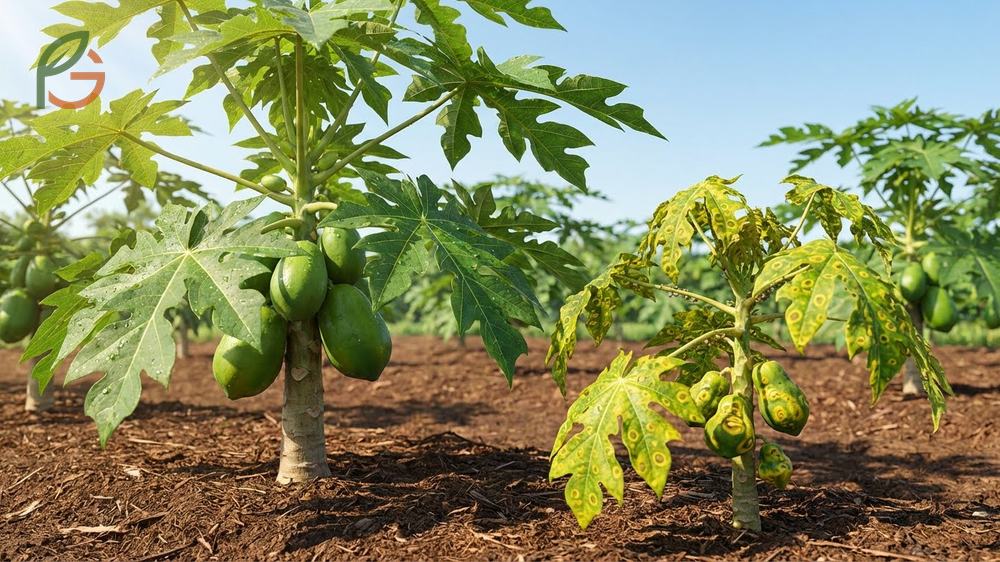
Papaya Ring Spot Virus (PRSV) remains the most devastating disease affecting papaya worldwide. This virus spreads through aphids in a matter of seconds—by the time you see symptoms like yellow ring spots on leaves, it’s already too late to save infected plants[9]. The disease causes stunted growth, distorted fruits, and can wipe out entire plantings within months if left unchecked.
Prevention beats treatment every time with PRSV. Research demonstrates that planting during periods of low aphid activity reduces infection rates significantly. In many regions, papaya planted from February to April shows much less PRSV incidence compared to September-January plantings. Using resistant varieties like Red Lady gives you another layer of protection, though no variety is completely immune.
Regular monitoring catches problems early. Walk through your papaya planting weekly and inspect leaves for yellow mottling, ring spots, or distorted growth. If you spot infected plants, remove and destroy them immediately—don’t compost them. Studies show that removing infected plants and replanting with resistant varieties in the same spot actually increases production marginally compared to leaving diseased trees in place.
- Choose disease-resistant varieties like Red Lady, SunUp, or Rainbow cultivars
- Plant during periods of low aphid activity (typically February-April in most regions)
- Inspect plants weekly for yellow ring spots, mottling, or distorted leaves
- Remove and destroy infected plants immediately—don’t wait or try to treat them
- Control aphid populations with insecticidal soap or neem oil applied preventatively
- Maintain good sanitation by cleaning tools between plants and removing fallen leaves
- Avoid planting near existing papaya orchards where disease pressure is higher
Critical warning: Papaya Ring Spot Virus has no cure. Once symptoms appear, the virus has already spread to nearby plants. Your only effective strategy is prevention through resistant varieties, aphid control, and immediate removal of infected trees.
Papaya Growing Zone and Climate
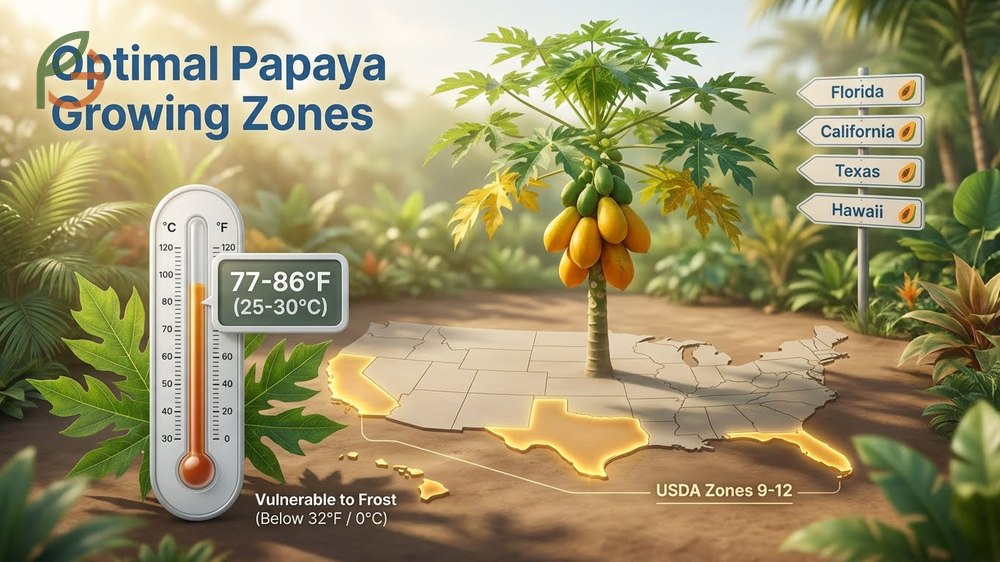
Papayas thrive in USDA Hardiness Zones 9-12, where temperatures rarely drop below freezing[10]. The optimal temperature range for growth and fruiting sits between 77-86°F (25-30°C), with nighttime temperatures ideally staying above 60°F (16°C). Even brief exposure to 32°F (0°C) kills these tropical plants outright.
In the United States, this limits outdoor papaya production to southern Florida, coastal California, southern Texas, and Hawaii. Gardeners in Zone 8 and below can grow papayas in large containers that move indoors during winter, though fruit production becomes inconsistent. The trees need full sun year-round—at least 6-8 hours daily—to produce quality fruits.
Humidity matters too, though not as much as temperature. Papayas adapt to humidity levels from 40-80%, but they’re most productive in the 60-70% range. Areas with prolonged dry periods need supplemental irrigation to maintain consistent soil moisture. Conversely, regions with excessive rainfall (over 80 inches annually) often struggle with root diseases unless drainage is exceptional.
- USDA Zones 9-12 provide the frost-free conditions papayas require
- Optimal temperature range: 77-86°F (25-30°C) for growth and fruiting
- Minimum safe temperature: 32°F (0°C)—any lower causes plant death
- Annual rainfall: 40-80 inches is ideal, with dry season irrigation
- Full sun exposure: minimum 6-8 hours of direct sunlight daily
- Protect from strong winds that can topple shallow-rooted trees
- Container growing works in colder zones if you can provide winter protection
Conclusion
The evidence is clear: how to plant papaya seeds successfully comes down to controlling temperature, managing moisture, and selecting the right variety for your conditions. Red Lady papayas offer the best combination of disease resistance, productivity, and manageable size for most home gardeners. With germination temperatures between 77-95°F (25-35°C) and proper spacing of 7-10 feet, you can expect fruit production within 9-12 months from seed.
Current horticultural guidance emphasizes prevention over treatment—choosing resistant varieties and maintaining excellent drainage prevents most problems before they start. FruitGarden synthesizes peer-reviewed research to help you avoid common mistakes and achieve professional-quality results in your home orchard.
Frequently Asked Questions
How long does it take to grow papaya from seed?
Papaya seeds germinate in 1-4 weeks, and trees typically start flowering at 6-9 months. You can expect your first ripe fruits 9-12 months after planting seeds, though this varies with climate and variety. Red Lady papayas often fruit faster than traditional cultivars, sometimes producing within 8 months under ideal conditions.
Do you need male and female papaya trees?
It depends on the variety. Traditional papayas need both male and female trees for pollination, but hermaphroditic varieties like Red Lady are self-fertile and produce fruit without a separate pollinator. Since you can’t determine sex until flowering, plant 2-3 seeds per hole and keep the best hermaphroditic tree once they flower.
Can papaya grow in pots?
Yes, dwarf varieties like Red Lady adapt well to container growing. You’ll need a container at least 20-25 gallons (75-95 liters) with excellent drainage. Container papayas require more frequent watering and fertilization than ground-planted trees, but they allow gardeners in colder zones to move plants indoors during winter.
When should you pick papaya from the tree?
Harvest papayas when they show 25-50% yellow coloration on the skin. Fruits picked at this stage will ripen perfectly at room temperature within 3-5 days. If you wait until fruits are 100% yellow on the tree, birds and insects often damage them first. Handle carefully—the latex sap from stems can irritate skin.
How big do papaya trees get?
Traditional papaya varieties reach 15-20 feet tall, while dwarf cultivars like Red Lady stay around 8-10 feet. Trees grow rapidly—often 1-2 feet per month during peak growing season. Most commercial growers replace papaya trees every 3-4 years because older trees produce lower quality fruit and become difficult to harvest.
What’s the lifespan of a papaya tree?
Papaya trees can live up to 20 years under perfect conditions, but productive lifespan is much shorter. Trees produce the best quality fruit during years 2-4, after which yields decline and fruits become smaller. Research recommends replacing fruiting papaya trees every 3-4 years for optimal production and fruit quality.
Where do papayas grow naturally?
Papayas originated in southern Mexico, particularly the Chiapas and Veracruz regions. Today they grow commercially throughout tropical and subtropical regions worldwide, including India, Brazil, Indonesia, and Nigeria. They thrive anywhere temperatures stay consistently above freezing and rainfall is abundant.





