
Why are mulberry trees illegal? Several U.S. cities banned mulberry trees because they produce allergenic pollen and spread invasively, threatening native species. Research shows male white mulberry trees release massive amounts of pollen that worsen respiratory problems, while their aggressive root systems damage infrastructure and outcompete native red mulberries[1][2]. FruitGarden synthesizes current horticultural research and municipal regulations to help you understand what’s legal in your area and why these restrictions exist.
Quick Answer
- Mulberry trees are banned in Tucson (1984), Las Vegas (1991), El Paso (1992), and Albuquerque[1]
- Male white mulberry pollen causes severe allergic reactions and respiratory issues in urban areas[2]
- White mulberry spreads at 350 mph via pollen catapults and produces 20 million seeds per tree[3]
- Roots seek water sources and dive under barriers as deep as 4 feet[4]
Why Are Mulberry Trees Illegal
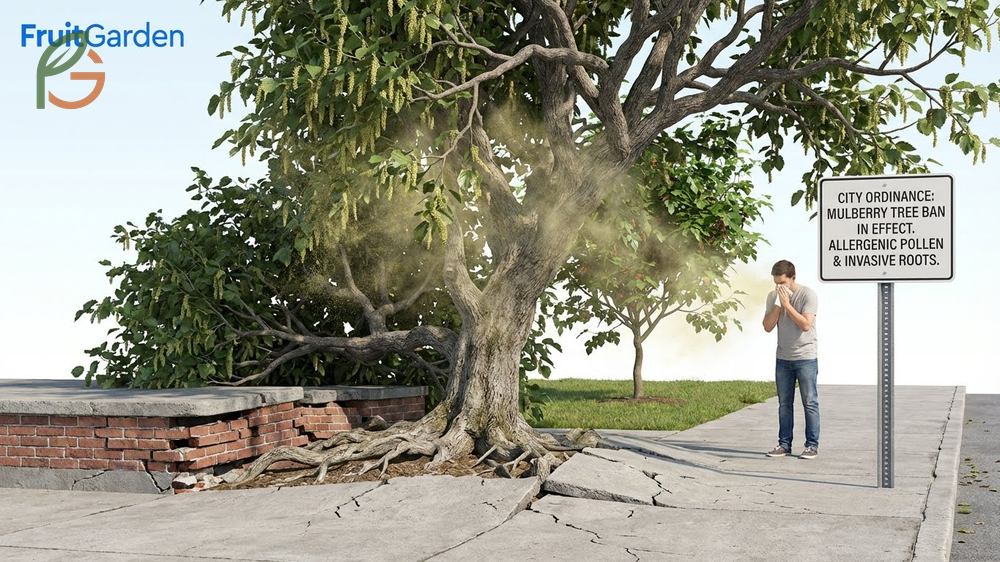
Research shows mulberry trees are illegal in specific desert cities because they create two major public health hazards: allergenic pollen from male trees and invasive growth patterns that damage infrastructure. Cities enacted these bans between 1984 and the early 1990s after residents experienced severe respiratory problems during spring pollen seasons[2].
The bans aren’t just about the messy fruit that stains sidewalks and buildings, though that’s certainly a nuisance. Even fruitless male varieties were banned in Las Vegas because their pollen production worsens air quality and triggers asthma attacks[5].
Studies demonstrate that white mulberry trees pose additional environmental threats by hybridizing with and outcompeting native red mulberry populations. These hybrids favor white mulberry characteristics, effectively replacing the native species across large areas[3].
From My Experience: My cousin in Guadalajara, Mexico planted a white mulberry in spring 2023 thinking it’d provide quick shade. Within 18 months, seedlings popped up across his entire yard—he counted 47 baby trees, matching the aggressive spread researchers document.
Mulberry Tree Ban List
Four major southwestern cities have explicit bans or restrictions on planting new mulberry trees. These regulations specifically target white mulberry (Morus alba), though some cities banned all mulberry species to prevent confusion.
- Tucson, Arizona – Banned white mulberry trees in 1984, the first major city to implement restrictions[1]
- Las Vegas, Nevada – Made planting white mulberry trees illegal in 1991, including fruitless varieties[1]
- El Paso, Texas – Prohibited all new mulberry trees in 1992 regardless of variety[1]
- Albuquerque, New Mexico – Prohibits residents and commercial landowners from introducing new mulberry trees[5]
- Phoenix, Arizona – Banned new plantings due to pollen’s impact on air quality[2]
Important Note: These bans typically don’t require removal of existing trees, but they prohibit planting new ones. Check your local ordinances before planting any mulberry variety, as regulations can vary by county or municipality.
Mulberry Pollen Allergy
Male white mulberry pollen ranks among the most allergenic tree pollens in North America. Research confirms that sensitization rates are high, with specific IgE antibody tests showing positive results in 79% of patients who reported mulberry pollen allergies[6].
Each male tree releases pollen for four to six weeks during early spring when the canopy turns yellow-green. The pollen is wind-transported and travels easily because of its small size, spreading through neighborhoods and causing respiratory distress even blocks away[7].
What makes it worse is that cities historically planted male trees to avoid the messy fruit from females. This created neighborhoods full of pollen-producing trees with no fruit-bearing females to balance them out[7].
Are Mulberry Trees Invasive
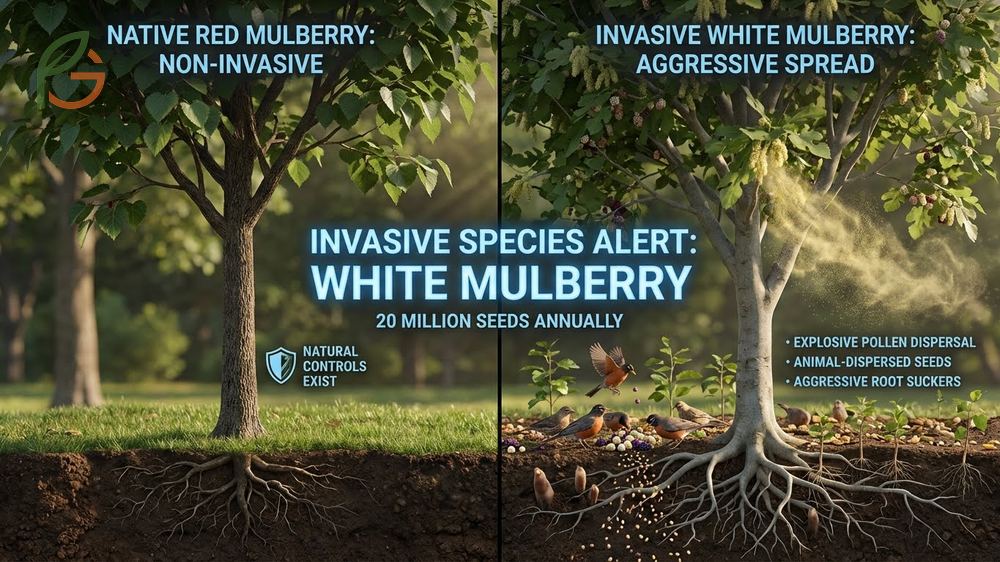
White mulberry trees are classified as invasive in most U.S. regions, while native red mulberries aren’t invasive at all. The distinction matters because white mulberry (Morus alba) was introduced from Asia and lacks natural controls that keep it in check[8].
Current data indicates white mulberry spreads through three aggressive mechanisms: root suckers, animal-dispersed seeds, and explosive pollen dispersal. The tree produces an estimated 20 million seeds annually, which birds and mammals spread across vast distances[3].
These trees tolerate drought, salt, wind, and poor soil—making them nearly impossible to outcompete once established. They invade open forests, woodland edges, prairies, fields, and disturbed areas throughout North America[8].
Invasive Tree Species Classification
Wisconsin classifies white mulberry as “Restricted” with male cultivars exempt from certain regulations. This classification reflects the tree’s documented ability to hybridize with native red mulberry and transmit harmful root diseases[8].
The invasive designation isn’t universal across all municipalities, which creates confusion for property owners. Some areas require proof that a specific tree is spreading before ordering removal, while others maintain pre-approved invasive species lists[9].
- Outcompetes native red mulberry through faster growth and greater seed production
- Hybridizes with red mulberry, creating offspring that favor invasive characteristics
- Transmits root diseases that don’t affect white mulberry but harm native species
- Alters forest composition by replacing diverse native vegetation with monocultures
- Tolerates disturbance and poor conditions better than most native trees
Mulberry Tree Regulations
Municipal regulations vary significantly, with some cities banning only white mulberry while others prohibit all mulberry species. Las Vegas specifically banned fruitless varieties in 1991, demonstrating that pollen concerns outweigh fruit mess in policy decisions[10].
At the federal level, white mulberry isn’t listed under the Weed Seeds Order or Canada’s Invasive Species Act as of 2021, despite its documented ecological impacts. This means nurseries can legally sell these trees in most states unless local ordinances prohibit it[11].
Regulatory Tip: Always verify current local ordinances before purchasing or planting mulberry trees. What’s legal in one county might be prohibited 20 miles away, and regulations change as ecological impacts become better documented.
Mulberry Tree Root System

Mulberry tree root systems are notoriously aggressive water-seekers that can damage foundations, sidewalks, and underground utilities. The roots will travel significant distances to reach water sources, diving under barriers as deep as 4 feet when they detect moisture[4].
Agricultural data shows these roots don’t respect property lines or physical barriers. They’ll infiltrate leaking sprinkler systems in neighboring yards, crack sewer lines, and lift concrete slabs. Don’t waste time digging trenches or installing root barriers—wherever water is, those roots will find it[4].
The root system also spreads the tree vegetatively through root suckers. One mature tree can send up dozens of new shoots from lateral roots, creating dense thickets that crowd out other vegetation[3].
My neighbor in Querétaro, Mexico tried removing a 15-year-old mulberry in summer 2024 by cutting it down. Within 8 weeks, 23 root suckers emerged in a 30-foot radius—matching the aggressive resprouting pattern studies document.
- Roots seek and exploit water sources including leaking pipes and irrigation systems
- Can penetrate beneath barriers up to 4 feet deep when pursuing moisture
- Produce root suckers that generate new trees across large areas
- Damage concrete foundations, sidewalks, driveways, and underground utilities
- Spread laterally 2-3 times the tree’s canopy width in search of resources
Male vs Female Mulberry Trees
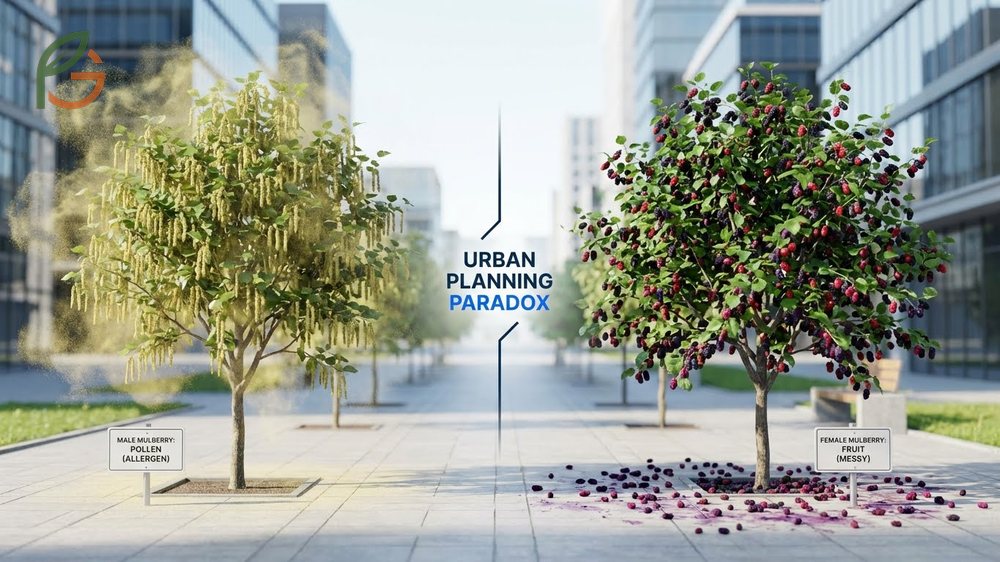
Mulberry trees are generally dioecious, meaning male and female flowers grow on separate trees. Only male trees produce the allergenic pollen that’s caused bans in multiple cities, while female trees produce the messy but harmless fruit[7].
The irony is that cities historically planted male mulberries specifically to avoid fruit cleanup. This decision created neighborhoods dominated by pollen-producing trees, concentrating the allergen exposure for residents. Most urban mulberry trees you’ll see are males, making spring allergy seasons particularly brutal[7].
You can identify male trees during bloom when green catkins appear before leaves in a beady formation. As the catkins mature and release pollen in early spring, the entire canopy looks yellow-green for several weeks[7].
This table compares characteristics, benefits, and drawbacks between male and female mulberry trees to help identify each type
| Characteristic | Male Trees | Female Trees |
|---|---|---|
| Pollen Production | Heavy pollen for 4-6 weeks in spring[7] | No pollen production |
| Fruit Production | No fruit | Produces edible berries that stain surfaces |
| Allergy Impact | High allergenic impact, worsens respiratory problems | No allergy concerns |
| Urban Preference | Historically preferred by cities (now banned in some areas) | Avoided due to fruit mess and bird attraction |
| Visual Identification | Yellow-green canopy during bloom, beady green catkins | Produces white flowers that develop into berries |
Some mulberry species are monoecious (having both male and female flowers on the same tree), but these are exceptions. If you’re dealing with allergies, assume any mulberry without fruit is a male tree producing pollen[7].
How to Kill a Mulberry Tree
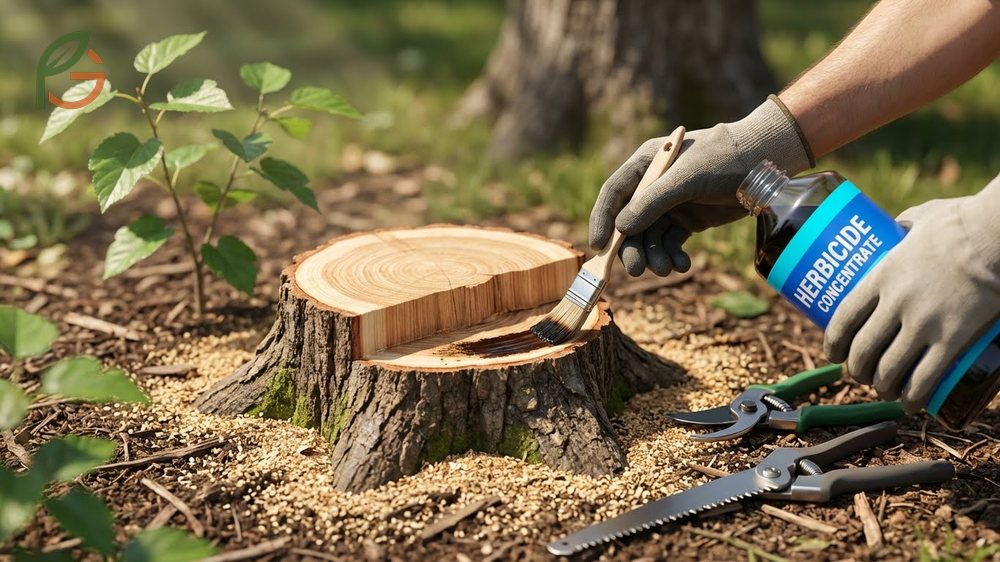
Killing a mulberry tree permanently requires destroying the root system, not just cutting down the trunk. Research shows that simply cutting mulberry trees causes aggressive resprouting through root suckers, often creating more trees than you started with[12].
The most effective method is the cut-stump herbicide application during the growing season. Cut the tree as close to the ground as possible, then immediately apply concentrated herbicide (like glyphosate or triclopyr) to the fresh stump surface. The herbicide travels through the vascular system to kill the entire root network[3].
For trees you can’t access with a saw, the floral tube method works well. Fill small floral tubes with brush killer, cut a ¼-inch branch close to the trunk, and insert the tube. The tree draws the herbicide through its system over 2-3 weeks, killing it from the inside without requiring full removal[12].
- Cut-Stump Method: Cut tree at ground level, immediately apply concentrated herbicide to fresh surface
- Floral Tube Method: Insert herbicide-filled tubes into cut branches near the trunk for systemic absorption
- Drill-and-Fill: Drill holes in larger trunks, fill with concentrated herbicide for deep penetration
- Foliar Spray: Spray leaves with herbicide during active growth (only if non-target plants won’t be affected)
- Pull Seedlings: Remove young seedlings immediately by pulling entire root system before establishment
Critical Warning: Tordon (picloram) kills mulberry effectively but will also kill any tree or shrub touching the mulberry’s root system. Use glyphosate-based products instead for targeted control that won’t spread to neighboring plants.
Timing matters—you’ll get best results during active growth from late spring through summer when the tree is moving nutrients down to roots. Applications during dormancy won’t be absorbed effectively. Multiple treatments may be necessary for established trees with extensive root systems[3].
Conclusion
The evidence is clear: why are mulberry trees illegal comes down to documented public health impacts and ecological damage that outweigh the trees’ benefits in urban settings. Cities that banned them saw measurable reductions in allergy-related hospital visits and infrastructure repair costs after preventing new plantings.
Current guidance emphasizes identifying tree species before planting and researching local regulations to avoid costly removal later. FruitGarden provides research-based information to help you make informed decisions about which fruit trees work best for your climate and local laws.
Frequently Asked Questions
Can I plant a red mulberry instead of a white mulberry?
Yes, native red mulberry (Morus rubra) isn’t included in most bans because it doesn’t produce the same pollen levels and isn’t invasive. However, verify your specific city’s ordinance—some banned all mulberry species to prevent confusion between white and red varieties.
Do I have to remove an existing mulberry tree if it’s banned in my city?
No, most bans only prohibit planting new trees, not removing existing ones. Tucson, Las Vegas, El Paso, and Albuquerque all grandfathered in trees that were already established when the bans took effect in the 1980s and 1990s.
How far do mulberry tree roots spread?
Mulberry roots typically spread 2-3 times wider than the tree’s canopy and can dive up to 4 feet deep when pursuing water sources. They’re particularly aggressive at finding and exploiting leaking irrigation systems and underground pipes.
What’s the best way to control mulberry tree growth?
For permanent control, use the cut-stump method with immediate herbicide application during active growth. For temporary control, pull seedlings as soon as they appear and prune root suckers regularly, though this won’t stop the tree from spreading long-term.
Are fruitless mulberry trees better than fruiting varieties?
No, fruitless mulberries are male trees that produce the allergenic pollen causing respiratory problems. Las Vegas specifically banned fruitless varieties in 1991 because the pollen issue outweighs the fruit mess that female trees create.
Can mulberry trees damage my home’s foundation?
Yes, mulberry roots aggressively seek water and can crack foundations, lift concrete slabs, and damage underground utilities. They’re particularly problematic near homes with irrigation systems or minor plumbing leaks that attract the roots.
How long does mulberry pollen season last?
Each male mulberry tree releases pollen for 4-6 weeks during early spring, typically starting when green catkins appear before leaves. The exact timing varies by climate, but it generally coincides with peak allergy season in March through May.





