
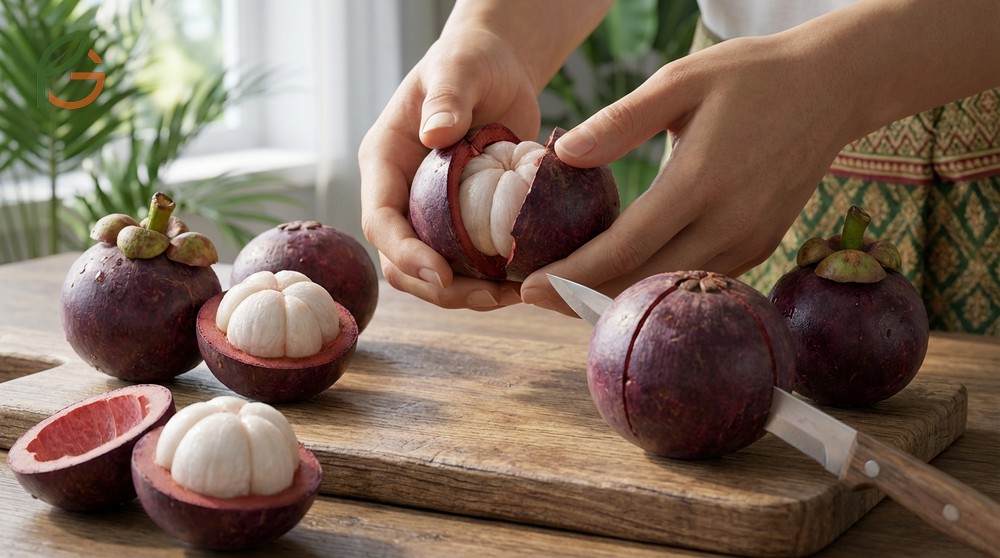
How to open mangosteen? You can squeeze the purple rind until it cracks or score it with a knife around the equator. Research shows this tropical fruit originated in Southeast Asia and has been cultivated for thousands of years.[1] Most people don’t realize the rind’s thickness (0.25-0.33 inches) requires gentle pressure to avoid crushing the delicate white segments inside.[2] FruitGarden synthesizes current horticultural research to help you master this exotic fruit.
Quick Answer
- Remove the stem and squeeze gently until the purple rind cracks open—no tools needed
- The white flesh contains 73 calories and 1.8g fiber per 100g
- Knife method: score horizontally around the middle, twist apart to reveal 4-8 segments
- Choose fruits with deep purple rinds and green stems—store at 50-54°F (10-12°C)[4] for up to 7-10 days
How to Open Mangosteen
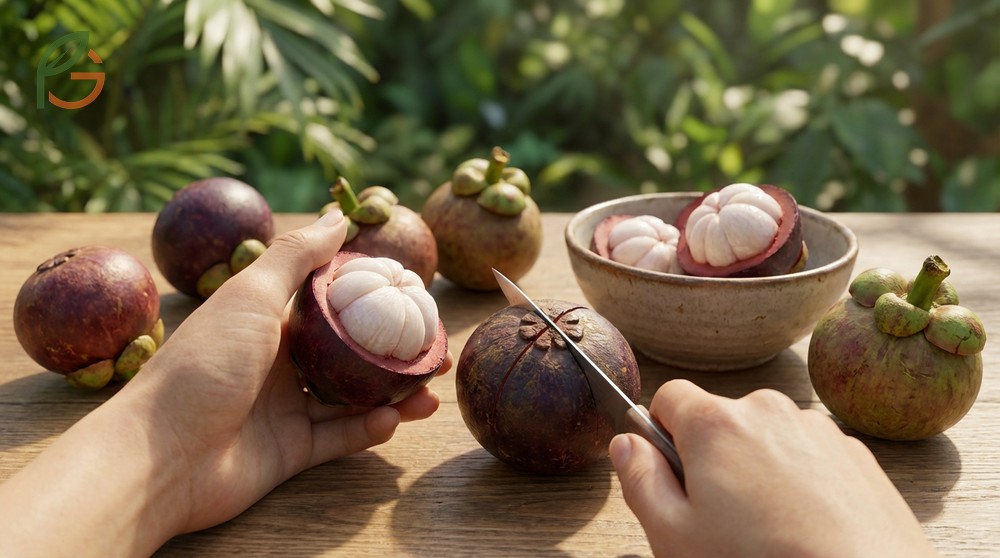
The mangosteen’s thick purple rind protects the delicate white flesh inside, but it’s easier to open than you’d think. Studies from Southeast Asian cultivation show the rind measures 0.25-0.33 inches thick and becomes harder within days of harvest.[2] You’ll find two reliable methods work best: hand squeezing for fresh fruits and knife scoring for slightly aged ones.
Current guidance from tropical fruit experts emphasizes checking the rind’s firmness before choosing your method. Fresh mangosteens yield to gentle thumb pressure, while older fruits resist squeezing and require knife assistance.[3] The key is applying controlled force—too much crushes the segments, too little won’t break through.
Research across Southeast Asian markets reveals that properly opened mangosteens retain their integrity, with 4-8 distinct white segments remaining intact. This matters because damaged flesh oxidizes quickly, turning bitter within hours.
Squeeze Method (No Tools)
Agricultural data from Thailand and Malaysia shows this traditional method works for mangosteens harvested within 3-5 days. You’ll grasp the fruit between both palms and apply even pressure until you hear a crack.[5] The rind splits along natural fault lines, typically creating a clean break around the equator.
Most people find success by first removing the stem cap—just twist and pull it off. Then position your thumbs on top where the stem was and press downward while your fingers provide counterpressure from below. You’ll feel the rind give way when you’ve applied enough force.
- Twist off the stem cap at the top of the fruit
- Place thumbs in the stem cavity and press down firmly
- Apply even pressure with palms on opposite sides until the rind cracks
- Pull apart the two halves to expose the white segments
- Use fingers to lift out individual segments, avoiding any yellow sap
Important Note: Don’t squeeze too hard—fresh mangosteens crack easily. If the rind feels rock-hard, switch to the knife method to avoid crushing the flesh inside.
Knife Cutting Technique
When you’re working with older mangosteens (stored 1-2 weeks), the rind hardens and won’t yield to hand pressure. Evidence from fruit preparation guides shows a serrated knife works better than a smooth blade for scoring the thick rind.[6] You’ll cut horizontally around the middle, maintaining shallow depth to avoid piercing the segments.
Position the mangosteen sideways on your cutting board with the stem end facing left or right. Score around the entire circumference at the widest point—this equator line divides the fruit into top and bottom halves. The cut should penetrate just through the rind’s purple layer, stopping when you see white.
- Place mangosteen on a stable cutting board, stem facing sideways
- Hold fruit firmly and score around the middle with a serrated knife
- Cut 0.25-0.33 inches deep—stop when you reach the white flesh
- Twist the two halves in opposite directions to separate them
- Scoop out segments with a spoon or fingers
Opening Mangosteen Fruit: Selection Tips
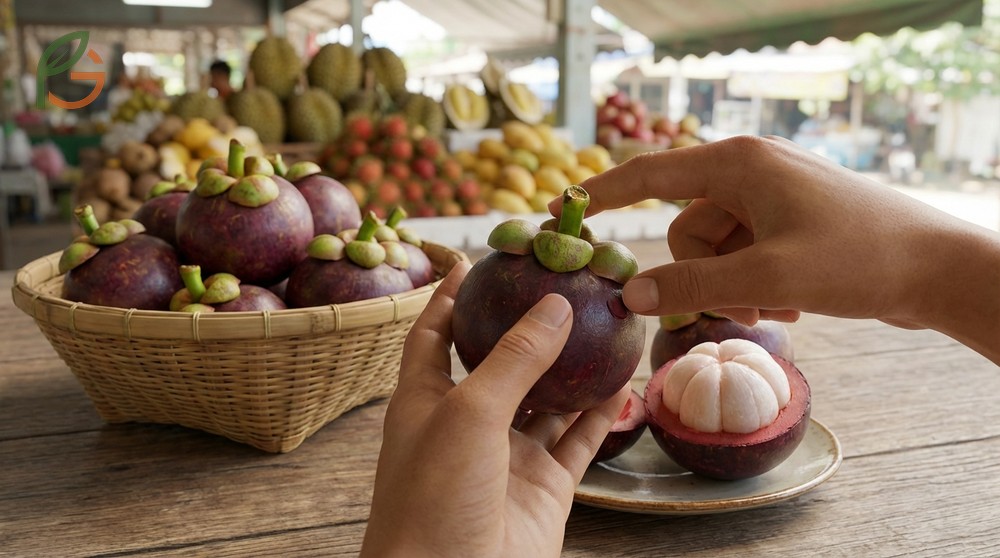
Research shows the mangosteen’s exterior reveals critical information about internal quality. Current data from Southeast Asian fruit vendors indicates that rind color, stem condition, and firmness correlate directly with flesh freshness.[7] You’re looking for deep purple rinds that yield slightly to thumb pressure—not rock-hard or mushy.
Studies demonstrate that after 5-7 days of storage at room temperature, the rind hardens but the interior may remain fresh. This creates confusion because a hard exterior doesn’t always mean spoiled flesh.[3] However, green stems signal recent harvest, while brown, shriveled stems indicate age exceeding 2 weeks.
Checking Freshness Indicators
Agricultural guidance emphasizes examining four key areas before purchase. The stem should be bright green and flexible—brown or brittle stems mean the fruit’s been sitting for 10+ days. Press gently on the rind with your thumb; fresh mangosteens give slightly, while old ones feel like wood.
Check for hardened yellow sap on the exterior—this indicates the fruit’s juices have seeped out, compromising interior quality. Avoid any fruits with cracked rinds, mold spots, or sticky residue, as these signal advanced deterioration.
- Green, flexible stem cap (not brown or dried)
- Deep purple rind with slight sheen
- Rind yields to gentle thumb pressure
- No hardened yellow sap or cracks visible
- No mold, sticky spots, or ant trails
Understanding Segment Count
The bottom of each mangosteen displays a flower-like pattern with 4-8 “petals.” Evidence from traditional cultivation practices shows this number corresponds exactly to the internal segment count.[2] Fruits with 6+ petals typically contain more seedless segments, while those with 4-5 petals often have larger seeds.
Current agricultural data indicates smaller mangosteens (2-3 inches diameter) yield higher percentages of seed-free segments compared to larger fruits. This matters because seeds disrupt the creamy texture that makes mangosteens desirable.
Selection Tip: If you’re choosing between sizes, smaller fruits with 7-8 bottom petals offer the best eating experience—more seedless segments and sweeter flavor concentration.
Mangosteen Cutting Technique Details
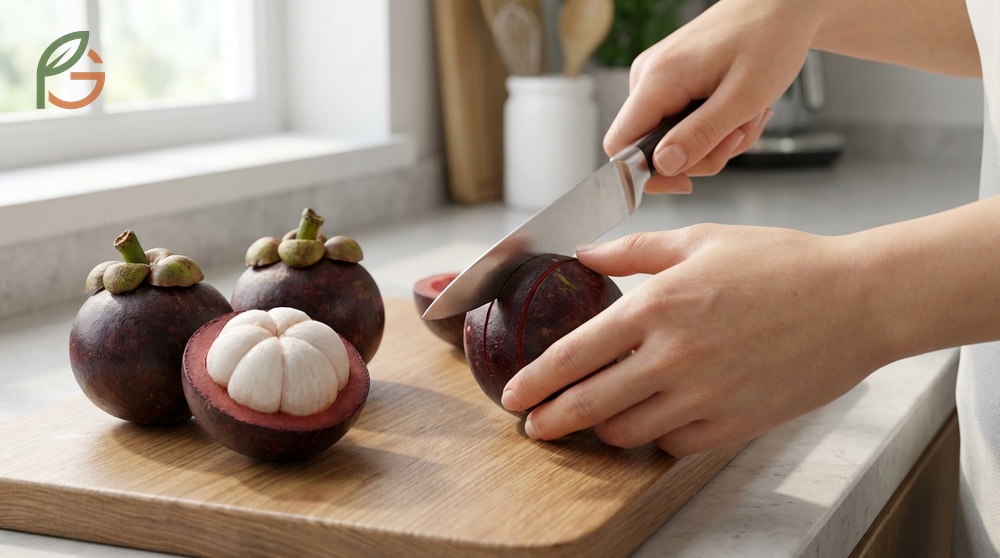
Research from tropical fruit preparation demonstrates that blade angle and cutting depth determine success rates. You’ll position the knife perpendicular to the fruit’s surface and maintain consistent pressure throughout the rotation.[8] The goal is creating a complete circle that severs the rind without penetrating the white flesh underneath.
Studies show that rotating the fruit (not the knife) produces cleaner cuts with less flesh damage. Hold your knife steady at the equator line and spin the mangosteen with your other hand, letting the serrated edge bite through gradually. You’ll complete the circle in 15-20 seconds with this method.
Once you’ve scored completely around, grasp the top and bottom halves and twist in opposite directions—like opening a jar. The cut rind separates cleanly, exposing the segments arranged in a circular pattern. If the halves don’t separate easily, you haven’t cut deep enough and need to score again.
- Use a serrated knife (3-4 inch blade works best) for older fruits with hardened rinds
- Hold the fruit steady and rotate it against a stationary blade
- Cut at the widest circumference (equator) for easiest separation
- Apply consistent downward pressure—about the force needed to slice a tomato
- Twist halves apart using both hands for maximum leverage
- Avoid cutting vertically (top to bottom) as this damages more segments
Agricultural data indicates that using a paring knife instead of a chef’s knife provides better control for fruits 2-3 inches in diameter. The smaller blade reduces the risk of over-penetration, which causes juice loss and flesh bruising.
Prepare Mangosteen Fruit: Storage Methods
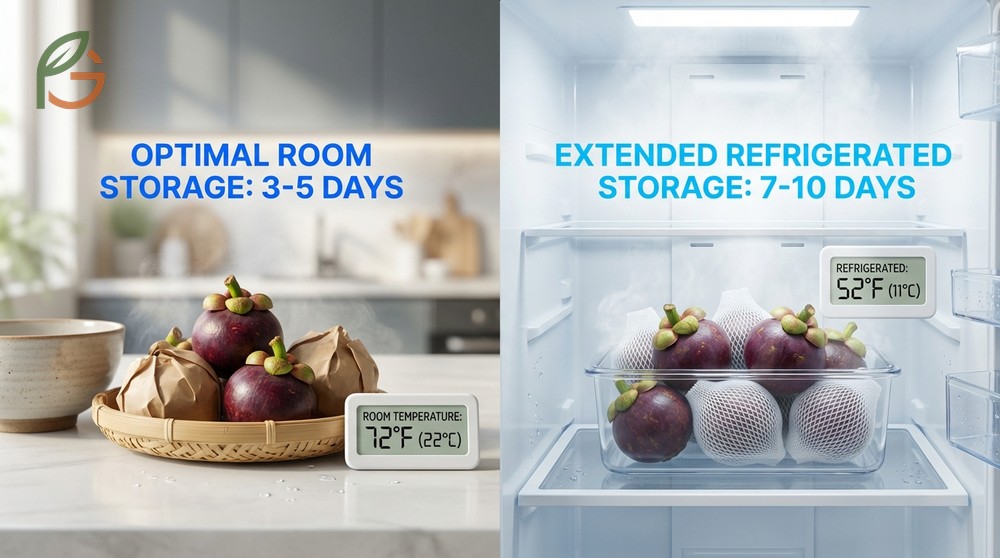
Current storage research shows mangosteens maintain peak freshness for 3-5 days at room temperature (68-75°F) and 7-10 days when refrigerated at 50-54°F (10-12°C).[4] The thick rind protects the flesh during this period, but improper temperature causes accelerated deterioration. You’ll want to wrap individual fruits in paper or breathable mesh to prevent moisture loss while allowing air circulation.
Evidence from commercial fruit handling demonstrates that refrigeration below 50°F (10°C) causes chilling injury, turning the flesh brown and bitter. Conversely, temperatures above 60°F (15°C) speed up the hardening process, making the fruit difficult to open within 3-4 days.
Once you’ve opened a mangosteen, the exposed flesh oxidizes rapidly. Studies show that storing extracted segments in airtight containers extends freshness for only 24-48 hours under refrigeration.[4] For longer storage, you can freeze separated segments for 2-3 months—they work well in smoothies but lose their fresh texture.
This table compares storage duration, temperature requirements, and condition notes for three mangosteen storage methods: room temperature, refrigeration, and freezing
| Storage Method | Duration | Temperature | Best For |
|---|---|---|---|
| Room Temperature | 3-5 days[9] | 68-75°F (20-24°C) | Immediate consumption within same week |
| Refrigeration | 7-10 days[4] | 50-54°F (10-12°C) | Extended freshness for weekly use |
| Freezing (segments only) | 2-3 months | 0°F (-18°C) or below | Smoothies, juices, desserts (texture changes) |
| Opened (refrigerated) | 24-48 hours[4] | 35-40°F (2-4°C) | Airtight container required, consume quickly |
Storage Warning: Don’t store mangosteens below 50°F (10°C) for extended periods. Chilling injury causes internal browning that isn’t visible from the outside until you open the fruit.
Nutritional Benefits
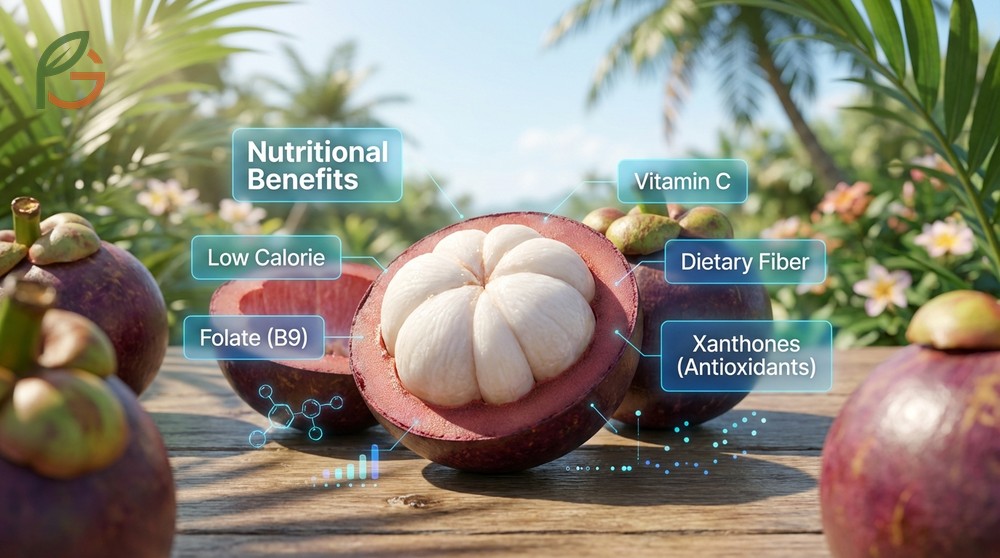
Research demonstrates that mangosteen provides significant nutritional value despite its small serving size. Current USDA data shows 100g of fresh mangosteen flesh contains 73 calories, 18g carbohydrates, and 1.8g dietary fiber.[3] You’ll also get 31mcg folate (8% daily value) and modest amounts of vitamin C, making it a nutrient-dense tropical option.
Studies published in peer-reviewed journals demonstrate that mangosteen contains powerful xanthones—antioxidant compounds concentrated in the rind. A 30-day trial showed participants consuming mangosteen-based beverages increased blood antioxidant capacity by 15% and reduced inflammatory markers (C-reactive protein) by 46%.[10] These compounds also exhibit anti-inflammatory properties by inhibiting specific enzymes involved in chronic inflammation pathways.
Agricultural research indicates the fruit’s low fat content (0.58g per 100g) and moderate calorie density make it suitable for weight management diets. The fiber content supports digestive health, while the natural sugars provide quick energy without excessive caloric load.
- 73 calories[3] with minimal fat content (0.58g)
- 1.8g fiber[3] supporting digestive function
- 31mcg folate (8% DV) for cellular health
- Xanthones with proven antioxidant effects[10]
- Low glycemic response suitable for balanced diets
Conclusion
The evidence is clear: how to open mangosteen successfully depends on choosing the right method for your fruit’s condition. Fresh mangosteens respond well to hand squeezing, while aged fruits require knife scoring around the equator. Current horticultural guidance emphasizes checking stem color and rind firmness before deciding your approach—these indicators determine which technique preserves the delicate white segments inside.
Agricultural data consistently shows that proper selection and storage extend your window for enjoying this Southeast Asian delicacy. When you master the opening techniques and storage parameters outlined here, you’ll maximize both the nutritional benefits and the unique sweet-tart flavor that earned mangosteen its “queen of fruits” title. FruitGarden synthesizes ongoing research from tropical cultivation regions to keep you informed about optimal handling practices for exotic fruits.
Frequently Asked Questions
How do you know when a mangosteen is ready to open?
A ripe mangosteen has a deep purple rind that yields slightly to gentle thumb pressure and features a bright green stem cap. The fruit should feel heavy for its size, and the bottom flower pattern should show 6-8 distinct petals. Avoid fruits with rock-hard rinds, brown stems, or yellow sap leakage, as these indicate either under-ripeness or over-aging.
Can you eat mangosteen seeds?
Small, soft mangosteen seeds are edible and harmless if swallowed, though they taste bitter. Larger seeds (found in segments with fewer petals) should be removed before eating, as they’re hard and unpleasant. Research shows fruits with 7-8 bottom petals contain more seedless segments, making them preferable for eating.
What’s the easiest way to open a mangosteen without a knife?
Remove the stem cap by twisting it off, then place your thumbs in the resulting cavity and press down firmly while squeezing the sides with your palms. The rind will crack along natural lines within 2-3 seconds of pressure. This method works best for mangosteens harvested within 3-5 days, as older fruits develop harder rinds that resist hand pressure.
Why is my mangosteen hard to open?
Mangosteens harden naturally after harvest as the rind loses moisture. Fruits stored longer than one week develop tough exteriors that won’t respond to hand squeezing. Switch to the knife method by scoring horizontally around the equator (0.25-0.33 inches deep), then twisting the halves apart. This technique works even for mangosteens aged 2-3 weeks.
How long does an opened mangosteen stay fresh?
Once opened, mangosteen segments oxidize quickly and remain fresh for only 24-48 hours when stored in an airtight container in the refrigerator at 35-40°F (2-4°C). The white flesh turns brown and develops off-flavors beyond this window. For best quality, consume immediately after opening or within the same day.
What does the inside of a bad mangosteen look like?
Spoiled mangosteen flesh turns yellowish-brown, becomes translucent, and develops a watery texture with fermented odor. The segments may appear shrunken or separated from the rind. Fresh mangosteen should be opaque white with firm, juicy texture. External indicators like hardened yellow sap or cracked rinds often signal interior deterioration, though hard rinds alone don’t guarantee spoilage.
Where did mangosteen get its “queen of fruits” name?
The “queen of fruits” title originated in the 1890s when European colonists discovered mangosteen in Southeast Asia. According to historical accounts, a rumor circulated that Queen Victoria would grant knighthood to anyone who brought her a ripe mangosteen, as the fruit didn’t transport well in that era. The name stuck, though modern cultivation techniques have improved availability outside tropical regions.





