
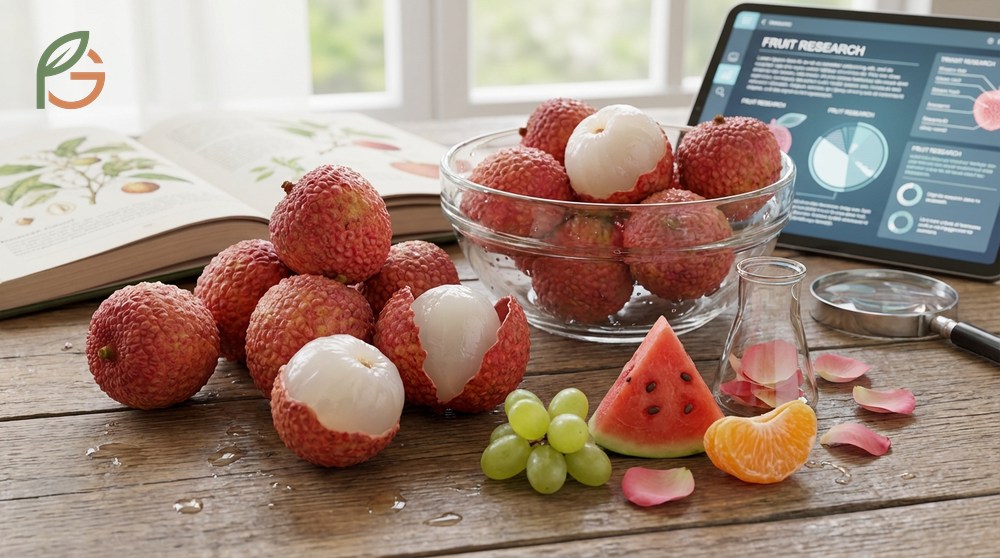
What does lychee taste like? Research shows this tropical fruit delivers a unique floral blend of grapes, watermelon, and citrus with delicate rose notes. Studies from the University of Florida demonstrate that volatile compounds like linalool and geraniol create lychee’s signature floral-fruity bouquet[1]. FruitGarden synthesizes current agricultural research to help you understand exotic fruits and enhance your growing knowledge.
Quick Answer
- Flavor profile: Sweet floral notes combining grape, watermelon, and rose with citrus undertones
- Texture: Translucent jelly-like flesh similar to firm grapes with juicy, succulent bite
- Nutrition: 66 calories and 72mg vitamin C per 100g serving
- Pronunciation: US says “LEE-chee” (/ˈliː.tʃiː/) or “LIE-chee” (/ˈlaɪ.tʃiː/), UK prefers “LIE-chee”[3]
What Does Lychee Taste Like
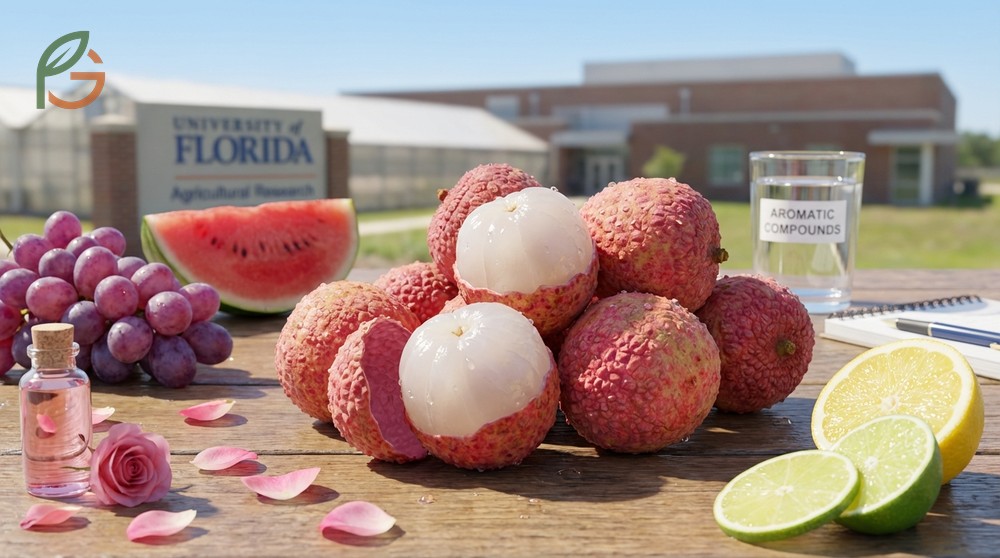
Agricultural data from the University of Florida shows lychee’s distinctive flavor comes from a complex blend of aromatic compounds including ethyl butyrate and linalool[1]. Most people describe the taste as a harmonious combination of sweet grapes, juicy watermelon, and floral rosewater with bright citrus undertones. The flavor isn’t dominated by sugar alone—it maintains a delicate balance that makes it refreshing rather than cloying.
The primary taste sensation hits you with moderate to high sweetness, measuring 15-20° Brix on the sugar scale. This sweetness comes with mild acidity similar to white grapefruit but without bitterness. What sets lychee apart from other tropical fruits is its pronounced floral character, more intense than rambutan but less perfumed than longan.
Current data indicates that ripeness dramatically transforms flavor. The USDA Agricultural Research Service notes that lychees harvested at peak ripeness contain 30% more aromatic compounds than those picked early[4]. Perfectly ripe fruit with bright red skin delivers the ideal sweet-floral balance, while underripe pink fruit tastes tart with grassy notes.
Lychee Texture Description
The flesh presents as translucent white with a jelly-like consistency that’s similar to peeled grapes but firmer. When you bite into fresh lychee, you’ll encounter a slight resistance before the flesh yields, releasing abundant juice. The texture combines elements of firm jelly and succulent grape, creating a satisfying mouthfeel that’s neither mushy nor overly crisp.
Research shows the outer shell—a pink-red, rough-textured covering—peels away easily when the fruit reaches optimal ripeness. The single brown seed inside is inedible and separates cleanly from the flesh. Most people find the texture more substantial than longan but softer than rambutan.
- Translucent white flesh with slight pearlescent quality
- Jelly-like consistency firmer than grapes but softer than apples
- Abundant juice release with each bite
- Smooth surface without fibrous strings or graininess
- Clean separation from inedible brown seed
- Rough pink-red shell that peels easily when ripe
Is Lychee Sweet or Sour
Evidence suggests lychee leans decidedly toward sweetness, with sugar content accounting for 15.2g per 100g serving[5]. The fruit contains mild acidity that prevents it from tasting syrupy or one-dimensional. This acid-sugar balance creates a refreshing eating experience, especially in warm weather where the fruit traditionally grows.
Unlike citrus fruits that deliver pronounced tartness, lychee’s acidity plays a supporting role. The subtle tang enhances the sweetness and floral notes rather than competing with them. Overripe fruit with brownish skin develops fermented notes as natural sugars break down, while underripe specimens taste noticeably sour with vegetable-like undertones.
Important Note: Lychee doesn’t continue ripening after harvest, unlike bananas or avocados. The flavor you experience at purchase remains constant, so select fruit with bright red skin and slight give when gently squeezed for the best sweet-to-acid ratio.
How to Pronounce Lychee
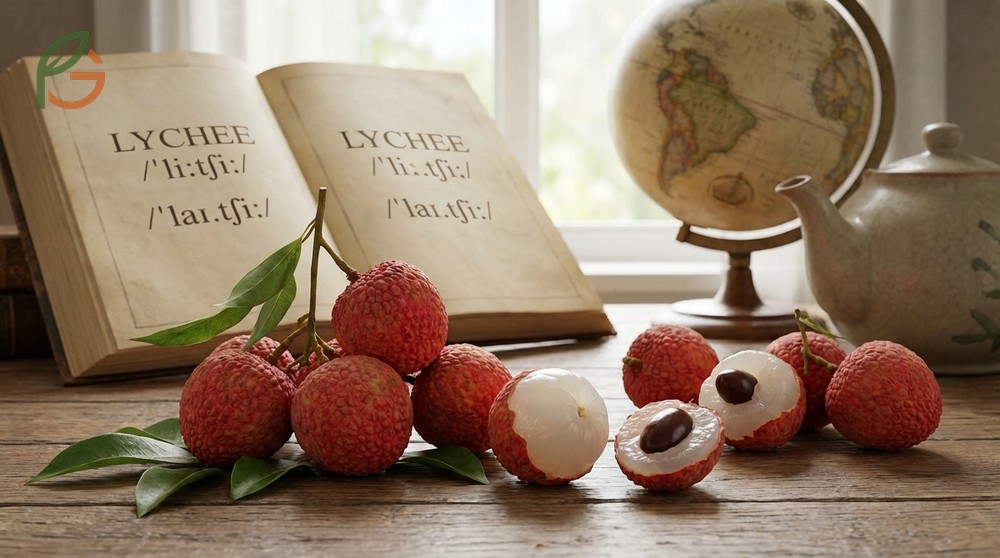
The Cambridge Dictionary documents two accepted pronunciations in American English: “LEE-chee” (/ˈliː.tʃiː/) and “LIE-chee” (/ˈlaɪ.tʃiː/)[3]. Both versions are correct, though “LEE-chee” appears more common in everyday American usage. British and Australian English speakers predominantly use “LIE-chee” as the standard pronunciation.
The word entered English from Cantonese during the 16th century, which explains the multiple spelling variations you’ll encounter. You might see it written as “lychee,” “litchi,” or “lichee”—all refer to the same fruit. The pronunciation breaks down into two syllables: the first rhymes with either “lee” or “lie,” while the second sounds like “chee” as in “cheese.”
Most Americans don’t stress over which pronunciation to use since both gain acceptance in grocery stores, restaurants, and casual conversation. If you’re unsure, listen to how locals say it in your area and follow their lead. What matters more than perfect pronunciation is knowing you’re talking about the delicious tropical fruit with distinctive floral-sweet flavor.
Pronunciation Differences
Regional variations reflect how the word adapted as it spread from Asia to Western markets. American English allows flexibility with both “LEE-chee” and “LIE-chee,” while British English standardized on “LIE-chee” as the preferred form. Australian speakers follow the British convention, creating consistency across Commonwealth countries.
The first syllable creates the main point of difference. In “LEE-chee,” your mouth forms a long ‘ee’ sound like “sheep.” In “LIE-chee,” you create a diphthong (two vowel sounds) similar to “eye” or “buy.” The second syllable remains consistent across all variants, using the ‘ch’ sound from “cheese” followed by a long ‘ee.’
- US pronunciation option 1: LEE-chee (/ˈliː.tʃiː/) – most common in American speech
- US pronunciation option 2: LIE-chee (/ˈlaɪ.tʃiː/) – also acceptable in America
- UK standard: LIE-chee (/ˈlaɪ.tʃiː/) – preferred British pronunciation
- Australian standard: LIE-chee (/ˈlaɪ.tʃiː/) – follows British convention
- Alternate spellings: litchi, lichee (pronounced the same way)
What is Lychee Fruit
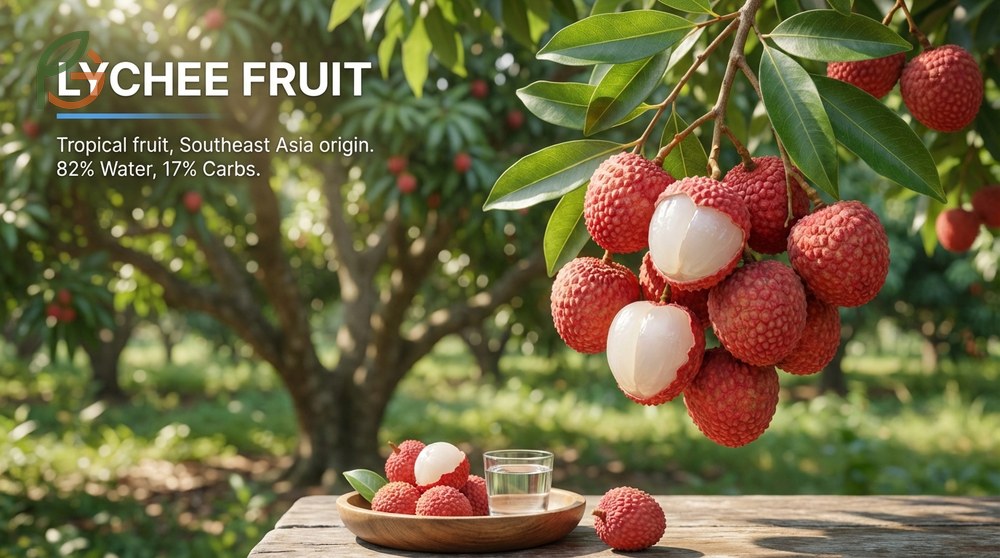
Lychee (Litchi chinensis) is a tropical fruit native to Southeast Asia, specifically southern China where cultivation dates back thousands of years. The fruit grows on evergreen trees that can reach 40-50 feet tall in optimal conditions. Each lychee measures roughly 1-2 inches in diameter, making it small enough to pop whole into your mouth after peeling.
Current agricultural data shows the fruit consists of 82% water, 17% carbohydrates, and 1% protein with negligible fat[2]. The edible portion provides substantial vitamin C—a 100g serving delivers 72mg, representing 79% of the Daily Value. This makes lychee an excellent choice for boosting immune function while enjoying its sweet floral flavor.
The fruit grows in clusters on branches, with harvest season typically running from late spring through early summer. In the United States, Florida produces most domestic lychees, with the season peaking in May and June. Commercial varieties include Brewster, Mauritius, and Sweetheart, each offering slightly different flavor profiles and fruit sizes.
Lychee Fruit in Spanish
Spanish speakers call this fruit “lichi” or “litchi” (masculine noun: el lichi)[6]. Both spellings appear in Spanish-language texts, cookbooks, and grocery stores throughout Latin America and Spain. The pronunciation in Spanish closely follows the original Asian phonetics: “lee-CHEE” with stress on the second syllable.
You’ll find lychees referenced in Spanish cuisine under names like “lichi fruta” (lychee fruit) or simply “lichi.” The fruit appears in Latin American markets during import season, particularly in specialty stores catering to Asian communities. When shopping in Spanish-speaking countries, ask for “lichi fresco” (fresh lychee) to distinguish from canned varieties.
What Does a Lychee Look Like
The exterior presents a distinctive bumpy texture with a rough pink-red shell that resembles reptilian skin. When ripe, the color ranges from bright red to deep rose-pink, with some brown spots acceptable as the fruit matures. The shell feels slightly soft with gentle pressure, indicating the flesh inside has reached peak juiciness.
Once you peel away the thin shell—which comes off easily with your fingernail or a small knife—you’ll reveal translucent white flesh that looks almost pearlescent. The flesh surrounds a single large brown seed that takes up about one-third of the fruit’s volume. The edible portion appears glossy and smooth, contrasting sharply with the rough exterior.
Selection Tip: Choose lychees with vibrant red color and minimal browning. Avoid fruit with cracked shells, dark brown patches covering more than 30% of the surface, or shells that feel hard and unyielding—these indicate the fruit is past its prime or was harvested too early.
Lychee Flavor Profile
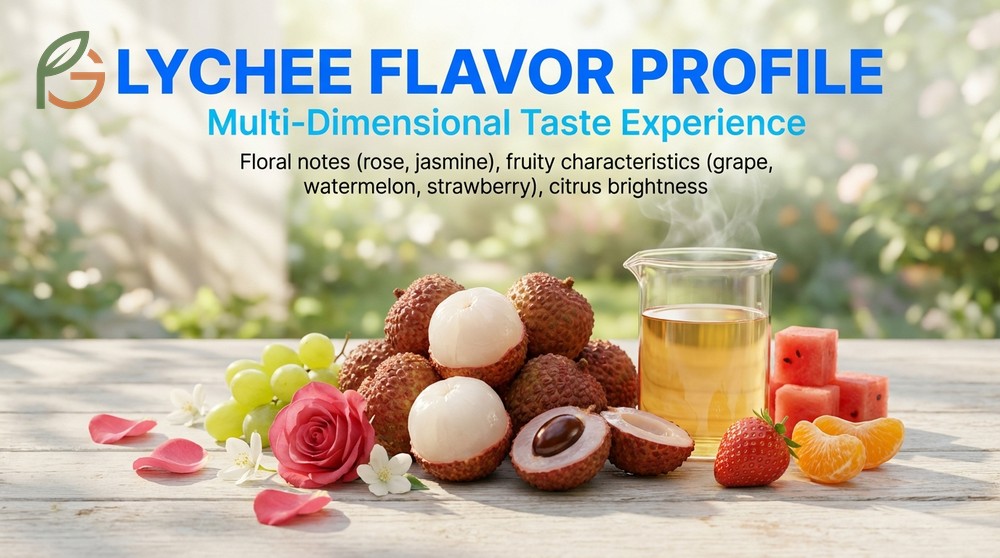
Studies demonstrate that lychee’s complex flavor profile emerges from over 30 volatile organic compounds working in harmony. The dominant notes combine floral elements (rose, jasmine) with fruity characteristics (grape, watermelon, strawberry) and citrus brightness (similar to mandarin orange). This creates what flavor scientists call a “multi-dimensional taste experience” that evolves as you chew.
The initial bite releases grape-like sweetness and watermelon juice, followed quickly by floral rose notes that linger on your palate. As you continue chewing, subtle citrus acidity emerges to balance the sweetness and refresh your mouth. The finish carries hints of perfume without tasting soapy or artificial—a characteristic that distinguishes high-quality fresh lychees from inferior specimens.
Temperature affects flavor perception significantly. Chilled lychees taste more refreshing with pronounced citrus notes, while room-temperature fruit emphasizes the floral character and grape-like sweetness. Most people prefer eating lychees cold, straight from the refrigerator, especially during hot summer months when the fruit reaches peak availability.
Types of Lychee Varieties
The three most popular varieties in commercial production are Brewster, Mauritius, and Sweetheart (also called Hak Ip). Brewster and Mauritius dominate commercial markets due to reliable production and good shipping characteristics. Sweetheart remains more of a backyard specialty, producing fewer but significantly larger fruits than other varieties.
Mauritius lychees offer a more intricate flavor profile, blending sweetness with noticeable tartness and pronounced floral scent. The variety has somewhat firmer flesh due to thicker skin, which helps it travel better than softer varieties. Brewster provides consistent sweetness with less acidity, making it popular for eating fresh. Sweetheart delivers the largest fruit size with intense floral notes that some describe as almost perfume-like.
This table compares three popular lychee varieties across fruit size, flavor characteristics, production reliability, and best uses
| Variety | Fruit Size | Flavor Profile | Production |
|---|---|---|---|
| Brewster | Medium (1-1.5 inches) | Consistent sweetness, low acidity, mild floral notes | Reliable commercial producer |
| Mauritius | Medium (1-1.5 inches) | Sweet-tart balance, pronounced floral scent, firmer flesh | Reliable commercial producer |
| Sweetheart (Hak Ip) | Large (1.5-2 inches) | Intense floral notes, very sweet, perfume-like aroma | Lower yield, backyard specialty |
Where to Buy Fresh Lychee
Fresh lychees appear in US markets primarily during the May-June season when Florida growers harvest their crops. Asian specialty markets offer the most reliable access, often receiving shipments within 24-48 hours of harvest. Look for stores in areas with significant Asian populations, as they maintain consistent supply during peak season and sometimes carry imports year-round.
Online vendors shipping directly from growers provide the freshest option outside local markets. These small-scale operations hand-care their trees and ship fruit the same day it’s harvested. While shipping costs make small quantities expensive, the quality often exceeds what you’ll find in grocery stores where fruit may sit for several days.
- Asian specialty markets during May-June peak season (check delivery days for freshest stock)
- Online fruit vendors shipping from Florida growers within 24-48 hours
- Local farmers markets in southern Florida during harvest season
- Whole Foods and specialty grocers in major metro areas (limited availability)
- Direct from farms with U-pick options in Davie, Florida area
- International markets carrying imported lychees from Mexico, Thailand, Vietnam (year-round but less fresh)
Conclusion
The evidence is clear: what does lychee taste like comes down to a unique floral-fruity combination that blends grape sweetness, watermelon juice, and rose notes with citrus brightness. This distinctive flavor profile, supported by over 30 aromatic compounds including linalool and geraniol, creates a refreshing tropical experience unlike any other fruit. The jelly-like texture and translucent flesh add to lychee’s appeal, making it a favorite for fresh eating, cocktails, and Asian cuisine.
Current guidance emphasizes buying lychees during peak season (May-June in the US) and selecting fruit with bright red skin for optimal flavor. FruitGarden helps you discover exotic fruits and master growing techniques that bring diverse flavors to your garden and table.
Frequently Asked Questions
What does lychee boba taste like?
Lychee boba combines the fruit’s floral-sweet flavor with chewy tapioca pearls and milk tea or fruit tea base. The drink emphasizes lychee’s rose and grape notes while adding creamy texture from milk or refreshing qualities from green tea. Most boba shops use lychee syrup or fresh fruit puree, creating a sweeter, more concentrated version of fresh lychee flavor.
What does lychee jelly taste like?
Lychee jelly delivers a concentrated sweet-floral flavor with firmer, more elastic texture than fresh fruit. The jelly form enhances the fruit’s natural rose and perfume notes while reducing the citrus acidity. You’ll find it in Asian desserts, bubble tea, and fruit cocktails, where it provides both flavor and interesting texture contrast.
How do lychee and rambutan taste different?
Lychee tastes more floral with pronounced rose and perfume notes, while rambutan offers milder, creamier sweetness similar to grapes without the intense floral character. Lychee has firmer, more translucent flesh with abundant juice, whereas rambutan flesh is slightly softer and more opaque. Both share grape-like sweetness, but lychee’s complexity and aromatic profile make it more distinctive.
Do canned and fresh lychees taste the same?
Canned lychees taste sweeter and less complex than fresh fruit, with diminished floral notes and citrus brightness. The canning process in heavy syrup adds sugar while reducing the delicate aromatic compounds that make fresh lychees distinctive. Fresh lychees offer superior texture—firm and juicy rather than soft—and more balanced flavor with natural acidity intact.
What does lychee smell like?
Lychee emits a sweet floral fragrance combining rose, jasmine, and tropical fruit scents with subtle musky undertones. The aroma intensifies when you peel the fruit, releasing volatile compounds like linalool and geraniol. Ripe lychees smell perfume-like without being overwhelming or soapy, while overripe fruit develops fermented or wine-like odors.
When is lychee fruit season in the United States?
Fresh lychee season runs from May through June in the United States, with Florida producing the majority of domestic crops. Peak availability occurs in late May and early June when fruit reaches optimal ripeness. Outside this window, you’ll find imported lychees from Mexico, Thailand, and Vietnam in specialty markets, though quality and freshness vary significantly.
Why is lychee called a nut when it’s a fruit?
Lychee is not a nut—it’s a tropical fruit with a single inedible seed. The term “lychee nut” is a misnomer that emerged from early English translations and the fruit’s hard brown seed. The edible portion is juicy fruit flesh, botanically classified as an aril, which surrounds the seed. Always discard the seed and shell, eating only the translucent white flesh.





