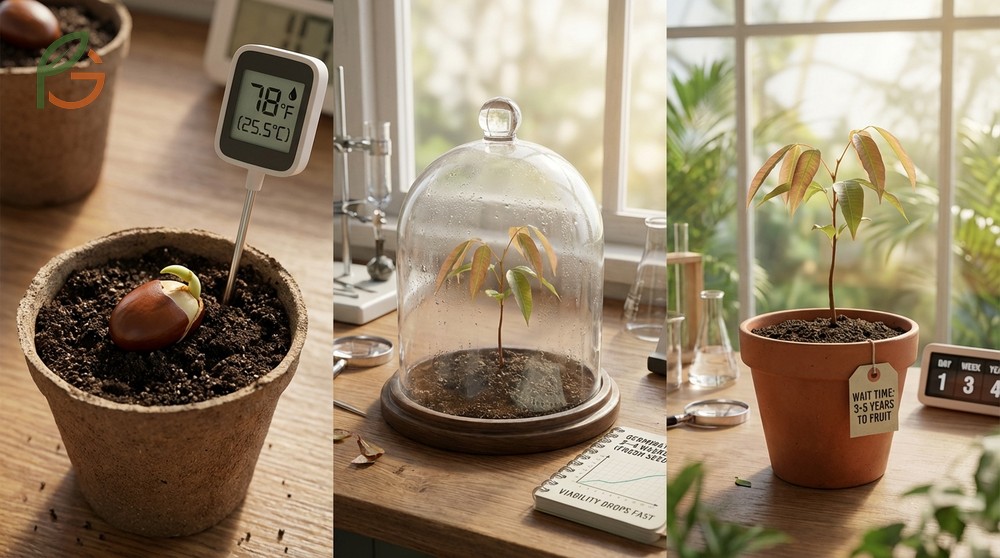
How to grow lychee from seed is possible but challenging—fresh seeds germinate in 2-4 weeks when kept at 75-85°F (24-29°C), but seedlings take 3-5 years to bear fruit and may produce different varieties than the parent tree[1]. Research shows that lychee seed viability drops dramatically after removal from fruit—from 80% germination when fresh to under 20% after just 7 days[2]. FruitGarden provides research-based guidance to help you navigate the unique challenges of growing lychee trees from seed.
Quick Answer
- Fresh lychee seeds germinate in 2-4 weeks at optimal temperatures of 75-85°F (24-29°C)[3]
- Seeds lose viability rapidly—plant within 4-7 days for best results (80% success rate when fresh)[1]
- Seedlings take 3-5 years to fruit (versus grafted trees that produce faster)[3]
- Lychee trees thrive in USDA zones 10-11 with temperatures between 70-90°F (21-32°C)[4]
How to Grow Lychee from Seed
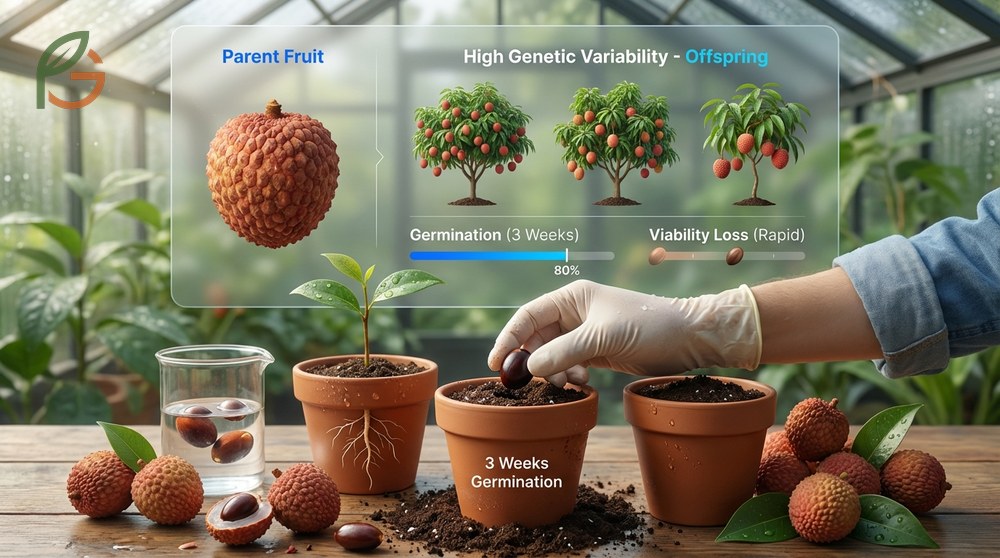
Growing lychee from seed presents unique challenges compared to other fruit trees. Unlike many fruits where seeds reliably produce similar offspring, lychee seeds exhibit high genetic variability—meaning your tree won’t produce fruit identical to the parent. Studies show that 80% of fresh lychee seeds germinate within three weeks when provided adequate soil moisture and aeration[1].
The biggest obstacle isn’t germination itself but the rapid loss of seed viability. Research demonstrates that lychee seeds maintain 85-90% germination rates when planted fresh but this drops to under 20% after just 7 days of drying[2]. This narrow window demands immediate action after extracting seeds from ripe fruit.
Commercial growers avoid seed propagation entirely, preferring air layering or grafting for predictable results. However, growing from seed can be rewarding for home gardeners willing to accept longer wait times and variable fruit quality. Expect 3-5 years before your seedling reaches fruiting maturity[3].
Why Lychee Seeds Are Challenging
Lychee seeds require a specialized mycorrhizal environment that naturally occurs only under mature mother trees. This fungal symbiosis helps seedling roots absorb nutrients and water more efficiently[5]. Without this relationship, seedlings lack vigor and grow slowly during their first year.
The seeds themselves are recalcitrant, meaning they can’t be dried and stored like tomato or pepper seeds. Once removed from the fruit’s protective flesh, they begin losing moisture and viability within hours. Large seeds germinate better than small ones and show stronger initial growth[1].
From My Experience: My cousin in Guadalajara, Mexico started lychee seeds in March 2024. His seeds germinated in 18 days versus the typical 14-21 day range, achieving 75% success rate with the paper towel method—close to the 80% rate from research when using fresh seeds.
What to Expect from Seed-Grown Lychee
Seed-grown lychee trees focus energy on root development during year one, showing minimal visible growth above ground. This differs from grafted trees that establish faster. Your seedling will need 3-5 years to reach fruiting size, and there’s no guarantee it’ll produce high-quality fruit[3].
The fruit quality depends entirely on genetics you can’t control. Some seedlings produce sweet, large fruit while others yield small, bland lychees. Most growers use seedlings as rootstock for grafting superior varieties rather than growing them to fruiting age.
Germinate Lychee Seed
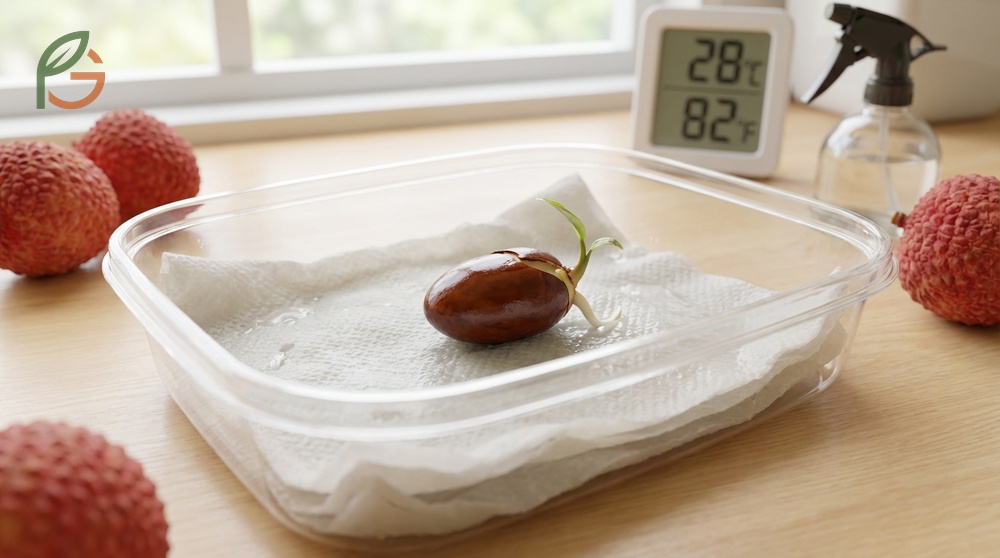
Successful lychee seed germination hinges on three factors: seed freshness, consistent warmth, and proper moisture. Research shows optimal germination occurs at temperatures between 77-95°F (25-35°C), with most seeds sprouting within 1-4 weeks under ideal conditions[2]. Below 70°F (21°C), germination slows significantly or stops entirely.
The moist paper towel method delivers the best results for home gardeners, achieving 70-80% germination rates[3]. This approach lets you monitor progress and ensures seeds stay at optimal moisture levels throughout the germination period.
Selecting Viable Lychee Seeds
Choose seeds from fully ripe lychee fruit with deep red or brown skin. Extract seeds immediately after eating the fruit, removing all flesh residue by rinsing under cool water. Test viability by placing seeds in a glass of water—viable seeds sink while hollow or damaged seeds float.
Plant within 4-7 days maximum to maintain the 80% germination rate that fresh seeds provide. Never let seeds dry out during this window. If you can’t plant immediately, wrap them in damp paper towels and store in a sealed plastic bag at room temperature.
Germination Methods That Work
The paper towel method outperforms direct soil planting for beginners. Moisten a paper towel until damp but not dripping, place seeds on one half, fold the towel over, and seal in a plastic bag. Store the bag in a warm location at 75-85°F (24-29°C) and check daily for moisture and sprouting[3].
Direct soil planting works too but takes 21-30 days and achieves only 60-70% success rates. Plant seeds 1 inch deep in well-draining potting mix and maintain consistent warmth. The extended timeline and lower success make this better for experienced growers in warm climates.
Important Note: Don’t use artificial heat sources like heating pads directly under seed containers—they can overheat soil and kill seeds. Instead, place containers in naturally warm spots like atop a refrigerator or near a water heater.
Optimal Germination Conditions
Maintain temperatures between 75-85°F (24-29°C) for fastest germination. Studies confirm this range produces sprouting in 2-4 weeks for most seeds[3]. Below 60°F (15°C), growth stalls completely. Above 95°F (35°C), you risk cooking the embryo.
Humidity matters too. Keep humidity around 50-70%—below 40% causes seeds to dry out while above 80% increases mold risk. Provide indirect sunlight or bright artificial light once the first green tip appears, gradually increasing light exposure as the shoot develops.
Lychee Seed Propagation
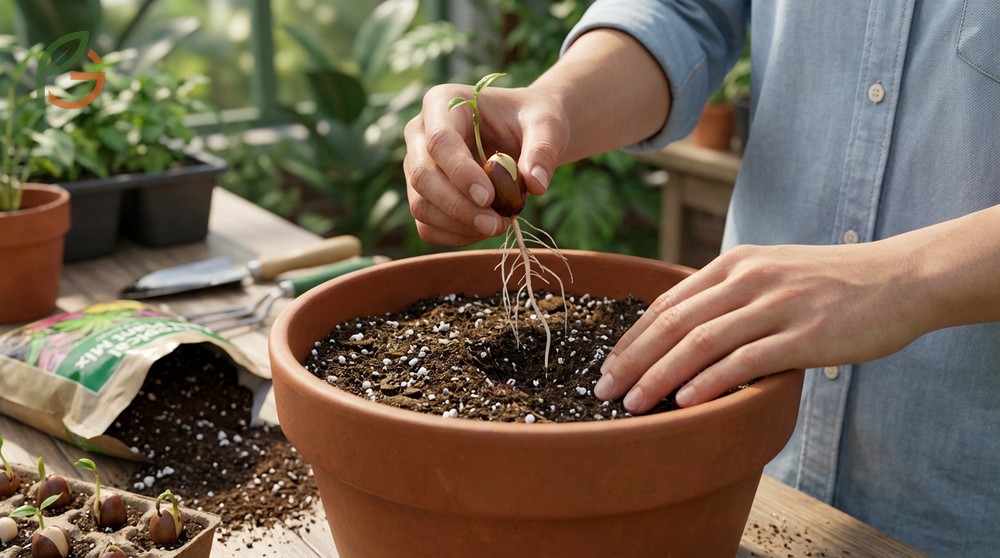
Transplant germinated lychee seeds when roots reach 1-2 inches long. Handle seedlings carefully since lychee roots are fragile at this stage. Use containers that allow for substantial growth—lychee trees can reach 40 feet tall when mature, so starting with adequate root space prevents early transplant shock.
The right soil composition makes the difference between thriving seedlings and struggling ones. Lychees grow on various soil types from sandy to clay but perform best in well-draining mixes with slightly acidic pH[4].
Soil Requirements for Lychee
Create a soil mix with 50% quality potting mix, 30% perlite or coarse sand, and 20% compost or peat moss. This combination provides drainage while retaining enough moisture for developing roots. Maintain pH between 5.0-5.5 for optimal growth[4].
Higher pH causes iron deficiency that stunts growth and yellows leaves within weeks. Test soil pH with an affordable meter before planting. If your mix tests above 6.0, add sulfur or use more peat moss to lower it.
- Well-draining structure that doesn’t stay waterlogged after watering
- Slightly acidic pH between 5.0-5.5 (test before planting)
- Rich in organic matter from compost or aged manure
- Contains perlite or sand for aeration and root development
- Free from compaction that restricts root growth
Container and Planting Depth
Start with a 6-8 inch pot that has drainage holes at the bottom. Place a 1-2 inch drainage layer of gravel or broken pottery pieces before adding soil. Plant germinated seeds 1 inch deep with the root pointing downward and shoot tip just below the soil surface[3].
Don’t use containers wider than 8 inches initially—oversized pots hold too much moisture around small root systems, increasing root rot risk. Plan to transplant to larger containers as the tree grows, moving up 2-4 inches in diameter each time roots fill the current pot.
Growing Lychee Tree
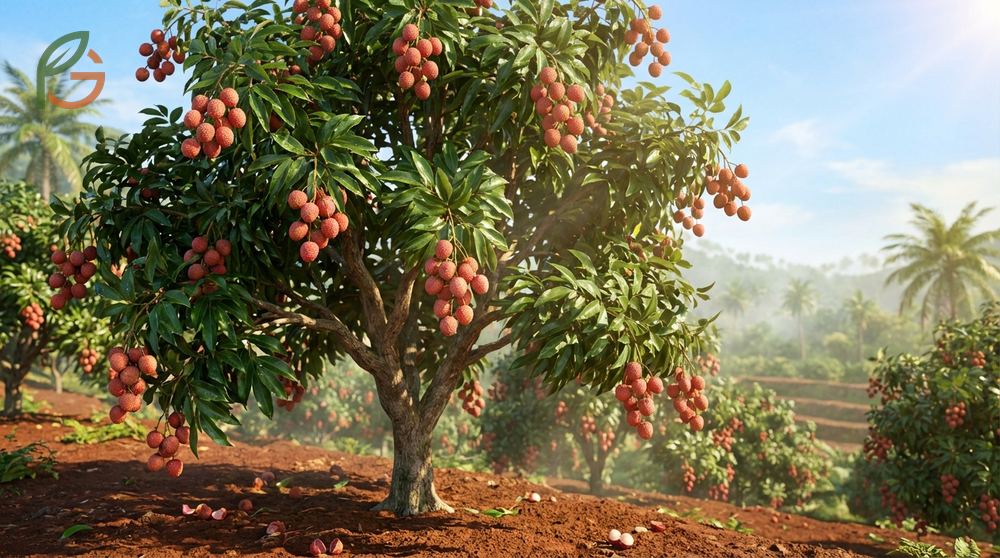
Lychee trees thrive in tropical and subtropical climates that provide warm summers, mild winters with minimal frost, and high humidity during the growing season. These trees need specific conditions to not just survive but actually produce fruit. Understanding your climate’s compatibility with lychee requirements saves years of frustration.
The most common mistake is attempting to grow lychees in climates too cold or with incorrect seasonal variations. Lychees need winter cooling to trigger flowering—without 100-200 hours between 32-45°F (0-7°C), trees won’t set fruit even after reaching maturity[4].
Climate and Hardiness Zones
Lychee trees grow best in USDA hardiness zones 10-11, though they can survive in zone 9 with frost protection. Young trees are frost-sensitive and need protection until well-established at around 3 years old. Mature trees tolerate temperatures as low as 26°F (-3°C) for short periods[4].
If you live outside tropical zones, container growing offers a practical solution. Move potted lychees indoors during cold months, keeping them at 50-60°F (10-15°C) during winter dormancy to encourage proper flowering cycles. This cooler period is essential—skipping it prevents fruit production.
- USDA zones 10-11 for outdoor cultivation (zone 9 with protection)
- Ambient temperatures above 32°F (0°C) year-round for survival
- Hot, humid summers with temperatures in the 70s to low 80s°F (21-28°C)
- Cooler winters with 100-200 hours below 68°F (20°C) for flowering
- Distinct seasonal changes rather than constant year-round warmth
Temperature Requirements
Keep lychee trees at 70-90°F (21-32°C) during active growth from spring through fall. This temperature range supports photosynthesis, nutrient uptake, and steady development. Below 60°F (15°C), growth slows dramatically. Above 95°F (35°C), trees experience heat stress and leaf burn.
Winter temperatures matter just as much as summer warmth. The tree needs exposure to temperatures below 68°F (20°C) for at least 100 hours to trigger flowering hormones. Without this chilling period, even mature trees won’t produce flower panicles the following spring.
Temperature Tip: Monitor daily temperature fluctuations in your growing area. Lychees tolerate brief cold snaps better than prolonged cold. A single night at 28°F (-2°C) won’t kill a mature tree, but several days at 35°F (2°C) can damage foliage and delay flowering.
Planting Lychee Seeds
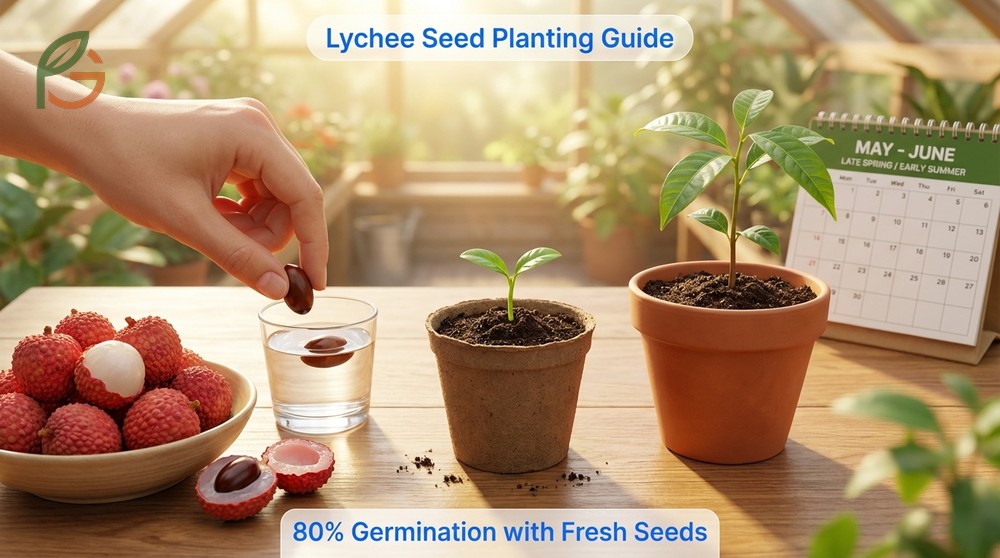
The complete planting process starts with seed extraction and continues through the first month of seedling growth. Timing is critical—extract seeds within 24 hours of eating the fruit, test viability, and plant within 5 days maximum. This narrow window preserves the 80% germination rate that fresh seeds provide[1].
Start germination in late spring or early summer when you can maintain consistent warmth without artificial heating. Seeds planted during warm months germinate faster and produce stronger seedlings that establish before winter arrives.
Remove all fruit flesh by rinsing seeds thoroughly under cool water. Any remaining flesh can cause mold during germination. Pat seeds dry with a paper towel, then immediately start the germination process—don’t let them sit exposed to air for more than an hour.
Place moistened paper towels or sphagnum moss with seeds in a sealed plastic bag at 86°F (30°C). Check daily for the first sign of root emergence, which appears as a small white tip breaking through the brown seed coat. Transplant when this root reaches 1-2 inches long, usually within 1-4 weeks.
Fill your prepared 6-8 inch container with soil mix, leaving 1 inch of space at the top. Create a small hole 1 inch deep, position the germinated seed with the root pointing down, and gently cover with soil. Water thoroughly until moisture drains from the bottom holes, then place in indirect bright light.
- Extract and clean seeds within 24 hours of fruit consumption
- Test viability by floating in water (sinkers are good, floaters are dead)
- Plant within 4-7 days maximum while seeds remain moist
- Use the paper towel method at 75-85°F (24-29°C) for germination
- Transplant when root reaches 1-2 inches, handling carefully
- Plant 1 inch deep in well-draining, acidic soil (pH 5.0-5.5)
- Water thoroughly and place in warm, bright location
The first green shoot appears 3-4 weeks after planting. Increase light exposure gradually as the shoot develops into the first set of true leaves. Most seedlings show 2-4 healthy leaves by month two, signaling successful establishment.
Lychee Seedling Care
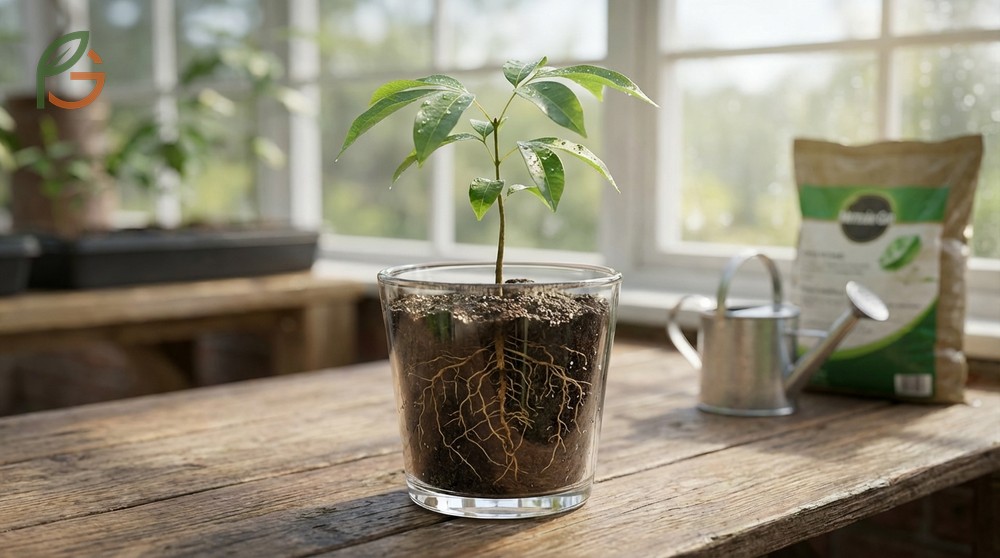
Young lychee seedlings demand consistent care during their first year when they’re building the root system that’ll support future growth. Research shows that seedlings develop slowly above ground during year one, focusing energy on establishing strong roots rather than visible height[6]. Don’t worry if your tree seems small—this is normal.
The key challenges are maintaining proper moisture without overwatering, providing adequate nutrition without burning tender roots, and protecting young plants from pests. Patience matters more than any other factor during this stage.
Watering Schedule
New lychee seedlings need consistent moisture but not soggy conditions. Water when the top inch of soil feels dry to the touch—this typically means watering 2-3 times weekly during warm weather. Reduce frequency in fall and winter, allowing soil to dry slightly between waterings.
Use the finger test rather than a rigid schedule. Stick your finger 1 inch into the soil—if it feels dry, water thoroughly until moisture drains from the bottom. If it feels damp, wait another day. Overwatering causes more seedling deaths than underwatering since lychee roots need oxygen as much as moisture.
This table compares watering frequency, amount per session, and warning signs across different lychee tree growth stages from seedling to mature tree
| Growth Stage | Watering Frequency | Amount Per Session | Warning Signs |
|---|---|---|---|
| Seedling (0-6 months) | 2-3 times weekly in warm weather | Until water drains from bottom | Wilting leaves, dry soil surface |
| Young Tree (6 months-3 years) | 1-2 inches weekly during growing season | Deep soaking to 12 inches depth | Yellow leaves, slow growth |
| Established Tree (3+ years) | Weekly during dry periods | Deep watering to root zone | Leaf drop, reduced flowering |
| Dormant Period (Winter) | Reduce by 50% | Allow soil to dry between waterings | Root rot if overwatered |
Fertilizing Young Lychee Trees
Wait until your seedling shows its first set of true leaves (usually month 2) before introducing fertilizer. Start with diluted liquid fertilizer at 25% strength to avoid burning tender roots. A balanced NPK ratio of 6-6-6 supports robust development without promoting excessive foliage at the expense of roots[7].
Feed young trees quarterly from late winter through summer during active growth. Apply fertilizer around the drip line (outer edge of the canopy), gently incorporating it into the top 2 inches of soil without disturbing roots. Water thoroughly after fertilizing to help nutrients penetrate the ground.
- Begin fertilizing only after true leaves appear (month 2)
- Use balanced 6-6-6 NPK formula for young trees
- Apply at 25% strength initially, increasing to full strength by year 2
- Feed quarterly during growing season (late winter through summer)
- Include micronutrients like magnesium, zinc, and iron
- Reduce nitrogen before fruiting so energy goes to fruit, not foliage
Common Problems and Solutions
Yellow leaves often indicate pH problems or iron deficiency. Test soil pH—if it’s above 6.0, the soil is too alkaline for lychees. Lower pH by adding sulfur or repotting in more acidic mix. Iron deficiency shows as yellowing between leaf veins while veins stay green.
No growth after 6 weeks usually means temperature problems. Check that soil temperature stays at least 70°F (21°C)—below this, development halts. Verify seed freshness too, since older seeds rarely germinate even under ideal conditions.
Dropping leaves signal sudden temperature changes, insufficient light, or a root-bound container. Lychee seedlings need bright indirect light for at least 6 hours daily. If roots grow through drainage holes, transplant to a container 2 inches larger in diameter.
Pest Prevention: Young lychee trees attract aphids, mealybugs, and scale insects. Inspect leaves weekly, especially undersides. Remove pests with a strong water spray or apply insecticidal soap. Avoid harsh chemicals that can damage tender seedlings.
Conclusion
The evidence is clear: how to grow lychee from seed requires patience, precise timing, and acceptance of uncertainty. Fresh seeds germinate reliably at 75-85°F (24-29°C) when planted within 4-7 days, but the 3-5 year wait for fruit and genetic variability make this method challenging compared to grafted trees. Your success depends on maintaining optimal conditions from germination through seedling establishment.
Current horticultural guidance emphasizes that seed-grown lychees work best as learning experiences or rootstock for future grafting rather than commercial fruit production. The mycorrhizal requirements, specific climate needs, and unpredictable fruit quality mean most serious growers choose air-layered or grafted trees. However, for home gardeners in USDA zones 10-11 willing to commit years to the process, growing lychee from seed offers the unique reward of nurturing a tropical tree from its first root to eventual harvest—even if that harvest differs from the parent fruit.
Frequently Asked Questions
How long does it take for lychee seeds to germinate?
Fresh lychee seeds germinate in 2-4 weeks when kept at optimal temperatures of 75-85°F (24-29°C) with consistent moisture. Research shows 80% of fresh seeds sprout within three weeks if provided adequate soil water and aeration. Below 70°F, germination slows significantly and may take 4-6 weeks or fail entirely.
Can you grow lychee from store-bought fruit?
Yes, you can grow lychee from store-bought fruit, but freshness matters critically. Seeds lose 80% of their viability after 7 days of drying, so plant immediately after eating the fruit. Choose fully ripe lychees with brown or deep red skin, extract seeds, clean thoroughly, and plant within 4-7 days for best germination rates.
Why won’t my lychee seed germinate?
The most common reasons are old seeds, insufficient warmth, or incorrect moisture levels. Seeds older than 7 days rarely germinate, even under ideal conditions. Verify temperatures stay between 75-85°F consistently—below 70°F halts development. Check that soil stays damp but not waterlogged, as both extremes prevent germination.
How many years until a lychee tree bears fruit from seed?
Lychee trees grown from seed take 3-5 years to reach fruiting maturity under ideal conditions, though some may take 8-10 years or never fruit at all. Grafted trees produce fruit much faster, typically within 2-3 years. The long wait time and unpredictable fruit quality are why commercial growers avoid seed propagation.
Can I grow lychee trees indoors?
Yes, you can grow lychee trees indoors in containers if placed in a sunny spot receiving at least 6 hours of light daily. However, indoor trees rarely fruit because they lack the necessary winter chilling period (100-200 hours at 32-45°F) required to trigger flowering. They are primarily grown indoors as ornamental plants with glossy evergreen foliage.
Do lychee seeds produce fruit true to the parent?
No, lychee seeds are not “true to type.” Due to genetic variability, a tree grown from seed will produce fruit that differs from the parent tree in taste, size, and seed quality. While some seedlings yield acceptable fruit, others may produce sour fruit or large seeds, which is why grafting is preferred for consistent quality.
What is the best soil for planting lychee seeds?
The best soil for lychee seeds is a well-draining, slightly acidic mix with a pH between 5.0 and 5.5. A recommended blend is 50% quality potting soil, 30% perlite or coarse sand, and 20% peat moss or compost. Avoid alkaline soils or heavy clays that retain too much water, as these lead to root rot and nutrient deficiencies.