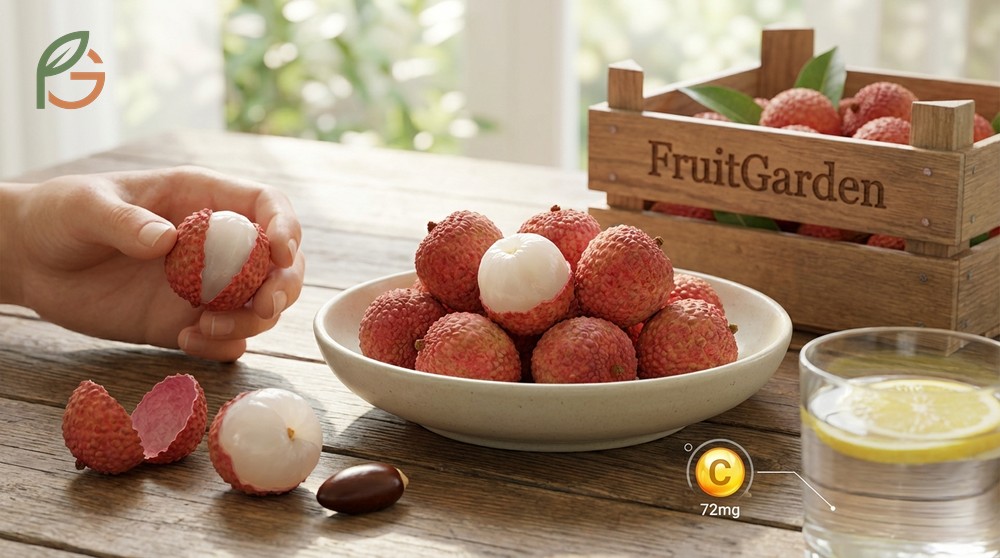
How to eat lychee involves three simple steps: peel off the bumpy red skin with your fingers, remove the toxic seed from the center, and enjoy the sweet translucent flesh fresh or in recipes. Research shows lychees deliver 72mg of vitamin C per 100 grams—nearly 80% of your daily needs—making them a nutritious tropical treat[1]. FruitGarden brings you expert guidance on selecting, preparing, and storing this delicate fruit that’s been cultivated in China for over 4,000 years.
Quick Answer
How to Eat Lychee
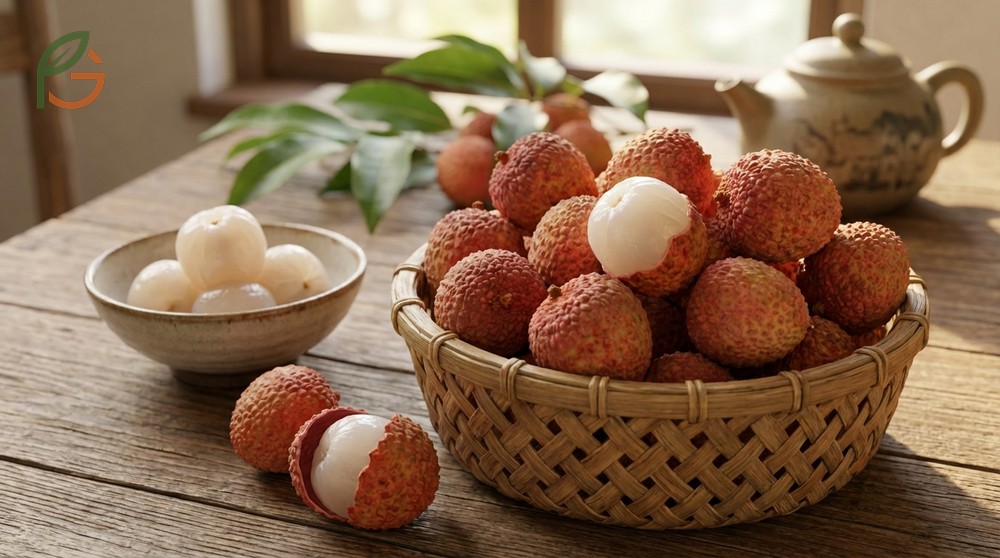
Lychees are tropical fruits native to southern China, where they’ve been cultivated for approximately four millennia[4]. The fruit features a rough, bumpy exterior that ranges from bright red to pink-red when ripe, protecting the sweet, translucent white flesh inside. Once you crack through the inedible skin, you’ll discover a grape-like texture with floral, sweet notes that work perfectly in both fresh applications and cooked dishes.
Each lychee contains about 66 calories per 100-gram serving, along with 16.5g of carbohydrates and 0.83g of protein[1]. What makes lychees stand out nutritionally is their impressive vitamin C content—one serving provides nearly 80% of your daily requirement. The fruit also delivers small amounts of potassium, copper, and B vitamins, making it a nutritious addition to your diet when eaten in moderation.
Most people eat lychees fresh as a standalone snack, but the fruit’s versatility extends far beyond simple consumption. You can toss peeled lychees into fruit salads, blend them into smoothies, muddle them for cocktails, or incorporate them into savory dishes like salads with avocado and mint. The key is selecting ripe fruit and properly removing the toxic seed before consumption.
Selecting Fresh Lychees
Choose lychees with vibrant red to pink-red coloring—this indicates proper ripeness[5]. Green or yellowish tones signal the fruit isn’t ready to eat, while dark brown spots suggest bruising or decay. The skin should feel firm but give slightly when pressed, similar to a ripe plum.
Fresh lychees emit a light, sweet floral aroma near the stem end when ripe. If you don’t detect any scent, the fruit may be underripe. A fermented or sour smell indicates overripeness and potential spoilage.
- Bright red or pink-red skin without brown discoloration
- Firm texture with slight give when gently squeezed
- Sweet floral aroma at the stem end
- Heavier weight for their size, indicating high juice content
- Intact skin without cracks, mold, or excessive drying
From My Experience: My cousin in Guadalajara, Mexico shops at an Asian market that sources lychees from Florida growers in May and June. She picks fruits that still have green stems attached—these were harvested recently and typically last 10-12 days in her fridge versus 5-7 days for stem-free options.
Preparing Lychee Fruit
Rinse lychees under cool running water before eating to remove any surface dirt or residue from handling. Pat them dry with a clean kitchen towel. You don’t need to wash them again after peeling since you’ll be discarding the outer skin entirely.
Work over a bowl or plate when peeling lychees, as the fruit releases sweet juice that you’ll want to capture for drinking or using in recipes. The translucent flesh is delicate and can tear if handled roughly, so use gentle pressure throughout the peeling and seeding process.
Important Safety Note: Never eat lychee seeds or unripe lychees. Both contain toxic compounds that can cause dangerous drops in blood sugar levels, especially when consumed on an empty stomach or by malnourished individuals.
How to Peel Lychee
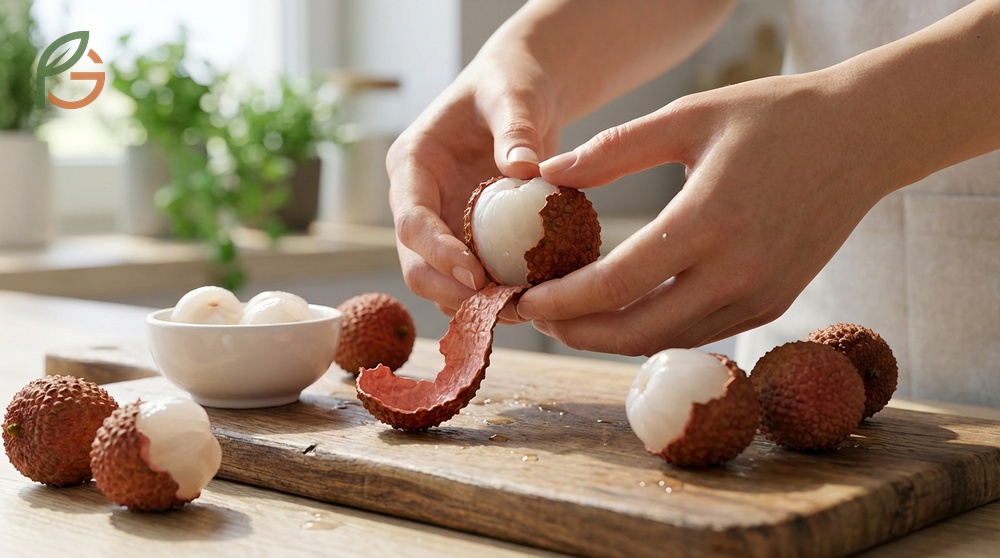
Peeling lychees takes just seconds once you understand the technique. The rough, bumpy skin separates cleanly from the flesh without requiring special tools. Unlike citrus fruits that need careful peeling to avoid bitter pith, lychee skin comes off in large pieces with minimal effort.
The skin itself is technically edible and contains antioxidants, but it’s not commonly consumed due to its tough, leathery texture and lack of appealing flavor. Most recipes and eating methods call for complete removal of the skin before consumption.
Finger Peeling Method
Hold the lychee between your thumb and forefinger near the stem end. Use your thumbnail to pierce the skin widthwise, creating a small opening. If you don’t have fingernails, make a tiny cut with a paring knife instead.
Press gently on both sides of the opening with your thumbs to crack the skin apart. The shell will split easily, revealing the white flesh underneath. Pull the skin down toward the base of the fruit in sections, twisting at the stem to remove it completely.
You’ll notice a thin brown membrane from the seed may remain on the fruit’s surface. Don’t try to remove this layer—it’s soft, edible, and removing it causes unnecessary juice loss. Focus only on removing the rough outer shell.
Knife Method
For faster processing of multiple lychees, use a small paring knife to make a shallow circular cut around the fruit’s equator. Cut just deep enough to pierce the skin without slicing into the flesh below.
Twist the two halves in opposite directions to separate the skin, then pull each half away from the fruit. This method works especially well when preparing lychees for recipes that require uniformly peeled fruit.
- Pierce the skin at the stem end with your thumbnail or knife tip
- Press gently with both thumbs to crack the shell open
- Pull the skin down in sections toward the base
- Twist and remove any remaining skin pieces at the stem
- Leave the thin brown seed coating on the fruit (it’s edible)
Can You Eat Lychee Seeds
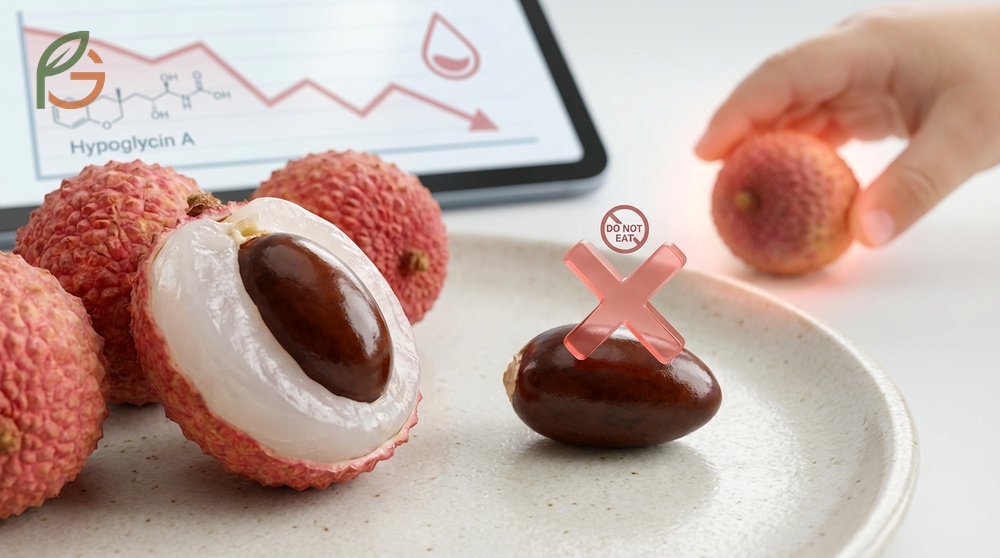
No, you should never eat lychee seeds. The seeds contain concentrated amounts of hypoglycin A and methylene cyclopropyl-glycine—toxic compounds that interfere with your body’s ability to produce glucose[2]. These toxins can cause dangerously low blood sugar levels, potentially leading to seizures, coma, or brain damage in severe cases.
The risk increases significantly when lychees are consumed in large quantities on an empty stomach, particularly by children or malnourished individuals. Unripe lychees contain even higher concentrations of these compounds, which decrease as the fruit matures and turns red.
To safely remove the seed, cut the peeled lychee in half lengthwise or squeeze it gently to push the seed out through one end. The seed is smooth, oval-shaped, and dark brown—about the size of a large bean. Discard it immediately and never attempt to eat it, even in small amounts.
Health Warning: Beyond their toxicity, lychee seeds are extremely hard and difficult to digest. Consuming them can cause choking hazards, intestinal blockages, or severe digestive discomfort even if the toxic effects don’t occur.
- Seeds contain hypoglycin A and methylene cyclopropyl-glycine toxins
- Consumption can cause dangerous drops in blood sugar levels
- Unripe lychees have higher toxin concentrations than ripe red fruit
- Seeds pose choking hazards and can cause digestive blockages
- Always remove and discard the seed before eating lychee flesh
Lychee Dessert Ideas
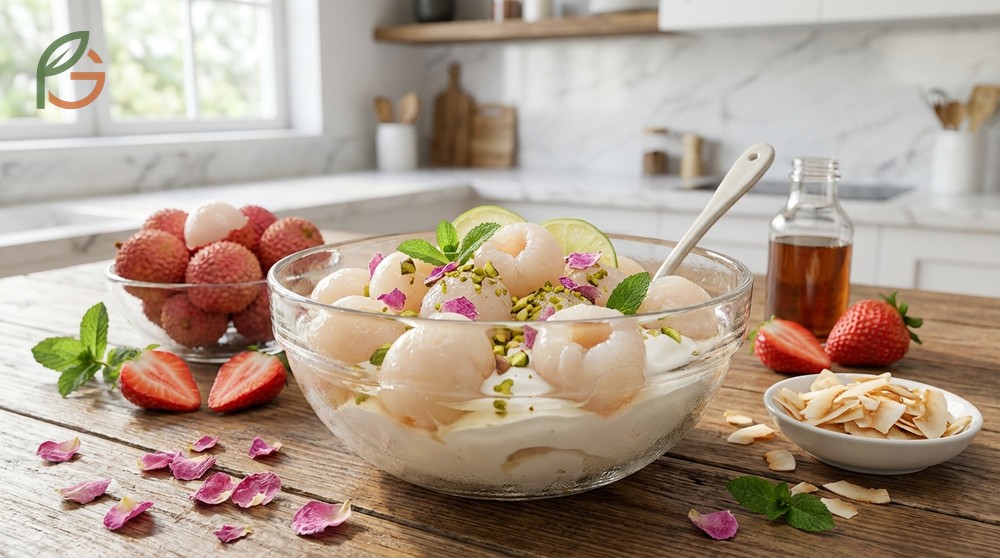
Lychees work beautifully in desserts and drinks due to their natural sweetness and floral notes. Their delicate flavor pairs well with coconut, mint, lime, strawberries, and other tropical fruits[6]. The translucent white flesh also adds visual appeal to layered desserts, parfaits, and cocktails.
For a simple dessert, poach lychees in simple syrup infused with vanilla or ginger, then serve over Greek yogurt with crushed pistachios and crystallized rose petals. The contrast between the soft fruit, creamy yogurt, and crunchy nuts creates an elegant finish to any meal.
Frozen lychees make excellent additions to smoothies and blended drinks. Freeze peeled, seeded lychees on a baking sheet, then transfer them to freezer bags for up to three months. Blend with coconut milk, mango, and ice for a tropical smoothie, or muddle fresh lychees with vodka, lime juice, and simple syrup for a refreshing martini.
- Lychee martini: muddle fresh lychees with vodka, coconut cream, and lime juice
- Tropical fruit salad: combine lychees with mango, papaya, kiwi, and mint
- Lychee sorbet: blend frozen lychees with simple syrup and lemon juice
- Poached lychees: simmer in vanilla-ginger syrup and serve over yogurt
- Fruit skewers: alternate lychees with strawberries, pineapple, and melon
- Lychee panna cotta: infuse cream with lychee juice before setting
| Category | Ingredients | Dessert Type |
|---|---|---|
| Tropical | Mango, pineapple, papaya, coconut | Fruit salads, smoothies, sorbets |
| Citrus | Lime, lemon, orange, yuzu | Cocktails, panna cotta, tarts |
| Herbs | Mint, basil, lemongrass, ginger | Infused syrups, fruit salads |
| Berries | Strawberry, raspberry, blueberry | Parfaits, compotes, jams |
How to Store Lychee
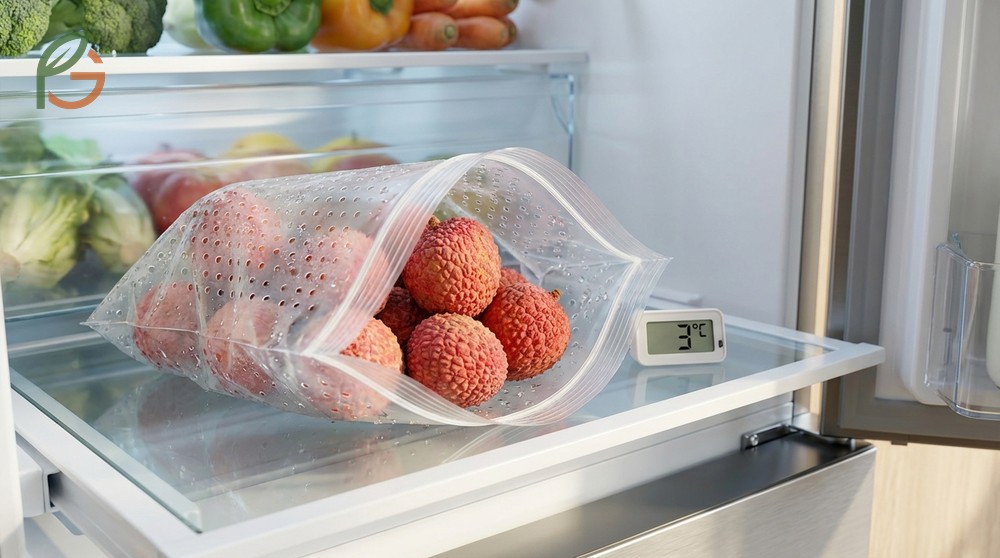
Store whole, unpeeled lychees in your refrigerator’s crisper drawer at temperatures between 32-40°F (0-4°C)[3]. This temperature range helps maintain the fruit’s moisture, texture, and nutritional value. Whole lychees with intact skin can last up to two weeks when refrigerated properly.
Place lychees in a perforated plastic bag or breathable container to allow some air circulation while preventing excessive moisture loss. Check the fruit every few days and remove any that show signs of browning, mold, or soft spots to prevent spoilage from spreading to healthy fruit.
Peeled lychees have a much shorter shelf life—only 2-3 days in the refrigerator. Store them in an airtight container and place a layer of plastic wrap directly on the fruit’s surface to minimize oxidation and moisture loss. For best flavor and texture, peel lychees just before eating rather than in advance.
At room temperature, fresh lychees last only 2-3 days before the skin begins to brown and the flesh starts deteriorating. If you can’t refrigerate them immediately, store them in the coolest spot in your kitchen away from direct sunlight.
- Refrigerate at 32-40°F (0-4°C) in the crisper drawer
- Keep whole lychees in perforated bags for up to two weeks
- Store peeled lychees in airtight containers for 2-3 days maximum
- Remove spoiled fruit promptly to prevent mold spread
- Freeze peeled, seeded lychees for up to three months
Storage Tip: Don’t wash lychees before storing them in the refrigerator. Excess moisture promotes mold growth and shortens shelf life. Rinse only the amount you plan to eat immediately.
Conclusion
The evidence is clear: how to eat lychee successfully depends on three critical steps—selecting firm, red fruit with a sweet aroma, peeling away the bumpy skin with your fingers, and always removing the toxic seed before consumption. Current guidance emphasizes choosing lychees at peak ripeness when their vitamin C content and natural sweetness reach optimal levels.
Whether you’re enjoying fresh lychees as a standalone snack or incorporating them into desserts and cocktails, proper selection and storage maximize both safety and flavor. FruitGarden synthesizes current research on tropical fruit cultivation and handling to help you make the most of this delicate, nutritious fruit that’s been prized in Asian cuisine for thousands of years.
Frequently Asked Questions
Is lychee skin edible?
Technically yes, lychee skin is edible and contains vitamins and antioxidants, but it’s not commonly eaten due to its tough, leathery texture and lack of pleasant flavor. Most people discard the skin and eat only the translucent white flesh inside. The skin poses no toxicity concerns, unlike the seed.
How many lychees can you safely eat per day?
Research suggests eating 10-15 lychees per day provides nutritional benefits without excessive sugar intake. This amount delivers substantial vitamin C while keeping calories around 100-150. Never eat lychees on an empty stomach, especially for children, as this increases the risk of blood sugar drops from natural compounds in the fruit.
Can you eat canned lychees the same way as fresh?
Yes, canned lychees are already peeled and seeded, making them ready to eat straight from the can. They’re typically packed in sugar syrup, which adds extra sweetness and calories compared to fresh fruit. Drain and rinse canned lychees if you want to reduce sugar content, or use the syrup in cocktails and desserts for added flavor.
What does lychee taste like?
Lychees taste sweet with floral notes, similar to a combination of grapes and roses with subtle tropical undertones. The texture resembles peeled grapes—firm yet juicy with a slight springiness. Ripe lychees are sweeter and more perfumed than underripe ones, which can taste bland or slightly tart.
Do lychees need to be refrigerated?
Refrigeration isn’t absolutely necessary but significantly extends shelf life from 2-3 days at room temperature to up to two weeks when stored at 32-40°F. The cool temperature slows enzymatic browning and maintains the fruit’s moisture content. If you plan to eat lychees within a day or two, room temperature storage works fine.
Can you freeze fresh lychees?
Yes, freeze peeled and seeded lychees for up to three months. Spread them in a single layer on a baking sheet to freeze individually, then transfer to freezer bags to prevent clumping. Frozen lychees work perfectly in smoothies, cocktails, and cooked desserts, though the texture becomes slightly softer after thawing for fresh eating.
Are lychees good for weight loss?
Lychees can support weight loss when eaten in moderation due to their low calorie content (66 calories per 100g) and high water content. The fiber content helps promote satiety, though it’s modest at 1.3g per serving. Their natural sweetness makes them a nutritious alternative to processed desserts, but the sugar content means portion control remains important.