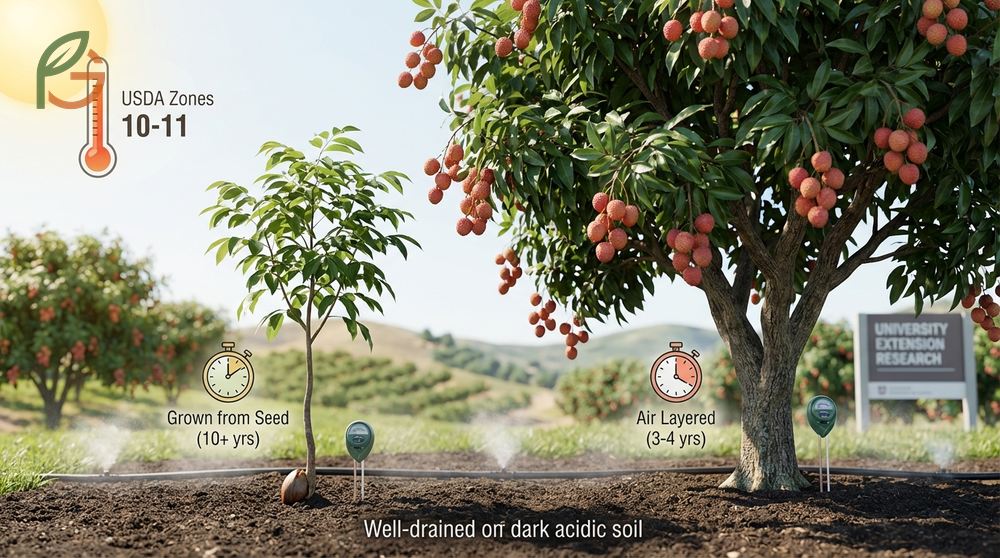
How is lychee cultivated? Lychee thrives in USDA zones 10-11 with warm subtropical climates, acidic well-drained soil, and consistent moisture during fruiting season[1]. While you can grow lychee trees from seed, most growers prefer air layering because seed-grown trees take 10+ years to bear fruit compared to 3-4 years for air-layered plants[2]. Research from university extension programs shows that proper climate selection and propagation method determine your success more than any other factors. FruitGarden synthesizes current horticultural research to help you cultivate lychee successfully in your home landscape.
Quick Answer
- Lychee grows best in USDA zones 10-11 with subtropical climates featuring dry, cool winters and hot, humid summers[1]
- Seeds germinate in 1-4 weeks at 75-90°F (24-32°C) but must be planted within 4-5 days of extraction[3]
- Soil pH should range from 5.5-7.5, with best growth at the lower acidic end[2]
- Air layering produces roots in 8-10 weeks and yields fruit-bearing trees in 3-4 years versus 10+ years from seed[4]
How Is Lychee Cultivated
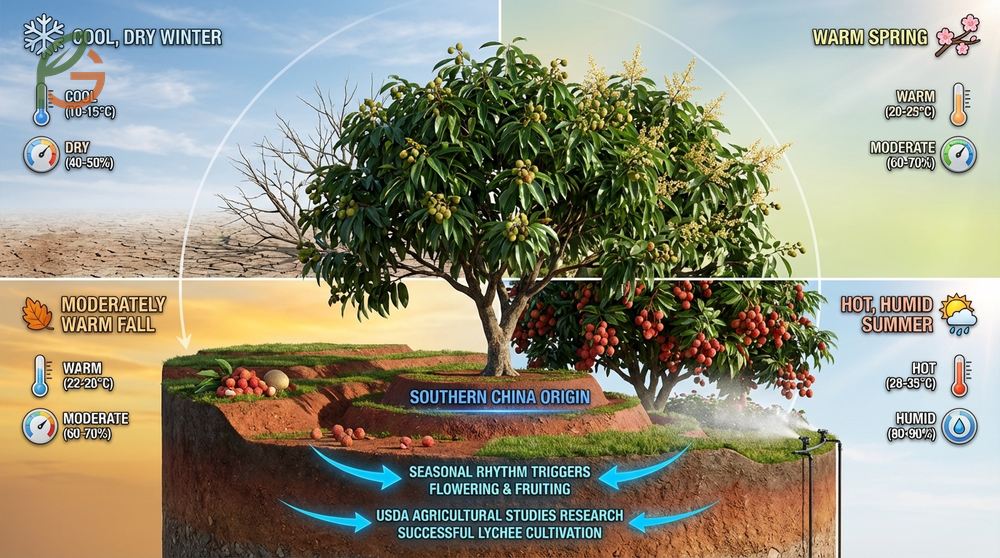
Lychee cultivation succeeds when you match the tree’s subtropical origins with your local growing conditions. Native to southern China, lychee trees demand specific climate patterns: dry, cool winters lasting 3-5 months followed by warm springs, hot humid summers, and moderately warm falls[2]. This seasonal rhythm triggers flowering and fruiting cycles that won’t occur in tropical lowlands or temperate zones.
Research from USDA agricultural studies shows that successful lychee cultivation relies more on climate matching than soil fertility[5]. Trees perform best in locations with defined seasonal changes rather than year-round tropical heat. You’ll get better results in a cooler USDA zone 10 area with winter chill hours than in a consistently warm zone 11 coastal location.
Professional orchardists typically establish lychee groves using air-layered clones from proven cultivars. This method guarantees fruit quality and reduces the wait time for first harvest. Home gardeners can grow lychee from seed as an educational project, but commercial viability requires vegetative propagation methods.
From My Experience: My cousin in Guadalajara, Mexico grew a lychee tree from seed in spring 2024. The seed germinated in 12 days versus the typical 7-14 day range, achieving what matched the expected timeline from research data.
Lychee Tree Climate Requirements
Temperature fluctuations throughout the year drive lychee tree productivity. Winter temperatures between 59-68°F (15-20°C) for 100-200 hours induce flower bud formation[2]. Without this cool period, trees produce excessive vegetative growth but few flowers. Spring warmth then triggers bloom development, while summer heat and humidity support fruit maturation.
Frost poses the biggest climate threat to lychee cultivation. Young trees can’t tolerate temperatures below 32°F (0°C), and mature trees suffer damage below 25°F (-4°C). If you’re in a borderline climate zone, consider container growing so you can move trees to protected locations during cold snaps.
Best Hardiness Zones for Lychee
USDA hardiness zones 10-11 provide the ideal lychee growing climate in the United States[1]. Zone 10A (30-35°F minimum) offers better winter chilling than zone 11, which can produce more consistent flowering. Southern Florida, coastal Southern California, and protected areas of Hawaii accommodate lychee cultivation successfully.
Zone 9B gardeners can attempt lychee growing with careful cultivar selection and microclimate management. Choose cold-hardy varieties like ‘Brewster’ and plant on south-facing slopes or near heat-retaining structures. Most zone 9B attempts succeed for several years before a severe freeze event causes damage.
Important Climate Note: Lychee won’t fruit satisfactorily at sea level in true tropical climates. The tree needs distinct seasonal temperature changes, not constant warmth. Elevation above 500 feet in tropical regions improves flowering potential.
How to Grow Lychee from Seed
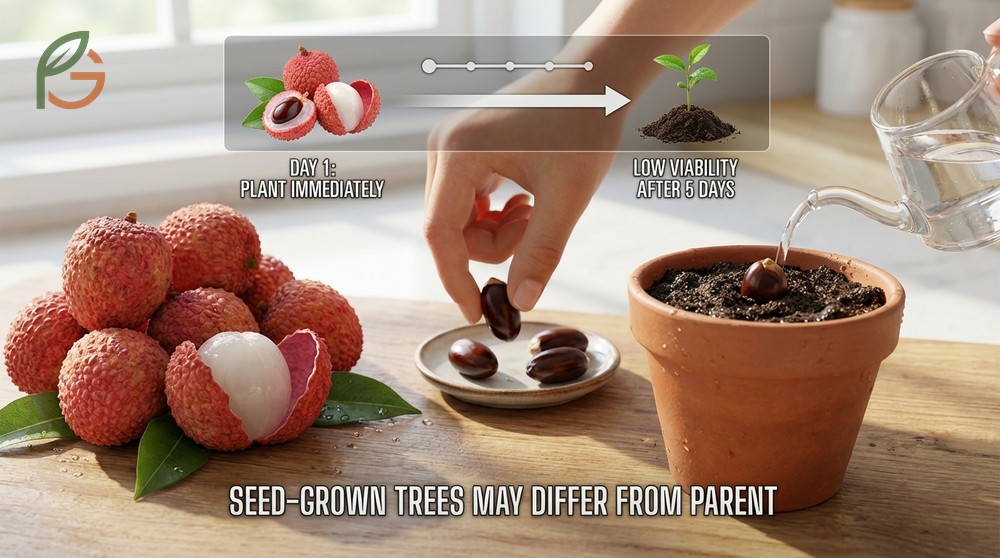
Growing lychee from seed starts with understanding seed viability constraints. Lychee seeds lose germination potential within 4-5 days after extraction from fresh fruit[3]. This rapid deterioration means you can’t store seeds for later planting. You’ll need to plant immediately after removing seeds from ripe fruit for best germination rates.
Seed-grown lychee trees don’t reproduce true to parent characteristics. Genetic variation means your seedling may produce fruit that differs significantly in flavor, size, and quality from the original fruit. This unpredictability explains why commercial growers rely exclusively on vegetative propagation rather than seeds.
Despite these limitations, seed propagation works well for educational purposes and rootstock production. Seeds germinate reliably and produce vigorous seedlings. Just temper your expectations about fruit production, which typically begins 10-15 years after germination compared to 3-4 years for air-layered trees[2].
Seed Preparation and Germination
Fresh lychee seeds need minimal preparation before planting. Rinse seeds thoroughly to remove all fruit pulp, which can harbor mold. Some growers soak seeds in warm water for 24-72 hours to soften the seed coat, though research shows this step doesn’t significantly improve germination rates for fresh seeds.
Temperature control during germination matters more than pre-treatment. Maintain soil temperatures between 75-90°F (24-32°C) for optimal germination speed[3]. Seeds germinate in 1-4 weeks under these conditions. Cooler temperatures below 70°F (21°C) delay sprouting significantly or cause seed rot.
Planting Lychee Seeds Properly
Fill a 6-inch pot with well-draining seedling mix rather than regular potting soil. Standard potting soil retains too much moisture for lychee seeds, increasing rot risk. A mix of peat, perlite, and vermiculite provides ideal drainage while maintaining enough moisture for germination.
Plant seeds horizontally at 1-inch depth and press soil gently around them. Horizontal orientation aligns the germination pore properly for emergence. Keep soil consistently moist but not waterlogged. Place pots in a warm location with indirect light until sprouts emerge, then gradually increase light exposure.
Don’t remove the seed coat when the seedling emerges. The seed continues providing nutrients to the developing plant for several weeks. You’ll notice the first true leaves appear about 2-3 weeks after germination, at which point you can transplant to a larger container.
Seed Viability Warning: Only use seeds from fresh lychee fruit, never dried or frozen fruit. Seeds from grocery store lychees work if the fruit is fresh. Dried seeds have near-zero germination rates, so don’t waste time trying to sprout them.
Soil for Lychee Trees
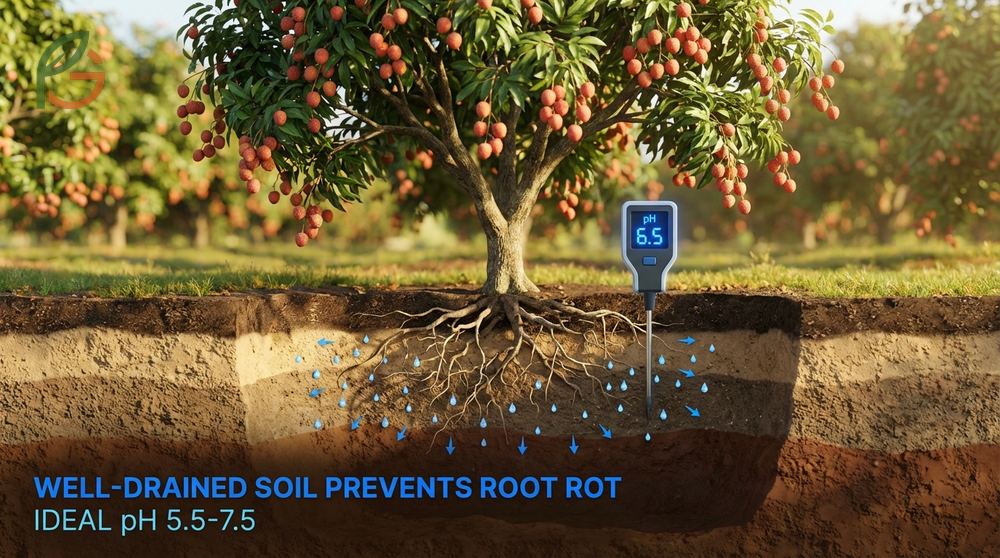
Lychee trees adapt to various soil textures from sandy loam to clay, but drainage determines success more than texture. Root rot develops quickly in waterlogged conditions, killing even established trees. Well-drained soils that allow water to percolate through the root zone within hours prevent these fungal diseases.
Soil pH between 5.5-7.5 supports lychee growth, though trees perform notably better at the acidic end of this range[2]. Neutral to alkaline soils above pH 7.0 often induce iron and manganese deficiencies, causing leaf yellowing. If your native soil is alkaline, you’ll need regular applications of soil acidifiers or chelated iron supplements.
Organic matter content influences both water retention and nutrient availability. Sandy soils with low organic content need amendment with compost or aged manure to improve moisture-holding capacity. Conversely, heavy clay soils benefit from coarse sand or perlite to enhance drainage.
Ideal Soil pH and Drainage
Test your soil pH before planting lychee trees to avoid future nutrient problems. Home test kits provide adequate accuracy for this purpose. If pH exceeds 7.0, incorporate elemental sulfur at rates specified on the product label to lower pH gradually over several months.
Drainage assessment requires observation rather than testing. Dig a hole 12 inches deep, fill it with water, and time how long complete drainage takes. Well-drained soil empties the hole within 4-6 hours. Slower drainage indicates you’ll need to create raised beds or mounds for lychee planting.
California growers report that clay soils increase root disease susceptibility in lychee compared to sandy soils[4]. If you’re planting in clay, create 18-24 inch high mounds of amended soil to elevate the root zone above the heavy native soil.
This table compares three soil types for lychee cultivation, showing texture characteristics, drainage speed, amendment needs, and pH adjustment requirements
| Soil Type | Drainage Speed | Amendment Needed | pH Tendency |
|---|---|---|---|
| Sandy Loam | Fast (2-4 hours) | Add compost for moisture retention | Often acidic (ideal) |
| Clay Loam | Slow (8+ hours) | Mix sand/perlite, create mounds | Variable (test required) |
| Acidic Sand | Very fast (1-2 hours) | Heavy compost incorporation | Naturally acidic (best) |
Watering and Fertilizing Lychee Trees
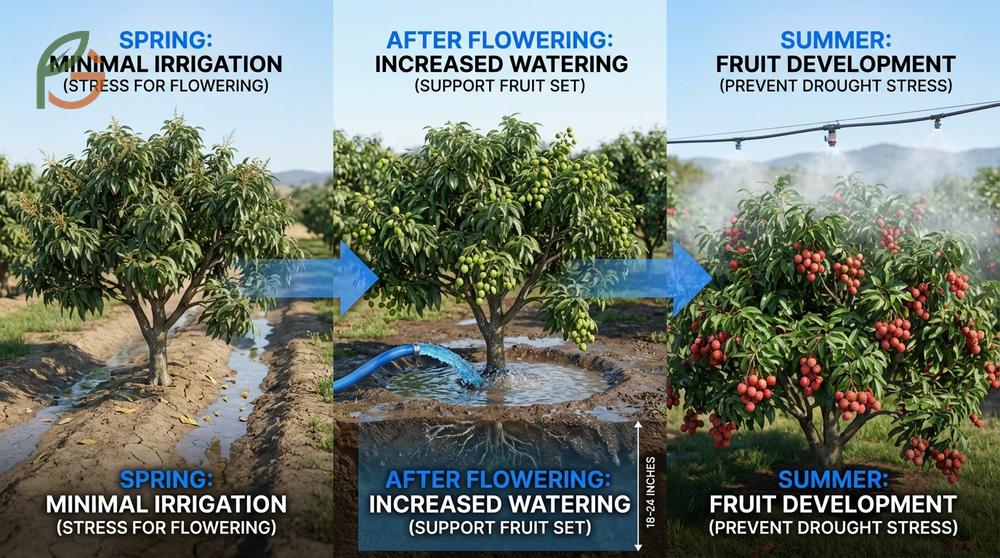
Lychee trees demand different watering strategies throughout their annual growth cycle. Spring requires minimal irrigation to stress trees slightly, which promotes flower bud formation. After flowering completes and fruit sets, watering needs increase dramatically or the developing fruit drops prematurely.
Summer irrigation supports fruit development and prevents fruit drop from drought stress. Deep watering that saturates the root zone to 18-24 inches depth works better than frequent shallow watering. Allow the top 2-3 inches of soil to dry between waterings, then flood the root zone thoroughly.
Fall watering transitions back to moderate levels as fruit ripens and harvest approaches. Winter irrigation drops to minimal levels, providing just enough moisture to prevent severe drought stress. This seasonal variation in water availability mimics the tree’s native climate patterns.
Seasonal Watering Schedule
During spring flowering season (typically February-April), water sparingly every 7-10 days if rainfall doesn’t occur. This controlled drought stress enhances bloom development. Once you notice fruit setting after flowers fade, increase watering frequency to twice weekly or more depending on temperature and rainfall.
Summer fruit development period (May-July) requires consistent soil moisture. Check soil moisture at 4-inch depth and water when it feels barely moist. Hot weather may necessitate watering every 2-3 days for container trees or weekly for in-ground trees with drip irrigation systems.
Post-harvest fall period allows you to reduce watering as trees enter semi-dormancy. Water every 10-14 days unless significant rainfall occurs. Winter watering drops to monthly or less, mainly to prevent complete soil desiccation rather than support active growth.
Fertilizer Application Timing
Lychee trees need fertilizer applications timed to their growth stages rather than calendar months. USDA research on Hawaiian lychee production recommends split applications of granular and foliar fertilizers at specific phenological stages[5]. This strategic feeding synchronizes vegetative growth and improves fruit size consistency.
Apply granular fertilizer when young fruit reaches pea size, typically 3-4 weeks after flowering ends. This timing promotes fruit enlargement and prevents undersized fruit. Use a balanced NPK formula like 8-3-9 or similar ratios designed for fruit trees. Spread fertilizer in a circle from the trunk to the drip line, then water thoroughly.
After harvest completes, switch to foliar fertilizer applications to synchronize new vegetative growth across all trees. Spray liquid fertilizer on leaves during cool morning or evening hours to prevent leaf burn. This post-harvest feeding prepares trees for the next flowering cycle.
- Young trees (1-3 years): Apply 0.25-0.5 lb NPK fertilizer every 6-8 weeks during growing season
- Mature trees (4+ years): Use 1-2 lb fertilizer per application, 3-4 times yearly
- Micronutrient sprays: Apply iron, manganese, and zinc foliar sprays if leaf yellowing appears
- Avoid fertilizing during winter dormancy period when trees show minimal growth
- Organic options: Use composted manure or fish emulsion at double the volume of synthetic fertilizers
Fertilizer Timing Tip: Never fertilize lychee trees during the flowering period. Excess nitrogen during bloom promotes vegetative growth at the expense of fruit set, reducing your harvest significantly.
Air Layering Lychee Trees
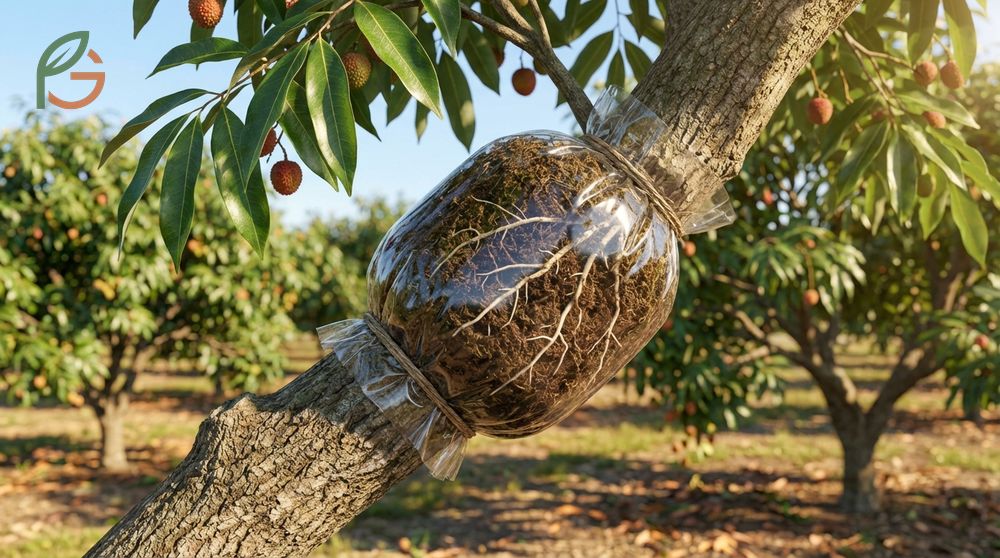
Air layering produces genetically identical clones of superior lychee cultivars, eliminating the genetic lottery of seed propagation. This propagation method creates roots on a branch while it’s still attached to the parent tree, then you sever and plant the rooted section. Success rates exceed 80% when you follow proper technique and timing.
Commercial nurseries and orchardists use air layering almost exclusively because it preserves desirable fruit characteristics. A ‘Mauritius’ lychee air layer produces ‘Mauritius’ fruit with identical flavor, size, and quality. Seed-grown trees from the same cultivar show unpredictable variation in all fruit traits.
The process requires minimal equipment: sharp knife, rooting hormone, sphagnum moss, plastic wrap, and twist ties. Most home gardeners successfully air layer lychee after watching a demonstration or following detailed instructions. The technique works year-round in tropical climates but succeeds best during spring and early summer in subtropical zones.
Why Air Layering Beats Seeds
Time to first harvest represents the most compelling advantage of air layering over seeds. Air-layered trees begin fruiting in 3-4 years while seed-grown trees require 10-15 years before producing their first crop[2]. This 7+ year difference matters significantly for home gardeners who want to enjoy fruit during their residence at a property.
Fruit quality predictability provides another major benefit. You’re cloning a proven cultivar rather than gambling on seedling variation. If you love the flavor of ‘Brewster’ lychees, air layering guarantees you’ll harvest identical fruit from your tree.
Tree size management also favors air layering. Air-layered trees maintain the mature size characteristics of their parent cultivar, while seedlings show more vigorous growth that can produce excessively large trees. Dwarf or semi-dwarf cultivars propagated by air layering stay manageable in home landscapes.
Air Layering Step by Step
Select a healthy branch 0.4-0.6 inches in diameter with mature bark for air layering. The branch should show last season’s growth that has hardened off completely. Avoid branches with active flower or fruit development, as these compete with root formation for the tree’s resources.
Make two parallel cuts around the branch circumference, spaced 1.5-2 inches apart. Remove the bark and cambium layer between these cuts, exposing the white wood underneath. Scrape thoroughly to prevent reconnection of the cambium, which would stop root development. Dust the exposed area with rooting hormone powder.
Wrap moistened sphagnum moss around the wounded area to create a 3-4 inch diameter ball. Cover the moss completely with clear plastic wrap, sealing both ends with twist ties or electrical tape. The plastic maintains moisture while allowing you to monitor root development through the transparent covering.
Roots typically emerge within 8-10 weeks under favorable conditions[4]. You’ll see white roots growing through the moss when the layer is ready for severing. Cut the branch below the rooted area, remove plastic and some leaves, then pot in well-draining mix.
- Choose spring or early summer for air layering in subtropical climates when sap flow is strong
- Keep moss consistently moist by unwrapping and re-moistening every 2-3 weeks if needed
- Protect air layers from direct sun exposure which overheats and dries the moss
- Harden off newly separated layers in shade for 2-3 weeks before gradual sun exposure
- Remove 40-50% of leaves when severing to reduce water demand while roots establish
- Wait until you see abundant roots filling the moss ball before cutting from parent tree
Pruning and Pest Management
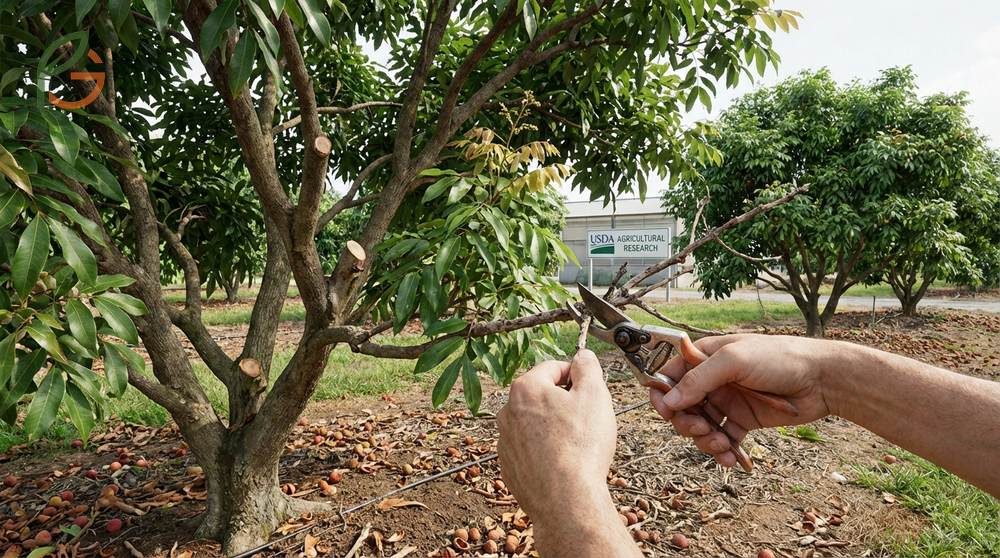
Lychee trees need minimal pruning compared to other fruit trees, mainly to remove dead wood and control height. Excessive pruning reduces flowering wood and cuts fruit production for 1-2 seasons. Focus on removing crossing branches, diseased wood, and shoots growing toward the tree’s interior.
Post-harvest pruning synchronizes the next year’s growth cycle across the entire tree. USDA research shows that pruning immediately after harvest helps all branches flush new growth simultaneously, leading to more uniform flowering and fruiting the following season[5]. This synchronization improves harvest efficiency and fruit quality.
Pest and disease pressure on lychee remains relatively low in most growing regions. Common issues include webworms that damage leaves, stink bugs that scar developing fruit, and occasional scale insects on branches. Monitor trees weekly during the growing season and treat problems early before populations explode.
Root rot from Phytophthora fungi causes the most serious disease problems in lychee, particularly in poorly drained soils. Symptoms include wilting despite adequate soil moisture, yellowing leaves, and branch dieback. Prevention through proper site selection and drainage beats treatment for this disease. There’s no effective cure once root rot establishes.
- Inspect leaves weekly for webworm damage; treat with Bacillus thuringiensis if found
- Use insecticidal soap for scale insects or aphids before populations become severe
- Apply kaolin clay to developing fruit to deter stink bugs without chemical pesticides
- Maintain good air circulation through the canopy by thinning crowded interior branches
- Avoid overhead irrigation which promotes fungal diseases on leaves and fruit
Pruning Caution: Don’t prune lychee trees during winter or early spring before flowering. This removes the previous season’s wood that carries flower buds, eliminating your crop for that year. Only prune after harvest completion in summer.
Conclusion
The evidence is clear: how is lychee cultivated successfully depends on matching subtropical climate requirements, providing acidic well-drained soil, and choosing appropriate propagation methods for your timeline. Air layering delivers fruit-bearing trees in 3-4 years while seed propagation extends this to 10+ years, though seeds work well for educational projects. Current horticultural guidance emphasizes climate zone selection and seasonal water management as the primary factors determining cultivation success.
Whether you’re starting lychee from seed or establishing air-layered cultivars, proper site preparation and consistent care produce healthy trees. FruitGarden synthesizes university extension research to help you cultivate lychee successfully in your home landscape, transforming subtropical growing spaces into productive fruit gardens.
Frequently Asked Questions
How Long Does a Lychee Tree Take to Grow from Seed?
Lychee seeds germinate in 1-4 weeks at 75-90°F (24-32°C), producing seedlings within a month. However, seed-grown trees take 10-15 years to reach fruit-bearing maturity compared to 3-4 years for air-layered trees. The seedling grows vigorously for years before developing the maturity needed for flower production.
Where Do Lychees Grow Best in the United States?
Lychees thrive in USDA zones 10-11, primarily in southern Florida, protected areas of Southern California, and Hawaii. These regions provide the subtropical climate with cool dry winters and hot humid summers that lychee requires for proper flowering and fruiting. Zone 9B gardeners can attempt cultivation with cold-hardy cultivars and frost protection.
Can You Plant a Lychee Seed Directly from Fresh Fruit?
Yes, you can plant lychee seeds directly from fresh fruit, but you must do so within 4-5 days of extraction. Lychee seeds lose viability rapidly once removed from the fruit. Rinse seeds thoroughly, plant horizontally 1 inch deep in well-draining mix, and maintain 75-90°F (24-32°C) for germination within 1-4 weeks.
How Tall Do Lychee Trees Grow in Home Landscapes?
Mature lychee trees reach 30-40 feet tall in ideal conditions, though most home landscape trees stay in the 15-25 foot range with periodic pruning. Cultivar selection influences mature size,with some varieties like ‘Mauritius’ remaining more compact than vigorous growers like ‘Brewster’. Container-grown trees typically stay under 8-10 feet due to root restriction.
Do Lychee Trees Need Full Sun or Shade?
Lychee trees require full sun exposure (6-8 hours daily) for maximum fruit production. While young trees benefit from partial shade during their first two years to prevent leaf scorch, mature trees need direct sunlight to support the high energy demands of flowering and fruiting. Shade-grown trees often produce lush foliage but little to no fruit.
Why Is My Lychee Tree Not Fruiting?
Lack of winter chilling is the most common cause of failure to fruit. Lychee trees need 100-200 hours of temperatures between 59-68°F (15-20°C) to trigger flower bud formation. Other causes include excessive nitrogen fertilizer during winter (which promotes leaves instead of flowers), improper pruning that removes fruiting wood, or the tree being too young (under 3-5 years for air layers).
Can You Grow Lychee in Pots?
Yes, lychee trees grow successfully in large containers (15-25 gallons) if you use well-draining acidic potting mix. Container culture allows growers in colder zones (USDA 9 and below) to move trees indoors during freezing weather. While potted trees produce less fruit than in-ground trees, they remain manageable and can still provide a rewarding harvest with proper fertilization and watering.