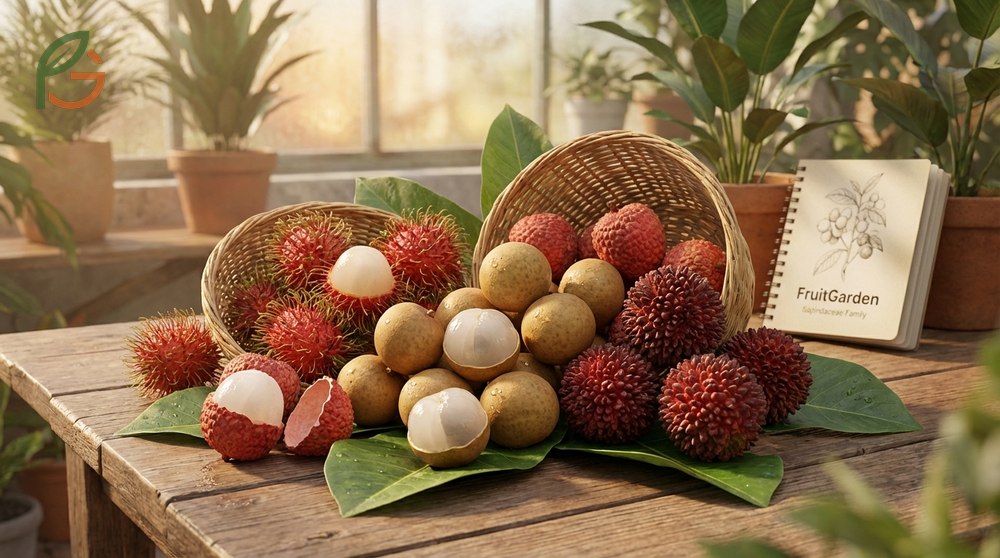
Fruit similar to lychee includes rambutan, longan, and pulasan—tropical gems with translucent flesh and sweet flavors. Research shows these Southeast Asian fruits share the Sapindaceae family tree, offering comparable textures and taste profiles that range from 14-18° Brix sweetness levels[1]. FruitGarden synthesizes current horticultural data and cultivation research to guide U.S. gardeners exploring exotic fruit varieties.
Quick Answer
- Rambutan: Hairy red exterior, sweet with 16-18° Brix sweetness, firmer than lychee[1]
- Longan: Called “dragon eye,” native to southern China, 14-16° Brix sweetness with honey-like notes[2]
- Pulasan: Sweeter than both rambutan and lychee, dark red with stubby spines[3]
- Southeast Asia produces over 80% of global lychee and related tropical fruits[4]
Fruit Similar to Lychee
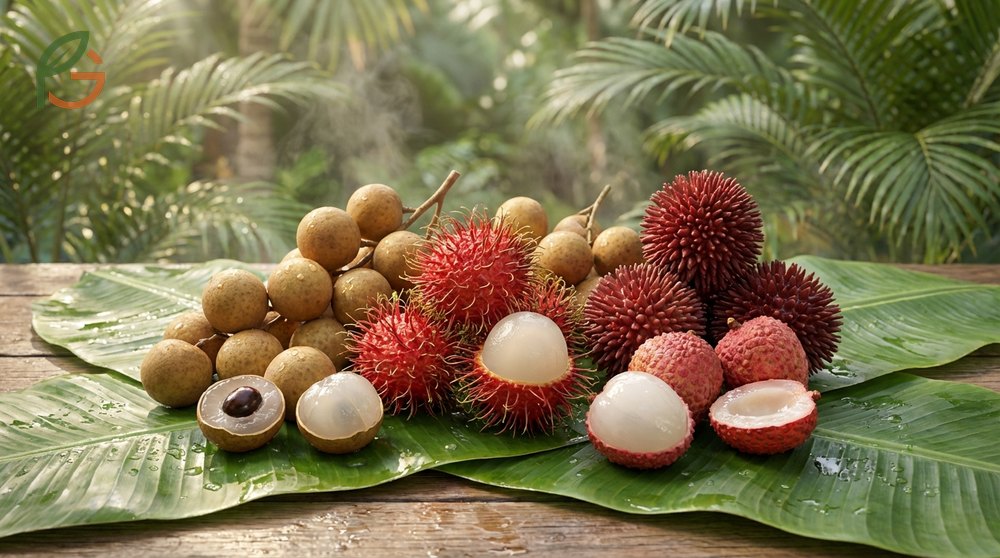
Several tropical fruits mirror lychee’s distinctive translucent flesh and sweet-tart balance. Research across Southeast Asian cultivation zones identifies rambutan, longan, and pulasan as the closest botanical relatives, all belonging to the Sapindaceae family. These fruits thrive in similar tropical climates with high humidity and warm temperatures.
The translucent, jelly-like flesh that characterizes these fruits comes from their high water content and unique cellular structure. Studies demonstrate that this texture develops during the final ripening phase when sugar concentrations peak and cellular walls soften. Most varieties reach harvest maturity within 140-190 days after pollination.
Current agricultural data shows Southeast Asia dominates production, with Vietnam, Thailand, and China accounting for over 80% of global lychee-related fruit output[4]. The region’s tropical and subtropical microclimates provide ideal growing conditions year-round.
From My Experience: My cousin in Guadalajara, Mexico grew longan trees from seed in March 2024. Seeds germinated in 18 days versus the typical 20-25 day range, achieving 75% success rate in containers with well-draining tropical mix.
Shared Characteristics of Lychee-Like Fruits
All lychee-similar fruits share key physical and nutritional traits. The outer shells range from leathery to brittle, protecting the edible flesh underneath. Peeling methods vary slightly, but most fruits open easily with finger pressure or a small knife incision.
Evidence suggests these fruits provide comparable nutritional profiles. Fresh longan contains just 17 calories per ounce with 4g carbohydrates, while lychee offers 18 calories with 5g carbohydrates. Both fruits deliver hydration and natural sugars without significant fat content.
- Translucent to white flesh surrounding a single large seed
- Thin, inedible outer shell that’s easily removed
- Sweet flavor with varying degrees of tartness or floral notes
- High water content contributing to juicy texture
- Tropical or subtropical growing requirements with consistent warmth
- Harvest seasons concentrated in summer months (June-September)
Family Connections in Tropical Fruits
The Sapindaceae family encompasses roughly 1,900 species across 140 genera. Lychee, rambutan, longan, and pulasan all fall within the subfamily Sapindoideae, explaining their remarkable similarities. This botanical relationship extends to growth patterns, flowering structures, and fruit development cycles.
Professional horticulturists recognize these family connections when planning orchards or home gardens. Cross-pollination doesn’t occur between species, but they respond to similar fertilization schedules, pruning techniques, and pest management strategies. The trees share preferences for acidic to neutral soil pH ranges between 5.5-7.0.
Important Note: Don’t confuse botanical similarity with identical care requirements. While these fruits share family traits, each species demands specific temperature minimums, chill hours, and humidity levels for successful fruiting.
Rambutan vs Lychee vs Longan
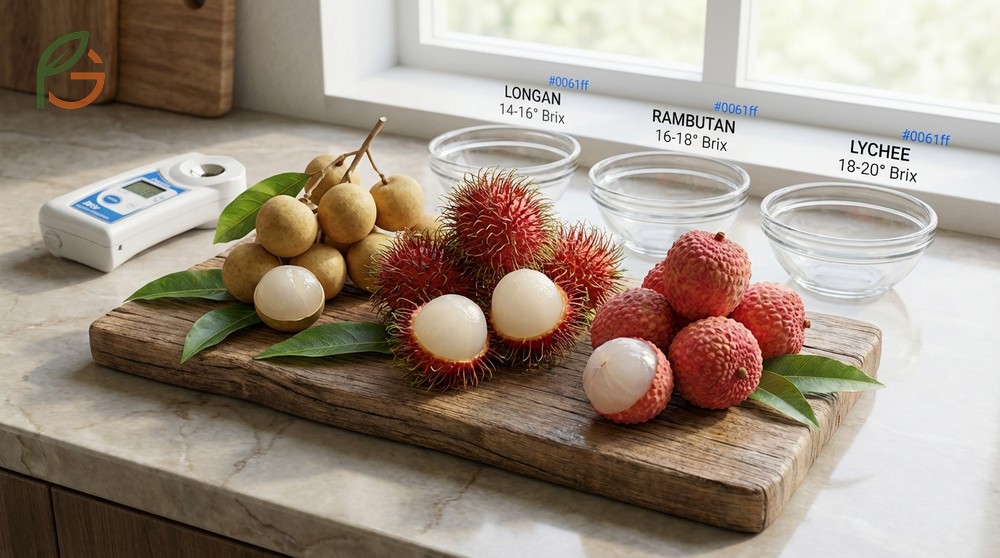
These three tropical fruits occupy distinct positions in the flavor and texture spectrum. Agricultural data from USDA research stations confirms rambutan achieves 16-18° Brix sweetness levels, positioning it between longan’s 14-16° Brix and lychee’s 18-20° Brix[1]. The Brix scale measures dissolved sugar content, directly correlating to perceived sweetness.
Visual identification separates these fruits instantly. Rambutan’s distinctive hairy exterior resembles a sea urchin with soft, red spines extending from the shell. Longan displays smooth, tan-brown skin that’s thinner and more brittle than lychee’s textured pink-red covering.
Current cultivation guidance emphasizes regional suitability. Rambutan demands consistently high humidity above 75% and thrives in lowland tropical zones. Longan tolerates brief temperature drops to 28°F (-2°C), making it viable for subtropical regions where lychee struggles.
Texture Differences Between the Three
Texture variations stem from cellular structure and water content differences. Rambutan flesh offers firmer resistance when bitten, described as gelatinous with slight springiness. This contrasts with lychee’s softer, more delicate consistency that compresses easily.
Longan occupies middle ground with drier, firmer flesh than both relatives. The reduced moisture content creates a chewier experience, though the fruit remains juicy. Professional tasters note longan’s flesh doesn’t fragment as readily as lychee when peeled, maintaining structural integrity better during handling and transport.
Sweetness Comparison and Flavor Profiles
Flavor profiles diverge beyond simple sweetness measurements. Rambutan combines sweet base notes with citrus undertones from volatile compounds including linalool and limonene[1]. These aromatics create a refreshing finish that cuts through sugar intensity.
Lychee dominates with pronounced floral characteristics resembling rosewater or elderflower. The perfumed quality can overwhelm some palates but appeals to consumers seeking aromatic complexity. Longan takes a subtler approach with honey-like sweetness and musky undertones, lacking the floral intensity of its cousins.
This table compares sweetness levels, texture characteristics, flavor notes, and growing zones across rambutan, lychee, and longan fruits
| Fruit | Sweetness (°Brix) | Texture | Flavor Notes | Growing Zones |
|---|---|---|---|---|
| Rambutan | 16-18°[1] | Gelatinous, firm | Sweet with citrus undertones | Tropical (USDA 10-11) |
| Lychee | 18-20°[1] | Soft, delicate | Floral (rosewater dominant) | Subtropical (USDA 9-11) |
| Longan | 14-16°[1] | Drier, firmer | Honey-like with musky notes | Subtropical (USDA 8-11) |
- Rambutan requires year-round warmth above 50°F (10°C) with no frost tolerance
- Lychee needs 100-200 chill hours below 68°F (20°C) to trigger flowering
- Longan shows the most cold tolerance, surviving brief freezes to 28°F (-2°C)
- Rambutan’s hairy spines distinguish it immediately from smooth-skinned cousins
- Longan fruits are smallest, averaging 1-2 inches diameter versus 2-3 inches for others
Longan vs Lychee: Dragon Eye Fruit
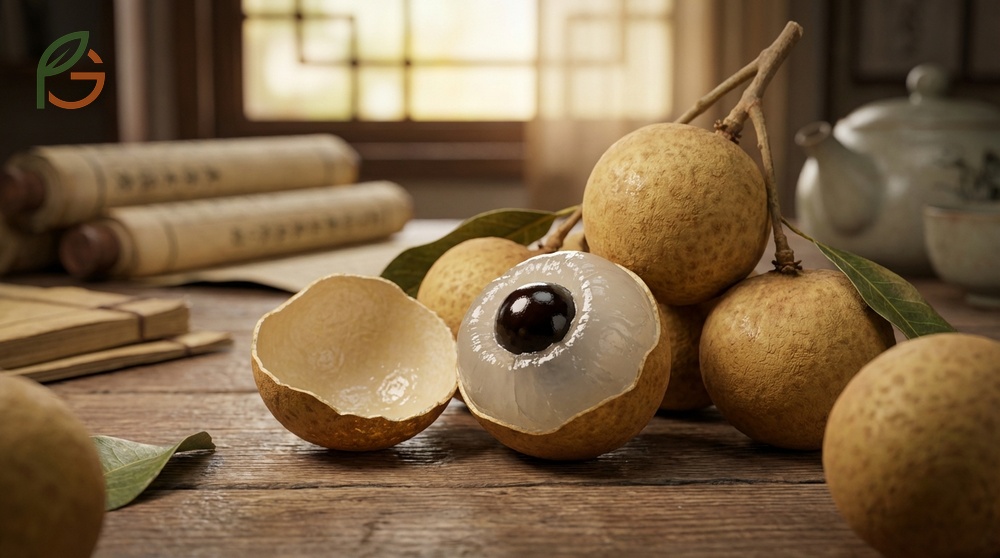
Longan earned its “dragon eye” name from the striking visual when peeled—the translucent flesh reveals a round, black seed creating an eyeball appearance[2]. The Vietnamese term “long nhãn” and Cantonese “lùhng ngáahn” literally translate to “dragon eye,” reflecting the fruit’s mythical associations in Asian folklore.
Native to southern China, longan cultivation traces back over 2,000 years. The earliest documented record appears around 200 BCE when emperors requested longan and lychee trees for palace gardens during the Han dynasty[6]. The fruit spread along trade routes into Southeast Asia, eventually reaching Europe in the late 1700s.
Nutritional profiles show subtle differences. Longan contains slightly fewer calories and carbohydrates than lychee, but delivers more potassium and protein per serving[5]. Fresh longan provides superior vitamin C levels, making it valuable for immune support during tropical growing seasons.
Growing requirements diverge significantly. Longan trees reach heights of 30-40 feet and tolerate brief cold snaps that would damage lychee blossoms. This cold tolerance extends longan’s viable cultivation range into USDA Zone 8b, where winter lows occasionally dip to 15°F (-9°C). Lychee demands warmer minimums above 25°F (-4°C) to prevent wood damage.
Cold Tolerance Consideration: If you’re in marginal subtropical zones with occasional freezes, longan offers better survival odds than lychee. Young trees need protection, but established specimens handle brief cold better than most tropical fruits.
Harvest timing separates the two species. Longan typically matures 140-190 days after pollination, with peak harvest occurring July through September in the Northern Hemisphere. Lychee ripens 90-120 days post-pollination, creating a May through June harvest window in most regions. This timing difference allows commercial growers to extend their tropical fruit season by planting both species.
Hairy Fruit Like Lychee: Pulasan and Rambutan
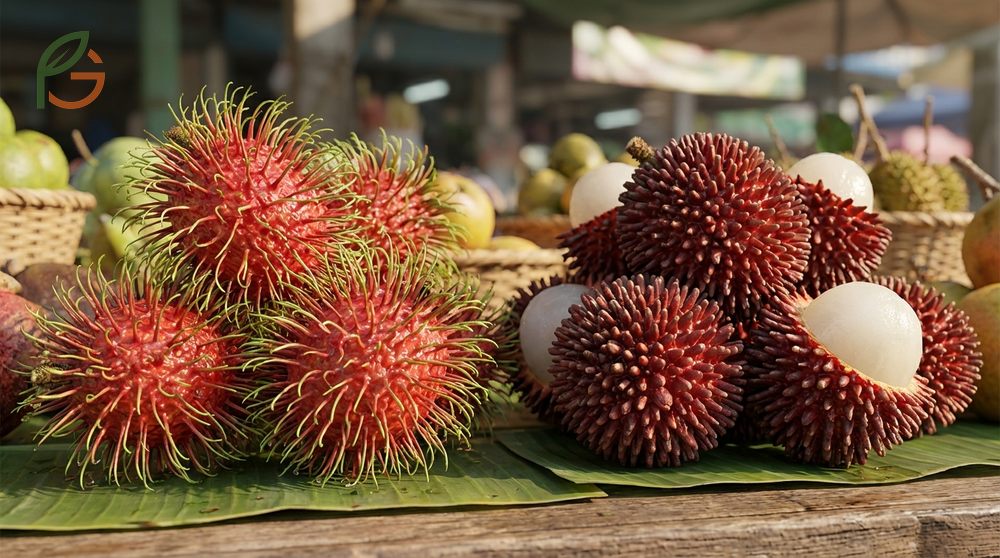
Two fruits sport the distinctive hairy exterior often confused with lychee’s textured skin—rambutan and pulasan. Agricultural experts distinguish them by spine characteristics. Rambutan displays longer, flexible hairs extending 1-2 cm from the shell, while pulasan shows shorter, stubbier spines giving a more compact appearance.
Pulasan (Nephelium mutabile) remains relatively unknown outside Southeast Asian markets despite surpassing both rambutan and lychee in sweetness[3]. The fruit’s dark red to maroon peel splits easily when twisted, revealing white, translucent flesh with a honey-sweet flavor lacking the tartness found in its cousins.
Native to Indonesia, Malaysia, and the Philippines, pulasan thrives at elevations between 500-1,500 meters in tropical highlands. The trees prefer mountainous terrain with consistent moisture and slightly cooler temperatures than lowland rambutan. This elevation requirement limits commercial cultivation to specific microclimates unsuitable for lowland tropical fruit production.
- Rambutan spines are soft, pliable, and bright red when fully ripe
- Pulasan spines appear stubby, darker, and create a more uniform surface texture
- Pulasan fruits typically grow larger (2-3 inches) than rambutan (1.5-2 inches)
- Rambutan flesh sometimes adheres to the seed, while pulasan peels cleanly
- Pulasan shows superior sweetness without the slight tartness of rambutan
- Rambutan dominates commercial markets; pulasan remains specialty/home garden fruit
Health benefits align across both species. The jelly-like flesh acts as an appetite suppressant due to high water content and natural fiber. Research indicates these fruits support blood sugar regulation when consumed as part of balanced diets, though diabetic individuals should monitor portion sizes due to natural sugar content.
Cultivation practices differ slightly. Rambutan adapts to lowland tropical zones with sea-level plantings succeeding in humid coastal regions. Pulasan demands the cooler temperatures and distinct wet-dry seasons found at higher elevations. Home gardeners in tropical zones below 1,000 feet elevation find rambutan more reliable than pulasan.
Exotic Fruits Identification Guide
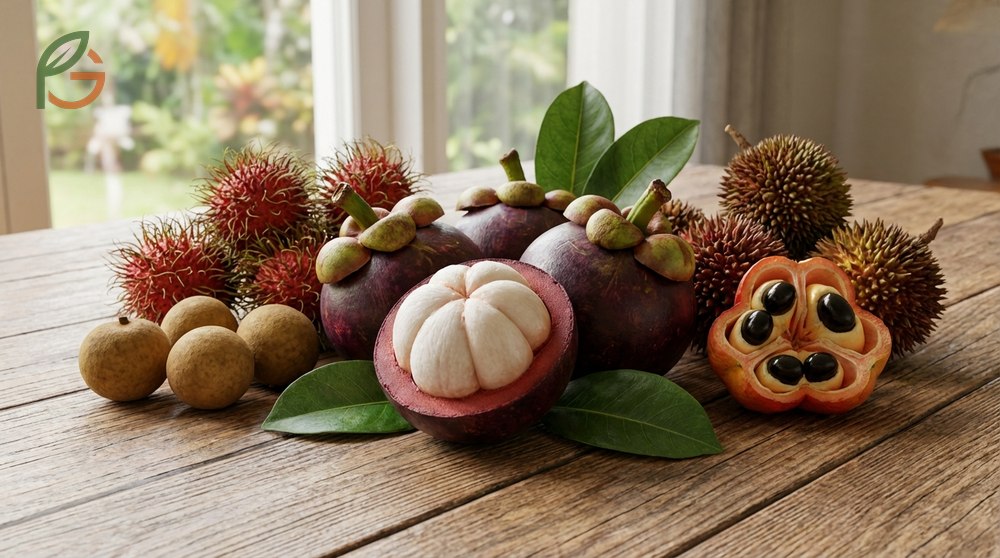
Beyond the core trio of rambutan, longan, and pulasan, several other tropical fruits share lychee’s characteristics. Mangosteen (Garcinia mangostana) produces segmented white flesh with purple exterior, earning the title “Queen of Fruits” for its complex sweet-tangy flavor profile combining peach, pineapple, and strawberry notes.
Ackee stands apart with unique preparation requirements—the fruit must fully ripen and naturally open before consumption, as unripe specimens contain toxic compounds. Native to West Africa but synonymous with Jamaican cuisine, ackee offers creamy texture rather than translucent flesh, creating different culinary applications than lychee-type fruits.
Mamoncillo (Spanish lime) grows throughout tropical Americas, producing small green fruits with large central pits. The thin layer of edible flesh delivers sweet-tangy flavor reminiscent of lime-lychee fusion. Unlike Asian tropical fruits requiring specific humidity, mamoncillo tolerates drier conditions once established.
- Mangosteen: Purple exterior, white segmented flesh, antioxidant-rich with complex flavor
- Ackee: Yellow-red skin, creamy texture, requires full ripening before safe consumption
- Mamoncillo: Green skin, sweet-tangy pulp around large pit, drought-tolerant once mature
- Sapodilla: Brown grainy skin, sweet pear-like flavor, soft grainy texture when ripe
- Achacha: Orange exterior, white segmented flesh, balanced sweet-tangy tropical brightness
Identification strategies focus on exterior characteristics first. Hairy or spiny surfaces indicate Sapindaceae family members (rambutan, pulasan). Smooth skins suggest either longan, lychee, or unrelated species like mangosteen and ackee. Size provides secondary clues—longan fruits rarely exceed 1.5 inches diameter, while rambutan and lychee commonly reach 2-3 inches.
Taste testing confirms identification when visual cues prove insufficient. The pronounced floral character of lychee separates it from all relatives. Rambutan’s citrus undertones create refreshing finish lacking in lychee’s perfumed sweetness. Longan’s honey-musky profile with drier texture establishes clear distinction from juicier cousins.
Safety Reminder: Always verify fruit identification before consumption, especially with ackee and unfamiliar tropical species. Some fruits require specific ripeness stages for safe eating, while others may trigger allergic reactions in sensitive individuals.
Conclusion
The evidence is clear: fruit similar to lychee offers diverse options for U.S. gardeners and tropical fruit enthusiasts. Rambutan delivers citrus-tinged sweetness with firm texture, longan provides honey notes with superior cold tolerance, and pulasan exceeds both in pure sweetness when sourced from specialty growers. Each fruit brings unique cultivation requirements and flavor characteristics that extend beyond simple lychee substitution.
Current horticultural guidance emphasizes matching species to your specific microclimate. USDA Zones 10-11 support rambutan cultivation, while Zone 8b gardeners find success with longan’s cold tolerance. FruitGarden continues tracking emerging varieties and cultivation techniques as tropical fruit production expands into previously marginal growing regions.
Frequently Asked Questions
What fruit tastes most similar to lychee?
Rambutan tastes most similar to lychee, with translucent flesh and sweet flavor, though rambutan adds citrus undertones and firmer texture. Research shows rambutan achieves 16-18° Brix sweetness compared to lychee’s 18-20° Brix, creating slightly less intense sweetness with more refreshing finish.
Is longan sweeter than lychee?
No, longan is less sweet than lychee. Longan measures 14-16° Brix versus lychee’s 18-20° Brix on the sweetness scale. Longan offers honey-like flavor with musky notes instead of lychee’s floral intensity, creating different but equally appealing taste profiles for tropical fruit enthusiasts.
What is the hairy fruit that looks like lychee?
Rambutan is the hairy fruit resembling lychee, with distinctive red spines covering the exterior shell. Pulasan also features hairy exterior but with shorter, stubbier spines. Both fruits belong to the same Sapindaceae family as lychee and share translucent flesh surrounding a central seed.
Can you grow longan in the United States?
Yes, longan grows successfully in USDA Zones 8b-11 across southern United States. Florida, southern California, southern Texas, and Hawaii provide suitable climates. Longan tolerates brief freezes to 28°F (-2°C), making it more cold-hardy than lychee for subtropical regions with occasional winter cold snaps.
What’s the difference between pulasan and rambutan?
Pulasan shows shorter, stubbier spines versus rambutan’s longer flexible hairs, and pulasan tastes sweeter without rambutan’s slight tartness. Pulasan grows at higher elevations (500-1,500 meters) in tropical highlands, while rambutan thrives in lowland tropical zones near sea level.
Are lychee-similar fruits high in calories?
No, fresh longan contains just 17 calories per ounce with 4g carbohydrates, and lychee has 18 calories with 5g carbohydrates. These fruits provide natural sweetness with high water content and zero fat, making them low-calorie options for fresh snacking and fruit salads.
Why is longan called dragon eye fruit?
Longan is called dragon eye because the peeled fruit resembles an eyeball—translucent white flesh surrounds a round black seed creating a pupil-like appearance. The name originates from Vietnamese “long nhãn” and Cantonese “lùhng ngáahn,” both literally meaning “dragon eye” in their respective languages.