
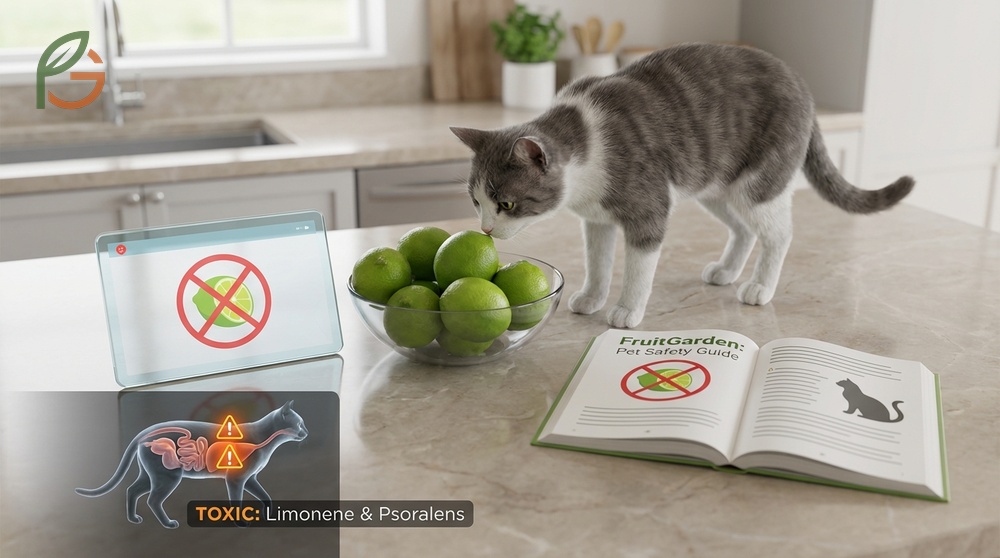
Can cats have lime? No, limes are toxic to cats and should never be given to them. Research shows that limes contain essential oils like limonene and chemical compounds called psoralens that cats can’t properly metabolize, leading to potentially serious health complications[1]. FruitGarden synthesizes current veterinary research and toxicology data to help pet owners understand which fruits are safe for their cats and which pose serious health risks.
Quick Answer
Can Cats Have Lime
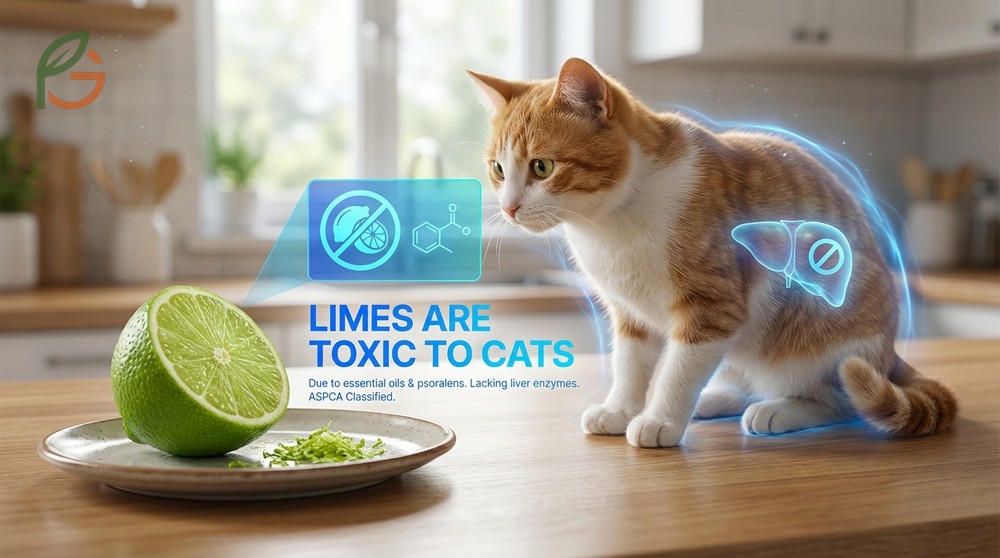
Limes are classified as toxic to cats by the ASPCA and major veterinary organizations[1]. The toxicity stems from essential oils and psoralens found throughout the fruit, particularly concentrated in the rind and peel. Cats lack the specific liver enzymes needed to break down these compounds, causing them to accumulate in the body and trigger adverse reactions.
Studies demonstrate that even small amounts of lime can cause gastrointestinal distress in cats. The severity of symptoms depends on how much lime your cat consumed and which part of the fruit they ate. Most cats naturally avoid limes due to their strong citrus scent, which serves as a protective instinct against this toxic fruit.
What makes limes particularly dangerous is that the toxic effects aren’t always immediate. Psoralens can cause photosensitivity, meaning your cat’s skin becomes abnormally sensitive to sunlight hours or even days after exposure[3]. This delayed reaction can make it harder to identify the source of your cat’s discomfort.
Toxic Compounds in Limes
Limonene is the primary essential oil in lime rinds that causes toxicity in cats. This compound gives limes their characteristic scent and is used in many household cleaning products. Cats exposed to limonene can develop central nervous system depression, hypothermia, and ataxia (loss of coordination)[2].
Psoralens represent the second major toxic component in limes. These naturally occurring compounds are used medically in humans to treat certain skin conditions by increasing UV sensitivity. In cats, however, psoralens can cause severe dermatological reactions, including reddened skin, sunburn-like symptoms, and blistering when exposed to light.
Both compounds work synergistically to create more severe symptoms than either would cause alone. The concentration of these toxins is highest in the rind, moderate in the pith (white part), and lowest in the juice and flesh. Even lime essential oils used in diffusers or cleaning products can pose risks through inhalation or skin contact.
How Cats Metabolize Citrus
Cats lack glucuronyl transferase enzymes in their liver, which are essential for breaking down phenols and citrus compounds like limonene[5]. This metabolic limitation means toxic compounds accumulate rather than being efficiently eliminated from the body. Human bodies process these substances without issue, but the same amounts can be dangerous for cats due to their smaller size and different metabolism.
The accumulated toxins primarily affect three body systems: gastrointestinal, neurological, and dermatological. Absorption happens quickly through the digestive tract if ingested, or through the skin and respiratory system if exposed to essential oils. This is why veterinarians warn against using citrus-based cleaners or diffusers around cats.
Important Note: Even if your cat doesn’t directly eat lime, exposure to lime essential oils in cleaning products, air fresheners, or diffusers can cause toxicity. Always check product labels and avoid citrus-based formulas in homes with cats.
Can Cats Eat Lime
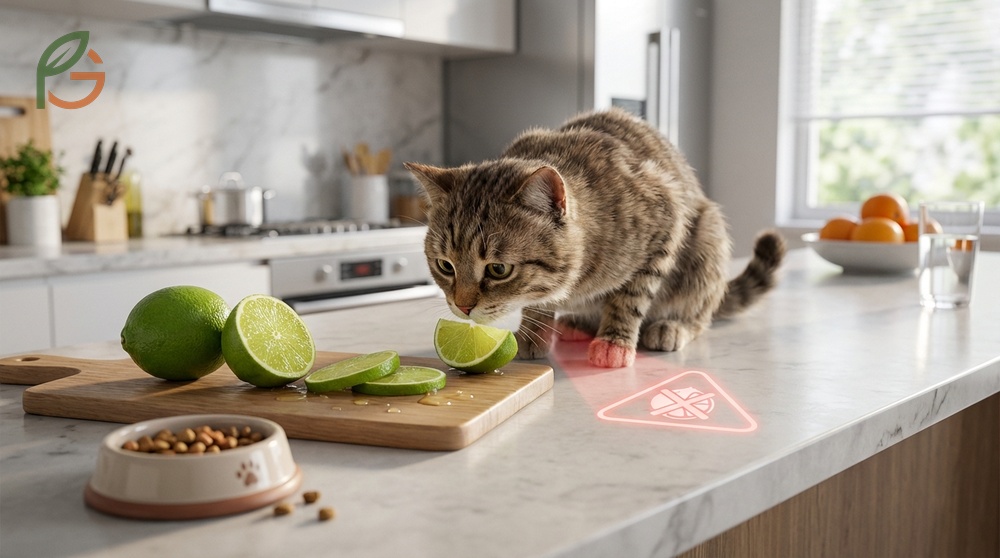
Cats should never eat any part of a lime, including the flesh, juice, rind, or peel. While the flesh contains lower concentrations of toxic compounds compared to the rind, it still poses health risks. Veterinary guidance consistently advises complete avoidance of limes in any form for feline diets.
The distinction between “toxic” and “deadly” is important to understand here. Most cats won’t die from licking a small amount of lime juice, but they’ll likely experience uncomfortable symptoms. Larger amounts or repeated exposure can lead to more serious complications, including liver damage and kidney problems[6].
Current veterinary data shows that cats would need to consume an excessive amount of lime flesh to be in immediate danger of severe reactions. However, the cumulative effects of repeated small exposures and the unpredictability of individual cat sensitivities make any lime consumption inadvisable. There’s simply no safe amount when alternative fruits exist that pose zero risk.
Lime Flesh vs Rind
The rind contains approximately 80-90% of the toxic essential oils found in limes. This concentration makes the rind the most dangerous part of the fruit for cats. The oils are stored in tiny glands visible as small dots on the peel’s surface, and these rupture easily when scratched or bitten.
Lime flesh and juice contain significantly lower levels of limonene but still have enough to cause gastrointestinal upset. The white pith between the rind and flesh contains moderate amounts of both limonene and psoralens. If your cat chews on any part of a lime, they’re likely to get some level of toxin exposure.
- Rind/peel: Highest toxicity – contains concentrated essential oils and psoralens
- Pith (white part): Moderate toxicity – contains both toxic compounds in lower concentrations
- Flesh: Lower toxicity – still contains enough compounds to cause symptoms
- Juice: Lowest toxicity – diluted but still potentially harmful
- Seeds: Variable toxicity – contain compounds similar to rind
Lime Juice Toxicity
Lime juice contains dissolved essential oils and psoralens in lower concentrations than the whole fruit. A few drops licked from your fingers probably won’t cause serious harm, but it’s not risk-free. Cats exposed to lime juice commonly show signs of oral irritation, excessive drooling, and gastrointestinal discomfort within minutes to hours.
Concentrated lime juice poses greater risks than fresh-squeezed juice. Commercial lime juice products may contain added preservatives and higher acidity levels that can further irritate your cat’s digestive system. The citric acid alone can cause stomach upset even without the essential oils.
Warning: Never use lime juice as a home remedy for fleas or skin conditions in cats. The topical application of citrus compounds can cause severe skin burns, photosensitivity, and systemic toxicity through absorption.
Is Lime Bad for Cats
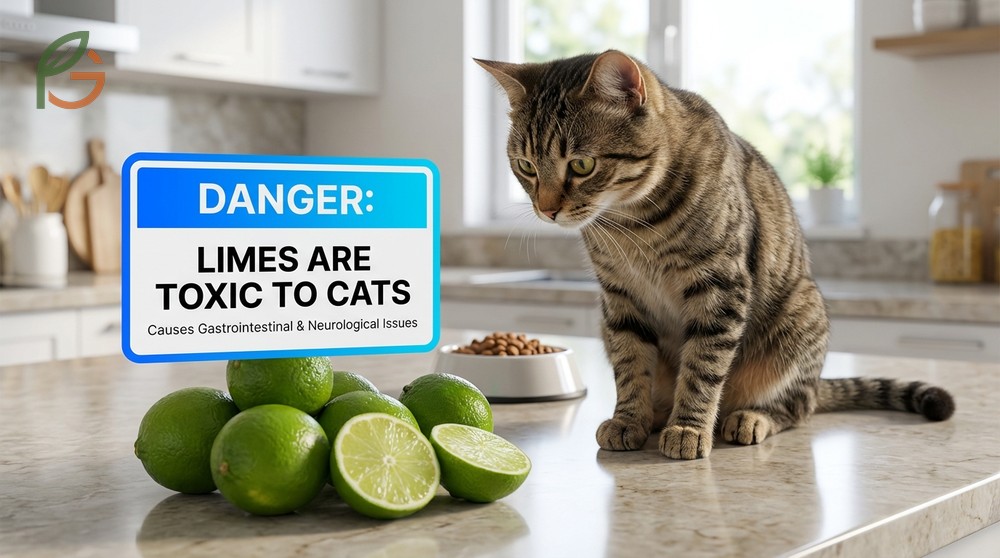
Limes are definitively bad for cats and rank among the fruits veterinarians most strongly advise against. Research confirms that lime ingestion leads to predictable toxic effects rather than occasional allergic reactions. The question isn’t whether limes are bad, but how bad the effects will be based on the amount consumed and individual cat sensitivity.
The bad outcomes from lime consumption fall into three categories: immediate gastrointestinal symptoms, delayed neurological effects, and photosensitivity reactions. Most cats experience the gastrointestinal symptoms first—vomiting and diarrhea typically begin within 2-4 hours of ingestion. Neurological symptoms like lethargy, depression, and coordination problems may take 6-12 hours to manifest.
Photosensitivity represents the most insidious problem with lime toxicity. Cats who’ve eaten lime may develop severe skin reactions when exposed to sunlight or even bright indoor lighting 24-48 hours later[3]. This delayed reaction can confuse pet owners who don’t connect the skin problems with the earlier lime exposure.
Long-term exposure concerns also make limes particularly problematic. Repeated small exposures to citrus compounds can accumulate in the liver over time. Cats living in homes where lime essential oils are regularly diffused or where citrus cleaners are frequently used may develop chronic low-level toxicity that manifests as vague symptoms like lethargy, poor appetite, and skin problems.
- Contain multiple toxic compounds cats can’t metabolize properly
- Cause multi-system effects (digestive, neurological, dermatological)
- Trigger delayed photosensitivity reactions that complicate diagnosis
- Accumulate in the liver with repeated exposure
- Offer no nutritional benefits that couldn’t be obtained from safe foods
- Can cause severe reactions even in small amounts
Are Citrus Fruits Toxic to Cats
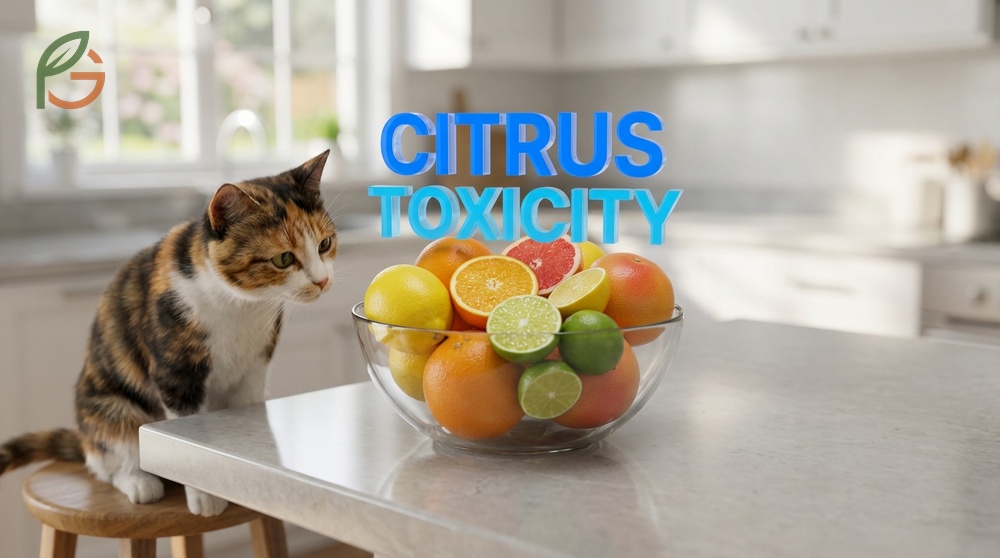
All citrus fruits are toxic to cats, including lemons, oranges, grapefruits, and limes. The toxic compounds (limonene, linalool, and psoralens) are present throughout the entire citrus family. Veterinary toxicology studies show that citrus toxicity in cats is consistent across all citrus species, though concentration levels vary slightly between fruits.
Lemons and limes contain the highest concentrations of toxic essential oils among common citrus fruits. Oranges and tangerines have slightly lower levels but are still dangerous. Grapefruit falls somewhere in the middle and carries the additional risk of interacting with certain medications due to compounds that affect drug metabolism.
The toxicity isn’t limited to fresh citrus fruits. Dried citrus peels, citrus essential oils, citrus-flavored foods, and even citrus-scented household products can all pose risks. Cats are particularly vulnerable to essential oil exposure through diffusers because the aerosolized oils can be inhaled and absorbed through respiratory tissues[5].
This table compares toxicity levels and primary toxic compounds across five common citrus fruits for cats
| Citrus Fruit | Toxicity Level | Primary Toxic Compounds | Most Dangerous Part |
|---|---|---|---|
| Lime | Very High | Limonene, psoralens | Rind and essential oils |
| Lemon | Very High | Limonene, linalool, psoralens | Rind and essential oils |
| Grapefruit | High | Limonene, psoralens, furanocoumarins | Rind, pith, and essential oils |
| Orange | Moderate to High | Limonene, linalool | Rind and essential oils |
| Tangerine | Moderate | Limonene, linalool | Rind and essential oils |
Cat deterrent products often exploit felines’ natural aversion to citrus scents. While these products use citrus to keep cats away from certain areas, they’re generally formulated with diluted citrus extracts rather than pure essential oils. Even so, heavy or prolonged exposure to citrus-based deterrents can potentially cause respiratory irritation or skin reactions in sensitive cats.
Symptoms of Citrus Poisoning in Cats
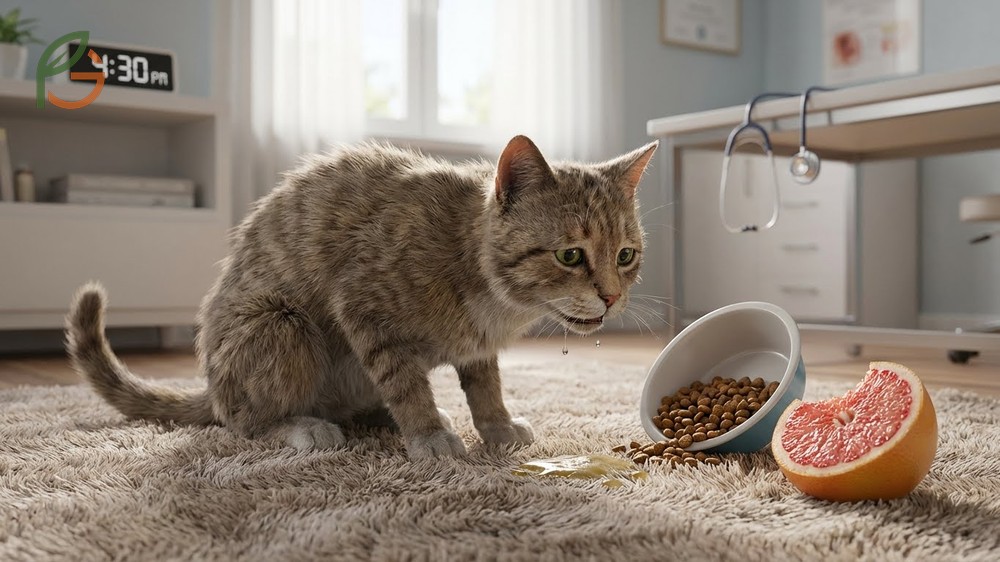
Gastrointestinal symptoms typically appear first, usually within 2-6 hours of lime ingestion. Vomiting is the most common initial sign, followed by diarrhea and excessive drooling[3]. Your cat may show signs of nausea like lip-licking, swallowing repeatedly, or seeking cool surfaces to lie on.
Neurological symptoms usually develop 6-12 hours after exposure and include lethargy, weakness, depression, and ataxia (stumbling or loss of coordination). Some cats experience tremors or muscle twitching in severe cases. You might notice your cat seems confused, has dilated pupils, or responds slowly to normal stimuli.
Dermatological symptoms from psoralen exposure can appear 12-48 hours after ingestion, particularly if your cat has been exposed to sunlight or bright lights. Watch for reddened skin, excessive scratching, hair loss in patches, or areas that appear sunburned. The skin around the ears, nose, and any areas with thin fur are most vulnerable.
- Gastrointestinal: Vomiting, diarrhea, excessive drooling, loss of appetite, abdominal pain
- Neurological: Lethargy, weakness, depression, ataxia, tremors, hypothermia
- Dermatological: Photosensitivity, reddened skin, sunburn-like reactions, dermatitis
- Respiratory: Coughing, sneezing, difficulty breathing (from inhaled essential oils)
- Behavioral: Hiding, aggression from pain, vocalization, restlessness
- Severe cases: Low blood pressure, seizures, liver damage, kidney failure
The severity of symptoms depends on several factors: amount consumed, which part of the lime was eaten, your cat’s size and overall health, and how quickly treatment begins. Kittens and senior cats typically experience more severe symptoms than healthy adult cats. Cats with pre-existing liver or kidney disease are at higher risk for serious complications.
If you notice any of these symptoms and suspect lime exposure, contact your veterinarian immediately. Don’t wait to see if symptoms improve on their own. Prompt treatment significantly improves outcomes and can prevent progression to more serious complications like organ damage.
Emergency Action: If your cat shows severe symptoms (seizures, difficulty breathing, collapse), go to an emergency veterinary clinic immediately. Time is critical in severe poisoning cases.
Safe Fruits for Cats
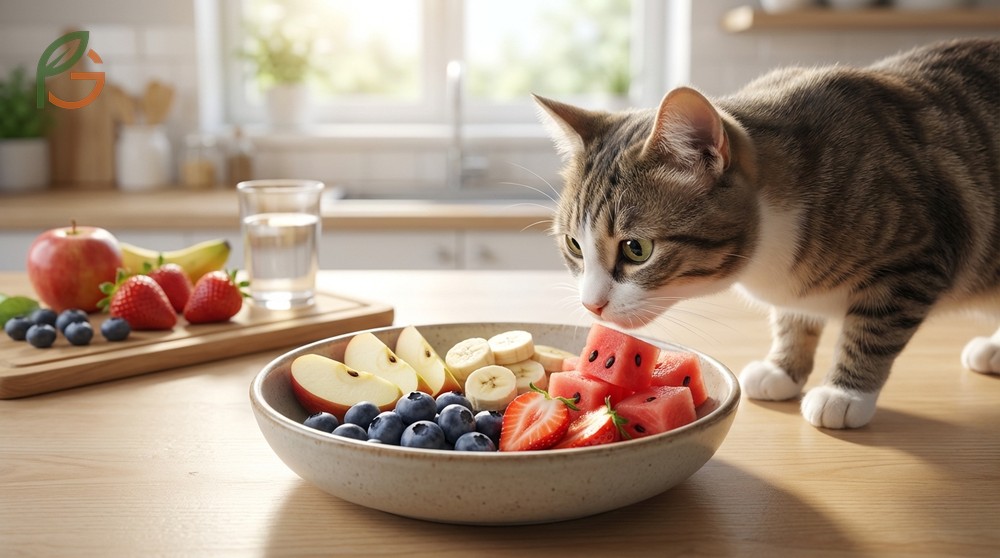
Several fruits are safe for cats in moderation and can provide beneficial nutrients without toxicity risks. Apples (without seeds), bananas, blueberries, and strawberries rank among the safest options according to veterinary nutritionists[4]. These fruits contain vitamins, antioxidants, and fiber that can complement your cat’s primary protein-based diet.
Watermelon makes an excellent summer treat due to its high water content and low calorie count. Remove all seeds and rind before offering small chunks of the pink flesh. Cantaloupe and honeydew melons are similarly safe, and many cats actually enjoy their aroma and sweet taste.
Remember that cats are obligate carnivores, meaning their bodies are designed primarily for meat consumption. Fruits should only represent occasional treats rather than regular diet components. Most veterinarians recommend keeping fruit treats to less than 10% of your cat’s daily caloric intake.
- Apples (no seeds): High in fiber and vitamin C, support digestive health
- Bananas: Rich in potassium and vitamin B6, good energy source
- Blueberries: Packed with antioxidants, support immune function
- Strawberries: Contain vitamin C and manganese, promote overall health
- Watermelon: Hydrating and low-calorie, contains vitamins A and C
- Cantaloupe: High in beta-carotene, supports eye health
- Pineapple (small amounts): Contains bromelain enzyme, aids digestion
- Mango: Rich in vitamins A and C, supports immune system
When introducing any new fruit to your cat’s diet, start with tiny amounts (a few small pieces) and monitor for any adverse reactions. Some cats may have individual sensitivities even to generally safe fruits. Watch for changes in stool consistency, vomiting, or behavioral changes over the next 24 hours.
Preparation matters when offering fruits to cats. Always wash fruits thoroughly, remove all seeds and pits (which often contain toxins), and cut into small, bite-sized pieces to prevent choking. Never offer fruits with added sugars, artificial sweeteners (especially xylitol, which is deadly to cats), or other additives.
Conclusion
The evidence is clear: cats cannot have lime in any form due to toxic essential oils and psoralens that cause gastrointestinal, neurological, and dermatological symptoms. Current veterinary guidance emphasizes complete avoidance of all citrus fruits for cats, with safer alternatives like apples, blueberries, and watermelon available for occasional treats.
If you’re looking for healthy treat options for your cat, FruitGarden provides research-backed information on pet-safe fruits and plants. Always consult your veterinarian before introducing new foods to your cat’s diet, and keep emergency contact information readily available in case of accidental toxic exposure.
Medical Disclaimer
Important Medical Disclaimer: This content is for informational and educational purposes only. It is not intended as a substitute for professional veterinary advice, diagnosis, or treatment. Always consult a qualified veterinarian before making any changes to your cat’s diet or if you suspect your cat has ingested a toxic substance. If your cat shows signs of poisoning, contact your veterinarian or the ASPCA Animal Poison Control Center (888-426-4435) immediately.
Frequently Asked Questions
What Should I Do If My Cat Licks Lime Juice?
If your cat licks a small amount of lime juice, monitor them closely for 24 hours for symptoms like vomiting, diarrhea, or lethargy. Offer fresh water to help dilute and flush the juice. Contact your veterinarian if any symptoms appear or if your cat consumed more than a few drops.
Are Lime Peels More Dangerous Than Lime Flesh for Cats?
Yes, lime peels contain 80-90% of the toxic essential oils found in limes, making them significantly more dangerous than the flesh. The rind has concentrated limonene and psoralens stored in oil glands. However, both parts are toxic and should be completely avoided.
Can I Use Lime-Scented Cleaners Around My Cat?
It’s best to avoid lime or citrus-scented cleaners in homes with cats. Cats can absorb citrus essential oils through inhalation or skin contact, potentially causing respiratory irritation and toxicity. Choose pet-safe, fragrance-free cleaning products or those specifically labeled as safe for use around cats.
How Long After Eating Lime Will My Cat Show Symptoms?
Gastrointestinal symptoms typically appear within 2-6 hours of ingestion. Neurological symptoms may take 6-12 hours to develop. Photosensitivity reactions from psoralens can appear 12-48 hours later, especially after sun exposure. Monitor your cat for at least 48 hours after suspected lime consumption.
Will My Cat Die From Eating a Small Piece of Lime?
Most cats won’t die from eating a small piece of lime, but they will likely experience uncomfortable symptoms. The risk depends on the amount consumed, which part was eaten, and your cat’s size and health status. Always contact your veterinarian after any lime ingestion to determine if treatment is needed.
Are There Any Citrus Fruits That Are Safe for Cats?
No citrus fruits are safe for cats. All citrus varieties—including limes, lemons, oranges, grapefruits, and tangerines—contain toxic essential oils and psoralens that cats cannot properly metabolize. Stick to verified safe fruits like apples (without seeds), blueberries, and watermelon for occasional treats.
Can Lime Essential Oil Diffusers Harm My Cat?
Yes, lime essential oil diffusers can harm cats through inhalation exposure. Cats absorb aerosolized essential oils through their respiratory system and skin, leading to toxicity symptoms like coughing, drooling, weakness, and tremors. Never use citrus essential oil diffusers in homes with cats.





