
Meyer lemon vs regular lemon differences come down to flavor and origin. Meyer lemons are sweeter hybrids with floral notes, while regular lemons (Eureka and Lisbon) deliver classic tartness. Research shows Meyer lemons have lower acidity at pH 2.6 compared to regular lemons at pH 2.3[1], making them ideal for different culinary uses. FruitGarden helps gardeners understand citrus varieties for successful home cultivation.
Quick Answer
- Meyer lemons are sweeter and less acidic[2], with a mandarin orange heritage that creates floral notes
- Regular lemons (Eureka/Lisbon) have classic tart flavor with thick, bright yellow skin perfect for zesting
- Meyer trees grow 6-10 feet tall[3], while Eureka trees reach 10-12 feet with wider spread
- Use Meyer lemons for desserts and beverages; use regular lemons for cooking and preserving
Meyer Lemon vs Regular Lemon
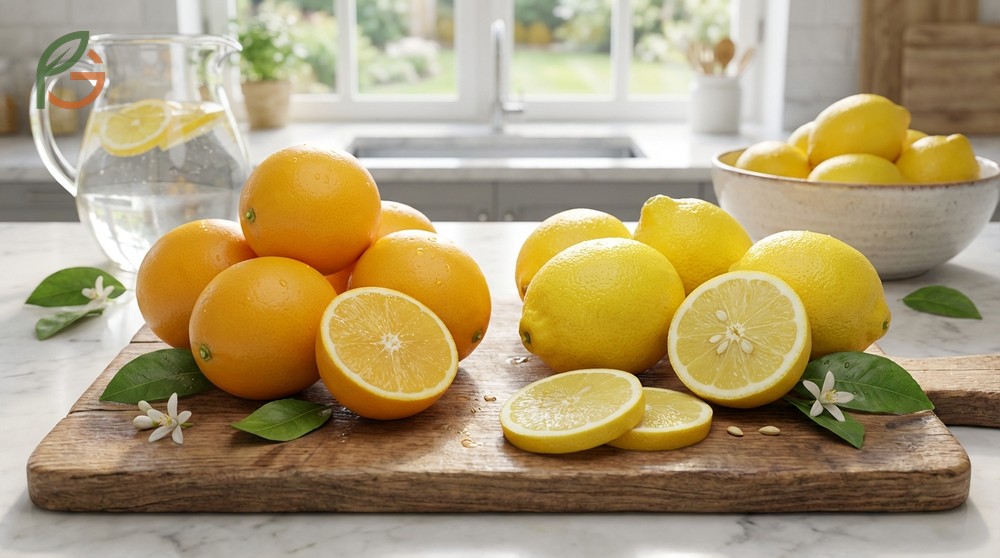
The fundamental difference between these citrus varieties lies in their genetic makeup and resulting flavor profiles. Meyer lemons aren’t true lemons at all—they’re hybrids between standard lemons and mandarin oranges. This cross-breeding gives them a sweeter, less acidic character that sets them apart from regular lemons.
Regular lemons, which include Eureka and Lisbon varieties, represent what most Americans consider “true” lemons. They’re the oval, bright yellow fruits you’ll find year-round in grocery stores. These varieties deliver the sharp, tart flavor that defines classic lemon taste in both cooking and baking.
Studies demonstrate that Meyer lemon juice measures 1.3 times less acidic than standard lemon juice[1]. This difference affects how each variety performs in recipes. If you’re substituting one for the other, you’ll notice distinct flavor changes that can alter your dish’s balance.
Origin and Classification
Meyer lemons originated in China and were introduced to the United States in the early 1900s. Agricultural botanists classify them as Citrus × meyeri, acknowledging their hybrid status. The mandarin orange parentage explains their orange-tinged skin and naturally sweeter juice.
Eureka and Lisbon lemons, by contrast, are Citrus limon—pure lemon varieties that have been cultivated for centuries. Commercial growers favor these varieties because they produce fruit year-round and ship well due to their thicker protective peels.
Physical Appearance
Meyer lemons have smooth, thin skin that often shows an orange or golden hue. They’re rounder and smaller than regular lemons, resembling small oranges in shape. The thin skin means you get more juice per fruit, but they don’t store as long as thick-skinned varieties.
Regular lemons feature thick, bumpy, bright yellow skin with pronounced tips at both ends. This textured outer peel protects the fruit during transport and extends shelf life. The thicker pith (white layer under the peel) adds bitterness when used in zesting.
From My Experience: My cousin in Guadalajara, Mexico grew Meyer lemons in containers for three years. The thin-skinned fruits bruised more easily than Eurekas but produced 40-50 lemons per season—matching the typical yield from studies.
Meyer vs Eureka Lemon
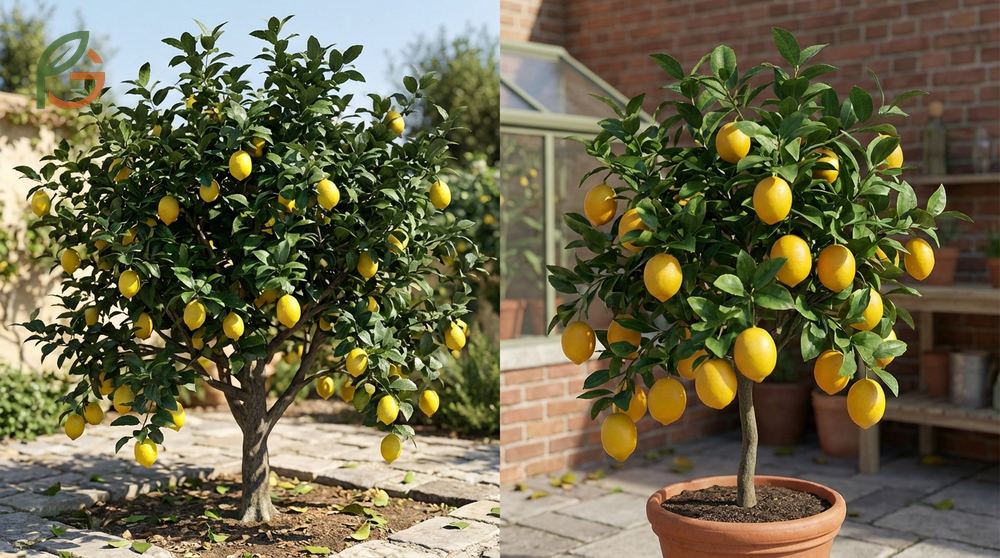
When comparing these two popular lemon varieties, tree size and growth habits show marked differences. Eureka lemon trees grow larger, reaching 10-12 feet in height with a wider, more spreading growth habit[2]. Meyer lemon trees stay more compact at 6-10 feet[3], making them better suited for containers and small spaces.
Climate tolerance varies significantly between these varieties. Meyer lemons handle cold better than Eurekas, thriving in USDA Hardiness Zones 8-11[4]. Eureka trees are more frost-sensitive and need protection when temperatures drop below freezing.
Fruit production patterns also differ. Eurekas are called “four-season lemons” because they produce fruit year-round, with peak harvests in late winter and early spring. Meyer lemons typically have two main harvest periods—winter and late summer—though they can produce sporadically throughout the year in warm climates.
Flavor Profiles
The taste difference between Meyer and Eureka lemons is immediately noticeable. Meyer lemons offer a sweet-tart balance with distinct floral notes that make them pleasant enough to eat raw. Their juice has a mild, almost honeyed quality that works beautifully in lemonade and cocktails without overwhelming sweetness.
Eureka lemons deliver the sharp, bright acidity most people expect from lemons. This classic tartness makes them ideal for cutting through rich foods and balancing savory dishes. The pronounced sourness also helps in preserving and pickling applications.
- Acidity level: Meyer lemons are noticeably less acidic, creating a gentler citrus punch
- Sweetness: Meyer varieties contain more natural sugars, eliminating the mouth-puckering effect
- Aroma: Meyer lemons have floral, perfumed notes; Eurekas smell purely citrusy
- Bitterness: Meyer’s thin pith means less bitter flavor when using the whole fruit
- Complexity: Meyer lemons offer layered flavors; Eurekas provide straightforward lemon taste
Tree Characteristics
Eureka lemon trees feature open branch structures with fewer thorns, making them easier to maintain and harvest. The trees need full sun exposure and perform best in coastal climates with moderate temperatures. They’re sensitive to wind damage and require protection in exposed locations.
Meyer lemon trees grow more densely with a bushier appearance. They adapt well to container growing, which is a huge advantage for gardeners in cooler zones who can move trees indoors during winter. Container-grown Meyers need consistent watering and regular feeding during the growing season.
Important Note: Both varieties need well-draining soil to prevent root rot. If your soil stays waterlogged for more than 24 hours after rain, you’ll need to amend it with sand and organic matter before planting citrus trees.
Sweet vs Tart Lemon
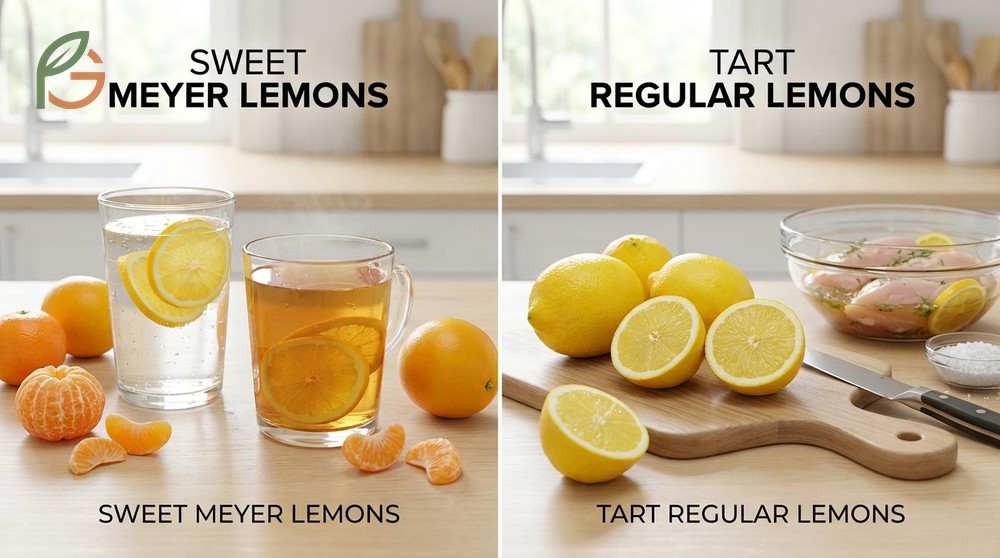
The sweetness factor in Meyer lemons comes from their mandarin orange heritage, which contributes natural sugars and reduces perceived acidity. This makes them versatile for applications where you want lemon flavor without overwhelming tartness. You can use Meyer lemon slices in water or tea without added sweetener.
Tart regular lemons pack a punch that’s essential for certain cooking techniques. Their high acidity helps tenderize proteins in marinades, prevents enzymatic browning in cut fruits, and provides the sharp contrast needed to balance fatty or sweet dishes. That tartness is also crucial for proper jam and marmalade setting.
Current culinary guidance emphasizes matching lemon variety to recipe purpose. For delicate desserts like curds, mousses, and ice creams, Meyer’s subtle sweetness enhances without dominating. For robust savory dishes, sauces, and preserves, regular lemons provide the necessary acidic backbone.
This table compares taste characteristics, acidity levels, skin thickness, and best culinary uses between Meyer lemons and regular lemons
| Characteristic | Meyer Lemon | Regular Lemon (Eureka/Lisbon) |
|---|---|---|
| Taste Profile | Sweet-tart with floral notes | Sharp, classic tart flavor |
| pH Level | 2.6[1] (less acidic) | 2.3[1] (more acidic) |
| Skin Texture | Smooth and thin | Thick and bumpy |
| Color | Golden-orange hue | Bright yellow |
| Best For | Desserts, beverages, raw consumption | Cooking, preserving, zesting |
Culinary Applications
Meyer lemons excel in pastry applications where their gentle acidity won’t curdle dairy products as quickly as regular lemons. They’re perfect for lemon bars, cakes, and custards where you want prominent lemon flavor without excessive tartness. The floral notes complement vanilla, honey, and delicate herbs like basil and mint.
Regular lemons are the workhorses of savory cooking. Their sharp acidity brightens heavy cream sauces, cuts through oily fish, and balances sweet elements in glazes and dressings. Lemon juice from Eureka or Lisbon lemons also provides the necessary acid for canning and preserving safely.
- Meyer lemons: Lemon curd, panna cotta, sorbet, lemonade, cocktails, salad vinaigrettes
- Meyer lemons: Fresh squeezed over fruit salads, in yogurt parfaits, garnishing desserts
- Regular lemons: Marinades for meat and fish, hollandaise sauce, lemon meringue pie
- Regular lemons: Preserved lemons, limoncello, classic lemon curd with high tartness
- Both varieties: Zesting (though regular lemons provide more intense flavor)
- Substitution tip: When recipes call for Meyer but you have regular lemons, mix lemon juice with tangerine juice
Kitchen Tip: Meyer lemons spoil faster than regular lemons due to their thin skin. Store them in the refrigerator and use within 1-2 weeks for best quality. Regular lemons can last 3-4 weeks when refrigerated.
Meyer vs Lisbon Lemon
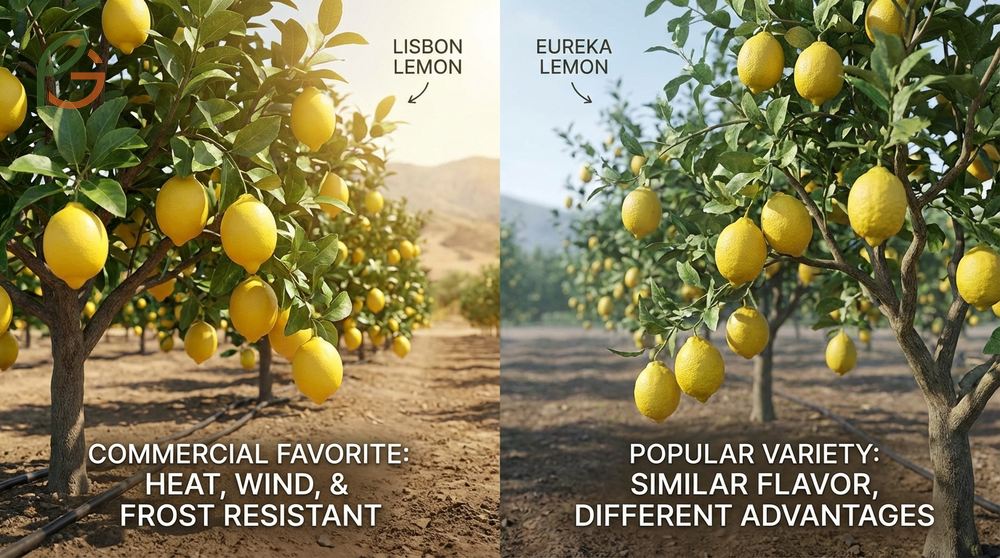
Lisbon lemons represent another major regular lemon variety that shares similarities with Eureka but offers distinct advantages for growers. Lisbon trees are more vigorous and heat-tolerant than both Meyer and Eureka varieties. They resist wind, heat, and frost better than Eurekas[5], making them the preferred choice for commercial orchards.
The fruits themselves look slightly different from Eurekas—Lisbons have smoother skin and a more pronounced nipple at the blossom end. They contain fewer or no seeds, which makes them attractive for juicing and recipes where you don’t want to strain out seeds. The flavor is virtually identical to Eureka: sharp, tart, and classically lemony.
When comparing Meyer lemons to Lisbons, you’re looking at the same sweet-versus-tart distinction that exists with Eurekas. Meyer lemons remain the sweeter, more aromatic option, while Lisbons deliver traditional lemon tartness. For home gardeners, the choice often comes down to space and climate—compact Meyers suit containers and smaller yards, while hardy Lisbons work well as landscape trees in warmer zones.
- Tree size: Lisbon trees grow large and thorny; Meyer trees stay compact and manageable
- Fruit protection: Lisbon fruits grow under leaf canopy shade; Meyer fruits are more exposed
- Cold tolerance: Meyer lemons handle cold better; Lisbons excel in heat and wind
- Seeds: Lisbon lemons have few or no seeds; Meyer lemons typically contain several seeds
- Growth zones: Both thrive in USDA zones 8-11, but Lisbons tolerate zone 9-11 better
Conclusion
The evidence is clear: choosing between meyer lemon vs regular lemon depends on your intended use and growing conditions. Meyer lemons provide sweet, floral complexity perfect for desserts and beverages, while regular lemons (Eureka and Lisbon) deliver the sharp tartness essential for cooking and preserving. If you’re growing citrus at home, Meyer trees fit smaller spaces and containers, whereas regular lemon varieties need more room but produce classic-tasting fruit year-round.
Current guidance from FruitGarden emphasizes matching citrus variety to your specific climate zone and culinary preferences. For zone 8 gardeners, Meyers offer better cold protection; for zones 9-11, any variety will thrive with proper care. Understanding these fundamental differences helps you select the right lemon for both your garden and your kitchen.
Frequently Asked Questions
Which lemon is sweeter, Meyer or regular?
Meyer lemons are significantly sweeter than regular lemons because they’re hybrids of true lemons and mandarin oranges. Their pH level of 2.6 makes them less acidic than regular lemons at pH 2.3, resulting in a naturally sweet-tart taste that’s mild enough to enjoy raw or in lemonade without excessive sugar.
Can I substitute regular lemon for Meyer lemon in recipes?
You can substitute them, but expect noticeable flavor differences. Regular lemons will make desserts more tart and less sweet, so you may need to add extra sugar. If a recipe specifically calls for Meyer lemons, you can mix regular lemon juice with fresh tangerine juice to approximate the sweeter, more complex flavor profile.
Are Meyer lemons harder to grow than regular lemons?
Meyer lemons are actually easier for home gardeners because they stay smaller (6-10 feet versus 10-12 feet) and adapt well to container growing. They handle cold better than Eureka lemons, thriving in USDA zones 8-11. However, their thin skin makes the fruit more delicate and shorter-lived after harvest.
What are the main differences between Eureka and Lisbon lemons?
Eureka and Lisbon lemons taste nearly identical—both deliver classic tart lemon flavor. The differences lie in tree characteristics: Lisbon trees are more vigorous, thorny, and heat-tolerant, while Eureka trees have open branches with fewer thorns. Lisbon lemons have smoother skin and fewer seeds, making them preferred for commercial juicing.
Why do Meyer lemons have an orange color?
Meyer lemons show orange or golden hues because they’re hybrids between true lemons and mandarin oranges. The mandarin parentage contributes not just color but also sweetness and floral aroma. This cross-breeding creates the unique characteristics that distinguish Meyer lemons from pure lemon varieties like Eureka and Lisbon.
Which lemon is best for cooking versus baking?
Regular lemons (Eureka or Lisbon) work best for savory cooking, marinades, and preserving because their high acidity cuts through rich foods and provides proper preservation levels. Meyer lemons excel in baking and desserts where their sweet-tart balance and floral notes enhance delicate flavors without overwhelming sweetness or causing excessive curdling in dairy.
How long do Meyer lemons last compared to regular lemons?
Meyer lemons last 1-2 weeks when refrigerated due to their thin, delicate skin that’s prone to damage and moisture loss. Regular lemons with their thick protective peels can last 3-4 weeks refrigerated. This storage difference makes regular lemons better for bulk buying, while Meyer lemons should be purchased in smaller quantities for immediate use.





