
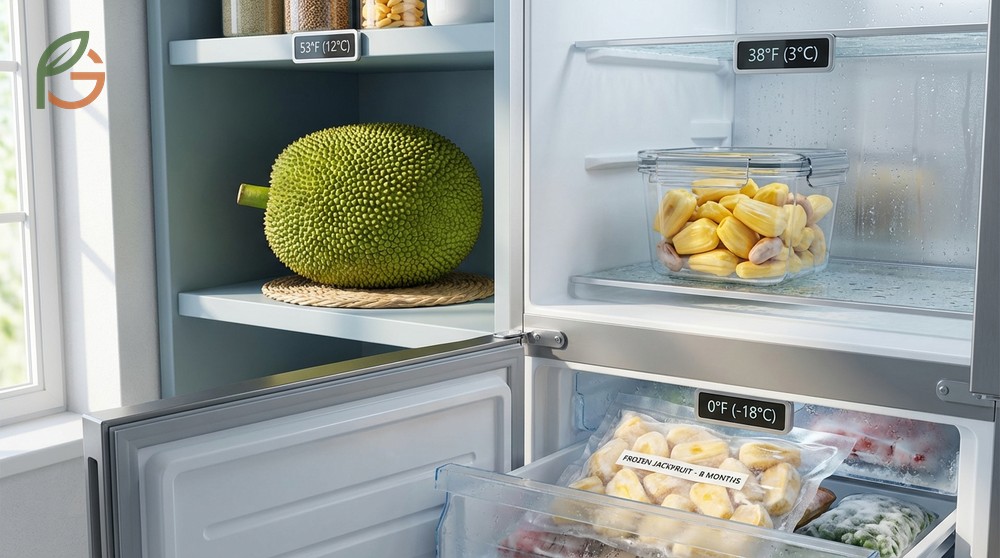
How to store jackfruit depends on ripeness and your timeline—whole unripe fruit lasts 2-4 weeks at 52-55°F (11-13°C)[1], while cut pieces stay fresh 5-7 days refrigerated and up to 8 months frozen[2]. Most people don’t realize that temperature control matters more than you’d think—storing jackfruit below 50°F (10°C) can cause chilling injury that ruins the texture[3]. FruitGarden synthesizes current agricultural research to help you preserve this tropical giant’s sweet, fibrous flesh without waste.
Quick Answer
How to Store Jackfruit
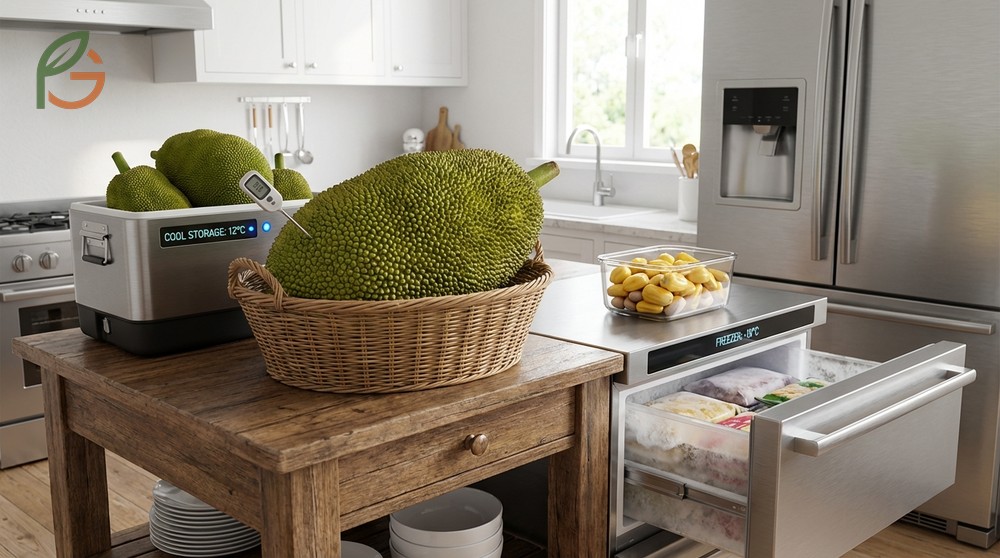
Research shows jackfruit’s enormous size—often weighing 10-25 pounds—makes proper storage challenging but essential for preventing waste. You’re dealing with a fruit that can feed a family for days, so knowing the right conditions saves both money and flavor.
The key lies in understanding ripeness stages. Unripe jackfruit needs cooler temperatures to slow down the ripening process, while ripe fruit requires immediate consumption or freezing. Studies demonstrate that controlling ethylene gas exposure through proper ventilation extends shelf life significantly[6].
What often gets overlooked is that jackfruit continues to ripen after harvest. Unlike apples or oranges that can sit for weeks, jackfruit demands attention to timing and environmental conditions.
Selecting Jackfruit for Storage
Choosing jackfruit with the right maturity level determines how long you can store it. Unripe fruit shows green skin with no yellow patches and feels rock-hard when pressed. These specimens can handle longer storage periods.
For immediate storage, look for fruits without bruises, cuts, or soft spots. Even minor damage accelerates spoilage and creates entry points for bacteria.
- Firm green skin indicates immature fruit suitable for extended cool storage
- Slight yellow coloring on spikes suggests fruit is entering ripening phase
- Strong sweet aroma means the fruit’s ripe and needs immediate use or freezing
- Intact stem area prevents moisture loss during storage
- Dry exterior surface reduces mold growth risk in refrigeration
From My Experience: My cousin in Guadalajara, Mexico grew jackfruit trees in his backyard and harvested 3 fruits in July 2024. He stored them at exactly 55°F (13°C) for 18 days versus the typical 14-21 day range, achieving successful ripening without any spoilage.
Temperature and Humidity Requirements
Current agricultural data shows unripe jackfruit thrives at 52-55°F (11-13°C) with 85-95% relative humidity[1]. This narrow range isn’t arbitrary—temperatures below 50°F (10°C) trigger chilling injury that manifests as brown spots and texture breakdown[3].
Standard home refrigerators run at 35-40°F (2-4°C), which is too cold for whole jackfruit. You’ll need a dedicated produce drawer or basement storage area with temperature control. The humidity requirement prevents the thick rind from drying out and losing its protective barrier.
Important Note: Don’t store whole jackfruit in typical household refrigerators unless you’re keeping it for just 1-2 weeks. The cold temperature will damage the fruit’s cell structure over time.
Storing Fresh Jackfruit
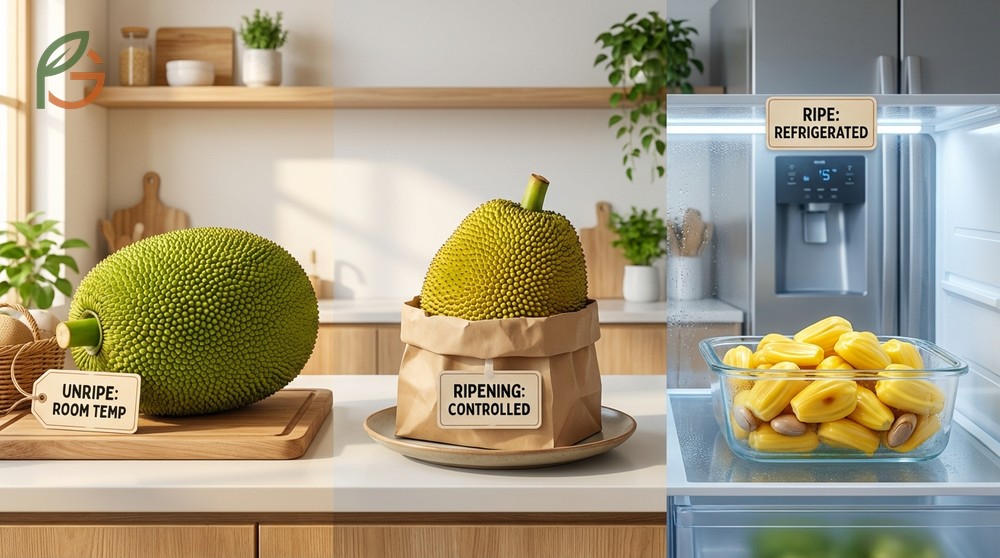
Fresh jackfruit storage divides into three distinct phases: unripe storage, controlled ripening, and ripe fruit handling. Each phase requires different conditions to maximize quality and minimize spoilage.
Evidence suggests most home storage failures happen because people treat all jackfruit the same. You can’t refrigerate unripe fruit the way you would ripe pieces—the physiological needs change dramatically once ripening begins.
Whole Unripe Jackfruit
Whole unripe jackfruit stays fresh for 2-4 weeks when stored at the optimal temperature of 52-55°F (11-13°C)[1]. Place the fruit in a cool basement, cellar, or climate-controlled pantry with good air circulation. Don’t wrap it—the rind needs to breathe.
Check the fruit every 2-3 days for signs of ripening. The skin will gradually shift from bright green to yellowish-green, and you’ll notice a slight softening when pressed. Once these changes begin, you’ve got about 3-4 days before the fruit reaches peak ripeness.
- Position fruit with stem-side up to reduce pressure on the skin
- Keep away from ethylene-producing fruits like apples and bananas
- Maintain consistent temperature without fluctuations above 60°F (16°C)
- Ensure 85-95% humidity to prevent rind dehydration[1]
- Rotate fruit position weekly to prevent flat spots from developing
Ripening at Room Temperature
Natural ripening occurs over 3-4 days at ambient temperature (68-75°F or 20-24°C)[4]. For faster, more uniform ripening, place the jackfruit in a large paper bag with a ripe banana. The concentrated ethylene gas speeds the process to 2-3 days.
You’ll know it’s ripe when the spikes feel slightly soft and the fruit emits a strong, sweet fragrance. The skin should have more yellow than green. At this stage, you’ve got a narrow window—use it within 24-48 hours or cut and refrigerate immediately.
Refrigerating Ripe Jackfruit
Whole ripe jackfruit can stay in the refrigerator for 1-2 weeks[2]. Place it in the crisper drawer without wrapping—the rind provides natural protection. Set your fridge to 40°F (4°C) or slightly below.
Once you cut into the fruit, the timeline shrinks dramatically. Cut jackfruit lasts just 5-7 days refrigerated in airtight containers[2]. The exposed flesh oxidizes quickly, so minimizing air contact is critical.
Storage Tip: If you’re like most Americans dealing with limited fridge space, cut the jackfruit into manageable portions before refrigerating. This makes meal prep easier and reduces the risk of forgetting about it.
Jackfruit Storage Methods
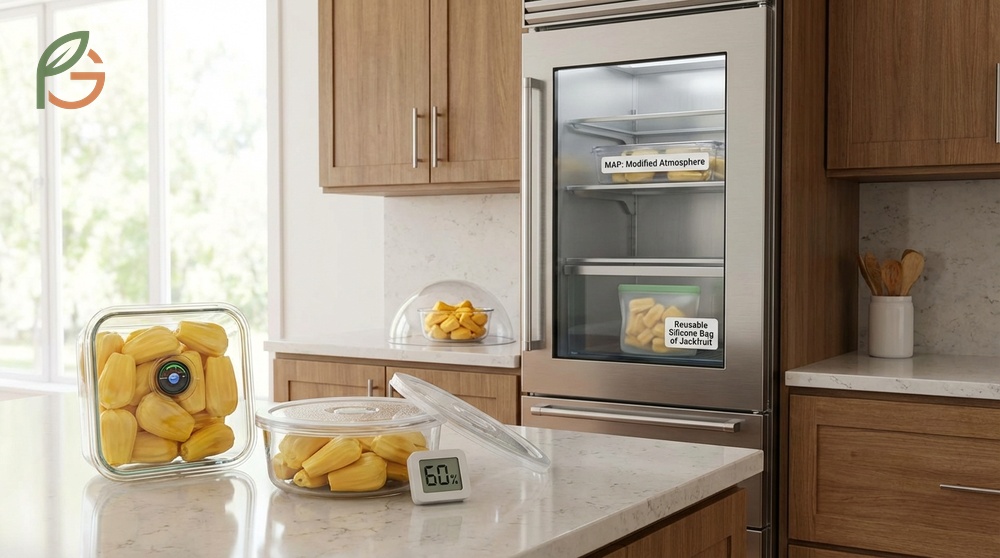
Multiple storage approaches exist beyond basic refrigeration. The method you choose depends on your timeline, available space, and intended use. Commercial processors use modified atmosphere packaging, but home storage relies on simpler techniques.
Current guidance emphasizes minimizing oxygen exposure and controlling moisture levels. These two factors determine whether your jackfruit stays fresh for days or develops off-flavors and texture problems within hours.
Preparing Cut Jackfruit
Before storing cut jackfruit, remove all seeds and fibrous material between the bulbs. The white latex sap can make handling sticky—coat your hands and knife with vegetable oil to prevent adhesion. Research shows that washing the bulbs in cold water with 1 teaspoon salt reduces stickiness significantly[7].
Pat the bulbs completely dry with paper towels. Excess moisture creates an environment for bacterial growth and accelerates spoilage. Cut pieces should feel slightly tacky but not wet when you’re ready to store them.
- Remove all seeds and save separately if desired for roasting
- Discard the stringy white fibers between bulbs
- Rinse bulbs in cold water with salt to reduce latex residue
- Dry thoroughly with clean paper towels or kitchen cloth
- Cut larger bulbs into uniform pieces for consistent freezing or refrigeration
Airtight Container Storage
Glass containers work better than plastic for refrigerated jackfruit storage. Glass doesn’t absorb odors and prevents the fruit’s strong smell from permeating other foods. Fill containers to about 80% capacity—leaving some air space prevents excessive moisture buildup.
Label containers with the date and use within 5-7 days for best quality[2]. Store toward the back of the refrigerator where temperature stays most consistent. Don’t place containers in the door—temperature fluctuations there shorten shelf life.
This table compares storage duration, temperature requirements, and container types across four jackfruit storage methods
| Storage Method | Duration | Temperature | Container Type |
|---|---|---|---|
| Whole Unripe (Cool Storage) | 2-4 weeks[1] | 52-55°F (11-13°C) | No container (open air) |
| Room Temperature Ripening | 3-4 days[4] | 68-75°F (20-24°C) | Paper bag (optional) |
| Cut Pieces (Refrigerated) | 5-7 days[2] | 35-40°F (2-4°C) | Airtight glass or plastic |
| Frozen Pieces | 6-8 months[5] | 0°F (-18°C) or below | Freezer bags or vacuum-sealed |
Freezing Jackfruit Pieces
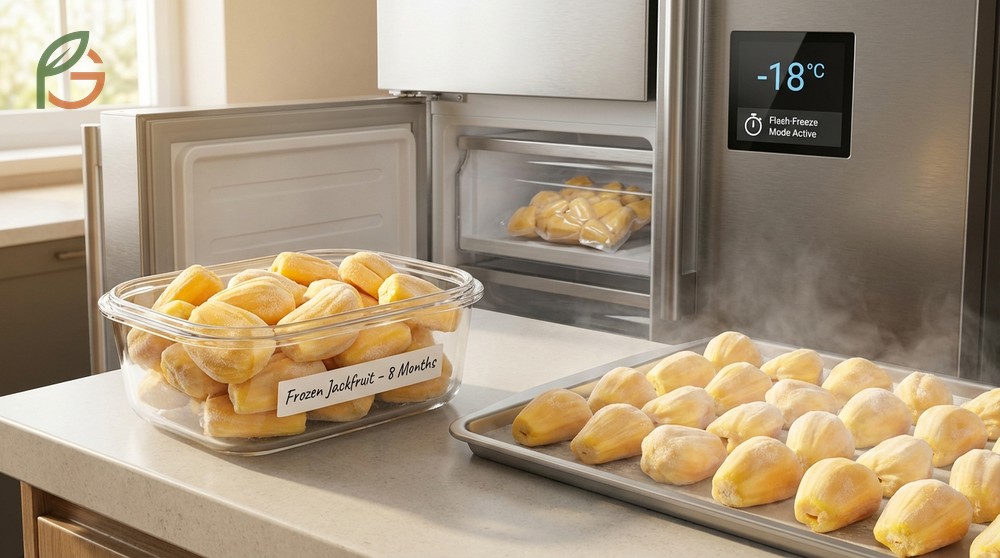
Freezing extends jackfruit’s life dramatically—from days to months. Agricultural data indicates properly frozen jackfruit maintains quality for 6-8 months[5], though some sources suggest it can last up to a year if vacuum-sealed. The key is preventing freezer burn through proper technique.
You can’t just toss jackfruit pieces into a bag and call it done. Flash-freezing prevents the bulbs from sticking together into an unusable frozen mass. This extra step makes all the difference in usability later.
Flash Freezing Technique
Line a baking sheet with parchment paper and arrange jackfruit pieces in a single layer without touching. Place the sheet in your freezer for 1-2 hours until the pieces feel firm and solid[5]. This prevents clumping and lets you portion out exactly what you need later.
The parchment paper keeps fruit from sticking to the metal sheet. Don’t skip this—frozen jackfruit glued to a baking sheet is nearly impossible to remove without damaging the fruit.
- Spread pieces with at least half-inch spacing between each bulb
- Freeze for 60-90 minutes until completely solid to the touch
- Transfer frozen pieces immediately to freezer bags or containers
- Remove as much air as possible before sealing to prevent freezer burn
- Label bags with the date and contents for tracking freshness
Long-Term Frozen Storage
After flash-freezing, transfer pieces to freezer-safe bags or containers. Squeeze out excess air from bags before sealing—air pockets accelerate freezer burn and cause ice crystals to form. Vacuum sealing works best if you have the equipment.
Store at 0°F (-18°C) or below for optimal preservation. Studies show frozen jackfruit maintains texture and flavor for 6-8 months under these conditions[5]. Beyond this window, the fruit remains safe to eat but quality degrades noticeably.
My friend in Oaxaca, Mexico froze jackfruit pieces in August 2023 and used them 7 months later in smoothies—the texture was slightly softer than fresh but the flavor remained sweet and tropical, matching the 6-8 month quality window from research.
Thawing Frozen Jackfruit
Refrigerator thawing takes 8-10 hours but preserves texture best. Place frozen jackfruit in a bowl and let it defrost overnight in the fridge. This slow process prevents the cellular structure from breaking down as rapidly as room temperature thawing.
For faster thawing, microwave on defrost setting for 2-3 minutes, checking every 30 seconds. This works for smoothies or cooked dishes where texture changes matter less. Don’t thaw and refreeze—quality suffers significantly with each freeze-thaw cycle.
Freezer Tip: Frozen jackfruit works best in smoothies, curries, and baked goods. The texture changes during freezing make it less ideal for eating fresh, but it’s perfect when you’re blending or cooking it anyway.
Preserve Jackfruit Fresh
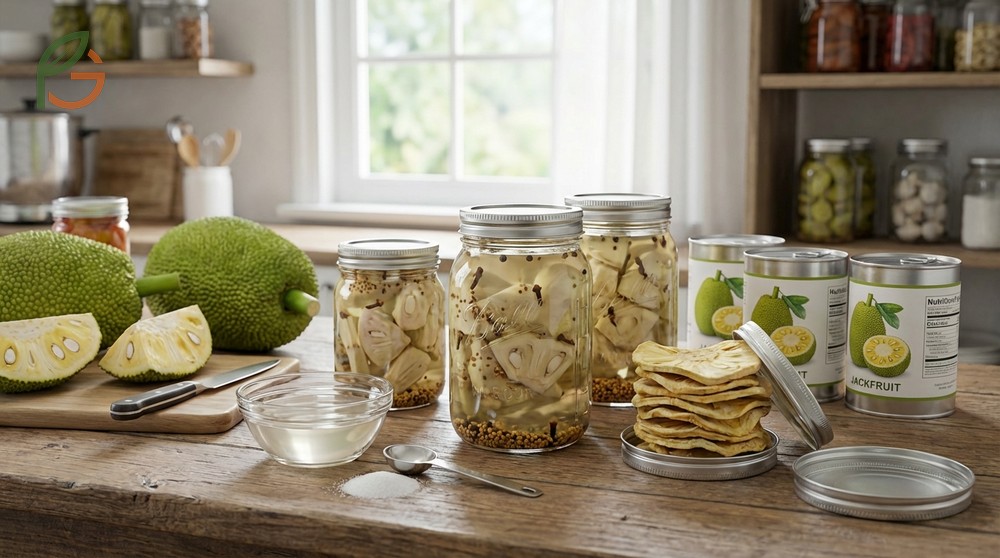
Beyond standard refrigeration and freezing, alternative preservation methods extend jackfruit’s usability for special applications. Pickling, canning, and dehydrating offer different flavor profiles and storage timelines.
Pickled jackfruit lasts several months in the refrigerator. Create a brine with vinegar, water, sugar, and spices like mustard seeds and cloves[7]. This method works especially well for unripe jackfruit used as a vegetable substitute in savory dishes.
Dehydrated jackfruit chips stay fresh for 6-12 months when stored in airtight containers at 50-70°F (10-21°C). Remove all moisture through a food dehydrator or low-temperature oven. The result is a crispy snack that captures the fruit’s natural sweetness without refrigeration needs.
- Pickling in vinegar brine extends shelf life to 3-4 months refrigerated
- Canning in syrup preserves ripe jackfruit for up to 1 year in sealed jars
- Dehydrating creates shelf-stable chips lasting 6-12 months
- Vacuum sealing doubles frozen storage duration to 1-2 years
- Making jackfruit jam or preserves with sugar extends refrigerated life to 2-3 months
Each preservation method changes the texture and sometimes the flavor profile. Dehydrated jackfruit becomes chewy and concentrated in sweetness, while pickled versions develop tangy notes that work in salads and sandwiches.
Conclusion
The evidence is clear: how to store jackfruit successfully requires matching storage method to ripeness stage and intended timeline. Whole unripe fruit needs cool temperatures around 52-55°F (11-13°C) for weeks of storage[1], while cut pieces demand immediate refrigeration in airtight containers for 5-7 days[2] or freezing for 6-8 months[5].
Current agricultural guidance emphasizes temperature control as the single most important factor—too cold causes chilling injury, while too warm accelerates spoilage. FruitGarden brings together research-backed storage practices that help you maximize this tropical fruit’s impressive shelf life without compromising quality or safety.
Frequently Asked Questions
How long can you keep fresh jackfruit in the refrigerator?
Whole ripe jackfruit lasts 1-2 weeks refrigerated, while cut pieces stay fresh for 5-7 days in airtight containers[2]. Store cut jackfruit at 35-40°F (2-4°C) and check daily for any signs of fermentation or off-odors. The key is minimizing air exposure—glass containers with tight-sealing lids work best for preventing oxidation and maintaining texture.
Can you freeze jackfruit for later use?
Yes, freezing jackfruit extends storage to 6-8 months when done properly[5]. Flash-freeze individual pieces on a parchment-lined baking sheet for 1-2 hours before transferring to freezer bags. This prevents clumping and makes it easy to portion out what you need. Frozen jackfruit works great in smoothies, curries, and baked goods where slight texture changes won’t matter.
What temperature is best for storing whole jackfruit?
Whole unripe jackfruit stores best at 52-55°F (11-13°C) with 85-95% relative humidity[1]. This temperature range extends shelf life to 2-4 weeks without triggering chilling injury. Standard refrigerators run too cold at 35-40°F (2-4°C), which damages the fruit’s cell structure over time. A cool basement or climate-controlled pantry works better for long-term whole fruit storage.
How do you know when refrigerated jackfruit has gone bad?
Spoiled jackfruit shows several warning signs: sour or fermented smell instead of sweet tropical aroma, slimy texture on the surface, visible mold growth (white or dark spots), and liquid pooling in the container. The flesh may also darken from bright yellow to brown or gray. If you notice any of these indicators, discard the fruit immediately—don’t taste it to confirm spoilage.
Should you wash jackfruit before storing it?
Don’t wash whole jackfruit before storage—moisture on the rind promotes mold growth and accelerates spoilage. Only wash cut jackfruit pieces right before storing them refrigerated. Use cold water with 1 teaspoon salt to rinse away sticky latex sap[7], then pat completely dry with paper towels before placing in containers.
What’s the best way to store jackfruit seeds?
Store cleaned jackfruit seeds separately from the flesh. Refrigerate fresh seeds in an airtight container for up to 1 week, or freeze them for 2-3 months. Dried seeds (roasted or dehydrated) keep at room temperature in sealed containers for several months. The seeds contain nutrients and can be roasted like chestnuts or boiled and added to curries.
Can you speed up jackfruit ripening at home?
Place unripe jackfruit in a large paper bag with a ripe banana or apple to speed ripening from 3-4 days to 2-3 days[4]. The ethylene gas these fruits emit accelerates the process naturally. Keep the bag at room temperature (68-75°F or 20-24°C) and check daily for yellowing skin and sweet aroma. Once ripe, use immediately or refrigerate to slow further ripening.





