
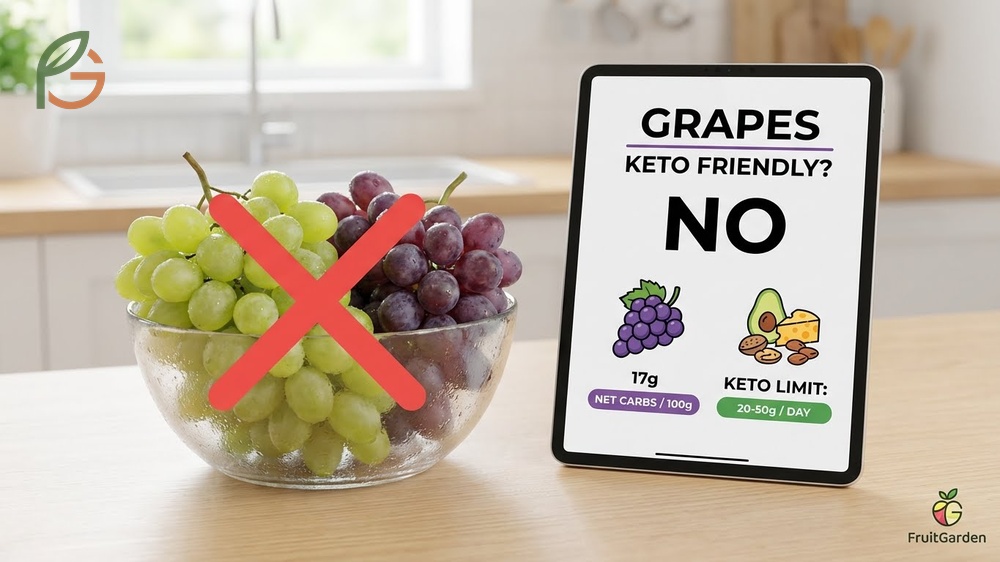
Are grapes keto friendly? No, they’re not. Research shows grapes contain approximately 17g net carbs per 100g[1], which exceeds the daily carb limit for most people following a ketogenic diet. A standard keto diet restricts carbohydrate intake to 20-50g daily to maintain ketosis, making grapes incompatible with this eating pattern[2]. FruitGarden synthesizes current nutritional research and USDA data to help you understand which fruits support your dietary goals.
Quick Answer
- Grapes contain 17g net carbs per 100g[1] (18g total carbs minus 1g fiber)
- A single cup (92g) provides 16g total carbs and just 62 calories
- This carb content takes up 68-85% of your daily keto allowance, making grapes incompatible with ketosis
- Yes, grapes are naturally gluten-free[4] and safe for celiac disease
Are Grapes Keto Friendly

Grapes don’t fit into a ketogenic diet due to their high net carbohydrate content. Studies demonstrate that maintaining ketosis requires limiting daily carb intake to 20-50g, with stricter protocols recommending 20-25g for optimal results[2]. A 100g serving of grapes contains 17g net carbs[1], consuming 68-85% of your entire daily allowance in one modest portion.
The reason grapes disrupt ketosis relates to how your body processes carbohydrates. When you consume high-carb foods like grapes, blood sugar rises, triggering insulin release. This hormonal response signals your body to burn glucose instead of fat, pulling you out of the metabolic state that defines keto. Even 50g of grapes (roughly 10 medium grapes) delivers about 8.5g net carbs, leaving minimal room for vegetables and other nutrient-dense foods.
Most people following keto can’t incorporate grapes without consequences. If you’re like most Americans who choose keto for weight management or blood sugar control, grapes will likely stall your progress. The high sugar content—approximately 15g per 100g[1]—compounds this issue, as natural sugars count toward your carb limit just like starches.
Important Note: If you’re following a cyclical or targeted ketogenic diet where you strategically consume carbs around workouts, small portions of grapes (10-15g) might work. However, standard keto protocols don’t accommodate this fruit.
Can You Eat Grapes on Keto
You technically can eat grapes on keto, but you’d need to restrict portions to 2-3 grapes maximum. This tiny amount provides roughly 1.5-2g net carbs, which fits within a strict 20g daily limit. However, such a small serving won’t satisfy cravings or provide meaningful nutrition.
The practical reality makes grapes an impractical choice. When you allocate carbs this carefully, you’d benefit more from lower-carb vegetables that offer greater volume and fiber. Three grapes deliver minimal satiety compared to a full cup of spinach (1g net carbs) or half an avocado (2g net carbs).
Are Grapes Low Carb
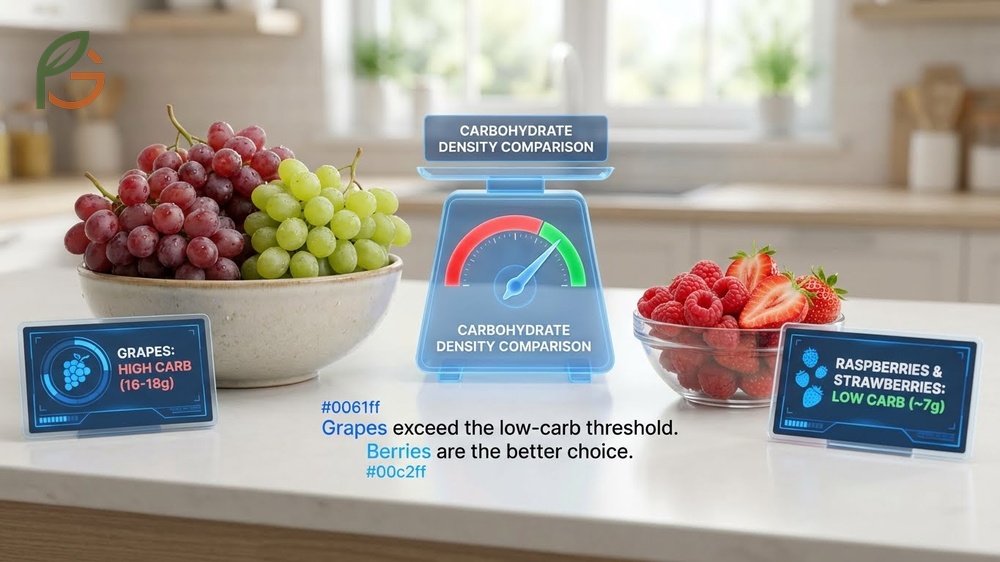
No, grapes aren’t considered low-carb by any standard dietary definition. Current nutritional guidance classifies foods with fewer than 10g carbs per serving as low-carb. Grapes exceed this threshold significantly, containing 16-18g total carbohydrates per typical serving[3].
Compared to truly low-carb fruits, grapes rank among the highest in carbohydrate density. Raspberries deliver just 7g net carbs per cup[5], while strawberries provide similar benefits. This difference matters when you’re tracking macros carefully.
Net Carbs in Grapes
Net carbs represent the carbohydrates your body actually digests and converts to glucose. You calculate this by subtracting fiber from total carbs, since fiber passes through your system without affecting blood sugar. For grapes, the math works out to 18g total carbs minus 1g fiber, resulting in 17g net carbs per 100g[1].
This minimal fiber content presents another issue. Fiber slows sugar absorption and promotes satiety, but grapes provide only 1g per 100g serving[1]. The low fiber-to-carb ratio means grapes impact blood sugar rapidly, similar to processed foods rather than fiber-rich whole foods.
This table compares total carbohydrates, fiber, net carbs, and calorie content across three common grape varieties per 100 gram serving
| Grape Type | Total Carbs (per 100g) | Fiber (per 100g) | Net Carbs (per 100g) | Calories (per 100g) |
|---|---|---|---|---|
| Red Seedless | 18g[1] | 1g[1] | 17g[1] | 69[1] |
| Green Seedless | 18g | 1g | 17g | 69 |
| Black/Purple | 18g | 1g | 17g | 69 |
Grapes Carb Count per Cup
A standard one-cup serving (92g) of grapes contains 16g total carbohydrates and 1g fiber[3], yielding 15g net carbs. This serving size equals approximately 30-32 medium grapes, which many people consume as a snack without realizing the carb impact.
The cup measurement can mislead you if you’re not weighing portions. Grapes vary in size, and larger varieties mean fewer grapes per cup but similar carb totals. Using a food scale ensures accuracy when you’re tracking macros strictly.
How Many Carbs Are Grapes
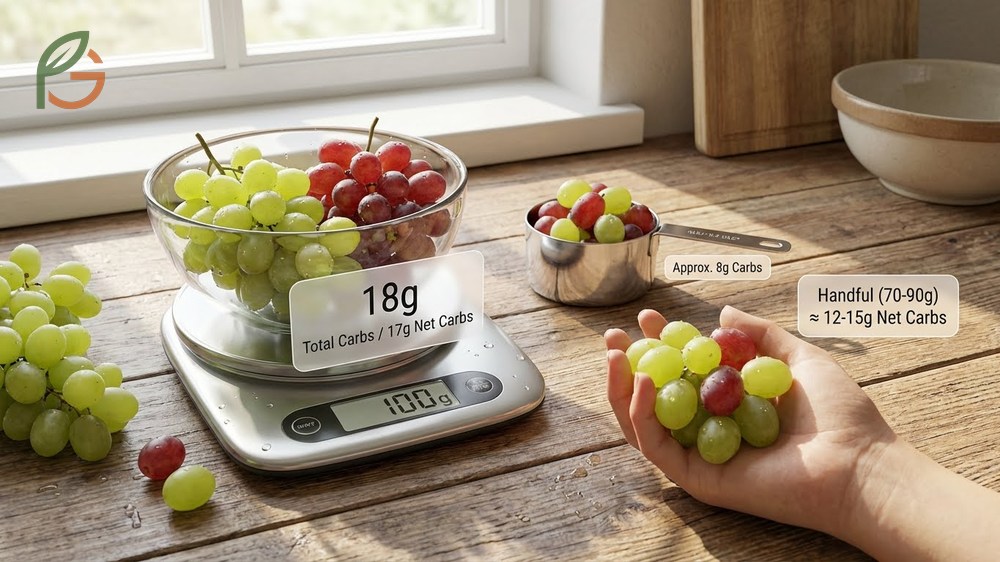
Grapes contain 18g total carbohydrates per 100g serving[1], with 17g counting as net carbs after subtracting 1g fiber. Different serving sizes adjust these numbers proportionally—a half-cup (46g) provides approximately 8g total carbs, while a quarter-cup (23g) delivers about 4g.
Understanding portion control matters when you’re evaluating any fruit. What most Americans consider a “handful” of grapes typically weighs 70-90g, translating to 12-15g net carbs. This seemingly innocent snack matches the carb content of a slice of bread.
The carbohydrate breakdown in grapes comes almost entirely from sugars. Research shows grapes contain about 15g natural sugars per 100g[1], comprised mainly of glucose and fructose. These simple sugars absorb quickly, spiking blood glucose within 15-30 minutes of consumption.
Carbs in Raisins vs Grapes
Raisins concentrate grape sugars through dehydration, dramatically increasing carbohydrate density. While 100g of fresh grapes contains 18g carbs, the same weight of raisins delivers approximately 79g carbohydrates[6]. This 4.4x increase makes raisins even less suitable for low-carb or keto diets.
The drying process removes water but preserves sugars and carbohydrates, condensing them into a smaller volume. A quarter-cup of raisins (about 40g) packs roughly 32g carbs—double your entire daily keto allowance. People often underestimate raisin portions since they’re small and easy to overeat.
- Fresh grapes contain 80% water, while raisins have only 15% moisture content
- Raisins provide 85 calories per ounce versus 20 calories per ounce for grapes
- The concentration effect makes raisins 4-5 times higher in carbs by weight
- Both forms spike blood sugar rapidly, but raisins create a more sustained elevation
- Neither grapes nor raisins fit into standard ketogenic meal plans
Are Grapes Gluten Free
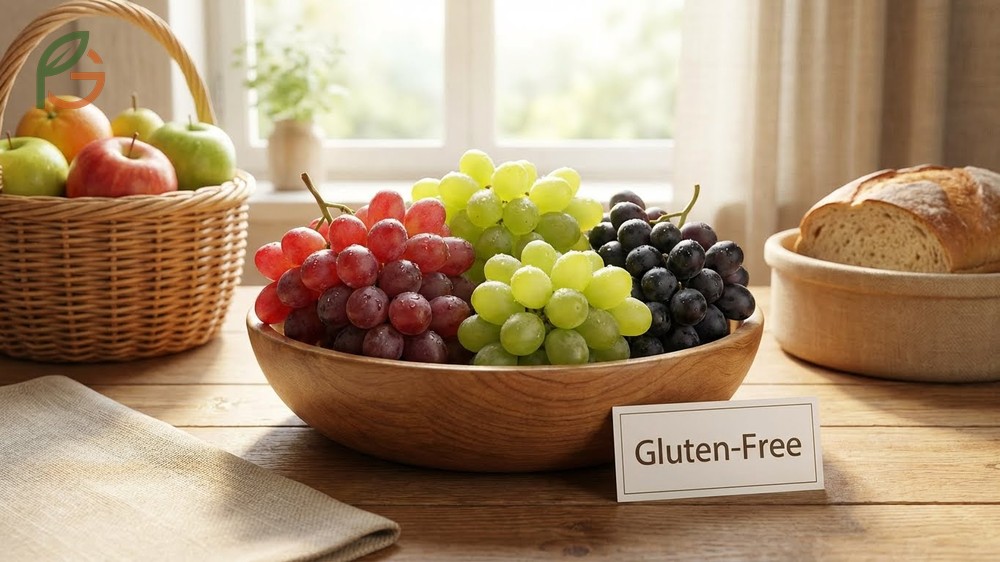
Yes, grapes are naturally gluten-free and safe for people with celiac disease or gluten sensitivity[4]. Gluten is a protein found exclusively in wheat, barley, rye, and their derivatives—grains that have no connection to fruit. All fresh fruits, including grapes, contain zero gluten in their natural state.
This gluten-free status applies to all grape varieties—red, green, black, seedless, and seeded types. You can safely enjoy grapes without concern if you’re managing celiac disease, non-celiac gluten sensitivity, or following a gluten-free diet for other health reasons. The carbohydrate content poses challenges for keto dieters, but gluten isn’t a factor.
Watch for processed grape products where gluten contamination might occur. Some grape jellies, jams, or fruit snacks manufactured in facilities that also process wheat products could carry trace gluten. Always check labels on packaged foods, even when the primary ingredient is naturally gluten-free.
Cross-Contamination Alert: While fresh grapes never contain gluten, be cautious with dried grapes (raisins) packaged in bulk bins or facilities that also handle gluten-containing products. Purchase sealed packages to minimize cross-contact risk.
Low Carb Fruit Alternatives
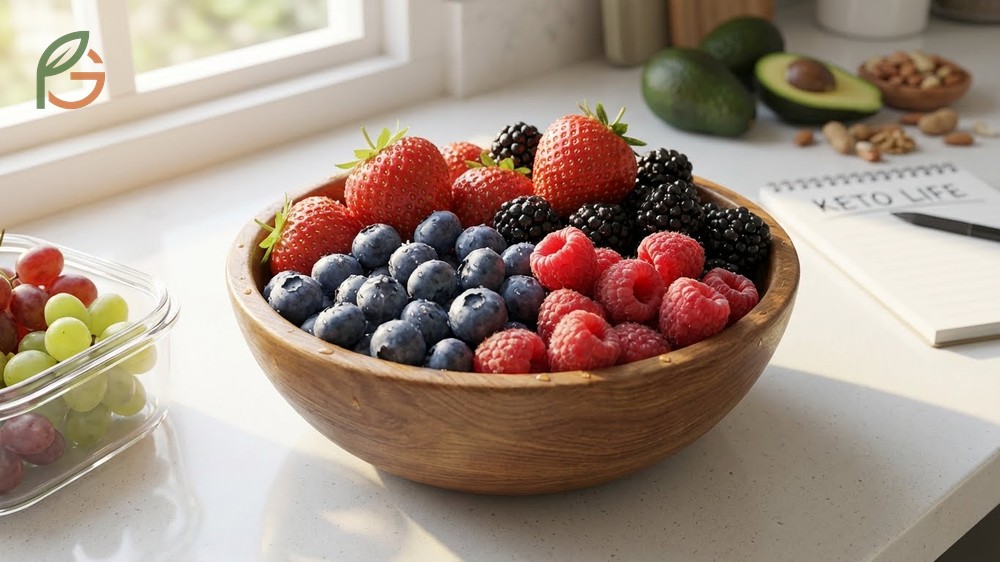
When you’re craving something sweet on keto, several fruits deliver flavor without the carb overload. Research shows berries generally rank lowest in net carbs, making them your best fruit options for maintaining ketosis. Unlike grapes, these alternatives provide similar or better nutritional benefits while keeping carb counts manageable.
Choosing low-carb fruits strategically lets you enjoy natural sweetness without derailing your macros. The key difference lies in portion sizes and carb density—you can eat a full cup of some berries for fewer carbs than 10 grapes deliver.
Keto Fruit List
The following fruits fit comfortably into ketogenic meal plans when portioned correctly. Each option provides vitamins, antioxidants, and fiber while staying under 10g net carbs per standard serving.
- Raspberries: 7g net carbs per cup (123g), plus 8g fiber for excellent digestive support[5]
- Strawberries: approximately 8-9g net carbs per cup, rich in vitamin C and manganese[5]
- Blackberries: 6-7g net carbs per cup, providing powerful antioxidants called anthocyanins
- Avocados: only 2g net carbs per half avocado (100g), with 7g fiber and healthy fats[5]
- Watermelon: 11.5g net carbs per cup (152g), making it occasional-use only for strict keto[5]
- Cantaloupe: 12.7g net carbs per cup (156g), best saved for higher-carb days[5]
- Star fruit: just 7.3g net carbs per cup (108g), offering a unique tropical flavor[5]
This table compares net carbohydrates, fiber content, serving sizes, and calorie counts for keto-friendly fruit alternatives versus grapes
| Fruit | Serving Size | Net Carbs | Fiber | Calories |
|---|---|---|---|---|
| Grapes | 1 cup (92g) | 15g[3] | 1g[3] | 62[3] |
| Raspberries | 1 cup (123g) | 7g[5] | 8g[5] | 64 |
| Strawberries | 1 cup (152g) | 9g | 3g | 49 |
| Blackberries | 1 cup (144g) | 6g | 8g | 62 |
| Avocado | ½ medium (100g) | 2g[5] | 7g[5] | 160 |
Notice how berries deliver more fiber per serving than grapes, which helps slow sugar absorption and improve satiety. The higher fiber content also reduces net carbs, giving you more nutritional value per carb gram consumed.
Conclusion
The evidence is clear: grapes aren’t keto friendly due to their 17g net carbs per 100g, which exhausts most of your daily carb allowance in a single serving. Current nutritional guidance emphasizes choosing fruits with net carbs under 10g per serving when following ketogenic protocols. Berries like raspberries, strawberries, and blackberries provide better alternatives with higher fiber and lower carb density.
While grapes offer vitamins and antioxidants, their incompatibility with ketosis makes them unsuitable for strict low-carb diets. If you’re following keto for weight management, blood sugar control, or metabolic health, save your carb budget for nutrient-dense vegetables and strategic fruit choices. FruitGarden synthesizes peer-reviewed nutrition research and USDA data to help you make informed decisions about which fruits support your dietary goals without compromising ketosis.
Medical Disclaimer
Important Medical Disclaimer: This content is for informational and educational purposes only. It isn’t intended as a substitute for professional medical advice, diagnosis, or treatment. Always consult a qualified healthcare professional or registered dietitian before making any changes to your diet, especially if you have diabetes, metabolic conditions, or other medical concerns. Individual nutritional needs vary, and what works for one person may not be appropriate for another.
Frequently Asked Questions
Can I eat any grapes on a keto diet?
You can eat 2-3 grapes maximum on strict keto, which provides roughly 1.5-2g net carbs. However, this tiny portion won’t satisfy cravings and uses up carbs better spent on nutrient-dense vegetables. Most keto dieters find it easier to avoid grapes entirely rather than practice such strict portion control.
What fruit has the lowest carbs for keto?
Avocados contain the lowest net carbs at just 2g per half fruit (100g), though they’re technically classified as a fruit. Among sweet fruits, raspberries and blackberries rank lowest with 6-7g net carbs per cup. These berries provide 8g fiber per serving, making them ideal for maintaining ketosis while satisfying fruit cravings.
Are green grapes lower in carbs than red grapes?
No, green and red grapes contain virtually identical carbohydrate content—both have approximately 17g net carbs per 100g serving. The color difference comes from antioxidant compounds (anthocyanins in red grapes), not carbohydrate levels. Neither variety fits into a standard ketogenic diet regardless of color.
Do frozen grapes have fewer carbs than fresh grapes?
Frozen grapes contain the same carbohydrate content as fresh grapes—freezing doesn’t alter nutritional composition. People sometimes perceive frozen grapes as “lighter” because they eat them more slowly, but 100g frozen delivers the same 17g net carbs as 100g fresh. The freezing process only affects texture and eating experience, not macronutrient content.
Are grape tomatoes keto friendly?
Yes, grape tomatoes are keto friendly despite their name. They contain only 5g net carbs per cup (180g), which is significantly lower than actual grapes. Tomatoes are botanically fruits but nutritionally treated as vegetables, offering more versatility in keto meal plans without the blood sugar impact of true grapes.
How many carbs kick you out of ketosis?
Most people exit ketosis when consuming more than 50g net carbs daily, though individual thresholds vary from 20-50g depending on activity level, metabolism, and insulin sensitivity. Strict keto protocols recommend staying under 20-25g daily to guarantee ketosis. Since 100g of grapes provides 17g net carbs, even a small serving risks disrupting this metabolic state.
What’s the best time to eat fruit on keto?
If you’re incorporating small amounts of low-carb fruit like berries, consume them after workouts when your body can best utilize the carbohydrates for muscle glycogen replenishment. Morning consumption works second best, as you have the entire day to burn those carbs. Avoid fruit in the evening when carb tolerance is lowest and you’re approaching sleep.





