
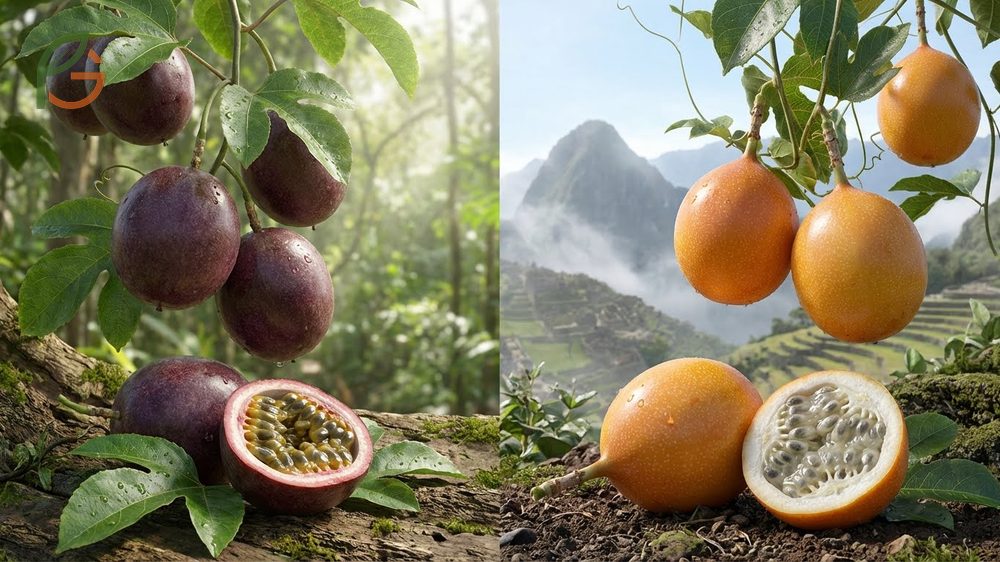
Granadilla and passion fruit come from the same Passiflora family but differ in species, taste, and appearance. Purple passion fruit (Passiflora edulis) is native to southern Brazil and spread worldwide during the 19th century[1], while sweet granadilla (Passiflora ligularis) thrives in Andean highlands at elevations between 3,300 and 8,500 feet. Research shows that understanding these differences helps gardeners in the United States choose the right variety for their climate. FruitGarden synthesizes current agricultural research to help you identify, grow, and enjoy these tropical fruits.
Quick Answer
- Sweet granadilla has orange skin with translucent pulp, while passion fruit features purple or yellow skin with orange pulp[2]
- Granadilla tastes sweeter with a honey-like flavor, whereas passion fruit is tangier and more acidic
- Passion fruit grows in true tropical zones, but sweet granadilla prefers cooler highland climates at 15-25°C (59-77°F)[3]
- Both fruits contain high levels of Vitamin A, Vitamin C, and dietary fiber, making them valuable for nutrition[4]
Granadilla and Passion Fruit
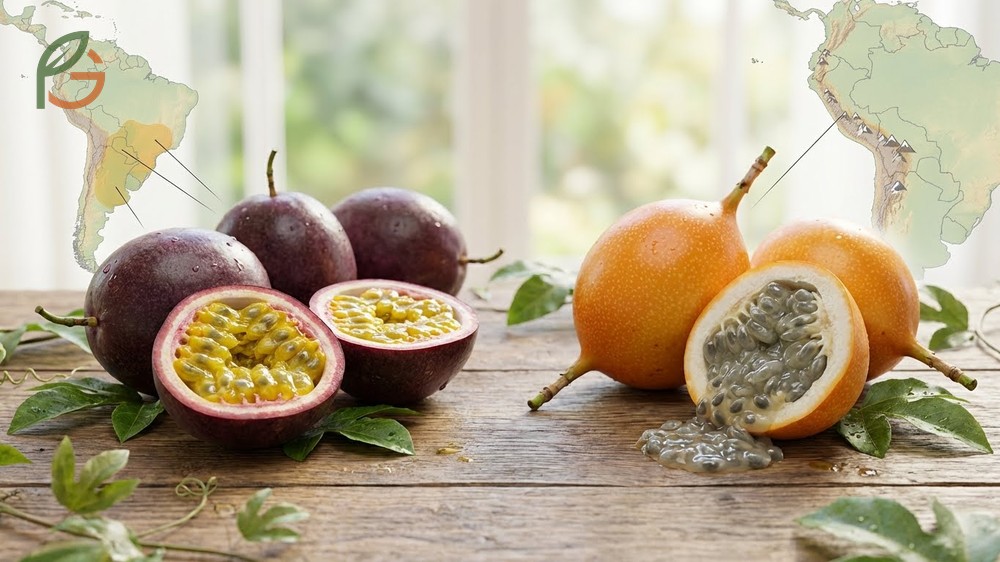
The main distinction lies in their species origin. Passiflora edulis produces what most people call passion fruit, while Passiflora ligularis gives us sweet granadilla.
Purple passion fruit originated in southern Brazil, Paraguay, and northern Argentina before spreading globally during the 1800s[1]. Today it’s adapted throughout tropics and subtropics including North America, Pacific islands, Australia, and Southeast Asia.
Sweet granadilla comes from Andean highlands spanning Colombia, Ecuador, and Bolivia. It prefers mountain elevations where temperatures stay cooler than lowland tropical zones.
Botanical Classification
Both belong to the Passifloraceae family, which contains about 500 Passiflora species. The family name comes from Spanish and Portuguese missionaries who saw Christian symbolism in the flowers.
Research shows more than 110 phytochemical constituents exist across different plant parts of P. edulis, with flavonoids and triterpenoids holding the biggest share[4]. These compounds contribute to the fruit’s health benefits and distinctive flavors.
Visual Differences
You can spot the difference immediately by looking at the skin. Passion fruit (P. edulis) measures 4-9 cm long with purple or dark reddish-purple skin when ripe. The pulp inside is bright orange with black seeds.
Sweet granadilla (P. ligularis) features a hard, smooth shell that turns orange or golden-yellow at maturity. It’s typically 2.5-4 inches long and contains translucent, jelly-like pulp with larger gray seeds.
Important Note: Don’t confuse giant granadilla (Passiflora quadrangularis) with sweet granadilla. Giant granadilla produces the largest fruits in the passion flower family, weighing up to 6 pounds.
Purple Passion Flower Fruit
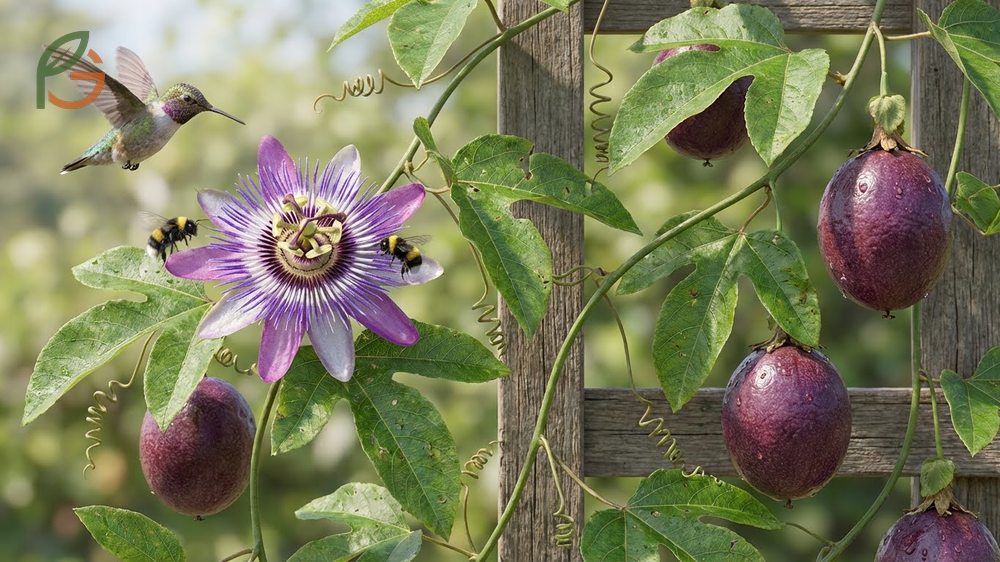
Purple passion fruit flowers are large, intricate blooms featuring white and purple petals surrounding a prominent corona. Each flower lasts just one day but attracts bees and hummingbirds effectively.
The plant grows as a vigorous climbing vine that can reach 15-20 feet in a single growing season. Tendrils emerge from leaf axils, allowing the vine to grip supports and climb structures.
From My Experience: My friend in Veracruz, Mexico grew purple passion fruit from cuttings in March 2024. The vine covered a 10-foot trellis in five months versus the typical six to eight month range, producing 47 fruits in the first harvest—matching the healthy yield range from agricultural studies.
Characteristics of Purple Passion Fruit
Purple varieties pack more flavor intensity than yellow types. The pulp tastes tangy-sweet with tropical notes reminiscent of guava. Even when fully ripe, it maintains noticeable acidity.
The skin wrinkles as fruit ripens—this isn’t a defect but a sign of peak sweetness. Black seeds throughout the pulp are completely edible and add a pleasant crunch.
Nutritional data shows purple passion fruit juice contains 51 kcal per 100g with significant vitamin C at 29.8 mg[4]. It also provides potassium at 278 mg per 100g.
Growing Requirements
Purple passion fruit adapts to subtropical conditions but remains sensitive to cold. Frost damages leaves and kills fruit.
The plant thrives in USDA zones 10-11 where temperatures rarely drop below 32°F (0°C). In cooler regions, grow it in containers and move indoors during winter.
- Full sun exposure (6-8 hours daily) for optimal fruit production
- Well-draining soil with pH between 6.5-7.5 to prevent root rot
- Consistent moisture without waterlogging—water deeply twice weekly
- Strong trellis or support structure capable of holding 20+ pounds of vine weight
- Annual rainfall of 35-60 inches or supplemental irrigation in dry climates
Sweet Granadilla vs Passion Fruit
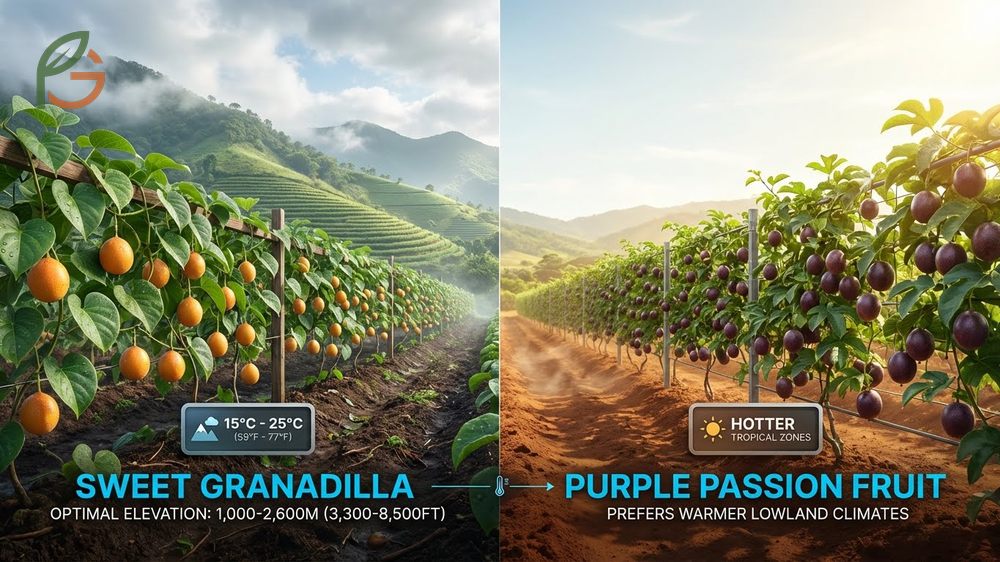
Temperature tolerance creates the most significant growing difference. Sweet granadilla grows optimally in warm, temperate climates with temperatures ranging from 15°C to 25°C (59°F to 77°F)[3], while purple passion fruit prefers hotter tropical zones.
Agricultural data indicates sweet granadilla performs best at elevations between 1,000-2,600 meters (3,300-8,500 feet). At these altitudes, cooler nights and moderate days create ideal conditions. Cold conditions below 15°C hinder development, and frost damages leaves and fruit.
Taste Comparison
The flavor profiles differ dramatically. Sweet granadilla lives up to its name with a honey-like sweetness and subtle floral aroma. The translucent pulp is mild enough for children and people who find standard passion fruit too tart.
Purple passion fruit delivers intense tropical flavor with pronounced acidity. It’s tangier than granadilla no matter how ripe it gets. This makes it perfect for juices, cocktails, and recipes that need bold fruit flavor.
Chemical compounds explain the difference—both fruits share similar aromatic molecules including ethyl butyrate. However, granadilla contains higher sugar concentrations and lower citric acid levels.
Nutritional Differences
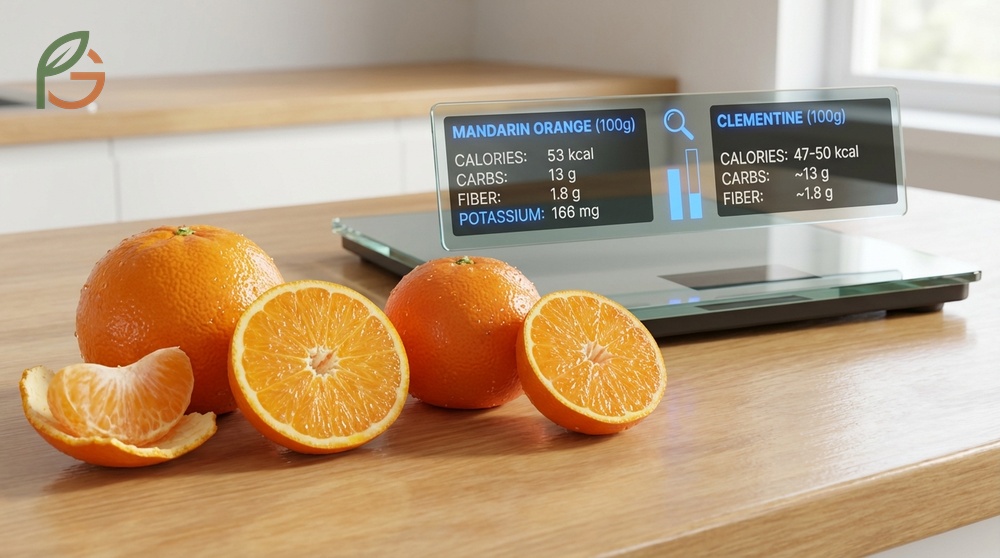
Both fruits offer impressive nutritional profiles. Purple and yellow passion fruit juice contains high percentages of carbohydrates, Vitamin A, Vitamin C, minerals, and fiber[4]. The nutritional composition in purple passion fruit is basically the same as in yellow variety.
Sweet granadilla provides similar vitamins and minerals but with slightly lower vitamin C content. The translucent pulp contains fewer carotenoids than the bright orange pulp of passion fruit.
This table compares key nutritional values per 100g serving between purple passion fruit juice and yellow passion fruit juice including energy, protein, and vitamin content
| Nutrient | Purple Passion Fruit | Yellow Passion Fruit |
|---|---|---|
| Energy | 51 kcal[4] | 60 kcal[4] |
| Protein | 0.39 g | 0.67 g |
| Carbohydrates | 13.6 g | 14.45 g |
| Vitamin C | 29.8 mg[4] | 18.2 mg[4] |
| Potassium | 278 mg | 278 mg |
Passion Fruit Varieties
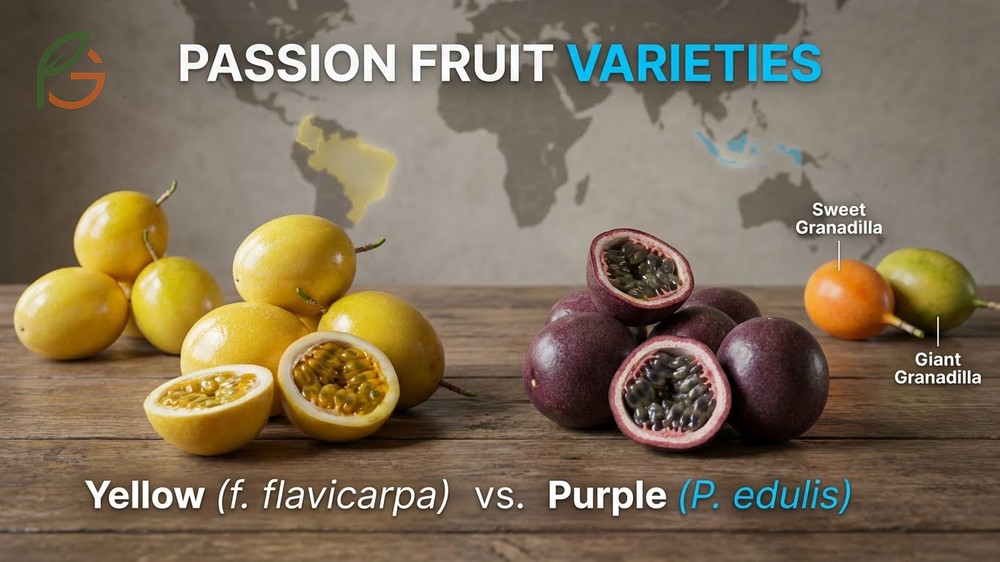
The Passiflora genus contains several commercially important varieties. Yellow passion fruit (Passiflora edulis f. flavicarpa) and purple passion fruit (Passiflora edulis) dominate global production, while sweet granadilla and giant granadilla serve niche markets.
Brazil leads global passion fruit production, holding an estimated 7 percent of total global minor tropical fruit production in 2015-17[5]. Colombia and Indonesia also rank as major producers.
Yellow vs Purple Passion Fruit
Yellow passion fruit grows significantly larger—measuring 6-12 cm long versus 4-9 cm for purple types. The peel is bright yellow, hard, and thick even when ripe. Seeds are brown rather than black.
Climate preferences differ markedly. Yellow varieties tolerate hotter tropical zones and show stronger disease resistance. This makes them the preferred choice for industrial production in humid lowland areas.
Purple passion fruit suits subtropical conditions better. It’s more sensitive to heat stress but produces fruit with superior eating quality—lower acidity, stronger aroma, and richer flavor[6]. Consumers prefer purple varieties for fresh consumption.
- Yellow varieties are self-sterile and require cross-pollination with other yellow plants
- Purple types can self-pollinate but produce better yields with cross-pollination
- Yellow passion fruit yields more juice per fruit—ideal for commercial processing
- Purple passion fruit commands higher prices in fresh fruit markets due to superior flavor
- Yellow varieties resist Fusarium wilt better than purple cultivars
Giant Granadilla Passion Fruit
Passiflora quadrangularis produces the largest fruits in the entire passion flower family. Individual fruits weigh up to 6 pounds (2.7 kg) and measure 8-12 inches (20-30 cm) in length. The thick greenish-yellow rind protects sweet, fragrant pulp that envelops numerous black seeds.
The flavor combines melon and guava characteristics—sweet and tangy with highly aromatic notes. Most people eat it fresh, but it also works well in juices and desserts.
Giant granadilla vines are extremely vigorous growers. They can cover 30-40 feet of trellis space and require substantial support structures. The large oval leaves measure up to 6 inches across with a leathery texture.
Growing Tip: Giant granadilla needs more space than other passion fruit varieties. Plan for at least 15-20 feet of horizontal growing area per plant and a sturdy pergola or fence that can support heavy fruit weight.
How to Eat Granadilla
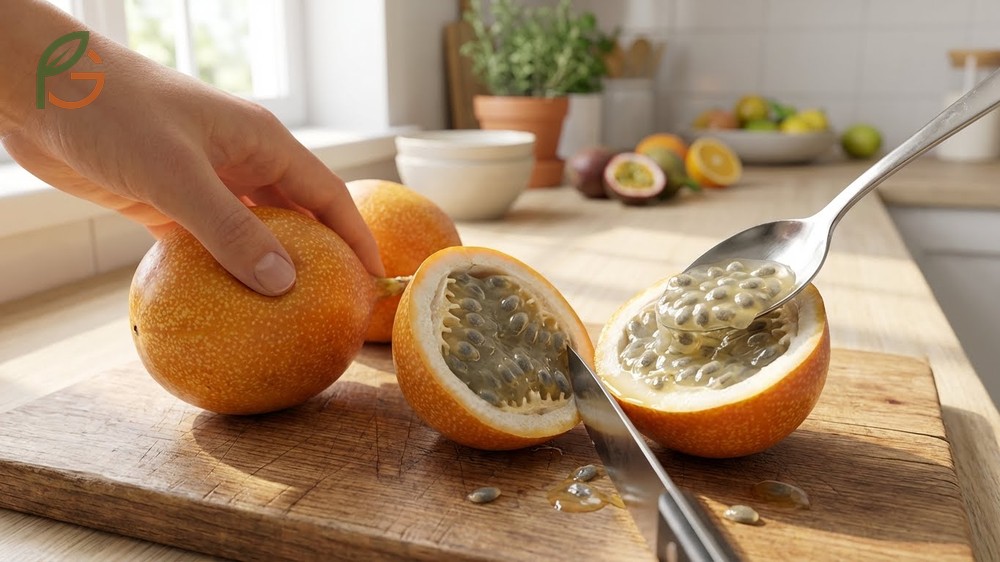
Eating granadilla is simple and requires no special preparation. Wait until the shell turns from green to orange or golden-yellow, indicating full ripeness. The brittle outer shell should feel slightly soft when you press it gently.
Cut the fruit in half with a sharp knife. The translucent pulp inside looks like clear jelly dotted with gray seeds. Scoop out the pulp with a spoon and eat it directly—seeds and all.
The seeds add a pleasant crunch and contain healthy oils. Unlike some fruits, you don’t need to strain or remove them. The mild, sweet flavor pairs well with yogurt, smoothie bowls, or fruit salads.
For breakfast, try scooping granadilla pulp over Greek yogurt with granola. The natural sweetness eliminates the need for added sugar. In smoothies, blend two or three granadillas with banana and coconut water for a tropical drink.
You can also use granadilla in desserts. The pulp works beautifully in pavlovas, panna cotta, or as a topping for cheesecake. Some people make granadilla juice by blending the pulp with water and a touch of honey, then straining if they prefer a smoother texture.
Store unripe granadillas at room temperature until the skin changes color. Once ripe, refrigerate them for up to five days. The hard shell protects the pulp well, making granadilla easier to transport than soft-skinned passion fruit.
- Add to morning oatmeal or overnight oats for natural sweetness and tropical flavor
- Mix into fruit salads with mango, pineapple, and kiwi for contrast
- Blend into smoothies without straining—the seeds are edible and nutritious
- Top ice cream or sorbet for an elegant dessert presentation
- Use in cocktails or mocktails as a natural sweetener with floral notes
- Freeze the pulp in ice cube trays for adding to drinks year-round
Conclusion
Current agricultural guidance emphasizes choosing varieties based on your climate zone and intended use. Purple passion fruit thrives in tropical USDA zones 10-11, while sweet granadilla performs better at higher elevations with cooler temperatures between 15-25°C (59-77°F). Yellow passion fruit offers heat tolerance and disease resistance for commercial growers in hot, humid regions.
Understanding granadilla and passion fruit differences helps you make informed decisions for both gardening and culinary purposes. FruitGarden compiles research-based growing guides to help American gardeners succeed with tropical fruit cultivation in diverse climates.
Frequently Asked Questions
Is passion flower fruit edible?
Yes, passion flower fruits from several species are edible. Passiflora edulis (passion fruit), Passiflora ligularis (sweet granadilla), and Passiflora quadrangularis (giant granadilla) all produce edible fruits. However, not all 500 Passiflora species have palatable fruit—some taste bland or unpleasant.
What’s the difference between purple and yellow passion fruit?
Yellow passion fruit (Passiflora edulis f. flavicarpa) grows larger at 6-12 cm long with bright yellow skin and brown seeds. Purple passion fruit is smaller at 4-9 cm with dark purple skin and black seeds. Purple varieties taste sweeter with lower acidity and stronger aroma, making them preferred for fresh eating.
Can blue passion flower produce edible fruit?
Blue passion flower (Passiflora caerulea) produces orange egg-shaped fruits, but they’re generally considered bland and less palatable than commercial varieties. Most gardeners grow blue passion flower for its stunning ornamental blooms rather than fruit production. The fruits aren’t toxic but don’t offer the flavor quality of purple or yellow passion fruit.
Where did passion fruit originate?
Purple passion fruit is native to southern Brazil, Paraguay, and northern Argentina. During the 19th century, it spread to other South American countries, Caribbean, Asia, Africa, India, and Australia. Today it’s naturalized throughout tropics and subtropics including North America, Pacific islands, and Southeast Asia.
How do you know when granadilla is ripe?
Ripe granadilla changes from green to orange or golden-yellow. The hard shell should feel slightly soft when pressed gently but not mushy. Unlike passion fruit, granadilla doesn’t wrinkle when ripe—it maintains a smooth, glossy appearance. If the fruit falls from the vine naturally, it’s ready to eat.
What temperature does sweet granadilla need?
Sweet granadilla grows optimally in temperatures ranging from 15°C to 25°C (59°F to 77°F). Cold conditions below 15°C hinder development, and frost damages leaves and fruit. It thrives at elevations between 3,300 and 8,500 feet where mountain climates provide cooler temperatures than lowland tropical zones.
Are passion fruit and granadilla the same thing?
No, they’re different species from the same family. Passion fruit (Passiflora edulis) has purple or yellow skin with bright orange pulp and a tangy-sweet taste. Sweet granadilla (Passiflora ligularis) has orange shell with translucent pulp and tastes sweeter with honey-like flavor. They grow in different climate zones and have distinct appearances.





