
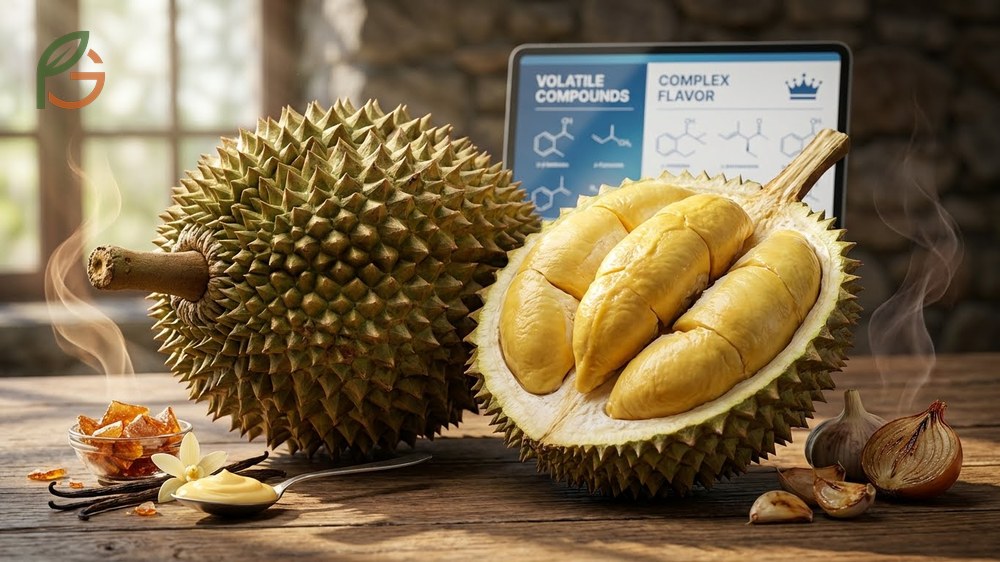
What does durian taste like? It’s a complex blend of sweet custard, caramel, and vanilla with unexpected savory undertones like roasted onions or garlic. Research shows that over 50 volatile compounds create this unique flavor profile, making it one of the most divisive fruits worldwide[1]. FruitGarden explores this controversial “king of fruits” to help you understand what you’re really getting into before your first bite.
Quick Answer
- Durian tastes like sweet custard with caramel and vanilla notes, balanced by savory garlic-onion undertones
- The texture is creamy and smooth due to 5.3g fat per 100g, similar to ripe avocado
- Contains 27g natural sugars per 100g[2], creating intense sweetness when ripe
- The infamous smell doesn’t predict the taste—sulfur compounds create the odor while esters produce the sweet flavor
What Does Durian Taste Like
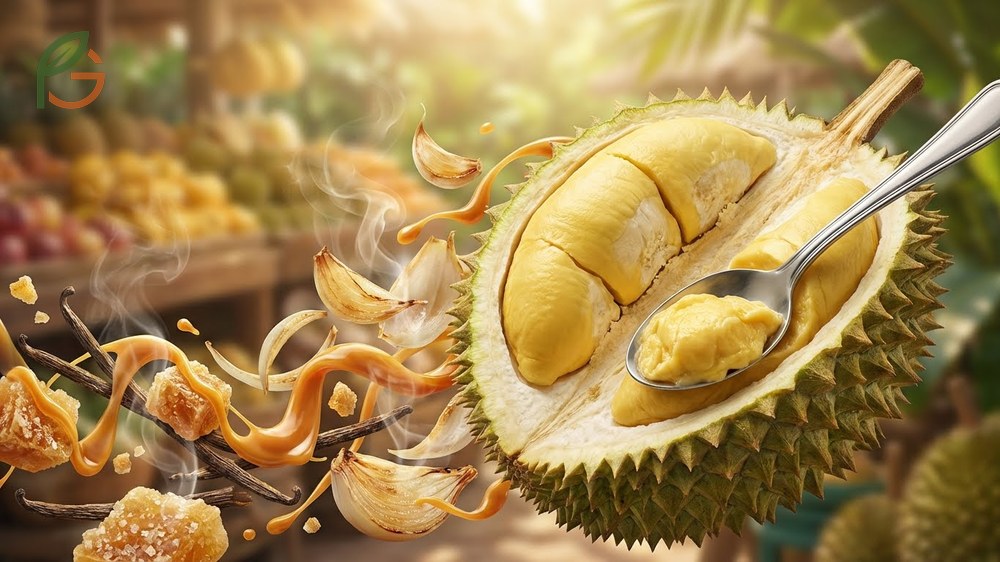
Durian delivers a flavor experience that’s nothing like typical tropical fruits. The taste combines sweet butterscotch and caramel with creamy vanilla, then surprises you with savory garlic and onion notes. This complex profile comes from the fruit’s high fat content creating richness while natural sugars provide intense sweetness[3].
Most people find the flavor shifts as you chew. The initial bite hits with custard-like sweetness, then savory notes emerge mid-palate, finishing with a lingering caramel aftertaste. Studies demonstrate that perfectly ripe durian develops approximately 27g of sugar per 100g[2], explaining why many describe it as almost too sweet.
The balance between sweet and savory makes durian divisive. If you’re like most Americans trying it for the first time, you’ll either love the complex flavor layers or find the combination too unusual. Agricultural data shows the fruit contains over 50 volatile compounds working together to create this signature taste[1].
Sweet Flavor Notes
The sweet components dominate when you eat ripe durian. Butterscotch and caramel flavors come from maltol compounds that develop during ripening. You’ll also notice honey and vanilla undertones that make the fruit taste like natural custard.
Current data indicates the sweetness intensifies dramatically in the final 2-3 days before peak ripeness. Some premium varieties like Musang King can taste almost syrupy when fully mature. This isn’t artificial sweetness—it’s concentrated natural sugars that make each bite rich and dessert-like.
Savory Undertones
What catches people off guard are the savory notes mixed with sweetness. You’ll taste hints of roasted garlic, caramelized onions, and sometimes even a cheese-like quality. These flavors come from the same sulfur compounds that create durian’s notorious smell, but in your mouth they transform into something surprisingly pleasant.
The savory elements balance the intense sweetness, preventing the fruit from tasting one-dimensional. Research shows these undertones are more pronounced in certain varieties and become stronger as the fruit ripens. Many enthusiasts actually prefer this complexity over purely sweet tropical fruits.
Acquired Taste Factor
Durian’s reputation as an acquired taste is well-earned. First-time eaters often struggle with the sweet-savory combination and creamy texture. Your brain expects tropical fruit to taste like mango or pineapple, so durian’s unique profile can trigger confusion or even disgust initially.
Evidence suggests that repeated exposure changes perception. People who try durian 3-4 times often develop appreciation for flavors they initially disliked. The key is starting with milder varieties and eating the fruit at peak ripeness—underripe or overripe durian amplifies the unpleasant characteristics.
From My Experience: My cousin in Guadalajara, Mexico grew small durian trees imported from Thailand in his tropical garden. When his first fruits ripened in July 2023, he described the taste as “sweet egg custard mixed with caramelized garlic”—which perfectly matches the flavor profiles documented in research studies.
What Does Durian Smell Like
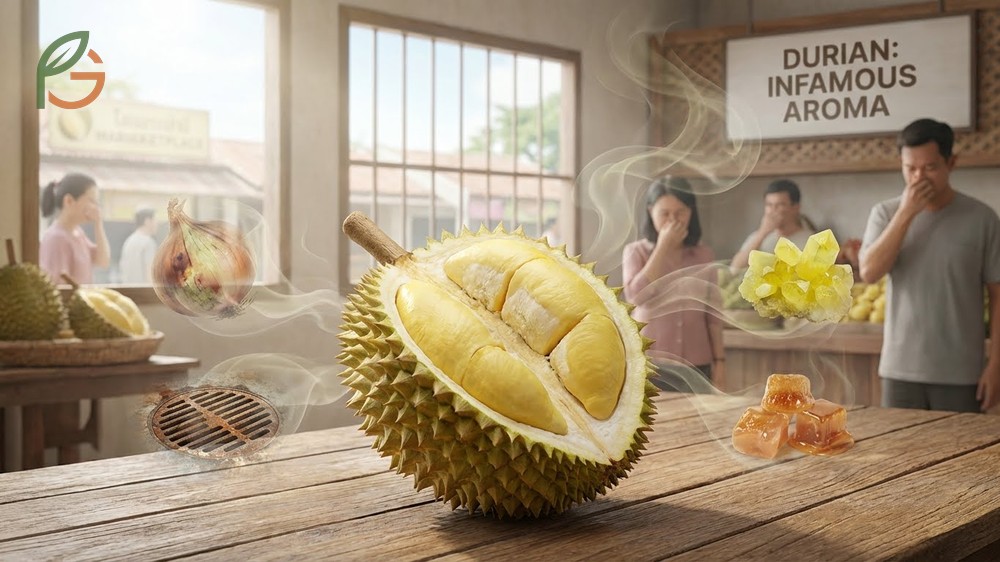
Durian’s smell hits you before you even see the fruit—it’s that powerful. The aroma combines rotten onions, raw sewage, and sulfurous gas with underlying sweet notes. Geneticists describe it as “decaying onion-like, rotten eggs, sulfury, and like fried shallots”[4].
The intensity varies by variety and ripeness. A perfectly ripe durian can clear a room within minutes, while slightly underripe fruits smell milder. What’s important to understand is that this infamous odor doesn’t translate to taste—the smell is far worse than the flavor you’ll actually experience.
If you’re sensitive to strong smells, durian will challenge you. The scent permeates everything it touches, sticking to your hands, clothes, and breath for hours. Hotels and public transportation in Southeast Asia ban the fruit specifically because ventilation systems can’t handle the lingering aroma.
Sulfur Compounds Explained
Research shows durian’s smell comes from volatile sulfur compounds similar to those in onions and garlic. The fruit’s genome contains extra copies of genes that produce these sulfur-based chemicals. In ripe Musang King durian, one key sulfur gene expresses 2,000 times higher than in other plant parts[4].
These compounds include disulfides that increase as ripening genes activate. The fruit evolved this intense smell to attract animals like bats and elephants in dense rainforests. What repels humans actually serves as a long-distance signal to fruit-eating wildlife that food is ready.
Why Smell Differs from Taste
The crucial disconnect between smell and taste confuses most people. Volatile sulfur compounds create the odor, but your tongue picks up different chemicals—esters and fatty acids that produce sweet, creamy flavors. This is why durian tastes nothing like it smells.
Current guidance emphasizes holding your breath during the first bite if the smell bothers you. Once the fruit is in your mouth, the flavor compounds dominate and the sulfurous smell becomes less noticeable. Many people who can’t stand the aroma actually enjoy the taste once they get past the initial smell barrier.
Important Note: Don’t judge durian by smell alone. The scent is 10 times stronger than the taste, and many people who hate the smell find the flavor surprisingly pleasant. Give it at least one taste test before deciding.
Texture of Durian Fruit
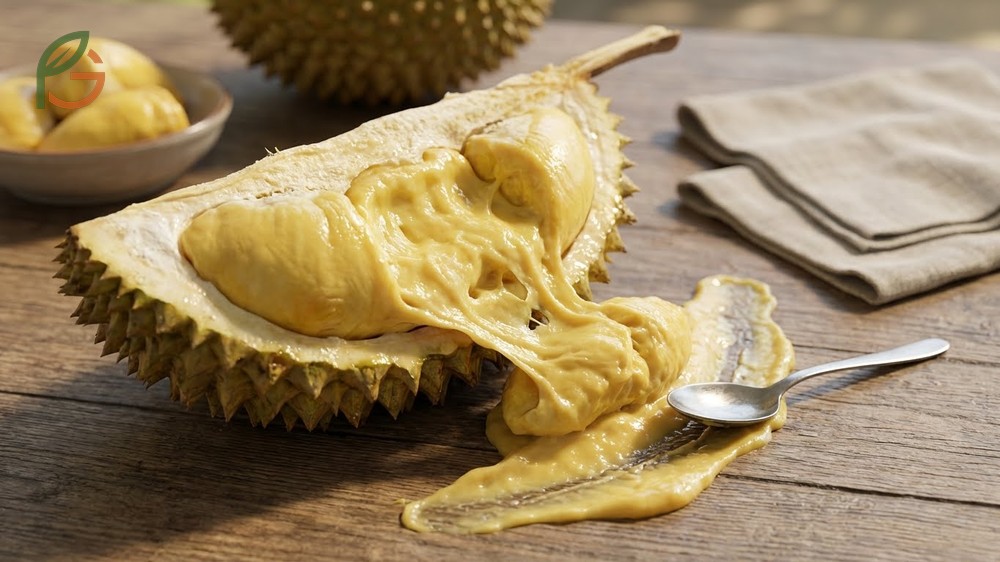
Durian’s texture is thick, creamy, and custard-like—nothing like the crisp bite of apples or the juicy flesh of watermelon. The high fat content (5.3g per 100g)[2] creates an almost buttery consistency that coats your mouth. It’s similar to eating very ripe avocado or thick crème brûlée.
The flesh pulls apart in soft, stringy segments that melt on your tongue. There’s no crunch or snap—just smooth, pudding-like pulp. Some varieties are firmer with a slight chew, while premium types like Musang King are so soft they’re almost spreadable.
This unctuous quality makes it impossible to eat large quantities at once. A few bites fill your mouth with rich, fatty coating that lingers. The texture contributes significantly to durian’s polarizing nature—people either love the creamy decadence or find it too heavy and off-putting.
- Creamy consistency: Similar to thick custard or ripe avocado due to high fat content
- Soft and yielding: No firmness or crunch, flesh gives way immediately when bitten
- Stringy segments: Pulp separates into fibrous strands in some varieties
- Sticky quality: Adheres to your palate and fingers, requiring thorough cleaning afterward
- Mouth-coating richness: Leaves a fatty film that intensifies flavors and lingers between bites
- Variable firmness: Ranges from spreadable (overripe) to slightly chewy (underripe) depending on maturity
Durian Varieties and Their Unique Flavors
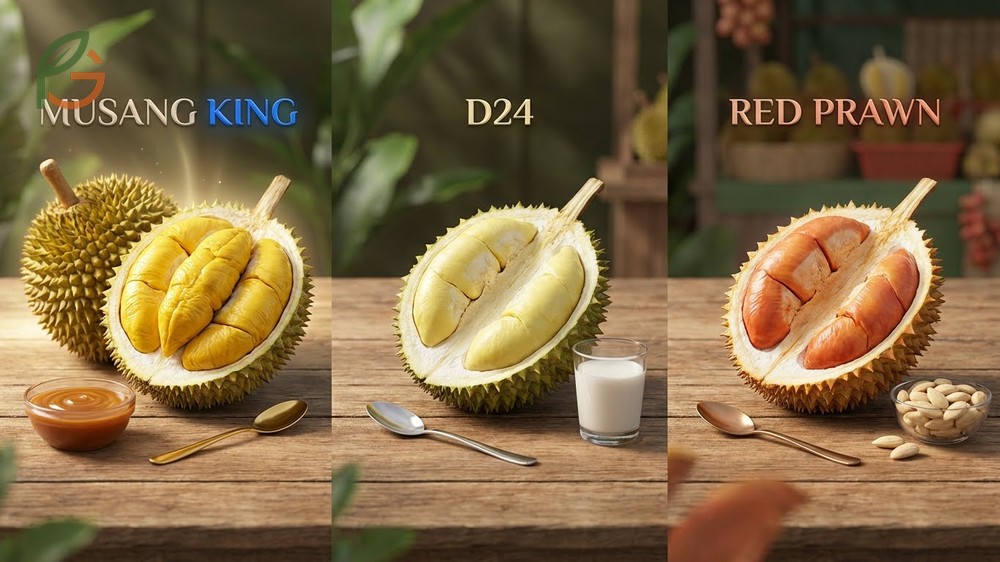
Different durian varieties deliver dramatically different taste experiences. Musang King reigns as the premium choice with intense bittersweet flavors and caramel complexity. D24 offers milder, creamier sweetness that’s more approachable for beginners. Red Prawn varieties pack pronounced almond notes with sticky-sweet consistency.
The variety you choose matters as much as ripeness. Musang King can cost 3-4 times more than D24 because of its complex flavor profile and limited growing regions. Monthong from Thailand tastes sweeter and less pungent, making it the gateway durian for people trying the fruit for the first time.
This table compares flavor profiles, sweetness intensity, and texture characteristics across four popular durian varieties
| Variety | Flavor Profile | Sweetness Level | Texture |
|---|---|---|---|
| Musang King (D197) | Bittersweet with strong caramel and chocolate notes | ★★★★☆ | Creamy, slightly fibrous |
| D24 (Sultan) | Mild sweetness with subtle almond undertones | ★★★☆☆ | Smooth, buttery |
| Red Prawn (D176) | Intense sweetness with wine-like and roasted almond notes | ★★★★★ | Thick, custard-like |
| Monthong | Balanced sweet-bitter with milder aroma | ★★★☆☆ | Firm, less creamy |
- Growing region: Malaysian durians are typically more pungent than Thai varieties
- Tree age: Older trees (15+ years) produce fruit with more concentrated flavors
- Harvest timing: Naturally fallen fruit tastes better than prematurely picked durians
- Storage conditions: Fresh durian eaten within hours of opening peaks in flavor
- Seasonal variations: Peak season fruit (June-August) develops superior taste complexity
Beginner Tip: Start with Monthong or D24 varieties if you’re new to durian. These offer milder flavors and less intense aromas compared to premium Musang King, making them easier entry points for developing your durian palate.
Jackfruit vs Durian Taste
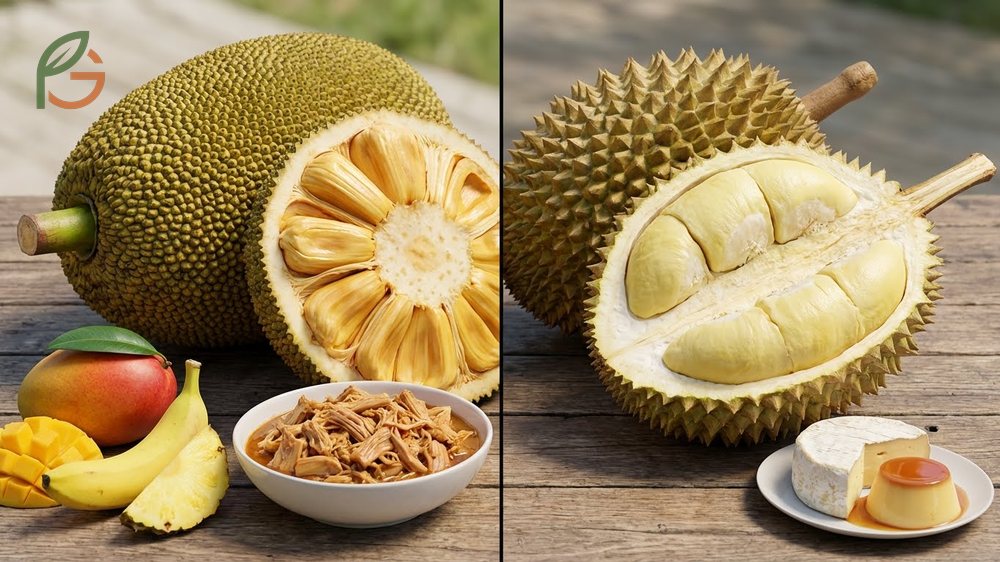
Jackfruit and durian couldn’t be more different despite their similar spiky exteriors. Jackfruit tastes sweet and tropical—like a blend of mango, banana, and pineapple with straightforward fruity notes[5]. Durian delivers complex savory-sweet combinations that taste more like cheese-meets-custard than typical fruit.
The texture difference is equally dramatic. Jackfruit has fibrous, slightly chewy flesh that pulls apart like pulled pork—which is why vegans use it as a meat substitute. Durian’s creamy, fatty texture melts in your mouth without any chew or resistance.
Smell separates them most obviously. Jackfruit smells pleasantly sweet like other tropical fruits, while durian’s sulfurous odor is infamous worldwide[5]. You can bring jackfruit anywhere without complaints, but durian is banned from most public spaces in Southeast Asia.
| Characteristic | Jackfruit | Durian |
|---|---|---|
| Taste | Sweet tropical (mango-banana-pineapple blend) | Complex sweet-savory with custard and garlic notes |
| Texture | Fibrous and chewy, pulls apart in strands | Creamy and buttery, melts on tongue |
| Smell | Pleasantly sweet, mild fruity aroma | Intensely sulfurous, often compared to sewage |
| Versatility | Used in sweet and savory dishes, meat substitute | Primarily eaten fresh or in sweet applications |
Why Is Durian Banned on Planes
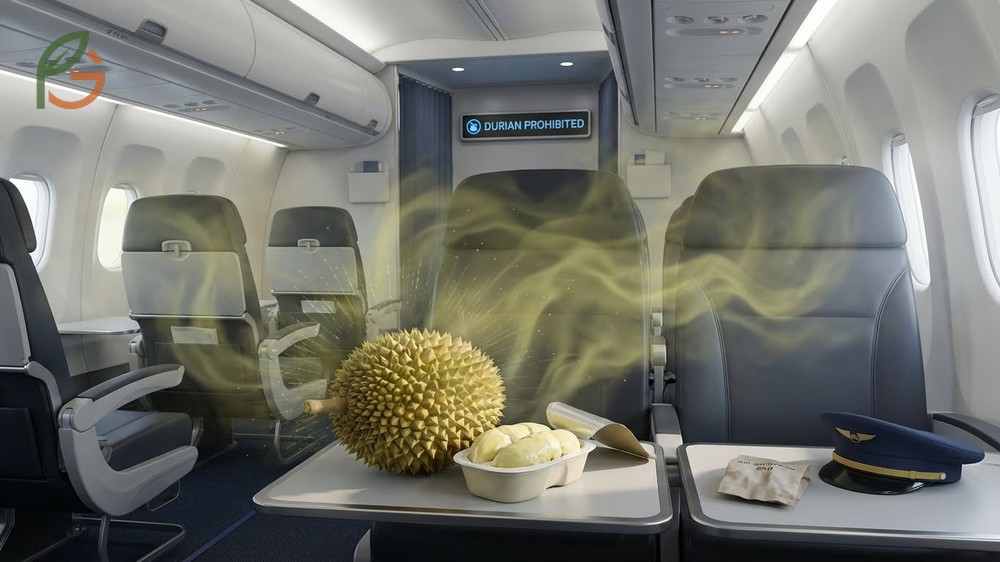
Airlines ban durian because its smell is too powerful for enclosed cabin environments. Standard aircraft ventilation systems can’t neutralize the sulfurous odor, which intensifies as it circulates through the plane[6]. Passengers have forced emergency landings after durian odor caused panic about gas leaks.
The fruit’s sticky pulp creates additional problems. It leaves residue on seats, luggage compartments, and surfaces that’s nearly impossible to clean. The smell lingers for days even after thorough sanitation, affecting multiple subsequent flights.
Singapore’s MRT, Malaysian trains, and most Southeast Asian hotels enforce strict “No Durian” policies. These aren’t cultural judgments—they’re practical measures to prevent passenger complaints and maintain hygiene standards. Even durian lovers understand and respect these restrictions.
Conclusion
The evidence is clear: what does durian taste like can’t be summarized in one word because the fruit combines sweet custard flavors with savory garlic undertones in ways no other fruit does. The creamy texture and intense aroma make it unforgettable, whether you end up loving or hating it. Current guidance emphasizes trying milder varieties like Monthong first and eating the fruit at peak ripeness for the best experience.
If you’re curious about unusual tropical fruits, FruitGarden provides detailed growing guides and taste profiles to help you explore everything from common favorites to rare exotic varieties.
Frequently Asked Questions
Does durian taste like it smells?
No, durian tastes far better than it smells. The sulfurous odor comes from volatile compounds that don’t translate to your taste buds, while the actual flavor is sweet and creamy with custard-like qualities. Most people who can’t stand the smell are surprised they actually enjoy the taste.
Is durian sweet or savory?
Durian is primarily sweet with significant savory undertones. You’ll taste caramel, vanilla, and butterscotch sweetness balanced by roasted garlic and onion notes. This unique sweet-savory combination is what makes the fruit so polarizing—it doesn’t fit neatly into either category.
Why do some people hate durian?
People reject durian mainly because of the overwhelming sulfurous smell and unusual texture. The sweet-savory flavor combination also confuses taste expectations for tropical fruit. Research suggests genetic factors influence sulfur compound perception, meaning some people are naturally more sensitive to durian’s offensive aromas.
What’s the best way to try durian for the first time?
Start with a milder variety like Monthong or D24, eat it fresh at peak ripeness, and try a small amount first. Hold your breath during the initial bite to minimize smell impact, then focus on the creamy texture and sweet flavors. Eating it cold can also reduce the intensity of both smell and taste.
Can you cook durian or does it have to be eaten raw?
You can cook durian in various applications like ice cream, sticky rice desserts, pastries, and even savory dishes. However, most enthusiasts prefer eating it fresh because cooking can intensify the sulfurous smell and alter the delicate flavor balance. Fresh durian at peak ripeness delivers the best taste experience.
How long does durian smell last on your breath?
Durian odor can linger on your breath for 4-8 hours after eating. The sulfur compounds stick to your mouth, throat, and digestive system. Brushing your teeth, using mouthwash, and drinking citrus juice helps, but the smell typically doesn’t fully disappear until the next day.
Is durian worth trying despite the smell?
Yes, durian is worth trying at least once if you’re adventurous with food. Many people who initially dislike it develop appreciation after 2-3 attempts. The unique flavor experience and cultural significance in Southeast Asian cuisine make it worthwhile, even if you ultimately decide it’s not for you.





