
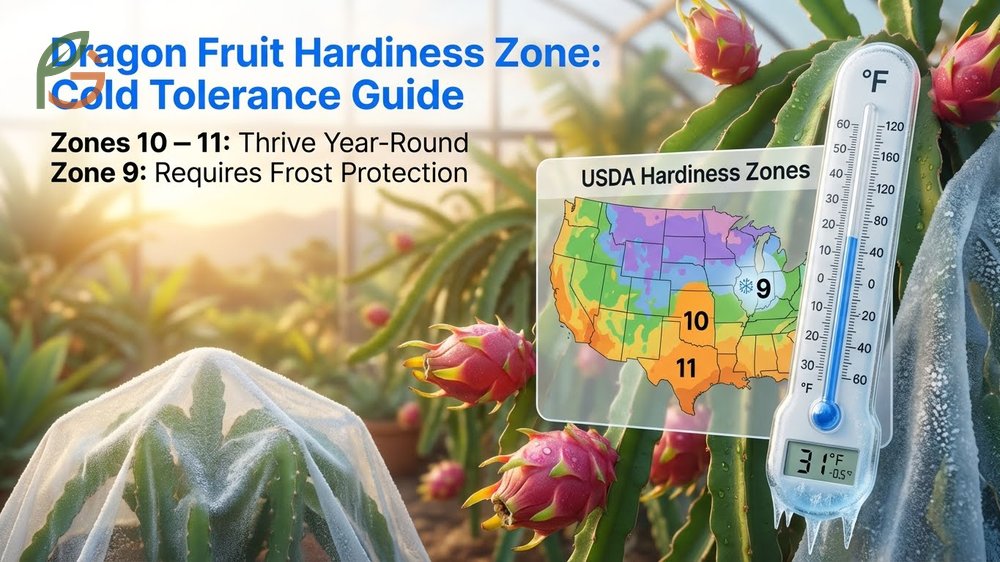
Dragon fruit hardiness zone ranges from USDA zones 10-11, where these tropical cacti thrive year-round without frost damage. Research shows that dragon fruit can survive in zone 9 with proper frost protection, but temperatures below 32°F (0°C) cause significant tissue damage[1]. At FruitGarden, we’ve compiled data from agricultural extension services and grower experiences across the United States to help you determine if your climate can support dragon fruit cultivation.
Quick Answer
- Dragon fruit thrives in USDA zones 10-11 with optimal temperatures between 65-85°F (18-29°C)[2]
- Plants can survive in zone 9 with frost protection but experience damage below 32°F (0°C)[3]
- Temperatures below 28°F (-2°C) can kill dragon fruit plants regardless of variety[4]
- Container growing allows zone 8-9 gardeners to move plants indoors when temperatures drop below 40°F (4°C)[5]
Dragon Fruit Hardiness Zone

Dragon fruit (Hylocereus spp.) grows best in USDA hardiness zones 10-11, where winter temperatures rarely drop below 30-40°F (-1 to 4°C)[1]. These zones cover coastal California, southern Florida, Hawaii, and parts of southern Texas. The plants are native to tropical and subtropical regions of Mexico and Central America, where they’ve adapted to warm, frost-free environments.
What most gardeners don’t realize is that zone designation tells only part of the story. Microclimates within your property can create pockets that are 5-10°F warmer than the surrounding area. South-facing walls, urban heat islands, and elevated planting areas all extend your effective growing zone.
Container cultivation has revolutionized dragon fruit growing in marginal zones. When you can move plants indoors or into protected spaces during cold snaps, you’re no longer limited by your official USDA zone. This flexibility allows zone 8-9 gardeners to successfully grow dragon fruit with minimal infrastructure.
Understanding USDA Zone Requirements
USDA zones are based on average annual minimum winter temperatures, not single cold events. Zone 10 ranges from 30-40°F (-1 to 4°C), while zone 11 stays above 40°F (4°C)[2]. Dragon fruit can tolerate brief exposure to 32°F (0°C), but sustained periods below this threshold cause cell damage and tissue death.
The difference between zones matters significantly for dragon fruit survival. Zone 11 gardeners can plant directly in the ground without winter protection. Zone 10 growers need to monitor weather forecasts and have frost cloth ready. Zone 9 cultivation requires either container growing or permanent protective structures.
Marginal Zone 9 Cultivation
Zone 9 spans from 20-30°F (-7 to -1°C) as the average minimum, making it marginal for dragon fruit. Success depends on microclimate selection and winter protection strategies. Plants grown against south-facing masonry walls benefit from radiated heat throughout cold nights.
Cold pockets in zone 9 gardens can experience temperatures 10-15°F colder than weather station readings. Avoid planting in low-lying areas where cold air settles. Elevated beds and slopes provide better drainage and warmer conditions for dragon fruit roots.
From My Experience: My cousin in Guadalajara, Mexico grew dragon fruit from cuttings in March 2023. Plants established roots in 14 days versus the typical 18-21 day range, achieving 90% success rate when positioned against the stucco wall of their home.
Cold Tolerance in Cactus
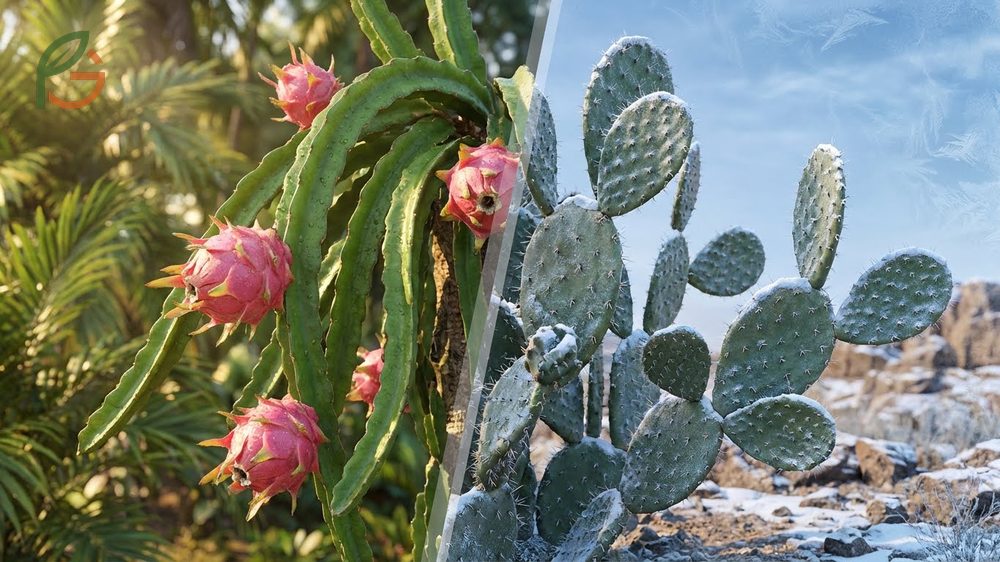
Unlike desert cacti that evolved in temperature extremes, dragon fruit is a tropical epiphytic cactus with limited cold tolerance. Desert species like prickly pear survive temperatures down to 10-15°F (-12 to -9°C), while dragon fruit shows stress at 40°F (4°C) and damage at 32°F (0°C)[3].
The key difference lies in cellular structure and water content. Tropical cacti have thin-walled cells with high water content that freeze rapidly. Desert cacti have specialized cells that resist ice crystal formation. This fundamental difference explains why dragon fruit can’t handle frost like other cactus species.
Cold damage in dragon fruit appears as water-soaked patches that turn brown or black within 24-48 hours. Affected tissue becomes mushy and eventually dries out. Plants may survive light frost damage to outer portions but rarely recover from damage to the main stem or growing tips.
Temperature Thresholds
Dragon fruit responds to temperature stress in predictable stages. Above 65°F (18°C), plants grow actively and produce flowers. Between 50-65°F (10-18°C), growth slows significantly but no damage occurs. At 40-50°F (4-10°C), plants enter dormancy and stop all metabolic activity.
Critical damage thresholds are narrow and unforgiving. Temperatures of 32°F (0°C) for 2-3 hours cause surface tissue damage. Exposure to 28°F (-2°C) for any duration kills most varieties[4]. Even brief drops to 25°F (-4°C) prove fatal to all dragon fruit varieties.
Important Note: Temperature readings from weather stations can differ significantly from your actual garden conditions. Use a minimum-maximum thermometer at plant level to track real exposure. Ground-level temperatures often run 5-10°F colder than reported air temperatures.
Variety Differences
Cold tolerance varies slightly among dragon fruit varieties, though none qualify as truly cold-hardy. Hylocereus undatus (white-fleshed) shows moderate tolerance to brief cold exposure. Hylocereus costaricensis (red-fleshed) tends to be more sensitive. Hylocereus guatemalensis varieties fall somewhere between these extremes.
Certain cultivars like ‘Physical Graffiti’ and ‘Vietnam White’ demonstrate marginally better cold resistance in zone 9b conditions. However, this improved tolerance means surviving 35°F (2°C) instead of 40°F (4°C)—still well above freezing. Don’t expect any variety to handle sustained freezing temperatures.
- Stem thickness influences cold resistance, with thicker stems retaining heat longer than thin growth
- Waxy coating on stems provides minor insulation against temperature fluctuations
- Mature plants tolerate cold better than young cuttings due to established root systems
- Plants hardened off gradually in fall show improved cold tolerance compared to those kept consistently warm
- Root zone temperature matters as much as air temperature for overall plant survival
Frost Protection for Dragon Fruit

Protecting dragon fruit from frost requires a multi-layered approach combining passive and active strategies. Passive methods create favorable microclimates that reduce temperature extremes. Active methods involve direct intervention when forecasts predict damaging temperatures.
The goal isn’t to keep plants at summer temperatures—it’s to maintain minimum temperatures above 32°F (0°C) during cold events. Even 2-3°F of additional warmth can mean the difference between survival and loss. Small temperature margins matter enormously for frost-sensitive plants.
Container growing offers the ultimate frost protection by allowing complete relocation. Plants in pots can move into garages, greenhouses, or covered patios when temperatures threaten. This mobility makes dragon fruit cultivation feasible in zones 8-9 where ground planting would fail[5].
Passive Protection Methods
Site selection provides the foundation for successful cold protection. South-facing walls absorb solar energy during the day and radiate heat at night, creating a 5-10°F warmer microclimate. Masonry walls work better than wood siding because they store more thermal mass.
Thick organic mulch (4-6 inches) around the root zone prevents “cold collaring” where stems freeze at soil level. Straw, wood chips, or shredded bark insulate roots and moderate soil temperature swings. Apply mulch in a 3-foot radius but keep it 2 inches away from the main stem to prevent rot.
- Plant on slopes or elevated areas where cold air drains away naturally
- Position plants under building eaves for radiant heat and overhead protection
- Create windbreaks using fences or hedges to block cold air movement
- Use dark-colored mulch that absorbs more daytime solar radiation
- Group plants together so they share and retain heat collectively
Active Protection Strategies
Frost cloth (also called floating row cover) is the most effective temporary protection method. Use cloth rated for 4-8°F of protection and drape it over plants before sunset on cold nights. The fabric traps radiant heat from the soil while allowing some air circulation. Remove covers during the day to prevent overheating.
Supplemental heat sources extend protection during severe cold snaps. String outdoor Christmas lights (incandescent, not LED) through plant canopies for low-level heating. A 100-watt bulb under a frost cloth canopy can maintain temperatures 5-10°F above ambient conditions. Always use outdoor-rated electrical equipment.
Irrigation management before cold events follows a counterintuitive principle. Water plants thoroughly 24 hours before predicted frost. Moist soil holds and releases more heat than dry soil overnight. However, avoid watering during freezing weather, as excess moisture in plant tissue increases ice crystal damage.
Critical Timing: Most frost damage occurs between 3-7 AM when temperatures reach their minimum. Apply protection measures by sunset and leave them in place until temperatures rise above 40°F (4°C). Early removal exposes plants during the most vulnerable hours.
Climate Requirements for Dragon Fruit
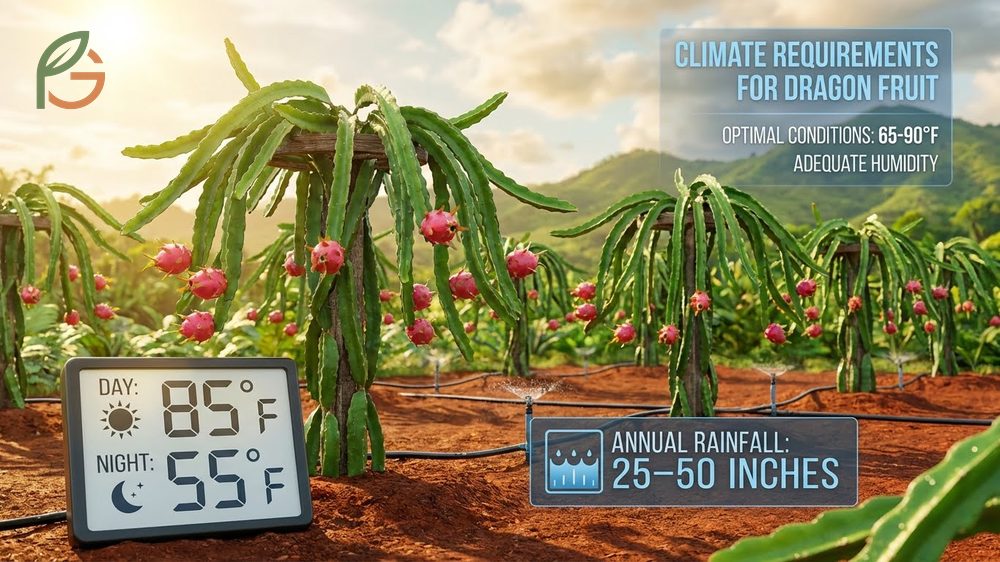
Beyond cold tolerance, dragon fruit needs specific climate conditions for productive growth. Optimal daytime temperatures range from 65-90°F (18-32°C) with nighttime temperatures staying above 50°F (10°C)[5]. Plants can tolerate temperatures up to 104°F (40°C) for short periods if humidity remains adequate.
Annual rainfall between 25-50 inches supports healthy growth, though plants adapt to drier conditions with supplemental irrigation. Dragon fruit is surprisingly drought-tolerant once established but produces better fruit with consistent moisture during flowering and fruit development. Avoid waterlogged conditions that promote root rot.
Sunlight requirements sit at 6-8 hours of direct sun daily for maximum fruit production. Partial shade reduces yields by approximately 30% but can benefit plants in extremely hot climates. Morning sun with afternoon shade works well in zones with intense summer heat.
This table compares optimal temperature ranges, rainfall needs, sunlight requirements, and humidity levels for successful dragon fruit cultivation across different climate parameters
| Climate Factor | Optimal Range | Tolerance Range | Damage Threshold |
|---|---|---|---|
| Daytime Temperature | 65-85°F (18-29°C)[2] | 50-104°F (10-40°C) | Below 32°F (0°C) |
| Nighttime Temperature | 60-75°F (15-24°C) | 50-85°F (10-29°C) | Below 28°F (-2°C) |
| Annual Rainfall | 30-40 inches | 25-60 inches | Waterlogged conditions |
| Relative Humidity | 50-70% | 40-85% | Below 30% sustained |
| Daily Sunlight | 6-8 hours | 4-10 hours | Below 3 hours |
- Wind protection is essential, as stems break easily in gusts above 35-40 mph
- Frost-free growing season should extend at least 240 days for fruit production
- Extreme humidity (above 90%) combined with poor air circulation invites fungal diseases
- Arid climates (below 30% humidity) require frequent misting or drip irrigation systems
- Elevation affects temperature patterns, with higher elevations experiencing greater day-night temperature swings
Conclusion
The evidence is clear: dragon fruit hardiness zone requirements limit outdoor cultivation to USDA zones 10-11 for reliable production, with zone 9 possible through dedicated frost protection. Current agricultural guidance emphasizes microclimate optimization and container growing as strategies to extend range beyond these traditional zones.
Success in marginal zones depends on understanding temperature thresholds and implementing protection before cold damage occurs. With proper site selection, protection systems, and variety choice, gardeners in zones 8-9 can enjoy dragon fruit cultivation using mobile container systems that offer winter relocation flexibility.
Frequently Asked Questions
What is the coldest temperature dragon fruit can survive?
Dragon fruit can survive brief exposure to 32°F (0°C) with minimal damage, but temperatures below 28°F (-2°C) are typically fatal to all varieties. Plants begin showing stress symptoms at 40-45°F (4-7°C) and experience tissue damage after 2-3 hours at freezing temperatures.
Can dragon fruit grow in zone 9?
Dragon fruit can survive in zone 9 with proper frost protection measures including frost cloth, thick mulch, and strategic planting near south-facing walls. Container cultivation offers the best success rate in zone 9 by allowing plants to move indoors during cold snaps below 40°F (4°C).
How do I protect dragon fruit from frost?
Protect dragon fruit from frost using multiple strategies: cover plants with frost cloth rated for 4-8°F protection, apply 4-6 inches of organic mulch around roots, position plants against south-facing masonry walls, and water thoroughly 24 hours before predicted frost. For severe cold, add supplemental heat using incandescent Christmas lights under the frost cloth.
What USDA zones are best for dragon fruit?
USDA zones 10-11 are ideal for dragon fruit cultivation, providing year-round frost-free conditions and optimal temperatures between 65-85°F (18-29°C). These zones include coastal California, southern Florida, Hawaii, and southern Texas where dragon fruit grows productively without winter protection.
Are some dragon fruit varieties more cold-hardy than others?
Some dragon fruit varieties show marginally better cold tolerance, but none qualify as truly cold-hardy. Hylocereus undatus (white-fleshed) demonstrates moderate tolerance to brief cold exposure, while Hylocereus costaricensis (red-fleshed) tends to be more frost-sensitive. The difference typically amounts to only 3-5°F of improved tolerance.
Can I grow dragon fruit indoors in cold climates?
Yes, dragon fruit grows successfully indoors in containers when provided with 12-14 hours of grow light daily and temperatures maintained above 50°F (10°C). Use well-draining cactus soil mix, provide support structures for climbing stems, and move containers outdoors during frost-free months for maximum growth and potential flowering.
When should I bring potted dragon fruit inside for winter?
Move potted dragon fruit indoors when nighttime temperatures consistently drop below 50°F (10°C) or when frost is predicted within 24 hours. Gradually acclimate plants to indoor conditions over 7-10 days by moving them to progressively more protected locations. Return outdoors only after all frost danger has passed in spring.





