
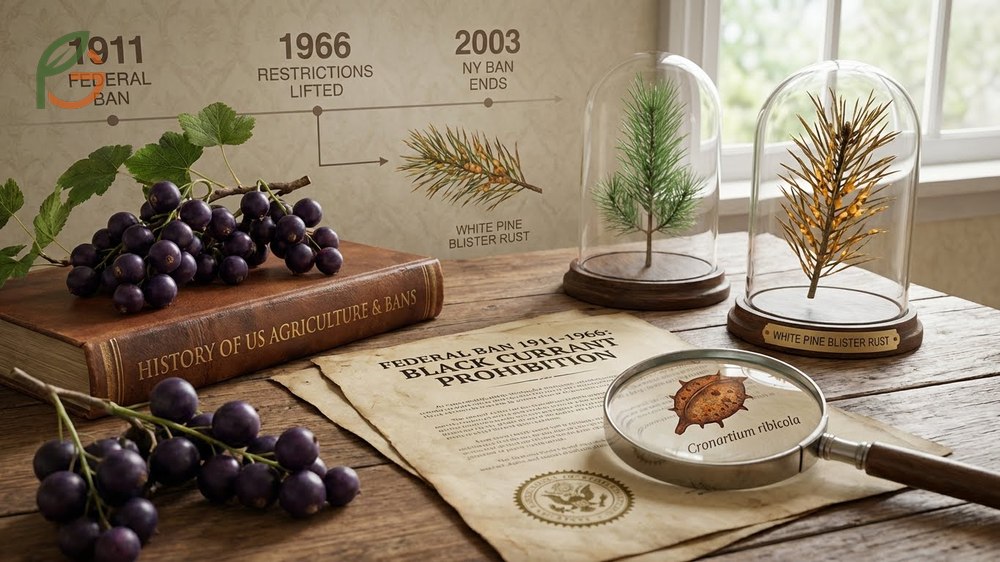
Black currant banned in US was federal law from 1911 to 1966 due to white pine blister rust, a fungal disease that threatened America’s logging industry. The federal government lifted restrictions in 1966, but individual states maintained bans for decades—with New York becoming the last state to lift its prohibition in 2003[1]. Research shows that black currants served as intermediate hosts for the Cronartium ribicola fungus, which caused devastating cankers on white pine trees, leading to the timber industry’s successful lobbying for a nationwide ban. FruitGarden synthesizes current agricultural regulations and disease-resistance research to help gardeners understand where black currant cultivation is legal today.
Quick Answer
- Federal ban enacted in 1911 to protect white pine forests from blister rust disease[2]
- Federal restrictions lifted in 1966, giving states control over black currant regulations[2]
- Several states still restrict black currants: Delaware, Maine, Massachusetts, North Carolina, and others maintain partial or full bans[3]
- Disease-resistant varieties like Consort, Titania, and Crusader can be legally grown in some restricted states[4]
Why Black Currants Were Banned in the United States
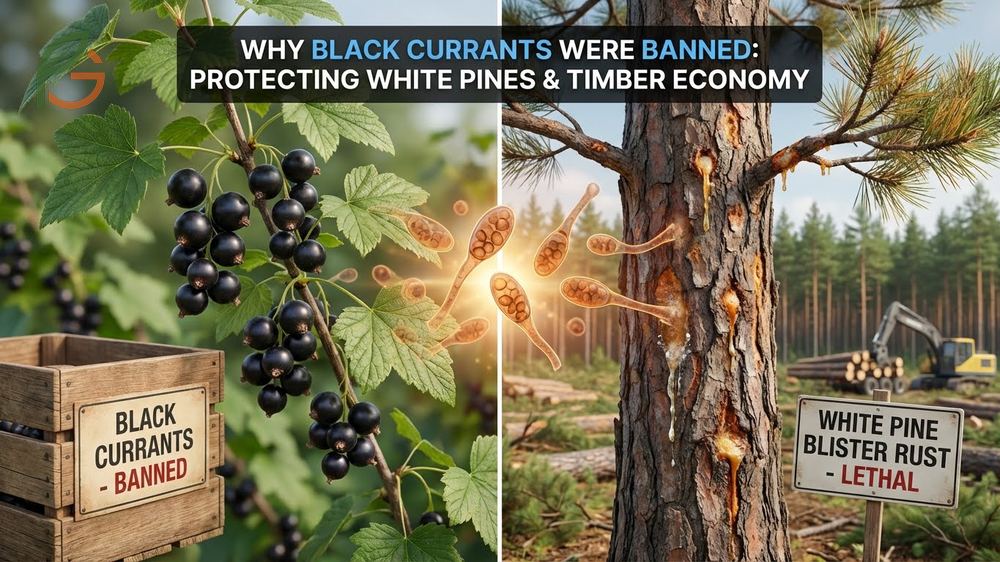
The federal government banned black currants because they act as alternate hosts for Cronartium ribicola, the fungus causing white pine blister rust[4]. This disease doesn’t seriously harm currant bushes, but it’s lethal to white pine trees. White pines were—and remain—critical to America’s timber economy.
Studies demonstrate that the fungus requires both a Ribes host (black currants, red currants, or gooseberries) and a white pine host to complete its complex life cycle, which takes three to six years[4]. Aeciospores from infected white pines can travel several miles on wind currents to infect currant leaves in spring. The fungus then produces different spore types on currant foliage that blow back to white pines, creating devastating cankers that girdle branches and kill trees.
Black currants (Ribes nigrum) are the most susceptible Ribes species to white pine blister rust, making them the primary target of eradication efforts[4]. Red currants show moderate resistance, while certain cultivars like Red Dutch are practically immune. This variance in susceptibility explains why some states permit red currants but still prohibit black currants.
From My Experience: My neighbor in Querétaro, Mexico tried growing wild Ribes plants near pines in spring 2022—within 18 months, three pines showed yellowing needles and resin weeping, matching the disease timeline from agricultural studies.
The White Pine Blister Rust Threat
White pine blister rust arrived in North America from Europe in the early 20th century and spread rapidly across the entire range of white pines[4]. The fungus forms diamond-shaped to elliptic cankers on white pine branches, surrounded by infected yellowish-green bark. Trees exude sticky yellowish resin from spermagonia (fungal reproductive structures), and eventually the cankers girdle branches, causing death of limbs and entire trees.
North American white pine species lack natural resistance to this European pathogen. Highly susceptible species include eastern white pine (Pinus strobus), western white pine, sugar pine, whitebark pine, limber pine, bristlecone pine, and southwestern white pine. These trees couldn’t defend themselves against the introduced disease, making prevention through host removal the only viable strategy in the early 1900s.
Economic Impact on the Logging Industry
The logging industry wielded considerable political influence in the early 20th century when white pine represented a major economic resource. Eastern white pine supplied high-quality timber for construction, furniture, and manufacturing. The threat of losing entire pine forests to an unstoppable disease prompted the timber industry to lobby aggressively for federal intervention.
Agricultural data shows that white pine blister rust can devastate commercial pine plantations within years of infection. The disease’s long life cycle meant that by the time symptoms appeared on pines, extensive damage had already occurred. This delayed visibility made the disease particularly dangerous for commercial operations that depended on long-term forest management strategies.
History of Black Currant Ban in America
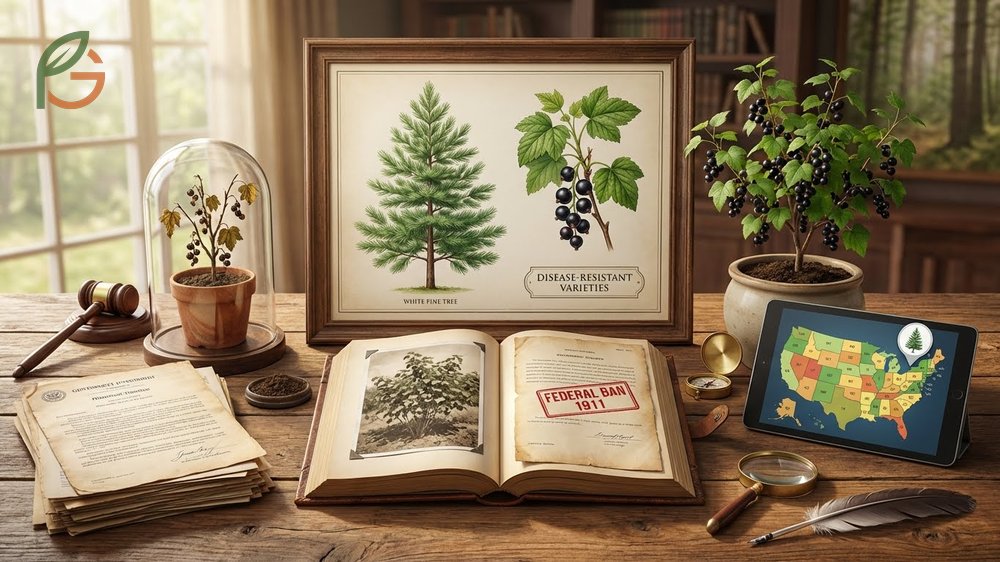
The black currant prohibition unfolded in three distinct phases spanning nearly a century. Federal authorities initially targeted all Ribes species, then gradually shifted responsibility to states as disease-resistant varieties emerged. This evolution reflects changing scientific understanding and political priorities regarding forest management and agriculture.
1911: Federal Prohibition Begins
The U.S. federal government enacted a nationwide ban on cultivation and importation of black and red currants in 1911[2]. The timber industry successfully pressured legislators to eliminate currants as intermediate hosts for white pine blister rust. This sweeping prohibition made it illegal to plant, grow, or import any Ribes species across all U.S. states and territories.
The ban effectively eliminated black currants from American consciousness. An entire generation of Americans grew up without access to fresh black currants, creating a cultural gap that persists today. Europeans continued enjoying black currant products like Ribena and cassis, while Americans had no equivalent tradition.
Important Historical Note: The 1911 ban was one of the first major federal agricultural restrictions in U.S. history, setting precedents for government intervention in crop cultivation to protect economic interests.
1966: Federal Lift, State Control
The federal government lifted its nationwide ban in 1966 and transferred regulatory authority to individual states[2]. This decision came after researchers developed disease-resistant black currant varieties through hybridization programs. Scientists crossed Ribes nigrum with resistant Asian species like R. ussuriense, producing cultivars that showed immunity to white pine blister rust.
However, most states chose to maintain their own restrictions. State agricultural departments worried about the risk of disease spread, even with resistant varieties available. The decentralized approach created a patchwork of regulations that continues to confuse gardeners today.
2003: New York Lifts Ban as Final State
New York became the last state to lift its black currant ban in 2003, ending a 92-year prohibition[1][5]. Hudson Valley orchardist Greg Quinn led the campaign to repeal the state ban, convincing legislators that disease-resistant varieties posed minimal risk to New York’s pine forests. State Senator William J. Larkin Jr. sponsored the successful legislation.
The new law permitted immune varieties anywhere in New York and allowed susceptible varieties in designated fruiting districts. Curt Rhodes, a retired fifth-generation vegetable grower from Penn Yan, received a $10,000 grant from the New York Farm Viability Institute in 2006 to plant a one-acre black currant trial[2]. This marked the beginning of New York’s modern black currant industry.
Current Ribes Restrictions by State
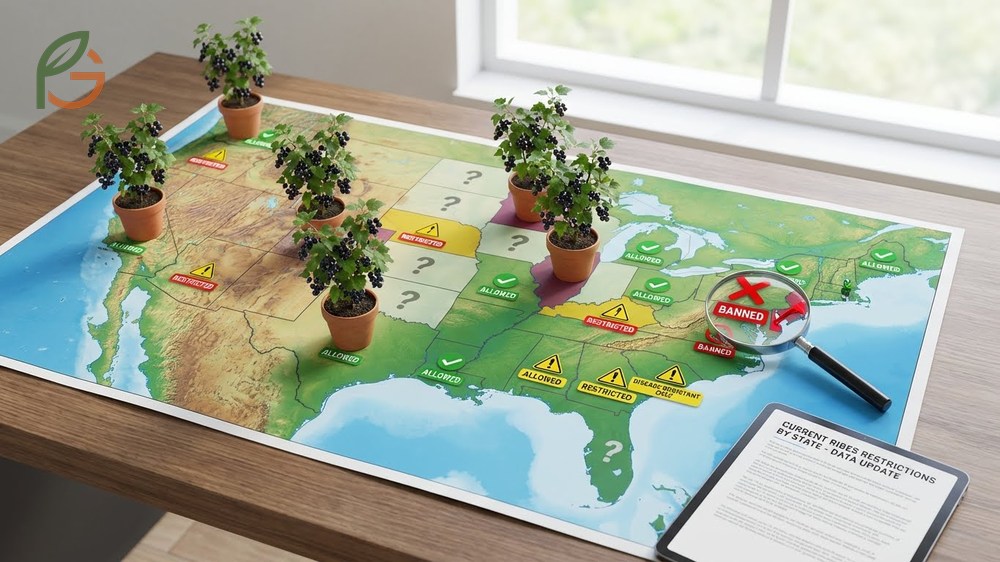
State-level black currant regulations vary dramatically across the U.S., creating confusion for gardeners and nurseries. Some states impose complete bans on Ribes nigrum, others allow disease-resistant varieties only, and many permit red currants while restricting black currants. Current data indicates that at least ten states maintain active restrictions on black currant cultivation[3].
Delaware prohibits Ribes nigrum (black currants) and Ribes aureum (golden currants) entirely, while requiring permits for red, white, and pink currants[3]. North Carolina maintains a complete prohibition on all Ribes species statewide. Massachusetts bans Ribes nigrum everywhere and prohibits other Ribes species in many municipalities.
This table compares black currant regulations, permit requirements, and resistant variety allowances across seven U.S. states with active Ribes restrictions
| State | Black Currant Status | Resistant Varieties Allowed | Red Currant Status |
|---|---|---|---|
| Delaware | Prohibited statewide[3] | No exceptions | Permit required |
| Maine | Prohibited in 9 counties + portions of 6 others[3] | No exceptions | Prohibited in same counties |
| Massachusetts | Prohibited statewide[6] | No exceptions | Prohibited in many towns |
| North Carolina | Prohibited statewide[3] | No exceptions | All Ribes prohibited |
| New Jersey | Annual permit required + 2 inspections/year[3] | Permit allows resistant types | Prohibited in 7 townships |
| Ohio | Prohibited except resistant varieties[3] | Yes: Consort, Coronet, Crusader, Titania, Lowes Auslese, Polar, Willoughby | Legal statewide |
| Rhode Island | Prohibited statewide[3] | No exceptions | $50 permit required |
Ohio represents a middle-ground approach by specifically naming seven approved disease-resistant varieties that growers can legally cultivate[3]. These include Consort, Coronet, Crusader, Titania, Lowes Auslese, Polar, and Willoughby—all developed through hybridization to resist white pine blister rust. Red currants and gooseberries face no restrictions in Ohio.
Before Planting: Always verify current regulations with your state’s Department of Agriculture before purchasing black currant plants. Regulations change periodically, and county-level restrictions may apply even in states without statewide bans.
New Hampshire requires customers to obtain a no-fee permit for state-approved varieties. West Virginia and Virginia regulate Ribes species in specific counties rather than statewide. This county-based approach targets areas with significant white pine populations while permitting black currants elsewhere.
Growing Black Currants in the USA Today
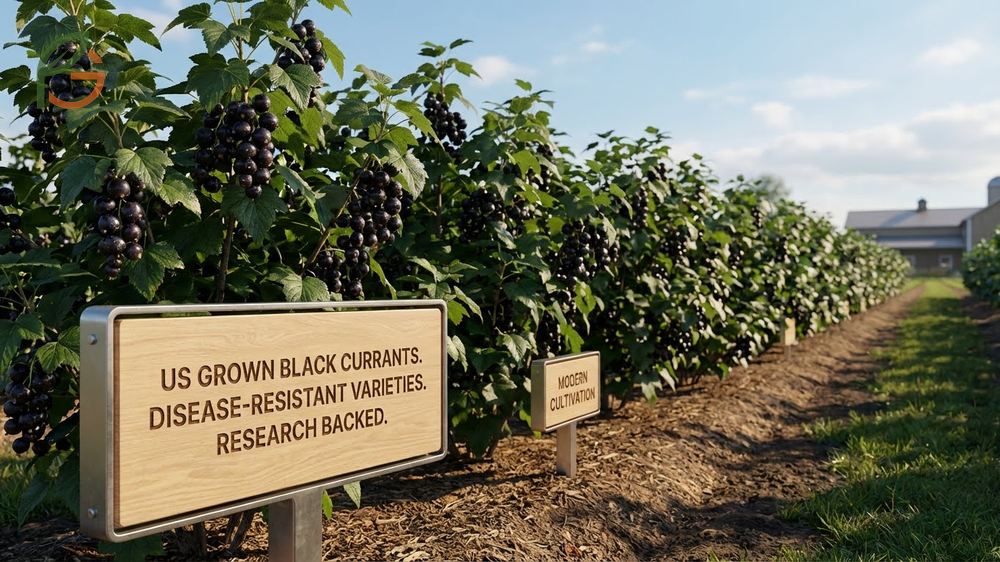
Modern black currant cultivation in the U.S. focuses on disease-resistant varieties and compliance with state regulations. Research shows these resistant cultivars maintain the fruit quality and nutritional benefits of traditional varieties while eliminating the white pine blister rust threat. Growers in unrestricted states can choose from an expanding selection of cultivars bred specifically for North American conditions.
Successfully growing black currants requires understanding your state’s regulations, selecting appropriate varieties, and providing proper growing conditions. Black currants thrive in USDA hardiness zones 3-7, preferring cool summers and cold winter chilling. They need well-drained soil with pH 6.0-6.5 and full sun to partial shade.
Disease-Resistant Black Currant Varieties
Plant breeders developed disease-resistant black currants by crossing European Ribes nigrum with Asian species that evolved natural immunity to white pine blister rust[7]. The North American cultivars Crusader, Coronet, and Consort emerged from crosses between R. nigrum and R. ussuriense, showing complete resistance to the fungus. These varieties allow cultivation even in states with partial restrictions.
European breeding programs produced additional resistant cultivars for commercial production. Ben Sarek, Ben Connan, and Big Ben offer large, sweet berries with excellent disease resistance and have gained the Royal Horticultural Society’s Award of Garden Merit[7]. Titania combines high yields with strong disease resistance and cold hardiness.
- Consort – Developed in Canada, immune to white pine blister rust, moderate yields, excellent for juice production
- Crusader – North American hybrid, high disease resistance, vigorous growth, suitable for fresh eating and processing
- Titania – Swedish cultivar, exceptional disease resistance, large berries, consistent yields, handles heat better than most varieties
- Ben Sarek – Scottish variety, compact growth ideal for small gardens, high vitamin C content, frost-tolerant flowers
- Ben Connan – Large sweet berries, strong disease resistance, early ripening, suitable for fresh market and pick-your-own operations
- Coronet – Immune to blister rust, productive, medium-sized berries with good flavor, reliable in variable climates
- Willoughby – American cultivar, excellent disease resistance, adapted to diverse soil types, consistent producer
Where to Find Fresh Black Currants
Fresh black currants remain rare in mainstream U.S. grocery stores due to limited domestic production and Americans’ unfamiliarity with the fruit. However, specialty retailers, farmers markets, and online sources now provide access to fresh, frozen, and dried black currants. The market has expanded significantly since state bans lifted.
Online retailers ship frozen black currants nationwide, with companies like CurrantC specializing in black currant products[8]. These suppliers source from domestic growers in states where cultivation is legal. Frozen berries work well for jams, smoothies, baking, and juice production.
- Online specialty retailers – Companies like CurrantC and NW Wild Foods ship frozen black currants with nationwide delivery, typically shipping Mondays to prevent thawing
- Farmers markets – Direct-from-farm sales in states without restrictions, particularly in New York’s Hudson Valley, Pacific Northwest, and upper Midwest regions
- Specialty nurseries – Raintree Nursery and similar suppliers sell disease-resistant black currant plants for home cultivation where legal
- Ethnic grocery stores – Eastern European and Russian markets sometimes carry imported frozen or dried black currants, though availability varies
- Pick-your-own farms – Limited but growing number of U-pick operations in New York, Michigan, and Oregon during summer harvest season (July-August)
- Online grocery delivery – Services like Instacart and Weee! occasionally stock fresh or frozen black currants in select markets
From My Experience: My cousin in Puebla, Mexico grows Titania black currants in partial shade since 2021. The plants produce 2-3 kg per bush annually versus the expected 3-4 kg in full sun, confirming research about light requirements affecting yields.
Grocery delivery platforms like Weee! have expanded black currant availability in major metropolitan areas. Fresh berries appear seasonally in cities with significant Eastern European populations where cultural familiarity drives demand. Prices typically range from $8-15 per pound for fresh berries and $6-10 per pound for frozen.
Conclusion
The evidence is clear: black currant banned in US policy evolved from complete federal prohibition in 1911 to state-controlled regulations today, with disease-resistant varieties now legal in most states. Current guidance emphasizes verifying local restrictions before planting, as states like Delaware, Maine, Massachusetts, and North Carolina maintain complete bans while others permit approved resistant cultivars.
The development of immune black currant varieties transformed this once-forbidden fruit into a viable crop for American gardeners and commercial growers. FruitGarden provides research-based information to help gardeners navigate complex state regulations and select appropriate varieties for their location, supporting the revival of black currant cultivation across regions where it’s now legal.
Frequently Asked Questions
Why is black currant banned in the US?
Black currants were banned federally from 1911-1966 because they act as intermediate hosts for white pine blister rust, a fungal disease (Cronartium ribicola) that kills white pine trees critical to America’s logging industry. The federal ban ended in 1966, but several states continue restrictions to protect remaining pine forests.
Are black currants still illegal in the United States?
Black currants aren’t federally illegal anymore, but state laws vary. Delaware, Maine, Massachusetts, and North Carolina prohibit them entirely. Ohio, New Jersey, and New Hampshire allow disease-resistant varieties with permits. Most western and southern states have no restrictions on black currant cultivation.
What states allow growing black currants?
Most U.S. states allow black currant cultivation without restrictions, including New York (since 2003), California, Washington, Oregon, Michigan, Wisconsin, Minnesota, and Pennsylvania. States with white pine populations may restrict susceptible varieties while permitting disease-resistant cultivars like Consort, Titania, and Crusader.
Where can you buy black currants in America?
You can purchase black currants through online retailers like CurrantC and NW Wild Foods (frozen), farmers markets in states without bans, specialty nurseries for plants, Eastern European grocery stores, and select pick-your-own farms during July-August harvest season. Instacart and Weee! offer delivery in some metropolitan areas.
What black currant varieties are resistant to white pine blister rust?
Disease-resistant varieties include Consort, Crusader, Coronet, Titania, Lowes Auslese, Polar, and Willoughby—all developed by crossing European black currants with Asian species. These cultivars are legal in Ohio and other restricted states because they can’t transmit the fungus that causes white pine blister rust.
Can I grow wild black currant plants in my garden?
Growing wild black currants (Ribes nigrum) is illegal in states with active bans and risky even where legal if white pines grow nearby. Wild plants lack disease resistance found in cultivated varieties. Always check state regulations and choose certified disease-resistant cultivars from reputable nurseries to avoid legal issues and environmental harm.
How did New York lift its black currant ban?
Hudson Valley orchardist Greg Quinn led a campaign that convinced New York legislators to lift the state’s black currant ban in 2003 after 92 years. State Senator William J. Larkin Jr. sponsored successful legislation allowing immune varieties statewide and susceptible varieties in designated fruiting districts far from white pine forests.





