
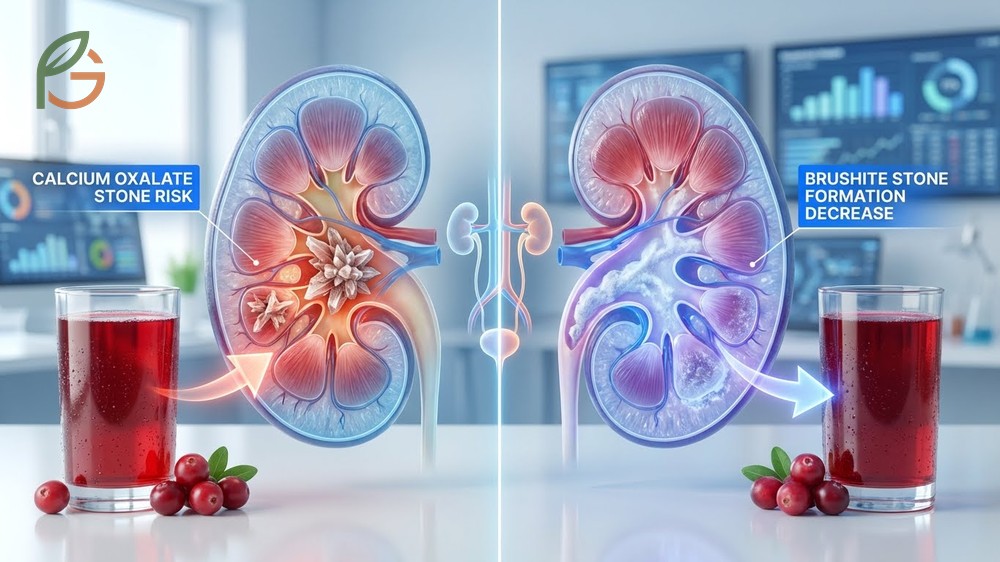
Is cranberry juice good for your kidneys? The answer isn’t straightforward—research shows it can help prevent urinary tract infections, but its effect on kidney stones depends on which type you’re prone to developing. Studies demonstrate that cranberry juice may increase calcium oxalate stone risk while decreasing brushite stone formation[1]. FruitGarden synthesizes current kidney health research to help you make informed decisions about incorporating cranberry products into your diet.
Quick Answer
- Cranberry juice contains 24mg vitamin C per 8-ounce serving and may reduce UTI recurrence risk[2]
- It increases calcium oxalate stone formation risk by 18% but decreases brushite stone risk[1]
- Contains 195mg potassium per cup, making it suitable for low-potassium kidney diets[3]
- Safe intake for kidney health: 8 ounces daily of unsweetened juice, but consult your doctor if you have existing kidney stones[2]
Is Cranberry Juice Good for Your Kidneys
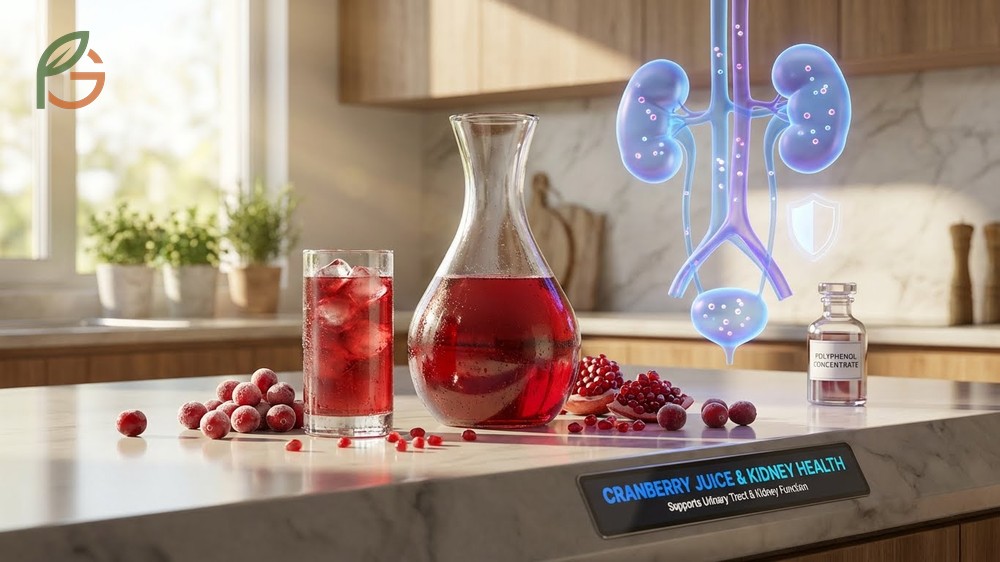
Research shows that cranberry juice offers specific benefits for kidney health, particularly through its antioxidant compounds and urinary tract protection. Current evidence suggests it’s effective at preventing recurrent UTIs, which can protect kidney function over time[4]. Studies involving people with chronic kidney disease demonstrate that moderate cranberry consumption doesn’t harm kidney function when consumed appropriately[5].
The juice contains polyphenols and proanthocyanidins (PACs) that provide anti-inflammatory effects. These compounds help reduce oxidative stress in kidney tissues, which is particularly important for people with early-stage kidney disease. What often gets overlooked is that timing and quantity matter more than simply adding cranberry juice to your daily routine.
Clinical trials reveal that cranberry products reduced UTI occurrence by 30% in women with recurrent infections[6]. This matters for kidney health because untreated UTIs can ascend to the kidneys and cause pyelonephritis, potentially leading to permanent kidney damage. The FDA has issued a qualified health claim stating that 8 ounces daily may help reduce recurrent UTI risk in healthy women[2].
Antioxidant Properties
Cranberry juice delivers 47% of the daily value for vitamin C per 100ml serving[7]. This vitamin acts as a powerful antioxidant that helps neutralize free radicals in kidney cells. The polyphenols in cranberries also support healthy blood pressure and cholesterol levels, both critical for maintaining optimal kidney function.
Evidence indicates that these antioxidants may slow the progression of chronic kidney disease by reducing inflammation. Most people don’t realize that oxidative stress accelerates kidney damage in conditions like diabetes and hypertension. Cranberry’s bioactive compounds target this mechanism directly.
UTI Prevention Mechanism
Cranberry juice prevents bacteria from adhering to the urinary tract lining. The PACs in cranberries alter the surface properties of E. coli bacteria, making it harder for them to stick to bladder and urethral walls. This mechanical action provides protection without antibiotics.
Research demonstrates this effect works best with consistent daily consumption rather than drinking cranberry juice only when symptoms appear. The protective compounds need to maintain steady concentrations in urine to block bacterial attachment effectively.
- Reduces recurrent UTI risk by approximately 30% in susceptible women
- Provides anti-inflammatory polyphenols that protect kidney tissues
- Contains minimal sodium (2mg per 100ml), suitable for low-sodium kidney diets
- Delivers vitamin C without excessive potassium (195mg per cup vs. 4,700mg daily requirement)
- May help lower blood pressure, reducing strain on kidney filtration systems
Important Note: If you’re taking warfarin or blood thinners, consult your doctor before consuming cranberry juice regularly. Case reports suggest potential interactions that can affect blood clotting, though systematic reviews show mixed evidence[8].
Cranberry Juice for Kidney Stones
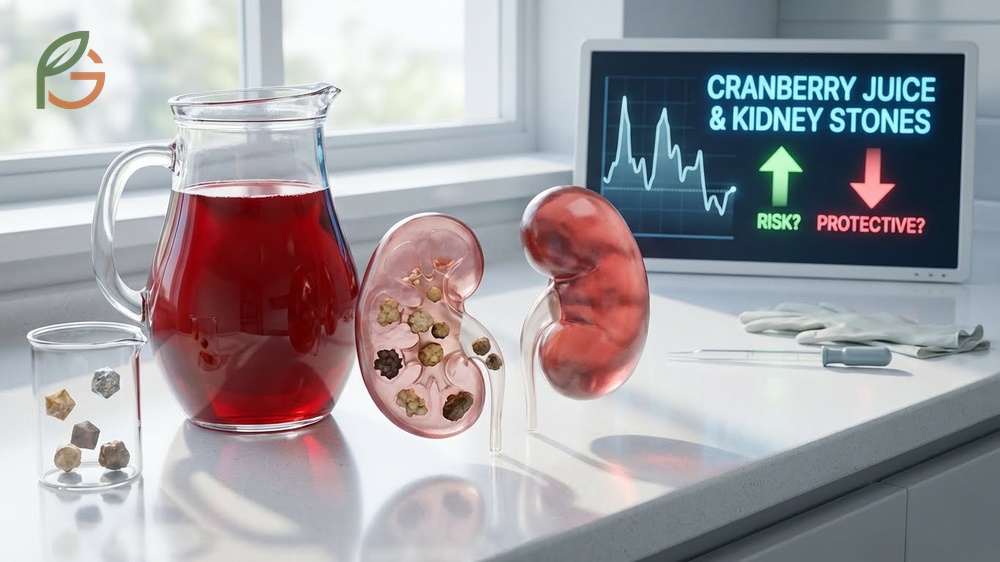
The relationship between cranberry juice and kidney stones is complex and depends entirely on which type of stones you develop. Studies produce conflicting results—some show cranberry juice increases certain stone risks while others demonstrate protective effects. This contradiction exists because different stone types form under different urinary conditions.
A controlled trial involving 24 participants found that consuming 1 liter of cranberry juice daily increased urinary calcium by 15% and oxalate by 11%[1]. This raised calcium oxalate stone formation risk by 18%. However, the same study showed cranberry juice lowered urinary pH, which decreased brushite stone risk significantly.
The reason for these opposing effects lies in urinary chemistry. Cranberry juice acidifies urine, creating an environment hostile to certain stone types while promoting others. Current data indicates you should match cranberry consumption to your specific stone composition, not follow generic advice.
Calcium Oxalate Stones
Calcium oxalate stones are the most common type, accounting for about 80% of all kidney stones. Evidence suggests cranberry juice may increase your risk if you’re prone to these stones. The juice raises urinary oxalate levels and increases calcium excretion, creating ideal conditions for crystal formation[9].
Research contradicts this in some cases—one study from South Africa found cranberry juice actually decreased oxalate excretion and lowered calcium oxalate supersaturation[10]. This highlights why individual responses vary and medical guidance is essential for stone formers.
Warning for Stone Formers: If you’ve had calcium oxalate stones, avoid drinking more than 4 ounces of cranberry juice daily without medical supervision. The acidic nature and oxalate content can create conditions that promote crystal formation in susceptible individuals.
Uric Acid and Brushite Stones
Cranberry juice benefits people prone to uric acid and brushite stones. It lowers urinary pH from approximately 5.97 to 5.67[1]. This increased acidity prevents brushite (calcium phosphate) stones from forming since they require alkaline conditions.
The juice also decreased serum uric acid levels in clinical trials, potentially reducing uric acid stone risk through different pathways. This creates a beneficial scenario for certain stone formers while increasing risk for others—demonstrating why blanket recommendations about cranberry juice and kidney stones mislead people.
This table compares how cranberry juice affects risk levels for four different kidney stone types including calcium oxalate, uric acid, brushite, and struvite stones
| Stone Type | Effect | Risk Change | Urinary pH Impact |
|---|---|---|---|
| Calcium Oxalate | Increases | +18% supersaturation[1] | Lower pH promotes formation |
| Uric Acid | Increases | Higher with acidic urine | Lower pH increases undissociated uric acid[1] |
| Brushite | Decreases | Reduced supersaturation | Acidic pH prevents formation[9] |
| Struvite | Decreases | Less likely in acidic urine | Requires alkaline environment[9] |
How Much Cranberry Juice Should I Drink for My Kidneys
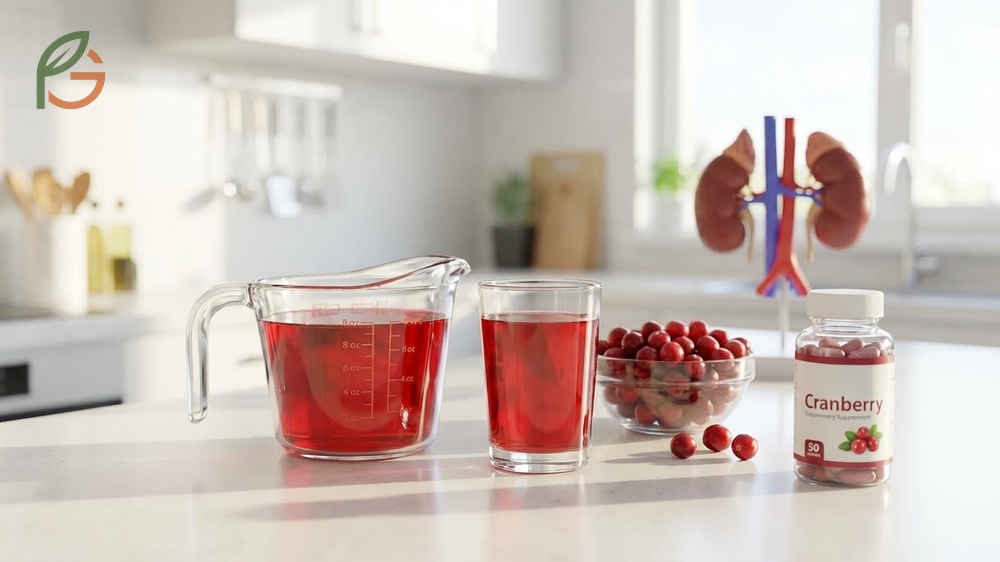
The FDA recommends 8 ounces (240ml) of cranberry juice daily for UTI prevention in healthy women[2]. This amount provides benefits without overwhelming your kidneys with excess oxalates or sugars. People with chronic kidney disease should stick to the lower end—about 4 to 8 ounces daily—after consulting their nephrologist[8].
Cranberry supplements offer an alternative with 500mg daily showing protective effects against UTIs without the sugar content found in juice[2]. This option works better for diabetics or those monitoring blood sugar levels. The concentrated form provides PACs without adding 12g of sugar per 100ml that juice contains.
Timing matters as much as quantity. Studies show that consistent daily intake works better than sporadic consumption because protective compounds need steady urinary concentrations. Most people see benefits within 2-3 weeks of regular intake.
- Healthy adults without kidney stones: 8 ounces (1 cup) unsweetened juice daily
- CKD Stage 3-4 patients: 4-6 ounces low-sugar juice with medical approval
- Calcium oxalate stone formers: Limit to 4 ounces or avoid entirely
- Brushite/struvite stone history: Up to 8 ounces may offer protective benefits
- Alternative supplement form: 500mg cranberry extract capsules daily
Choose 100% unsweetened cranberry juice rather than cranberry juice cocktails that contain added sugars. The cocktail versions typically contain only 25-30% actual cranberry juice, diluting beneficial compounds while adding unnecessary calories and sugar that can worsen kidney health over time.
Best Practice Tip: If you find unsweetened cranberry juice too tart, dilute it with water in a 1:1 ratio. This maintains the beneficial compounds while reducing acidity and sugar concentration, making it gentler on your kidneys and more palatable.
Types of Kidney Stones
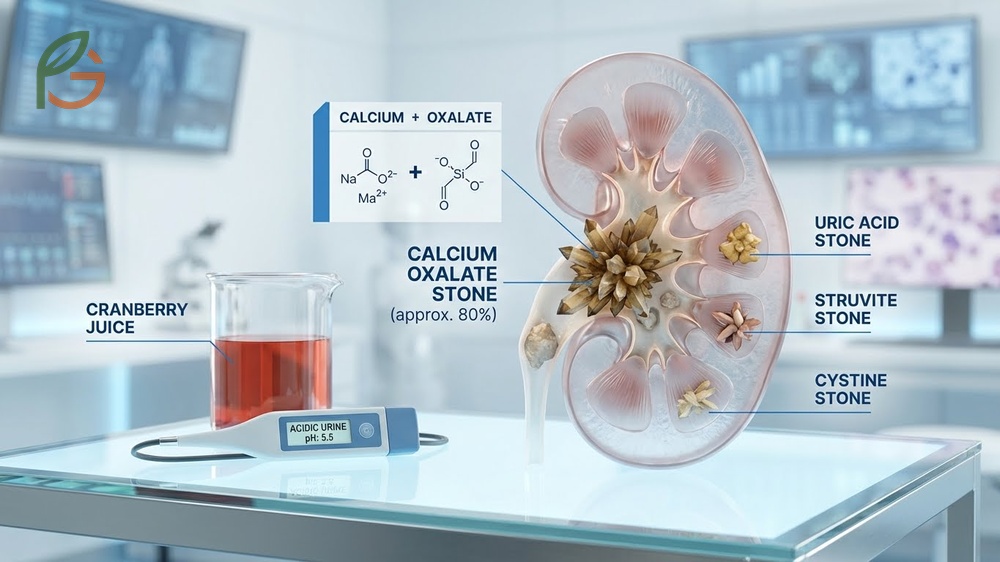
Understanding kidney stone types helps you make informed decisions about cranberry juice consumption. Each type forms under specific urinary conditions and responds differently to dietary changes. The four main categories have distinct compositions and require tailored prevention strategies.
Calcium oxalate stones represent approximately 80% of all kidney stones and form when calcium binds with oxalate in urine. These develop more readily in acidic urine conditions, which is why cranberry juice’s pH-lowering effect can increase their formation risk. Genetics, dehydration, and high-oxalate diets (spinach, nuts, chocolate) contribute to their development.
Uric acid stones account for 5-10% of cases and occur when urine becomes too acidic. People with gout or those consuming high-purine diets face elevated risk. Unlike calcium stones, these can sometimes dissolve with alkaline treatment, making cranberry juice potentially problematic since it acidifies urine.
- Calcium oxalate stones: Most common type, form in acidic to neutral pH, worsened by high oxalate intake
- Uric acid stones: Develop in acidic urine (pH below 5.5), associated with high protein diets
- Struvite stones: Caused by urinary tract infections, grow rapidly in alkaline urine
- Cystine stones: Rare genetic disorder stones, form in both acidic and alkaline conditions
- Calcium phosphate (brushite): Form in alkaline urine, often with kidney disease or metabolic disorders
Struvite stones result from bacterial infections that produce ammonia, creating alkaline urine conditions. These “infection stones” can grow quickly and become quite large. Cranberry juice may help prevent these by maintaining acidic urine that inhibits bacteria growth and prevents the alkaline environment struvite requires.
The reason stone type matters for cranberry consumption is clear—the juice’s acidifying effect helps some stone formers while harming others. You can’t know which category you fall into without proper medical testing of stone composition and 24-hour urine analysis.
Kidney Cleansing Foods
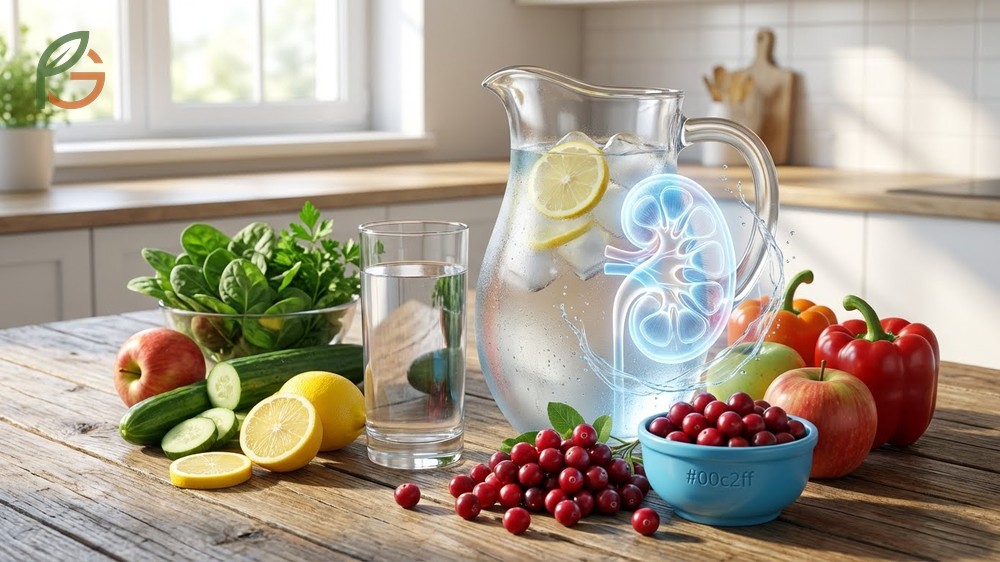
Several foods support kidney health through increased hydration, reduced inflammation, and improved filtration. Current research emphasizes that “cleansing” means supporting normal kidney function rather than detoxification—healthy kidneys already filter waste efficiently without special cleanses.
Water remains the most effective kidney-supporting beverage. Staying hydrated helps kidneys flush toxins and prevents stone formation by diluting urine concentration. Most adults need 8-12 cups daily, though individual needs vary based on activity, climate, and health status.
Lemon juice offers benefits similar to cranberry juice but with less stone risk for most people. It increases urinary citrate, which binds to calcium and prevents stone formation. Studies show that 4 ounces of lemon juice in water daily can reduce calcium stone recurrence rates.
- Water: Primary kidney cleanser, maintains optimal filtration and prevents concentrated urine
- Leafy greens (in moderation): Provide magnesium and potassium while managing oxalate intake
- Berries (blueberries, strawberries): Antioxidant-rich without high oxalate content
- Apples: High water content and fiber support overall kidney function
- Fatty fish (salmon, mackerel): Omega-3 fatty acids reduce kidney inflammation
- Garlic: Contains allicin with anti-inflammatory properties for kidney tissues
- Cauliflower: Low-potassium vegetable suitable for CKD diets with good vitamin C content
Foods to limit for kidney health include high-sodium processed foods, excessive protein (especially red meat), and high-oxalate items like spinach and rhubarb if you’re prone to calcium oxalate stones. Balance matters more than elimination—restrictive diets can create nutritional deficiencies that harm overall health.
Hydration Strategy: Drink enough water so your urine appears light yellow throughout the day. Dark yellow or amber urine signals dehydration, which concentrates stone-forming minerals and stresses kidney filtration systems. Consistent hydration prevents approximately 50% of recurrent kidney stones.
Conclusion
The evidence is clear: cranberry juice offers specific kidney health benefits but isn’t universally beneficial for all stone types. It effectively prevents UTIs that could damage kidneys and provides valuable antioxidants, making it helpful for general kidney health in moderate amounts. However, if you’re prone to calcium oxalate or uric acid stones, you’ll need to limit or avoid it entirely.
Current guidance emphasizes personalized approaches—work with your healthcare provider to determine if 8 ounces daily suits your specific kidney health profile. FruitGarden encourages readers to prioritize consistent hydration, maintain balanced diets, and seek professional medical advice before making significant dietary changes for kidney conditions.
Medical Disclaimer
Important Medical Disclaimer: This content is for informational and educational purposes only. It is not intended as a substitute for professional medical advice, diagnosis, or treatment. Always consult a qualified healthcare professional before making any changes to your diet, medication, or health routine, especially if you have kidney disease, kidney stones, diabetes, or other medical conditions. Individual responses to cranberry juice vary based on kidney function, stone type, medications, and overall health status. Your doctor can perform necessary tests to determine the safest approach for your specific situation.
Frequently Asked Questions
Does cranberry juice help with kidney infection?
Cranberry juice helps prevent urinary tract infections that can lead to kidney infections, but it doesn’t treat existing kidney infections. If you have a kidney infection (pyelonephritis) with symptoms like fever, back pain, or nausea, you need antibiotics—cranberry juice can’t substitute for medical treatment. It works as a preventive measure by stopping bacteria from adhering to urinary tract walls, reducing infection risk by approximately 30% in susceptible individuals.
Can cranberry juice cause kidney stones?
Yes, cranberry juice can increase calcium oxalate and uric acid kidney stone risk by raising urinary oxalate levels and lowering pH. Studies show it increases calcium oxalate supersaturation by 18% when consumed in large amounts (1 liter daily). However, it decreases brushite and struvite stone risk due to its acidifying effects. Whether it causes stones depends on your individual stone type, genetics, and overall diet—medical testing can identify your specific risk profile.
Is cranberry juice good for chronic kidney disease patients?
Research shows cranberry juice is generally safe for CKD Stage 3-4 patients in moderation (4-6 ounces daily) due to its low potassium content of 195mg per cup. Clinical studies found no significant evidence that cranberry products harm kidney function in early-stage CKD patients. However, you must consider medication interactions (especially warfarin), fluid restrictions, and blood sugar management. Always consult your nephrologist before adding cranberry juice to your CKD diet plan.
What’s better for kidneys: cranberry juice or cranberry pills?
Cranberry supplements (500mg daily) provide benefits without the sugar content found in juice, making them preferable for diabetics and those watching calorie intake. The FDA recognizes both forms for UTI prevention, though evidence is slightly stronger for supplements. Pills deliver concentrated proanthocyanidins without affecting urinary pH as dramatically as juice, potentially reducing stone formation risks. Choose supplements if you’re concerned about sugar intake or want standardized PAC dosing.
How long does it take for cranberry juice to help your kidneys?
Studies show protective effects against UTIs appear within 2-3 weeks of consistent daily consumption. The proanthocyanidins need to reach steady concentrations in urine to prevent bacterial adhesion effectively. Benefits for overall kidney health through antioxidant and anti-inflammatory effects develop gradually over several months of regular intake. Sporadic consumption doesn’t provide the same protection—consistency matters more than occasional high doses.
Is cranberry juice good for your liver and kidneys together?
Evidence suggests cranberry juice’s antioxidant properties may benefit both organs by reducing oxidative stress and inflammation. The polyphenols support healthy cholesterol and blood pressure levels, which protect both liver and kidney function. However, research focuses primarily on urinary and kidney benefits rather than liver-specific effects. No studies demonstrate significant liver cleansing or detoxification properties—both organs filter waste naturally without requiring special “cleansing” beverages.
Should I drink cranberry juice if I have kidney pain?
No, don’t rely on cranberry juice if you’re experiencing kidney pain—seek immediate medical attention instead. Kidney pain can signal serious conditions like stones, infection, or obstruction that require professional diagnosis and treatment. Cranberry juice works as prevention, not treatment for active kidney problems. If you have confirmed kidney stones causing pain, cranberry juice might worsen calcium oxalate stones by increasing urinary oxalate levels. Always get medical evaluation for kidney pain before making dietary changes.





