
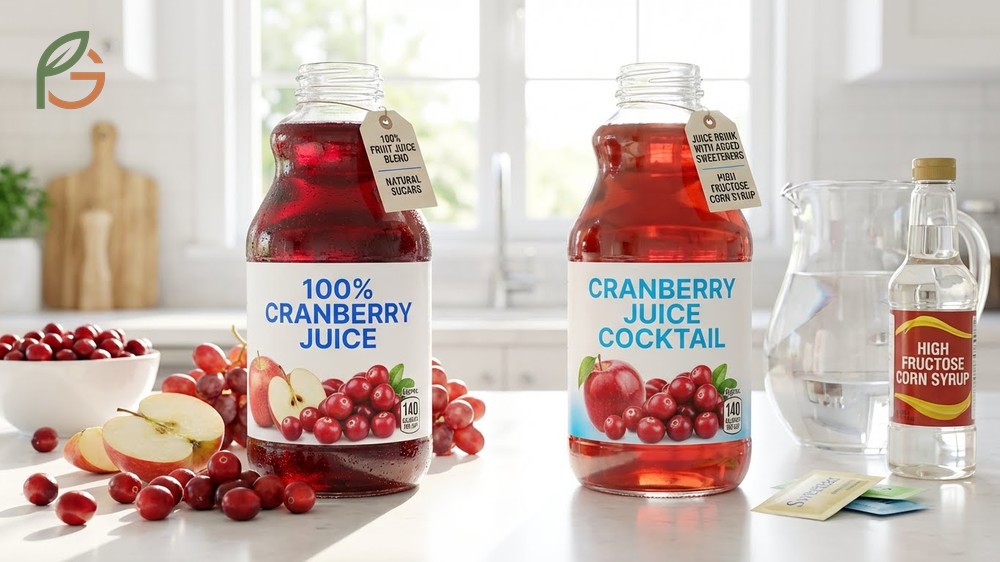
Cranberry juice vs cranberry juice cocktail—the main difference lies in ingredients and processing. Pure cranberry juice contains 100% fruit juice (often blended with apple or grape), while cranberry juice cocktails mix cranberry juice with water, high fructose corn syrup, and artificial sweeteners[1]. Both contain similar calories—around 137-140 per cup—but differ in nutrient density and sugar sources[2]. Research shows cranberry products can reduce urinary tract infections by 30%, though effectiveness varies by product type[3]. FruitGarden synthesizes current nutritional data to help you make informed choices about cranberry beverages.
Quick Answer
- Pure cranberry juice has 36g natural sugars per cup from fruit blends[4]
- Cranberry cocktails contain 12-14g added sugars from high fructose corn syrup[5]
- 100% juice provides 90-100mg vitamin C per serving versus 34mg in cocktails[6]
- Both deliver similar calories (137-141 per cup) but different nutritional profiles
Cranberry Juice vs Cranberry Juice Cocktail
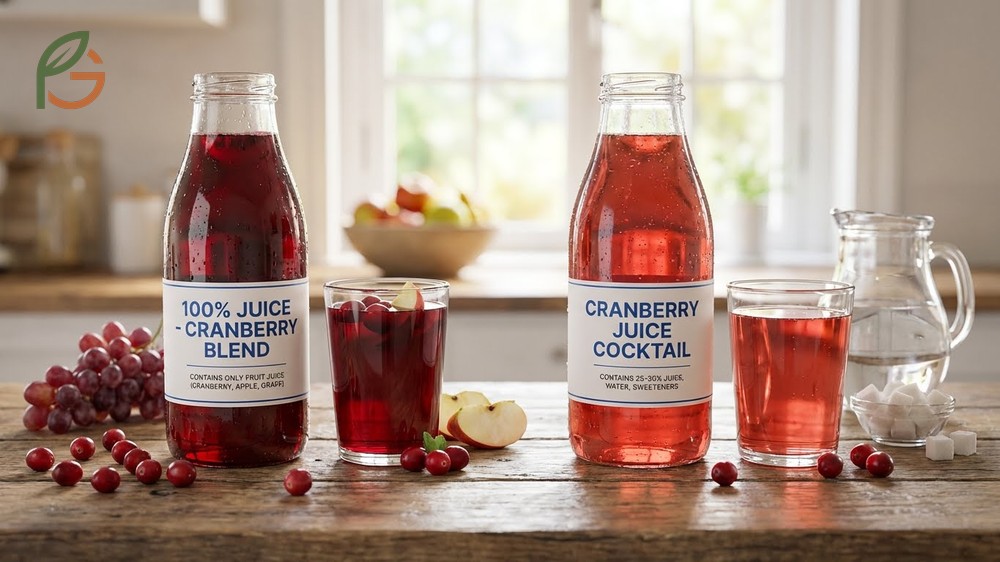
The distinction between these beverages starts with labeling regulations. Products marked “100% juice” must contain only fruit juice, though not necessarily 100% cranberry[7]. Most blend cranberry with sweeter fruits like apple or grape to balance the natural tartness.
Cranberry juice cocktails don’t meet the 100% juice threshold. They typically contain 25-30% real cranberry juice mixed with water and sweeteners. Current data shows cocktails average 52 calories per 100 grams compared to pure juice’s more concentrated nutrient profile[6].
The processing method affects final products differently. Pure juice undergoes pasteurization while maintaining fruit integrity. Cocktails involve dilution, sweetener addition, and flavor standardization to create consistent taste across batches.
What Is 100% Cranberry Juice
This category includes beverages made entirely from pressed fruit juices. Manufacturers blend cranberry with apple, grape, or cherry juice to reach drinkable sweetness levels. The tart cranberry requires this approach—unsweetened pure cranberry juice tastes extremely sour and acidic.
These products contain no added sugar, water, or artificial ingredients. All carbohydrates come from naturally occurring fruit sugars. One cup delivers 29g total carbohydrates with 0g added sugars[4].
Important Note: “100% juice” doesn’t mean 100% cranberry. Check ingredient lists—most contain 20-30% cranberry mixed with other fruits to achieve palatability without adding refined sweeteners.
What Is Cranberry Juice Cocktail
Cocktails represent the most common cranberry beverage in U.S. grocery stores. They mix cranberry juice concentrate with filtered water, high fructose corn syrup, and citric acid[5]. Some brands add natural flavors and preservatives to extend shelf life.
These beverages prioritize affordability and consistent taste. The added sweeteners mask cranberry’s natural bitterness, making cocktails more palatable for most consumers. Light versions use artificial sweeteners like sucralose and acesulfame potassium to reduce calories[1].
The “cocktail” designation signals the presence of non-juice ingredients. Federal regulations require this labeling when beverages contain less than 100% juice content.
Difference Between Cranberry Juice and Cranberry Juice Cocktail
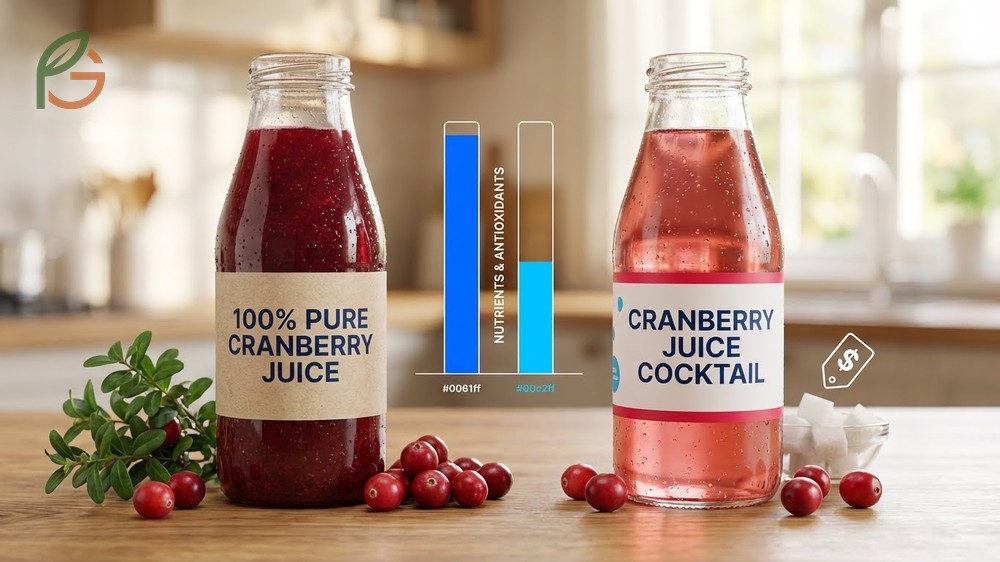
The primary distinction centers on ingredient purity and nutrient density. Pure juice delivers more vitamins and antioxidants per serving. Cocktails provide lower costs and sweeter flavor profiles at the expense of nutritional value.
Studies demonstrate that 100% juice shows stronger health effects than cocktails. Research on urinary tract infection prevention found cranberry juice more effective than capsules or tablets, likely due to increased fluid intake and compound bioavailability[3].
Ingredient Composition
Pure cranberry juice blends contain only fruit juices from cranberries, apples, grapes, and sometimes white grape concentrate. No water, sugar, or artificial additives appear on ingredient lists. The sugar content comes entirely from natural fruit sources.
Cocktail ingredients read differently. They start with filtered water as the primary component, followed by high fructose corn syrup or cane sugar[5]. Cranberry juice concentrate ranks third or fourth, contributing only 25-27% of total volume.
- Pure juice: Cranberry concentrate, apple juice, grape juice, natural flavors, ascorbic acid (vitamin C)
- Cocktails: Filtered water, high fructose corn syrup, cranberry concentrate, citric acid, natural flavors
- Light cocktails: Water, cranberry juice, artificial sweeteners (sucralose, acesulfame-K), preservatives
- Organic options: Organic cranberry juice, organic cane sugar, organic apple juice (no synthetic additives)
- Simply branded products: Cranberry juice, water, cane sugar (avoiding high fructose corn syrup)
Taste and Tartness Levels
Pure cranberry beverages taste noticeably tart even with fruit juice blending. The natural cranberry acidity creates a puckering sensation that some find off-putting. Most people describe the flavor as intensely fruity with lingering tartness.
Cocktails taste significantly sweeter and milder. The added sugars overwhelm cranberry’s natural tartness, producing a flavor similar to fruit punch. This makes cocktails more appealing to children and those who dislike sour beverages.
Sugar Content Cocktail vs 100% Juice
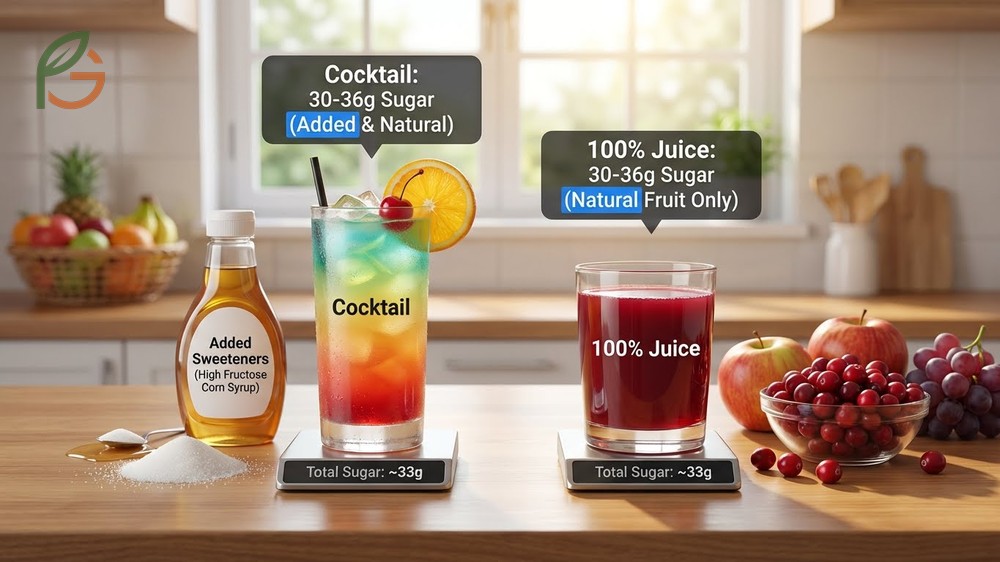
Both beverage types contain similar total sugar amounts—around 30-36g per cup—but the sources differ dramatically. Pure juice sugar comes from fruit (fructose, glucose, and sucrose naturally present in cranberries, apples, and grapes). Cocktail sugar comes from both fruit and added sweeteners like high fructose corn syrup.
The added sugar distinction matters for health recommendations. Current dietary guidelines suggest limiting added sugars to less than 10% of daily calories. A cup of cranberry cocktail with 12g added sugars consumes 24% of the daily recommended limit[5].
Light or diet versions offer lower sugar options. These products replace caloric sweeteners with sucralose, reducing total sugars to 5-10g per serving. However, they sacrifice the natural fruit compounds found in regular versions.
This table compares total sugars, added sugars, and natural fruit sugars across four cranberry beverage types including pure juice, regular cocktail, light cocktail, and unsweetened options
| Beverage Type | Total Sugars | Added Sugars | Natural Fruit Sugars |
|---|---|---|---|
| 100% Cranberry Juice Blend | 36g[4] | 0g | 36g |
| Cranberry Juice Cocktail | 34g[2] | 12-14g[5] | 20-22g |
| Light Cranberry Cocktail | 8-10g | 0g (artificial sweeteners) | 8-10g |
| Unsweetened Pure Cranberry | 12-15g | 0g | 12-15g |
Watch Out: “No sugar added” claims on cocktails can mislead consumers. These products still contain naturally occurring sugars from fruit juice—typically 20-25g per cup—even without additional sweeteners.
Nutritional Difference Cranberry Juice vs Cocktail
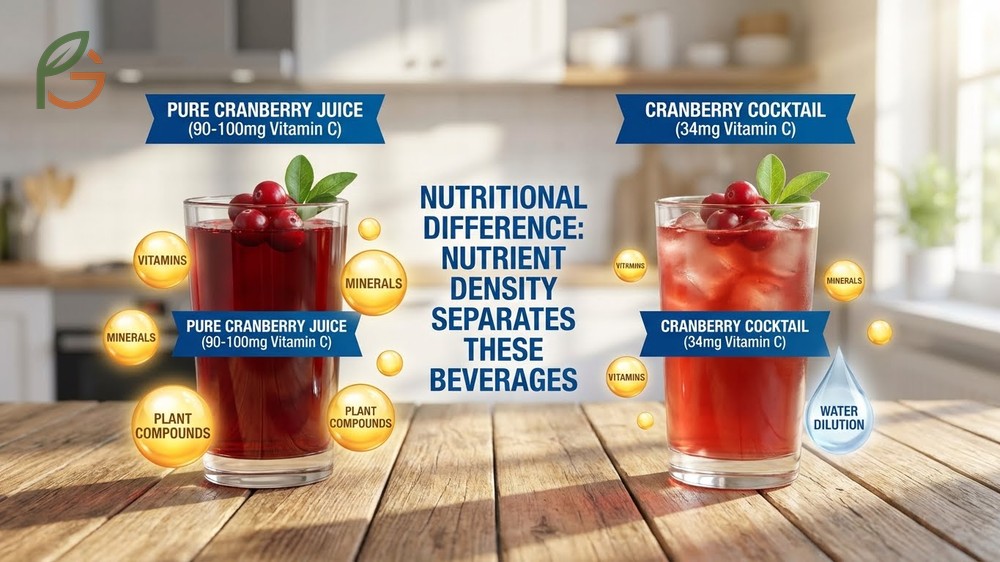
Nutrient density separates these beverages more than calorie counts. While both deliver 137-141 calories per cup, pure juice concentrates more vitamins, minerals, and beneficial plant compounds. Cocktails dilute these nutrients with water and provide fewer health-promoting substances per serving.
Vitamin C content differs substantially. Pure cranberry juice blends provide 90-100mg per cup—exceeding 100% daily value—compared to cocktails’ 34mg (about 37% daily value)[6]. Manufacturers often fortify juice to preserve freshness and boost nutritional appeal.
Antioxidant levels favor pure juice significantly. Cranberries contain A-type proanthocyanidins (PACs)—unique compounds linked to urinary tract health. Studies suggest at least 36mg PACs daily can reduce UTI recurrence, though exact amounts vary by product[3].
This table compares calories, carbohydrates, vitamin C, potassium and protein content between pure cranberry juice and cranberry juice cocktail per eight ounce serving
| Nutrient | 100% Cranberry Juice | Cranberry Cocktail | Difference |
|---|---|---|---|
| Calories | 140[4] | 137[2] | Similar |
| Total Carbohydrates | 36g | 34g | Nearly identical |
| Vitamin C | 90-100mg[4] | 34mg[6] | 3x higher in pure juice |
| Potassium | 255mg | 14mg | 18x higher in pure juice |
| Protein | 0g | 0g | None in either |
- Pure juice provides more folate (10-15% daily value) compared to cocktails’ negligible amounts
- Fiber content remains minimal in both—cranberries’ natural fiber gets removed during juice extraction
- Sodium levels stay low in both types, typically under 5mg per serving
- Neither beverage type contains significant amounts of calcium, iron, or vitamin D
- PAC concentrations in pure juice reach 50-80mg per cup versus 15-25mg in diluted cocktails
The water content also differs meaningfully. Pure cranberry juice contains 86% water by composition[8], while cocktails exceed 90% due to added water dilution. This affects both flavor concentration and nutrient density per ounce.
Health Benefits and Uses
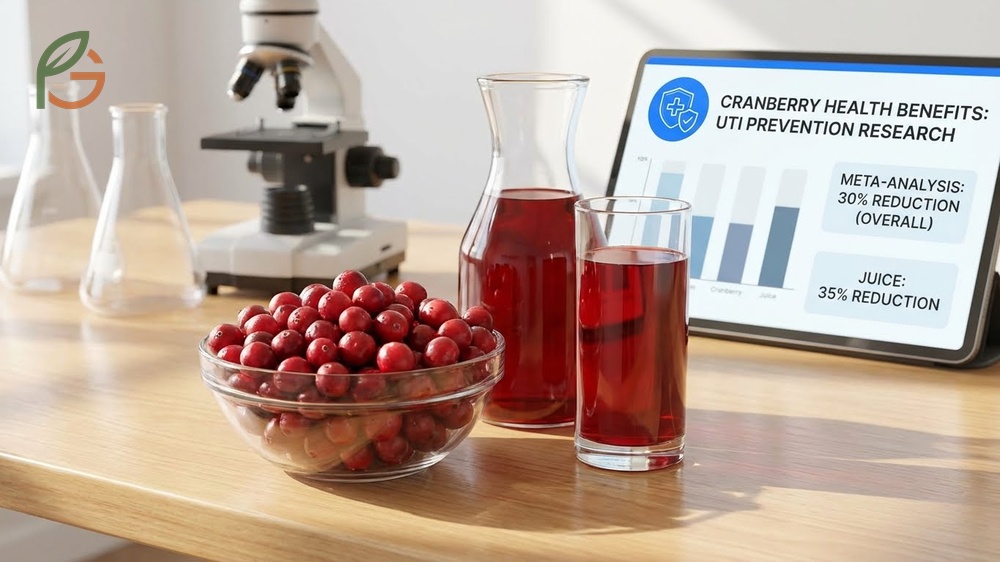
Research demonstrates cranberry consumption can prevent urinary tract infections in susceptible populations. A comprehensive meta-analysis of 23 trials with 3,979 participants found cranberry products reduced UTI risk by 30% overall (risk ratio = 0.70)[3]. Women with recurrent UTIs experienced 32% risk reduction, while children saw 45% reduction.
The effectiveness varies significantly by product form. Studies show cranberry juice reduced UTI incidence by 35% compared to capsules or tablets (risk ratio = 0.65)[3]. Researchers attribute this to increased fluid intake and potentially better compound absorption from liquid forms.
Beyond urinary health, cranberry beverages provide antioxidant benefits. The proanthocyanidins, anthocyanins, and benzoic acid in cranberries combat oxidative stress. However, pure juice delivers these compounds in higher concentrations than diluted cocktails.
- UTI prevention: Drink 8oz daily of pure juice (containing minimum 36mg PACs) for women with recurrent infections
- Cocktail mixers: Cranberry cocktails work well in recipes where sweetness matters more than nutritional content
- Kidney stone prevention: The citric acid in both types may help reduce calcium oxalate stone formation
- Heart health support: Antioxidants in pure juice may improve cholesterol profiles when consumed regularly
- Vitamin C supplementation: Pure juice provides immune system support during cold season
- Digestive aid: Small amounts before meals may stimulate digestive enzyme production
Dosage Matters: Most UTI prevention studies used 8-16oz cranberry juice daily. Drinking more doesn’t increase benefits and may add excessive sugar to your diet. Consistency matters more than quantity for urinary tract health.
Cocktails serve better for casual consumption where taste takes priority. They work well in party punches, mocktails, and recipes requiring sweet-tart flavor. Pure juice suits health-focused applications where maximum compound concentration matters.
Healthy Alternatives to Juice Cocktail
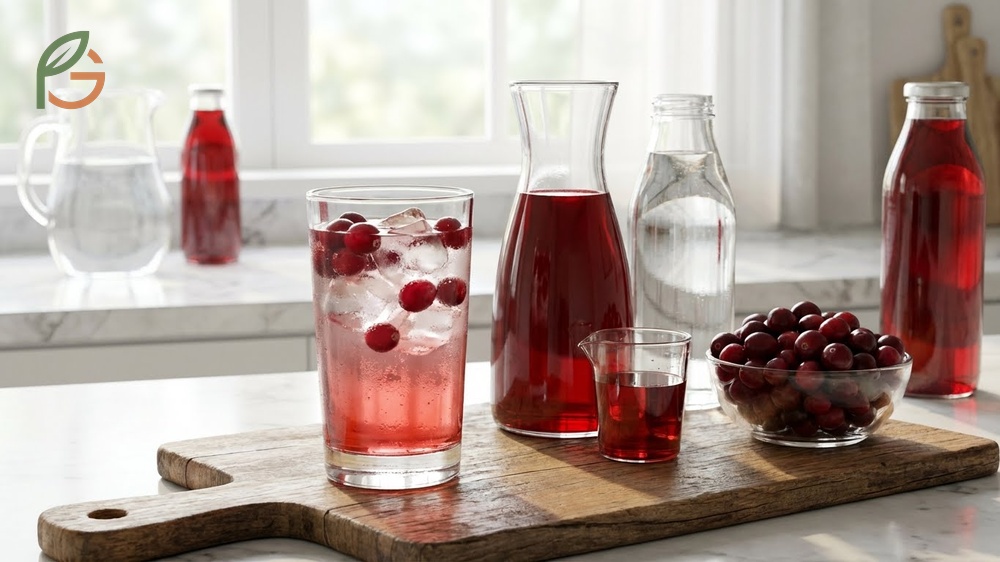
Several options provide cranberry flavor with improved nutritional profiles. Diluting pure cranberry juice with water creates a lower-calorie beverage while maintaining beneficial compounds. Mix 2-4oz pure juice with 4-6oz water and ice for a refreshing drink with half the sugar.
Unsweetened cranberry juice offers the most authentic option, though extremely tart. It contains 12-15g natural sugars per cup—less than half of sweetened versions. Gradually adjusting to the tartness allows taste buds to adapt over 2-3 weeks.
Sparkling water with cranberry creates a satisfying alternative. Combine 2oz pure cranberry juice with 6oz unflavored seltzer for a fizzy beverage containing only 9g sugar. Add lemon or lime juice to enhance flavor without adding sweeteners.
- Pomegranate juice: Provides similar antioxidant benefits with lower sugar when choosing 100% varieties
- Tart cherry juice: Contains anti-inflammatory compounds and may improve sleep quality with 30g sugar per cup
- Coconut water: Delivers natural electrolytes with only 11g sugar and 60 calories per cup
- Green tea: Offers antioxidants without calories or sugar, with optional lemon for vitamin C
- Fruit-infused water: Add cranberries, oranges, and mint to water for subtle flavor without juice calories
- Light cranberry juice: Provides cranberry taste with 40-50 calories per cup using artificial sweeteners
Cranberry capsules or tablets deliver concentrated PACs without liquid sugar. Studies used 400-500mg cranberry extract daily for UTI prevention—equivalent to compound levels in 16oz pure juice but with negligible calories. However, the 35% effectiveness advantage of juice over supplements suggests liquid forms work better[3].
Budget-Friendly Tip: Buy unsweetened cranberry concentrate and dilute it yourself. One bottle makes 6-8 quarts, costing 60-70% less than pre-mixed juice while giving you complete control over sweetness levels.
Conclusion
The evidence clearly shows cranberry juice vs cranberry juice cocktail differences extend beyond simple labeling. Pure juice delivers concentrated nutrients, higher vitamin C, and more beneficial plant compounds despite similar calorie counts. Cocktails provide affordable, palatable options but sacrifice nutritional density through dilution and added sweeteners.
Current research supports choosing pure juice for health applications, particularly UTI prevention where compound concentration matters. For casual drinking or recipes, cocktails serve adequately. The best choice depends on your priorities—whether maximizing health benefits or enjoying sweet flavor at lower cost. FruitGarden recommends reading labels carefully, understanding that “100% juice” doesn’t guarantee 100% cranberry, and considering dilution strategies to balance taste, nutrition, and budget effectively.
Medical Disclaimer
Important Medical Disclaimer: This content is for informational and educational purposes only. It is not intended as a substitute for professional medical advice, diagnosis, or treatment. Always consult a qualified healthcare professional before making any changes to your diet, supplement routine, or health practices, especially if you have urinary tract conditions, diabetes, kidney problems, or other medical concerns. Cranberry juice doesn’t replace prescribed medications for UTI treatment.
Frequently Asked Questions
Is cranberry juice cocktail the same as cranberry juice?
No, they’re different products. Cranberry juice cocktail contains 25-30% cranberry juice mixed with water, sweeteners, and additives, while 100% cranberry juice blends only fruit juices without added water or sugar. Cocktails deliver fewer nutrients and beneficial compounds per serving despite similar calorie counts.
Which has more sugar: cranberry juice or cranberry cocktail?
Both contain similar total sugar—30-36g per cup. However, pure juice sugar comes entirely from natural fruit sources, while cocktails include 12-14g added sugars from high fructose corn syrup or cane sugar. The added sugar distinction matters for dietary guidelines recommending limited added sweetener intake.
Does cranberry juice cocktail work for urinary tract infections?
Research shows cranberry juice works better than cocktails for UTI prevention. Studies found juice reduced UTI risk by 35% more than concentrated forms, likely due to higher PAC concentrations and increased fluid intake. For maximum effectiveness, choose pure juice with at least 36mg PACs per serving.
What’s in Simply Cranberry Juice Cocktail?
Simply brand cranberry cocktails typically contain cranberry juice, filtered water, cane sugar, and natural flavors. They avoid high fructose corn syrup but still include added sugars. Check specific product labels—some Simply varieties offer “light” versions with reduced sugar content using alternative sweeteners.
How many calories in cranberry juice cocktail versus pure juice?
Cranberry juice cocktail contains 137 calories per 8oz cup, while 100% cranberry juice blend has 140 calories—nearly identical. Light cocktails offer 40-50 calories per cup through artificial sweeteners. The calorie similarity disguises major nutritional differences, with pure juice providing 3x more vitamin C and potassium.
Can I substitute cranberry cocktail for cranberry juice in recipes?
Yes for most recipes, though results vary. Cocktails taste sweeter, so reduce added sugar in baked goods or sauces by 2-3 tablespoons per cup of cocktail used. For health-focused recipes like smoothies, pure juice delivers better nutritional results despite similar flavor profiles.
What are the best low-sugar alternatives to cranberry cocktail?
Dilute pure cranberry juice with sparkling water (2oz juice to 6oz water) for only 9g sugar per serving. Light cranberry juice provides cranberry flavor with artificial sweeteners at 40-50 calories per cup. Unsweetened cranberry juice offers 12-15g natural sugars—the lowest option—though extremely tart.





