
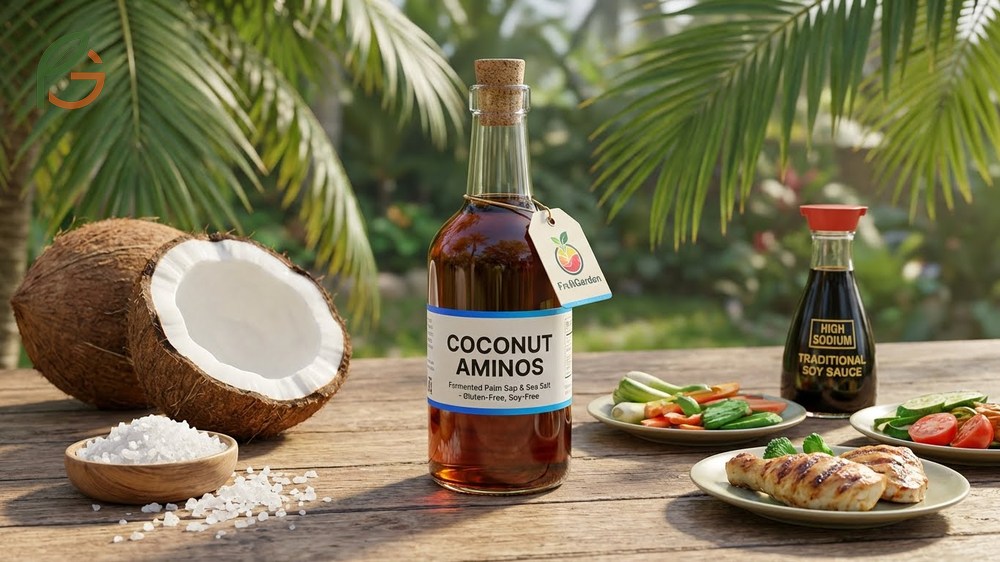
What is coconut aminos? It’s a savory condiment made from fermented coconut palm sap and sea salt, offering a naturally gluten-free and soy-free alternative to traditional soy sauce[1]. Research shows coconut aminos contains 70-75% less sodium than regular soy sauce while maintaining a similar umami flavor profile, making it suitable for Paleo, Whole30, and low-sodium diets[2]. FruitGarden provides evidence-based insights to help you understand how this versatile ingredient fits into your healthy cooking routine.
Quick Answer
- Made from fermented coconut sap with 90-180mg sodium per teaspoon versus 280-879mg in soy sauce[1]
- Contains 17 amino acids naturally occurring from fermentation, though minimal protein content[3]
- Flavor profile: slightly sweet, savory umami taste that’s less salty than traditional soy sauce[4]
- Perfect for Paleo, Whole30, keto, gluten-free, and soy-free diets without compromising flavor[2]
What Is Coconut Aminos
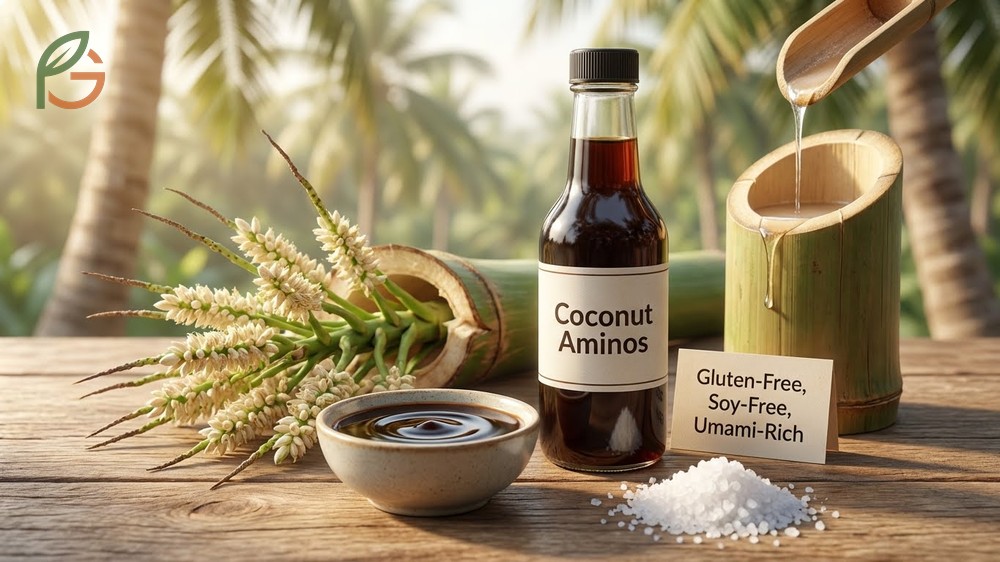
Coconut aminos is a dark, savory liquid seasoning made from the naturally fermented sap of coconut palm tree blossoms mixed with sea salt[4]. Unlike soy sauce, it doesn’t contain any soy or wheat products, making it naturally gluten-free and allergen-friendly. Studies show this fermentation process enriches the sap with amino acids that contribute to its signature umami flavor[4].
The condiment originated as an alternative for people with soy allergies or those following specific dietary protocols. It contains about 5-10 calories per teaspoon with 1-2 grams of carbohydrates[5]. Most people notice it’s slightly sweeter than soy sauce due to the natural sugars present in coconut sap.
How Is Coconut Aminos Made
The production process starts with tapping coconut palm flowers to collect the nutrient-rich sap. Workers carefully cut the tip of the coconut flower bud and attach food-grade collection containers to gather the fresh sap[6]. This sap is immediately transported to processing facilities to prevent premature fermentation.
Natural fermentation transforms the raw sap into the flavorful base. The sap is filtered and transferred to specialized fermentation tanks where temperature and environmental conditions are precisely controlled[6]. After fermentation, producers blend the liquid with sea salt, then filter, heat, and bottle the final product without adding water or concentrates.
Nutritional Profile
Coconut aminos contains 17 naturally occurring amino acids, including glutamate which provides the savory umami taste. However, it contains zero grams of protein per serving despite the presence of these amino acids[3]. The low glycemic index of 35 makes it suitable for blood sugar management.
Each teaspoon provides minimal calories but delivers essential flavor compounds. The condiment contains small amounts of B vitamins and minerals, though you’d need to consume larger quantities than typical seasoning amounts to meet daily requirements. Most brands contain 90-180mg sodium per teaspoon compared to 280-920mg in traditional soy sauce[1].
Are Coconut Aminos Healthy
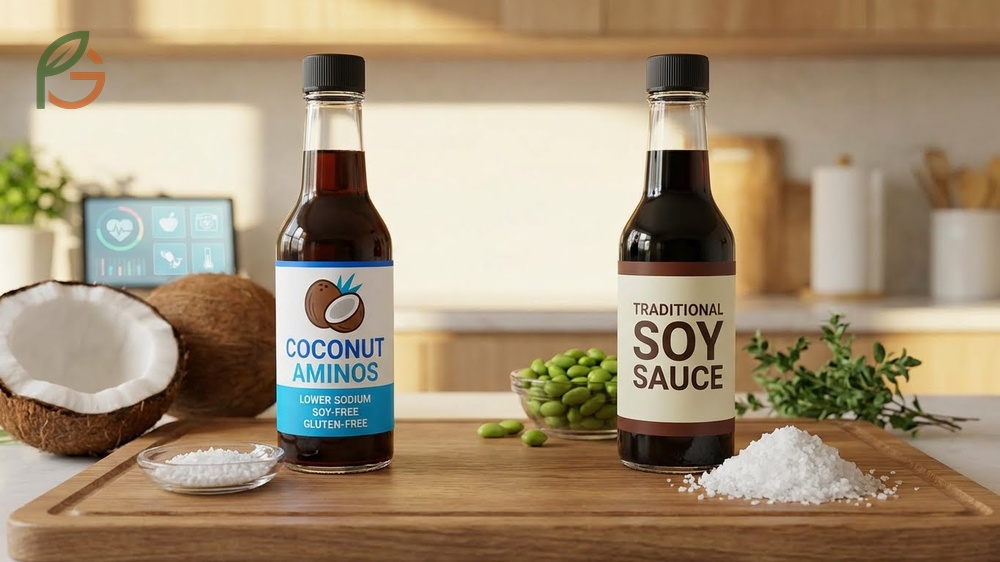
Research demonstrates coconut aminos offers several health advantages over traditional soy sauce. The significantly lower sodium content makes it beneficial for people managing blood pressure or reducing salt intake[2]. Current dietary guidelines emphasize reducing sodium consumption, and coconut aminos provides a practical way to achieve this without sacrificing flavor.
The absence of soy and gluten makes it suitable for people with celiac disease, gluten sensitivity, or soy allergies. Evidence shows these allergens affect millions of Americans, creating demand for safe alternatives that don’t trigger adverse reactions. The amino acids present support various bodily functions, though the small serving sizes mean it’s not a primary protein source.
Important Note: While coconut aminos contains less sodium than soy sauce, it’s still not a low-sodium food. The salt content adds up quickly if you use more than 1-2 teaspoons at a time, so monitor your portions when following sodium-restricted diets.
Sodium Content Benefits
The sodium reduction in coconut aminos ranges from 70-75% less than regular soy sauce brands[2]. This translates to 90mg per teaspoon compared to 280mg in traditional soy sauce and 879mg in some concentrated varieties. Even low-sodium soy sauce contains 191mg per teaspoon, making coconut aminos the lowest-sodium option available.
For people with heart disease risk factors, this reduction matters significantly. Current guidelines recommend limiting sodium to 2,300mg daily, with lower targets for certain populations. Using coconut aminos instead of regular soy sauce can save 190-800mg of sodium per serving while maintaining the savory taste you’re looking for.
Dietary Compatibility
Coconut aminos fits seamlessly into multiple dietary frameworks. It’s compliant with Paleo, Whole30, keto, vegan, and grain-free eating patterns[2]. The naturally gluten-free and soy-free composition eliminates concerns about hidden allergens or processed ingredients.
People following elimination diets or managing autoimmune conditions often choose coconut aminos. The simple ingredient list—just coconut sap and sea salt—makes it suitable for those avoiding additives, preservatives, or fermented soy products. The 1-2g of carbohydrates per serving works for most low-carb and ketogenic diets without disrupting macronutrient targets.
- Contains 70-75% less sodium than traditional soy sauce, supporting heart health and blood pressure management
- Naturally gluten-free and soy-free, making it safe for people with celiac disease or soy allergies
- Provides 17 amino acids from natural fermentation, though not a significant protein source
- Low glycemic index of 35 helps maintain stable blood sugar levels
- Free from artificial flavors, colors, and preservatives found in some conventional condiments
- Compatible with Paleo, Whole30, keto, vegan, and grain-free dietary protocols
Coconut Aminos vs Soy Sauce
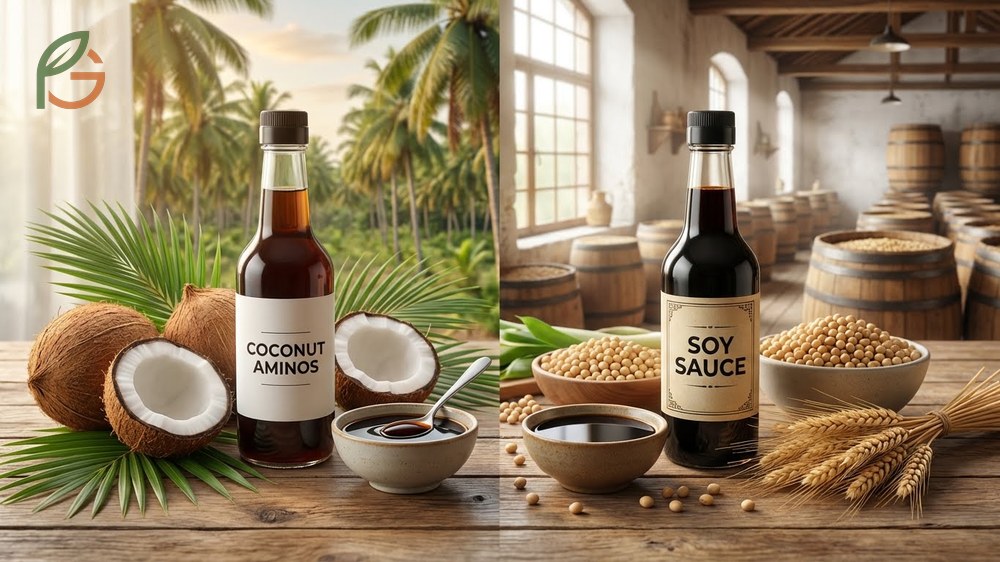
The primary differences between these condiments lie in their ingredients, sodium content, and allergen profiles. Soy sauce is made from fermented soybeans and wheat, while coconut aminos comes from coconut palm sap. This fundamental difference affects who can safely consume each product and how they impact your nutritional intake.
Taste-wise, coconut aminos offers a slightly sweeter and less salty flavor compared to soy sauce’s bold, intense saltiness[4]. Both deliver umami flavor from glutamate content, but coconut aminos provides a more subtle, nuanced taste. Many people find it works better in dishes where you don’t want the seasoning to overpower other ingredients.
This table compares nutritional content and key characteristics between coconut aminos and traditional soy sauce per teaspoon serving
| Characteristic | Coconut Aminos | Regular Soy Sauce | Low-Sodium Soy Sauce |
|---|---|---|---|
| Sodium per teaspoon | 90mg[1] | 280-920mg[1] | 191mg |
| Calories per teaspoon | 5-10 | 8-11 | 10 |
| Gluten-free | Yes | No (contains wheat) | No (most brands) |
| Soy-free | Yes | No | No |
| Taste profile | Slightly sweet, mild umami | Salty, intense umami | Moderate salt, umami |
| Main ingredient | Coconut sap | Fermented soybeans | Fermented soybeans |
Price differences exist between the two options. Coconut aminos typically costs 2-3 times more than regular soy sauce due to the labor-intensive harvesting process and smaller production scale. However, many people find the health benefits and allergen-free properties justify the additional expense, especially when managing specific dietary needs.
What Are Coconut Aminos Substitute
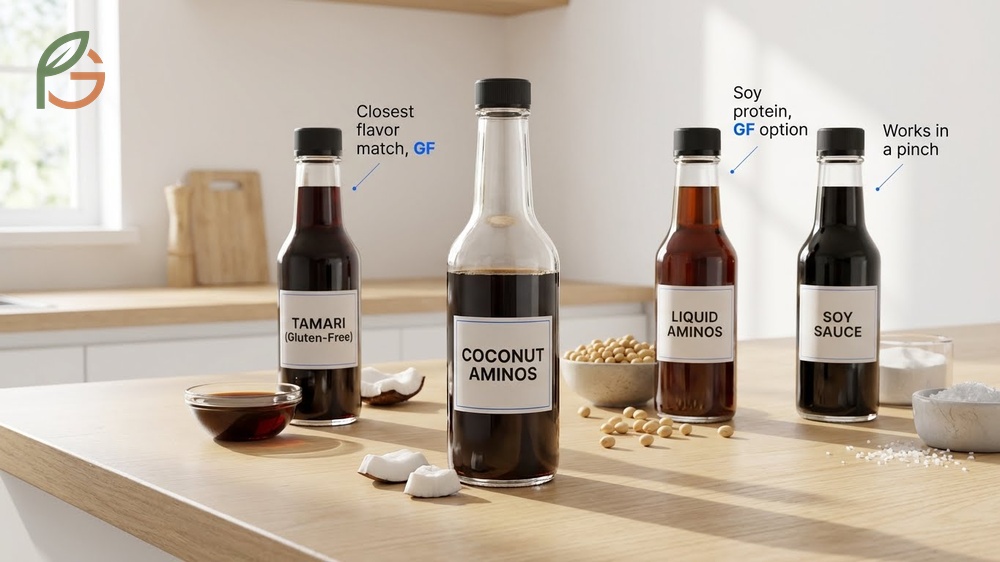
If you don’t have coconut aminos on hand, several alternatives can work depending on your dietary needs. Tamari offers the closest flavor match while remaining gluten-free, though it contains soy[7]. You can substitute tamari in a 1:1 ratio, but be aware it’s saltier and lacks the slight sweetness of coconut aminos.
Liquid aminos made from soy protein provides another gluten-free option with similar umami characteristics. Regular soy sauce works in a pinch, though you’ll need to reduce the amount due to higher sodium content. For completely soy-free alternatives, consider mixing equal parts balsamic vinegar and water with a pinch of sea salt, though this won’t perfectly replicate the flavor.
- Tamari (gluten-free soy sauce): Use 1:1 ratio, best flavor match but contains soy and higher sodium
- Liquid aminos: Use 1:1 ratio, gluten-free but contains soy, slightly sweeter than regular soy sauce
- Regular soy sauce: Use 1/2 to 3/4 the amount called for, adjust for higher sodium content
- Low-sodium soy sauce: Use 3/4 the amount, better sodium profile but still contains gluten and soy
- Balsamic vinegar + water + salt: Mix 1:1 vinegar to water with pinch of salt, soy-free but different flavor
- Fish sauce diluted: Use 1/2 amount mixed with water, provides umami but has distinct fishy taste
Substitution Tip: When replacing coconut aminos with saltier alternatives like soy sauce or tamari, reduce the amount by 25-50% and skip any additional salt in your recipe. Taste as you go and adjust seasoning at the end to avoid over-salting your dish.
For Whole30 or strict Paleo diets, your options narrow significantly since most substitutes contain soy. In these cases, consider making a homemade version using coconut water, sea salt, and a small amount of coconut sugar, though the flavor won’t be identical. Some people use a combination of fish sauce and a touch of maple syrup to approximate the salty-sweet profile.
Cooking with Coconut Aminos

Coconut aminos works in virtually any recipe that calls for soy sauce. It excels in stir-fries, where you can add it during the final minutes of cooking to coat vegetables and proteins with savory flavor. The slightly sweet taste complements Asian-inspired dishes, marinades, and dipping sauces without overpowering delicate ingredients.
For marinades, mix coconut aminos with fresh ginger, garlic, and sesame oil to infuse chicken, beef, or tofu before grilling or roasting. Current culinary trends show it’s particularly popular in Whole30 stir-fry recipes paired with arrowroot powder for sauce thickening. You can also drizzle it over roasted vegetables, add it to salad dressings, or use it as a finishing sauce for rice bowls and grain dishes.
The heat stability makes it suitable for both raw and cooked applications. Unlike some delicate seasonings, coconut aminos maintains its flavor when heated, making it ideal for sautéing and braising. Studies on fermented condiments show the amino acids remain stable at cooking temperatures, preserving the umami characteristics throughout the cooking process.
Recipe Applications
In dipping sauces, combine 1/4 cup coconut aminos with 2 tablespoons rice vinegar, 1 teaspoon sesame oil, and minced garlic for a quick Asian-style sauce. This ratio provides balanced flavor without excessive saltiness. For a sweeter teriyaki-style glaze, mix coconut aminos with fresh orange juice, ginger powder, and a touch of honey or maple syrup.
Salad dressings benefit from coconut aminos’ umami depth. Whisk it with olive oil, lemon juice, and Dijon mustard for a savory vinaigrette that works on grain bowls and green salads. The slight sweetness means you might need less added sweetener than traditional recipes call for, naturally reducing sugar content.
Storage and Shelf Life

Store unopened bottles of coconut aminos in a cool, dark pantry where they’ll remain fresh for up to three years. Once opened, refrigeration extends shelf life and maintains optimal quality for about one year[8]. Keep the bottle tightly sealed between uses to prevent oxidation and flavor degradation.
Watch for signs of spoilage like a strong vinegary smell or visible mold, though properly stored coconut aminos rarely spoils. The natural fermentation and salt content act as preservatives, but refrigeration after opening ensures the best flavor and longest usability. If the taste becomes overly acidic or off, discard the bottle and purchase fresh product.
Where to Buy Coconut Aminos

Most major grocery stores now stock coconut aminos in multiple locations throughout the store. Check near the soy sauce in the international aisle, in the health food section, or among spices and seasonings[8]. Stores like Target, Whole Foods, Trader Joe’s, and natural food markets typically carry several brands including Bragg, Coconut Secret, and store-brand organic options.
Online retailers offer the widest selection and often better prices when buying in bulk. Amazon, Thrive Market, and Vitacost stock numerous brands with customer reviews to help guide your selection. Many manufacturers sell directly through their websites, sometimes offering subscription services that deliver fresh bottles regularly at discounted rates.
Prices range from $4-8 for an 8-10 fluid ounce bottle, with organic and specialty brands commanding premium prices. Buying larger bottles or multi-packs reduces the per-ounce cost significantly. Compare sodium content and ingredient lists between brands, as some add additional flavors like garlic while others stick to the traditional coconut sap and sea salt formula.
Conclusion
The evidence clearly shows coconut aminos serves as an effective lower-sodium, allergen-free alternative to soy sauce for people managing dietary restrictions or seeking healthier condiment options. With 70-75% less sodium, natural gluten-free properties, and compatibility with multiple eating patterns, it addresses the needs of health-conscious cooks without sacrificing the savory umami flavor that makes Asian-inspired dishes delicious.
Current nutritional guidance emphasizes reducing sodium intake and avoiding common allergens, positioning coconut aminos as a practical solution for everyday cooking. Whether you’re following Paleo protocols, managing celiac disease, or simply looking to cut back on salt, FruitGarden recommends trying this versatile ingredient in your favorite stir-fries, marinades, and dipping sauces to experience the benefits firsthand.
Frequently Asked Questions
Is coconut aminos really healthier than soy sauce?
Yes, coconut aminos contains 70-75% less sodium than regular soy sauce, making it beneficial for heart health and blood pressure management. It’s also naturally gluten-free and soy-free, eliminating common allergens that affect millions of people. However, it’s still not a low-sodium food and should be used in moderation.
Does coconut aminos taste like coconut?
No, coconut aminos doesn’t taste like coconut at all. The fermentation process transforms the coconut sap into a savory, slightly sweet umami-flavored condiment that resembles soy sauce. Most people can’t detect any coconut flavor in the finished product, just a balanced salty-sweet taste similar to milder soy sauce.
Can I use coconut aminos on a keto diet?
Yes, coconut aminos works for ketogenic diets since it contains only 1-2g of carbohydrates per teaspoon. While it has slightly more carbs than regular soy sauce, the amount is minimal and fits within most people’s daily carb limits. Just account for it in your macros if you’re using larger quantities in marinades or sauces.
What’s the difference between coconut aminos and liquid aminos?
Coconut aminos is made from fermented coconut sap and is completely soy-free, while liquid aminos (like Bragg Liquid Aminos) is derived from soy protein. Both are gluten-free, but liquid aminos contains soy and has a stronger, saltier taste. Choose coconut aminos if you’re avoiding soy or following Paleo/Whole30 diets.
How long does coconut aminos last after opening?
Opened coconut aminos stays fresh for about one year when refrigerated, though unopened bottles last up to three years in a cool pantry. Store it tightly sealed in the refrigerator to maintain optimal flavor and prevent spoilage. Discard if you notice a strong vinegary smell, mold, or off flavors.
Can I substitute coconut aminos 1:1 for soy sauce in recipes?
Yes, you can generally substitute coconut aminos 1:1 for soy sauce, but expect a slightly sweeter and less salty result. Since coconut aminos contains less sodium, you might want to add a small pinch of salt if your dish tastes under-seasoned. The flavor works best in Asian-inspired dishes, marinades, and stir-fries.
Is coconut aminos Whole30 approved?
Yes, coconut aminos is Whole30 approved and serves as the primary soy sauce substitute during Whole30 rounds. It’s naturally free from soy, gluten, grains, and additives, making it compliant with strict Whole30 rules. Many Whole30 recipes specifically call for coconut aminos in stir-fries, marinades, and Asian-inspired sauces.





