
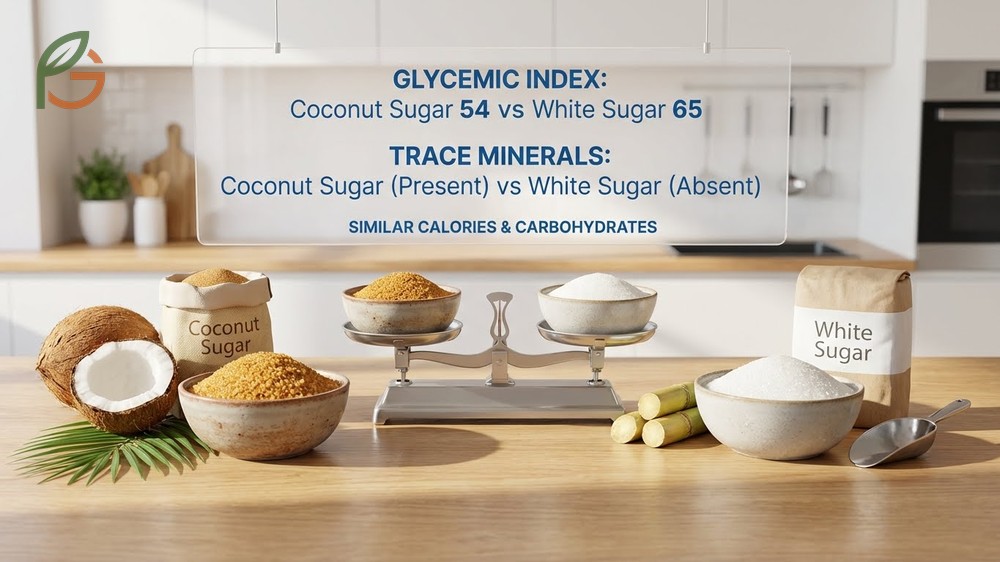
Coconut sugar vs white sugar—which should you choose? Research shows coconut sugar has a slightly lower glycemic index (54 vs 65) but contains nearly identical calories and carbohydrates per serving[1]. Current nutritional data indicates both sugars affect blood glucose, though coconut sugar offers trace minerals absent in refined white sugar[2]. FruitGarden synthesizes current agricultural research to help you make informed choices about natural sweeteners.
Quick Answer
- Both contain 15-16 calories and 4g carbs per teaspoon[3]
- Coconut sugar’s GI of 54 is lower than white sugar’s GI of 65[1]
- Coconut sugar contains trace minerals (iron, zinc, potassium), but you’d need 33 teaspoons to match nutrients in 6oz chicken[4]
- Use a 1:1 substitution ratio in most baking recipes[5]
Coconut Sugar vs White Sugar
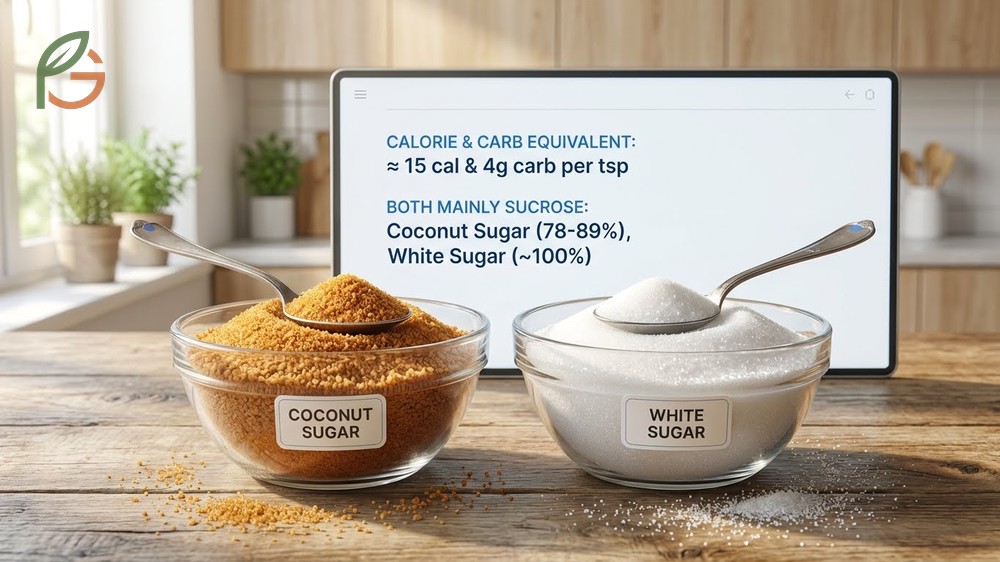
Studies demonstrate that coconut sugar and white sugar aren’t as different as marketing suggests. Both deliver approximately 15 calories and 4 grams of carbohydrates per teaspoon, making them calorically equivalent[3]. The primary difference lies in processing methods and trace mineral content.
What often gets overlooked is that both sugars consist mainly of sucrose—coconut sugar contains 78-89% sucrose while white sugar is nearly 100% sucrose[3]. This means your body processes them similarly. The glycemic index difference exists but doesn’t transform coconut sugar into a “health food.”
Research from Medical News Today confirms that people with diabetes should treat coconut palm sugar like any other sweetener[1]. Calorie and carbohydrate content matter more than the source. Both types contribute to tooth decay, weight gain, and elevated triglycerides when consumed in excess.
What Is Coconut Sugar
Coconut sugar comes from the sap of coconut palm flower buds, not from coconuts themselves. Farmers collect the sap and heat it until moisture evaporates, leaving behind caramel-colored crystals[6].
The processing is less intensive than white sugar production. This explains why coconut sugar retains small amounts of iron, zinc, and potassium. However, manufacturers sometimes add cane sugar to coconut sugar products, which increases the glycemic index—always check labels.
What Is White Sugar
White sugar (granulated sugar) undergoes extensive refinement from sugarcane or sugar beets. The refining process removes molasses, minerals, and natural compounds, leaving pure sucrose crystals[6]. This creates a neutral flavor and bright white appearance.
The refinement process makes white sugar virtually nutrient-free—it’s often called “empty calories.” White sugar contains trace amounts of calcium and iron (less than 1% daily value per 100g), making it nutritionally insignificant beyond energy provision.
Glycemic Index Comparison
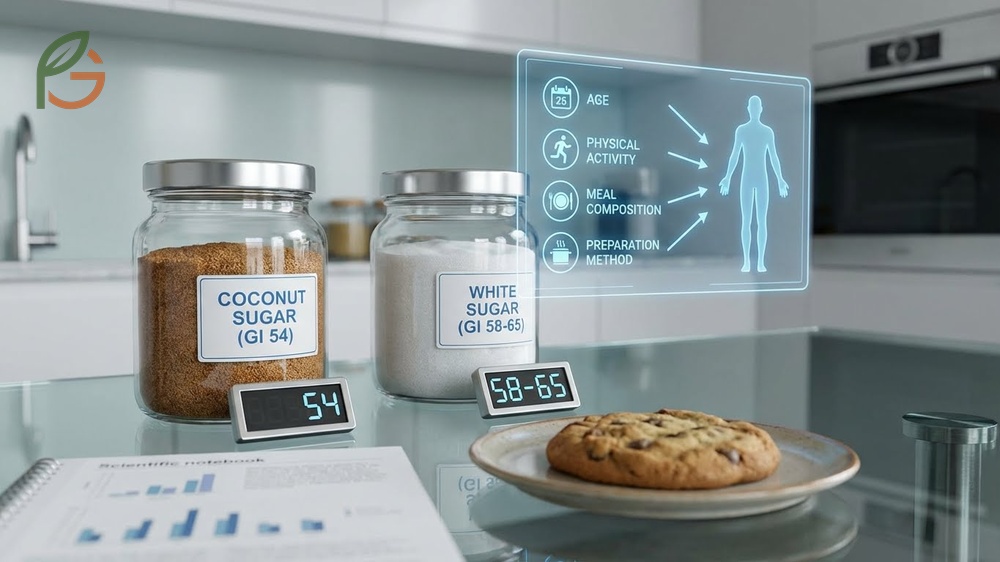
The glycemic index (GI) measures how quickly foods raise blood glucose levels. Coconut sugar scores 54 on the GI scale, while white sugar ranges from 58-65 depending on the type[1]. This 11-point difference sounds significant but has limited practical impact.
Current data indicates that individual factors matter more than GI alone. Your age, physical activity levels, what else you’re eating, and preparation methods all influence blood sugar response[1]. A cookie made with coconut sugar won’t magically become healthy.
Evidence suggests that coconut sugar’s lower GI comes partly from its inulin content—a prebiotic fiber that slows digestion. However, the amounts present aren’t enough to provide meaningful health benefits without consuming excessive sugar quantities.
Important Note: Both sugars have moderate GI scores. Low GI is 55 or under, medium is 56-69, and high is 70 and above. Neither sugar qualifies as “low” glycemic when you’re eating typical serving sizes.
Understanding GI Scores
According to the American Diabetes Association, low GI foods are 55 or under, medium GI is 56-69, and high GI is 70 and above[1]. Coconut sugar barely qualifies as low or medium depending on the source. White sugar sits firmly in the medium range.
Most people don’t realize that GI values vary based on testing methods and product variations. Different coconut sugar brands show GI scores ranging from 35 to 57. This variability makes it hard to rely on GI alone for decision-making.
Blood Sugar Impact
Research shows that consuming either sugar causes blood glucose spikes. The magnitude and duration differ slightly—coconut sugar produces a gentler rise that lasts longer, while white sugar creates a sharper, shorter spike. For most healthy people, this difference won’t affect daily functioning.
People with diabetes need to count carbohydrates from both sugars equally. Medical professionals recommend limiting added sugars to less than 10% of daily calories, regardless of the source. That’s about 12 teaspoons (48g) for a 2,000-calorie diet.
Nutritional Differences Between Sugars
Current nutritional analysis reveals minimal differences between these sugars. Both provide 15-16 calories per teaspoon with 4g of carbohydrates and zero protein or fat[3]. The distinction comes down to micronutrients that exist in trace amounts.
Coconut sugar contains vitamin C, B vitamins, and polyphenols with anti-inflammatory properties[2]. You’d need to consume 33 teaspoons of coconut sugar to get 2mg each of iron and zinc—the same amount found in 6 ounces of roasted chicken[4]. That’s 495 calories from sugar versus 180 from chicken.
This table compares calories, carbohydrates, minerals, and glycemic index between coconut sugar and white sugar per teaspoon serving
| Nutrient | Coconut Sugar | White Sugar |
|---|---|---|
| Calories | 15-16[3] | 15-16[3] |
| Total Carbs | 4g | 4g |
| Glycemic Index | 54[1] | 65[1] |
| Iron | Trace amounts | Negligible |
| Potassium | Trace amounts | Negligible |
| Processing Level | Minimally processed | Highly refined |
White sugar contributes essentially zero micronutrients. Brown sugar—white sugar with molasses added back—contains slightly more minerals than white sugar but less than coconut sugar. The bottom line: don’t choose any sugar for its nutritional value.
- Both contain 95-100% sugars (mainly sucrose)
- Neither provides significant fiber, protein, or healthy fats
- Coconut sugar’s minerals exist in nutritionally insignificant amounts
- White sugar undergoes more processing, removing trace nutrients
- Caloric density is identical between both types
- Both contribute to tooth decay and should be limited
Coconut Sugar Benefits
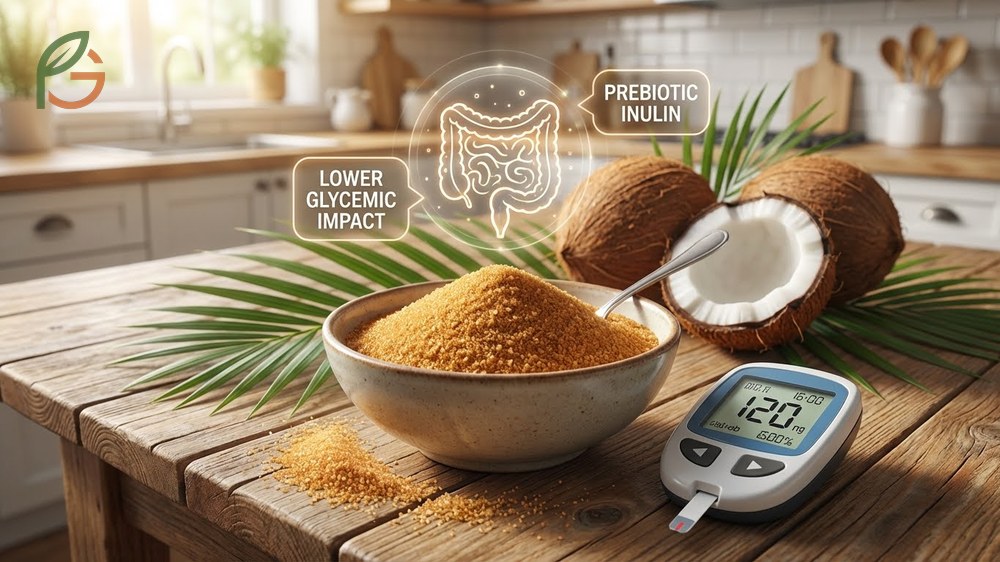
The primary benefit of coconut sugar is its slightly lower glycemic impact. For people monitoring blood sugar, this modest advantage might help with glucose control when used in small amounts. Research shows the difference between GI 54 and GI 65 produces measurably different insulin responses.
Coconut sugar contains inulin, a prebiotic fiber that feeds beneficial gut bacteria. A 2015 study found significant inulin amounts in coconut palm sugar, which may improve insulin sensitivity in people at high risk for diabetes[1]. However, you’d need to eat far too much sugar to gain meaningful prebiotic benefits.
Environmental considerations favor coconut sugar in some cases. Coconut palms require less water and fewer inputs than sugarcane crops. The trees produce sap for 20+ years without replanting. However, transportation costs from tropical regions often offset these benefits.
- Lower GI score (54 vs 65) causes gentler blood sugar rises
- Contains trace minerals like iron, zinc, and potassium
- Provides small amounts of B vitamins and vitamin C
- Includes inulin, a prebiotic fiber (though in minimal amounts)
- Less processed than white sugar, retaining natural compounds
- Potentially more sustainable farming practices
- Richer, more complex flavor profile
Reality Check: These benefits don’t make coconut sugar a health food. It’s still 95% sugar and should be limited just like white sugar. The American Heart Association recommends no more than 6 teaspoons daily for women and 9 for men.
Taste and Flavor Differences
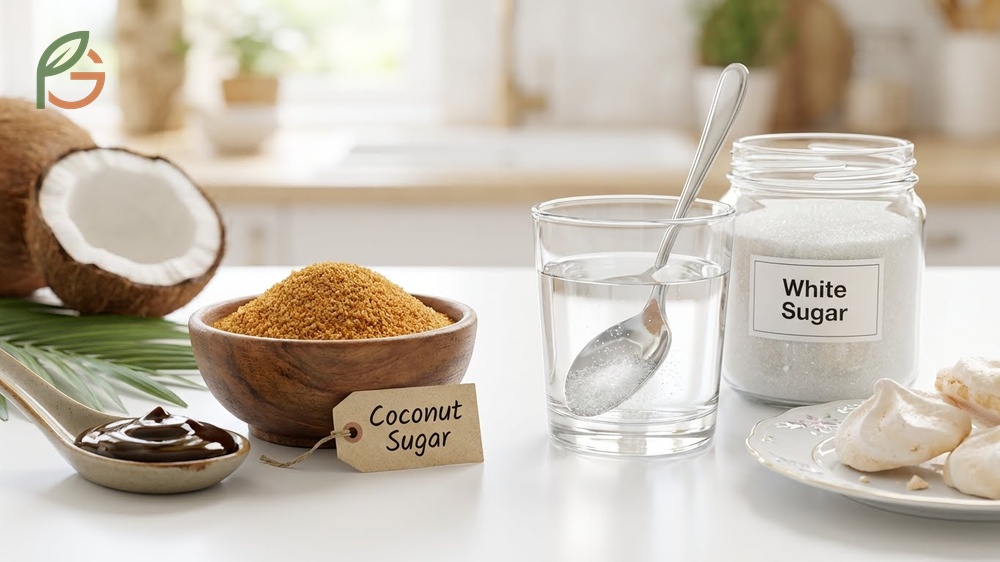
Coconut sugar tastes similar to light brown sugar with caramel undertones[6]. It doesn’t taste like coconuts despite its name. The flavor comes from natural molasses present in the palm sap. Most people find it slightly less sweet than white sugar with a richer, more complex taste.
White sugar offers a clean, neutral sweetness without competing flavors. This makes it ideal for delicate desserts where you don’t want additional taste notes. It dissolves quickly in liquids and creates consistent results in baking because of its refined crystal structure.
The flavor difference matters most in simple recipes. In chocolate chip cookies, you’ll notice coconut sugar’s caramel notes. In heavily spiced gingerbread, the difference disappears. For frostings and meringues, white sugar’s neutral taste performs better.
- Coconut sugar: caramel, toffee, and brown sugar notes
- White sugar: pure, neutral sweetness without flavor undertones
- Coconut sugar adds golden-brown color to baked goods
- White sugar keeps recipes bright and light-colored
- Coconut sugar works well in spiced or chocolate recipes
- White sugar suits delicate flavors like vanilla or lemon
Baking Substitution Ratio
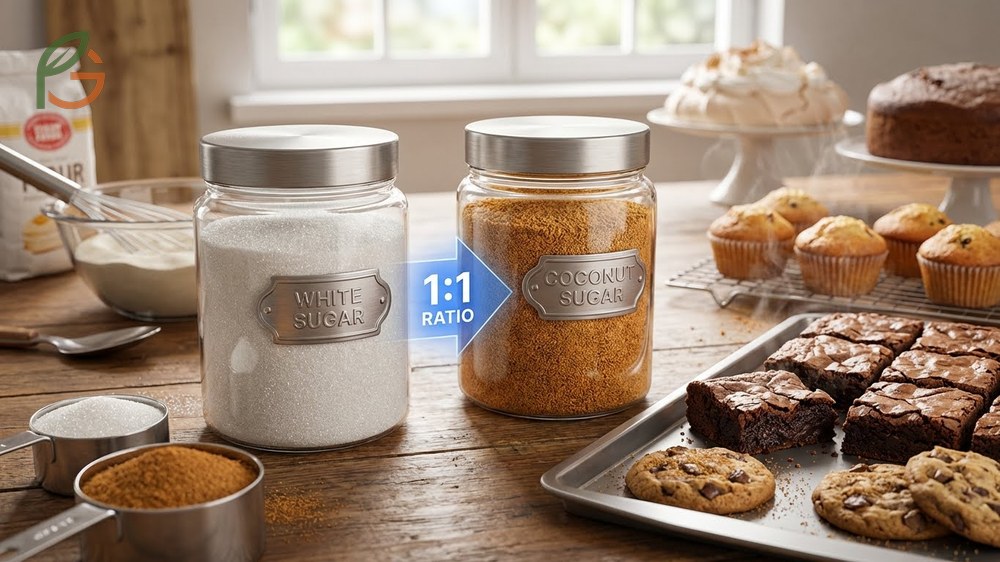
You can replace white sugar with coconut sugar using a 1:1 ratio in most recipes[5]. If your recipe calls for 1 cup of white sugar, use 1 cup of coconut sugar. This works particularly well for moist baked goods like brownies, muffins, and chewy cookies.
Coconut sugar retains moisture better than white sugar, creating denser, chewier textures. This makes it less suitable for light, airy desserts like angel food cake or delicate meringues. The golden color also darkens finished products—your sugar cookies won’t stay pale.
For recipes requiring dissolved sugar (beverages, syrups), coconut sugar takes slightly longer to dissolve because of its coarser crystals. Warm your liquid first or give it extra stirring time. The caramel flavor enhances coffee, tea, and cocktails but might clash with fruit-forward drinks.
Baking Tip: Coconut sugar can cause faster browning in the oven due to its higher mineral content. Reduce your oven temperature by 25°F (14°C) or monitor baking time closely to prevent over-browning.
- Use 1:1 ratio for most baking applications (no math required)
- Best results in brownies, cookies, quick breads, and muffins
- Avoid using in light-colored cakes or delicate meringues
- Reduce oven temperature by 25°F to prevent excessive browning
- Allow extra time for dissolving in cold liquids
- Expect slightly denser, chewier textures in baked goods
- Store coconut sugar in airtight containers to prevent clumping
Conclusion
The evidence is clear: coconut sugar vs white sugar isn’t a battle between “healthy” and “unhealthy”—both are sweeteners that should be limited in your diet. Coconut sugar’s lower glycemic index and trace minerals offer modest advantages, but these don’t justify treating it as a health food. Current guidance emphasizes reducing all added sugars regardless of the source.
Choose coconut sugar if you prefer its caramel flavor or want a slightly lower glycemic option. Stick with white sugar for neutral sweetness and lighter-colored baked goods. Better yet, reduce sugar intake overall and get nutrients from whole foods like fruits, vegetables, and whole grains. FruitGarden encourages making informed choices based on your specific health needs and taste preferences rather than marketing claims.
Medical Disclaimer
Important Medical Disclaimer: This content is for informational and educational purposes only. It’s not intended as a substitute for professional medical advice, diagnosis, or treatment. Always consult a qualified healthcare professional before making any changes to your diet, medication, or health routine, especially if you have diabetes, metabolic disorders, or other medical conditions. Individual nutritional needs vary significantly based on health status, age, activity level, and other factors.
Frequently Asked Questions
Is coconut sugar healthier than white sugar?
Coconut sugar is marginally better due to its lower glycemic index (54 vs 65) and trace minerals, but it contains the same calories and carbohydrates as white sugar. Both should be limited in your diet—the “healthier” choice is using less sugar overall, regardless of type.
Can diabetics eat coconut sugar?
People with diabetes can consume coconut sugar in moderation, but they should count its carbohydrates the same as white sugar. Research shows coconut sugar has a lower GI score, which may produce gentler blood sugar rises, but it’s not a “free pass”—consult your healthcare provider about appropriate amounts for your condition.
Does coconut sugar taste like coconut?
No, coconut sugar doesn’t taste like coconuts. It has a caramel-like flavor similar to light brown sugar with subtle toffee notes. The taste comes from natural molasses in the palm sap, not from coconut flavor.
What’s the best substitute for coconut sugar?
Light brown sugar works best as a coconut sugar substitute using a 1:1 ratio—it has similar moisture content, color, and caramel flavor. For liquid alternatives, use 3/4 cup maple syrup per 1 cup coconut sugar and reduce other liquids in your recipe.
Is coconut sugar good for weight loss?
Coconut sugar isn’t better for weight loss—it contains the same 15-16 calories per teaspoon as white sugar. Weight loss depends on total calorie intake, not sugar source. Reducing all added sugars (including coconut sugar) supports weight management more effectively than switching sugar types.
How much coconut sugar equals white sugar in recipes?
Use a 1:1 substitution ratio—1 cup coconut sugar replaces 1 cup white sugar in most recipes. This works best for moist baked goods like brownies and cookies. For delicate cakes, reduce oven temperature by 25°F to prevent over-browning.
Why is coconut sugar so expensive compared to white sugar?
Coconut sugar costs more because production is labor-intensive—farmers must hand-harvest sap from coconut palm flowers and process small batches. White sugar benefits from large-scale industrial processing and established supply chains. Coconut sugar typically costs 8-10 times more per pound than white sugar.





