

Coconut oil benefits for skin are backed by clinical research showing it improves hydration by up to 149% after four weeks[1] and reduces eczema severity by 68%[2]. Research shows this natural moisturizer penetrates deep into skin layers, strengthening your barrier function while fighting bacteria. FruitGarden synthesizes current dermatological research to help you understand how coconut cultivation connects to effective skincare solutions.
Quick Answer
- Increases skin moisture by 148.89% within four weeks of daily application[1]
- Reduces transepidermal water loss by 37%, strengthening your skin barrier[1]
- Contains 45-50% lauric acid with proven antibacterial properties against acne-causing bacteria[3]
- Boosts collagen density by 67.1% after two weeks, reducing wrinkle depth and improving elasticity[4]
Coconut Oil Benefits for Skin
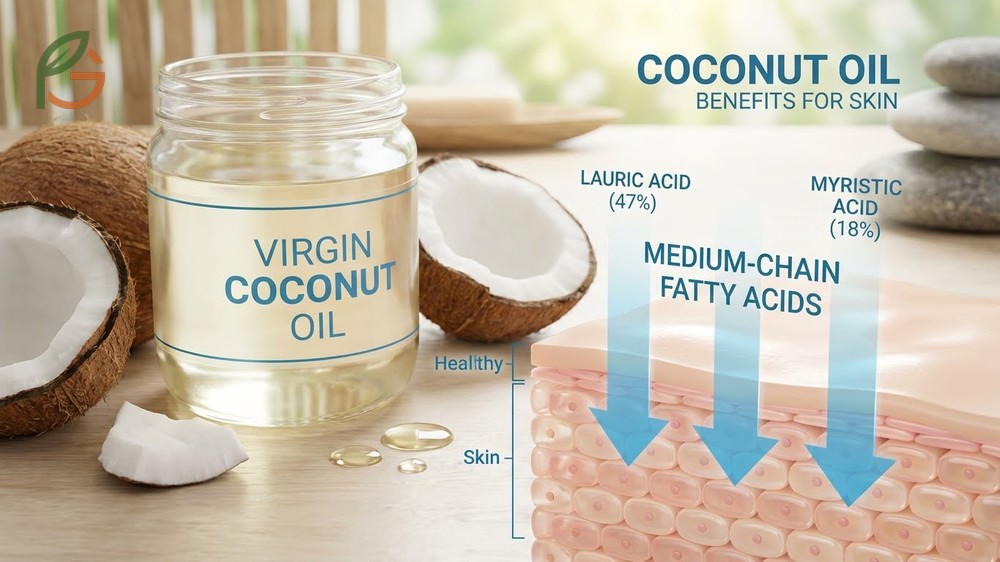
Studies demonstrate that virgin coconut oil delivers measurable improvements across multiple skin health markers. Clinical trials show it’s equally effective—and often superior—to mineral oil for treating xerosis (dry skin)[2]. The medium-chain fatty acids in coconut oil penetrate your skin’s surface layer, delivering moisture where it’s needed most.
What makes coconut oil stand out is its unique fatty acid profile. You’re getting lauric acid (47%), myristic acid (18%), capric acid (7%), and smaller amounts of oleic and linoleic acids[3]. Each of these compounds contributes different benefits—from antibacterial action to enhanced moisture retention.
Research across dermatology journals consistently shows coconut oil’s effectiveness isn’t just anecdotal. Controlled studies with measurable outcomes prove it reduces inflammation, fights harmful bacteria, and accelerates skin healing. Most people notice softer, more supple skin within the first week of consistent use.
How Coconut Oil Hydrates Skin
The hydration mechanism works through two pathways. First, coconut oil creates an occlusive barrier that prevents water loss from your skin’s surface. Second, its fatty acids integrate into your skin’s lipid matrix, actually becoming part of your moisture-retention system[1].
A four-week study tracked moisture levels in participants who applied coconut oil daily after showering. The improvement rate hit 100.36% after just two weeks, then jumped to 148.89% by week four[1]. Dead skin cell accumulation dropped by 60.49% during the same period.
Unlike water-based moisturizers that sit on top of your skin, coconut oil’s structure allows it to sink in. You’ll feel the difference immediately—no greasy residue, just smooth, hydrated skin that holds moisture for hours.
Lauric Acid’s Antibacterial Power
Lauric acid makes up nearly half of coconut oil’s fatty acid content, and your body converts it into monolaurin—a compound that destroys bacteria, viruses, and fungi. This is particularly effective against Staphylococcus aureus, the bacteria commonly found on eczema-affected skin[5].
Research shows lauric acid fuses to bacterial membranes, preventing them from multiplying. It’s especially effective against P. acnes bacteria that cause breakouts. If you’re dealing with acne-prone skin, this antibacterial action helps without the harsh side effects of chemical treatments.
Important Note: While coconut oil’s antibacterial properties benefit most skin types, people with extremely oily skin or severe acne should patch-test first. The oil can occasionally clog pores in highly sensitive individuals.
Moisturizing Skin Properties
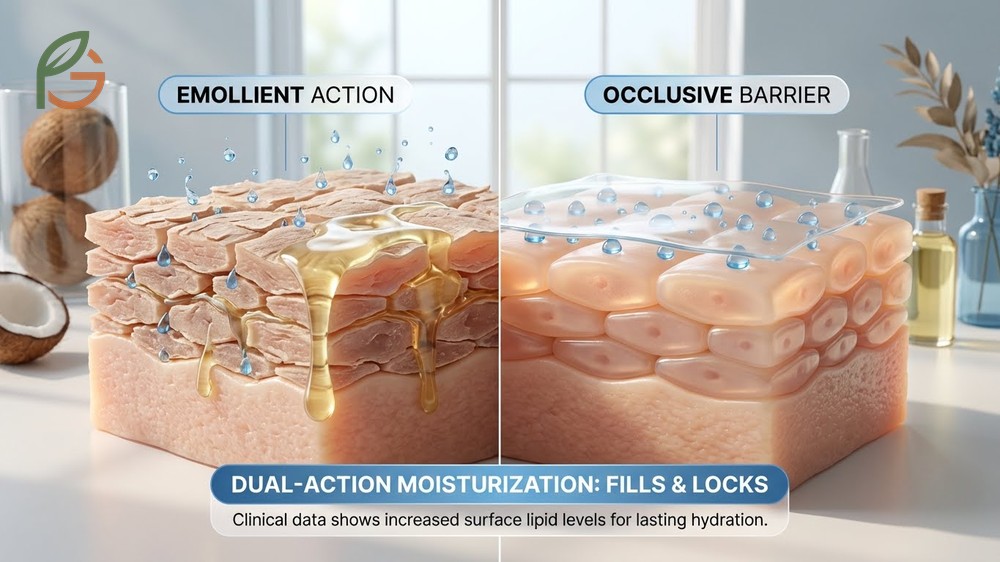
Coconut oil functions as both an emollient and an occlusive moisturizer. As an emollient, it fills gaps between skin cells, smoothing rough texture. As an occlusive agent, it forms a protective layer that locks in existing moisture[2].
This dual action means you’re not just adding temporary moisture—you’re actually improving your skin’s ability to maintain hydration over time. Clinical data shows coconut oil increases surface lipid levels significantly, which is your skin’s natural waterproofing system.
The best results come from applying coconut oil to slightly damp skin right after bathing. This traps water molecules underneath the oil layer. Most people find that 2-3 drops warmed between their palms is enough for the entire face.
Barrier Function Improvement
Your skin barrier is like a brick wall—lipids are the mortar between skin cell “bricks.” Coconut oil strengthens this structure by providing the right types of fatty acids. Studies show it reduces transepidermal water loss (TEWL) by 27.70% after two weeks and 36.97% after four weeks[1].
Lower TEWL means your skin holds onto moisture naturally instead of constantly losing it to the environment. You’ll notice less tightness, fewer dry patches, and better resilience against irritants like cold weather or air conditioning.
Hydration Versus Mineral Oil
A randomized double-blind trial compared virgin coconut oil to mineral oil in 34 patients with mild-to-moderate dry skin. Coconut oil performed equal to—and showed a trend toward superiority over—mineral oil for skin hydration[2]. The coconut oil group also experienced increased surface lipid levels with equal safety profiles.
What’s remarkable is that coconut oil achieved these results while also providing antibacterial benefits—something mineral oil can’t do. You’re getting multi-functional skincare from a single ingredient.
This table compares moisture improvement rates, barrier function enhancement, and clinical outcomes between coconut oil and mineral oil treatments over four weeks
| Measure | Coconut Oil Results | Mineral Oil Results | Clinical Significance |
|---|---|---|---|
| Skin Moisture (Week 4) | +148.89%[1] | Equal to coconut oil[2] | Both effective; coconut oil trending higher |
| TEWL Reduction | -36.97%[1] | Comparable reduction | Similar barrier protection |
| Antibacterial Action | Yes (against S. aureus)[5] | None | Coconut oil provides added benefit |
| Dead Skin Cell Reduction | -60.49%[1] | Not measured | Improved skin texture |
| Adverse Reactions | Minimal[2] | Minimal | Both well-tolerated |
Anti Aging Effects
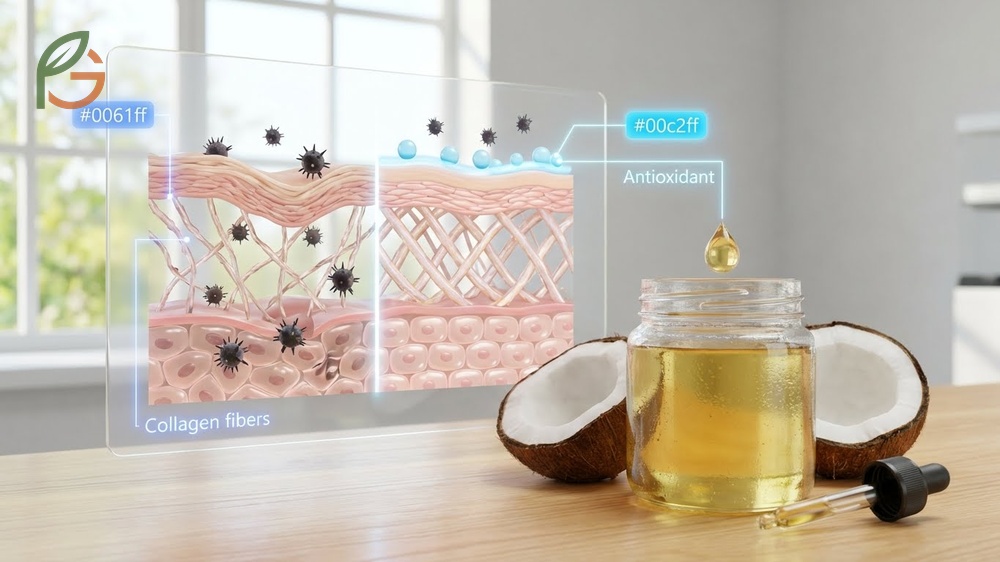
Current data indicates coconut oil stimulates collagen production and reduces oxidative stress—two key factors in skin aging. A controlled study measuring anti-aging parameters found that coconut oil increased collagen density by 32.23% after just two weeks of daily use[4].
The antioxidants in coconut oil neutralize free radicals before they damage skin cells. This protection is crucial because free radical damage breaks down collagen and elastin fibers, leading to wrinkles and sagging. You’re essentially giving your skin defensive tools against daily environmental assault.
Most people notice plumper, more supple skin within three weeks of consistent use. Fine lines appear less pronounced because well-hydrated skin naturally looks smoother. The collagen boost takes longer—typically 6-8 weeks—but the results are measurable.
Collagen Synthesis Boost
Research shows coconut oil promotes collagen formation through multiple mechanisms. It activates growth factors like TGF-β that signal your skin to produce new collagen. It also protects existing collagen from degradation by enzymes that break down structural proteins[4].
The most dramatic results came from a study combining coconut oil with growth factors. Collagen density increased by 67.1% compared to control groups after two weeks[4]. Even basic coconut oil alone showed significant improvements, making it an accessible anti-aging option.
Wrinkle Reduction Results
Clinical measurements show coconut oil reduces both the number and depth of wrinkles. After two weeks of daily application, participants experienced a 7.4% reduction in wrinkle count[4]. Skin recovery time—how quickly skin bounces back after being pinched—improved by 37%.
Epidermal thickness increased by over 100% in treated groups, meaning the outer layer of skin became more robust and youthful. This thickening effect helps reduce the appearance of fine lines and creates a smoother skin surface.
- Increases collagen density by up to 67.1% within two weeks when used consistently[4]
- Reduces wrinkle depth through improved skin hydration and plumping effects
- Improves skin elasticity by strengthening collagen and elastin fiber networks
- Speeds up skin recovery time by 37%, indicating enhanced barrier function[4]
- Protects against free radical damage through natural antioxidant compounds
- Enhances cell proliferation, supporting natural skin renewal processes
Realistic Expectations: While coconut oil improves collagen and reduces wrinkles, it won’t eliminate deep lines or reverse severe sun damage. It’s most effective for prevention and treating early signs of aging when combined with sun protection.
Treating Skin Conditions
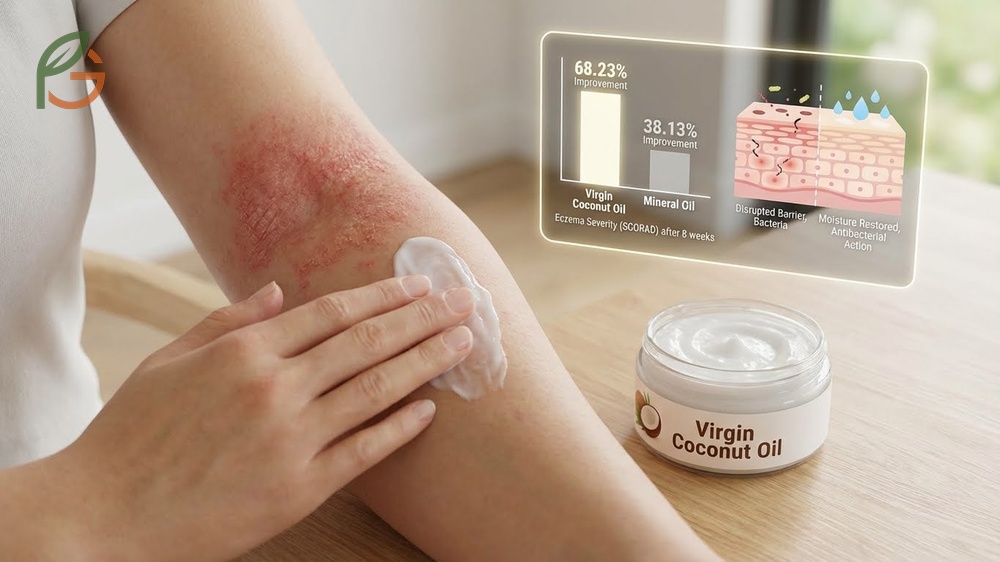
Evidence suggests coconut oil is particularly effective for inflammatory skin conditions like eczema and atopic dermatitis. A randomized trial of 117 patients showed that virgin coconut oil reduced eczema severity (measured by SCORAD index) by 68.23% after eight weeks, compared to only 38.13% improvement in the mineral oil group[2].
The mechanism involves both moisture restoration and antibacterial action. Eczema-affected skin often has disrupted barrier function and bacterial overgrowth. Coconut oil addresses both issues simultaneously—it rebuilds the lipid barrier while reducing harmful bacteria like S. aureus[5].
For psoriasis, the evidence is more limited but promising. Coconut oil’s anti-inflammatory properties may help reduce the redness and scaling associated with psoriasis plaques. It’s not a cure, but it can provide symptom relief when used alongside prescribed treatments.
Another study comparing coconut oil to olive oil in 52 adults with eczema found that coconut oil significantly reduced dryness and helped control eczema symptoms more effectively. The lauric acid content appears to be the key differentiator, providing benefits that other plant oils don’t offer.
- Eczema (atopic dermatitis) – reduces severity by 68% and controls bacterial colonization[2]
- Xerosis (dry skin) – improves hydration equally to or better than mineral oil
- Contact dermatitis – soothes inflammation and repairs damaged barrier function
- Psoriasis – provides moisture and anti-inflammatory effects for plaque management
- Minor wounds and skin cracks – antibacterial properties prevent infection while moisturizing
- Mild acne – lauric acid fights P. acnes bacteria without harsh chemical side effects[3]
When to Seek Medical Advice: Coconut oil complements but doesn’t replace medical treatment for chronic skin conditions. If you have severe eczema, psoriasis, or persistent skin problems, consult a dermatologist before relying solely on coconut oil.
How to Use Coconut Oil for Face Care
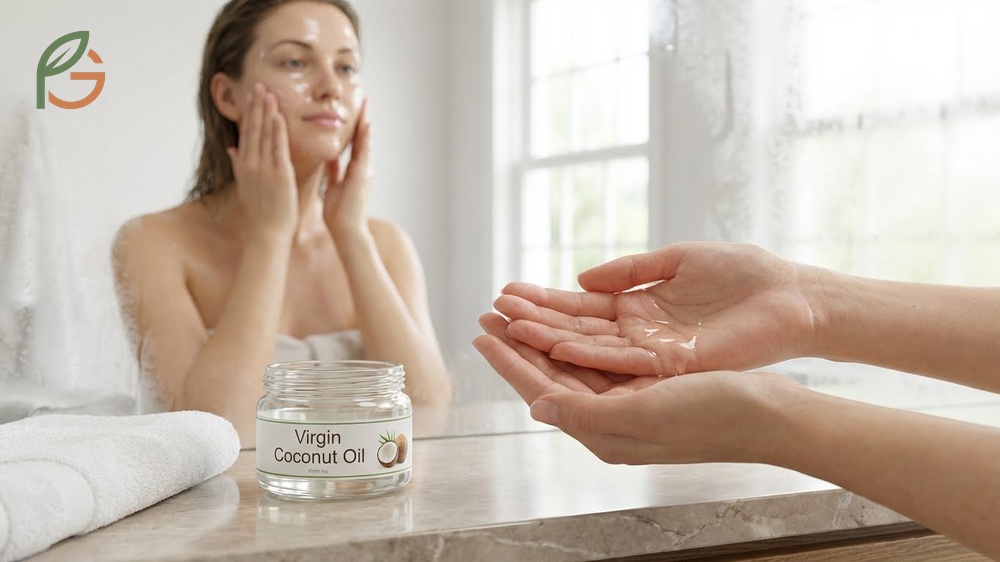
The most effective application method is warming 2-3 drops between your palms until it liquefies, then gently massaging it onto clean, slightly damp skin. This technique helps the oil penetrate deeper while sealing in moisture from the water on your skin’s surface.
For daily moisturizing, apply coconut oil right after showering when your pores are open and skin is receptive. Pat your face with a towel to remove excess water, but leave it slightly damp. The oil will spread more easily and won’t feel greasy.
If you’re using it as a nighttime treatment, apply a thin layer before bed. You’ll wake up with noticeably softer skin. This works particularly well in winter when indoor heating strips moisture from your face.
As a makeup remover, coconut oil dissolves even waterproof mascara without harsh rubbing. Apply generously, massage for 30 seconds, then wipe away with a warm, damp cloth. Follow with your regular cleanser to remove any oily residue.
For targeted treatment of dry patches or eczema flare-ups, apply a slightly thicker layer to affected areas twice daily. Clinical studies used once-daily application after bathing, which proved sufficient for significant improvements[1].
- Daily facial moisturizer – use 2-3 drops after cleansing, morning or night
- Overnight treatment – apply thin layer before sleep for intensive hydration
- Makeup remover – massage onto dry skin, wipe with warm cloth, then cleanse
- Face scrub base – mix with brown sugar (2 tsp oil + 2.5 tsp sugar) for gentle exfoliation
- Healing balm – apply to cracked skin, cuts, or irritated patches twice daily
- Under-eye treatment – gently pat small amount around eye area to reduce fine lines
- Face mask boost – add 1 tsp to honey or yogurt masks for extra moisturizing power
Patch Test First: Even though coconut oil is generally safe, test it on a small area of your inner arm for 24 hours before applying to your face. This is especially important if you have sensitive or acne-prone skin.
Conclusion
The evidence is clear: coconut oil benefits for skin are backed by rigorous clinical studies showing measurable improvements in hydration, barrier function, and anti-aging markers. You’re not just moisturizing when you apply coconut oil—you’re strengthening your skin’s natural defenses while fighting harmful bacteria.
Current guidance emphasizes choosing virgin or unrefined coconut oil for maximum benefits, as processing can reduce the concentration of beneficial fatty acids and antioxidants. FruitGarden connects you with research-based insights on how tropical crops like coconuts provide natural solutions for skin health, linking sustainable cultivation practices to effective personal care.
Medical Disclaimer
Important Medical Disclaimer: This content is for informational and educational purposes only. It is not intended as a substitute for professional medical advice, diagnosis, or treatment. Always consult a qualified healthcare professional or dermatologist before making any changes to your skincare routine, especially if you have existing skin conditions, allergies, or are using prescription topical medications. Coconut oil may not be suitable for all skin types, and individual results will vary.
Frequently Asked Questions
Can I use coconut oil on my face every day?
Yes, most people can use coconut oil daily without issues. Clinical studies showing the best results used once-daily application after bathing, which improved skin moisture by nearly 149% after four weeks. Start with a small amount (2-3 drops) and monitor how your skin responds, especially if you’re acne-prone.
Does coconut oil clog pores and cause acne?
Coconut oil has a moderate comedogenic rating, meaning it can clog pores in some people but not others. Research shows its lauric acid actually fights acne-causing bacteria, so many people see improvements. If you have extremely oily or acne-prone skin, patch-test first or use it only on dry areas like cheeks and forehead.
How long does it take to see results from using coconut oil on skin?
You’ll notice improved softness and hydration within the first week of consistent use. Measurable moisture improvements appear after two weeks (100% increase), with maximum benefits at four weeks (149% increase). Anti-aging effects like collagen improvement take longer—typically 6-8 weeks of daily application.
Is virgin coconut oil better than refined for skin care?
Yes, virgin or unrefined coconut oil retains more beneficial compounds including antioxidants, vitamins, and the full spectrum of fatty acids. The clinical studies showing dramatic skin improvements all used virgin coconut oil. Refined versions work for basic moisturizing but won’t deliver the same antibacterial and anti-aging benefits.
Can coconut oil help with eczema or psoriasis?
Research shows coconut oil reduces eczema severity by 68% after eight weeks, significantly outperforming mineral oil. It works by rebuilding the skin barrier and fighting bacterial overgrowth common in eczema. For psoriasis, evidence is more limited, but its anti-inflammatory properties may help reduce scaling and redness when used alongside prescribed treatments.
Should I apply coconut oil before or after moisturizer?
Coconut oil works best on slightly damp skin as your sole moisturizer, applied right after cleansing. If you prefer layering products, apply water-based serums first, then coconut oil last since oils create a barrier that prevents other products from penetrating. Don’t mix it with your regular moisturizer—use one or the other.
What’s the best way to remove coconut oil from my face?
Use a warm, damp washcloth to gently wipe away excess oil, then follow with a mild cleanser if needed. Most of the oil should absorb within 10-15 minutes if you’ve used the right amount (2-3 drops). If your skin feels greasy, you’re using too much—coconut oil is concentrated, so a little goes a long way.





