

Can dogs eat coconut? Yes, dogs can safely eat coconut in moderation. Research shows coconut meat is non-toxic to dogs but contains medium-chain triglycerides that may cause digestive upset if overfed[1]. The flesh and milk of fresh coconuts contain oils that may cause stomach upset, loose stools, and diarrhea when consumed in large amounts[2]. FruitGarden synthesizes current veterinary research to help pet owners make informed decisions about coconut-based treats for their dogs.
Quick Answer
- Coconut meat is safe for dogs in small portions (1-2 teaspoons for small dogs, 1-2 tablespoons for large dogs)
- Contains medium-chain triglycerides that offer antimicrobial benefits but can cause digestive issues[1]
- High in calories and fat—can lead to weight gain and pancreatitis risk if overfed[3]
- Always remove the husk and shell—they’re choking hazards and can cause intestinal blockages
Can Dogs Eat Coconut

Studies demonstrate that coconut is non-toxic to dogs and can be a nutrient-rich addition when served properly[1]. The fresh pulp of coconut contains lauric acid and healthy fats that support skin and coat health. However, the high calorie and fat content means you’ll need to limit portions to prevent digestive problems.
Veterinary experts emphasize that coconut should never replace your dog’s regular balanced diet. It’s best offered as an occasional treat rather than a daily supplement. Most dogs enjoy the taste and texture of fresh coconut meat, but some may experience stomach upset if they’re not used to high-fat foods.
The medium-chain triglycerides in coconut provide antimicrobial and antifungal properties that can benefit your dog’s overall health[4]. Research indicates these compounds may aid digestion and support brain function. That said, too much fat in one sitting can trigger pancreatitis, a serious inflammatory condition.
Types of Coconut Dogs Can Eat
Fresh coconut meat is the safest option for dogs. You’ll want to serve only the soft white pulp, cut into bite-sized pieces to prevent choking. Raw coconut contains no added sugars or preservatives that could harm your pet.
Avoid dried coconut or desiccated coconut products, as these are typically loaded with added sugar that can cause weight gain and dental problems. Sweetened coconut flakes marketed for human consumption often contain high levels of sugar that aren’t suitable for canine diets. Plain, unsweetened shredded coconut is acceptable in very small amounts, but fresh is always better.
- Safe: Fresh coconut meat (white pulp), plain unsweetened shredded coconut, coconut oil
- Moderate risk: Coconut water (high potassium), coconut milk (high fat content)
- Unsafe: Sweetened coconut flakes, coconut with added sugars, coconut husk or shell
- Avoid completely: Coconut products containing xylitol, chocolate-covered coconut, flavored coconut treats
- Caution: Dried coconut chips (often contain added oils and salt)
Nutritional Benefits
Coconut provides medium-chain fatty acids that support your dog’s immune system. The main MCT is lauric acid, which has antimicrobial, antifungal, and antiviral properties[4]. These compounds help fight bacteria and may improve your dog’s resistance to infections.
The oil in coconut also contains capric and caprylic acids, both known for their antifungal effects. Additionally, coconut provides polyunsaturated and monounsaturated fatty acids that support brain health and help lower cholesterol[4]. Some research suggests these nutrients may assist with weight management when used appropriately.
Important Note: Don’t assume more coconut equals more benefits. The high fat content means even small amounts provide concentrated nutrition, and overfeeding can quickly lead to digestive upset or weight gain.
Is Coconut Safe for Dogs
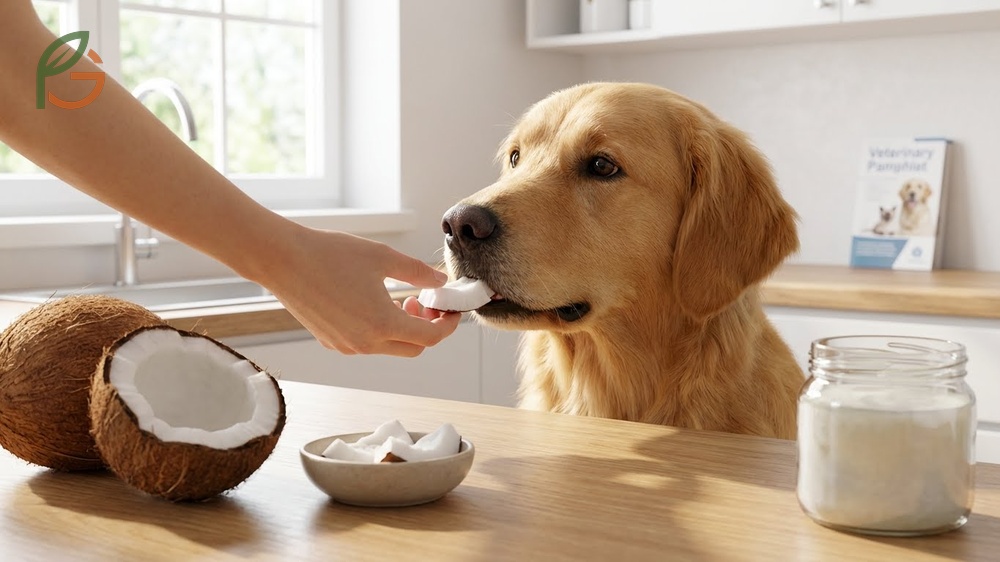
Current veterinary guidance confirms coconut is safe for most healthy dogs when given in appropriate portions. The ASPCA notes that coconut and coconut-based products won’t cause serious harm in small amounts[2]. However, you’ll need to monitor your dog’s response, especially the first time you introduce coconut to their diet.
Dogs with pre-existing health conditions require extra caution. If your dog has pancreatitis, is overweight, or has kidney disease, check with your veterinarian before offering any coconut products. The fat content can exacerbate these conditions and potentially cause serious complications.
What often gets overlooked is that coconut husks and shells pose significant dangers. These hard outer layers can splinter in your dog’s mouth, damage teeth, or create intestinal blockages if swallowed. Always remove all shells and husks before giving coconut to your dog, and supervise them while they eat.
Potential Risks
Research shows the high fat content in coconut can trigger pancreatitis, a potentially life-threatening inflammation of the pancreas[3]. Dogs with sensitive stomachs or those prone to pancreatitis should avoid coconut entirely. The condition develops when the pancreas becomes inflamed and starts digesting itself, requiring immediate veterinary care.
Coconut’s calorie density presents another concern for weight management. Just one ounce of coconut meat contains approximately 100 calories, which can quickly add up for small dogs. Overweight dogs face increased risks for diabetes, joint problems, and heart disease, making portion control critical.
- Gastrointestinal upset including bloating, gas, and diarrhea from medium-chain triglycerides
- Weight gain from excessive calorie intake (coconut is calorie-dense)
- Pancreatitis risk increases with high-fat foods, especially in predisposed breeds
- Choking hazards from large coconut pieces or accidental shell consumption
- Intestinal blockages if dogs consume coconut husk or shell fragments
- Allergic reactions in sensitive dogs (though rare)
Signs of Digestive Issues
Watch for signs of stomach upset within 6-12 hours after your dog eats coconut. Common symptoms include vomiting, diarrhea, loss of appetite, and excessive gas. If your dog shows these signs, withhold food for 12-24 hours and offer only water, then contact your veterinarian if symptoms persist.
More serious warning signs require immediate veterinary attention. These include severe abdominal pain (hunched posture, reluctance to move), repeated vomiting, bloody diarrhea, or lethargy. These symptoms may indicate pancreatitis or an intestinal blockage, both of which require prompt medical treatment.
Coconut Oil for Dogs
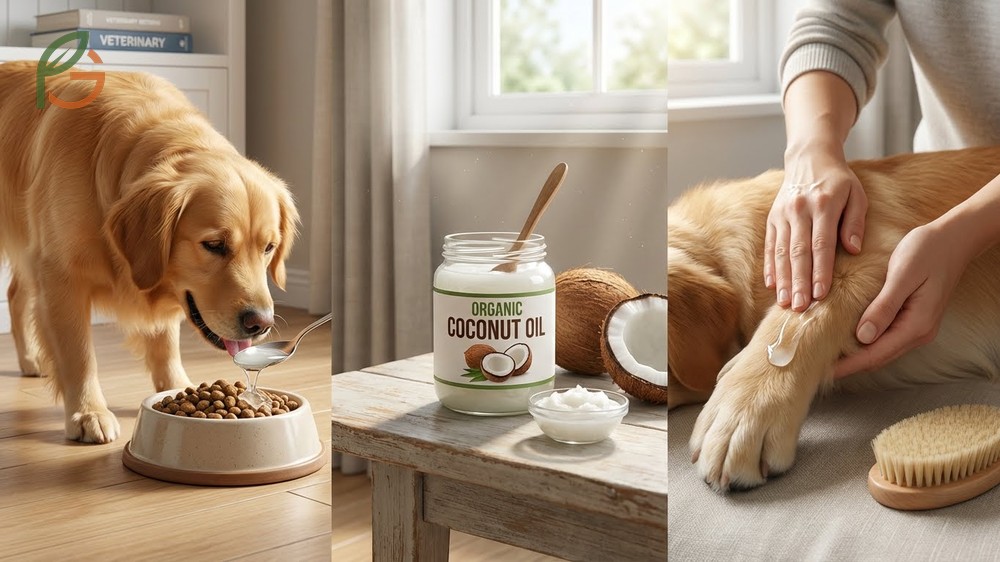
Veterinary research indicates coconut oil can be a beneficial supplement when used correctly. Most vets consider it a good, nutrient-dense addition to a healthy dog’s diet[4]. You can add it to your dog’s food or apply it topically for skin and coat benefits.
Current data indicates coconut oil may help with canine digestion, improve brain activity and mental function, and assist with weight loss when used as part of a balanced diet[4]. The lauric acid in coconut oil provides antimicrobial properties that can fight harmful bacteria and support your dog’s immune system. Many dog owners report improvements in their pet’s coat shine and skin condition within 2-4 weeks of regular use.
Benefits of Coconut Oil for Dog Coat
The fatty acids in coconut oil moisturize your dog’s skin from the inside out. When fed regularly in small amounts, these oils help alleviate dry, itchy skin and reduce inflammation from skin allergies. You’ll typically see results within 3-4 weeks of consistent use.
Applied topically, coconut oil works as a natural moisturizer for dry, flaky skin. It may also help stop the spread of bacterial skin infections or yeast infections thanks to its antimicrobial properties. Many groomers recommend applying a small amount to your dog’s coat 10-15 minutes before bathing for extra shine.
- Reduces dry, flaky skin and dandruff when applied topically or fed regularly
- Improves coat shine and texture within 2-4 weeks of consistent use
- Helps soothe hot spots and minor skin irritations with antimicrobial properties
- May reduce excessive shedding by strengthening hair follicles
- Provides natural deodorizing effect for dogs with strong odors
- Supports healing of minor cuts and abrasions when applied to affected areas
How to Use Coconut Oil
Start with small doses to avoid digestive upset. For dogs under 20 pounds, begin with 1/4 teaspoon daily. Medium dogs (20-50 pounds) can handle 1/2 to 1 teaspoon, while large breeds over 50 pounds can receive up to 1 tablespoon per day.
Mix coconut oil into your dog’s regular food or let them lick it directly from a spoon. You can also melt it and drizzle over kibble for easier mixing. If using topically, warm the oil between your hands until it liquefies, then massage into your dog’s coat and skin, avoiding the eyes and nose.
Tip: Always introduce coconut oil gradually over 1-2 weeks to let your dog’s digestive system adjust. Some dogs may experience loose stools initially, which typically resolves as their body adapts to the new fat source.
How Much Coconut Can a Dog Eat

Veterinary experts recommend strict portion control based on your dog’s size and weight. For small dogs under 20 pounds, limit coconut meat to 1-2 teaspoons per serving. Medium-sized dogs (20-50 pounds) can safely consume 1-2 tablespoons, while large breeds over 50 pounds can handle up to 3 tablespoons.
These portions should be treated as occasional snacks, not daily additions. Most veterinarians suggest offering coconut no more than 2-3 times per week to minimize digestive risks. The high calorie content means coconut treats should count toward your dog’s daily calorie intake, not as extras on top of regular meals.
Consider your dog’s overall diet and health status before setting portion sizes. Dogs eating high-fat foods or struggling with weight issues need smaller amounts or should avoid coconut entirely. If you’re unsure about appropriate serving sizes for your specific dog, consult your veterinarian for personalized guidance.
This table compares recommended coconut portions, frequency guidelines, and calorie considerations across three dog size categories from small to large breeds
| Dog Size | Weight Range | Coconut Meat Portion | Frequency |
|---|---|---|---|
| Small | Under 20 lbs | 1-2 teaspoons | 2-3 times per week maximum |
| Medium | 20-50 lbs | 1-2 tablespoons | 2-3 times per week maximum |
| Large | Over 50 lbs | 2-3 tablespoons | 2-3 times per week maximum |
- Count coconut treats as part of daily calorie intake (10% rule: treats should be no more than 10% of total daily calories)
- Reduce regular meal portions slightly on days when you offer coconut to maintain caloric balance
- Monitor your dog’s weight weekly when introducing coconut to catch any unwanted weight gain early
- Adjust portions downward if your dog shows any digestive upset or loose stools
- Skip coconut entirely for dogs with diagnosed pancreatitis, obesity, or inflammatory bowel disease
Can Dogs Drink Coconut Milk
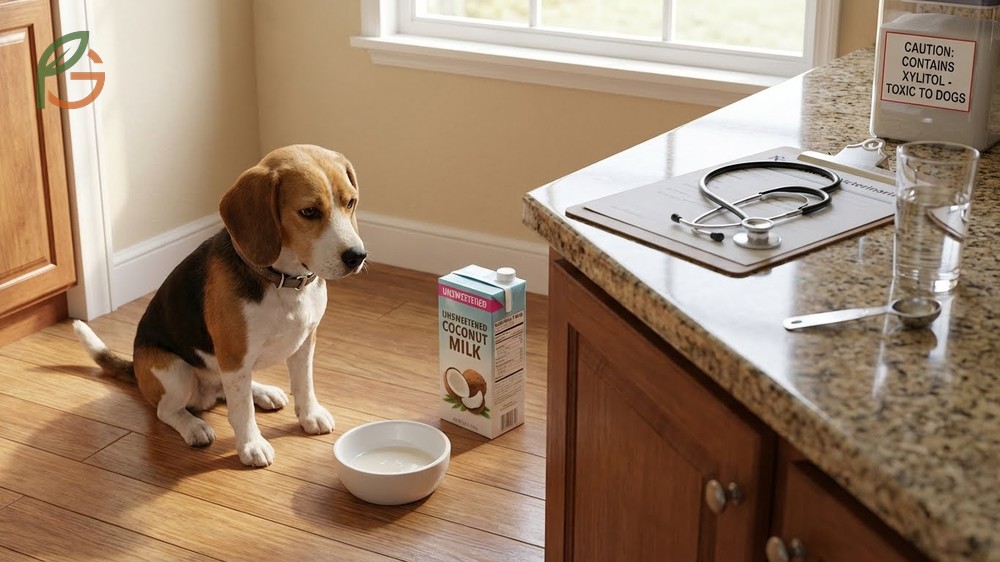
Coconut milk is safe for dogs in very small quantities, but it’s not recommended as a regular drink. The high fat content poses the same pancreatitis risks as coconut meat. Most veterinarians advise against making coconut milk a dietary staple for dogs.
If you do offer coconut milk, stick to unsweetened varieties with no added sugars or artificial sweeteners. Never give dogs coconut milk products containing xylitol, a sugar substitute that’s highly toxic to canines. Check ingredient labels carefully, as many commercial coconut milk drinks contain additives unsuitable for pets.
Coconut water presents a different profile than coconut milk. While generally safe in small amounts, coconut water contains high potassium levels that can cause hyperkalemia in dogs with kidney disease[2]. Use coconut water only as an occasional treat, never as a replacement for fresh drinking water.
- Coconut milk: Limit to 1-2 tablespoons for large dogs, less for smaller breeds, no more than once per week
- Coconut water: Offer 1-4 tablespoons depending on dog size, only occasionally for hydration boost
- Avoid: Sweetened coconut milk, coconut milk with xylitol, flavored coconut drinks, coconut creamers
- Monitor: Watch for diarrhea or vomiting within 12 hours of offering coconut milk products
- Special concerns: Dogs with kidney disease, diabetes, or heart conditions should avoid coconut water entirely due to high potassium and natural sugar content
Symptoms of Coconut Allergy in Dogs

While rare, dogs can develop allergic reactions to coconut just like humans. Evidence suggests coconut allergies occur in a small percentage of dogs, typically manifesting within 2-24 hours of consumption. If your dog has never eaten coconut before, introduce it in tiny amounts and watch carefully for adverse reactions.
Skin-related symptoms are the most common signs of coconut allergy in dogs. You’ll notice increased scratching or itching, red or irritated skin, and swelling around the face and paws. Some dogs develop hives or raised bumps on their skin that appear suddenly after eating coconut.
Gastrointestinal symptoms can also indicate an allergic response. These include vomiting, diarrhea, excessive gas, and loss of appetite. If your dog shows multiple symptoms simultaneously, discontinue coconut immediately and contact your veterinarian for guidance.
- Increased scratching, licking, or biting at skin (especially paws, face, and ears)
- Red, inflamed, or irritated skin patches that appear within hours of eating coconut
- Facial swelling, particularly around eyes, muzzle, or ears
- Hives or raised welts on skin surface
- Digestive upset including vomiting, diarrhea, or excessive drooling
- Respiratory symptoms (rare but serious): difficulty breathing, wheezing, or coughing
- Chronic ear infections that develop after regular coconut consumption
Warning: Severe allergic reactions can cause anaphylaxis, though this is extremely rare with coconut. If your dog shows difficulty breathing, extreme swelling, or collapses after eating coconut, seek emergency veterinary care immediately.
To test for coconut sensitivity, offer a tiny amount (less than 1/4 teaspoon) and wait 24-48 hours before giving more. Keep a journal noting the date, amount given, and any reactions observed. This information helps your veterinarian determine if coconut is safe for your specific dog or if an allergy exists.
Conclusion
The evidence is clear: dogs can eat coconut safely when you follow proper portion guidelines and preparation methods. Fresh coconut meat offers nutritional benefits including medium-chain triglycerides with antimicrobial properties, but the high fat content requires careful moderation to prevent digestive issues and weight gain.
Current veterinary guidance emphasizes treating coconut as an occasional snack rather than a dietary staple. Always remove husks and shells, start with small amounts to test tolerance, and consult your veterinarian if your dog has pre-existing health conditions. FruitGarden recommends prioritizing your dog’s regular balanced diet while using coconut sparingly as a nutrient-rich treat that supports coat health and immune function.
Medical Disclaimer
Important Medical Disclaimer: This content is for informational and educational purposes only. It is not intended as a substitute for professional veterinary advice, diagnosis, or treatment. Always consult a qualified veterinarian before making any changes to your dog’s diet, especially if your pet has pre-existing health conditions such as pancreatitis, obesity, kidney disease, or food allergies. Individual dogs may react differently to coconut products, and what’s safe for one dog may not be appropriate for another.
Frequently Asked Questions
Can Dogs Have Coconut Every Day?
Dogs shouldn’t have coconut every day due to its high fat and calorie content. Veterinarians recommend offering coconut no more than 2-3 times per week as an occasional treat. Daily consumption increases the risk of weight gain, digestive upset, and pancreatitis, especially in dogs with sensitive stomachs or predisposition to pancreatic issues.
Is Coconut Meat Better Than Coconut Oil for Dogs?
Both coconut meat and coconut oil offer similar nutritional benefits since they come from the same source. Coconut meat provides additional fiber and texture that some dogs enjoy, while coconut oil is more concentrated and easier to measure for precise dosing. Most veterinarians recommend coconut oil for consistent daily supplementation and coconut meat as an occasional treat.
Can Puppies Eat Coconut?
Puppies can eat small amounts of coconut after they’re fully weaned and eating solid food (typically 8-10 weeks old). However, their developing digestive systems are more sensitive to high-fat foods, so start with very tiny portions (1/4 teaspoon or less) and watch carefully for any signs of diarrhea or stomach upset. Consult your veterinarian before introducing coconut to puppies under 6 months old.
What Should I Do If My Dog Ate Too Much Coconut?
If your dog consumed excessive coconut, monitor them closely for 12-24 hours for signs of digestive upset including vomiting, diarrhea, bloating, or loss of appetite. Withhold food for 6-12 hours to let their stomach settle, but ensure they have access to fresh water. Contact your veterinarian if symptoms persist beyond 24 hours, worsen, or if your dog shows signs of severe abdominal pain or lethargy.
Can Dogs Eat Dried Coconut or Coconut Flakes?
Dogs should avoid sweetened dried coconut and coconut flakes, as these products typically contain added sugars that contribute to weight gain and dental problems. Plain unsweetened dried coconut is technically safe in very small amounts, but fresh coconut meat is always the better choice. Check ingredient labels carefully—many commercial coconut products contain additives, preservatives, or sweeteners that aren’t appropriate for dogs.
Is Coconut Good for Dogs With Skin Problems?
Research indicates coconut oil can help dogs with dry, itchy skin or minor skin allergies due to its moisturizing fatty acids and antimicrobial properties. You can apply it topically or add small amounts to their food. However, coconut won’t cure serious skin conditions like severe allergies, mange, or bacterial infections—these require proper veterinary diagnosis and treatment. Use coconut as a complementary approach alongside veterinary care, not as a replacement.
Can Cats Eat Coconut Too?
Yes, cats can eat small amounts of coconut with the same precautions that apply to dogs. Coconut is non-toxic to cats, but they’re obligate carnivores with less ability to digest plant-based fats compared to dogs. Most cats show little interest in coconut due to their preference for meat-based foods. If offering coconut to cats, use even smaller portions than recommended for dogs and watch carefully for digestive upset.





