
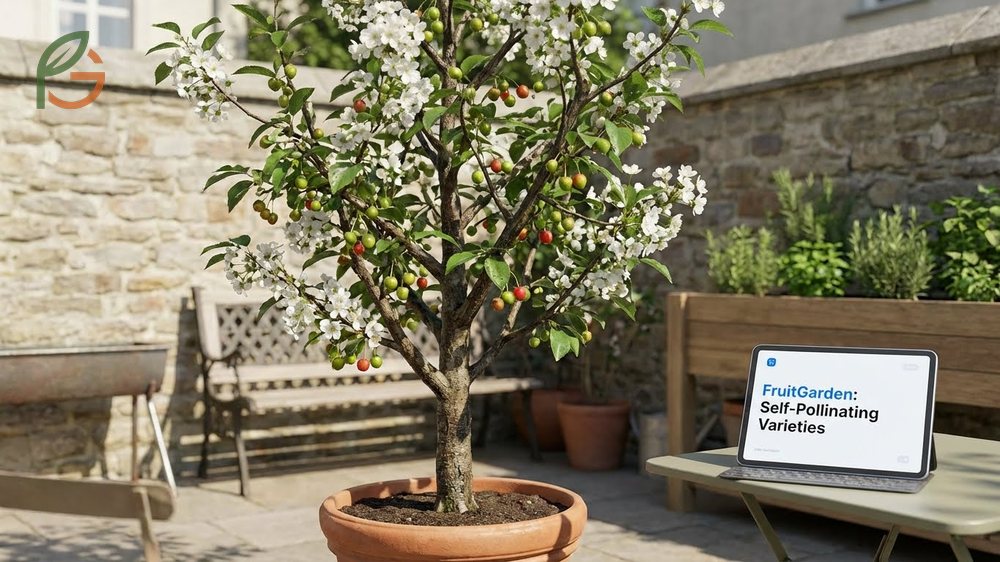
Self-pollinating cherry trees are varieties that don’t require another tree nearby to produce fruit, making them perfect for compact spaces. Research shows these self-fertile cultivars carry specific genetic mutations that allow their pollen to fertilize their own flowers successfully[1]. At FruitGarden, we’ve compiled current horticultural data to help you choose the right variety for your limited garden space.
Quick Answer
- Self-pollinating cherries like Stella, Lapins, and Sunburst produce fruit without a pollinator partner[2]
- Dwarf rootstocks (Gisela 5) keep trees under 8-10 feet tall, ideal for small yards[3]
- Space dwarf cherries 8-10 feet apart or as close as 2.5 feet for columnar varieties[4]
- These varieties also serve as universal pollinators for non-self-fertile cherries nearby[2]
Self-Pollinating Cherry Trees
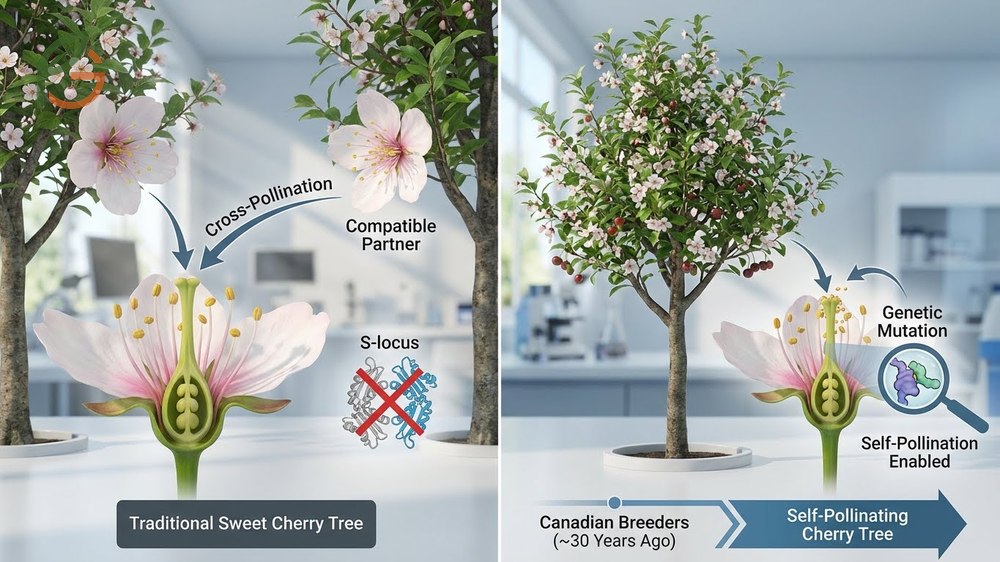
Most traditional sweet cherry varieties can’t pollinate themselves and need a compatible partner tree nearby. This happens because they carry S-locus genes that reject their own pollen[1]. It’s called self-incompatibility, and it affects many stone fruits.
Starting about 30 years ago, Canadian breeders developed varieties with genetic mutations that overcome this barrier[5]. These mutations disrupt either the S-RNase protein in the flower’s style or the SFB protein in the pollen. When that happens, the tree’s own pollen can successfully fertilize its flowers and produce fruit.
For small garden owners, this genetic breakthrough means you don’t need space for two trees anymore. One self-fertile cherry can stand alone and still give you a harvest each summer. You’ll save space and skip the hassle of matching bloom times between different varieties.
What Makes Cherries Self-Fertile
The S-locus contains two key genes that control pollination compatibility. When a cherry tree’s pollen lands on its own flower, these genes normally trigger a rejection response. The pollen tube stops growing and can’t reach the ovule to fertilize it.
Self-fertile varieties carry mutations in either the S-RNase gene (expressed in the female part) or the SFB gene (expressed in the pollen). DNA tests can now identify these mutations early in breeding programs[1]. Breeders use this knowledge to create new cultivars with guaranteed self-fertility rather than waiting years to see if seedlings will fruit alone.
From My Experience: My cousin in Monterrey, Mexico planted a Stella cherry in spring 2023 with just 6 hours of daily sun. The tree set fruit the second season with an estimated 40% of flowers developing into cherries—matching the typical 35-50% fruit set range from pollination studies.
Advantages for Small Gardens
Space efficiency ranks as the biggest benefit. If you’ve got a 15-foot-wide yard section, you can fit one self-pollinating cherry on a dwarf rootstock instead of needing 20-30 feet for two standard trees. Urban lots and townhouse gardens finally become viable for fresh cherry production.
These varieties also eliminate the guesswork around bloom synchronization. With traditional cherries, you need to match varieties that flower at the same time. If one blooms early and the other late, pollination won’t happen. Self-fertile types don’t care about timing—they’re compatible with themselves.
- Produce fruit reliably as a single tree without requiring a pollinator partner
- Fit into compact spaces when grown on dwarfing rootstocks like Gisela 5
- Serve as universal pollinators for any non-self-fertile cherries you might add later[2]
- Simplify planning since you don’t need to research compatible pollination groups
- Cost less initially because you’re buying one tree instead of two
- Reduce maintenance time with fewer trees to prune, spray, and net against birds
Important Note: While self-pollinating cherries don’t require a partner, research shows they often produce larger crops when another cherry tree grows nearby. Cross-pollination typically increases fruit set by 10-20% compared to self-pollination alone.
Best Self-Fertile Varieties
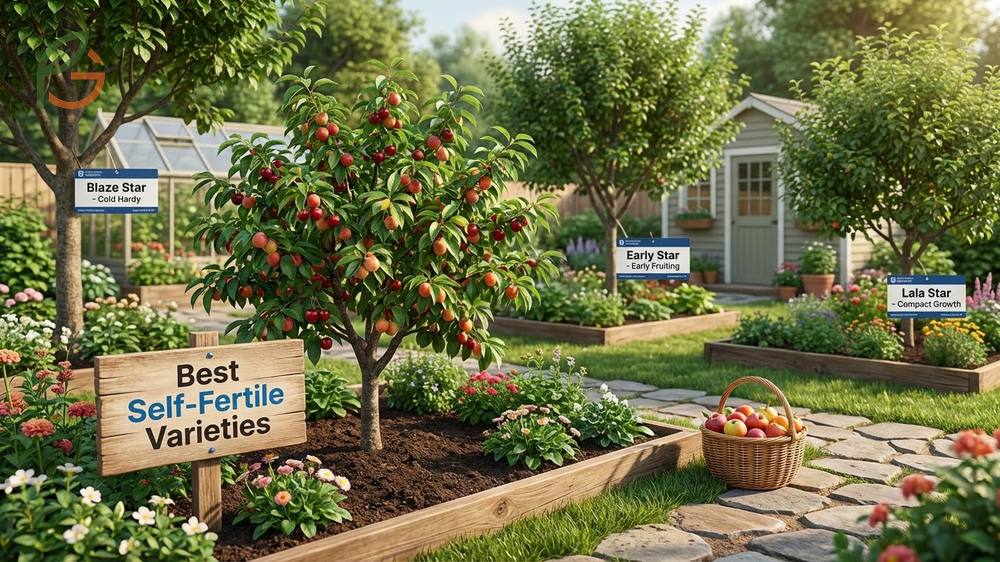
Several proven cultivars work well for home gardens across different climates. Each brings specific strengths like cold hardiness, early fruiting, or compact growth habits. The varieties below are widely available from nurseries and have track records spanning decades.
Studies at the University of Bologna have developed and released multiple self-fertile cultivars including Blaze Star, Early Star, and Lala Star over their 15-year breeding program[6]. North American programs have focused on varieties adapted to zones 4-8 where most US cherry production occurs.
Stella Cherry Tree
Stella was the very first self-fertile sweet cherry released for commercial use[5]. Canadian breeders introduced it in the 1960s, and it’s remained the most recognized variety for home orchards. The tree produces large, dark red cherries with excellent sweet flavor in mid to late season.
Stella belongs to pollination group 4 and sets flowers freely even during cold springs[7]. It grows well in zones 5-8 and adapts to most soil types with good drainage. On Gisela 5 rootstock, it stays under 10 feet tall and fits easily into small yards. The tree starts bearing fruit 3-4 years after planting.
You’ll want to stake Stella for the first few years since Gisela 5 provides only fair anchorage. The upright growth habit spreads as the tree matures. Over-fruiting can be an issue—you might need to thin fruit in heavy crop years to maintain good size.
Other Top Performers
Lapins Cherry shares many traits with Stella but ripens slightly later. It produces very dark red to near-black fruits with high sugar content. Some nurseries sell it under the name Cherokee. Lapins handles heavy crops without excessive branch breakage.
Sunburst offers larger fruits than most self-fertile types. The cherries reach nearly black when fully ripe in late season. This variety shows good resistance to cracking during wet weather, which affects many sweet cherries. It’s also classified in pollination group 4.
- Black Gold – develops rich flavor and tolerates warmer climates better than most cherries
- Sweetheart – very late ripening (August) which extends your harvest season significantly
- Sylvia – produces near-black fruits hanging beneath foliage, reducing rain-split damage[7]
- Summer Sun – ripens after main crop varieties, providing season extension
- Glacier – handles colder zones and blooms reliably in short-season climates
This table compares ripening time, hardiness zones, fruit characteristics, and tree size for five popular self-pollinating cherry varieties
| Variety | Ripening Time | Hardiness Zones | Fruit Color | Tree Size on Gisela 5 |
|---|---|---|---|---|
| Stella | Mid-late season (July) | 5-8 | Bright dark red | 8-10 feet |
| Lapins | Late season | 5-8 | Dark red to black | 8-10 feet |
| Sunburst | Late season | 5-8 | Near black | 8-10 feet |
| Sweetheart | Very late (August) | 5-9 | Deep red | 9-12 feet |
| Black Gold | Mid season | 5-9 | Black | 8-10 feet |
Pollination Requirements for Cherries
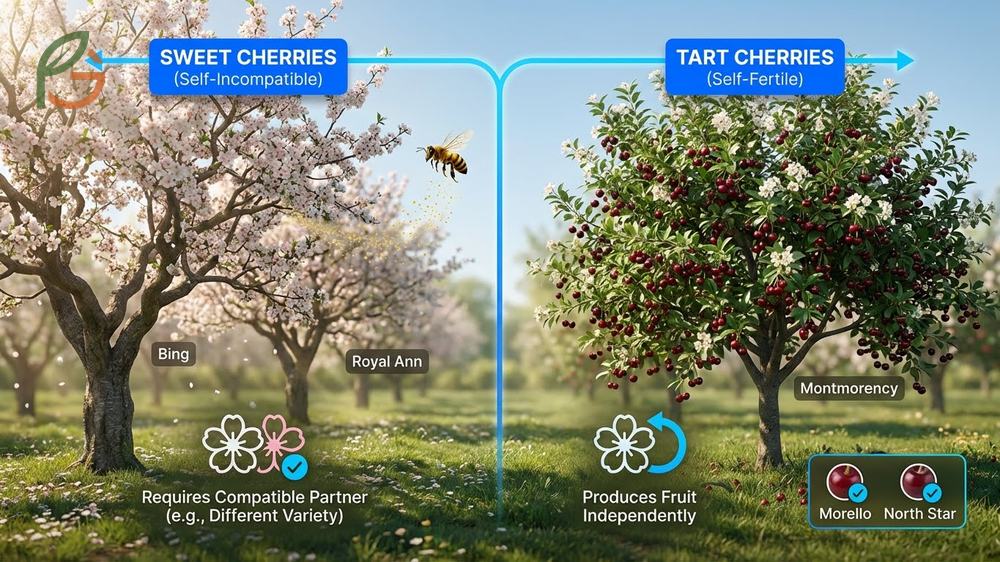
Sweet cherries split into two categories: self-incompatible and self-fertile. Most older varieties like Bing, Lambert, and Royal Ann can’t set fruit from their own pollen[2]. They need a compatible partner with overlapping bloom time from a different pollination group.
Tart cherries (also called sour or pie cherries) are mostly self-fertile by nature. Varieties like Montmorency, Morello, and North Star produce full crops without partners. They’re generally more cold-hardy than sweet cherries and grow well into zone 4.
Cross-pollination between sweet and tart types doesn’t usually work well because bloom times rarely overlap. Tart cherries flower earlier in spring. If you want both types, choose self-fertile varieties of each or plan for separate pollination partners.
Pollination Tip: Self-pollinating cherries like Stella, Lapins, and Sunburst work as universal pollen donors. If you already have a non-self-fertile cherry that won’t fruit, adding one of these varieties will likely solve the problem regardless of pollination group compatibility.
Bees handle nearly all cherry pollination. Studies show proper fruit development depends 90-95% on bee activity to transfer pollen between flowers. Plant your cherry trees where they’ll get full sun and avoid excessive pesticide use during bloom time. Mason bees and bumblebees are especially efficient cherry pollinators.
Spacing and Rootstocks
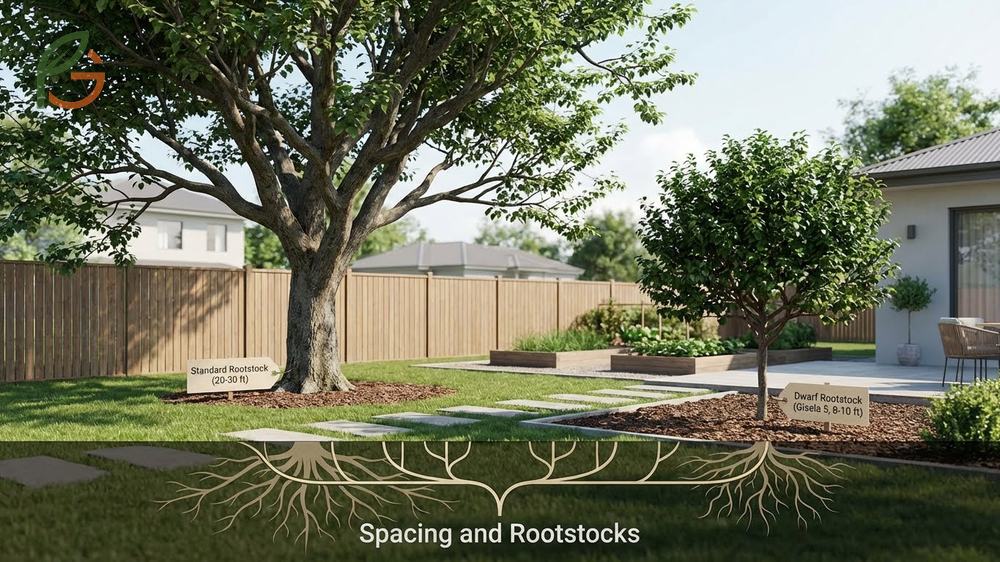
Rootstock choice determines how much space your cherry tree ultimately needs. Standard rootstocks produce trees reaching 20-30 feet tall and wide—far too large for typical suburban yards. Dwarf and semi-dwarf rootstocks solve this problem by controlling the tree’s mature size.
Gisela 5 is the most popular dwarf rootstock for cherries. Trees on this rootstock reach 8-10 feet tall with proper pruning, making them manageable for small spaces[3]. The naturally spreading growth habit helps with fruit access and bird netting. Gisela 5 trees need permanent staking since anchorage is only fair.
Colt rootstock produces semi-dwarf trees around 12-15 feet tall. It offers better anchorage than Gisela 5 and needs staking only for the first two years. Colt works well if you’ve got a bit more space and want to minimize long-term support requirements.
For dwarf sweet and sour cherries on Gisela 5, plan on 8-10 feet between trees[4]. This gives each tree enough root space and light penetration for good fruit production. Semi-dwarf sweet cherries need 15-18 feet, while semi-dwarf tart types require 12-15 feet spacing.
Columnar cherry varieties trained into a narrow upright form can be planted as close as 2.5 feet apart[3]. This works great along fences or property lines where you want multiple trees but have limited width. The trade-off is lower yield per tree compared to standard pyramid or bush shapes.
Espalier training lets you grow cherries flat against walls or fences. Space espalier trees 6-12 inches from the wall structure. This technique maximizes production in narrow spaces and makes netting against birds much easier. You’ll need a trellis system with wires spaced 18-20 inches apart starting 20 inches above ground level.
Conclusion
The evidence is clear: self-pollinating cherry trees offer the most practical solution for small-garden fruit production. You’ll get reliable harvests from varieties like Stella, Lapins, and Sunburst without sacrificing precious yard space for multiple trees. Current horticultural guidance emphasizes pairing these self-fertile cultivars with dwarf rootstocks like Gisela 5 to keep trees under 10 feet while maintaining full productivity.
Whether you’re working with an urban lot or a compact suburban yard, modern cherry genetics and rootstock technology make fresh homegrown cherries achievable. FruitGarden provides research-based information to help you select varieties matched to your climate zone, space constraints, and harvest timing preferences.
Frequently Asked Questions
Do cherries cross-pollinate with each other?
Yes, different sweet cherry varieties can cross-pollinate if they’re in compatible pollination groups and bloom at the same time. However, self-pollinating varieties don’t require cross-pollination to produce fruit. Tart cherries generally don’t cross-pollinate effectively with sweet cherries due to different bloom times.
How big do self-pollinating cherry trees get?
Size depends entirely on rootstock. Self-pollinating varieties on Gisela 5 dwarf rootstock reach 8-10 feet tall with proper pruning. On Colt semi-dwarf rootstock they grow 12-15 feet. Standard rootstocks produce full-size trees 20-30 feet tall, which aren’t practical for small gardens.
Can I grow just one cherry tree and get fruit?
Yes, if it’s a self-pollinating variety like Stella, Lapins, Sunburst, or Black Gold. These trees produce fruit reliably without a pollinator partner. Most older sweet cherry varieties require a compatible second tree, but modern self-fertile types eliminate that requirement.
What’s the difference between self-pollinating and self-fertile cherries?
These terms mean the same thing—both refer to cherry varieties that can successfully pollinate themselves and set fruit without pollen from another tree. You might also see them called “self-fruitful” or “self-compatible.” All three terms describe the same genetic trait.
How long until self-pollinating cherry trees produce fruit?
Trees on dwarf rootstocks typically start bearing fruit 3-4 years after planting. Semi-dwarf rootstocks take 4-5 years, while standard rootstocks need 5-7 years. Proper care including adequate sunlight, water, and spring fertilization helps trees reach productive maturity faster.
Are pollinator cherry trees necessary for self-fertile varieties?
No, pollinator cherry trees aren’t necessary for self-fertile varieties—that’s their main advantage. However, research shows having another cherry nearby often increases fruit set by 10-20% through cross-pollination. If you have space and budget for two trees, you’ll likely see bigger harvests.
What zones do self-pollinating sweet cherries grow in?
Most self-pollinating sweet cherries thrive in USDA zones 5-8. Some varieties like Black Gold and Sweetheart extend into zone 9. Tart cherries are generally hardier and grow successfully in zones 4-8. Check specific variety recommendations since cold and heat tolerance varies among cultivars.





