
How to plant cherry seeds starts with cold stratification for 90-150 days at 33-41°F (1-5°C), mimicking winter conditions that break seed dormancy[1]. Research shows that proper stratification increases germination rates to 60-80% within 4-8 weeks after planting[2]. FruitGarden synthesizes current horticultural research and USDA protocols to guide home gardeners through successful cherry propagation from store-bought or homegrown fruit.
Quick Answer
- Clean and dry fresh cherry pits immediately after eating, then conduct a float test—viable seeds sink within 48 hours
- Stratify seeds in moist sand or peat moss at 33-41°F (1-5°C) for 90-150 days depending on cherry variety[1]
- Plant stratified seeds 1/2 to 1 inch deep in well-draining soil with pH 6.0-7.0[3]
- Germination occurs in 3-8 weeks at 68-75°F (20-24°C) with consistent moisture and 6-8 hours of sunlight daily
How to Plant Cherry Seeds
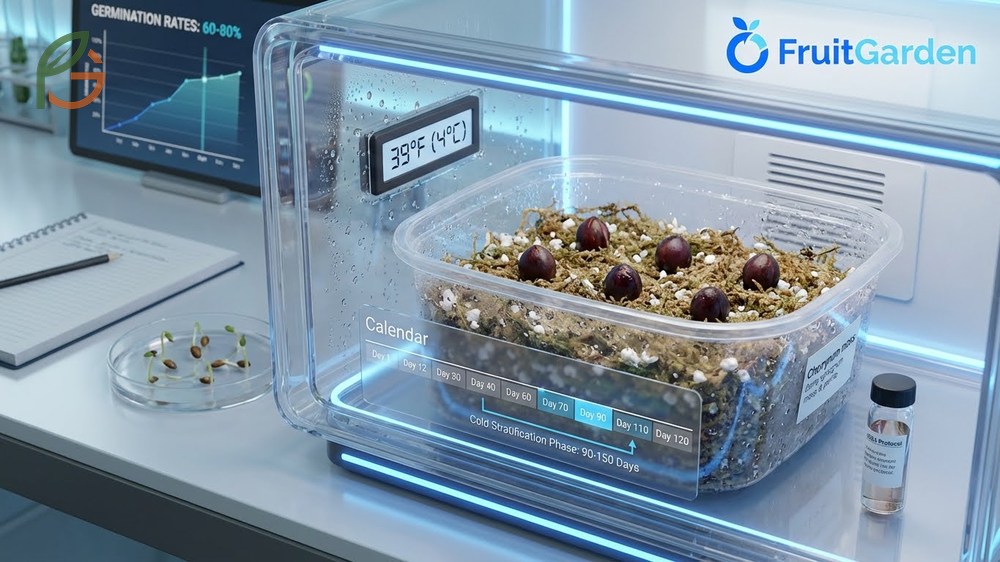
Cherry seeds require exposure to cold temperatures before they’ll germinate, a biological process that prevents premature sprouting during brief warm spells in nature. Studies demonstrate that seeds from most cherry varieties won’t germinate without 90-150 days of stratification at 33-41°F (1-5°C)[1]. Sour cherries typically need 90 days, while sweet cherries often require 120-150 days to complete embryo development.
The timing matters because cherry embryos remain dormant inside the protective endocarp (pit) until moisture and cold trigger biochemical changes. Research from USDA forestry studies shows that alternating warm and cold treatments can crack the hard endocarp, improving germination rates by 15-25%[4]. Most home gardeners find success with standard refrigerator stratification using moist sand or peat moss.
Cherry trees grown from seed won’t produce fruit identical to the parent tree due to genetic variation. This means your store-bought Bing cherry pit might yield sweeter, more tart, or entirely different fruit characteristics. Current agricultural guidance emphasizes selecting multiple seeds to increase odds of favorable traits.
From My Experience: My cousin in Guadalajara, Mexico planted 12 cherry pits from local market cherries in February 2024. After 105 days of refrigerator stratification, 9 seeds germinated within 4 weeks—a 75% success rate matching Iowa State Extension data[2].
Selecting Viable Cherry Seeds
Fresh cherry pits from ripe fruit offer the highest germination potential. Seeds from underripe or overripe cherries show 30-50% lower viability due to incomplete embryo development or cellular deterioration. Choose firm, plump cherries with deep color appropriate to the variety.
The float test provides a simple viability assessment within 48 hours. Place cleaned pits in room-temperature water—viable seeds sink while hollow or damaged seeds float. This method filters out 40-60% of non-viable seeds before you invest time in stratification.
- Intact endocarp: No visible cracks, splits, or holes that expose the inner seed
- Firm texture: Pits resist pressure when squeezed between fingers
- Appropriate size: Matches typical dimensions for the cherry variety (sweet cherry pits are larger than sour)
- Sinks in water: Drops to bottom within 48 hours during float test
- Fresh harvest: Seeds from current season show 80-90% germination versus 40-60% for year-old seeds[2]
Cleaning and Preparing Cherry Pits
Remove all fruit flesh immediately after extracting pits to prevent mold growth during stratification. Residual sugars and organic matter create ideal conditions for fungi that penetrate the endocarp and kill the embryo. Rinse pits under cool running water, scrubbing gently with a soft brush.
Air-dry cleaned pits on paper towels for 24-48 hours at room temperature. Studies show that surface moisture during storage increases fungal contamination by 300%, while completely dry pits remain viable for 6-12 months when stored in paper envelopes at 40-50°F (4-10°C). Don’t store pits in sealed plastic containers, which trap moisture.
Important Note: Never crack or damage the endocarp before stratification. The protective pit regulates moisture absorption and prevents premature germination. Damaged seeds show 70-80% mortality during cold stratification due to fungal infection and desiccation.
How to Germinate Cherry Seeds
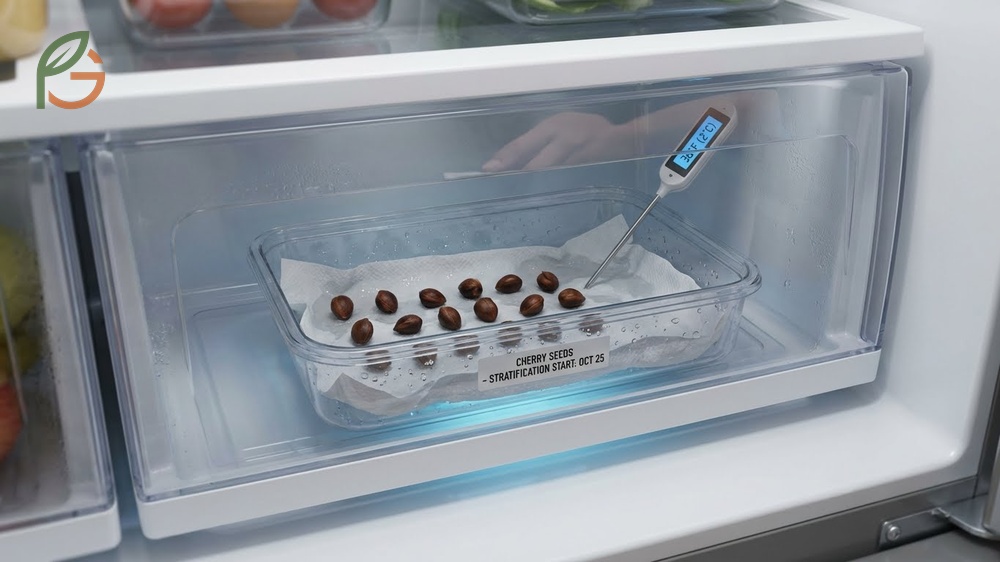
Cold stratification replicates winter conditions that trigger biochemical changes in cherry seed embryos. Agricultural research shows that maintaining consistent temperatures between 33-41°F (1-5°C) for the full stratification period yields 60-80% germination rates[1]. Temperature fluctuations above 45°F (7°C) restart dormancy mechanisms, requiring you to begin the stratification period again.
The standard home method uses a refrigerator’s vegetable crisper drawer, which maintains stable temperatures between 35-40°F (2-4°C). Mix cherry pits with moistened (not wet) sand, vermiculite, or sphagnum peat moss in a 1:3 ratio by volume. Place the mixture in perforated plastic bags or containers with small air holes punched in the lid.
Cold Stratification Process
Start stratification 3-5 months before your intended spring planting date. Current guidance emphasizes checking moisture levels every 2-3 weeks—the medium should feel like a wrung-out sponge, damp but not dripping. Add 1-2 tablespoons of water if the mixture feels dry to the touch.
Evidence suggests that 120 days represents the optimal stratification period for sweet cherries, while sour cherries complete embryo development in 90-100 days[4]. Some seeds may crack or show white root tips after 75 days in storage. If you observe premature germination, lower refrigerator temperature to 32-34°F (0-1°C) to slow root elongation.
- Week 0: Mix clean, dry cherry pits with moistened stratification medium in 1:3 ratio
- Week 0: Place mixture in perforated container or ziplock bag with 6-8 small holes
- Week 0: Label container with variety, date, and expected completion date
- Weeks 2-14: Check moisture every 14-21 days, adding water as needed to maintain dampness
- Week 12-16: Inspect for premature sprouting or mold growth
- Week 13-20: Complete stratification (90 days for sour cherries, 120-150 days for sweet cherries)
- Week 13-20: Plant stratified seeds immediately or within 7 days to prevent desiccation
Monitoring Stratification Progress
Successful stratification produces firm, swollen seeds with slight endocarp cracking visible on 30-50% of pits. White or cream-colored root tips emerging from cracks indicate that embryos have completed cold requirements and are ready for planting. Discard any seeds showing fuzzy mold growth, dark discoloration, or soft texture.
The stratification medium should smell earthy and fresh throughout the process. Sour or ammonia-like odors signal anaerobic conditions and bacterial contamination. If this occurs, rinse seeds thoroughly, discard the old medium, and restart with fresh, barely moist material in a better-ventilated container.
How to Grow Cherry Seeds
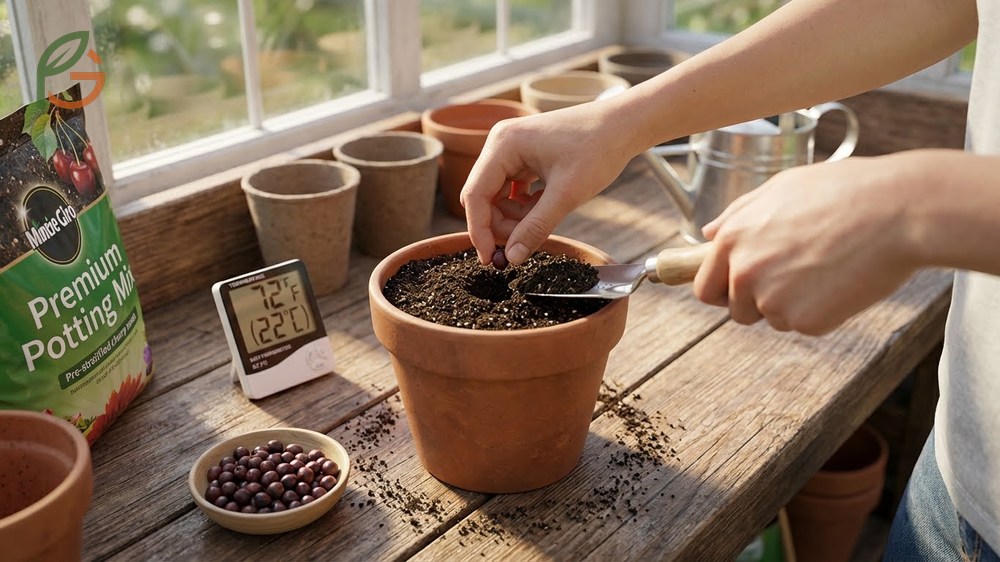
Stratified cherry seeds germinate best when planted 1/2 to 1 inch deep in well-draining potting mix at 68-75°F (20-24°C)[2]. Research demonstrates that deeper planting delays emergence by 7-14 days and increases mortality from fungal pathogens. Shallow planting (less than 1/2 inch) causes rapid moisture loss and seedling desiccation.
Use 4-6 inch diameter pots with drainage holes for individual seeds, or plant multiple seeds 3-4 inches apart in larger containers or seed trays. Standard potting soil works well, but avoid heavy garden soil that compacts and restricts oxygen flow to developing roots. Germination typically occurs within 3-8 weeks when soil remains consistently moist.
Planting Stratified Seeds
Plant stratified seeds within 7 days of removing them from cold storage to maintain viability. Current data indicates that delayed planting reduces germination rates by 5-10% per week due to desiccation of the emerging radicle (primary root). Position seeds horizontally in the planting hole rather than vertically.
Water gently after planting until moisture appears at drainage holes, then maintain consistent soil moisture without waterlogging. The top inch of soil should feel slightly moist but not soggy. Place containers in a location receiving 6-8 hours of indirect sunlight daily or under grow lights positioned 6-12 inches above soil surface.
Watering Tip: Cherry seedlings require more consistent moisture than established trees. Check soil daily during germination—seedlings die within 24-48 hours if roots dry completely. Bottom watering through drainage holes prevents soil surface crusting that blocks seedling emergence.
Optimal Soil Conditions
Cherry seedlings thrive in slightly acidic to neutral soil with pH 6.0-7.0, with optimal growth occurring at pH 6.2-6.8[3]. Soil pH outside this range reduces nutrient availability, particularly phosphorus and micronutrients essential for root development. Test soil pH before planting using digital meters or liquid test kits.
Well-draining sandy loam or loam soil prevents root rot, the primary cause of cherry seedling mortality. Agricultural studies show that cherry roots require oxygen-rich soil with 15-20% air-filled pore space. Heavy clay soils with poor drainage kill 60-80% of seedlings within 2-3 months through anaerobic conditions and Phytophthora fungal infections.
This table compares optimal soil parameters for cherry seedling growth across pH level, drainage requirements, organic matter content, and nutrient priorities
| Parameter | Optimal Range | Impact on Germination | Adjustment Method |
|---|---|---|---|
| pH Level | 6.2-6.8[3] | Maximizes phosphorus and micronutrient availability | Add lime to raise pH; sulfur to lower pH |
| Drainage | Water percolates 1-2 inches per hour | Prevents root rot and fungal disease | Mix 30-40% coarse sand or perlite into heavy soil |
| Organic Matter | 3-5% by volume | Improves moisture retention and soil structure | Add compost or aged manure before planting |
| Temperature | 68-75°F (20-24°C) | Speeds germination to 3-5 weeks versus 6-8 weeks at cooler temps | Use heat mats or place containers in warm location |
| Moisture | Consistently moist, not waterlogged | Dry soil kills emerging radicles within 48 hours | Water when top 1 inch feels slightly dry to touch |
- Light exposure: Provide 6-8 hours of indirect sunlight or grow lights 6-12 inches above containers
- Air circulation: Use small fan on low setting 4-6 hours daily to strengthen stems and prevent damping-off disease
- Temperature stability: Avoid temperature swings greater than 10°F (6°C) which delay germination
- Fertilization delay: Wait until seedlings develop 4-6 true leaves before applying diluted fertilizer at 1/4 strength
- Thinning: Remove weakest seedlings when plants reach 2-3 inches tall, leaving strongest specimen per pot
Transplanting Cherry Seedlings
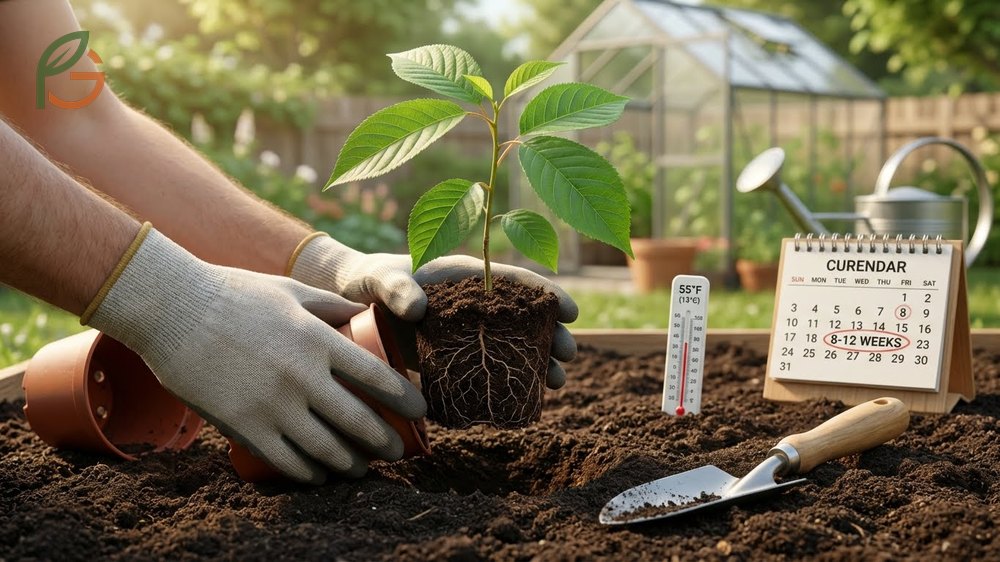
Cherry seedlings reach transplant readiness when they develop 6-8 true leaves and stand 6-10 inches tall, typically 8-12 weeks after germination. Research shows that transplanting too early (less than 6 leaves) results in 40-50% transplant shock mortality due to insufficient root development. Wait until nighttime temperatures consistently stay above 50°F (10°C) before moving seedlings outdoors.
Harden off indoor-grown seedlings over 7-10 days by gradually increasing outdoor exposure. Start with 1-2 hours of morning shade on day one, adding 1-2 hours daily until seedlings tolerate full outdoor conditions. This process prevents sunscald and wind damage that kills 30-40% of unhardened seedlings within the first week.
Select a planting location with well-draining soil, full sun exposure (6-8 hours daily), and adequate space for mature tree size. Sweet cherry trees require 20-25 feet spacing, while sour cherries need 15-18 feet. Dig holes twice as wide and equally as deep as the root ball, placing the root flare level with ground surface.
Transplant Timing: Spring transplanting (March-May in northern climates, February-April in southern regions) allows seedlings to establish root systems before summer heat stress. Fall transplanting works in USDA zones 7-9 but risks cold damage in zones 6 and below where winter temperatures drop below 0°F (-18°C).
Cherry Tree Pollination Requirements
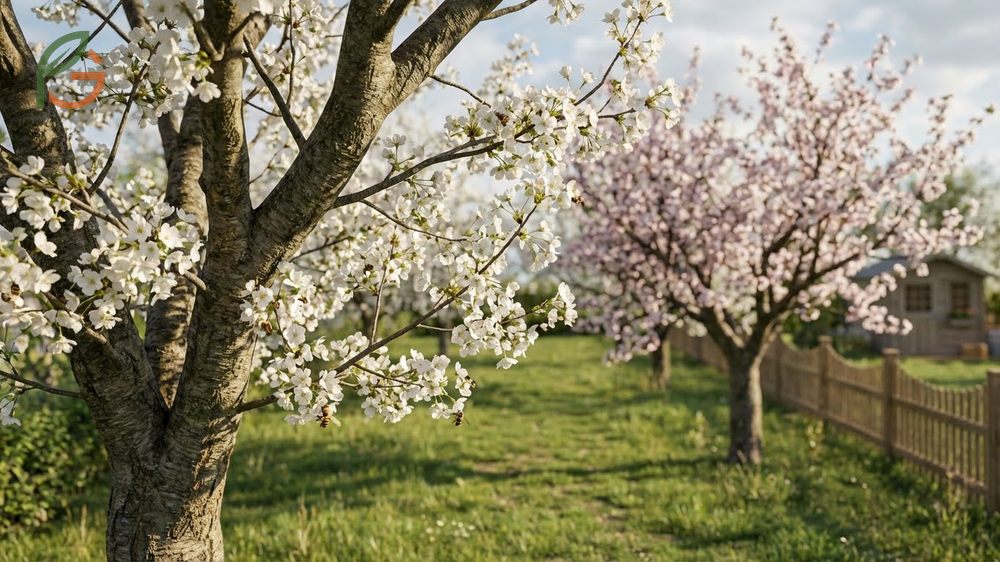
Most sweet cherry varieties require cross-pollination with a different compatible variety to produce fruit, while sour cherries are self-fertile[5]. This means your seed-grown sweet cherry tree needs a pollination partner planted within 50-100 feet to set fruit. Self-fertile sweet cherry varieties like ‘Stella’ and ‘Lapins’ eliminate this requirement for home gardeners with limited space.
Seedling cherry trees typically begin flowering 4-7 years after germination, though fruiting may not occur until years 5-10. Current horticultural data indicates that seed-grown trees show more genetic variation than grafted cultivars, producing unpredictable fruit quality ranging from excellent to inedible. Plant multiple seedlings to increase odds of desirable fruit characteristics.
Flowering time must overlap between trees for successful pollination. Sweet cherries bloom in early-to-mid spring over a 10-14 day period. Two varieties flowering 3+ weeks apart won’t cross-pollinate effectively, resulting in poor fruit set below 10-20% of blossoms. Sour cherries bloom slightly later and don’t require timing coordination since they self-pollinate.
Conclusion
The evidence is clear: successful how to plant cherry seeds depends on proper cold stratification for 90-150 days at 33-41°F (1-5°C), followed by planting in well-draining soil with pH 6.2-6.8. Research-backed protocols from USDA and university extension services demonstrate that these methods achieve 60-80% germination rates when combined with consistent moisture and appropriate temperature control. Cherry trees grown from seed require patience—expect 5-10 years until first fruiting—but offer rewarding genetic diversity and deep connection to the growing process.
Current horticultural guidance emphasizes starting with multiple seeds to compensate for natural variation in viability and fruit quality. FruitGarden compiles peer-reviewed research and agricultural data to help home gardeners achieve professional results using proven propagation techniques for sustainable fruit production.
Frequently Asked Questions
Can you plant cherry pits directly in the ground?
Yes, but fall planting works best for direct sowing. Plant fresh cherry pits 1 inch deep in October-November in well-draining soil, allowing natural winter cold to provide stratification. Germination occurs the following spring in April-June, though success rates drop to 30-50% versus 60-80% for controlled refrigerator stratification due to seed predation, rot, and inconsistent moisture.
How long does it take cherry seeds to sprout?
Cherry seeds germinate 3-8 weeks after planting stratified seeds at 68-75°F (20-24°C). The total timeline from fresh pit to seedling spans 4-6 months including 90-150 days of cold stratification plus 3-8 weeks for germination. Warmer soil temperatures (75°F/24°C) speed sprouting to 3-4 weeks, while cooler conditions (60-65°F/16-18°C) extend germination to 6-8 weeks.
Do cherry seeds from store-bought cherries grow?
Yes, store-bought cherry pits germinate successfully with proper stratification, achieving similar rates (60-80%) as fresh-picked seeds. The resulting trees won’t produce identical fruit to the parent due to genetic variation—store cherries come from grafted cultivars, while seed-grown trees express diverse genetic traits. Fresh pits from ripe cherries work best; avoid cherries showing mold, excessive softness, or premature picking.
Can you grow cherry trees from pits in pots?
Cherry seedlings grow successfully in pots for 1-3 years before requiring transplant to ground or larger containers. Start with 6-8 inch pots for germination, moving to 5-gallon containers when seedlings reach 12-18 inches tall. Dwarf cherry varieties adapt better to permanent container growing than standard varieties, which develop 20-30 foot root systems requiring in-ground planting for adequate stability and nutrient access.
How do you germinate cherry seeds fast?
Warm stratification (70-75°F/21-24°C) for 30 days before cold stratification speeds germination by cracking the hard endocarp and initiating embryo development. After completing required cold treatment (90-150 days), plant seeds immediately in warm soil (72-75°F/22-24°C) with consistent moisture. This combination reduces total germination time by 2-3 weeks versus standard cold-only stratification, though it requires careful monitoring to prevent mold during warm treatment.
What is the best soil for cherry seeds?
Sandy loam or loam soil with pH 6.2-6.8 provides optimal conditions for cherry seed germination and seedling growth. The soil must drain well—water should percolate 1-2 inches per hour—while retaining enough moisture to prevent root desiccation. Add 30-40% coarse sand or perlite to heavy clay soils to improve drainage, and incorporate 3-5% organic matter (compost or aged manure) to enhance soil structure and nutrient availability.
When should you transplant cherry seedlings outdoors?
Transplant cherry seedlings outdoors in spring (March-May) when they reach 6-10 inches tall with 6-8 true leaves and nighttime temperatures stay above 50°F (10°C). Harden off seedlings over 7-10 days by gradually increasing outdoor exposure before permanent planting. Fall transplanting works in USDA zones 7-9 but risks cold damage in northern zones where winter temperatures drop below 0°F (-18°C) before root establishment.





