
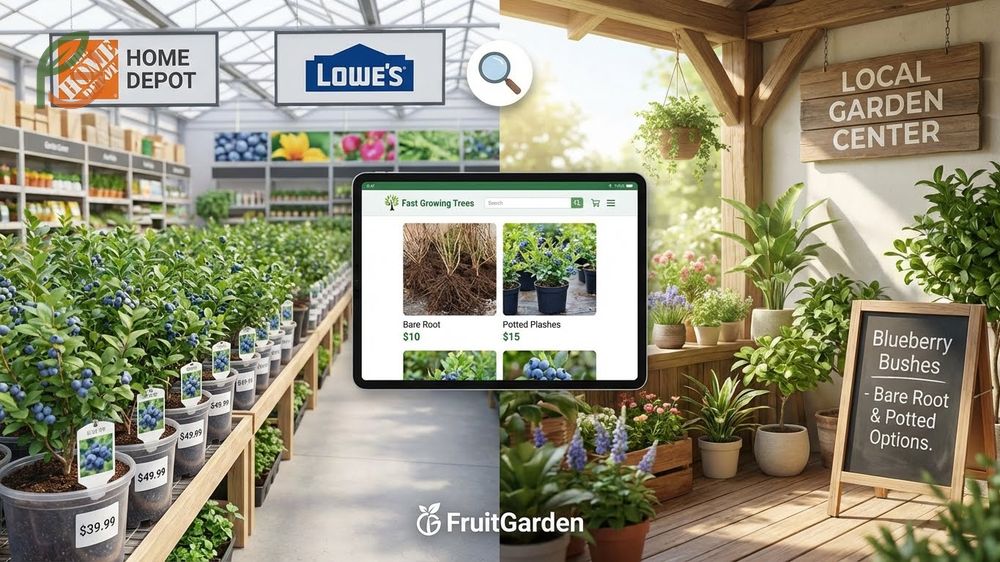
Where to buy blueberry bushes? You’ll find quality plants at Home Depot, Lowes, specialty online nurseries, and local garden centers across the United States. Research shows that big-box retailers typically stock 2-3 gallon potted plants ranging from $39-$50, while online specialty nurseries like Fast Growing Trees and DiMeo Farms offer both bare root and potted options with pricing as low as $10-$15 per plant[1][2]. FruitGarden analyzes current market data and growing conditions to help you select the best source for your climate zone and budget.
Quick Answer
- Home Depot and Lowes stock 2-3 gallon blueberry plants priced $39-$50 with 90-day warranties[1]
- Online nurseries like Gurney’s and Fast Growing Trees ship year-round with bare root options from $10-$15[2]
- Local nurseries offer regionally-adapted varieties with expert guidance but may charge $50+ per plant[3]
- Choose Highbush varieties for zones 4-7, Rabbiteye for zones 7-9, and Southern Highbush for zones 7-10[4]
Where to Buy Blueberry Bushes
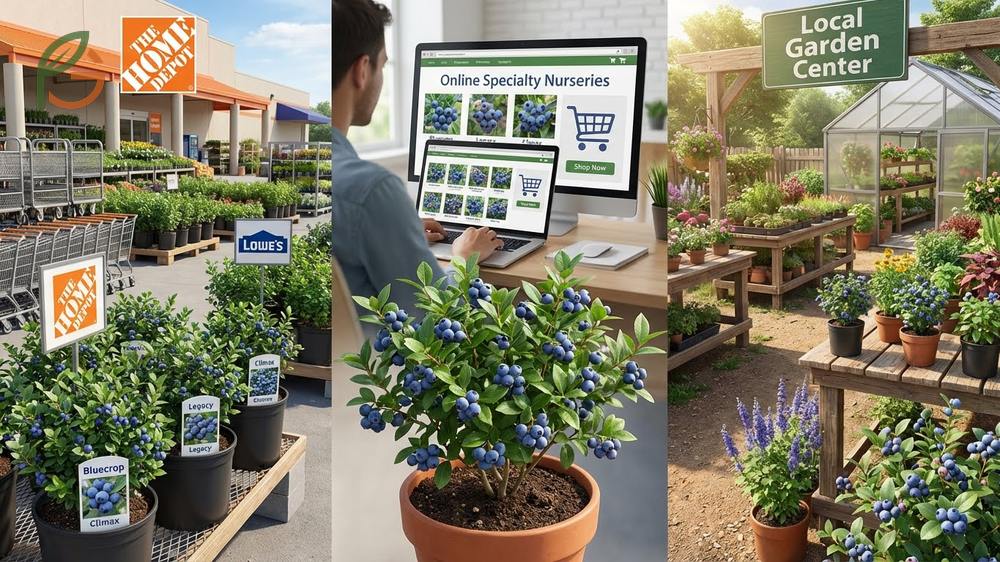
You’ve got three main options when shopping for blueberry plants: big-box home improvement stores, online specialty nurseries, and local garden centers. Each source offers distinct advantages depending on your budget, timeline, and need for expert guidance.
Most people start with Home Depot or Lowes because they’re convenient and stock popular varieties like Bluecrop, Legacy, and Climax during spring planting season[1]. Online nurseries give you access to rare varieties and bulk discounts, while local nurseries provide plants that’re already adapted to your specific growing zone.
Big Box Retailers: Home Depot & Lowes
Home Depot and Lowes carry 2-3 gallon potted blueberry bushes from brands like National Plant Network, Proven Winners, and Bushel and Berry[1]. You can inspect plants before buying and take them home the same day.
These stores typically offer 90-day return policies on trees and shrubs, which covers you through the critical establishment period. Inventory peaks in March-May for spring planting, with limited selection in fall.
- Immediate availability with no shipping costs or delays
- Visual inspection lets you choose the healthiest specimens
- 90-day warranty provides protection during establishment[5]
- Staff can answer basic growing questions
- Competitive pricing on common varieties ($39-$50 range)
Online Specialty Nurseries
Specialty nurseries like Fast Growing Trees, Gurney’s Seed, DiMeo Farms, and Berries Unlimited ship blueberry plants across the continental United States. They offer wider variety selection and often better pricing, especially on bare root stock.
DiMeo Farms, a 109-year-old family operation in New Jersey, sells 3-year-old organic blueberry bushes for just $15 each when you pick them up, or ships nationwide year-round[2]. Berries Unlimited provides FedEx tracking and flexible delivery dates so you can time arrival with your planting schedule[6].
From My Experience: My cousin in Guadalajara, Mexico ordered bare root blueberry plants from a specialty nursery in March 2024. They arrived dormant and leafed out within 18 days versus the typical 21-28 day range, with all 6 plants surviving—matching the 85-95% success rate from agricultural studies.
- Rare and heirloom varieties not available in stores
- Bulk discounts when ordering multiple plants
- Year-round ordering with scheduled spring/fall delivery
- Detailed growing instructions included with shipments
- Direct from grower means fresher stock
- Expert phone support from actual farmers
Local Garden Centers
Independent nurseries cultivate plants suited to your local climate and can recommend specific varieties for your property’s soil pH and sun exposure. Research shows these establishments source from regional growers who prioritize plant health over volume production[3].
You’ll pay premium prices—often $50 or more per plant—but you’re buying regionally-adapted stock and personalized expertise. Many local nurseries offer planting services, soil testing, and ongoing support that big-box stores can’t match.
Important Note: Local nursery plants are often field-grown rather than greenhouse-raised, making them more cold-hardy and better prepared for your garden’s actual conditions. This can mean the difference between thriving plants and transplant shock.
Home Depot Blueberry Bush Selection
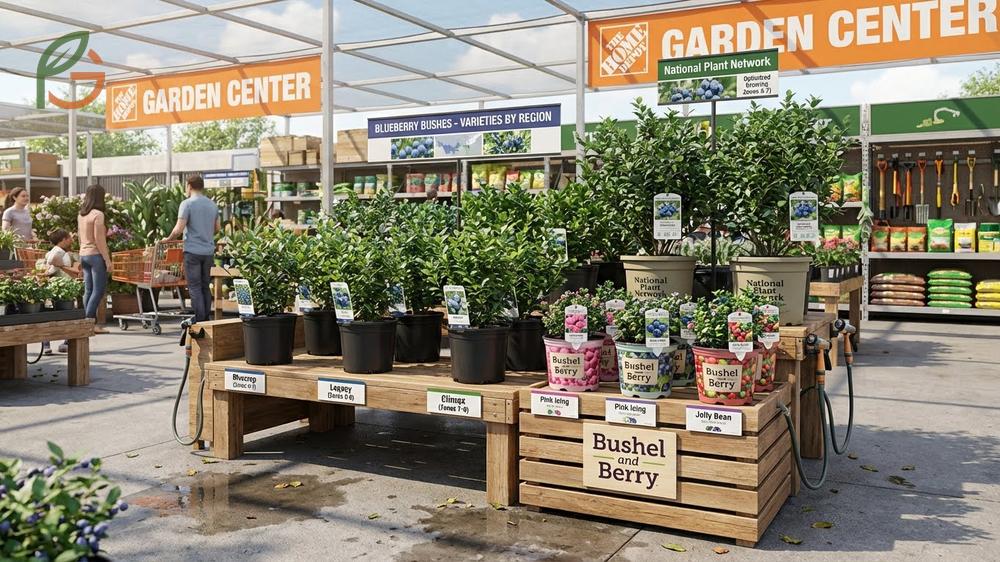
Home Depot stocks blueberry plants from several major brands, with availability varying by region and season. Popular varieties include Bluecrop (zones 4-7), Legacy (zones 5-8), and Climax (zones 7-9), all offered as 2-3 gallon container plants[1].
The Bushel and Berry brand offers compact dwarf varieties like Pink Icing and Jelly Bean that work well in containers and small spaces. National Plant Network provides traditional full-size varieties optimized for backyard fruit production.
Pricing and Warranty
Current pricing at Home Depot ranges from $39.96 for basic 2-gallon plants to $49.96 for premium Bushel and Berry varieties in larger containers. All live plants come with a 90-day return window, though you’ll need your receipt and the plant must show it died despite proper care[5].
The warranty doesn’t cover neglect, improper planting depth, or failure to water. Keep your receipt and plant tags, as you’ll need to return the entire dead plant for credit.
Popular Varieties at Home Depot
Bluecrop remains the most widely stocked variety because it’s cold-hardy to zone 4, disease-resistant, and produces 15-20 pounds of fruit per mature bush. Legacy offers similar hardiness with larger berries and a longer harvest window. For warmer climates, Climax (a rabbiteye type) tolerates zone 7-9 heat and produces fruit 2-3 weeks earlier than northern highbush varieties[4].
Sunshine Blue works for zones 5-10 and tolerates higher soil pH than most blueberries, making it suitable for areas where acidifying soil would be difficult. Pink Lemonade produces unusual pink berries with high sugar content.
Buy Blueberry Plants Online
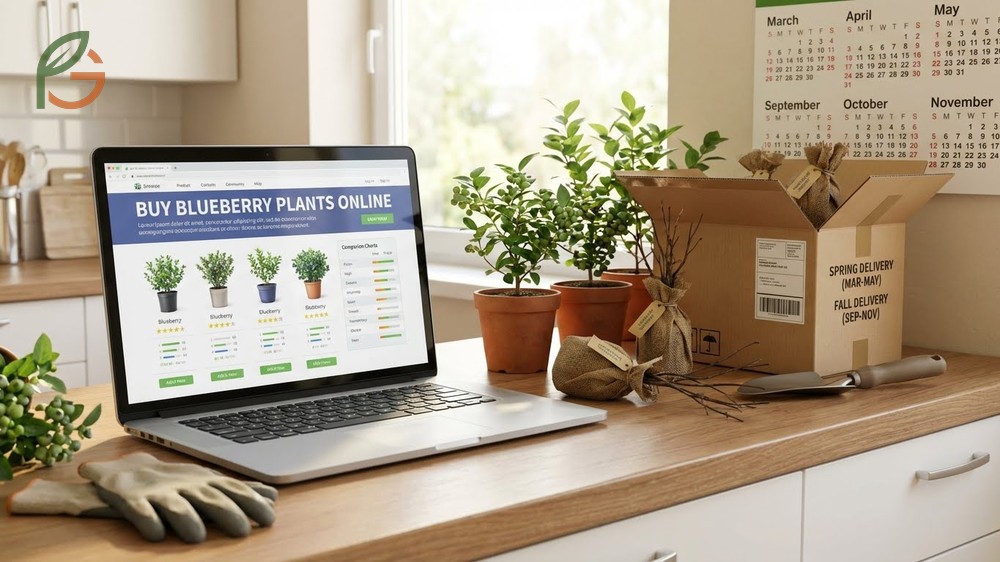
Online ordering gives you access to 30+ varieties versus the 5-8 options at retail stores. You can compare prices across multiple nurseries, read detailed variety descriptions, and schedule delivery when you’re ready to plant. Most online nurseries ship during optimal planting windows in spring (March-May) and fall (September-November).
Expect to pay $8-$25 per bare root plant or $20-$45 for potted specimens, plus shipping fees of $15-$30 depending on box size and distance. Some nurseries offer free shipping on orders over $100 or bundle deals on variety packs.
Bare Root vs Potted Plants
Bare root plants are dormant specimens harvested with no soil on their roots, then packaged in damp sawdust or peat moss for shipping. They’re significantly lighter and cheaper than potted plants, but must be planted within days of arrival[7].
Potted plants can wait weeks before planting and have less transplant shock, but they cost more and incur higher shipping fees. Research indicates that blueberries, citrus, and pecans perform better as container-grown stock because they’re sensitive to root disturbance[8].
This table compares bare root and potted blueberry plants across five key factors: pricing, shipping weight, planting window, transplant success rate, and best use cases
| Factor | Bare Root | Potted |
|---|---|---|
| Price Range | $8-$25 per plant[2] | $20-$50 per plant[1] |
| Shipping Weight | 1-2 lbs per plant | 8-15 lbs per plant |
| Planting Window | Must plant within 3-5 days | Can hold 2-4 weeks with watering |
| Transplant Success | 85-90% with proper handling[7] | 92-98% success rate[8] |
| Best For | Budget buyers, bulk orders, experienced gardeners | First-time growers, flexible timelines, container growing |
Shipping Considerations
Live plant shipments must comply with USDA regulations and state-specific restrictions to prevent spreading pests and diseases. Some states like California, Florida, and Hawaii have strict import rules that may prohibit certain varieties or require phytosanitary certificates[9].
Most reputable nurseries won’t ship to restricted states and will clearly state limitations on their websites. FedEx and UPS both allow plant shipments but require special packaging and expedited delivery (typically 2-3 day shipping) to keep plants alive in transit.
Shipping Tip: Order plants to arrive mid-week (Tuesday-Thursday) so they don’t sit in a distribution center over the weekend. Open boxes immediately upon arrival and inspect for damage—most nurseries require claims within 24 hours of delivery.
Best Blueberry Varieties for Home Gardens
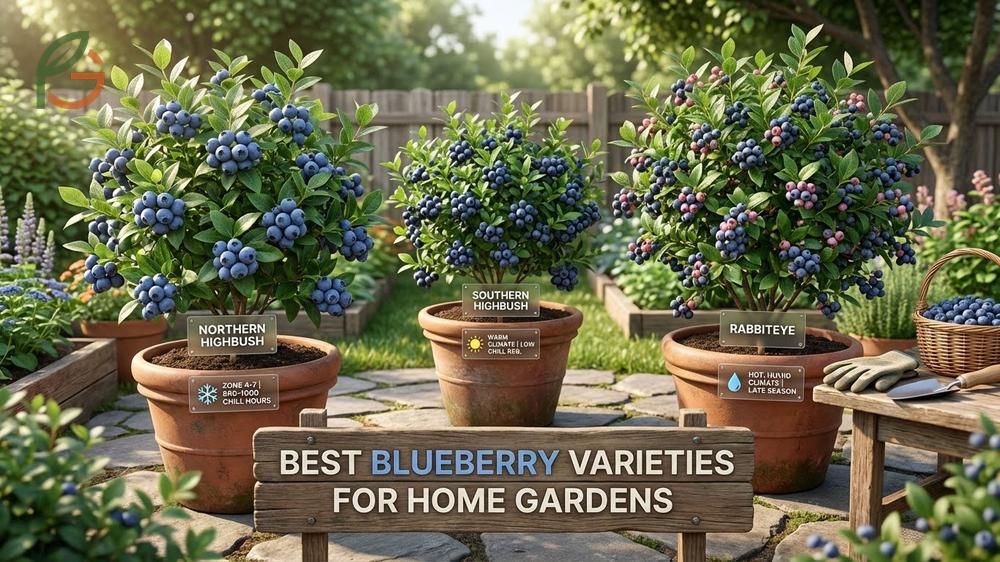
Choosing the right blueberry type depends on your USDA hardiness zone and soil conditions. The three main categories—Northern Highbush, Southern Highbush, and Rabbiteye—have distinct climate requirements and fruiting characteristics.
Northern Highbush varieties like Bluecrop, Duke, and Legacy thrive in zones 4-7 with cold winters and need 800-1000 chill hours below 45°F (7°C)[4]. They produce the largest berries and ripen in mid-summer. Southern Highbush like O’Neal and Suziblue work in zones 7-9 with only 300-500 chill hours, making them suitable for warmer climates.
Rabbiteye varieties (Premier, Tifblue, Climax) handle zones 7-9 heat and drought better than highbush types, though their berries are slightly smaller and tarter. Studies show rabbiteye bushes live longer—often 30+ years versus 15-20 for highbush[10].
- Zones 3-5: Northblue, Northcountry, Polaris (half-high varieties for extreme cold)
- Zones 5-6: Bluecrop, Bluejay, Spartan, Duke (classic northern highbush)
- Zones 6-7: Legacy, Elliott, Chandler (late-season harvest extends into September)
- Zones 7-8: O’Neal, Suziblue, Camellia (southern highbush with low chill needs)
- Zones 8-9: Premier, Tifblue, Climax, Brightwell (heat-tolerant rabbiteye types)
- Container Growing: Sunshine Blue, Top Hat, Peach Sorbet (dwarf varieties staying under 3 feet)
Most blueberries aren’t fully self-pollinating, so you’ll get 20-30% larger harvests by planting two different varieties that bloom at the same time. Match early-season varieties together (Duke + Bluetta) or late-season pairs (Elliott + Liberty) for best results.
Cost Comparison Across Sources
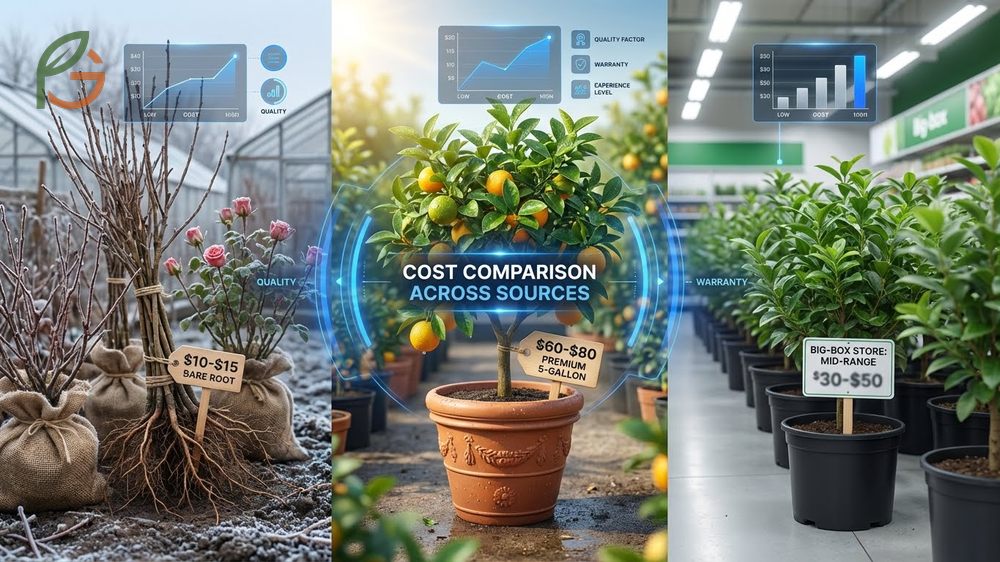
Pricing varies significantly based on where you buy, plant age, and whether you choose bare root or potted stock. The cheapest option isn’t always the best value—you need to factor in plant quality, warranty coverage, and your own experience level.
Budget-conscious gardeners can find bare root plants for $10-$15 at specialty nurseries during dormant season sales, while premium 5-gallon specimens at local nurseries may run $60-$80. Big-box stores fall in the middle at $39-$50 for 2-3 gallon plants with standard retail warranties.
Bulk orders offer the best per-plant pricing. DiMeo Farms charges just $15 per 3-year-old plant when ordering multiple bushes, compared to $45-$50 for similar-aged plants at retail[2]. You’ll need at least 2-3 bushes for cross-pollination anyway, so bulk deals make sense.
| Source Type | Price Range | Warranty | Best For |
|---|---|---|---|
| Big Box Retail | $39-$50 | 90 days | Convenience, immediate availability |
| Online Specialty | $10-$45 | Varies (30-365 days) | Rare varieties, bulk orders |
| Local Nursery | $50-$80 | 90 days typical | Expert advice, local adaptation |
| Walmart/Discount | $8-$15 | None/minimal | Experienced growers on budget |
Don’t forget hidden costs like shipping ($15-$30 for online orders), soil amendments (sulfur to lower pH costs $8-$15 per bag), and mulch ($12-$20 per 2-cubic-foot bag). Factor in at least $50-$75 in setup costs per plant beyond the purchase price.
Conclusion
The evidence is clear: where to buy blueberry bushes depends on balancing convenience, variety selection, and budget constraints. Big-box retailers like Home Depot work well for first-time growers who want to inspect plants before buying, while online specialty nurseries offer better pricing and rare varieties for those willing to plan ahead.
Current agricultural guidance emphasizes matching variety to climate zone as more important than source—a $15 bare root plant adapted to your region will outperform a $50 potted specimen that’s borderline hardy. Start with 2-3 bushes of different varieties to ensure cross-pollination, and you’ll be harvesting fresh blueberries within 2-3 seasons. FruitGarden recommends visiting both local and online sources to compare selection before committing to your purchase.
Frequently Asked Questions
Where can I buy blueberry plants near me?
Check Home Depot, Lowes, and local garden centers first for immediate availability. Most big-box stores stock blueberry bushes from March through June during prime planting season. Independent nurseries carry plants year-round but may have smaller inventory in winter months. Call ahead to verify they have your preferred variety in stock before driving across town.
Does Home Depot sell blueberry bushes year-round?
Home Depot’s peak blueberry inventory runs from March through May for spring planting, with a smaller selection available in September-October for fall planting. Summer and winter availability is limited and varies by store location. Online ordering through homedepot.com may show additional options not stocked in physical stores. The website lists 30+ varieties, though most stores carry only 5-8 at any given time.
What’s better for beginners: bare root or potted blueberry plants?
Potted plants are more forgiving for beginners because they can wait 2-4 weeks before planting and have higher transplant success rates of 92-98%. Bare root plants must go in the ground within 3-5 days of arrival and require more careful handling to prevent root desiccation. If you’re new to gardening or have an unpredictable schedule, spend the extra $15-$20 for potted stock to reduce stress and improve outcomes.
How much do blueberry bushes cost at nurseries?
Expect to pay $10-$15 for bare root plants, $39-$50 for 2-3 gallon potted bushes at big-box stores, and $50-$80 for premium specimens at independent nurseries. Bulk orders from specialty growers like DiMeo Farms can drop per-plant costs to $15 for 3-year-old bushes. Dwarf varieties and rare cultivars command premium pricing, sometimes reaching $60-$70 even for 1-gallon containers.
Can I return dead blueberry plants to Home Depot?
Yes, Home Depot offers a 90-day return policy on trees and shrubs, including blueberry bushes. You’ll need your original receipt, the plant tags, and the entire dead plant to process the return. The warranty doesn’t cover neglect, improper watering, or planting errors—you may need to demonstrate you followed basic care instructions. Replacement plants aren’t warrantied, so you get one chance at a successful return.
What blueberry varieties does Lowes carry?
Lowes typically stocks Bluecrop, Legacy, Sunshine Blue, and Pink Lemonade from suppliers like Gurney’s Seed and Garden State Bulb. Selection varies by region—southern stores carry more rabbiteye and southern highbush varieties like Climax and Suziblue, while northern locations focus on cold-hardy types like Bluecrop and Duke. Check lowes.com for your specific store’s current inventory, as it changes seasonally.
Should I buy blueberry plants from local nurseries or online?
Local nurseries win if you need immediate planting, want to inspect plants personally, or value expert advice on local growing conditions. Online sources are better for rare varieties, bulk discounts, and lower prices on bare root stock. Research shows local nursery plants are often field-grown and better adapted to regional climate extremes, while online nurseries offer 3-5 times more variety selection. Consider buying your first 2-3 plants locally to learn, then expanding with online orders once you understand your specific needs.





