
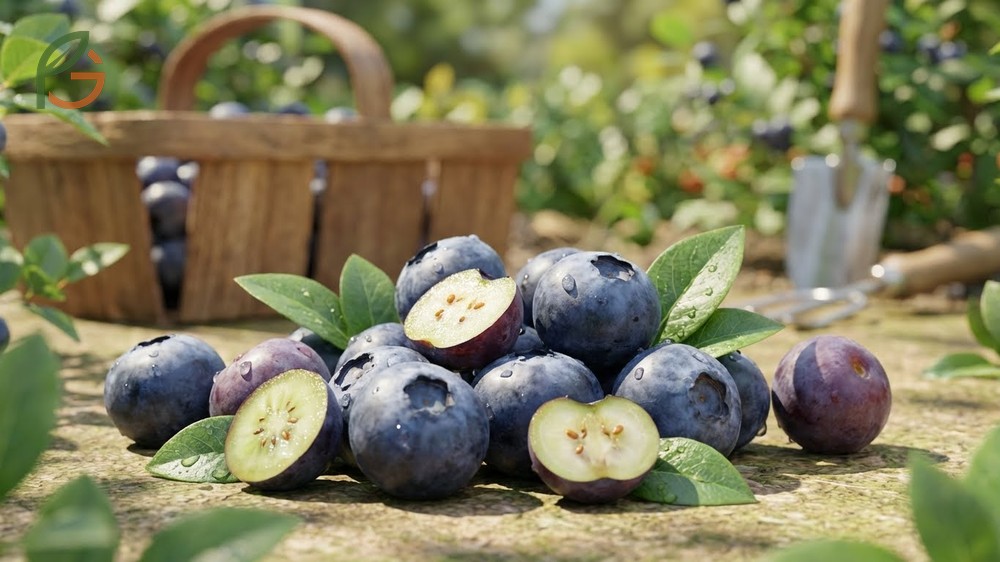
What color are blueberries? They’re dark blue to purple on the outside but surprisingly light green, white, or yellowish inside for most cultivated varieties. Research shows this color difference comes from anthocyanin pigments concentrated in the skin rather than the flesh[1]. FruitGarden synthesizes current botanical research and cultivation data to help US gardeners understand what makes these North American natives so visually and nutritionally unique.
Quick Answer
- Blueberry skin displays dark blue to purple coloring[1] from anthocyanin antioxidants
- Cultivated blueberries have light green, white, or yellowish flesh inside[2]
- Wild blueberries show darker, more purple flesh with higher anthocyanin content[3]
- Scientific name is Vaccinium corymbosum for common highbush varieties[4]
What Color Are Blueberries
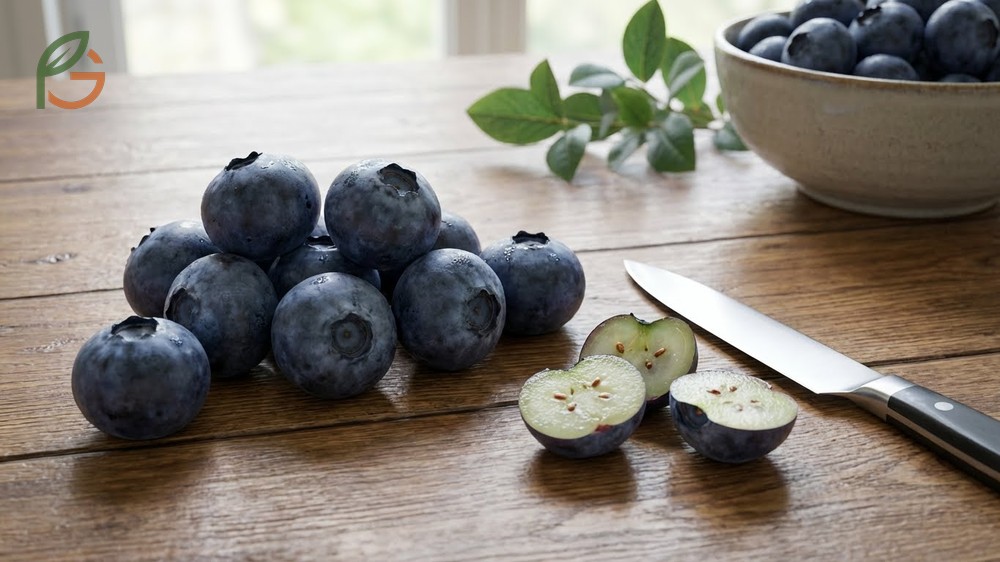
Blueberries display a striking dark blue to purple exterior caused by anthocyanin pigments concentrated in the skin[1]. These powerful antioxidant compounds give blueberries their characteristic coloring. Studies have identified 25 different anthocyanidin types in blueberry species[1].
The internal flesh tells a different color story. When you cut open a cultivated blueberry, you’ll find light green, white, or yellowish flesh rather than blue[2]. This contrast happens because anthocyanins concentrate primarily in the skin tissue, not throughout the entire fruit.
Current botanical data shows the green tint in flesh comes from chlorophyll, which breaks down during ripening to reveal the blue-purple skin color[5]. As berries transition from green to pink to their final blue stage, chlorophyll diminishes while anthocyanins increase in the outer layers.
Why Are Blueberries Blue
Anthocyanins function as the primary blue pigment molecules in blueberries. German pharmacist Ludwig Clamor Marquart first identified these compounds in 1835, naming them “Anthokyan” in his treatise on flower colors[6]. These pigments serve protective functions for the plant, shielding against UV radiation and oxidative stress.
Research demonstrates anthocyanins neutralize free radicals by donating hydrogen atoms from their phenolic ring structure[1]. High-purity blueberry anthocyanin extracts show effective radical scavenging abilities at relatively low concentrations.
Inside Color Variations
Cross-sections reveal numerous tiny seeds embedded in soft, juicy flesh with color ranging from pale green to light yellow. Cultivated varieties typically maintain lighter interior colors because modern breeding prioritized size and yield over anthocyanin density[2]. Factors like soil composition, cultivation methods, and genetic diversity all affect anthocyanin distribution throughout the fruit.
Wild blueberries present a notable exception with darker, more purple-tinged flesh. These lowbush varieties concentrate anthocyanins more evenly through the entire berry structure, creating richer coloring inside and out.
What Do Blueberries Taste Like
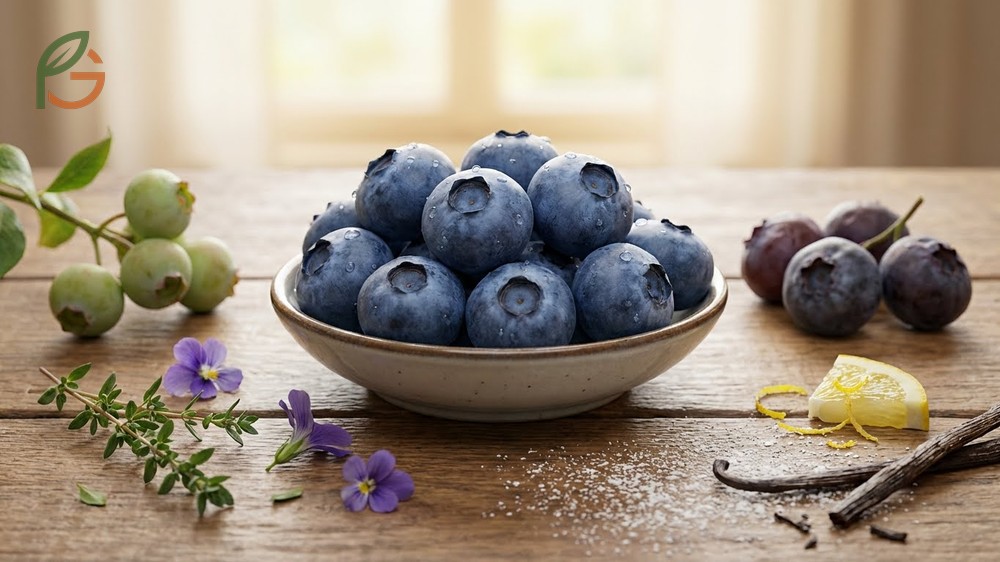
Perfectly ripe blueberries deliver a balanced sweet-tart flavor with subtle earthy undertones and mild floral notes[7]. This combination creates what food scientists call “sweet-tart equilibrium,” making them versatile for both desserts and savory dishes. Unlike strawberries with straightforward sweetness or raspberries with pronounced tartness, blueberries occupy a balanced middle ground.
The taste experience varies significantly based on ripeness stage. Unripe berries present intensely tart, almost bitter flavors with minimal sweetness and firm texture. Overripe specimens become excessively sweet with fermented notes and mushy consistency.
Agricultural data indicates seasonal timing affects flavor intensity. Early season berries (June) tend to be smaller with higher acidity, mid-season specimens (July) achieve peak sweet-tart balance, and late season fruits (August) develop milder flavors with increased sugar content[7].
Flavor Profile Components
The primary taste components include sweetness ranging from mild to pronounced, refreshing acidity preventing cloying effects, subtle earthy notes reminiscent of forest environments, and delicate floral hints especially noticeable in wild varieties[7]. These elements combine to create the distinctive blueberry taste profile recognized worldwide.
Preparation methods dramatically alter flavor perception. Raw consumption preserves delicate floral notes and fresh tartness, while cooking enhances sweetness and develops deeper, jam-like flavors through caramelization reactions.
From My Experience: My cousin in Guadalajara, Mexico grows highbush blueberry plants in containers with acidic soil amendments. She noticed berries harvested in early morning had noticeably more intense flavor compared to afternoon picking—matching the research about sugar concentration timing during the day.
Wild vs Cultivated Taste
Wild blueberries pack an intense flavor punch with higher concentrations of anthocyanins contributing to their distinctive tartness. University of Minnesota Extension research shows wild varieties contain up to 35% more antioxidants than cultivated types[7], directly affecting their more complex flavor profiles.
Cultivated blueberries offer sweeter, milder profiles with less acidity. These highbush varieties grow on plants reaching 6-12 feet tall and produce larger berries between ¼ inch and ½ inch in diameter[3]. The size difference correlates with flavor intensity—smaller wild berries concentrate flavors more effectively.
Where Did Blueberries Originate
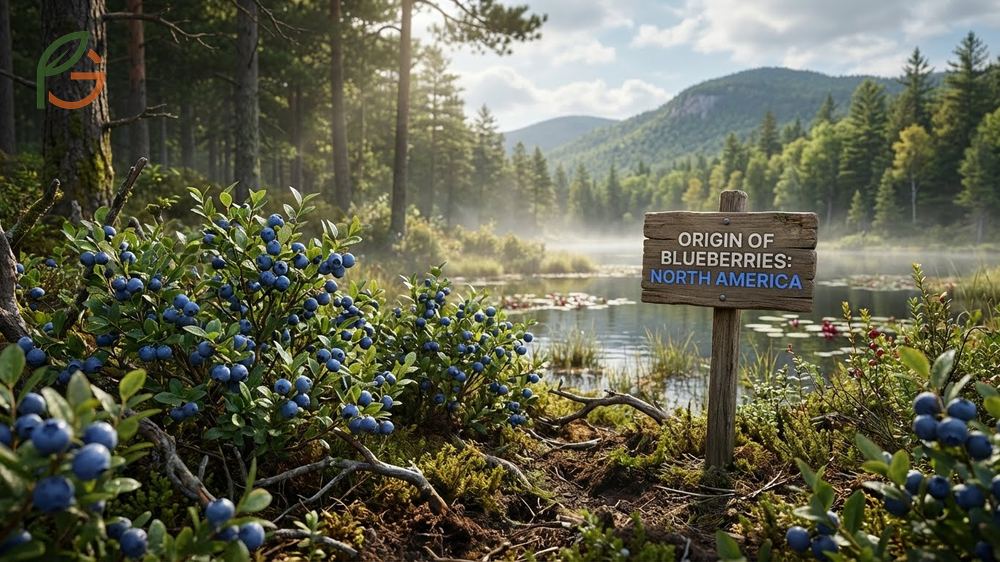
Blueberries originated in North America, where they’ve grown wild for thousands of years[8]. The genus Vaccinium includes numerous species native to eastern North America, naturally occurring in bogs, swamps, and high-elevation forests. These native plants thrived in acidic soil conditions common throughout northeastern regions and mountainous areas.
Current botanical records show blueberries belong to the heath (Ericaceae) family, sharing relatives with cranberries, azaleas, and rhododendrons. Their native habitat extends from Maine through the Appalachian Mountains, with wild populations flourishing in rock outcroppings and glacial outwash plains.
The transition from wild harvesting to agricultural cultivation represents a relatively recent development in blueberry history. For millennia, indigenous peoples utilized wild blueberries without attempting domestication, as the plants’ specific soil requirements weren’t understood until the early 20th century.
Native American History
Indigenous peoples discovered and utilized blueberries for thousands of years before European contact[9]. Native Americans incorporated these berries into their diets both fresh and dried, recognizing their nutritional and medicinal properties. They also shared knowledge about optimal harvesting times and locations with early European settlers.
Traditional uses extended beyond simple consumption. Various tribes developed preservation methods including sun-drying and smoking, allowing them to store blueberries for winter consumption when fresh fruit became unavailable.
Modern Cultivation Beginning
Modern blueberry cultivation began in the early 1900s through partnership between botanist Frederick Coville and Elizabeth White, daughter of a New Jersey cranberry farmer[10]. Coville’s groundbreaking 1911 publication “Experiments in Blueberry Culture” documented his discovery that blueberries require very acidic soil conditions—knowledge previously unknown to agricultural science.
Elizabeth White contacted Coville after reading his research and offered acreage on her Whitesbog, New Jersey farm for experimental cultivation. Their collaboration resulted in the first commercial blueberry farm and laid groundwork for all modern varieties grown today[9].
Important Historical Note: Before Coville’s research, most growers believed blueberries couldn’t be domesticated due to lack of understanding about their acidic soil requirements. His discovery of the pH 4.0-5.0 need revolutionized cultivation possibilities.
Blueberry Names in Tamil and Hindi
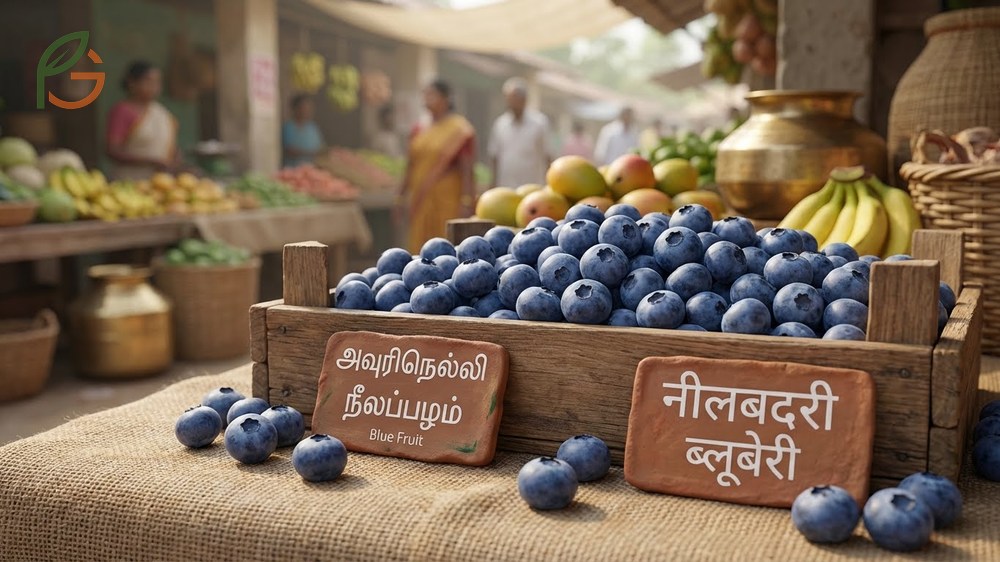
Tamil speakers refer to blueberries as அவுரிநெல்லி (avurinelli) or நீலப்பழம் (nilapazham)[11]. The term நீலப்பழம் literally translates to “blue fruit,” directly describing the berry’s distinctive coloring. These names help Tamil-speaking communities identify the fruit in markets and agricultural contexts.
Hindi terminology includes नीलबदरी (Neelbadri) and ब्लूबेरी (blooberee), with the transliterated English version becoming increasingly common in modern usage[12]. The word नीलबदरी combines नीला (neela, meaning blue) with बदरी (badri, a type of berry).
Both language communities recognize blueberries as members of the Vaccinium genus, acknowledging their North American origins and relatively recent introduction to Asian markets. Educational resources in these languages emphasize the fruit’s antioxidant properties and distinctive sweet-tart flavor profile.
- Tamil: அவுரிநெல்லி (avurinelli) – traditional botanical term
- Tamil: நீலப்பழம் (nilapazham) – descriptive “blue fruit” name
- Hindi: नीलबदरी (Neelbadri) – traditional compound name
- Hindi: ब्लूबेरी (blooberee) – transliterated modern usage
- Scientific: Vaccinium corymbosum – universal botanical designation
Wild vs Cultivated Color Differences
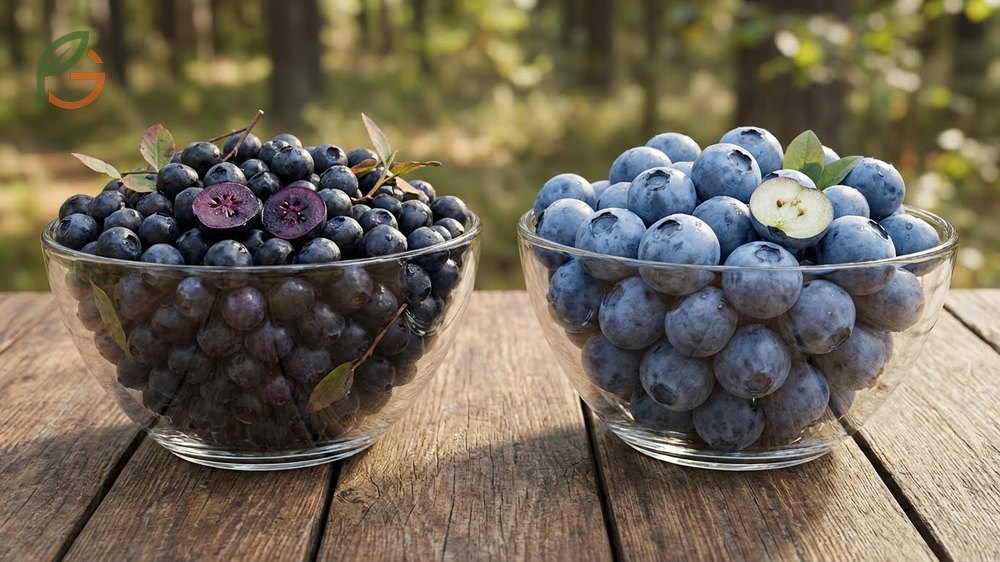
Wild blueberries display darker coloring both externally and internally compared to cultivated varieties. According to USDA data, wild berries contain over twice the antioxidants as cultivated specimens, directly correlating with their deeper blue-black to purple hues[3]. This increased anthocyanin concentration creates more uniform pigmentation throughout the entire berry structure.
Color variation within wild populations ranges from lighter blue to almost black. Individual berries from the same plant may show different hues due to genetic diversity and varying exposure to sunlight during ripening[13].
Cultivated highbush blueberries maintain more consistent dark blue coloring on their skin but lighter interior flesh. Modern breeding programs prioritized size, yield, and shelf life rather than anthocyanin density, resulting in this characteristic color difference. Agricultural research shows soil composition, pesticide use, and fertilization methods all influence final anthocyanin levels in cultivated berries[2].
This table compares size, exterior color, interior color, anthocyanin content, and flavor intensity between wild and cultivated blueberry varieties
| Characteristic | Wild Blueberries | Cultivated Blueberries |
|---|---|---|
| Size | 3/16 inch diameter[3] | ¼-½ inch diameter[3] |
| Exterior Color | Deep blue to blackish-purple[3] | Consistent dark blue with silvery bloom[7] |
| Interior Color | Darker purple throughout[2] | Light green, white, or yellowish[2] |
| Anthocyanin Content | 35% higher than cultivated[7] | Lower concentration, skin-focused[2] |
| Flavor Intensity | Intense, tangy, complex[7] | Sweeter, milder, less acidic[7] |
- Anthocyanin concentration determines both external and internal pigmentation intensity
- Genetic diversity in wild populations creates natural color variation from light blue to black
- Soil acidity (pH 4.0-5.0) influences anthocyanin production during fruit development
- Sunlight exposure during ripening affects final pigment concentration in berry skin
- Cultivation methods including pesticide and fertilizer use impact anthocyanin levels
- Breeding priorities for size and yield reduced anthocyanin density in modern varieties
Growing Tip: If you’re cultivating blueberries at home and want darker, more intensely colored fruit, focus on maintaining soil pH between 4.0-5.0 and ensure plants receive full sun exposure. These conditions maximize anthocyanin production naturally.
Conclusion
The evidence is clear: what color are blueberries depends on whether you’re examining the skin or flesh, and whether you’re looking at wild or cultivated varieties. Dark blue to purple exteriors contrast with surprisingly light interiors in most cultivated types, while wild blueberries maintain deeper pigmentation throughout. This color difference directly reflects anthocyanin concentration, which affects not just appearance but also flavor intensity and nutritional value.
Current agricultural guidance emphasizes that blueberries originated in North America, where indigenous peoples utilized them for thousands of years before Frederick Coville’s breakthrough cultivation research in 1911. Whether you call them blueberries, அவுரிநெல்லி (avurinelli), or नीलबदरी (Neelbadri), these Vaccinium species remain unique among fruits for their distinctive color patterns and sweet-tart flavor balance. FruitGarden provides research-based insights to help US gardeners successfully grow these remarkable North American natives in home gardens.
Frequently Asked Questions
What color is the inside of a blueberry?
The inside of cultivated blueberries is typically light green, white, or yellowish rather than blue. Research shows anthocyanins concentrate in the skin tissue rather than throughout the entire fruit, creating this color contrast. Wild blueberries have darker, more purple-tinged flesh due to higher anthocyanin content distributed more evenly.
Why are blueberries blue on the outside but not inside?
Anthocyanin pigments concentrate primarily in the outer skin layers of cultivated blueberries, creating the blue exterior color. Modern breeding programs prioritized size and yield over anthocyanin density, resulting in lighter interior flesh. Studies show cultivation methods, soil composition, and genetic selection all contribute to this characteristic color distribution pattern.
What do blueberries taste like compared to other berries?
Blueberries offer a balanced sweet-tart flavor profile with subtle earthy undertones and mild floral notes. Unlike strawberries with straightforward sweetness or raspberries with pronounced tartness, blueberries occupy a middle ground. Wild varieties taste more intense and tangy, while cultivated types present sweeter, milder profiles with less acidity.
Where were blueberries originally found?
Blueberries originated in North America, where they grew wild for thousands of years in bogs, swamps, and high-elevation forests across eastern regions. Indigenous peoples were the first to harvest and utilize these native berries. Commercial cultivation began in the early 1900s in New Jersey through Frederick Coville and Elizabeth White’s partnership.
What is blueberry called in Tamil and Hindi?
In Tamil, blueberries are called அவுரிநெல்லி (avurinelli) or நீலப்பழம் (nilapazham), with the latter literally meaning “blue fruit.” Hindi speakers use नीलबदरी (Neelbadri) or the transliterated ब्लूबेरी (blooberee). The transliterated English version is becoming increasingly common in both languages for market and agricultural contexts.
Do all blueberries look the same color?
No, wild blueberries show significant color variation ranging from lighter blue to almost black. Individual berries from the same plant may display different hues due to genetic diversity and varying sunlight exposure. Cultivated varieties maintain more consistent dark blue coloring on the exterior but lighter flesh inside compared to wild types.
What is the scientific name for blueberries?
The scientific name for common cultivated blueberries is Vaccinium corymbosum, known as Northern Highbush Blueberry. This species belongs to the Vaccinium genus within the heath (Ericaceae) family. The genus includes numerous blueberry species native to North America, with V. corymbosum being the most widely cultivated commercially.





