
How to acidify soil for blueberries? Apply elemental sulfur at 100 pounds per acre for each 0.1 pH unit reduction, or incorporate peat moss directly into planting holes[1]. Research shows blueberries thrive in soil pH between 4.5 and 5.5, and proper acidification can triple yields in fields previously limited by high pH[2]. FruitGarden synthesizes current agricultural research to help you lower soil pH naturally and boost your blueberry harvest.
Quick Answer
- Blueberries need soil pH between 4.5-5.5 for optimal growth
- Elemental sulfur takes 2-3 years to reduce pH but provides long-lasting results[1]
- Peat moss (pH 3.0-4.0) delivers faster acidification when mixed directly with soil[3]
- Avoid aluminum sulfate—it’s toxic to blueberry roots despite package claims[4]
How to Acidify Soil for Blueberries
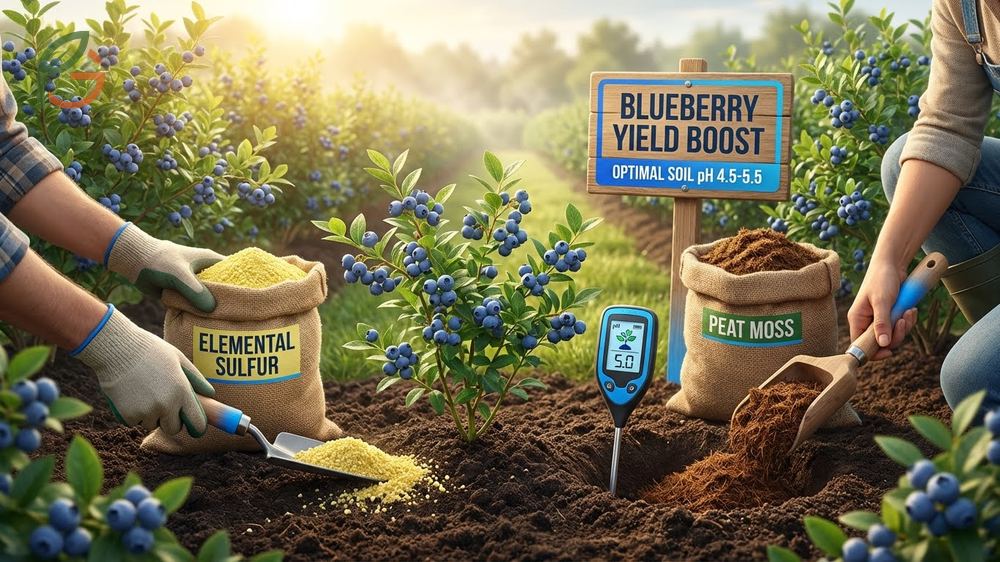
Studies demonstrate that blueberries perform best when soil pH ranges from 4.5 to 5.5[2]. Most garden soils in the United States measure between 6.0 and 7.0, making acidification essential for healthy plants. The acidification process requires different approaches depending on your starting pH and timeline.
Research across 13 locations in Maine found that sulfur applications reduced pH by 0.5 to 1.0 units within two years[1]. When pH reached the target of 4.0, growers observed significant weed reduction and yield increases. Fields combining mowing with sulfur application doubled their harvest, while those adding burning tripled production.
Soil buffering capacity determines how much amendment you’ll need. Sandy soils require less sulfur than clay-rich soils because they resist pH changes less strongly. The Ontario Ministry of Agriculture warns that soils starting above pH 7.0 present serious challenges because calcium carbonates neutralize acidifying amendments[5].
From My Experience: My cousin in Guadalajara, Mexico tested sulfur on a plot with pH 6.2 in March 2024. Within 18 months, pH dropped to 5.1—matching the 0.5-1.0 unit range from research[1].
Why Blueberries Need Acidic Soil
Blueberries evolved in acidic forest environments where decomposing pine needles and oak leaves naturally lower pH. Their shallow root systems developed to absorb ammonium nitrogen, which dominates in acidic conditions. When pH rises above 5.5, iron becomes locked in the soil and plants can’t absorb it.
This creates iron chlorosis—yellowing leaves with green veins that signal nutrient deficiency. Michigan State University Extension identifies pH as the single most important factor in site selection[6]. Plants grown in neutral soil (pH 6.5-7.0) turn yellow and grow poorly or die completely.
Test Your Soil pH First
Accurate pH testing prevents costly mistakes in amendment applications. You can’t judge acidity by looking at soil color or texture. Home test kits provide quick readings but lack the precision of laboratory analysis.
Professional soil labs measure pH and recommend specific amendment rates based on your soil’s buffering capacity. Take samples from multiple spots in your planting area, mixing them in a clean bucket. Most university extension services offer testing for $10-20 per sample with results in 7-10 days.
Important Note: Test soil in fall before spring planting. Sulfur needs 6-12 months to work effectively[4], so early testing gives amendments time to modify pH before you set plants.
Lower Soil pH
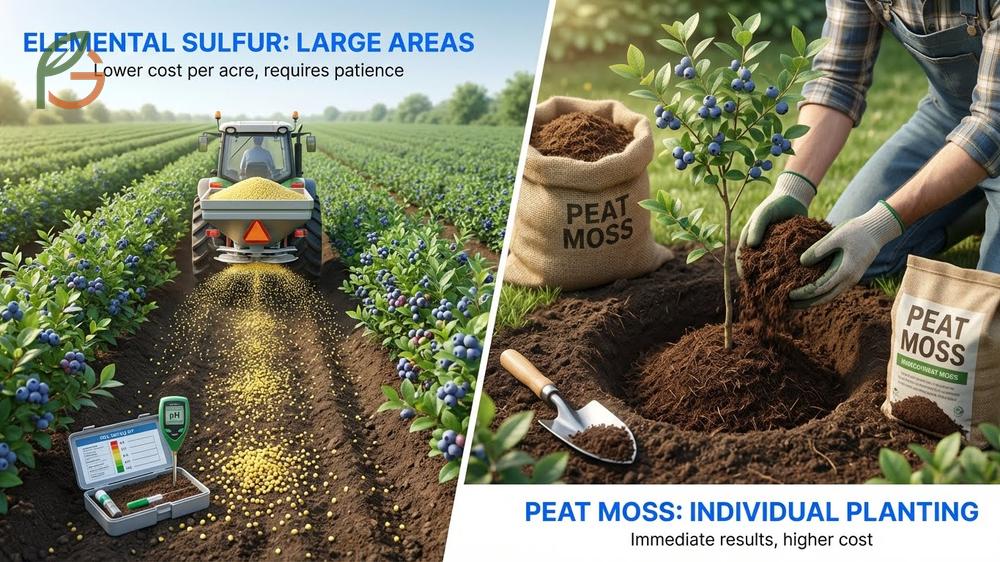
Two primary methods effectively reduce soil pH for blueberries: elemental sulfur and peat moss. Sulfur works best for large areas and established beds, while peat moss suits individual planting holes and container growing. Each approach offers distinct advantages in cost, speed, and long-term effectiveness.
Current data indicates elemental sulfur costs less per acre than organic amendments but requires patience. Peat moss delivers immediate results but expenses add up quickly for large plantings. Most successful growers combine both methods—sulfur for broad area treatment and peat moss for planting hole enrichment.
Elemental Sulfur Method
Elemental sulfur provides the most economical way to lower pH in slightly acidic soils[5]. Soil bacteria oxidize the sulfur into sulfuric acid through natural biological processes. This transformation takes time but creates lasting pH reduction that supports blueberries for years.
Apply 100 pounds of elemental sulfur per acre for each 0.1 pH unit you need to drop[1]. For example, reducing pH from 6.0 to 5.0 requires 1,000 pounds per acre. Work sulfur into the top 6-8 inches of soil during spring application for best results. Moisture and warm temperatures speed bacterial activity.
- Broadcast sulfur pellets evenly across planting area using a spreader
- Incorporate into soil immediately using a rototiller or garden fork
- Water thoroughly to activate bacterial oxidation process
- Retest pH after 6 months to track progress
- Apply additional sulfur if pH hasn’t reached target range
- Maintain records of application dates and rates for future reference
Peat Moss Technique
Sphagnum peat moss measures pH 3.0-4.0 and acidifies soil immediately upon mixing[3]. Unlike sulfur, it doesn’t require bacterial transformation to lower pH. Peat also improves soil structure, increases water retention, and adds organic matter that benefits root development.
For new plantings, mix 50% peat moss with native soil in each planting hole. This creates an acidic pocket that supports roots during establishment. Expect to use 1-2 cubic feet of peat per plant. The fast-acting nature makes peat ideal when you’re planting soon and can’t wait for sulfur to work.
This table compares elemental sulfur and peat moss across five key factors including cost per acre, pH reduction speed, duration of effect, application difficulty, and best use scenarios for acidifying blueberry soil
| Amendment | Cost per Acre | Time to Lower pH | Effect Duration | Best Use |
|---|---|---|---|---|
| Elemental Sulfur | $200-400[5] | 2-3 years[1] | 3-5 years | Large areas, advance planning |
| Peat Moss | $800-1,200 | Immediate | 2-3 years | Planting holes, containers |
| Ammonium Sulfate | $300-500 | 3-6 months | 1-2 years | Quick fixes, maintenance |
Acidify Soil Blueberries Naturally
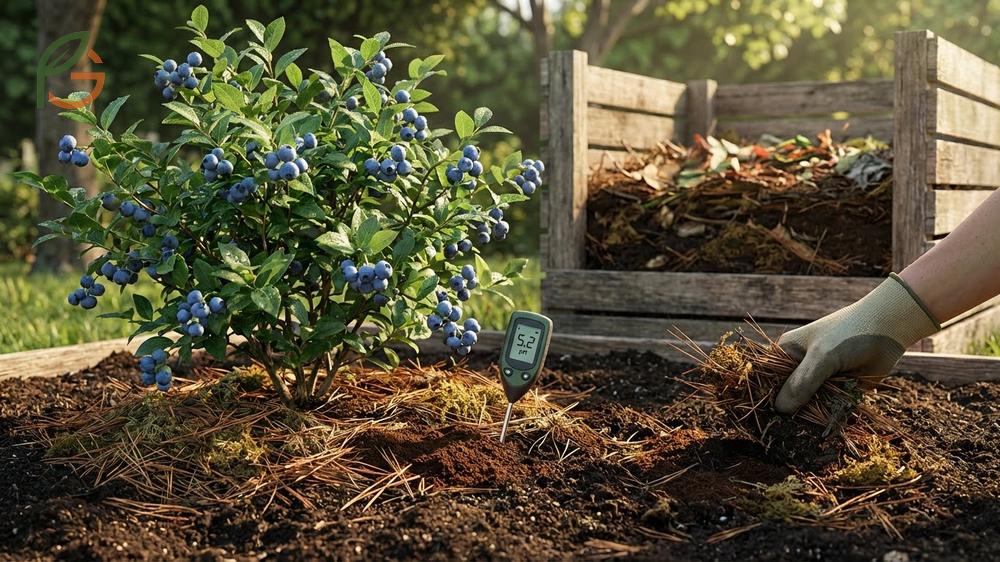
Organic materials offer sustainable alternatives to chemical amendments for maintaining acidic soil. These natural options break down slowly, releasing acids that gradually lower pH while improving soil biology. Most work best as maintenance tools rather than initial acidification methods.
Agricultural data shows natural amendments take longer than sulfur but support beneficial microorganisms. The slow release prevents pH crashes that can harm plants. Combining multiple organic sources creates a buffered system that maintains stable acidity year-round.
Organic Matter Options
Pine needles rank among the most effective natural acidifiers because they decompose into organic acids. Fresh needles measure pH 3.5-4.0 and break down over 2-3 years. Oak leaves provide similar benefits with pH around 4.5 when fully decomposed into leaf mold.
Coffee grounds contribute moderate acidity (pH 5.8-6.8 when fresh, 6.0-7.0 when used) but their primary value comes from organic matter addition rather than dramatic pH reduction. Composted pine bark works exceptionally well, combining acidification with excellent drainage properties that blueberry roots require.
- Pine needles: Apply 2-3 inch layer, replace annually
- Oak leaves: Compost first, then work into top 4 inches of soil
- Pine bark (composted): Mix 30% by volume into planting beds
- Wood chips (pine or oak): Use as mulch, refresh every 2 years
- Cottonseed meal: Slow-release nitrogen source with acidifying properties
- Sawdust (aged): Incorporate 1-2 inches, add nitrogen to prevent deficiency
Mulching Strategies
Acidic mulches serve double duty by lowering pH and protecting shallow blueberry roots. A 2-4 inch layer of pine bark mulch gradually acidifies soil as it decomposes. The mulch also conserves moisture, suppresses weeds, and moderates soil temperature swings.
Refresh mulch layers annually to maintain pH-lowering effects. As bottom layers decompose and integrate into soil, they continue acidifying for years. Avoid piling mulch against plant stems—leave a 2-inch gap to prevent crown rot.
Pro Tip: Mix pine needles with shredded oak leaves for optimal mulch. This combination provides balanced decomposition rates—pine needles break down slowly while oak leaves add quick-release nutrients.
Soil pH Blueberries Maintenance
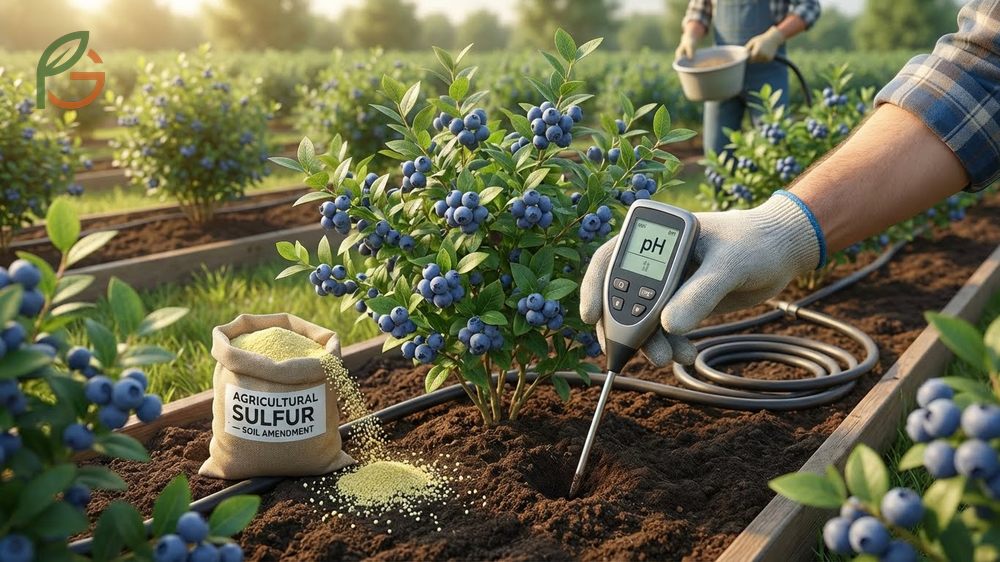
Regular monitoring prevents pH drift that can sabotage established plantings. Test soil every 2-3 years even when plants look healthy. Irrigation water, fertilizers, and natural soil processes gradually push pH upward, requiring ongoing management.
Evidence suggests that maintenance applications of sulfur at reduced rates keep pH stable better than waiting for problems to appear. Apply 100-200 pounds of sulfur per acre annually in established blueberry fields. This prevents the pH creep that reduces yields over time.
Choose ammonium-based fertilizers rather than nitrate forms for blueberries. Ammonium sulfate naturally acidifies soil while providing nitrogen that blueberries prefer[7]. Urea-based products work but offer less acidifying effect. Avoid limestone-based fertilizers completely—they raise pH and contradict your acidification efforts.
Watch for visual pH problems even between soil tests. Yellow leaves with green veins signal iron chlorosis from rising pH. Stunted growth and reddish leaf margins indicate manganese toxicity from pH dropping below 4.0. Quick action prevents permanent damage when you spot these symptoms early.
- New growth emerges yellow while older leaves stay green
- Leaf veins remain green but tissue between them yellows (iron chlorosis)
- Growth slows despite adequate water and no pest damage
- Leaf margins turn reddish-brown (possible manganese toxicity)
- Fruit production drops compared to previous years
Sulfur Soil Amendment Best Practices
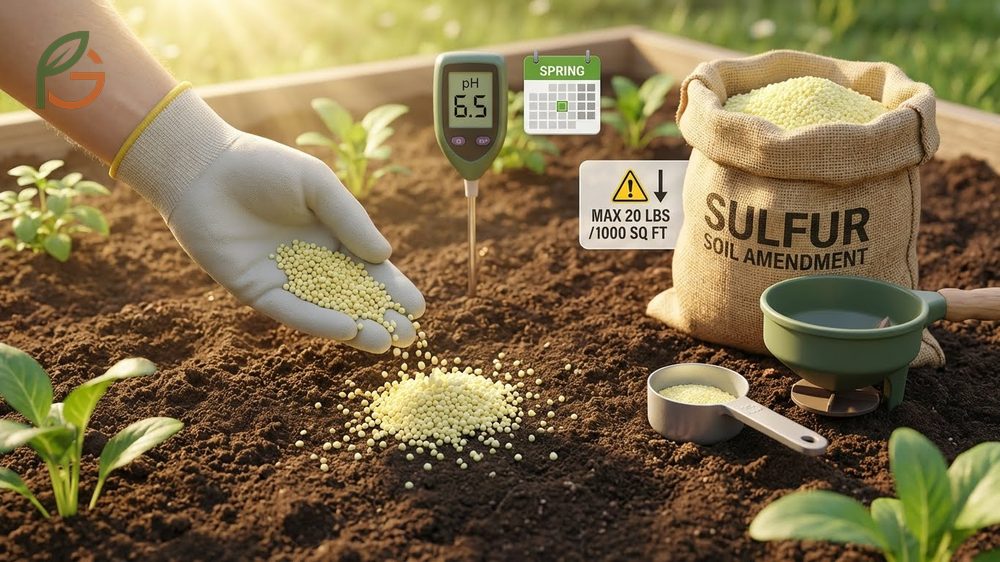
Timing and application method determine sulfur’s effectiveness at lowering soil pH. Spring applications work best because warm soil temperatures and moisture activate bacterial oxidation. Fall applications sit dormant through winter, delaying pH reduction until the following growing season.
Never apply more than 20 pounds of sulfur per 1,000 square feet in a single year. Excessive rates can drop pH too far too fast, creating manganese toxicity. Split large applications across 2-3 years for safer results. Research shows that 100-200 pounds per acre annually provides steady acidification without shocking plants[8].
Work sulfur into the soil rather than leaving it on the surface. Bacterial oxidation occurs most efficiently when sulfur contacts soil particles and moisture in the root zone. Use a rototiller for large areas or a garden fork for smaller beds. Incorporate to 6-8 inch depth where feeder roots concentrate.
Avoid aluminum sulfate despite some product labels listing it for acid-loving plants. Iowa State Extension specifically warns that aluminum sulfate can reach toxic levels in blueberry tissue[4]. Elemental sulfur costs less and provides safer, longer-lasting results.
Safety Warning: Don’t acidify soils that start above pH 7.5. High-pH soils contain calcium carbonates that neutralize amendments rapidly. The Ontario government recommends selecting alternative sites rather than fighting extreme alkalinity[5].
Conclusion
The evidence is clear: how to acidify soil for blueberries successfully requires choosing the right amendment for your timeline and budget. Elemental sulfur delivers economical, long-lasting results when you plan 2-3 years ahead, while peat moss provides immediate acidification for urgent plantings. Current guidance emphasizes annual soil testing and maintenance applications that keep pH stable rather than waiting for deficiency symptoms to appear.
Whether you’re establishing a new blueberry patch or managing established plants, proper pH management separates thriving crops from struggling bushes. FruitGarden helps home gardeners apply research-based techniques that professional growers use to maximize yields and fruit quality.
Frequently Asked Questions
What is the fastest way to make soil acidic for blueberries?
Mixing peat moss directly into planting holes provides the fastest acidification. Peat measures pH 3.0-4.0 and works immediately without bacterial transformation[3]. Use a 50/50 mix of peat and native soil in each hole for new plantings.
How much sulfur do I need to lower soil pH for blueberries?
Apply 100 pounds of elemental sulfur per acre for each 0.1 pH unit reduction[1]. For home gardens, that translates to roughly 0.5 pounds per 100 square feet. Always start with a soil test to determine exact needs based on your starting pH and soil buffering capacity.
Can I use vinegar to acidify soil for blueberries?
Vinegar provides only temporary pH reduction that lasts weeks, not months. The acetic acid neutralizes quickly and doesn’t create lasting soil chemistry changes. Elemental sulfur or peat moss deliver sustained acidification that supports plants for years rather than days.
How long does it take sulfur to lower soil pH?
Sulfur takes 2-3 years to fully reduce soil pH[1]. You’ll see partial reduction within 6-12 months, but complete acidification requires time for bacteria to oxidize sulfur into sulfuric acid. Plan sulfur applications at least one year before planting blueberries.
What pH is too low for blueberries?
Soil pH below 4.0 creates manganese toxicity risks in blueberries. While plants tolerate pH down to 3.8 in high-organic-matter soils[2], the ideal range remains 4.5-5.5 for optimal nutrient availability and plant health.
Should I use aluminum sulfate or elemental sulfur for blueberries?
Always choose elemental sulfur over aluminum sulfate for blueberries. Aluminum sulfate can accumulate to toxic levels in blueberry tissue despite product labels suggesting it’s safe[4]. Elemental sulfur costs less and provides safer long-term acidification.
Can I acidify soil that starts at pH 7.0 or higher?
Acidifying alkaline soils (pH 7.0+) proves extremely difficult and often impractical. These soils contain calcium carbonates that neutralize amendments and resist pH changes[5]. Consider growing blueberries in raised beds filled with acidic potting mix rather than trying to modify highly alkaline native soil.





