
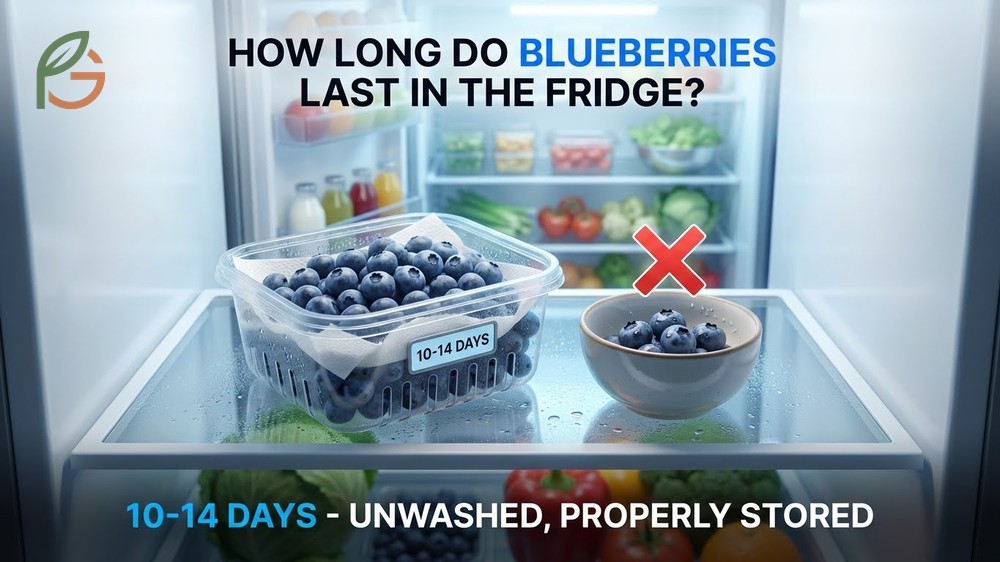
How long do blueberries last in the fridge? Fresh blueberries stay good for 10 to 14 days when stored properly in the refrigerator[1][2]. Research shows that moisture and improper temperature are the main culprits behind premature spoilage—which is why you shouldn’t wash blueberries before refrigerating them[1]. FruitGarden provides evidence-based guidance to help you maximize freshness and reduce food waste.
Quick Answer
- Refrigerated blueberries last 10-14 days when stored unwashed in a breathable container[1]
- At room temperature, they’re only good for 1-2 days before spoiling[3]
- Optimal fridge temperature is 32-40°F (0-4°C) for maximum shelf life[2]
- Frozen blueberries maintain quality for 8-12 months in airtight containers[3]
How Long Do Blueberries Last in the Fridge
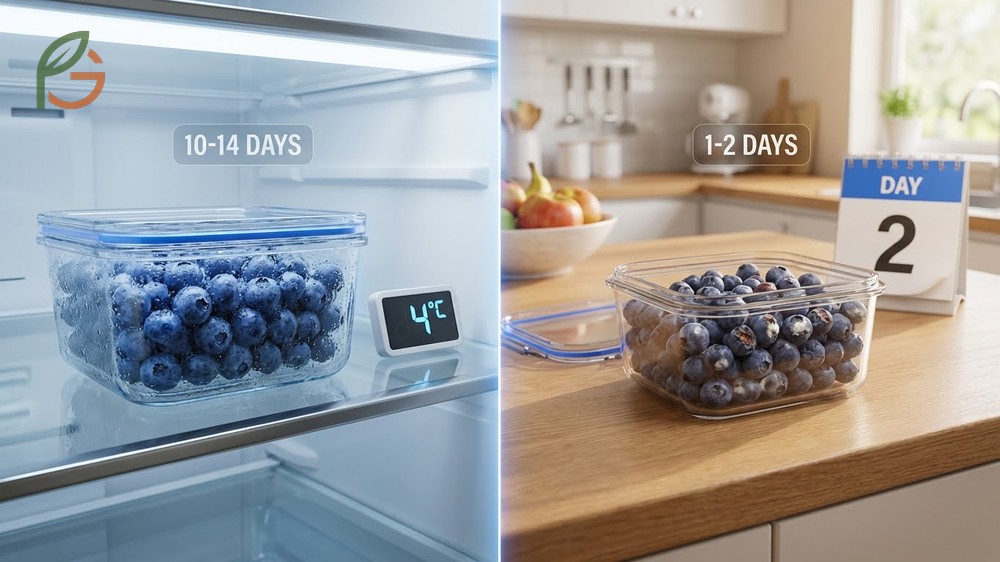
Fresh blueberries stored in the refrigerator maintain quality for 10 to 14 days when handled correctly[1][2]. This timeframe assumes you’re starting with fresh berries and following best storage practices. Compare this to room temperature storage, where blueberries last just 1 to 2 days before they start deteriorating[3].
The key difference between blueberries that last 5 days versus 14 days often comes down to three factors: initial freshness at purchase, whether they’re washed before storage, and temperature consistency. Most people don’t realize that washing introduces moisture that accelerates mold growth[1].
Factors Affecting Shelf Life
Several variables determine how long your blueberries stay fresh. Berries harvested at peak ripeness last longer than underripe or overripe ones. Studies show that temperature fluctuations—like repeatedly opening your fridge or storing berries near the door—significantly reduce shelf life[2].
Container choice matters too. Breathable containers that allow air circulation prevent moisture buildup, while completely sealed containers trap condensation. The original plastic clamshell packaging often works well because it’s designed with ventilation holes.
- Initial berry quality and ripeness at time of purchase
- Moisture exposure from washing or condensation
- Storage temperature consistency and proper refrigeration
- Container type and air circulation capability
- Contamination from damaged or moldy berries in the batch
Optimal Storage Temperature
Refrigerators should maintain temperatures between 32-40°F (0-4°C) for optimal blueberry storage[2]. The USDA recommends keeping your refrigerator at 41°F (5°C) or below for food safety[4]. Temperatures above 40°F (4°C) allow bacteria to multiply faster, shortening shelf life.
Place blueberries on the middle or upper shelf rather than the crisper drawer. While this seems counterintuitive, crisper drawers often have limited air circulation and higher humidity, which can promote mold growth on berries[1].
Important Temperature Note: If your fridge doesn’t have a built-in thermometer, consider buying a refrigerator thermometer. Many fridges run warmer than their settings indicate, which can cut blueberry shelf life in half.
How to Tell if Blueberries Are Bad
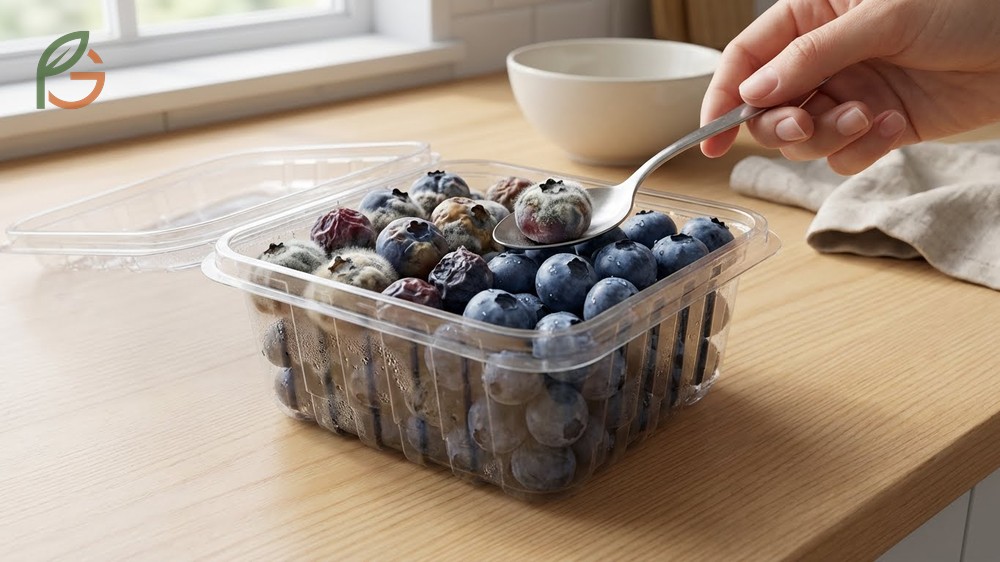
Spoiled blueberries show clear warning signs you shouldn’t ignore. Evidence indicates that consuming moldy berries can cause allergic reactions or respiratory issues in sensitive individuals[5]. Learning to identify these signs helps you avoid foodborne illness and reduce waste by catching problems early.
Most spoilage becomes visible within 3-5 days if berries weren’t stored properly. The good news? You don’t need to throw out the entire container if only one or two berries show mold—food safety experts confirm you can remove those berries and eat the rest if they show no signs of contamination[5].
Visible Mold Signs
Mold on blueberries typically appears as white, gray, or greenish fuzzy growth. Research shows this coating develops when microscopic spores find the right conditions—warmth, moisture, and organic material[5]. You’ll often see it concentrated around the stem area or on bruised spots where the skin is damaged.
If you spot mold, remove the affected berries immediately along with any they were touching. Wash the remaining berries in cold water right before eating them, not for storage.
- White or gray fuzzy mold coating on the surface
- Soft, mushy texture instead of firm plumpness
- Leaking juice or liquid pooling in the container
- Wrinkled, shriveled skin indicating dehydration
- Dull, faded color instead of vibrant blue-purple
- Sour or fermented smell rather than fresh, sweet aroma
Texture and Smell Changes
Fresh blueberries feel firm with a slight give when gently pressed. Once they start breaking down, they become mushy or collapse under light pressure. This texture change happens as cell walls deteriorate, releasing moisture and making berries vulnerable to mold.
Smell provides another reliable indicator. Fresh blueberries have a subtle, sweet fragrance. If you detect a sour, fermented, or off-putting odor when you open the container, the berries have likely started fermenting—a sign of bacterial activity that means they’re past their prime.
Safety Reminder: When in doubt, throw it out. If more than 25% of your berries show mold or significant spoilage, it’s safer to discard the entire batch rather than risk consuming contaminated fruit.
How to Keep Blueberries Fresh
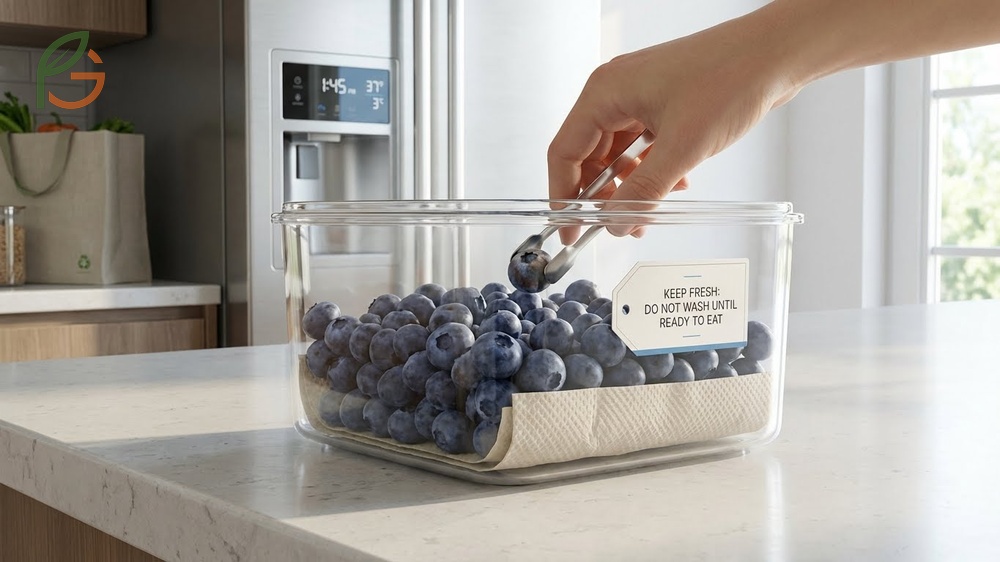
Proper storage starts the moment you bring blueberries home. Studies demonstrate that berries refrigerated within 2 hours of purchase last significantly longer than those left at room temperature[3]. The single most important rule? Don’t wash them until you’re ready to eat them[1].
Before refrigerating, inspect your berries and remove any that are soft, leaking, or show mold. One spoiled berry can quickly contaminate others through direct contact. Line your storage container with a paper towel to absorb excess moisture, which helps prevent the damp environment mold loves.
Proper Container Selection
The best containers for blueberries allow air circulation while protecting berries from getting crushed. Current guidance suggests keeping berries in their original plastic clamshell if it has ventilation holes, or transferring them to a shallow container lined with paper towels[1].
Arrange blueberries in a single layer when possible. This prevents berries from crushing each other and allows air to circulate around each one. Mason jars work well too—they’re airtight enough to prevent dehydration but can be left slightly open for ventilation.
- Inspect berries immediately and discard any moldy or damaged ones
- Line your storage container with a dry paper towel
- Place unwashed berries in a single layer if container size allows
- Store on the middle or upper refrigerator shelf, not in the crisper
- Check berries every 2-3 days and remove any that start to spoil
Vinegar Wash Method
If you want to wash blueberries before storage to extend their life, use a vinegar solution. Research shows that a 1:4 ratio of white vinegar to water effectively kills mold spores and bacteria without affecting flavor[6]. Mix 1 cup white vinegar with 4 cups water in a large bowl.
Soak berries for 5 minutes, then drain and rinse thoroughly under cold water. The critical step: let them air dry completely on a clean towel before refrigerating[6]. Any remaining moisture will promote mold growth, defeating the purpose of the vinegar wash.
Should Blueberries Be Refrigerated
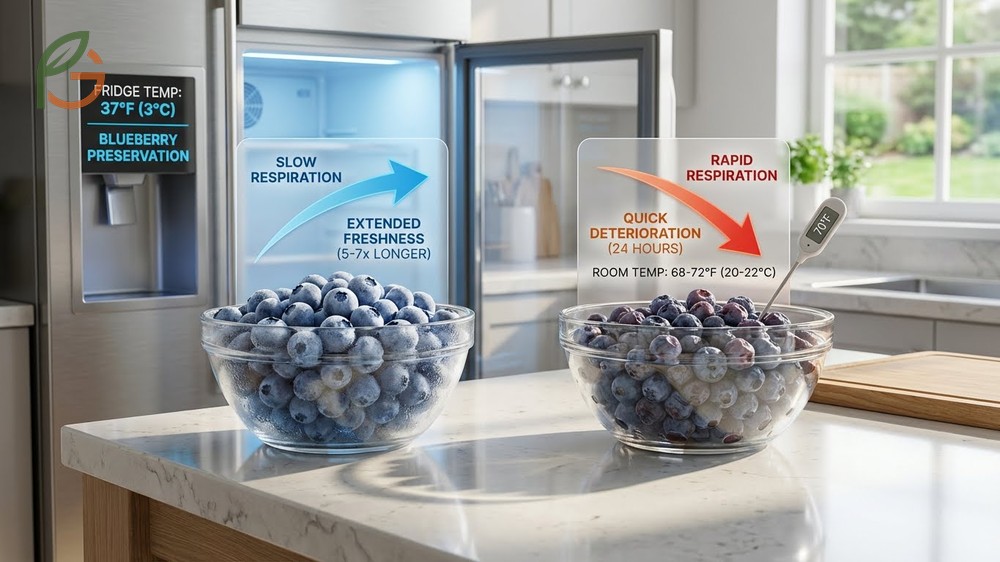
Yes, blueberries need refrigeration unless you’re eating them within 1-2 days. Agricultural data shows that berries left at room temperature deteriorate 5-7 times faster than refrigerated ones[3]. The reason comes down to respiration rate—berries continue “breathing” after harvest, consuming sugars and releasing moisture. Cooler temperatures slow this process dramatically.
At room temperature around 68-72°F (20-22°C), blueberries lose firmness within 24 hours as their cell walls break down. You’ll notice they become softer, duller in color, and develop that characteristic wrinkled appearance much faster than refrigerated berries.
The only exception is if you’re specifically letting underripe berries finish ripening. If your blueberries are hard and very tart, leaving them at room temperature for 12-24 hours can help develop their sweetness. Once they reach your desired ripeness, immediately transfer them to the fridge.
This table compares shelf life, quality retention, and best use cases for room temperature, refrigerator, and freezer storage of blueberries
| Storage Method | Shelf Life | Temperature | Best For |
|---|---|---|---|
| Room Temperature | 1-2 days[3] | 68-72°F (20-22°C) | Same-day eating or ripening underripe berries |
| Refrigerator | 10-14 days[1] | 32-40°F (0-4°C) | Fresh snacking and short-term use |
| Freezer | 8-12 months[3] | 0°F (-18°C) or below | Smoothies, baking, long-term storage |
Keep blueberries away from raw meat in your fridge to prevent cross-contamination. Store them on upper shelves while keeping raw proteins on the bottom shelf where any drips can’t reach other foods[1].
Freezing Blueberries for Long-Term Storage

Freezing extends blueberry shelf life to 8-12 months while maintaining most nutritional value[3]. This method works perfectly for preserving excess berries you can’t eat within two weeks. Unlike refrigeration, freezing essentially stops deterioration by halting enzymatic activity and microbial growth.
The key to successful freezing is preventing berries from clumping into one solid mass. Studies show that individually frozen berries (called IQF or individually quick frozen) maintain better texture and are easier to use in portions[1]. Spread washed and dried berries in a single layer on a baking sheet, freeze for 1-2 hours, then transfer to freezer bags.
Before freezing, rinse berries in cold water and pat them completely dry. Remove any stems or damaged berries. Label freezer bags with the date—while frozen blueberries technically last up to a year, quality starts declining after 8 months as freezer burn develops.
- Wash berries thoroughly and let them dry completely before freezing
- Spread in a single layer on a parchment-lined baking sheet
- Freeze for 1-2 hours until solid, then transfer to freezer bags
- Remove as much air as possible from bags to prevent freezer burn
- Label bags with the date and use within 8-12 months for best quality
- Use frozen berries directly in smoothies or baking—no need to thaw
Frozen blueberries work best in cooked applications or smoothies rather than fresh eating. The freezing process ruptures cell walls, so thawed berries become mushy. However, they retain nearly all their antioxidants and vitamin content, making them nutritionally comparable to fresh berries.
Conclusion
The evidence is clear: how long do blueberries last in the fridge depends entirely on how you store them. Proper refrigeration at 32-40°F (0-4°C) in breathable containers keeps unwashed berries fresh for 10-14 days[1][2]. The three critical practices—don’t wash before storing, remove spoiled berries immediately, and maintain consistent cool temperatures—can double your blueberries’ lifespan.
Current agricultural guidance emphasizes that small changes in storage technique create significant differences in shelf life and reduce food waste. Visit FruitGarden for more expert advice on maximizing the freshness and quality of your favorite fruits.
Frequently Asked Questions
How long can blueberries sit out at room temperature?
Blueberries can sit out for 1-2 days at room temperature before they start to spoil[3]. However, they’ll stay freshest if refrigerated within 2 hours of bringing them home. Room temperatures above 70°F (21°C) accelerate deterioration significantly.
Should you wash blueberries before storing them in the fridge?
No, you shouldn’t wash blueberries before refrigerating them. Washing introduces moisture that creates an ideal environment for mold and bacteria growth[1]. Instead, wash them right before eating or using them in recipes.
Can you eat blueberries with white fuzz on them?
No, don’t eat blueberries with white fuzzy mold. Remove moldy berries and any they were touching immediately. The remaining berries without visible mold are typically safe to eat after washing[5], but consume them quickly as spores may spread.
How do you keep blueberries fresh longer in the refrigerator?
Keep blueberries fresh longer by storing them unwashed in a container lined with paper towels on the middle refrigerator shelf. Remove any damaged berries immediately, ensure your fridge stays at 40°F (4°C) or below, and check them every few days for signs of spoilage[1].
What’s the best container for storing blueberries in the fridge?
The best containers allow air circulation while protecting berries from crushing. Keep blueberries in their original vented plastic clamshell, or transfer them to a shallow container lined with paper towels[1]. Avoid completely airtight containers that trap moisture.
How long are blueberries good for after you buy them?
Fresh blueberries are good for 10-14 days after purchase when stored properly in the refrigerator[2]. This timeline assumes they were fresh at purchase and you refrigerate them promptly. Check them regularly and remove any that start showing signs of mold or softness.
Does the vinegar wash really make blueberries last longer?
Yes, a vinegar wash can extend blueberry shelf life by killing mold spores and bacteria. Mix 1 cup white vinegar with 4 cups water, soak berries for 5 minutes, rinse thoroughly, and dry completely before storing[6]. The key is ensuring berries are completely dry—any moisture defeats the purpose.





