
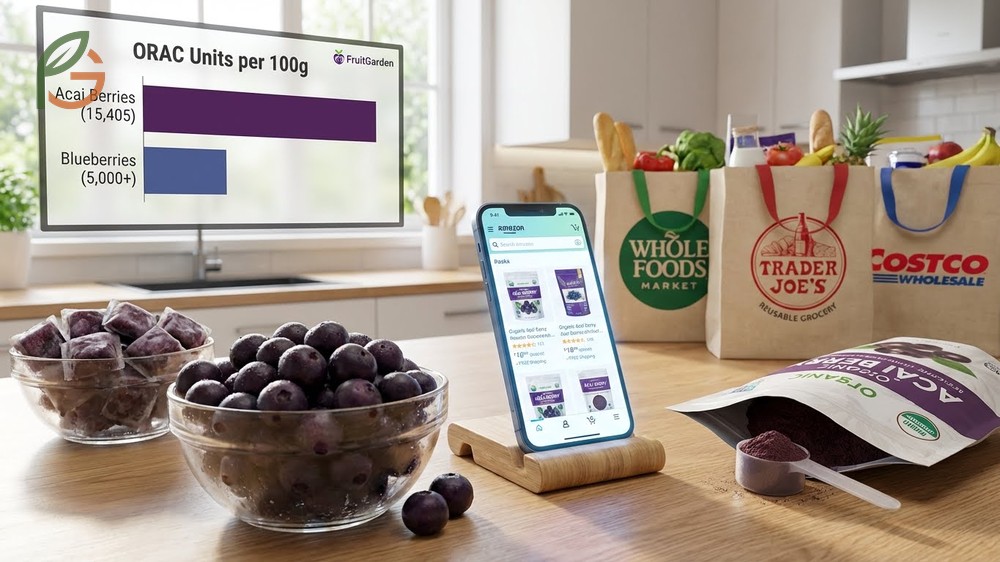
Where to buy acai berries? You can purchase acai berries at major retailers like Amazon, Whole Foods, Trader Joe’s, and Costco, plus specialty health stores and online suppliers. Research shows acai contains 15,405 ORAC units per 100g[1]—more than three times the antioxidant capacity of blueberries. FruitGarden synthesizes current market data to help you find the best sources for fresh, frozen, and powdered acai products across the United States.
Quick Answer
- Top online retailers: Amazon, Walmart, and Whole Foods Market offer frozen acai packets for $4-$18[2]
- Best local stores: Trader Joe’s, Sprouts, and Costco stock organic acai puree packets and smoothie packs
- Fresh acai berries aren’t widely available in the US due to their 48-hour[3] perishability window
- Frozen packets are the most practical option—they’re flash-frozen within hours of harvest to preserve nutrients
Where to Buy Acai Berries
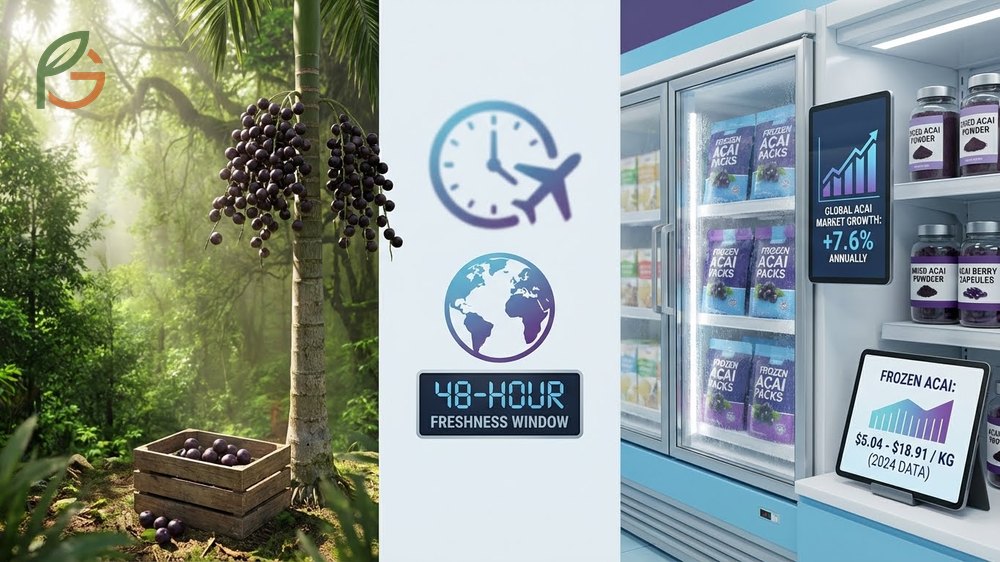
Acai berries grow exclusively on palm trees in the Amazon rainforest, making fresh berries nearly impossible to find outside Brazil. They spoil within 48 hours of harvest[3], which is why most US retailers sell frozen or dried products instead. Current market data shows frozen acai prices range from $5.04 to $18.91 per kg[4] as of 2024.
The acai berry market is expanding at 7.6% annually[5], driven by increasing demand for plant-based superfoods. You’ll find the widest selection at stores specializing in organic and health-focused products. Most retailers stock three main forms: frozen puree packets, organic powder, and supplement capsules.
Flash-freezing technology preserves acai’s nutritional profile better than any other preservation method. Studies demonstrate that frozen acai retains its full antioxidant capacity[6], making it nutritionally equivalent to fresh berries. This process locks in the berry’s signature anthocyanins and omega fatty acids within hours of harvest.
Online Retailers
Amazon leads online acai sales with dozens of brands and product formats. You’ll find single-serve packets, bulk powder, and supplement capsules ranging from $10 to $50 depending on quantity and brand. Walmart’s online marketplace offers similar variety, with Pitaya Foods’ 12 oz frozen packets priced at $4.98[2] when available.
Specialty suppliers like Sambazon and Tropical Acai sell directly through their websites, often offering bulk discounts for regular buyers. These companies control the entire supply chain from Brazilian farms to your doorstep, which typically results in fresher products. Most offer free shipping on orders over $50.
- Amazon: widest selection of brands, Prime shipping available
- Walmart.com: competitive pricing on frozen packets and powder
- Whole Foods Market online: premium organic options with same-day delivery in select cities
- Sambazon.com: direct-from-source Fair Trade certified products
- Tropical Acai: wholesale and individual orders, Non-GMO verified
Local Health Stores
Brick-and-mortar health food stores typically stock acai in their frozen foods section. You’ll need to check product labels carefully—some brands add sugar or guarana to their acai puree. The purest options contain only organic acai pulp and citric acid as a preservative (less than 0.2%)[7].
Independent health stores often carry local or regional brands you won’t find at major chains. These smaller suppliers sometimes offer better prices on bulk purchases. Most stores keep acai powder on shelves alongside other superfood powders like spirulina and maca.
Important note: Always check the freezer temperature when buying acai in-store. Frozen acai should be rock-solid—any softness indicates temperature fluctuations that can degrade nutrients and flavor.
Buy Acai Online
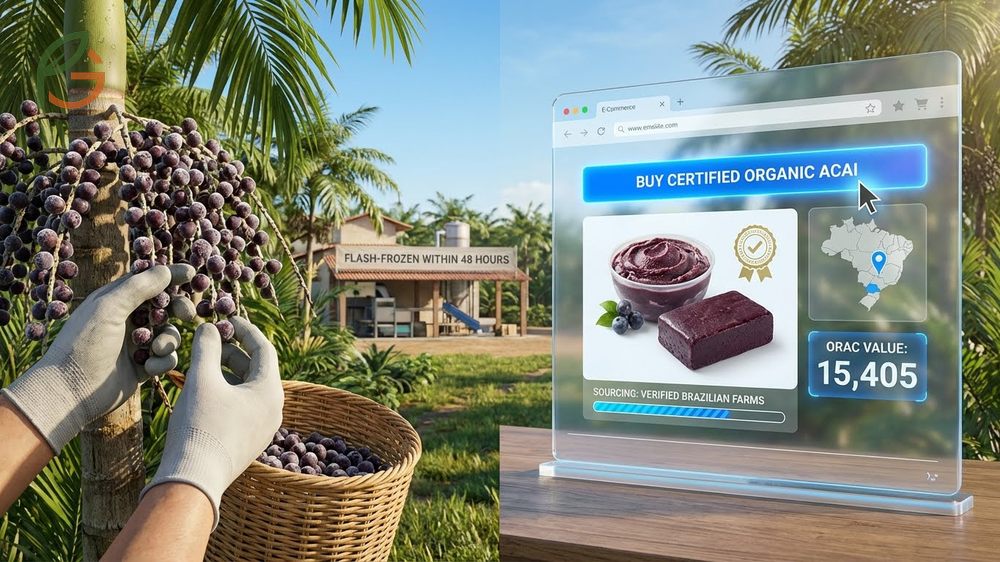
Online shopping gives you access to certified organic acai from verified suppliers worldwide. Most reputable sellers provide detailed sourcing information, showing exactly which Brazilian farms grew their berries. This transparency matters because acai quality varies significantly based on harvest timing and processing speed.
When ordering online, you’re getting products that were flash-frozen within 48 hours of hand-picking[3]. This speed preserves the berry’s ORAC value of 15,405 per 100g[1], keeping antioxidants intact. Most suppliers ship with dry ice or gel packs to maintain the cold chain during transit.
Amazon Acai Berries
Amazon stocks over 100 different acai products, from basic frozen puree to premium supplement blends. Top-selling brands include Sambazon, Pure Encapsulations, and Slofoodgroup. Prime members get two-day shipping on most items, though frozen products may require expedited delivery in warmer months.
Product reviews on Amazon help you identify quality issues before buying. Look for verified purchases mentioning flavor, consistency, and packaging condition upon arrival. The highest-rated frozen acai products maintain 4.5+ star ratings with at least 500 reviews.
- Filter for “USDA Organic” certification to avoid synthetic additives
- Check seller ratings—choose vendors with 95%+ positive feedback
- Subscribe & Save option reduces prices by 5-15% on recurring orders
- Read recent reviews from your climate zone for shipping quality insights
- Compare per-ounce pricing across different package sizes
Specialty Online Suppliers
Direct-to-consumer acai suppliers like Sambazon, Tropical Acai, and Acai Life control their entire supply chain. They harvest from their own Brazilian farms, process within hours, and ship directly to customers. This vertical integration typically produces higher quality than third-party sellers.
These suppliers often offer educational resources about acai cultivation and sustainability practices. Sambazon pioneered Fair Trade certification for acai berries, ensuring indigenous Amazon communities receive fair compensation. Tropical Acai provides wholesale options for cafes and smoothie shops alongside consumer products.
Pro tip: Sign up for email lists from specialty suppliers. They frequently offer first-time customer discounts of 15-20% and notify subscribers about flash sales on bulk orders.
Whole Foods Acai
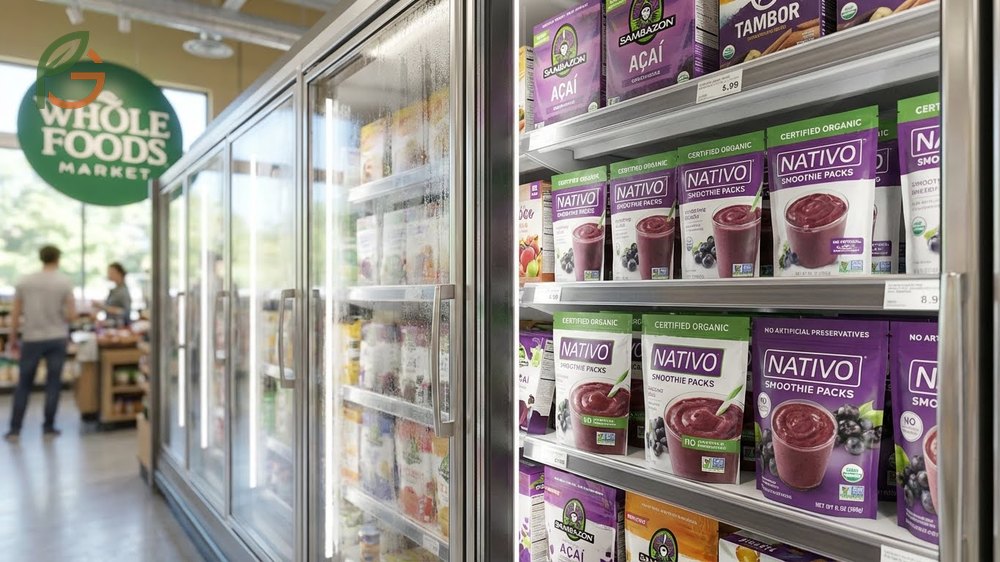
Whole Foods Market carries multiple acai brands across their frozen foods section, with Nativo being their flagship offering. The store’s quality standards require all acai products to be certified organic and free from artificial preservatives. You’ll find prices slightly higher than discount chains, but the selection tends toward premium, single-origin products.
Most locations stock both individual smoothie packets and larger bulk containers. The bulk options work better if you’re making acai bowls regularly—you’ll save roughly 30% per ounce compared to single-serve packets. Whole Foods’ same-day delivery through Amazon Prime Now includes frozen acai in most metropolitan areas.
Nativo Brand
Nativo’s raw acai berry pulp contains only wild-harvested organic acai[8] with no additives. This makes it the purest option at Whole Foods and ideal for smoothie bowls where you control the sweetness. The unsweetened puree has a naturally tart, earthy flavor that pairs well with banana and honey.
Nativo sources their berries from indigenous communities in the Amazon, following sustainable harvesting practices. The berries are hand-picked at peak ripeness and processed within 24 hours to maximize nutrient retention. Each packet contains approximately 100g of pure acai pulp.
Availability
Acai availability at Whole Foods fluctuates based on Brazilian harvest cycles and shipping logistics. Peak season runs from July through December when Amazon acai palms produce the highest yields. You’ll occasionally find limited stock from January to March due to supply chain constraints.
Call ahead to confirm your local store has acai in stock, especially if you’re making a special trip. Store employees can check inventory and sometimes order specific brands if they’re temporarily out. The frozen foods manager can provide arrival dates for upcoming shipments.
Frozen Acai Packets
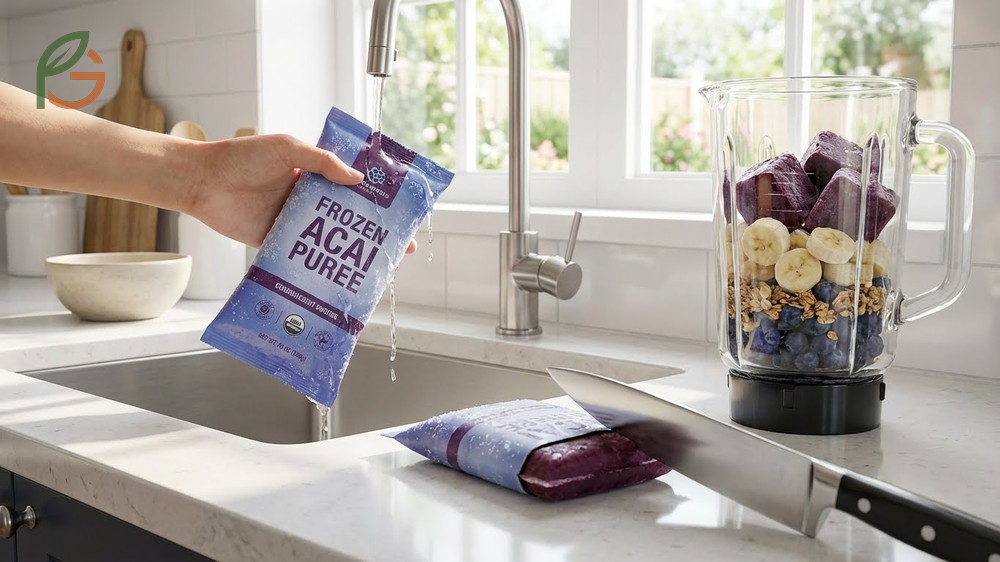
Frozen acai packets revolutionized home acai bowl preparation by providing pre-portioned, ready-to-blend servings. Each packet typically contains 100-200g of frozen acai puree—enough for one large smoothie bowl or two small servings. The packets break apart easily under running water or can be cut open with a sharp knife.
These packets preserve acai’s nutritional value better than any other format. Flash freezing happens within 48 hours of harvest[3], locking in antioxidants before they degrade. Studies show frozen acai maintains the same antioxidant levels as fresh berries for up to 24 months when stored properly.
Price-wise, packets range from $1.25 to $4.50 each depending on brand, organic certification, and retailer. Buying multi-packs of 8-12 packets reduces the per-unit cost by 20-30%. Store them at 0°F (-18°C) or below to maintain quality throughout their shelf life.
Sambazon Products
Sambazon dominates the US frozen acai market with their 3.5 oz smoothie packs sold at Costco, Whole Foods, and online retailers. Their “Original Blend” contains organic acai plus guarana for natural caffeine, while the “Pure Unsweetened” version has only acai pulp. A 12-pack at Costco Business typically costs around $20-25[9].
All Sambazon products carry Fair Trade certification, meaning Amazon harvesters receive premium wages for their work. The company pioneered sustainable acai sourcing in Brazil and maintains direct relationships with over 1,000 farming families. Their packaging includes detailed nutritional information and recipe suggestions.
- Original Blend: acai with guarana for energy boost
- Pure Unsweetened: 100% organic acai pulp, no additives
- Supergreens: acai blended with kale, spinach, and spirulina
- Protein: acai mixed with pea protein for post-workout recovery
- Amazon Berry: acai combined with other Amazonian fruits
Trader Joe’s Options
Trader Joe’s sells Unsweetened Organic Açaí Puree Packets in 4-count boxes[10] at competitive prices compared to specialty health stores. Each packet contains pure acai without added sugars or flavors. The store’s buyers source from certified organic suppliers in Brazil who follow sustainable harvesting practices.
Stock varies by location and season, with the best availability during fall and winter months. Trader Joe’s doesn’t offer online ordering, so you’ll need to visit in person. The frozen acai typically lives near other frozen fruit products like mango chunks and wild blueberries.
Storage tip: Keep frozen acai packets in the back of your freezer where temperature stays most consistent. Avoid storing in the door, where temperature fluctuates each time you open it.
Acai Berry Products
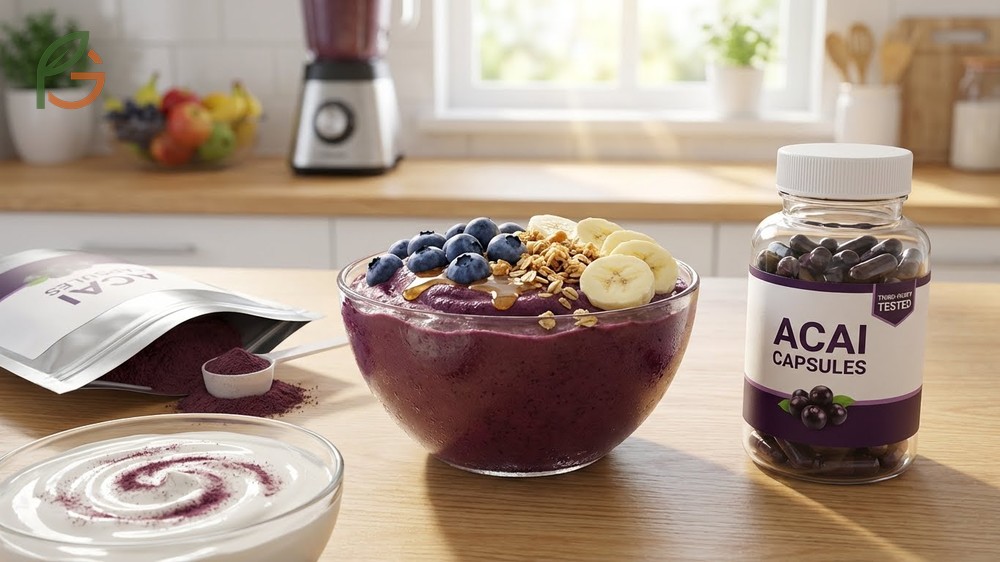
Beyond frozen puree, acai comes in powdered and capsule forms that offer different benefits. Powder works well for smoothies, yogurt bowls, and baking, while capsules provide a concentrated dose of acai’s antioxidants without the taste. Each format has distinct advantages depending on your needs and preferences.
Product quality varies significantly across brands, especially with powder and supplements. Look for products tested by third-party labs for purity and potency. The label should specify the ORAC value and list acai as the first ingredient without fillers like maltodextrin or rice flour.
Organic Acai Powder
Organic acai powder is made by freeze-drying or spray-drying fresh acai pulp into a fine powder. Freeze-dried powder retains more nutrients, with ORAC values reaching 70,000 units per 100g[11] for spray-dried versions. This concentrated form packs more antioxidants per gram than frozen acai.
One tablespoon of acai powder (roughly 10g) provides the antioxidant equivalent of 100g of frozen acai. You can mix it into smoothies, sprinkle over oatmeal, or blend into energy balls. The powder has a shelf life of 12-24 months when stored in a cool, dry place away from direct sunlight.
Price ranges from $15 to $40 per 8 oz bag depending on certification and processing method. Certified organic powder costs more but guarantees no pesticide residues. Some brands add vitamin C or other supplements to boost nutritional content—check labels if you prefer pure acai.
- Add 1-2 tablespoons to smoothies for antioxidant boost
- Mix into Greek yogurt or overnight oats
- Blend into homemade energy bars or protein balls
- Stir into pancake or waffle batter for purple color
- Combine with nut butter for a superfood spread
Acai Supplement Capsules
Acai capsules deliver concentrated berry extract in convenient pill form. Pure Encapsulations offers Acai 600 capsules providing fiber, immune support, and antioxidants in a 180-count bottle[12]. Each capsule typically contains 500-1,000mg of acai berry extract standardized for anthocyanin content.
Supplement capsules work well if you dislike acai’s earthy taste but want its health benefits. They’re also portable and shelf-stable, making them practical for travel. Most brands recommend taking 1-2 capsules daily with meals for optimal absorption.
Quality varies dramatically among supplement brands. Choose products certified by NSF International or USP to ensure label accuracy. Third-party testing confirms the capsules contain what’s claimed and are free from contaminants like heavy metals or bacteria.
Conclusion
The evidence is clear: where to buy acai berries depends on your preferred format and budget. Online retailers like Amazon and Walmart offer the widest selection and competitive pricing, while local stores like Whole Foods and Trader Joe’s provide curated organic options you can inspect before purchase. Current market data shows frozen packets remain the most practical choice, preserving acai’s exceptional antioxidant content of 15,405 ORAC units per 100g[1] better than any other format.
Whether you choose Sambazon’s Fair Trade packets from Costco, Nativo’s raw pulp from Whole Foods, or organic powder from specialty suppliers, prioritize certified organic products from verified sources. FruitGarden emphasizes selecting suppliers who provide transparency about harvest dates, processing timelines, and sustainability practices—factors that directly impact both nutrient quality and ethical sourcing.
Frequently Asked Questions
Can you buy fresh acai berries in the United States?
Fresh acai berries are nearly impossible to find in US stores because they spoil within 48 hours of harvest. The berries grow exclusively in the Amazon rainforest and must be processed immediately to prevent degradation. Frozen packets and powder are your only practical options for maintaining acai’s nutritional benefits.
What’s the best place to buy frozen acai packets?
Costco offers the best value for frozen acai packets with Sambazon 12-packs priced around $20-25. Trader Joe’s provides competitive pricing on their 4-pack boxes if you don’t need bulk quantities. For premium organic options, Whole Foods Market carries Nativo brand with wild-harvested acai from sustainable sources.
How much do acai berries cost per pound?
Frozen acai prices range from $2.29 to $8.58 per pound based on 2024 market data. Organic certification, Fair Trade status, and brand reputation affect pricing. Buying in bulk through wholesale suppliers or multi-packs reduces costs by 20-30% compared to single-serve packets.
Is acai powder as nutritious as frozen acai?
Freeze-dried acai powder is actually more concentrated than frozen, with ORAC values reaching 70,000 units per 100g compared to frozen’s 15,405 units. However, one tablespoon of powder (10g) equals roughly 100g of frozen acai nutritionally. Both formats preserve antioxidants effectively when processed and stored correctly.
Does Amazon sell organic acai berries?
Yes, Amazon carries dozens of USDA Organic certified acai products including frozen packets, powder, and supplement capsules. Top brands like Sambazon, Tropical Acai, and Pure Encapsulations sell directly through Amazon with Prime shipping available. Filter search results by “Organic” certification to find verified products.
Which stores carry acai puree frozen packets?
Major chains stocking frozen acai include Whole Foods, Trader Joe’s, Costco, Sprouts Farmers Market, and some Walmart locations. Health food stores like Natural Grocers and Sprouts typically maintain better year-round selection. Call ahead to confirm availability since stock varies by season and location.
Are acai supplements better than frozen acai for health benefits?
Frozen acai and quality supplements provide similar antioxidant benefits, but whole frozen acai includes natural fiber and omega fatty acids that capsules may lack. Supplements offer convenience and standardized dosing, while frozen acai delivers a broader nutrient profile. Choose based on whether you want concentrated extracts or whole-food nutrition.





