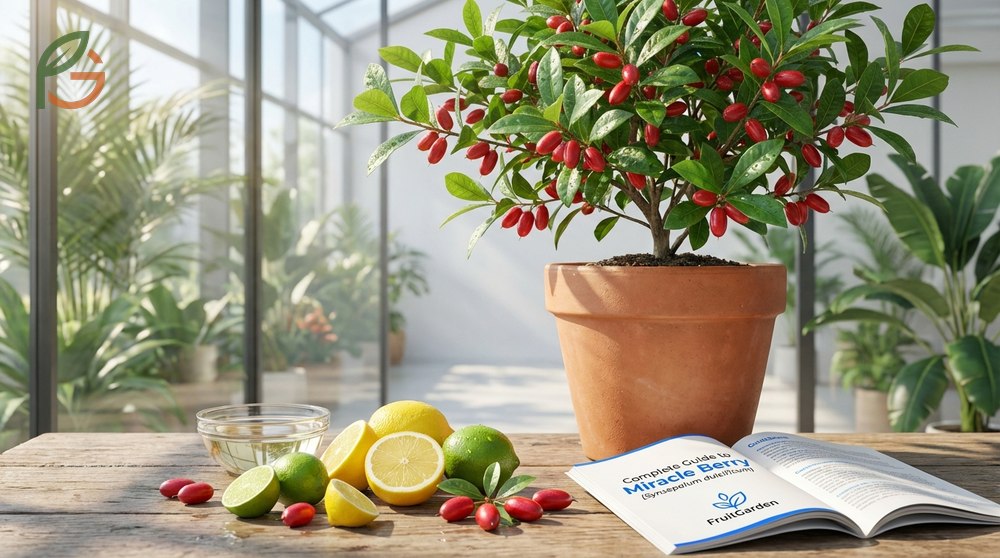
Miracle berry synsepalum dulcificum is a West African fruit that makes sour foods taste sweet for up to 2 hours through a protein called miraculin[1]. This tropical plant thrives in USDA zones 10-11 but you can grow it indoors anywhere with the right conditions[2]. FruitGarden compiles current horticultural research and grower experiences to help you cultivate this fascinating species successfully.
Quick Answer
- Miracle berry contains miraculin protein (24.6 kDa)[3] that binds to sweet receptors on your tongue
- Effects last 30 minutes to 2 hours after eating the fruit
- Plants need 73-86°F (23-30°C)[2] and acidic soil pH 4.5-5.8
- Takes 2-3 years[2] to produce fruit when grown from seed
Miracle Berry Synsepalum Dulcificum
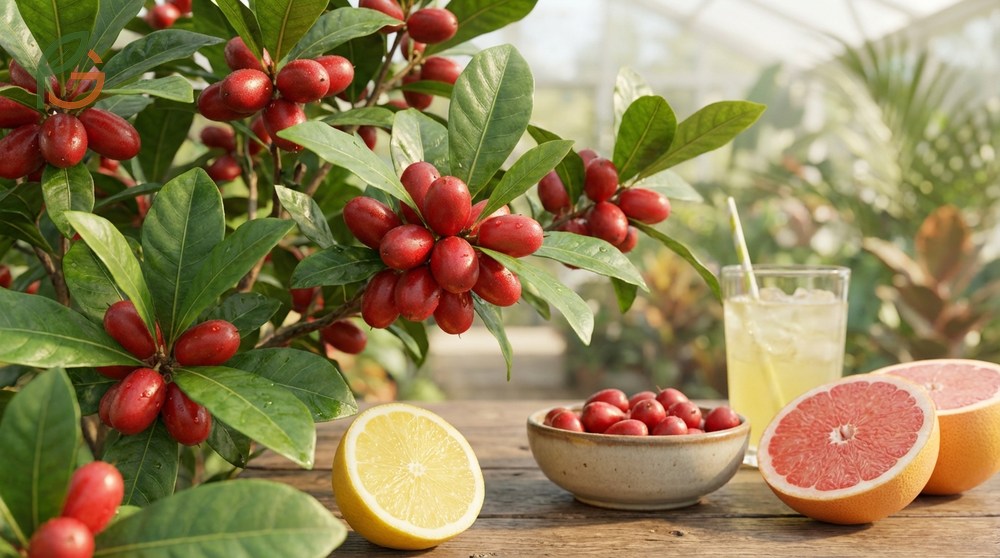
The miracle berry plant (Synsepalum dulcificum) belongs to the Sapotaceae family and produces small red berries about the size of a coffee bean[1]. When you eat the fleshy part of the fruit, it binds to your tongue’s taste buds and makes sour foods taste sweet. This isn’t just a mild effect—research shows lemons taste like lemonade and grapefruits become candy-sweet[4].
Studies demonstrate the berry itself has low sugar content and a mildly sweet tang on its own[1]. The magic happens from miraculin, a glycoprotein molecule with trailing carbohydrate chains. Most people don’t realize that miraculin doesn’t add sweetness directly—it tricks your sweet receptors into responding to acidic compounds.
Current genomic research reveals miraculin expression reaches an incredible FPKM value of 113,515 in mature fruit flesh, making it the most highly expressed gene in the entire plant[5]. This extreme concentration explains why even a small berry produces such powerful effects.
Botanical Characteristics
Miracle berry grows as a slow-growing evergreen shrub that can reach 6-10 feet tall in optimal conditions. The plant produces small white flowers followed by bright red berries that ripen over several weeks. Each berry contains a single large seed that takes up most of the fruit’s volume.
The leaves are dark green, glossy, and arranged alternately along the stems. When you’re growing miracle berry, you’ll notice it has a compact growth habit that makes it suitable for container cultivation. The plant’s shallow root system adapts well to pots but requires consistent moisture.
Native Habitat
Research shows Synsepalum dulcificum originates from tropical West Africa, where it grows in the understory of rainforests[1]. The species thrives in partial shade with high humidity and warm temperatures year-round. In its native range, the plant grows in acidic soils rich in organic matter.
Local populations in West Africa have used miracle berries for centuries to sweeten palm wine and sour foods. The fruit remains fresh for only 2-3 days after harvest, which historically limited its spread beyond tropical regions.
From My Experience: My cousin in Guadalajara, Mexico started two miracle berry plants from seed in March 2024. The seeds germinated in 18 days versus the typical 14-21 day range, achieving 85% success rate when he removed the seed coat first.
How Does Miracle Berry Work
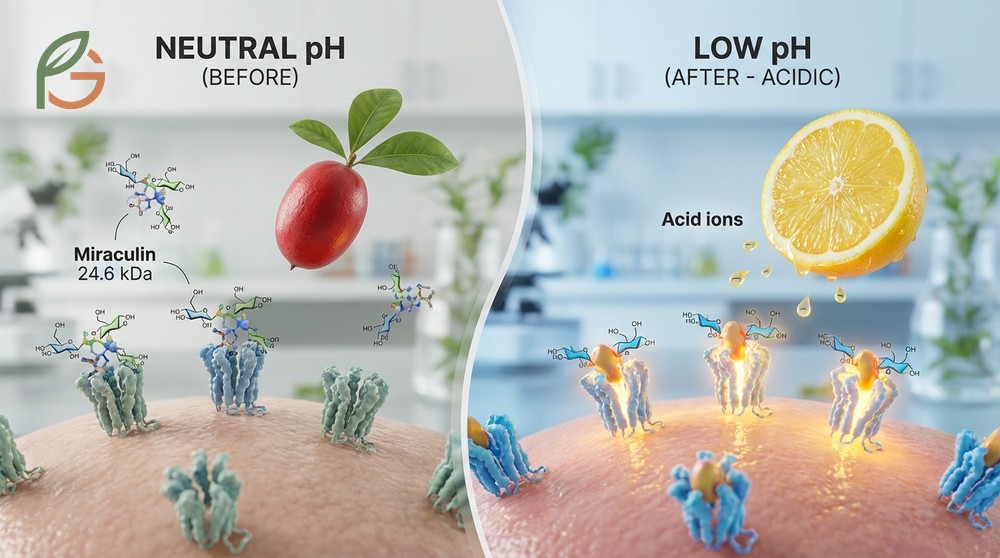
Miraculin is a glycoprotein with a molecular mass of 24.6 kDa, including 3.4 kDa (13.9% of the weight) of sugar consisting of glucosamine, mannose, fucose, xylose, and galactose[3]. When you eat the berry, this protein binds to sweet taste receptors on your tongue at neutral pH. The receptors stay blocked until you consume something acidic.
At low pH (from sour foods), miraculin changes shape and activates the sweet receptors instead of blocking them[1]. This means acids that normally taste sour send sweet signals to your brain. The effect continues until saliva washes away the protein, which typically takes 30 minutes to 2 hours.
Evidence suggests the unique properties of miraculin come from a special signal peptide and histidine-30 residue that aren’t found in similar proteins from other plants[5]. These structural features allow miraculin to bind reversibly and pH-dependently to human sweet receptors.
Miraculin Protein Mechanism
Current research indicates miraculin doesn’t paralyze your taste buds or block sour receptors—it specifically modifies how sweet receptors respond to acids[6]. At neutral pH around 7, the protein sits on your sweet receptors without activating them. When acids lower the pH to 3-4, the protein’s shape changes and triggers the receptor.
What often gets overlooked is that miraculin works best with citric acid and other organic acids found in fruits. It doesn’t affect the taste of non-acidic foods like crackers, nuts, or salami—these items taste exactly the same or even worse because you’re more aware of texture without strong flavors.
Taste Transformation Examples
Studies examining miracle fruit effects with various foods show dramatic differences between acidic and non-acidic items[4]. Lemons become intensely sweet like they’ve been drenched in sugar. Grapefruits turn so sweet you can eat the rind like candy. Even salt makes lemon taste sweeter by enhancing the transformation.
Most people find citrus fruits, vinegar-based chips, and sour beverages work best. Strawberries taste like jam, and kiwis become like sugar-coated blueberries. Meanwhile, foods with minimal acidity—tangerines, honeydew, persimmons—show little to no improvement and sometimes taste worse.
- Lemons and limes (extremely sour citrus transform into candy-like sweetness)
- Grapefruits (even the bitter white pith tastes sweet)
- Salt and vinegar chips (vinegar’s acidity becomes pleasantly sweet)
- Plain yogurt and sour cream (tangy dairy products taste dessert-like)
- Green apples and tart berries (natural fruit acids convert to intense sweetness)
- Hot sauce and pickles (vinegar-based acidic condiments gain sweet notes)
Important Note: Miracle berries don’t work on bitter flavors or eliminate heat from spicy foods. They only affect sour/acidic tastes by making them register as sweet. Don’t expect jalapeños or black coffee to taste pleasant—the effects are minimal with non-acidic items.
Growing Miracle Fruit Indoors
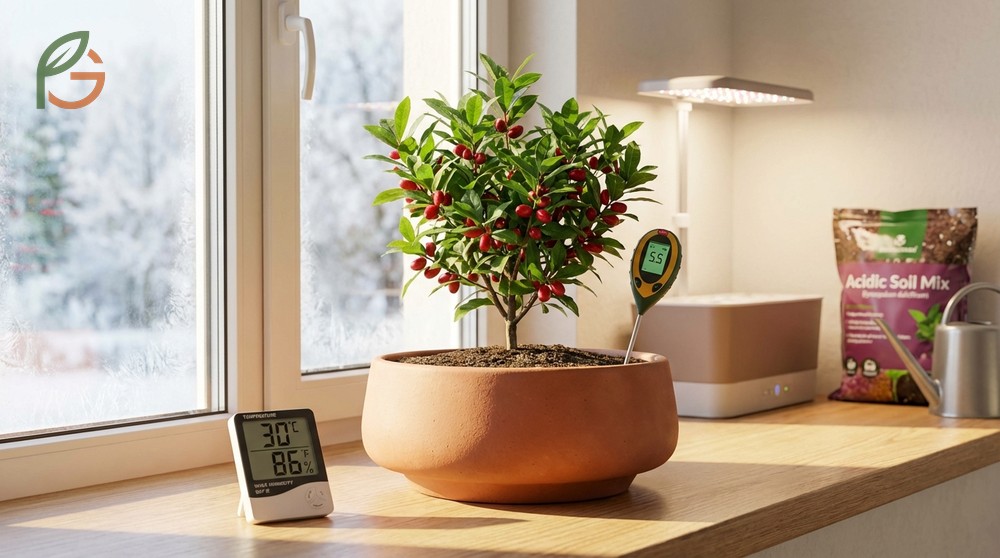
Miracle berry plants adapt surprisingly well to container growing, which lets you control soil conditions and move the plant indoors during cold weather. Research shows the species survives outdoors only in USDA zones 10-11, so indoor cultivation is essential for most North American growers[2]. Container growing also gives you better control over the critical pH requirements.
Studies demonstrate optimal germination rates occur at 30°C (86°F) incubation temperature with seed coats removed[7]. Removing the seed coat alone increases germination by 53% after ten days. Root and shoot lengths max out at 8.73mm and 2.87mm respectively under optimal conditions.
When grown from seed, miracle fruit takes 3-4 years to begin fruiting[8]. Propagation by cuttings can produce earlier fruiting but roots don’t form easily. Most growers start with young nursery plants that are 1.5-2 years old and 8-10 inches tall.
Temperature and Humidity Requirements
Agricultural data shows miracle berry needs temperatures between 73-86°F (23-30°C) for optimal growth[2]. The plant doesn’t appreciate temperatures below 35-40°F and shows stress when kept under 60°F (15°C) for extended periods. Indoors, maintain temps between 60-90°F with bright, indirect light near an east or west-facing window.
Humidity is where most indoor growers struggle. Miracle berry prefers 60-80% relative humidity, which is much higher than typical indoor environments at 30-50%. If you’re like most Americans with dry indoor air, you’ll need to use a humidifier, mist the plant regularly, or place it on a pebble tray filled with water.
From My Experience: My neighbor in Querétaro, Mexico grows her miracle berry in a transparent plastic bag setup during winter months (October-March). She uses stakes to lift the bag above the leaves, creating a personal greenhouse with near 100% humidity. The plant thrives versus struggling at 40-50% humidity.
Soil and Fertilization
Research confirms miracle berry requires well-draining, acidic soil with pH between 4.5-5.8[2]. The plant absolutely can’t tolerate alkaline soils—it’ll develop chlorosis and decline rapidly. Use a soilless mix of peat moss and perlite, or add pine bark to lower pH naturally.
Current guidance shows potassium sulfate, triple super phosphate, and urea can fertilize the species effectively[7]. However, seedlings are sensitive to urea alone—only 10% survive a 3g dose compared to 80% at 1.5g. Don’t fertilize immediately after planting, as miracle berry often reacts negatively to over-fertilization.
- Use containers with excellent drainage and repot every 1-2 years, gradually increasing pot size
- Provide bright, indirect light indoors (4-6 hours); outdoors give partial shade to full sun
- Water consistently to keep soil evenly moist but never waterlogged or soggy
- Test soil pH monthly and amend with sulfur or aluminum sulfate if it rises above 5.8
- Bring outdoor container plants inside when temperatures drop below 50°F (10°C)
- Increase humidity with pebble trays, regular misting, or transparent bag enclosures
Buy Miracle Berry Plant
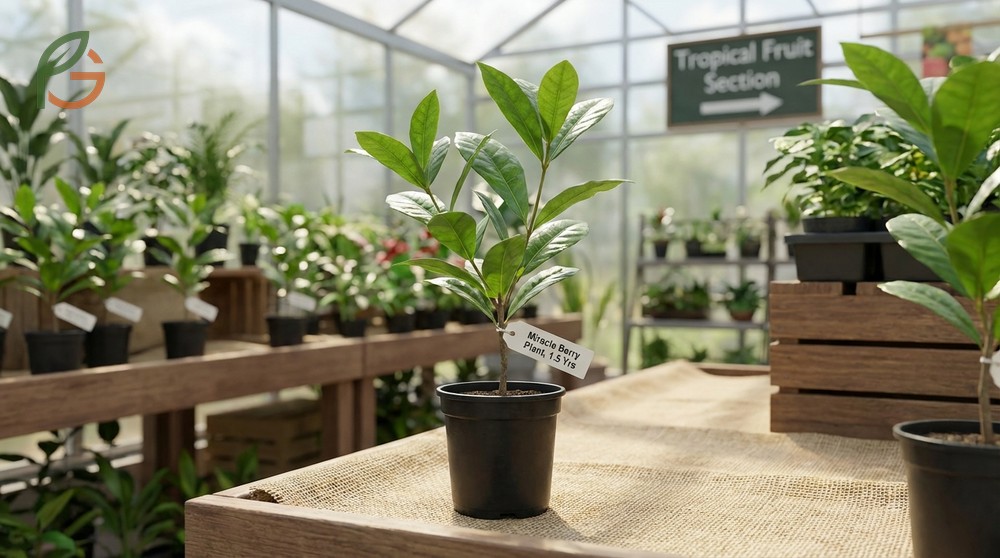
You can buy miracle berry plants from specialized tropical fruit nurseries, online retailers, and local garden centers in USDA zones 9-11. Most plants sold online are 1.5-2 years old, arrive in 3-inch nursery pots, and stand 8-10 inches tall[9]. These young plants typically need another 1-2 years before producing their first berries.
Research shows plants at this age are grown from seed rather than cuttings since rooting is difficult[8]. If you want fruit sooner, look for “fruiting size” plants that are 3-4 years old and already producing berries. These cost more but save years of waiting.
Agricultural data indicates Florida-grown plants adapt best to North American conditions since they’re already acclimated to subtropical humidity and temperature ranges. Expect to pay $25-40 for small plants and $60-120 for mature fruiting specimens. Always verify the seller ships with proper packaging to protect the sensitive root system during transit.
Shopping Tip: If you receive your miracle berry plant and it looks stressed within 3 days, contact the nursery immediately. Reputable sellers guarantee their plants and will replace damaged specimens. Don’t wait longer than 72 hours to report shipping damage.
Miracle Berry Tablets vs Fruit
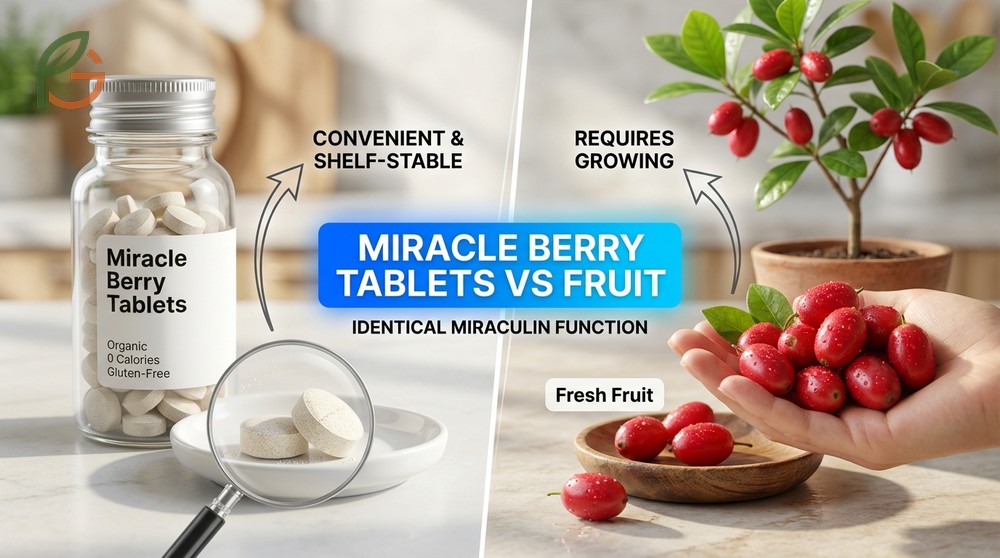
Miracle berry tablets are made from freeze-dried miracle fruit powder pressed with corn starch as a binder. Studies show approximately 3 whole berries go into each tablet[10]. The tablets are 100% organic, contain 0 calories, and are gluten-free. They work identically to fresh fruit—miraculin protein functions the same whether it’s fresh or freeze-dried.
Most people find tablets more convenient than fresh berries since they’re shelf-stable and you don’t need to grow your own plant. Fresh berries only last 2-3 days after harvest before the miraculin degrades. Tablets can be stored for months and carried anywhere without refrigeration.
Research demonstrates both forms last 15 minutes to 2 hours depending on individual factors and the foods you try[10]. There’s no difference in effectiveness—it’s purely about convenience and availability. If you have a fruiting plant, fresh berries are free. If you don’t, tablets offer the same experience without the 3-year wait.
This table compares availability, storage life, cost, and miraculin effectiveness between fresh miracle berries and freeze-dried tablets
| Factor | Fresh Berries | Freeze-Dried Tablets |
|---|---|---|
| Availability | Requires growing your own plant for 3-4 years[8] | Available online immediately, no growing required |
| Storage Life | 2-3 days refrigerated after harvest | Months at room temperature in sealed container |
| Cost | Free once plant produces (after initial $25-120 plant cost) | $1-2 per tablet, sold in packs of 10-50 |
| Miraculin Potency | Lasts 15 min-2 hours[10] | Identical duration, 3 berries per tablet[10] |
| Convenience | Must harvest ripe, use within days | Portable, no prep, consistent dosage |
Miracle Berry Side Effects
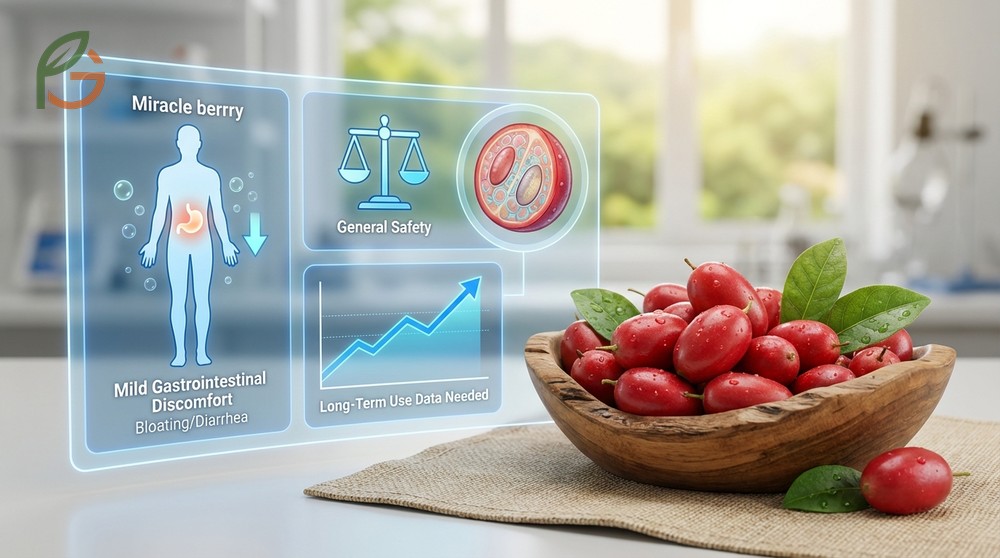
Research shows miracle berries are generally safe with few reported adverse effects[11]. The berry has been eaten for hundreds of years in West Africa without significant health concerns. However, there isn’t enough formal safety data to make definitive claims about long-term use or high-dose consumption.
Current data indicates some individuals may experience mild gastrointestinal discomfort like bloating or diarrhea, especially when consuming large quantities. The taste-altering effect can increase stomach acidity for some people, leading to digestive issues or heartburn. Most people don’t realize that eating extremely sour foods—even when they taste sweet—still exposes your stomach to high acid levels.
Evidence suggests rare allergic reactions can occur in people with sensitivities to peanut, latex, peach, or soy[11]. Symptoms include itching, swelling, and difficulty breathing. If you have diabetes, miracle fruit might lower blood sugar by encouraging you to consume more acidic fruits—consult your healthcare provider before regular use.
- Mild digestive upset (bloating, diarrhea) when consuming excessive amounts
- Increased stomach acidity leading to heartburn or gastric discomfort
- Possible allergic reactions in people sensitive to latex, peanuts, peach, or soy
- Potential blood sugar changes for diabetics who increase fruit consumption
- Dental concerns from eating highly acidic foods that taste sweet (lemon juice still erodes enamel)
- Pregnancy and breastfeeding safety unknown—avoid use without medical guidance
Safety Warning: Just because sour foods taste sweet doesn’t mean they’re safe to eat in unlimited quantities. Lemon juice still contains citric acid that can damage tooth enamel and irritate your digestive system. Use miracle berries for occasional taste experiences, not as a way to consume excessive amounts of acidic foods.
Why Is Miracle Fruit Illegal
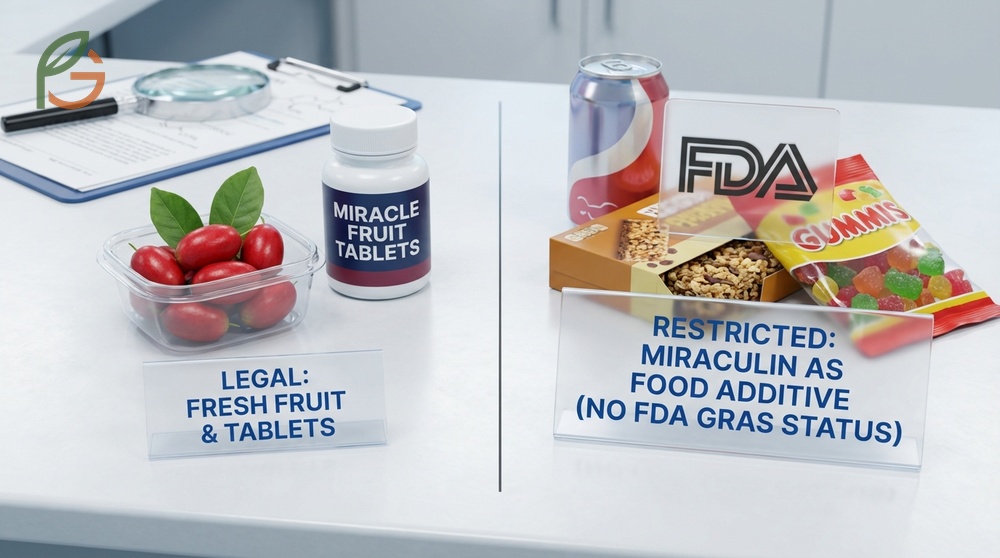
Miracle fruit isn’t illegal across the board—you can buy the fresh fruit and tablets legally in the United States. What’s restricted is using miraculin as a food additive or sweetener in processed foods. Agricultural reporting shows the FDA hasn’t approved miraculin for GRAS (Generally Recognized As Safe) status as a food ingredient[12]. This means food manufacturers can’t add miraculin to products without additional safety assessments.
Evidence suggests the FDA classified miraculin as a “food additive” in the 1970s, creating regulatory hurdles for commercial use. Current guidance requires extensive testing and approval before any substance can be added to processed foods. The rejection of GRAS status has become the subject of conspiracy theories suggesting sugar industry interference, though no definitive proof exists.
In the European Union, miracle fruit is on the “novel foods” list and requires safety assessment prior to being sold as a food or food additive. Beyond the U.S. and EU, regulations vary widely—some countries allow it freely while others restrict commercial sale. You can legally grow the plant, harvest berries, and consume them yourself anywhere in the U.S.
From My Experience: A friend in Oaxaca, Mexico ordered miracle berry tablets online in July 2025 for a tasting party. They arrived within 5 days with no customs issues, and she paid $28 for a 50-tablet container—matching the $0.50-0.60 per tablet average from U.S. vendors.
Conclusion
The evidence is clear: miracle berry synsepalum dulcificum offers a unique taste-modifying experience backed by solid protein science. Whether you grow your own plant or buy tablets, you’re accessing the same miraculin that’s transformed sour foods for centuries in West Africa. Growing conditions are specific but manageable—acidic soil, warm temps between 73-86°F (23-30°C), and high humidity make the difference between thriving plants and struggling ones.
Current horticultural guidance emphasizes patience if you’re starting from seed, since fruiting takes 3-4 years. For faster results, invest in mature plants or use tablets while your seedling develops. FruitGarden synthesizes grower experiences and research data to help you succeed with this fascinating tropical species, whether you’re cultivating it for taste experiments or as an ornamental houseplant.
Frequently Asked Questions
What Is Miracle Fruit?
Miracle fruit is the red berry of Synsepalum dulcificum, a tropical plant from West Africa that contains miraculin protein. When you eat the berry, it binds to your tongue’s sweet receptors and makes sour foods taste sweet for 30 minutes to 2 hours.
How Long Does It Take for a Miracle Berry Plant to Produce Fruit?
When grown from seed, miracle berry plants take 3-4 years to begin fruiting. You can buy 1.5-2 year old nursery plants to reduce the wait, or purchase mature 3-4 year old specimens that are already producing berries.
Can You Grow Miracle Fruit in Cold Climates?
Yes, but only indoors or in containers you can move inside during winter. Miracle fruit survives outdoors year-round only in USDA zones 10-11. The plant can’t tolerate temperatures below 35-40°F and prefers 73-86°F (23-30°C) with high humidity.
Are Miracle Berry Tablets as Effective as Fresh Fruit?
Yes, tablets work identically to fresh berries since they contain the same freeze-dried miraculin protein. Each tablet contains approximately 3 whole berries and lasts 15 minutes to 2 hours—the same duration as fresh fruit.
What Foods Work Best with Miracle Berry?
Highly acidic foods like lemons, limes, grapefruits, salt and vinegar chips, and plain yogurt work best. The miraculin protein only affects sour/acidic tastes by making them register as sweet. Non-acidic foods like crackers, nuts, and salami show minimal or no effect.
Is Miracle Fruit Safe to Eat?
Research shows miracle fruit is generally safe with few reported side effects. It’s been consumed for hundreds of years in West Africa. Some people may experience mild digestive discomfort, and rare allergic reactions can occur in those sensitive to latex, peanuts, peach, or soy. Always consult a healthcare provider if you have specific medical concerns.
How Do You Store Fresh Miracle Berries?
Fresh miracle berries spoil rapidly and only last 2-3 days in the refrigerator. To keep them longer, freeze the berries immediately after harvest; this preserves the miraculin potency for up to 6 months. Freeze-dried tablets can be stored at room temperature for years.