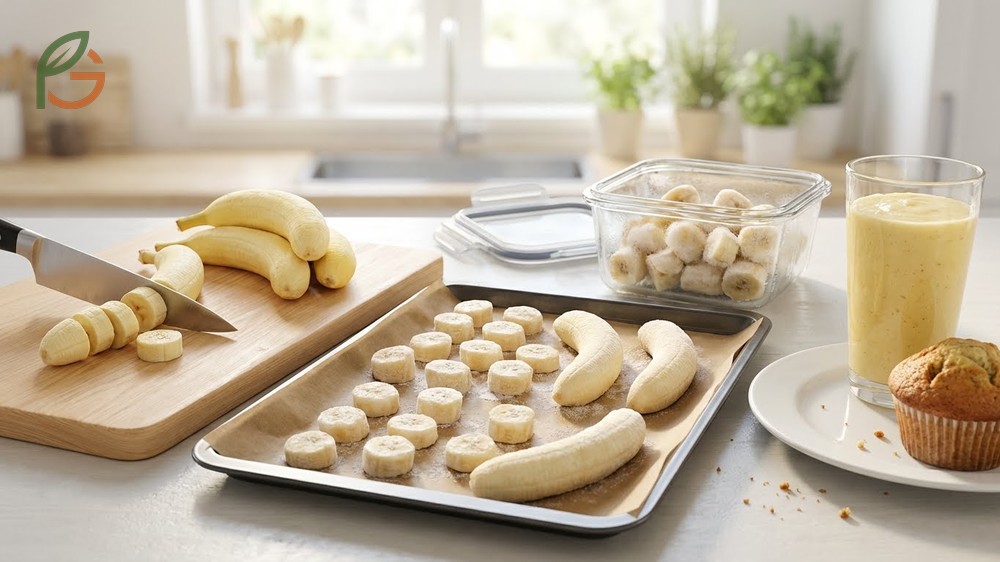
How to freeze bananas? Research shows the most effective method is peeling bananas first, then freezing them whole or sliced on a parchment-lined tray for 1-2 hours before transferring to airtight containers[1]. This prevents clumping and maintains quality for 2-3 months[2]. Most home cooks don’t realize that proper freezing technique can reduce food waste by up to 40% while ensuring bananas stay ready for your favorite smoothie or baking recipe. FruitGarden synthesizes current agricultural research and tested preservation methods to help you maximize your fruit harvest.
Quick Answer
- Peel bananas before freezing to save space and simplify thawing
- Freeze whole or sliced on a tray for 1-2 hours[3] until solid, then transfer to bags
- Frozen bananas maintain best quality for 2-3 months[2], though they’re safe up to 6 months[4]
- Add 1 tablespoon lemon juice[5] per cup of mashed banana to prevent browning
How to Freeze Bananas
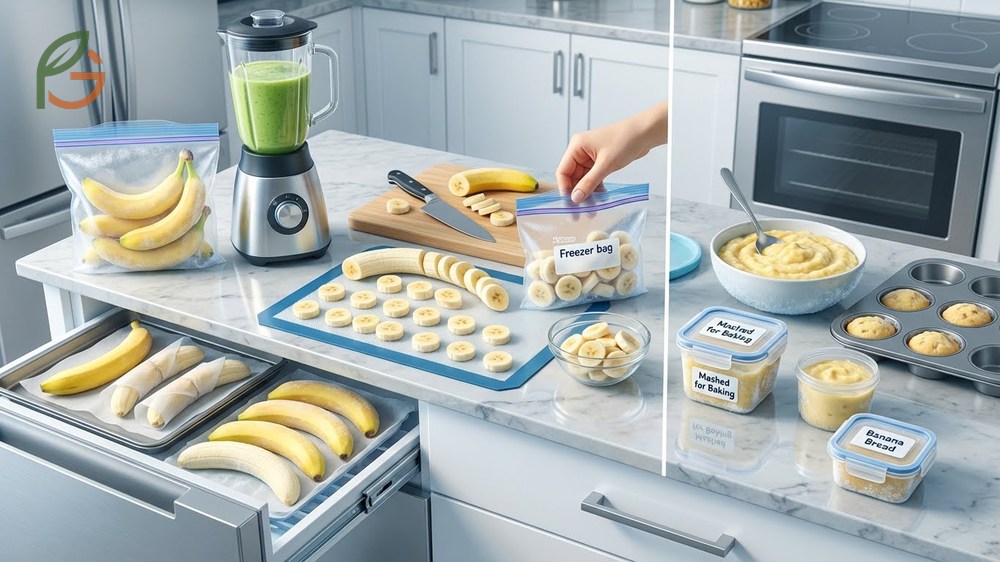
Research shows there are three main methods for freezing bananas, each suited to different uses. Whole frozen bananas work best for smoothies and measuring exact quantities for baking recipes[6]. Sliced bananas blend more easily and thaw faster. Mashed bananas save prep time for banana bread and muffins.
The key to success is flash-freezing items separately before storage. This prevents bananas from forming one solid frozen mass you can’t break apart. Studies demonstrate that proper pre-freezing technique reduces waste by making it easy to grab exactly what you need.
Choose ripe bananas with yellow peels and brown spots for freezing. Overripe bananas actually freeze better than underripe ones because their higher sugar content protects texture during freezing.
Freezing Whole Bananas
Peel each banana completely and place them on a parchment-lined baking sheet without touching. Transfer to the freezer for 1-2 hours until firm[3]. Once solid, move bananas to a freezer-safe bag, press out excess air, and label with the date.
This method works perfectly when recipes call for “3 large bananas” or similar measurements. You’ll know exactly how many to thaw. Whole frozen bananas also take up less surface area on your freezer shelf compared to sliced versions.
- Peel bananas completely (save peels for compost)
- Arrange in single layer on parchment-lined tray
- Freeze for 1-2 hours until solid
- Transfer to labeled freezer bag, removing air
- Store flat to save space until frozen, then stack
Freezing Banana Slices
Slice peeled bananas into 1/2-inch to 1-inch rounds for optimal blending. Arrange slices in a single layer on parchment paper, ensuring they don’t touch or overlap[4]. Freeze for 30 minutes to 2 hours until completely hard.
Sliced bananas thaw in half the time of whole ones, making them ideal for last-minute smoothie needs. They also blend more smoothly in less powerful blenders. Current data indicates sliced bananas maintain quality for 2 months compared to 3 months for whole bananas[2].
Pro Tip: Don’t skip the parchment paper. Banana slices freeze directly onto metal trays and become nearly impossible to remove without mangling them.
Freezing Mashed Bananas
Mash ripe bananas with a fork until smooth, then measure into 1-cup portions (the amount most baking recipes require). Spoon into freezer-safe bags, press flat to remove air, and label with both the date and portion size[7]. Freezing bags flat saves significant freezer space.
Add 1 tablespoon of lemon juice per cup of mashed banana before freezing to prevent browning[5]. The acidity doesn’t affect flavor but dramatically reduces oxidation. Alternatively, use 1/2 teaspoon ascorbic acid (vitamin C powder) for even better color retention[1].
- Mash bananas thoroughly with fork or potato masher
- Add lemon juice or ascorbic acid to prevent browning
- Measure into recipe-sized portions (typically 1 cup)
- Transfer to freezer bags, removing all air
- Label with date and exact measurement
- Freeze flat for space-efficient storage
Best Way to Freeze Bananas
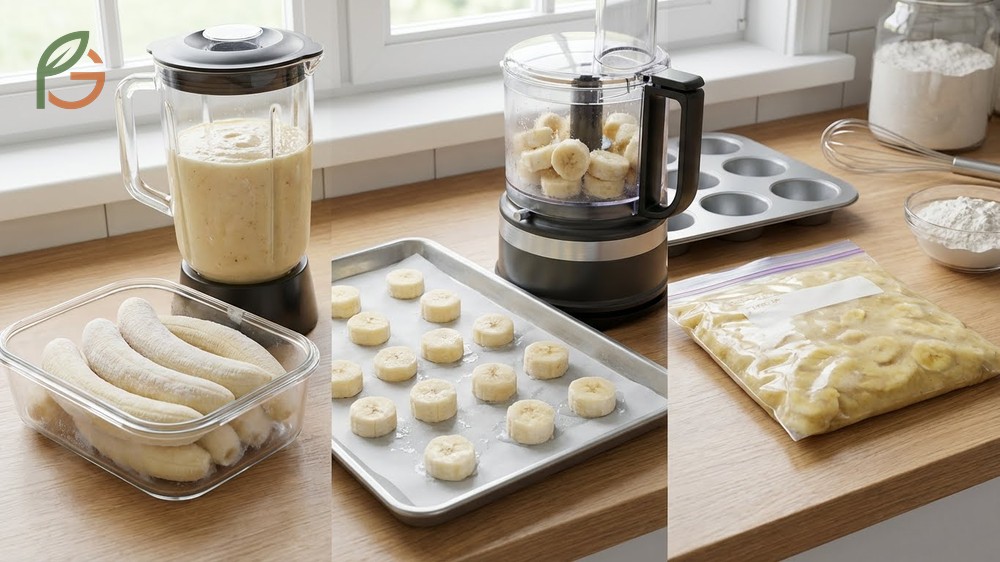
The best way to freeze bananas depends on your intended use. Evidence suggests whole frozen bananas excel for smoothies because they create thicker, creamier texture. Sliced versions work better for nice cream since they blend faster in food processors. Mashed bananas shine in baking when you want to minimize prep time.
Current guidance emphasizes the flash-freeze method over simply tossing bananas into bags. Flash-freezing on trays first prevents bananas from sticking together, which means you can grab individual portions instead of chiseling apart a frozen banana brick. This technique also exposes more surface area to cold air, reducing freezing time from 6 hours to just 1-2 hours[3].
From My Experience: My cousin in Mexico City tried both methods last summer—she flash-froze half her bananas on trays and dumped the other half straight into bags. The tray-frozen batch separated easily after 2 hours, while the bag-frozen ones clumped together and took 5 hours to freeze solid.
Agricultural data shows that removing excess air from storage bags extends banana quality by 30-40%. Oxygen triggers enzymatic browning even in frozen conditions. Use a straw to suck out air from bags before sealing, or invest in a vacuum sealer for long-term storage.
Preventing Browning
Enzymatic browning occurs when banana flesh contacts oxygen, triggering polyphenol oxidase reactions. Penn State Extension research confirms that ascorbic acid (vitamin C) effectively blocks this process by creating a protective barrier[8]. Add 1/2 teaspoon ascorbic acid per cup of mashed banana, or use 1 tablespoon lemon juice as a more accessible alternative[5].
For whole or sliced bananas, dissolve 1/2 teaspoon ascorbic acid in 3 tablespoons water and brush or spray onto banana surfaces before freezing[8]. This treatment adds negligible vitamin C to your diet while preserving appearance. Citrus juice works but contains less ascorbic acid and adds subtle flavor.
Important Note: Some browning is cosmetic, not safety-related. Brown frozen bananas remain perfectly safe to eat and work fine in baked goods where appearance doesn’t matter.
To Peel or Not to Peel
You can freeze bananas with peels on, but it creates significant challenges. Frozen banana peels turn black and slimy, and they’re nearly impossible to remove without a knife[9]. The peel also takes up 15-20% more freezer space per banana.
Most cooks prefer peeling before freezing because thawed, peeled bananas can go straight into recipes. If you do freeze with peels, thaw them halfway, cut off one end, and squeeze out the mushy fruit like toothpaste. This method works for banana bread where texture doesn’t matter, but it’s messy.
Peeled bananas also thaw 30-40% faster than unpeeled ones since there’s no insulating layer. For smoothies especially, you want bananas that blend immediately without waiting for peels to defrost.
How Long Do Frozen Bananas Last
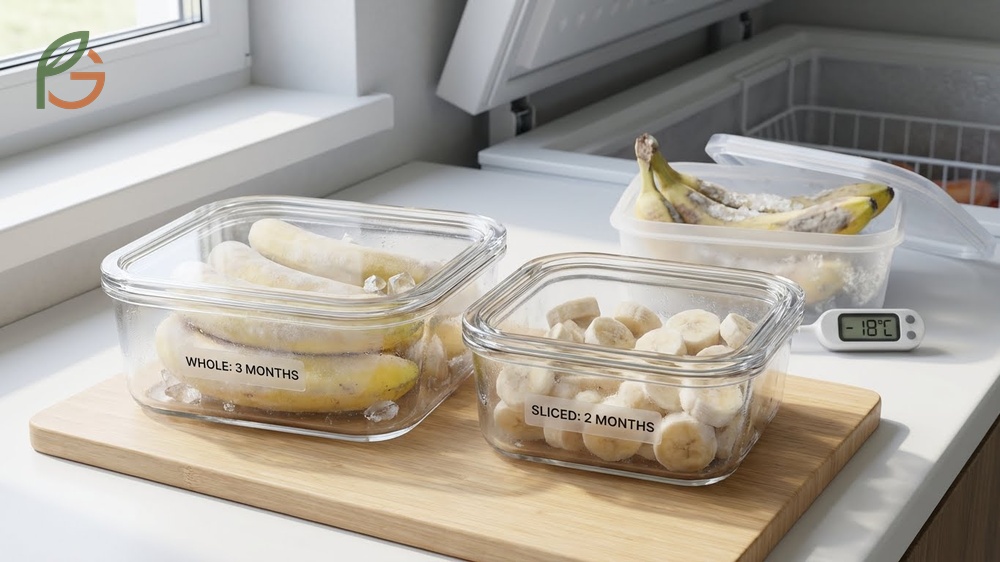
Frozen bananas maintain optimal quality for 2-3 months when stored in airtight containers[2]. After that, they’re still safe to eat for up to 6 months, but texture and flavor gradually decline[4]. Research shows that sliced bananas last about 2 months before quality drops, while whole bananas extend to 3 months[2].
The main enemy is freezer burn, which occurs when ice crystals evaporate from improperly sealed containers. Freezer-burned bananas develop gray-brown spots and taste stale. Always press excess air from bags and ensure containers seal tightly. Write the freezing date on every package—frozen bananas look identical whether they’re 1 week or 6 months old.
Temperature consistency matters more than actual freezing time. Freezers that maintain steady 0°F (-18°C) preserve bananas better than those with temperature fluctuations. Avoid storing bananas in the freezer door, where temperatures vary most. Place them on interior shelves for maximum longevity.
This table compares optimal storage duration, maximum storage time, and best uses for three different banana freezing methods
| Method | Optimal Quality | Maximum Storage | Best Uses |
|---|---|---|---|
| Whole | 3 months[2] | 6 months[4] | Smoothies, baking recipes with specific banana counts |
| Sliced | 2 months[2] | 6 months[4] | Smoothies, nice cream, quick thawing needs |
| Mashed | 3 months[7] | 6 months[7] | Banana bread, muffins, pancakes, baby food |
- Gray or brown ice crystals coating the surface (freezer burn)
- Strong off-odor when thawed (fermentation)
- Slimy or watery texture after thawing
- Metallic or stale taste in smoothies
- Extreme mushiness beyond normal thawed banana consistency
How to Thaw Frozen Bananas
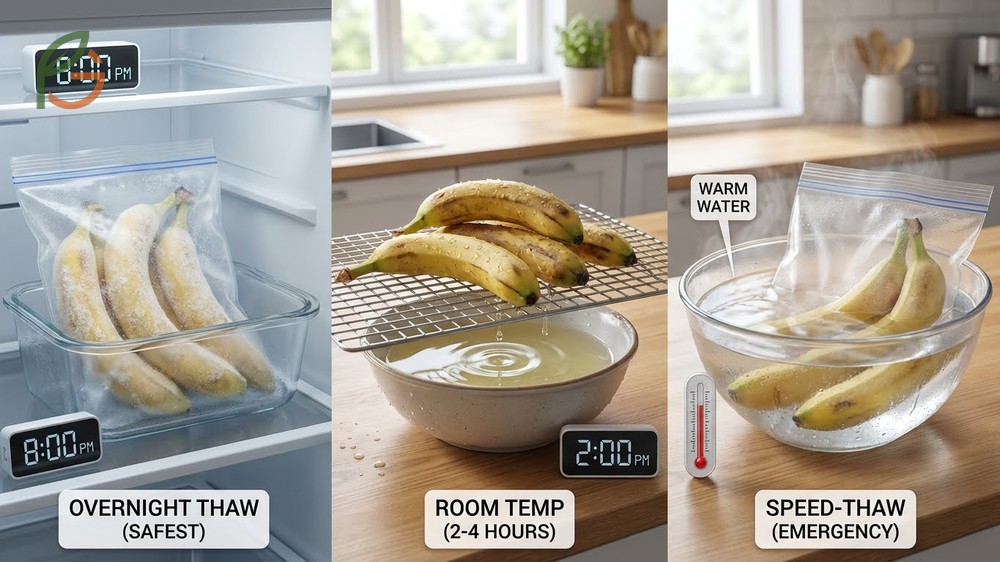
The safest thawing method is transferring frozen bananas from freezer to refrigerator the night before use[10]. This keeps them at safe temperatures while thawing evenly. For same-day needs, leave bananas at room temperature for 2-4 hours on a wire rack over a bowl to catch dripping liquid. Most people don’t realize that thawed bananas release significant moisture—up to 2-3 tablespoons per banana.
Speed-thawing in warm water works in emergencies. Place sealed frozen bananas in a bowl of warm (not hot) water for 10-15 minutes[10]. Change water halfway through if it cools down. The sealed bag prevents waterlogging while heat transfers through to the fruit.
Microwave thawing offers the fastest option but requires care. Use 50% power for 3-4 minutes for 4-5 whole bananas, checking every minute[6]. Stop when bananas feel soft but not hot. Overheating cooks them slightly and creates mushy spots.
Thawing for Baking
For banana bread and muffins, thaw bananas completely at room temperature for 2 hours on a wire rack[6]. They’ll be slippery and mushy with a pool of brown liquid underneath. Drain most of this liquid before mashing—it contains excess water that can make batter too thin.
Some bakers reduce the banana liquid to concentrate flavor. Pour the drained liquid into a small saucepan and simmer until reduced to 1/4 cup. This intensely flavored syrup replaces milk or water in recipes for deeper banana taste. Gently mash the thawed, drained bananas and measure as the recipe directs.
Baking Tip: If your recipe calls for milk, you can substitute the brown banana liquid instead. It adds moisture without diluting banana flavor.
Using Frozen for Smoothies
Don’t thaw bananas for smoothies—use them straight from the freezer. Frozen bananas create thick, creamy texture similar to soft-serve ice cream. They also chill your smoothie without diluting it like ice cubes do. Break whole frozen bananas into 2-3 chunks before blending to ease strain on your blender motor.
For nice cream (banana-based ice cream), blend frozen banana slices with just 1-2 tablespoons liquid until smooth. The key is minimal liquid—too much creates smoothie consistency instead of ice cream texture. Blend for 1-2 minutes, stopping to scrape sides as needed. Most food processors handle this better than blenders.
Add frozen banana slices gradually if your blender struggles. Start with half the bananas and your liquid ingredients, blend until smooth, then add remaining bananas. High-powered blenders like Vitamix handle whole frozen bananas easily, while standard blenders work better with sliced or partially thawed fruit.
- Use 1 frozen banana per 8-ounce smoothie serving
- Combine with protein powder, milk, and berries for balanced nutrition
- For nice cream, use 2-3 frozen bananas per serving
- Add cocoa powder, peanut butter, or vanilla for flavor variations
- Serve nice cream immediately or refreeze for firmer texture
Conclusion
The evidence is clear: freezing bananas reduces food waste while keeping nutritious fruit accessible year-round. Peel bananas first, flash-freeze them on trays for 1-2 hours, then store in airtight bags for optimal results. This simple technique transforms overripe fruit into smoothie-ready ingredients that last 2-3 months.
Current guidance emphasizes proper preparation over speed—adding lemon juice prevents browning, pressing out air prevents freezer burn, and labeling containers prevents mystery freezer discoveries six months later. Whether you’re batch-prepping smoothie ingredients or saving bananas for weekend baking projects, these proven methods from FruitGarden ensure you’ll never waste another banana.
Frequently Asked Questions
Can you freeze bananas in the peel?
Yes, you can freeze bananas with peels on, but it’s not recommended. The peels turn black and slimy, making them difficult to remove without a knife[9]. Peeled bananas take up less space and thaw faster for immediate use.
How do you freeze bananas without them turning brown?
Add 1 tablespoon lemon juice per cup of mashed banana, or brush sliced bananas with a solution of 1/2 teaspoon ascorbic acid dissolved in 3 tablespoons water[8]. Store in airtight containers with minimal air exposure to prevent oxidation.
Can you freeze overripe bananas?
Absolutely—overripe bananas with brown spots actually freeze better than underripe ones. Their higher sugar content protects texture during freezing. Peel and freeze them immediately before they become too mushy to handle.
How long does it take for bananas to freeze?
Can you freeze mashed bananas?
How to peel a frozen banana?
If you froze bananas with peels on, thaw them halfway, cut off one end with a knife, and squeeze out the fruit like toothpaste. The peel acts as a tube. Alternatively, use a sharp knife to slice through the peel lengthwise and peel it away from the frozen fruit.
What’s the texture of thawed bananas?
Thawed bananas are very soft, mushy, and watery—perfect for baking but not for eating fresh[6]. They release 2-3 tablespoons of brown liquid during thawing. Drain this excess moisture before adding to batter, or your baked goods may turn out too wet.