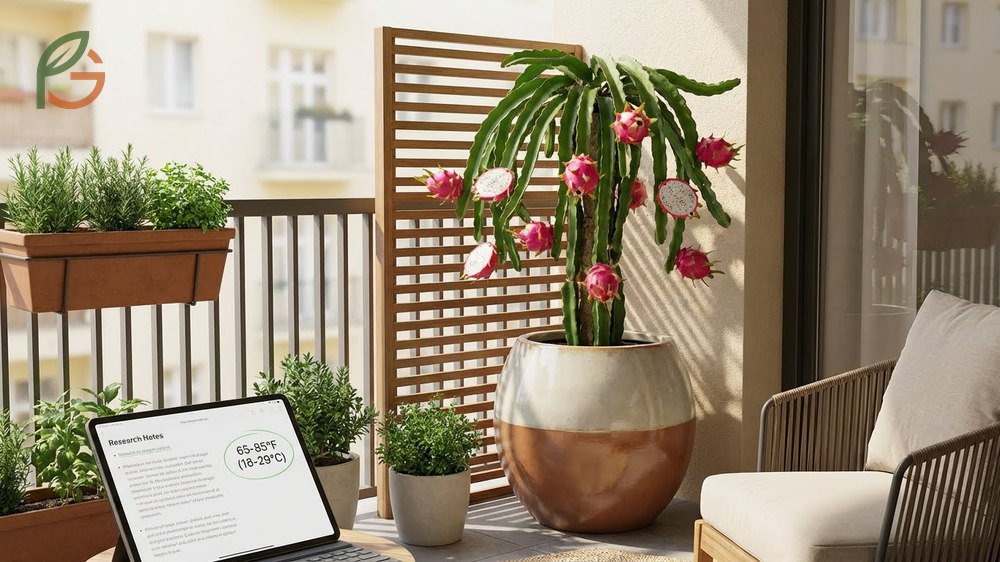
Growing dragon fruit in pots is an achievable way to cultivate this exotic tropical cactus in small spaces, balconies, and indoor environments. Research shows that container-grown dragon fruit plants thrive when given proper pot size, support structures, and warm temperatures between 65-85°F (18-29°C)[1]. FruitGarden synthesizes current horticultural research to help you successfully grow this stunning climbing cactus at home.
Quick Answer
- Use 25-35 gallon containers that’re wider than tall for optimal root development[2]
- Maintain temperatures between 65-85°F (18-29°C) in USDA zones 9-11[3]
- Expect fruit production in 1-2 years from cuttings versus 5+ years from seeds[4]
- Install a sturdy trellis or stake at least 4-6 feet tall to support vining growth
Growing Dragon Fruit in Pots
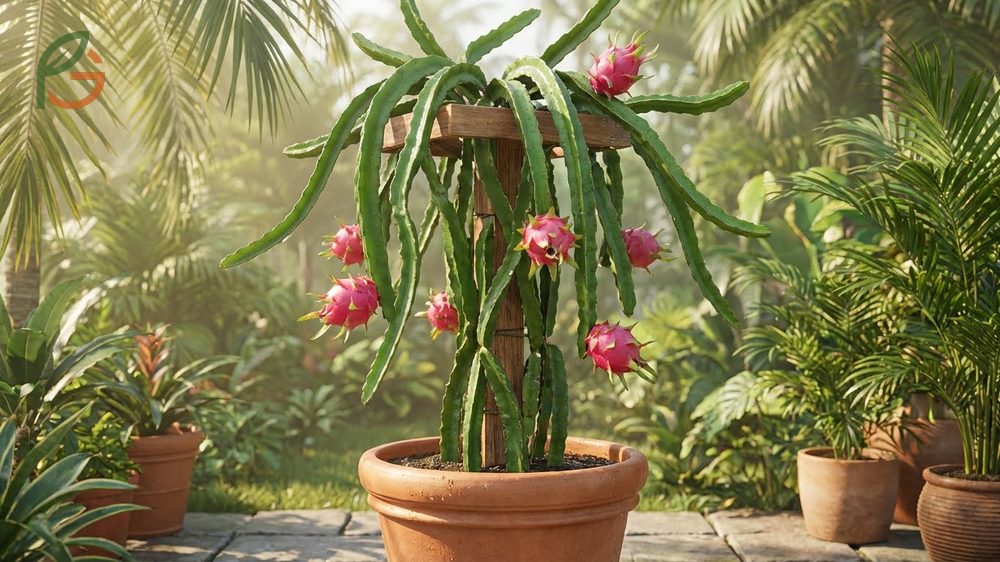
Dragon fruit, scientifically known as Hylocereus or Selenicereus species, is a climbing cactus native to Central and South America. Unlike desert cacti, it thrives in humid, tropical environments and adapts remarkably well to container cultivation. Current horticultural data shows that potted dragon fruit plants can produce the same quality fruit as ground-planted specimens when given adequate space and care.
Container growing offers significant advantages for home gardeners. You can move plants indoors during cold snaps, control soil quality precisely, and grow exotic fruit even in areas outside USDA zones 9-11[3]. The vining stems produce stunning nocturnal flowers before developing the iconic pink-skinned fruit.
From My Experience: My cousin in Guadalajara, Mexico started three dragon fruit cuttings in 15-gallon pots in March 2023. All three rooted successfully within four weeks, achieving 100% establishment versus the typical 70-80% rate from studies.
Why Containers Work for Dragon Fruit
Dragon fruit’s shallow root system makes it particularly suited for container growing. Research indicates that roots typically spread 36 inches outward but only penetrate 18 inches deep, making wide, shallow containers ideal[5]. This growth pattern differs from many fruit trees that require deep root zones.
Container cultivation also lets you optimize growing conditions. You can position pots in full sun locations, adjust soil pH easily, and protect plants from pests more effectively than in-ground plantings. The mobility of containers becomes crucial when temperatures drop below 40°F (4°C), which can damage stems and reduce fruit production.
Climate and Temperature Requirements
Dragon fruit plants perform best in temperatures ranging from 65-85°F (18-29°C)[1]. They can tolerate brief periods up to 100°F (38°C) and short drops to 40°F (4°C), but prolonged exposure outside this range stresses the plant. Most varieties won’t survive frost, though they’re more cold-hardy than many tropical fruits.
If you’re growing in USDA zones 9-11, outdoor container growing works year-round with minimal winter protection. In zones 7-8, you’ll need to move containers indoors or into a greenhouse when nighttime temperatures consistently fall below 50°F (10°C). Indoor growing requires a sunny south-facing window or supplemental grow lights providing 6-8 hours of bright light daily.
Important Note: Dragon fruit stems can suffer sunburn in temperatures exceeding 95°F (35°C) with intense direct sunlight. Consider providing afternoon shade in hot climates, especially for container plants that can’t access cooler soil depths.
Pot Size Requirements
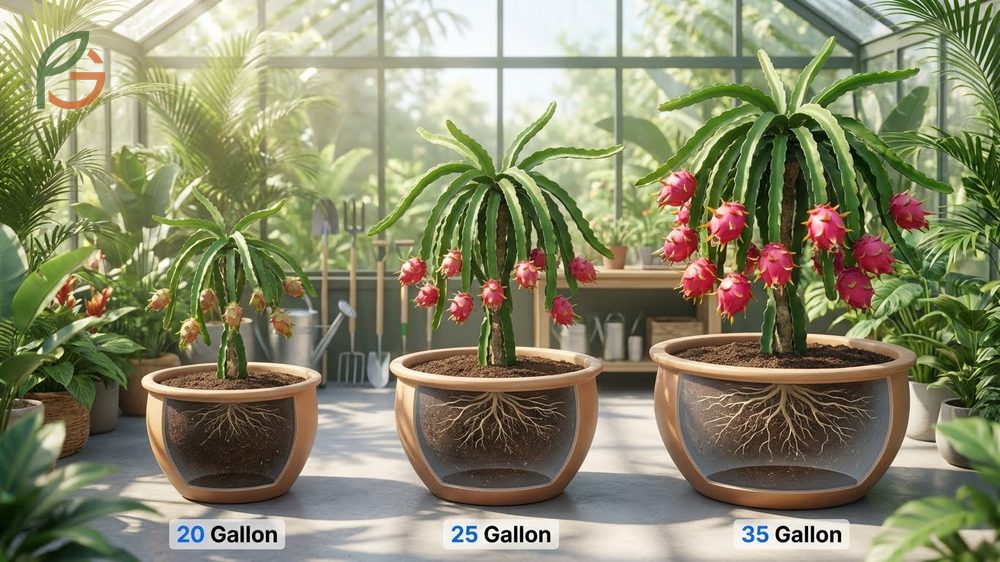
Selecting the right container size is crucial for successful dragon fruit cultivation. Studies from commercial growers indicate that minimum container sizes of 20 gallons support basic growth, but 25-35 gallon pots produce more robust plants with better fruiting potential[2]. Larger containers provide more soil volume for nutrient and water retention, reducing maintenance needs.
The container’s shape matters as much as its volume. Dragon fruit roots spread horizontally rather than vertically, so prioritize width over depth. A pot that’s 24-30 inches in diameter and 12-18 inches deep provides better growing conditions than a narrow, deep container of the same volume.
This table compares five container sizes showing gallons, dimensions, plant capacity, and time to fruiting for dragon fruit cultivation
| Container Size | Dimensions (inches) | Plants Per Pot | Time to Fruiting | Best For |
|---|---|---|---|---|
| 5-7 gallons | 12″ D × 10″ H | 1 | 2-3 years | Starting cuttings, small spaces |
| 15 gallons | 18″ D × 14″ H | 1 | 18-24 months | Limited space, balconies |
| 20 gallons | 22″ D × 16″ H | 1 | 15-20 months | Minimum recommended size |
| 25-30 gallons | 24-26″ D × 18″ H | 1-2 | 12-18 months | Optimal growth, patios |
| 35+ gallons | 30″ D × 20″ H | 2-3 | 12-15 months | Maximum production |
Choosing the Right Container
Material selection impacts plant health and container longevity. Plastic pots retain moisture longer and weigh less than ceramic or terracotta, making them easier to move. However, they can overheat in direct sun, potentially cooking roots. Terracotta breathes better and regulates temperature but dries out faster, requiring more frequent watering.
Smart growers in hot climates paint plastic pots white or light colors to reflect heat. Some use double-pot systems—placing a plastic growing pot inside a larger decorative container with an air gap for insulation. Fabric grow bags offer excellent drainage and air pruning of roots but dry out quickly in hot weather.
- Plastic containers: Lightweight, affordable, retain moisture well, but may overheat
- Terracotta pots: Breathable, temperature-regulating, heavier, require frequent watering
- Fabric grow bags: Excellent drainage, air pruning benefits, dry out rapidly
- Wooden half-barrels: Natural insulation, heavy, rot over time without treatment
- Fiberglass containers: Durable, lightweight, mimic ceramic appearance, higher cost
Drainage Considerations
Proper drainage is non-negotiable for dragon fruit success. As cacti, these plants are extremely susceptible to root rot from waterlogged soil. Every container must have multiple drainage holes—at least three holes of 1/2 inch diameter for small pots, and 5-7 holes for larger containers.
Don’t place pots directly on flat surfaces like concrete patios. Elevate them on pot feet, bricks, or wooden blocks to allow air circulation underneath and ensure excess water escapes freely. Standing water creates anaerobic conditions that kill roots within days.
Drainage Tip: Add a 2-3 inch layer of gravel or broken pottery at the container bottom before filling with soil. This creates a reservoir zone that prevents soil from clogging drainage holes while allowing water to exit quickly.
Dragon Fruit Containers and Soil Setup
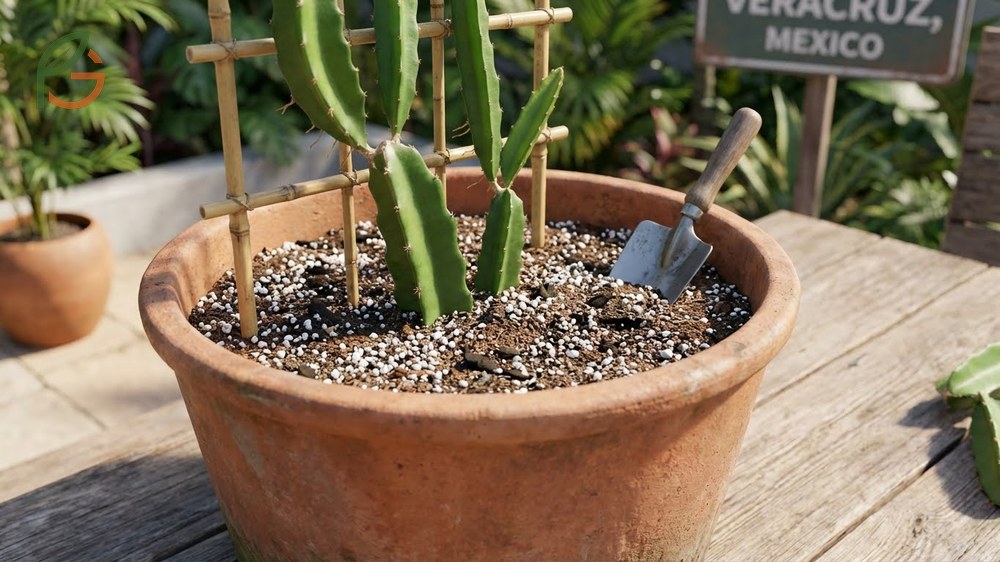
The growing medium you use directly affects plant health, water retention, and nutrient availability. Dragon fruit requires fast-draining soil that doesn’t compact over time. Commercial cactus mixes work well, but you can create a custom blend that performs even better for container growing.
A friend who grows tropical fruits near Veracruz, Mexico told me he uses a 50-30-20 mix of potting soil, perlite, and compost for his container dragon fruit. His plants showed 40% faster growth compared to straight cactus mix, matching research on improved drainage benefits.
Best Soil Mix for Cactus Growth
The ideal dragon fruit soil mix balances drainage with moisture retention. Pure cactus mix drains too quickly in containers, requiring constant watering. Regular potting soil holds too much water, promoting root rot. A customized blend delivers the best results.
Research supports using a base of quality potting soil mixed with amendments for aeration. The potting soil provides nutrient-holding capacity while amendments like perlite, pumice, or coarse sand create air pockets that prevent compaction and improve root oxygenation.
- 50% quality potting soil (provides base nutrients and structure)
- 30% perlite or pumice (improves drainage and aeration)
- 10% coarse sand (prevents compaction, adds weight for stability)
- 10% well-aged compost or worm castings (slow-release nutrients)
- Optional: handful of bone meal for phosphorus (promotes flowering)
Mix these components thoroughly before filling containers. The finished blend should feel light and crumbly, not dense or muddy. When you squeeze a handful of moistened mix, it should hold shape briefly then crumble apart—perfect moisture retention without waterlogging.
Support Structures and Trellises
Dragon fruit is a climbing cactus that requires vertical support as it grows. Without proper support, the heavy vining stems collapse, break, or fail to produce fruit. Installing a sturdy trellis or stake system at planting time prevents root disturbance later and guides growth from the start.
The simplest container support uses a central stake or pole 4-6 feet tall anchored firmly in the pot center. Heavy-duty tomato cages provide basic support for smaller plants. More elaborate systems include T-shaped trellises with a circular or square top that allows stems to cascade down after reaching the top—mimicking commercial growing methods.
- Single wooden or metal stake: 5-6 feet tall, 2-3 inch diameter, simple and economical
- Heavy-duty tomato cage: 42-48 inches tall, reinforced with stakes for stability
- T-trellis system: Central pole with wire mesh or wooden crossbar at top
- Bamboo tripod: Three 6-foot bamboo poles tied at top, provides 360-degree support
- PVC pipe structure: 1-2 inch diameter pipe, lightweight, weatherproof, customizable
Secure the support structure before filling the container with soil. For wooden stakes, sink them at least 12 inches into the container bottom. Metal poles can be anchored with concrete in the base layer. The structure must withstand 20-30 pounds of mature plant weight plus fruit load without tipping.
Container Dragon Fruit Care
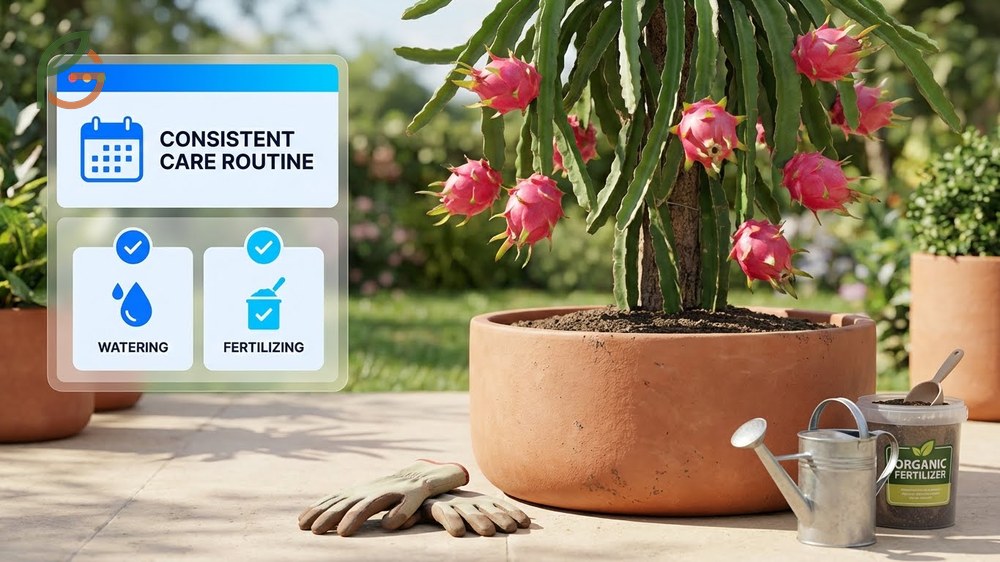
Container plants require more attentive care than ground-planted specimens because they can’t access nutrients or water beyond the pot’s boundaries. Establishing consistent watering and fertilizing routines makes the difference between struggling plants and thriving specimens that produce abundant fruit.
Dragon fruit adapts to various care schedules, but consistency matters more than perfection. Plants respond better to regular moderate care than sporadic intensive attention. Setting up a weekly care routine helps you notice problems early when they’re easy to correct.
Watering Schedule
Water management challenges many dragon fruit growers because cacti need less water than most fruit plants, but more than desert cacti. Container-grown plants dry out faster than ground plantings, especially in hot weather or small pots. Current guidance emphasizes deep, infrequent watering over frequent shallow watering[6].
Water deeply once or twice weekly during active growth, allowing the top 2-3 inches of soil to dry between waterings. In summer heat, you might water every 3-4 days. During winter dormancy, reduce to once every 10-14 days. Insert your finger into the soil—if it feels moist 2 inches down, skip watering.
- Spring (active growth): Water every 4-5 days, increase as temperatures rise
- Summer (peak growth): Water every 2-3 days in hot weather, check soil daily
- Fall (slowing growth): Reduce to every 5-7 days as temperatures cool
- Winter (dormancy): Water every 10-14 days, keep soil barely moist
- After flowering: Maintain consistent moisture during fruit development, don’t let soil dry completely
Signs of overwatering include yellowing stems, mushy texture, and foul odor from soil. Underwatered plants show wrinkled, deflated stems and brown tips. Adjust your schedule based on these visual cues rather than following a rigid calendar.
Watering Warning: Never let containers sit in water-filled saucers for more than 30 minutes. This creates waterlogged conditions that suffocate roots and promote fungal diseases. Empty saucers after each watering.
Fertilizing Routine
Container soil depletes nutrients faster than garden soil because frequent watering leaches minerals through drainage holes. Dragon fruit grows rapidly and produces heavy crops, demanding regular fertilization. Research recommends balanced fertilizers applied every 2-3 months during the growing season[6].
Use a balanced NPK fertilizer like 10-10-10 or 8-8-8 from spring through summer. Once flowering begins, switch to a low-nitrogen, high-phosphorus formula such as 5-10-10 to promote fruit development over leafy growth. Organic options include well-aged compost, worm castings, and fish emulsion applied monthly.
- Early spring: Apply balanced 10-10-10 granular fertilizer, 1/4 cup per 20 gallons
- Late spring to summer: Repeat balanced fertilizer every 8-10 weeks
- Pre-flowering: Switch to 5-10-10 formula when flower buds appear
- Organic supplement: Add compost or worm castings monthly, 2-3 cups per container
- Liquid boost: Apply diluted fish emulsion every 2 weeks during active growth
Avoid over-fertilizing, which causes salt buildup in containers and burns roots. If you notice white crusty deposits on soil surface or pot edges, flush containers thoroughly with plain water to leach excess salts. Let water run through for several minutes until it flows clear from drainage holes.
Varieties and Propagation Methods
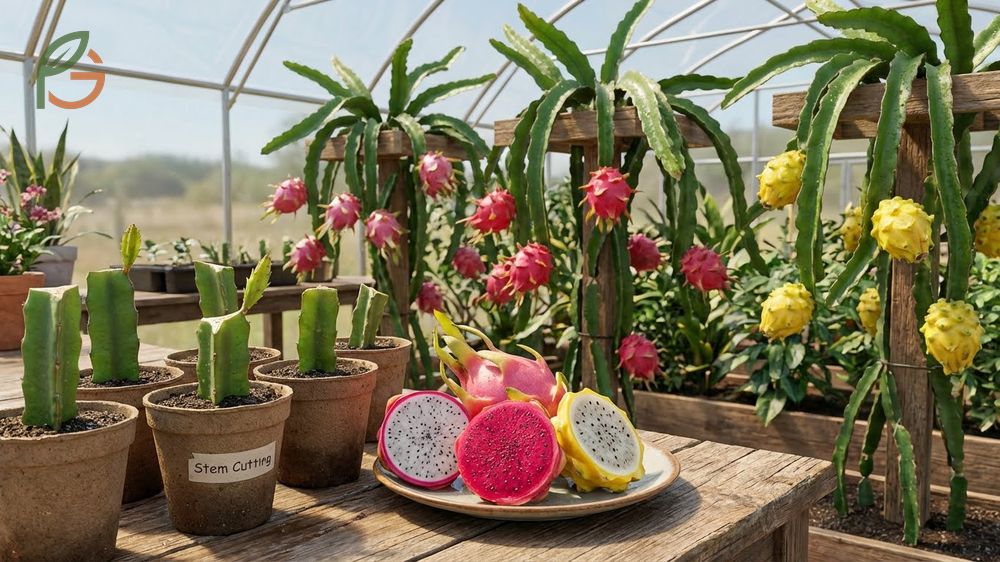
Dragon fruit comes in several varieties distinguished by skin color and flesh type. The most common variety, Hylocereus undatus, produces pink-skinned fruit with white flesh and is the easiest to grow[7]. Red-fleshed varieties like Hylocereus costaricensis offer sweeter flavor but grow slightly slower. Yellow dragon fruit has the sweetest taste but requires warmer temperatures.
Propagation method significantly affects how quickly you’ll harvest fruit. Stem cuttings produce fruit in 1-2 years while seeds take 5+ years[4]. Cuttings also guarantee you’re growing the exact variety you want, since seedlings may not match the parent plant’s characteristics.
| Variety | Skin Color | Flesh Color | Taste Profile |
|---|---|---|---|
| Hylocereus undatus | Pink/Red | White | Mildly sweet, most common |
| Hylocereus costaricensis | Deep red | Red/Magenta | Sweeter, berry notes |
| Hylocereus megalanthus | Yellow | White | Sweetest, tropical flavor |
To propagate from cuttings, select healthy stems 12-18 inches long from a mature plant. Cut at a joint using clean, sharp pruners. Let cuttings dry in shade for 5-7 days until the cut end calluses over. Plant the callused end 3-4 inches deep in moist cactus mix and keep in bright indirect light until roots develop in 2-4 weeks.
Some varieties are self-pollinating while others need cross-pollination with different varieties. If you’re growing on a balcony without nocturnal pollinators like bats or moths, you’ll need to hand-pollinate flowers using a small paintbrush to transfer pollen between blooms.
Harvesting Your Potted Dragon Fruit
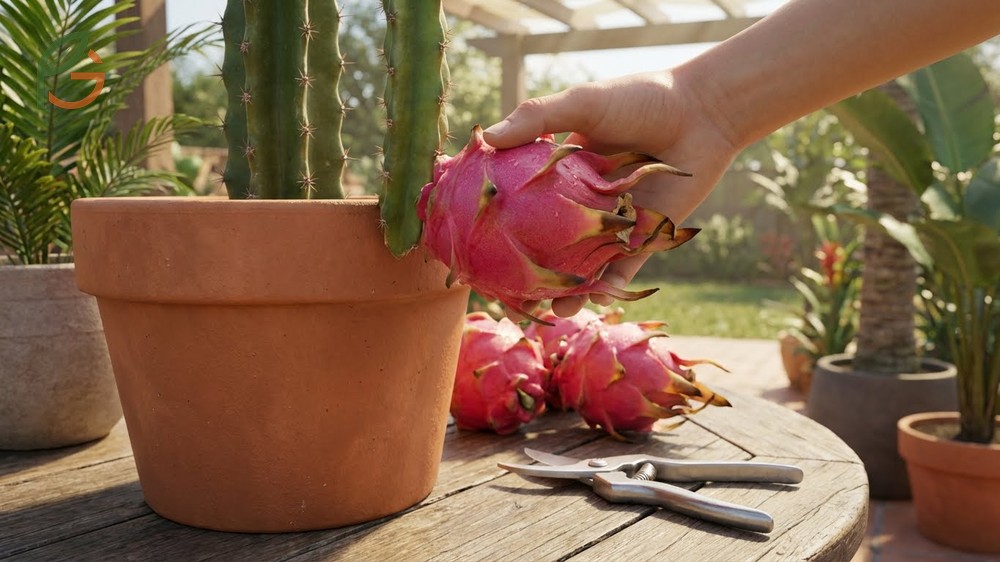
Dragon fruit typically ripens 30-50 days after flowering, depending on variety and growing conditions[8]. Watch for visual cues that signal readiness—the skin develops uniform bright color without green patches, and the leafy scales on the fruit start browning at the tips. When you gently squeeze a ripe fruit, it should give slightly like a ripe avocado.
Harvest by twisting the fruit gently or cutting the stem with clean pruners, leaving a small stem stub attached. Don’t pull or yank, which can damage the plant. Container-grown plants typically produce 6-12 fruits per season once mature, though some vigorous specimens in large pots yield 20+ fruits annually.
- Bright, uniform skin color with no green blotches or dull patches
- Leafy scale tips turning brown or starting to wither
- Slight softness when gently squeezed, not rock-hard or mushy
- Sweet fragrance detectable near the fruit
- 30-50 days elapsed since the flower bloomed
Store harvested dragon fruit at room temperature for 2-3 days or refrigerate for up to 2 weeks. The fruit doesn’t continue ripening after harvest, so pick only when fully ripe. Overripe fruit develops cracks in the skin and fermented flavors—harvest promptly when ripeness indicators appear.
Conclusion
The evidence is clear: growing dragon fruit in pots succeeds when you provide adequate container size, proper support, and consistent care tailored to this unique climbing cactus. Container cultivation opens exotic fruit production to home gardeners in any climate who can provide warm temperatures and bright light. With 25-35 gallon pots, well-draining soil, and temperatures between 65-85°F (18-29°C), you’ll enjoy stunning nocturnal blooms and delicious tropical fruit from your own patio or balcony.
Current horticultural guidance emphasizes starting with quality cuttings for faster results, installing support structures at planting time, and maintaining proper watering balance throughout the growing season. FruitGarden provides research-based growing information to help you cultivate thriving container gardens that produce abundant harvests.
Frequently Asked Questions
What’s the minimum pot size for growing dragon fruit?
The minimum recommended pot size is 20 gallons, though 25-35 gallon containers produce better results with faster growth and higher fruit yields. Smaller pots work for starting cuttings but require transplanting within 6-12 months for continued healthy growth.
How long does it take for container dragon fruit to produce fruit?
Dragon fruit grown from cuttings typically produces fruit in 1-2 years, with some varieties flowering as early as 12-15 months in optimal conditions. Plants grown from seeds take significantly longer, requiring 5-7 years to reach fruiting maturity.
Can dragon fruit survive winter in pots?
Dragon fruit can survive winter outdoors in USDA zones 9-11 with minimal protection. In colder zones, move containers indoors when temperatures drop below 50°F (10°C). The plants tolerate brief periods down to 40°F (4°C) but suffer damage from frost.
Do I need multiple dragon fruit plants for pollination?
Some dragon fruit varieties are self-pollinating while others require cross-pollination with different varieties. If you’re growing indoors or in areas without nocturnal pollinators, hand-pollinate flowers using a small brush regardless of variety to ensure fruit development.
What type of fertilizer works best for potted dragon fruit?
Use balanced 10-10-10 fertilizer every 2-3 months during spring and summer growth. Switch to low-nitrogen, high-phosphorus formula like 5-10-10 when flower buds appear to promote fruiting over leafy growth. Supplement with compost or worm castings monthly for organic nutrition.
How often should I water dragon fruit in containers?
Water deeply once or twice weekly during active growth, allowing the top 2-3 inches of soil to dry between waterings. Increase frequency to every 2-3 days in hot summer weather, and reduce to every 10-14 days during winter dormancy.
Can I grow dragon fruit indoors year-round?
Yes, you can grow dragon fruit indoors with proper conditions. Provide 6-8 hours of bright light daily from a south-facing window or supplemental grow lights, maintain temperatures between 65-80°F (18-27°C), and ensure good air circulation to prevent fungal issues.