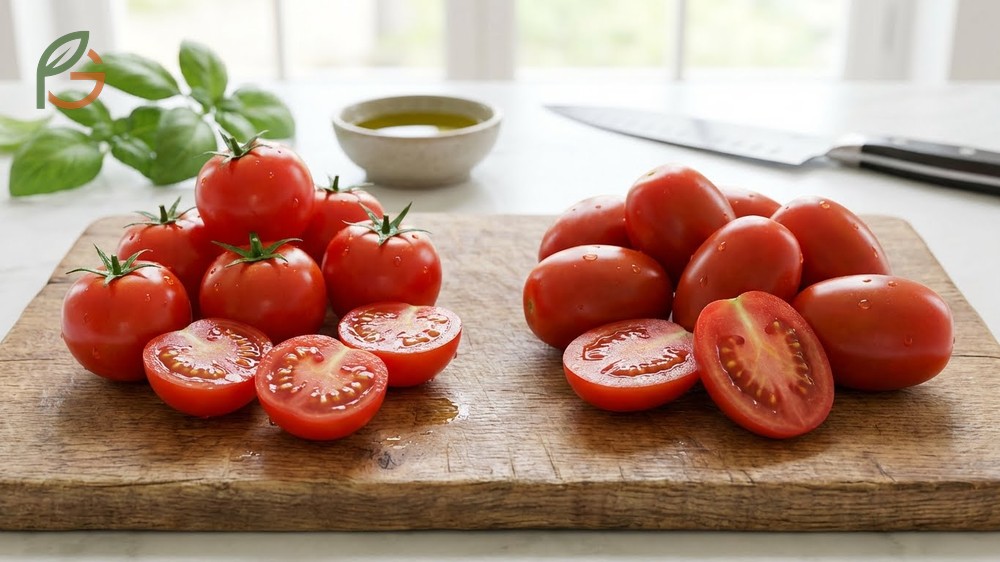
Cherry vs grape tomatoes aren’t the same, despite their similar size and sweetness. Research shows these varieties differ significantly in shape, texture, and cooking applications—cherry tomatoes are round and juicy with thin skins, while grape tomatoes are oval-shaped and meaty with thicker skins[1]. Most gardeners don’t realize that choosing the wrong variety for your recipe can affect moisture content and cooking time. FruitGarden provides expert guidance on growing and selecting the right tomato varieties for every culinary purpose.
Quick Answer
- Cherry tomatoes are round like cherries with thin, juicy flesh that bursts when you bite into them[2]
- Grape tomatoes are oval-shaped like grapes, about half the size, with thicker skins and meatier texture[2]
- Both contain approximately 18-20 calories per 100g with comparable vitamin C and lycopene content[3]
- Grape tomatoes roast better due to lower moisture, while cherry tomatoes shine in fresh salads[2]
Cherry vs Grape Tomatoes
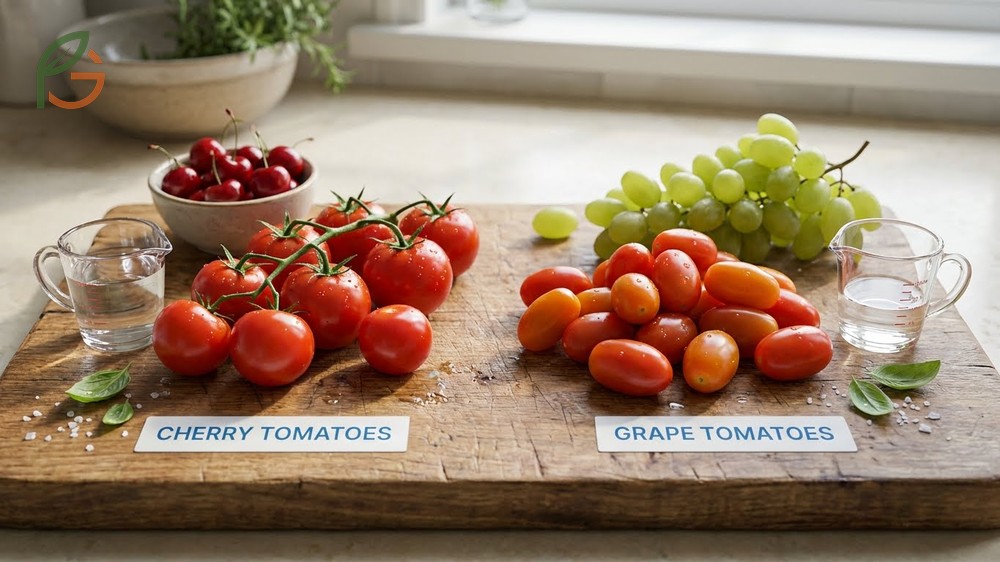
The primary distinction between these two tomato varieties lies in their physical structure and culinary performance. Cherry tomatoes grow perfectly round, resembling their namesake fruit, while grape tomatoes develop an oblong, oval shape similar to table grapes[1]. This shape difference isn’t just cosmetic—it affects how each variety holds up during cooking and storage.
Studies demonstrate that grape tomatoes contain significantly less water than cherry tomatoes, making them ideal for applications where excess moisture can be problematic[2]. Most home cooks find this difference becomes obvious when making salsas or pasta dishes. The meatier texture of grape tomatoes won’t water down your recipe the way cherry tomatoes sometimes can.
If you’re like most Americans growing tomatoes in your backyard, you’ll notice cherry tomato plants tend to produce slightly larger individual fruits. Grape tomatoes typically measure about half the size of cherry tomatoes, though both varieties are considerably smaller than standard slicing tomatoes[2].
Shape and Size Differences
The easiest way to tell these tomatoes apart is remembering what their names represent. Cherry tomatoes live up to their name by growing in a spherical shape, just like fresh cherries you’d pick from a tree. Grape tomatoes stretch into an elongated oval, mimicking the classic grape silhouette.
This shape difference affects how you prep them in the kitchen. Cherry tomatoes roll easily on cutting boards, while grape tomatoes sit stable when you need to halve them lengthwise. The oval shape of grape tomatoes also means you get more surface area when cutting them in half, which matters for roasting.
- Cherry tomatoes measure approximately 1 to 2 inches in diameter with perfect spherical symmetry
- Grape tomatoes range from 0.5 to 1 inch in length with an oval cross-section
- The round shape of cherry tomatoes creates a higher surface-area-to-volume ratio
- Grape tomatoes pack more densely in containers due to their oblong shape
- Cherry tomato vines produce larger individual fruits but often fewer per cluster
- Grape tomato clusters tend to yield more fruits per truss, though each fruit is smaller
Skin Thickness and Texture
Grape tomatoes develop noticeably thicker skins compared to cherry tomatoes, which contributes to their superior shelf life and firmer bite. This thicker skin acts as a protective barrier, reducing moisture loss and maintaining structural integrity during transport and storage. Cherry tomatoes have more delicate skins that tear easily when you bite into them, creating that characteristic juicy burst.
The skin thickness difference becomes critical when you’re deciding between varieties for stuffing or grilling. Grape tomatoes hold their shape better under heat because their robust skins don’t rupture as quickly. Cherry tomatoes, with their thinner skins, tend to split and release juice when exposed to high temperatures for extended periods.
Storage Tip: Grape tomatoes can last 5-7 days longer than cherry tomatoes at room temperature due to their thicker protective skin. Don’t refrigerate either variety unless they’re overripe—cold temperatures damage the cell structure and eliminate that fresh-from-the-garden flavor.
Flavor Profile Comparison
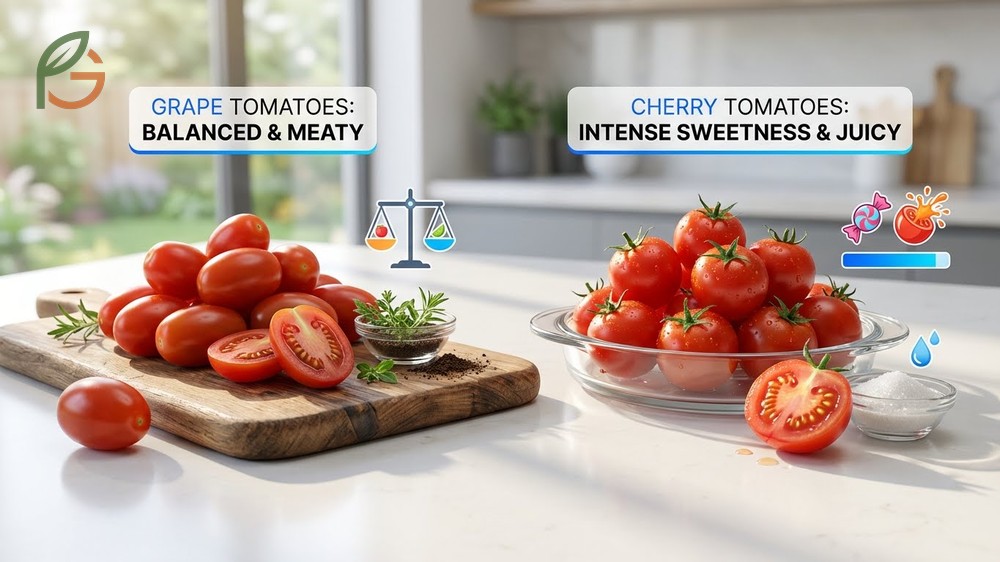
Current taste studies indicate that while both varieties deliver sweetness, the flavor profiles differ substantially. Grape tomatoes achieve a balanced sugar-to-acid ratio that creates a classic, garden-fresh tomato taste with meaty undertones[1]. Cherry tomatoes skew toward intense sweetness—almost candy-like—with a crisp, juicy bite that explodes with flavor.
The concentrated flesh of grape tomatoes provides a more robust, earthy tomato character. You’ll notice this especially when eating them raw in salads or as snacks. Cherry tomatoes offer immediate sweetness that hits your palate first, followed by subtle acidity.
Sweetness Levels
Cherry tomatoes generally register as sweeter than grape tomatoes in direct taste comparisons. The higher water content in cherry tomatoes dilutes their natural sugars less than you might expect—instead, the thin skin allows those sugars to reach your taste buds immediately when you bite down. Most people describe cherry tomatoes as having dessert-like sweetness that makes them perfect for snacking straight from the vine.
Grape tomatoes deliver concentrated sweetness with more complexity. The sugar content is comparable, but the meatier texture and thicker skin release flavors more gradually. This makes grape tomatoes taste less intensely sweet at first bite, even though laboratory analysis shows similar sugar levels between varieties[3].
Texture and Juiciness
The texture contrast between these varieties significantly impacts how you experience them. Cherry tomatoes burst with juice when you bite into them, releasing a flood of liquid that carries intense flavor. This juiciness comes from their high water content and thin skin barrier.
Grape tomatoes offer a meatier, almost crunchy texture that doesn’t release as much liquid. You get more substantial tomato flesh with each bite, which some people prefer for texture-focused dishes. The drier interior means grape tomatoes won’t make your sandwich soggy or dilute your salad dressing.
- Cherry tomatoes contain approximately 95% water, creating their signature juicy burst
- Grape tomatoes average 94% water content with denser flesh concentration
- The thin skin of cherry tomatoes ruptures easily, releasing juice immediately upon biting
- Grape tomato skins resist tearing, requiring more pressure to break through
- Cherry tomatoes collapse more readily when cooked at high heat
- Grape tomatoes maintain structural integrity even after prolonged roasting
Nutritional Differences
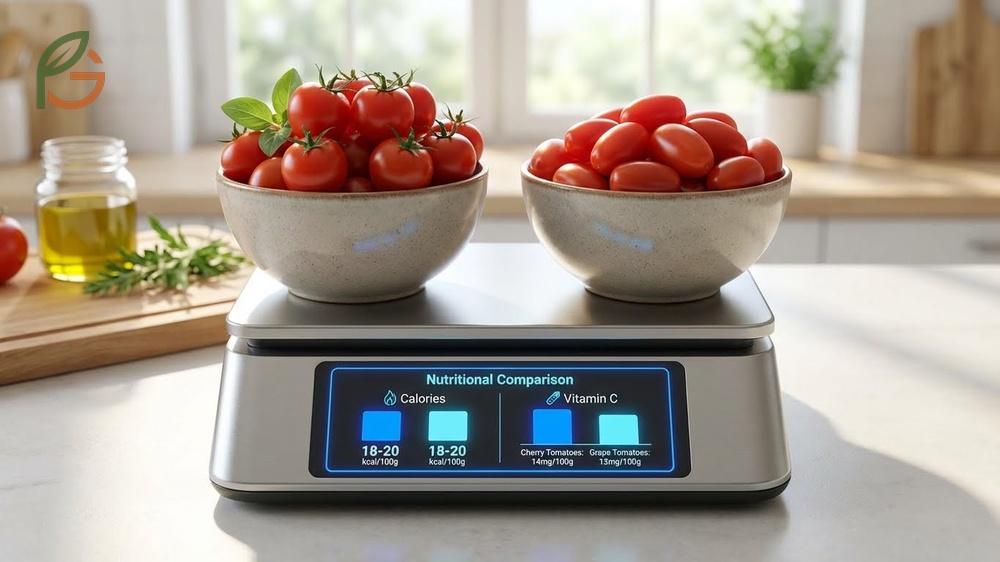
Nutritionally speaking, cherry and grape tomatoes are nearly identical twins. Both varieties deliver approximately 18-20 calories per 100g serving with minimal variation in macronutrient composition[3]. You’ll get comparable amounts of dietary fiber, vitamins, and minerals regardless of which variety you choose.
Research shows cherry tomatoes provide slightly higher vitamin C content at 14mg per 100g compared to grape tomatoes’ 12mg per 100g[4]. However, grape tomatoes contain marginally more lycopene due to their thicker skins and concentrated flesh. The lycopene difference is minimal but worth noting if you’re specifically seeking this powerful antioxidant.
Both varieties qualify as non-starchy vegetables with low glycemic index values around 15, making them excellent choices for blood sugar management[3]. The fiber content in both helps moderate glucose response, so you can’t go wrong with either option from a metabolic perspective.
This table compares calories, water content, vitamin C, and lycopene levels between cherry and grape tomato varieties per 100g serving
| Nutrient | Cherry Tomatoes | Grape Tomatoes |
|---|---|---|
| Calories | 18 kcal[3] | 20 kcal[3] |
| Water Content | 94.9% | 94.5% |
| Vitamin C | 14mg[4] | 12mg[4] |
| Lycopene | Moderate | Slightly Higher |
| Dietary Fiber | 1.2g | 1.2g |
- Lycopene acts as a powerful antioxidant linked to reduced cancer risk and cardiovascular health
- Vitamin A supports eye health and immune function through beta-carotene conversion
- Vitamin K contributes to proper blood clotting and bone metabolism
- Potassium helps regulate blood pressure and cellular function
- Both varieties contain negligible fat and sodium, making them heart-healthy choices
- The low glycemic index of 15 makes both suitable for diabetic meal plans
Cooking and Roasting
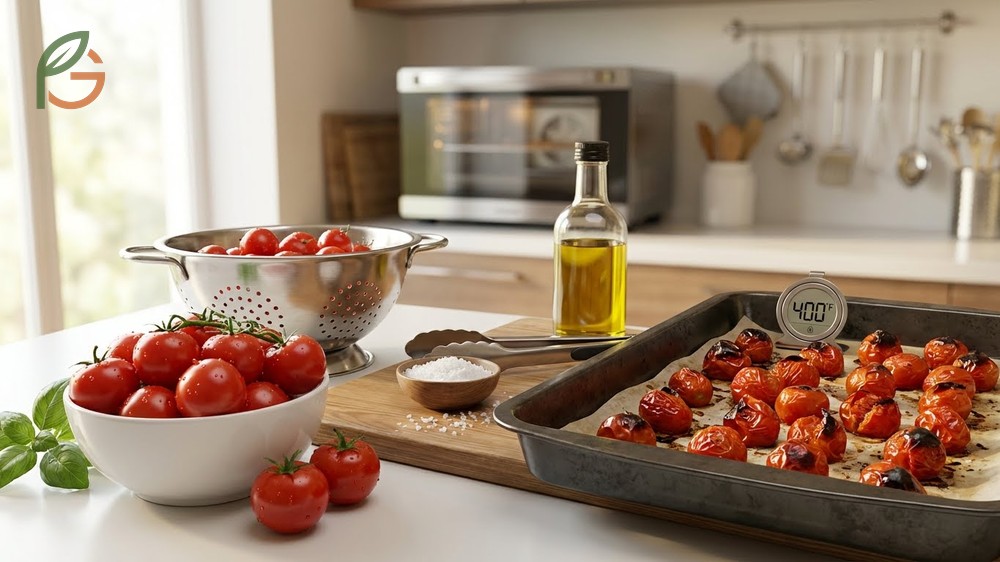
The moisture content difference between cherry and grape tomatoes dramatically affects cooking performance. Grape tomatoes excel in high-heat applications because their lower water content means they caramelize rather than steam. When you roast grape tomatoes at 400°F (204°C), they’ll develop deep, concentrated flavors in 45-60 minutes[5].
Cherry tomatoes require different handling due to their juiciness. They’re better suited for quick cooking methods or dishes where you want their liquid to contribute to a sauce. When roasted, cherry tomatoes need lower temperatures—around 225-250°F (107-121°C)—for 2-3 hours to prevent bursting and excessive juice loss[6].
For stovetop cooking, grape tomatoes hold their shape when sautéed with pasta or vegetables, while cherry tomatoes break down quickly and create more sauce. This isn’t a flaw—it’s just a different application. Choose based on whether you want distinct tomato pieces or a juicier, sauce-like consistency in your final dish.
Best Tomatoes for Roasting
Grape tomatoes win the roasting competition hands down. Their thicker skins prevent splitting, and their meaty flesh concentrates into intensely flavored, slightly chewy morsels. Professional chefs prefer grape tomatoes for roasting because they maintain visual appeal—each tomato stays intact and develops beautiful caramelization without collapsing into mush.
When roasting grape tomatoes, toss them with olive oil, salt, and herbs, then spread them cut-side up on a baking sheet. The flat cut surface caramelizes beautifully at 400°F (204°C) while the intact skin holds everything together. You’ll get concentrated tomato flavor with a slightly jammy texture that works perfectly in grain bowls, on pizza, or alongside roasted proteins.
Cherry tomatoes can be roasted successfully, but you need patience and lower heat. At 225-250°F (107-121°C), they’ll slowly dehydrate over 2-3 hours, concentrating their sugars without bursting[6]. The result is sweeter and more delicate than roasted grape tomatoes, but takes significantly longer.
Roasting Tip: Don’t crowd your baking sheet—give tomatoes space for air circulation. Overcrowding creates steam that prevents caramelization. Use parchment paper or lightly oiled foil for easy cleanup and to prevent sticking.
Best Tomatoes for Salads
Cherry tomatoes shine in fresh salad applications where their juicy burst adds texture contrast and moisture. When you bite into a cherry tomato nestled among crisp greens, the explosion of sweet juice provides flavor punctuation that grape tomatoes can’t match. They’re ideal for mixed green salads, caprese salad, and any preparation where you want that pop of freshness.
Grape tomatoes work better in composed salads where excess moisture would be problematic. For grain salads, pasta salads, or dishes that sit for a while before serving, grape tomatoes won’t water down your dressing or make other ingredients soggy. Their firm texture also holds up better when tossed with heavier ingredients like feta cheese or olives.
Consider serving temperature too. Cherry tomatoes taste best at room temperature when their sugars are most pronounced and their juice flows freely. Grape tomatoes maintain better texture even when served cold, making them suitable for make-ahead salads stored in the refrigerator.
Substitution Guide
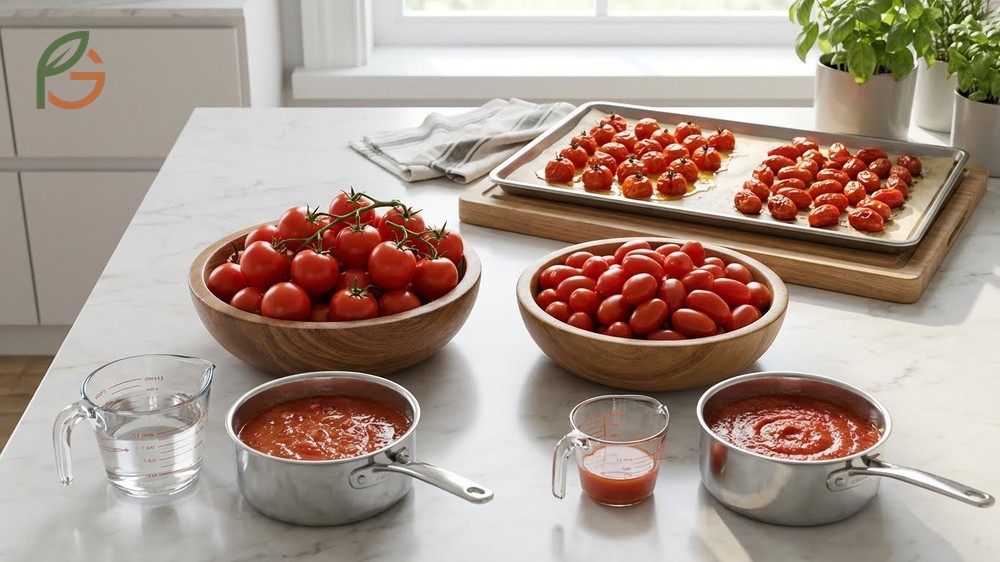
You can substitute grape tomatoes for cherry tomatoes in most recipes, but expect some differences in final results. When a recipe calls for cherry tomatoes but you’re using grape tomatoes instead, reduce added liquid slightly to compensate for the lower moisture content. This matters most in sauces, salsas, and dishes where tomato juice contributes to the overall consistency.
For roasting applications, grape tomatoes work even better than cherry tomatoes in most cases. They’ll roast faster at higher temperatures and maintain better visual appeal. If substituting cherry tomatoes for grape tomatoes in a roasting recipe, lower your oven temperature by 50°F (10°C) and check them frequently to prevent bursting.
In raw applications like salads, the substitution changes the eating experience but doesn’t ruin the dish. Cherry tomatoes provide more juice and intense sweetness, while grape tomatoes offer a meatier bite. Choose based on whether you want that burst of juice (cherry) or a firmer texture that won’t make your salad watery (grape).
- Substitute 1:1 by volume for most recipes, though individual fruit count will differ
- Reduce added liquid by 2-3 tablespoons when using grape tomatoes instead of cherry in sauces
- Increase oven temperature by 25-50°F when substituting grape for cherry tomatoes in roasting
- Add a splash of water or tomato juice when using grape tomatoes in dishes requiring more moisture
- Cut grape tomatoes slightly smaller if you want them to break down faster during cooking
- Leave cherry tomatoes whole rather than halving them if you want to reduce juice release
Substitution Note: If you’re making stuffed tomatoes, stick with cherry tomatoes—their larger size and thinner skins make them much easier to hollow out and fill. Grape tomatoes are too small and have skins too thick for effective stuffing.
Conclusion
The evidence is clear: cherry vs grape tomatoes represent distinct varieties optimized for different culinary applications. Cherry tomatoes deliver juicy sweetness perfect for fresh eating and quick-cooking applications, while grape tomatoes provide meaty texture and concentrated flavor ideal for roasting and dishes requiring structural integrity. Neither variety is objectively better—success depends on matching the tomato to your intended use.
Current agricultural data shows both varieties thrive in similar growing conditions with comparable nutritional profiles, making your choice purely functional rather than nutritional. Whether you’re growing them in your garden or selecting them at the market, understanding these differences helps you make informed decisions that improve your cooking results. FruitGarden provides comprehensive growing guides for both varieties to help home gardeners achieve maximum flavor and yield from their tomato plants.
Frequently Asked Questions
Are grape tomatoes the same as cherry tomatoes?
No, grape tomatoes and cherry tomatoes are different varieties. Grape tomatoes are oval-shaped with thicker skins and meatier texture, while cherry tomatoes are round with thin skins and juicier flesh. Though both are small and sweet, they perform differently in cooking applications due to their moisture content and structural differences.
Which is better for roasting—cherry or grape tomatoes?
Grape tomatoes roast better than cherry tomatoes because their thicker skins and lower moisture content allow them to caramelize without bursting. They maintain their shape at 400°F for 45-60 minutes, developing concentrated flavor. Cherry tomatoes require lower temperatures (225-250°F) for 2-3 hours to prevent excessive juice loss and splitting.
Can I substitute grape tomatoes for cherry tomatoes in salads?
Yes, you can substitute grape tomatoes for cherry tomatoes in salads, though the experience differs. Grape tomatoes provide a meatier, less juicy bite that won’t water down your salad dressing. Cherry tomatoes offer that characteristic juicy burst when you bite into them. For make-ahead salads, grape tomatoes work better because they won’t release excess moisture over time.
Which tomato variety is sweeter?
Cherry tomatoes taste sweeter than grape tomatoes, though both varieties contain similar sugar levels. The thin skin and high water content of cherry tomatoes allow their sugars to hit your palate immediately, creating an intense, candy-like sweetness. Grape tomatoes deliver more balanced, complex sweetness with traditional tomato flavor due to their meatier texture and thicker skin.
Do cherry and grape tomatoes have the same nutritional value?
Cherry and grape tomatoes have nearly identical nutritional profiles, both containing approximately 18-20 calories per 100g. Cherry tomatoes provide slightly more vitamin C (14mg vs 12mg per 100g), while grape tomatoes contain marginally higher lycopene due to thicker skins. Both offer comparable fiber, potassium, and vitamins A and K, making either choice nutritionally sound.
How long do grape tomatoes last compared to cherry tomatoes?
Grape tomatoes last 5-7 days longer than cherry tomatoes when stored at room temperature due to their thicker protective skins. This thicker skin reduces moisture loss and provides better protection during transport and storage. Both varieties should be kept at room temperature rather than refrigerated, as cold damages their cell structure and diminishes flavor.
What’s the best way to cut cherry and grape tomatoes for cooking?
Cut cherry tomatoes in half through their equator to create two equal hemispheres, which prevents excessive rolling on your cutting board. For grape tomatoes, slice them lengthwise to maximize the flat surface area that will caramelize during roasting. Use a sharp knife for clean cuts that don’t crush the flesh—a serrated knife works particularly well for tomatoes with thick skins.