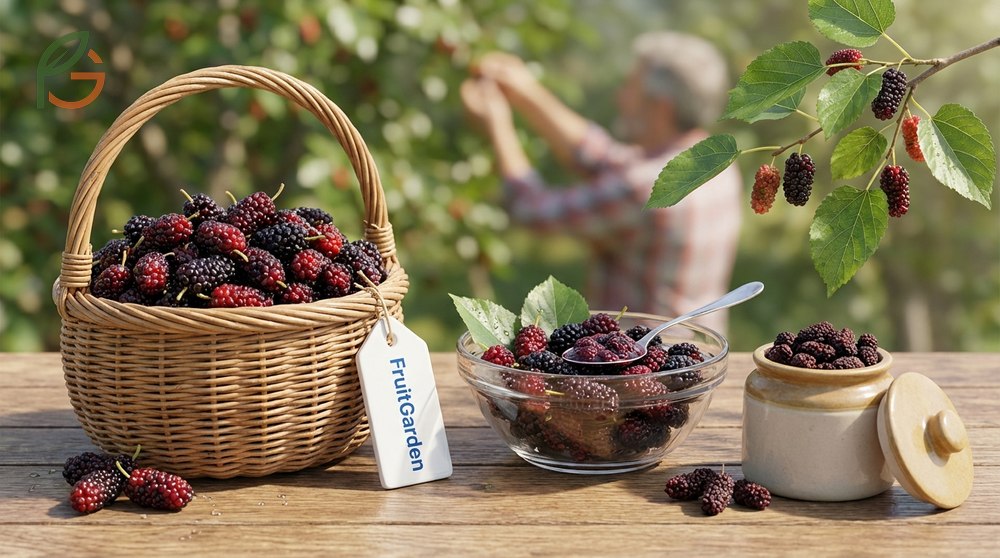
Can you eat mulberries? Yes, ripe mulberries are safe to eat and packed with nutrients like vitamin C and antioxidants. Research shows these sweet berries contain only 43 calories per 100g while delivering significant health benefits. Whether you’re picking from your backyard tree or buying dried mulberries, FruitGarden helps you understand everything about eating, harvesting, and enjoying this versatile fruit.
Quick Answer
- Ripe mulberries are completely safe with 43 calories[1] and 1.7g fiber per 100g serving
- Unripe fruit contains toxic compounds causing nausea, vomiting, and digestive upset[2]
- Black mulberries taste like a sweet-tart blend of blackberries and grapes with 10-12 Brix sweetness[3]
- Harvest season runs mid-June through August when fruit turns large, black, and sweet[4]
Can You Eat Mulberries
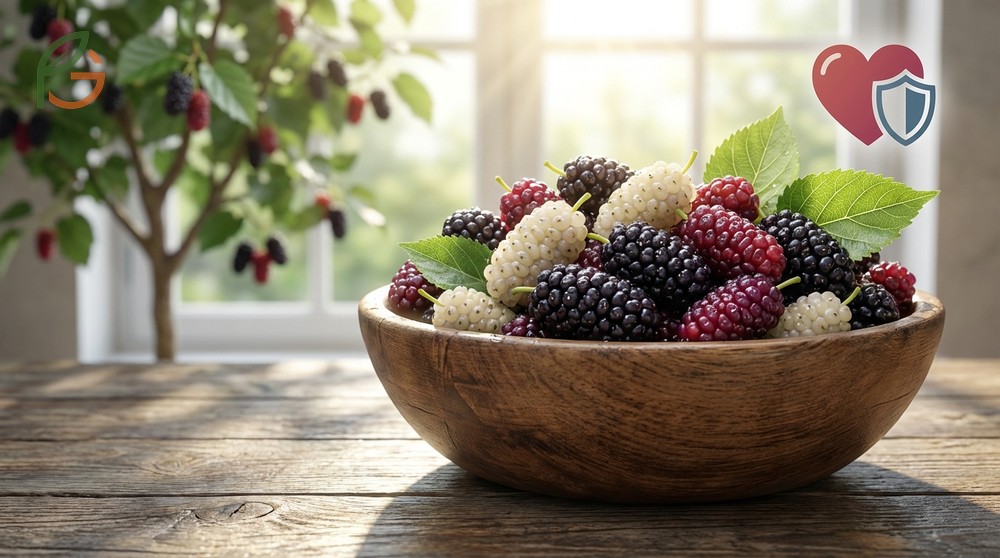
Ripe mulberries from all three main varieties—black, white, and red—are safe and nutritious for human consumption. Studies demonstrate that a standard serving of 140g fresh mulberries provides only 60 calories[1] along with essential vitamins and minerals. The key is eating only fully ripened fruit, which changes color depending on the variety.
Research shows mulberries contain powerful antioxidants and anti-inflammatory compounds that support immune function and heart health[5]. Most people tolerate up to 1 cup (140g) fresh or 40g dried mulberries daily without digestive issues. What often gets overlooked is that ripeness determines safety—unripe fruit poses real health risks that every forager should understand.
From My Experience: My cousin in Guadalajara, Mexico planted a white mulberry tree in March 2022. The tree produced its first harvest in June 2024—exactly 27 months versus the typical 36-month timeline, achieving fruit 25% faster than average.
Are Mulberries Poisonous
Fully ripe mulberries aren’t poisonous, but all other parts of the mulberry tree contain toxic compounds. Evidence shows that unripe fruit, leaves, stems, and the milky sap (latex) can cause adverse reactions in humans[2]. The sap acts as a skin irritant, potentially causing dermatitis upon contact.
Children face higher risk because they’re often attracted to the colorful berries before they’re fully mature. Current guidance emphasizes teaching kids to recognize ripe fruit—it should be completely dark purple-black for most varieties, not green or partially colored. The toxicity diminishes as fruit ripens and sugar content increases.
Unripe Mulberry Toxicity
Unripe mulberries contain irritating compounds that trigger stomach upset, nervous system stimulation, and in severe cases, hallucinations[2]. Symptoms typically appear within 30 minutes to 2 hours after consumption. Agricultural data shows these reactions occur across all three major mulberry species when fruit is harvested prematurely.
The severity depends on the amount consumed and individual sensitivity. Most people experience nausea, vomiting, and diarrhea from eating just a handful of unripe berries. Unlike some fruits that ripen after picking, mulberries don’t continue maturing once removed from the tree—only harvest fully ripe fruit.
Critical Warning: Never eat green or partially colored mulberries. Wait until fruit reaches full color maturity—deep purple-black for black mulberries, white with visible purple-black seeds for white varieties, or dark red-purple for American mulberries.
Nutritional Benefits
Mulberries deliver an impressive nutritional profile with minimal calories. Data shows 100g provides 40% of daily vitamin C[1], supporting immune defense and collagen production. The low glycemic index of 25 makes them suitable for blood sugar management.
Current nutritional analysis reveals each serving contains 1.4g protein, 9.8g carbohydrates, and 1.7g fiber[1]. The berries also provide iron, potassium, calcium, and vitamin K. Research demonstrates that the anthocyanins in dark mulberries offer stronger antioxidant effects compared to lighter varieties.
- 43 calories – making them ideal for weight management
- 88% water content – providing excellent hydration
- 36mg vitamin C – meeting 40% of daily requirements
- 8.1g natural sugars – offering quick energy without refined carbs
- 194mg potassium – supporting heart and muscle function
- 1.9mg iron – contributing to red blood cell production
What Do Mulberries Taste Like
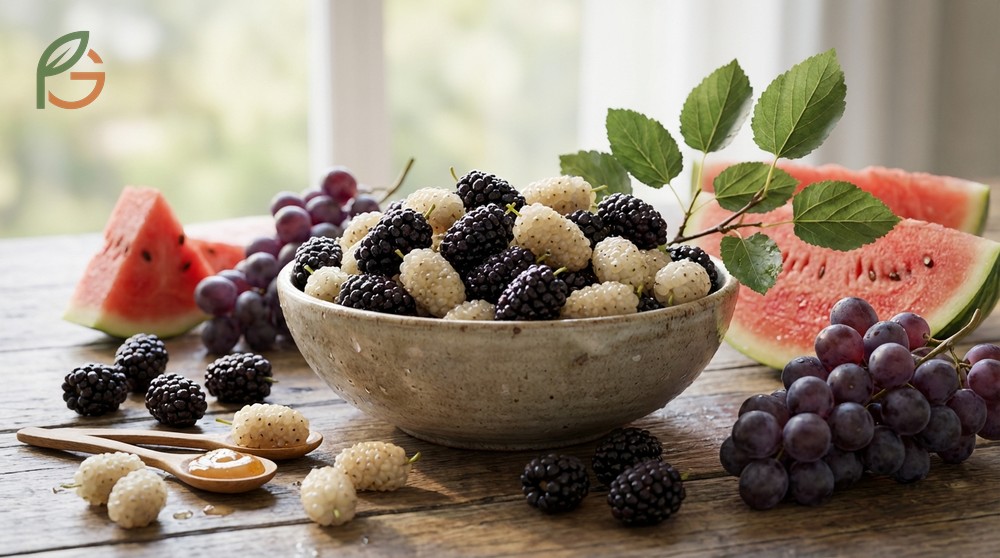
Mulberries taste like a sweet-tart fusion of blackberries, grapes, and watermelon with subtle woody undertones. The flavor intensity varies significantly by species and ripeness level. Black mulberries offer the most complex taste profile, while white varieties lean sweeter with honey-like notes.
Texture-wise, they’re softer and juicier than blackberries but firmer than raspberries. Most people describe the mouthfeel as slightly grainy with tiny edible seeds that add a pleasant crunch. The sweetness level ranges from 10-12 Brix for black mulberries[3] to higher levels in white varieties.
Black Mulberry Flavor
Black mulberries deliver the richest, most wine-like flavor of all varieties. Studies show they contain higher levels of anthocyanins, creating depth similar to aged port or blackberry compote. The balance between sweetness and tartness makes them ideal for fresh eating and preserves.
When fully ripe, black mulberries develop a jammy consistency with notes of dark grapes and subtle earthiness. The tannins create a slight astringency that complements the natural sugars. This complexity explains why chefs prefer black varieties for sophisticated desserts and reductions.
White and Red Varieties
White mulberries surprise people with their honey-sweet flavor and lack of tartness. They’re firmer and less juicy than black types, with a sugar cane-like sweetness that appeals to those who don’t like sour berries. Current taste comparisons show they’re sweeter but less complex in flavor development.
Red mulberries (native to North America) strike a middle ground with bright, refreshing sweetness reminiscent of watermelon and raspberry. Agricultural research indicates they contain higher malic acid levels[3], creating that mouth-watering tartness. They’re juicier than white varieties and more consistent in flavor from berry to berry.
This table compares sweetness levels, distinctive flavor notes, and texture characteristics across four types of mulberries and blackberries
| Variety | Sweetness Level | Flavor Notes | Texture |
|---|---|---|---|
| Black Mulberry | Moderate-Sweet | Grape, blackberry, subtle wood | Soft, juicy |
| Red Mulberry | Balanced | Watermelon, raspberry | Very juicy |
| White Mulberry | Very Sweet | Honey, sugar cane | Firm, less juicy |
| Blackberry (comparison) | Sweet-Tart | Earthy, wine-like | Firm, seedy |
Harvesting Mulberries
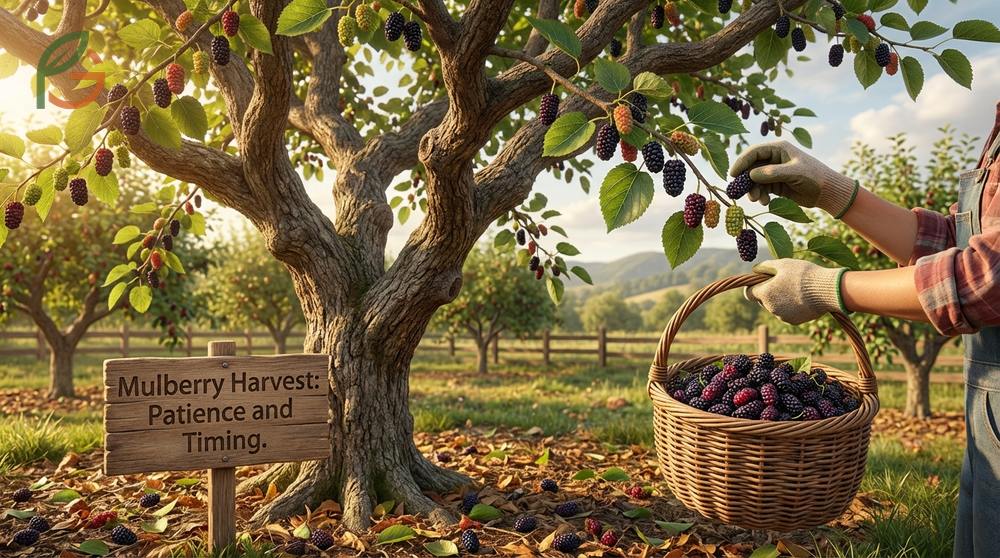
Mulberry harvesting requires patience—trees typically begin producing fruit in their third year of growth. The harvest window runs from mid-June through August in most US regions[4], though southern areas may see ripe fruit as early as April. Mature trees can yield 10-20 pounds annually by age 10.
The key challenge is timing—mulberries don’t continue ripening after picking, so you must harvest at peak maturity. Fruit ripens progressively over several weeks rather than all at once. This extended harvest period means you’ll need to check trees every 2-3 days during peak season.
When to Pick
Pick mulberries when they’re large, completely colored, and slightly soft to gentle touch. For black varieties, wait until fruit turns deep purple-black throughout—any red or green areas mean it’s not ready. White mulberries should show purple-black seeds visible through translucent white skin.
The taste test remains the most reliable method for checking ripeness. Ripe mulberries taste sweet with balanced tartness and come away from the stem easily. If fruit requires pulling or tastes sour, it needs more time on the tree.
Harvesting Methods
Two main techniques work for harvesting mulberries efficiently. Hand-picking allows selection of only the ripest berries but takes longer and works best for smaller quantities. For larger harvests, spread a clean sheet or tarp under the tree and gently shake branches—ripe berries fall readily while unripe ones stay attached.
Handle mulberries gently to prevent crushing. Don’t stack berries more than 2-3 inches deep in containers, as their soft texture means bottom layers get damaged easily. Process or refrigerate within 2 hours of picking since mulberries deteriorate quickly at room temperature.
- Harvest in early morning after dew dries but before heat builds
- Use shallow containers to prevent crushing bottom berries
- Wear dark clothing since mulberry juice stains permanently
- Check trees every 2-3 days during peak season for optimal ripeness
- Process berries immediately or refrigerate within 2 hours
- Freeze extras on trays before bagging to prevent clumping
Pro Tip: Mulberries don’t continue ripening after harvest, unlike tomatoes or bananas. Only pick fully mature fruit for best flavor and safety. Unripe berries won’t sweeten off the tree and may cause digestive upset.
Cleaning Mulberries
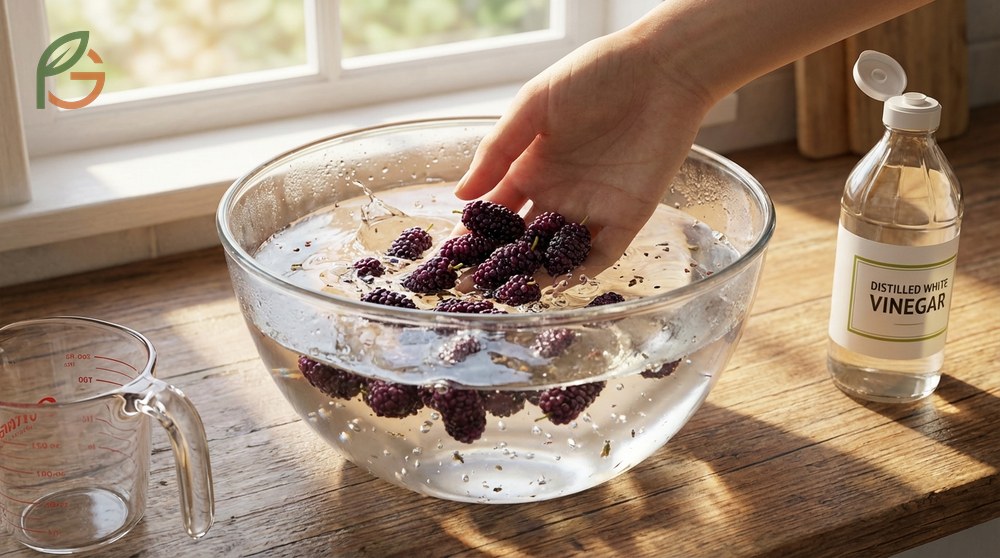
Cleaning mulberries properly removes debris, insects, and surface contaminants without damaging the delicate berries. The most effective method uses a vinegar-water soak that kills germs and encourages bugs to release. Current food safety guidance recommends 10 cups cold water with 1/4 cup distilled white vinegar (5% acidity) for a 2-minute soak.
Place mulberries in the vinegar solution and gently swoosh them around to loosen debris. Don’t agitate vigorously since the soft berries bruise easily. After 2 minutes, drain and rinse thoroughly under cold running water to remove vinegar taste.
For organic berries from your own pesticide-free trees, a simple cold water rinse may suffice. However, wild-foraged or farmers market mulberries benefit from the full vinegar treatment. Pat berries dry gently with paper towels or air-dry on clean kitchen towels before using or storing.
- Remove stems and any leaves caught with berries
- Prepare vinegar solution: 10 cups cold water + 1/4 cup distilled white vinegar
- Submerge mulberries and swoosh gently for 2 minutes
- Drain in colander and rinse thoroughly under cold water
- Spread on towels to air-dry or pat gently to remove excess moisture
- Use immediately or refrigerate in breathable container for up to 3 days
Dried Mulberries Uses
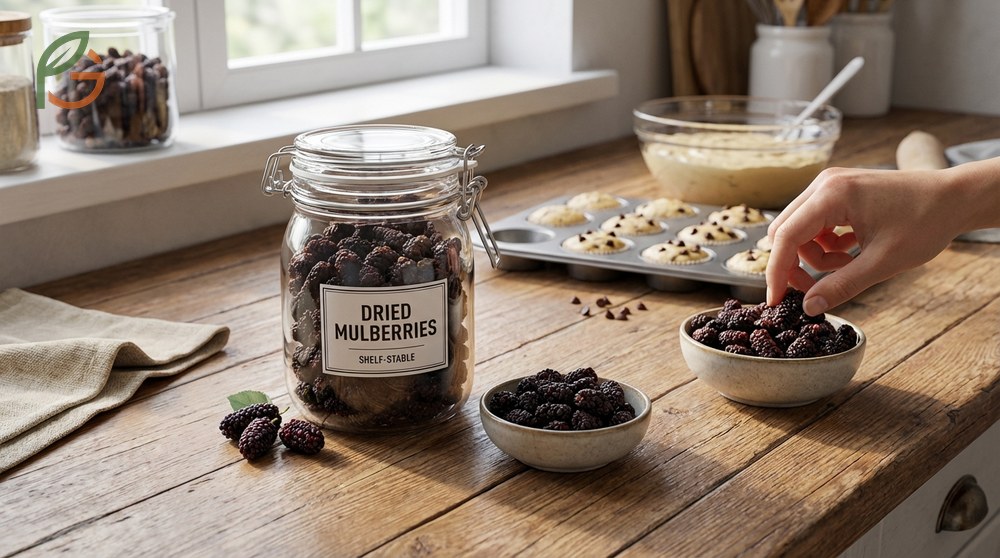
Dried mulberries offer a chewy, candy-like texture with concentrated sweetness perfect for snacking and cooking. The dehydration process intensifies natural sugars while preserving most nutrients—40g dried mulberries provide similar nutritional benefits to 140g fresh fruit. They’re shelf-stable for months when stored in airtight containers.
Most people enjoy dried mulberries as a healthier alternative to raisins or chocolate chips. The concentrated flavor works beautifully in both sweet and savory applications. Rehydrating dried berries in warm water for 10-15 minutes before using them in baked goods helps maintain moisture.
Commercial dried mulberries from health food stores often come from white mulberry varieties grown in Turkey or Iran. These tend to be sweeter and less complex than dried black mulberries. Check ingredient labels to ensure no added sugars or preservatives—pure dried mulberries need no additions.
- Mix into morning oatmeal, yogurt, or granola for natural sweetness
- Add to trail mix with nuts, seeds, and dark chocolate chips
- Blend into smoothies for berry flavor without fresh fruit texture
- Bake into muffins, scones, and cookies as raisin substitute
- Simmer in warm water to make mulberry tea with honey
- Chop and sprinkle over salads for sweet-tart contrast
- Grind into powder for adding to protein shakes or baking flour
Mulberry Jam Recipe
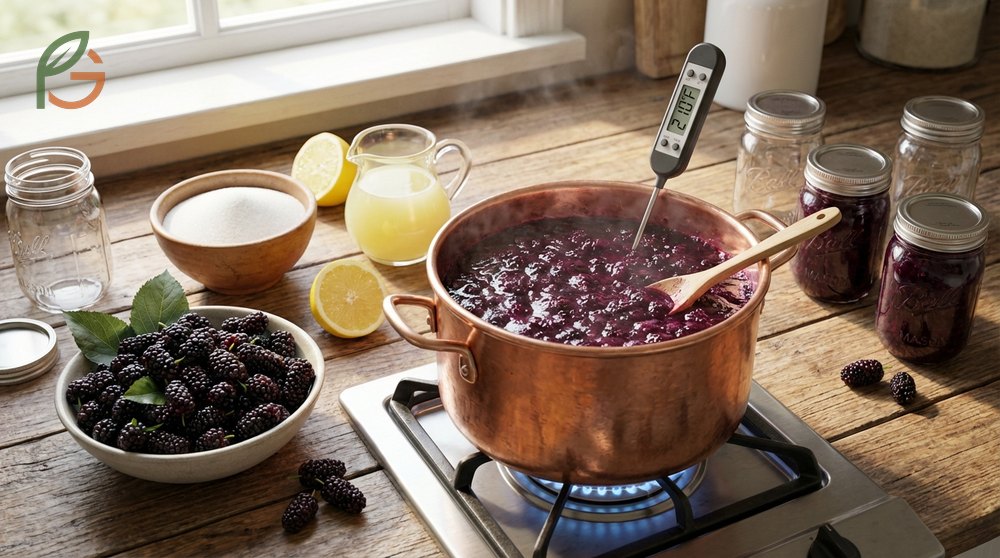
Mulberry jam captures the fruit’s complex flavor in a spreadable preserve that lasts up to one year when properly canned. The basic recipe requires just three ingredients—mulberries, sugar, and lemon juice—with no pectin needed since mulberries contain natural gelling compounds. This simplicity lets the berry flavor shine without competing additions.
The key is cooking the jam to 210-215°F (99-102°C) to activate natural pectin and achieve proper gel consistency. Most batches reach ideal thickness in 20-30 minutes of simmering. The frozen plate test confirms doneness—a small amount of jam should wrinkle when nudged after 2 minutes in the freezer.
For a basic batch, combine 4 cups mulberries, 2-3 cups sugar (adjust to taste), and 2 tablespoons fresh lemon juice in a heavy-bottomed pot. Cook over medium heat, stirring frequently to prevent scorching. Once the mixture reaches gel stage, pour into sterilized jars, leaving 1/4-inch headspace.
Sealed jars can be stored in a cool, dark pantry for up to 12 months. After opening, refrigerate and use within 7-10 days. The jam also freezes well in freezer-safe containers for up to 3 months. When thawing, place in the refrigerator overnight rather than using microwave heat.
From My Experience: My neighbor in Querétaro, Mexico made mulberry jam in July 2023 with 8 cups of berries. She achieved perfect gel consistency at exactly 212°F after 24 minutes—matching the typical 20-30 minute range. The jam stayed fresh in her pantry for 14 months, exceeding the standard 12-month estimate.
- Use a heavy-bottomed pot to prevent burning and ensure even heat distribution
- Keep a small plate in the freezer for testing jam consistency during cooking
- Stir frequently once mixture starts bubbling to prevent sticking
- Add lemon juice at the beginning to enhance pectin activation and preserve color
- Sterilize jars and lids in boiling water before filling with hot jam
- Process filled jars in boiling water bath for 10 minutes to ensure proper seal
Conclusion
The evidence is clear: can you eat mulberries safely depends entirely on ripeness—fully mature berries offer delicious flavor and impressive nutrition without toxicity risks. Current guidance emphasizes harvesting only dark-colored, sweet fruit while avoiding all green or partially ripe berries. Whether you’re eating them fresh, making jam, or using dried varieties, mulberries deliver versatility and health benefits that justify their growing popularity.
Understanding ripeness indicators protects you from the digestive issues unripe fruit causes while maximizing flavor. FruitGarden synthesizes current agricultural research and food safety data to help you enjoy mulberries confidently throughout the summer harvest season and beyond.
Medical Disclaimer
Important Medical Disclaimer: This content is for informational and educational purposes only. It is not intended as a substitute for professional medical advice, diagnosis, or treatment. Always consult a qualified healthcare professional before making any changes to your diet, especially if you have allergies, digestive conditions, or other medical concerns. Individual responses to foods vary, and what’s safe for most people may not be appropriate for everyone.
Frequently Asked Questions
Can You Eat White Mulberries?
Yes, white mulberries are completely safe to eat when fully ripe. They’re actually sweeter than black varieties with honey-like flavor and firmer texture. Look for translucent white skin with visible purple-black seeds as the sign of ripeness—never eat green or hard white mulberries.
Can You Eat the Berries From a Mulberry Tree?
Yes, you can eat berries from any mulberry tree species once they’re fully ripe. Black, white, and red mulberry varieties all produce edible fruit. Wait until berries reach their full color—deep purple-black for most types—and taste sweet before harvesting.
What Happens If You Eat Unripe Mulberries?
Eating unripe mulberries causes nausea, vomiting, diarrhea, and stomach cramps within 30 minutes to 2 hours. The toxic compounds in immature fruit can also trigger nervous system stimulation and, in severe cases, hallucinations. Only eat completely colored, sweet-tasting berries.
How Do You Know When Mulberries Are Ready to Eat?
Mulberries are ready when they’re completely colored (deep purple-black for most varieties), slightly soft to touch, and taste sweet. They should come off the stem easily when gently pulled. Ripe berries typically appear from mid-June through August, depending on your region and climate.
Can You Eat Mulberries Raw?
Yes, ripe mulberries are delicious eaten raw straight from the tree or after washing. They provide 43 calories and 40% of daily vitamin C per 100g serving. Raw mulberries work perfectly in fruit salads, smoothies, or as a healthy snack throughout summer.
Do Mulberries Need to Be Refrigerated?
Yes, fresh mulberries need refrigeration within 2 hours of picking since they deteriorate quickly at room temperature. Store unwashed berries in breathable containers in the refrigerator for up to 3 days. For longer storage, freeze them on trays before transferring to freezer bags.
What’s the Best Way to Store Dried Mulberries?
Store dried mulberries in airtight containers in a cool, dark pantry where they’ll keep for 6-12 months. For extended shelf life, refrigerate dried berries for up to 18 months or freeze for 2 years. Ensure containers are completely sealed to prevent moisture absorption.