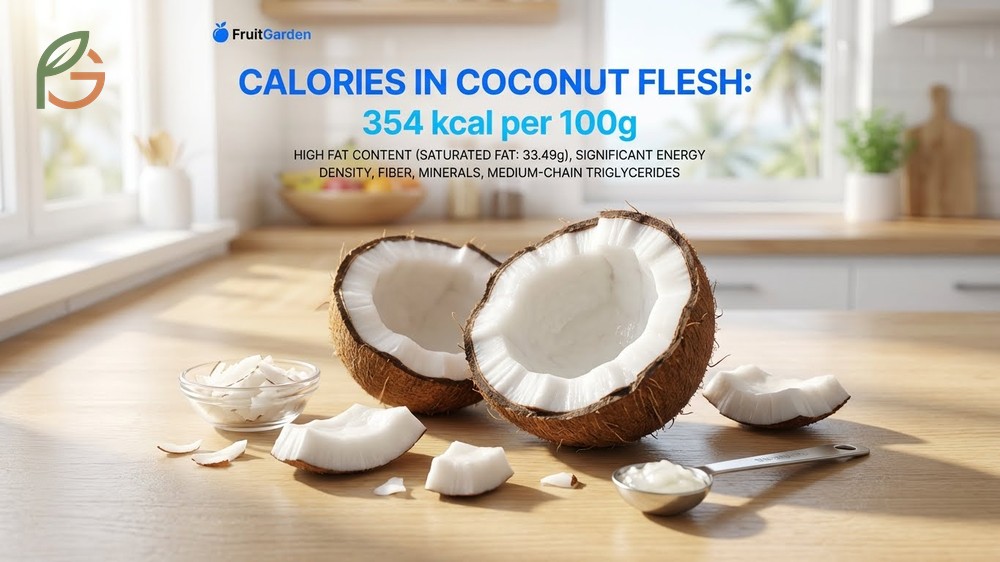
Calories in coconut flesh total 354 per 100 grams, making it one of the most calorie-dense fruits available[1]. Research shows that coconut meat’s high fat content—primarily saturated fat at 33.49 grams per 100 grams—contributes significantly to its energy density, while also delivering substantial fiber, minerals, and medium-chain triglycerides[2]. FruitGarden synthesizes current nutritional research to help you understand how coconut flesh fits into a balanced diet, whether you’re growing tropical fruits or simply enjoying their health benefits.
Quick Answer
- Fresh coconut flesh contains 354 calories per 100g and 283 calories per cup (80g)[1]
- Rich in fiber with 9 grams per 100g, providing over 30% of daily needs[1]
- Contains 3.3g protein and 15.23g carbohydrates per 100g serving[2]
- Provides exceptional minerals including 65% daily manganese and 44% daily copper[1]
Calories in Coconut Flesh
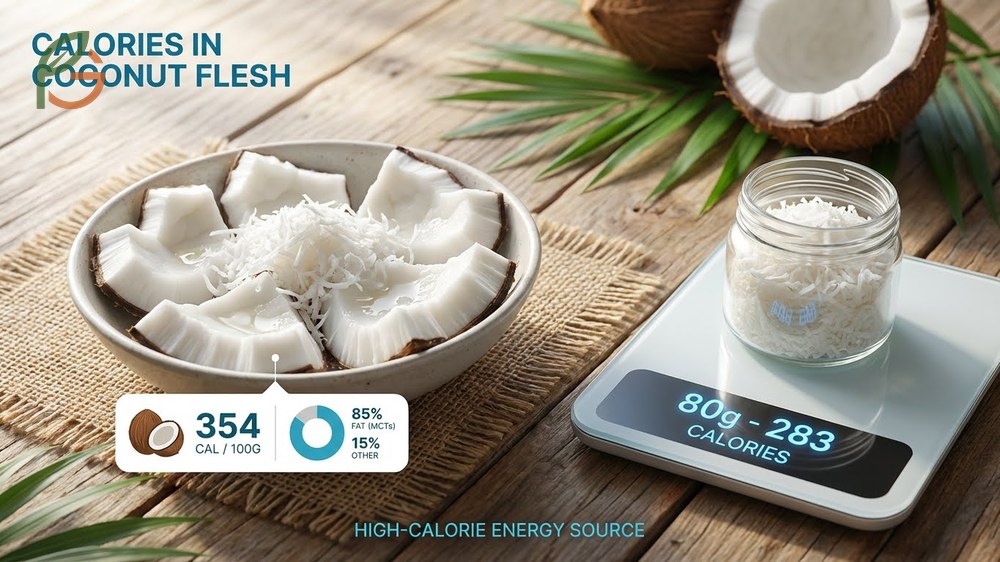
Raw coconut flesh delivers 354 calories per 100 grams, positioning it among the highest-calorie fruits available[1]. The majority of these calories—about 85%—come from fat, particularly medium-chain fatty acids that your body processes differently than other fats. This energy density makes coconut flesh particularly valuable for people needing calorie-rich foods in small portions.
Studies demonstrate that one cup of shredded coconut (80 grams) provides 283 calories, which represents roughly 14% of a standard 2,000-calorie daily diet[1]. This concentrated energy source can benefit athletes, gardeners doing physical labor, or anyone requiring sustained energy throughout the day. The high caloric content reflects coconut’s evolutionary adaptation to provide maximum nutrition in tropical environments.
What often gets overlooked is that coconut’s calorie composition differs fundamentally from processed snacks. While both might contain similar calories per serving, coconut delivers fiber, minerals, and healthy fats that promote satiety and metabolic function.
Serving Size Variations
Serving sizes significantly affect your calorie intake from coconut flesh. A one-ounce serving (28 grams) contains approximately 99 calories, making portion control straightforward for calorie-conscious consumers. Most recipes call for 1/4 to 1/2 cup measurements, translating to 71-142 calories respectively.
Understanding these variations helps you integrate coconut into meal plans effectively. Fresh coconut pieces cut from the shell typically weigh more and contain more water than packaged shredded varieties, affecting both calorie density and nutrient concentration.
Important Note: Whole coconuts vary dramatically in size. A medium coconut (397g of flesh) delivers approximately 1,405 calories—more than half the daily caloric needs for most adults. Always measure portions rather than estimating.
Raw Versus Dried Coconut
Dried coconut contains dramatically higher calorie concentrations than fresh varieties. Unsweetened desiccated coconut packs 660 calories per 100 grams—nearly double that of raw coconut[2]. This difference occurs because drying removes water while concentrating fats, proteins, and carbohydrates into smaller volumes.
Sweetened dried coconut escalates calorie counts even further. Flaked sweetened varieties can reach 456-501 calories per 100 grams due to added sugars. These products work well in baking but require careful portion management for those monitoring caloric intake.
Nutritional Value of Coconut Meat
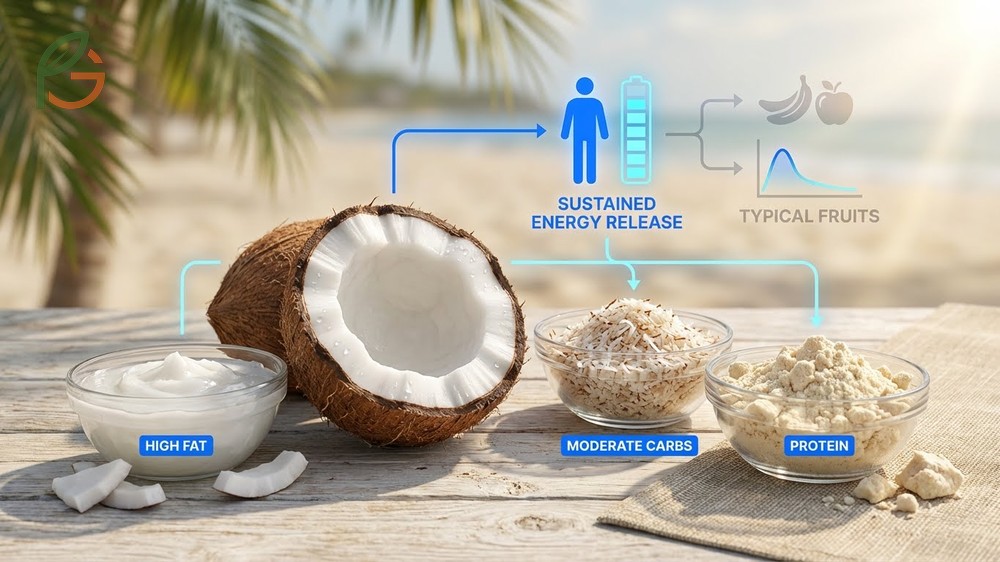
Current nutritional data shows coconut meat provides a unique macronutrient profile that sets it apart from other fruits. The combination of high fat, moderate carbohydrates, and surprising protein content creates a nutritionally dense food that supports various dietary approaches from ketogenic to whole-food plant-based eating.
Unlike typical fruits that derive calories primarily from carbohydrates, coconut’s unusual composition offers sustained energy release. This makes it particularly useful for people who need stable blood sugar levels or extended periods between meals, such as gardeners working long hours outdoors.
Macronutrient Breakdown
Each 100-gram serving of raw coconut flesh contains 33.49 grams of fat, 15.23 grams of carbohydrates, and 3.3 grams of protein[2]. This translates to approximately 85% of calories from fat, 11% from carbohydrates, and 4% from protein. The fat content consists predominantly of saturated fatty acids, specifically medium-chain triglycerides that bypass normal fat digestion pathways.
The protein content, while modest compared to nuts like almonds or cashews, still contributes meaningfully to daily requirements. For comparison, coconut provides more protein than most other tropical fruits including mangoes, papayas, or pineapples.
This table compares macronutrient values across different coconut forms showing calories, fat, carbohydrates, and protein per 100 gram serving
| Coconut Type | Calories (per 100g) | Fat | Carbohydrates | Protein |
|---|---|---|---|---|
| Raw Fresh Coconut | 354 kcal[2] | 33.49g | 15.23g | 3.3g |
| Dried Unsweetened | 660 kcal[2] | 65g | 24g | 7g |
| Sweetened Flaked | 456 kcal[2] | 29g | 51g | 3.5g |
| Coconut Water | 18 kcal[3] | 0g | 4g | <1g |
Does Coconut Have Fiber
Coconut flesh contains impressive amounts of dietary fiber—9 grams per 100 grams, representing over 30% of the daily recommended intake[1]. Most of this fiber is insoluble, meaning it doesn’t dissolve in water but instead adds bulk to digestive contents. This type of fiber moves food through your intestinal tract efficiently, supporting regular bowel movements and digestive health.
Research indicates that insoluble fiber from coconut can help prevent constipation and may reduce the risk of diverticular disease. Unlike soluble fibers that form gels in your digestive system, coconut’s insoluble fiber maintains its structure throughout digestion, promoting mechanical movement through the intestines.
- Promotes digestive regularity and prevents constipation through bulk formation
- Supports healthy gut bacteria by providing substrate for fermentation
- Helps maintain stable blood sugar levels by slowing carbohydrate absorption
- Increases satiety and reduces overall calorie intake at subsequent meals
- May lower cholesterol by binding bile acids and promoting their excretion
Vitamins and Minerals in Coconut
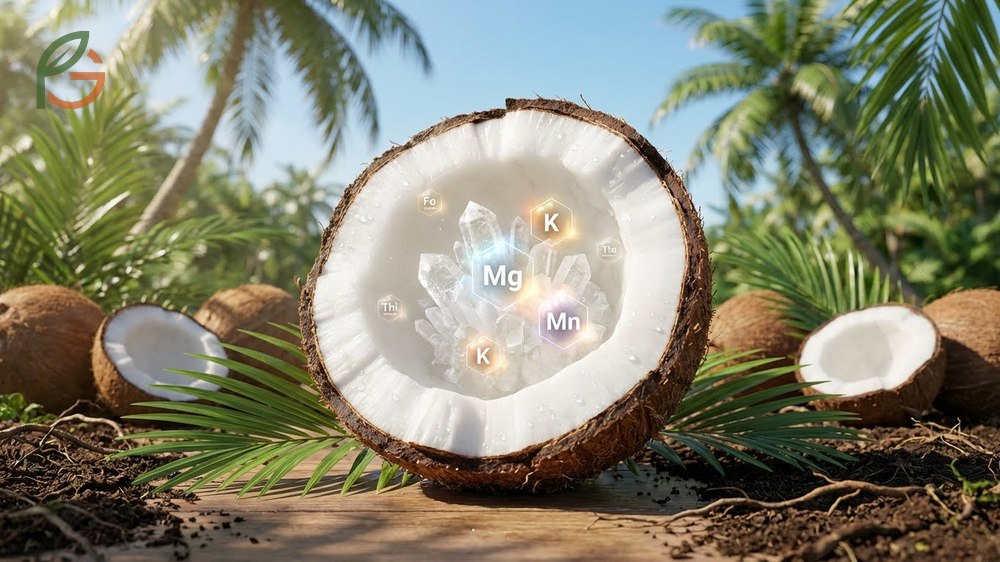
Coconut meat stands out for its exceptional mineral content rather than vitamins. While it provides modest amounts of B vitamins like folate and thiamin, the mineral profile truly impresses with concentrations that rival or exceed those found in many vegetables and grains.
Agricultural data shows these minerals play crucial roles in metabolic processes, from energy production to bone formation. For gardeners and farmers growing coconut palms, understanding these nutritional benefits adds value beyond commercial considerations.
Manganese and Copper Content
A single 100-gram serving of coconut delivers 1.5 milligrams of manganese—approximately 65% of the daily value[1]. Manganese supports enzyme function throughout your body, particularly those involved in fat metabolism, bone development, and antioxidant defense. This trace mineral also plays essential roles in wound healing and carbohydrate processing.
Copper content reaches 0.44 milligrams per 100 grams, contributing approximately 49% of the Daily Value (DV)[2]. This mineral works synergistically with iron to form red blood cells and maintains healthy bones, blood vessels, nerves, and immune function.
Iron and Zinc in Coconut
Iron deficiency remains a common global health concern, and coconut meat offers a helpful plant-based source. A 100-gram serving provides 2.43 mg of iron, representing about 14% of the daily requirement. While this is non-heme iron (which is less easily absorbed than animal-based iron), the presence of Vitamin C in raw coconut helps enhance absorption rates.
Zinc, essential for immune health and wound healing, is present at 1.1 mg per serving (10% DV). This mineral profile makes coconut a valuable addition to vegetarian and vegan diets where obtaining adequate trace minerals can sometimes be challenging.
Fat Content and Cholesterol Impact
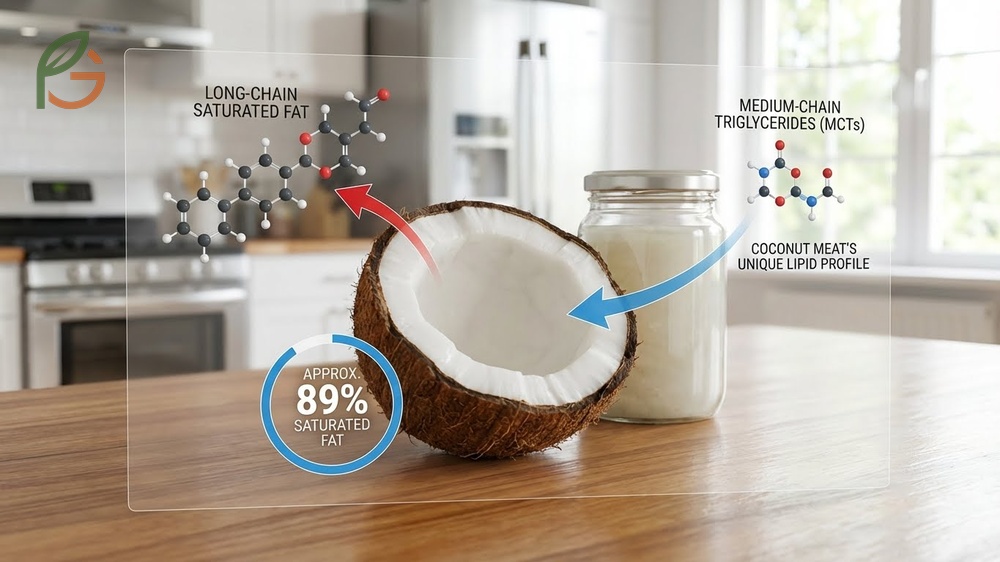
The high calorie count in coconut flesh stems directly from its fat content. However, not all fats behave the same way in the human body. Understanding the specific lipid profile of coconut meat is essential for making informed dietary choices.
Saturated Fat Composition
Approximately 89% of the fat in coconut meat is saturated. Unlike the long-chain saturated fats found in red meat and cheese, coconut fat consists largely of medium-chain triglycerides (MCTs), particularly lauric acid. Lauric acid makes up about 47% of the total fat content and possesses antimicrobial and antiviral properties.
MCTs are absorbed directly from the small intestine and transported to the liver, where they are rapidly oxidized for energy rather than being stored as fat. This metabolic pathway suggests that calories from coconut may be less likely to contribute to obesity than calories from other fat sources when consumed in moderation.
Is Coconut Bad for Cholesterol
The impact of coconut meat on cholesterol is nuanced. Studies indicate that while coconut fat can raise LDL (often called “bad”) cholesterol, it is particularly effective at raising HDL (“good”) cholesterol. The resulting ratio of Total Cholesterol to HDL—a key marker for heart disease risk—often improves or remains neutral. However, major health organizations still recommend limiting saturated fat intake to less than 10% of total daily calories.
Coconut Meat Glycemic Index
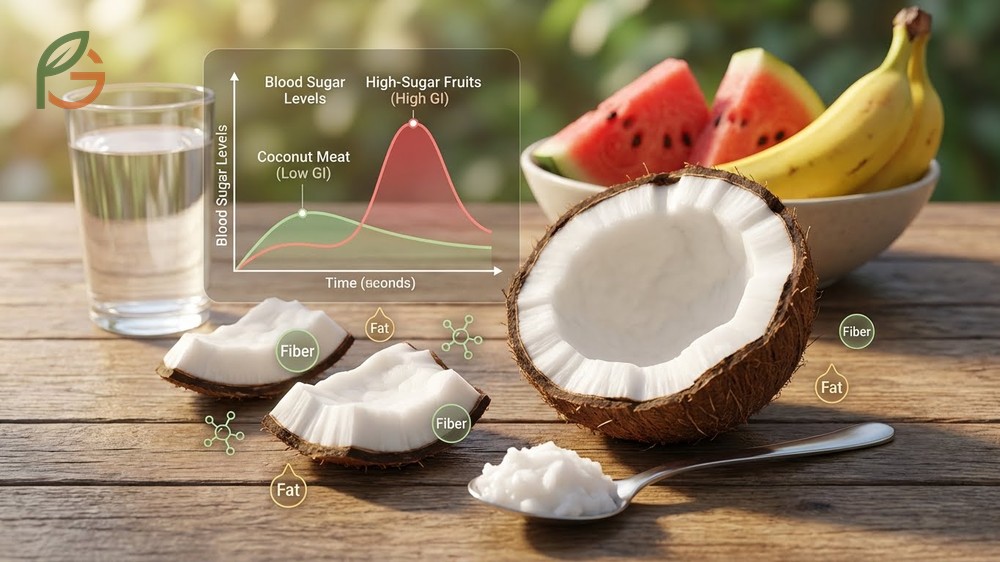
Despite its sweet flavor, fresh coconut meat has a low Glycemic Index (GI), typically estimated around 45. The high fiber and fat content slows down the digestion of carbohydrates, preventing rapid spikes in blood sugar levels. This makes coconut flesh a safer fruit option for individuals with diabetes or insulin resistance compared to high-sugar fruits like watermelon or ripe bananas.
Calories in Coconut Water vs Meat
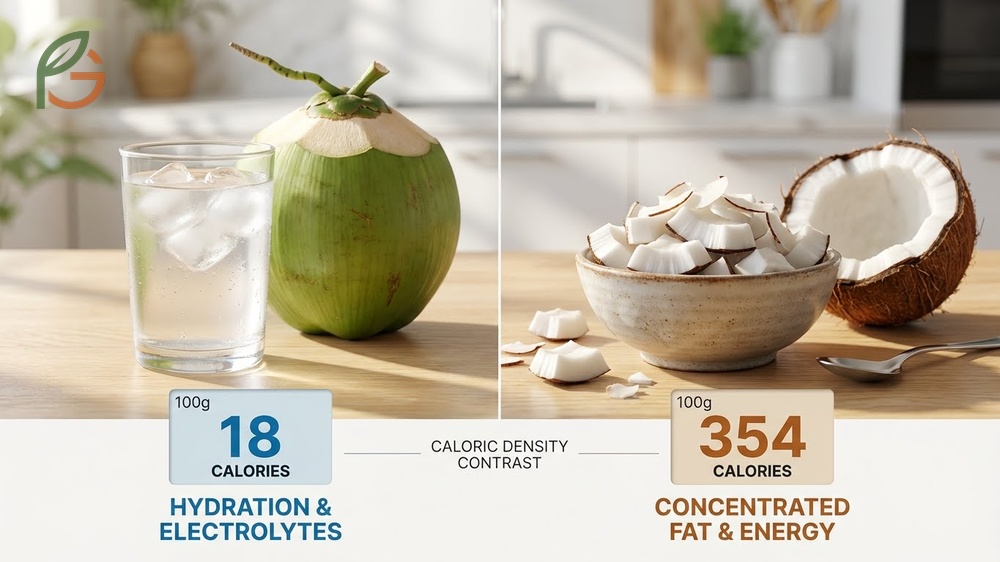
There is a stark contrast between the caloric density of coconut water and coconut meat. While the meat is calorie-dense (354 calories/100g), coconut water is exceptionally light, containing only about 18 calories per 100 grams. This difference occurs because the fat is concentrated entirely in the flesh, while the water consists mostly of hydration, electrolytes, and simple sugars. Confusing the two can lead to significant miscalculations in daily calorie tracking.
Conclusion
Calories in coconut flesh are substantial, at 354 per 100 grams, but they come packaged with high-quality fiber, essential minerals like manganese and copper, and unique healthy fats. While it is an energy-dense food that requires portion control, its nutritional benefits make it a worthy addition to a balanced diet. Whether you are a gardener harvesting your own palms or a health-conscious consumer, treating coconut meat as a nutrient-rich garnish or snack rather than a main course ensures you gain its health advantages without exceeding your caloric needs.
Medical Disclaimer
The content provided in this article is for informational purposes only and is not intended as medical advice, diagnosis, or treatment. Always seek the advice of your physician or other qualified health provider with any questions you may have regarding a medical condition or dietary changes.
Frequently Asked Questions
1. How many calories are in 1 cup of shredded coconut?
One cup (80 grams) of fresh, shredded coconut meat contains approximately 283 calories. If the coconut is dried and sweetened, the calorie count can jump to over 450 calories per cup due to the added sugar and reduced moisture content.
2. Is coconut flesh good for weight loss?
Despite being high in calories, coconut flesh can support weight loss when eaten in moderation. The high fiber content promotes fullness, and the medium-chain triglycerides (MCTs) may slightly increase the number of calories your body burns compared to other fats.
3. Is coconut meat keto-friendly?
Yes, coconut meat is excellent for the ketogenic diet. It is high in healthy fats and low in net carbohydrates (total carbs minus fiber). A 100g serving contains only about 6g of net carbs, making it a staple for low-carb eating plans.
4. Does coconut meat raise cholesterol?
Coconut meat contains saturated fats that can raise both LDL (bad) and HDL (good) cholesterol. However, because it raises HDL significantly, it may not negatively impact overall heart health markers as much as other saturated fats, though moderation is still advised.
5. What is the difference between young and mature coconut calories?
Young coconut meat (often called jelly) is softer, contains more water, and has fewer calories and less fat than the hard, thick meat of a mature coconut. Mature coconut flesh is much denser in both energy and nutrients.
6. Can diabetics eat coconut flesh?
Yes, generally. Coconut flesh has a low glycemic index and contains fiber and fat that help stabilize blood sugar. However, diabetics should monitor portion sizes and avoid sweetened dried coconut products.
7. How much protein is in a whole coconut?
A medium-sized whole coconut (containing about 397g of meat) provides approximately 13 grams of protein. While not a primary protein source like beans or meat, it contributes meaningfully to daily intake.