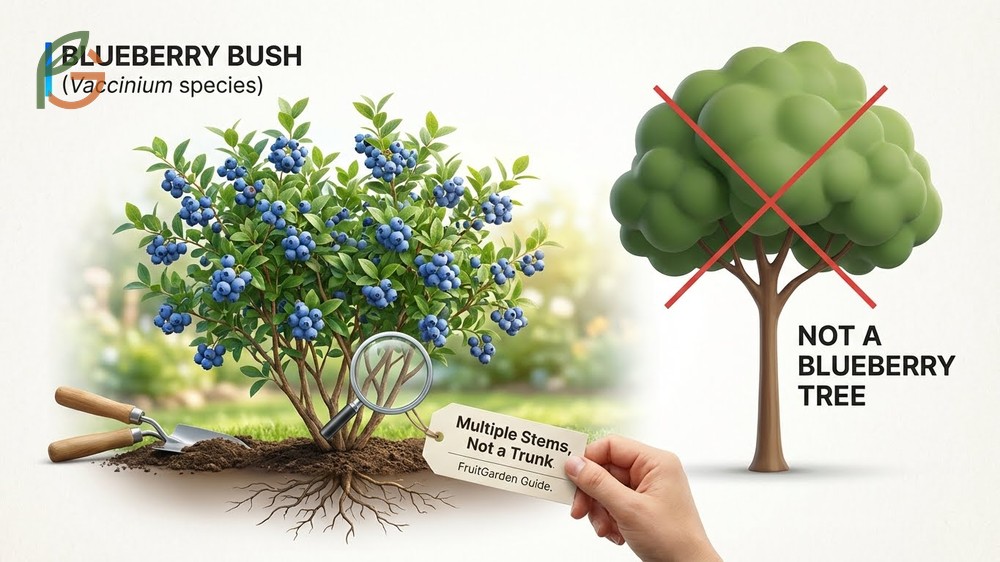
Blueberry tree or bush? True blueberries (Vaccinium species) are shrubs, not trees—they grow with multiple woody stems from the ground rather than a single trunk[1][2]. Research shows that understanding this distinction helps gardeners select the right variety and plan proper spacing for their landscapes. FruitGarden provides science-based guidance to help you identify blueberry varieties and understand their growth patterns.
Quick Answer
- True blueberries are shrubs with multiple stems, not trees[1]
- Highbush varieties reach 6-12 feet tall, while lowbush types stay under 2 feet[3]
- Japanese “blueberry tree” (Elaeocarpus decipiens) is an actual tree growing 20-35 feet with a single trunk[4]
- Blueberry shrubs have shallow roots concentrated in the top 12-18 inches of soil[5]
Blueberry Tree or Bush
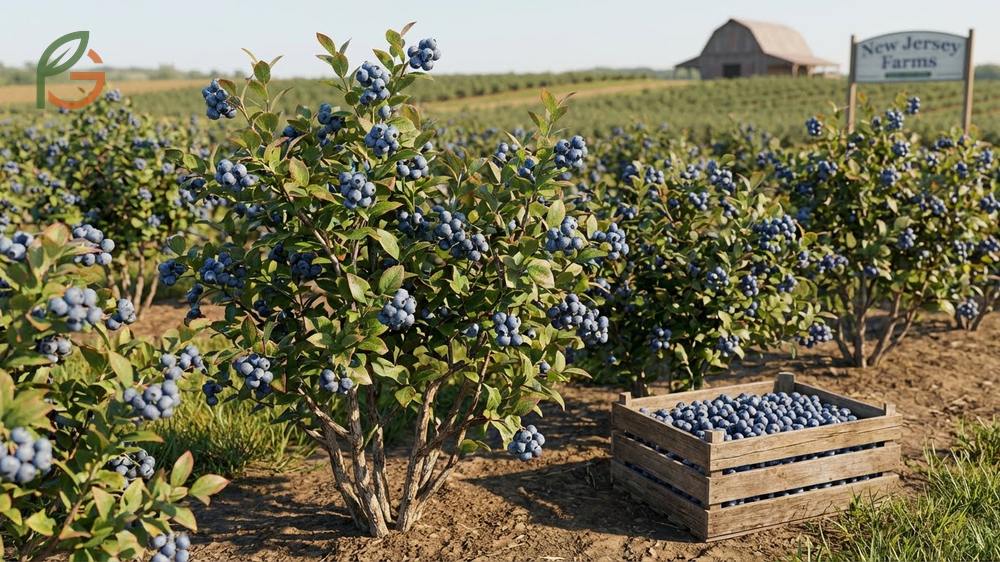
Blueberries belong to the genus Vaccinium in the heath family (Ericaceae) and are botanically classified as shrubs[6]. They’re grown commercially across the United States, particularly in New Jersey, Michigan, North Carolina, and Washington. The confusion about whether they’re trees or bushes often stems from their varying heights and the common name “Japanese blueberry tree,” which isn’t actually a true blueberry at all.
Studies demonstrate that blueberry plants produce fruit on woody stems that emerge from a crown at the soil surface. Unlike trees that develop a single dominant trunk early in their growth, blueberries maintain multiple stems throughout their lifespan. This growth pattern makes them ideal for hedgerows and container gardening since you can control their shape through selective pruning.
Difference Between Tree and Bush
Trees are woody perennial plants with a single central stem (trunk) that’s generally more than 12 feet in height with a distinct crown[7]. Shrubs, in contrast, produce multiple stems from near the soil line and typically grow less than 12 feet tall. This distinction isn’t always perfect since some shrubs can reach 20 feet or more, but the multi-stem characteristic remains the defining feature.
The structural difference affects how plants allocate resources. Shrubs benefit from having more total stem area for photosynthesis under the bark and a larger cambium zone for sprouting new growth. This explains why blueberries can regenerate vigorously from the base when older canes are pruned out.
Blueberry Plant Structure
Blueberry shrubs are upright, deciduous, woody perennials that form multi-stemmed bushes with crown-forming growth habits[1]. The crown is the area where stems emerge from the rootstock, typically forming a circle 12 to 18 inches in diameter at maturity. Mature canes can reach up to two inches in diameter and develop into the primary fruiting wood.
Each blueberry variety produces flowers in clusters of 8-10 blooms that are urn-shaped, white, and 6-12 mm long. After pollination, berries develop over several weeks, changing from green to pink (in rabbiteye varieties) and finally to blue-black when fully ripe. The flowering and fruiting occur on one-year-old wood, which is why annual pruning is essential for maintaining consistent harvests.
From My Experience: My cousin in Guadalajara, Mexico planted ‘Bluecrop’ highbush blueberries in March 2023. By year two, the plants reached 4.5 feet versus the typical 3-4 foot range for that age, achieving strong multi-stem structure with proper acidic soil amendments.
What Does a Blueberry Bush Look Like
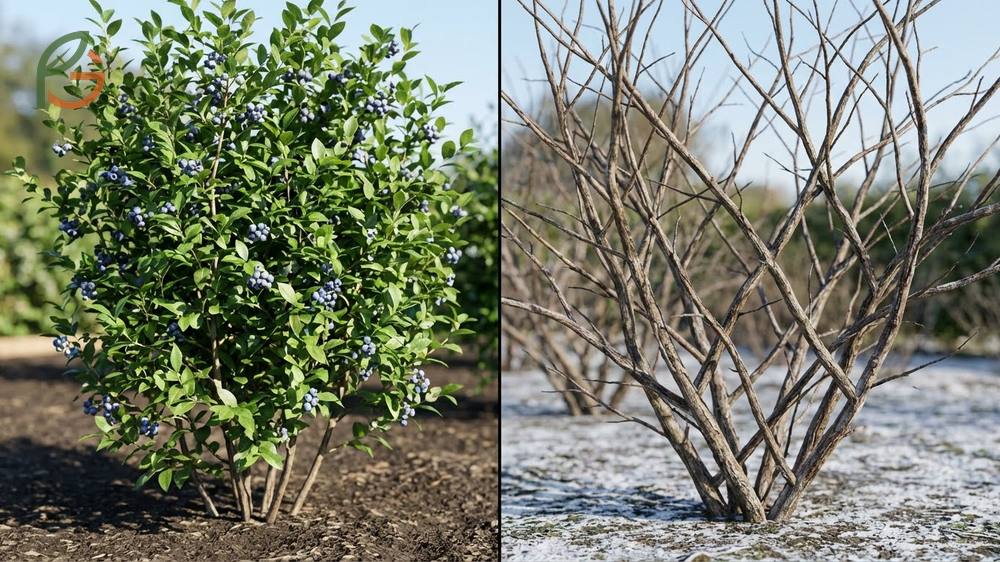
Blueberry bushes display distinctive features that make identification straightforward once you know what to look for. The plants have an upright, rounded growth habit with multiple woody stems that become increasingly branched as they mature. During the growing season, they’re covered in elliptical leaves that create a dense canopy, while winter reveals their structural framework of crisscrossing branches.
Seasonal changes dramatically alter the plant’s appearance. Spring brings clusters of bell-shaped white flowers hanging beneath the branches, followed by green berries that gradually ripen to deep blue. Fall transforms the foliage into brilliant shades of red, orange, and burgundy before the leaves drop, revealing smooth brown to reddish bark on the stems.
Identifying Blueberry Leaves
Blueberry leaves are simple (not divided into leaflets), elliptical in shape, and arranged alternately along the stems. They’re typically 1 to 2 inches long with smooth or finely serrated edges and a glossy surface that reflects light. The leaves grow on short petioles (leaf stalks) and feature a prominent central vein with pinnate secondary veins branching toward the margins.
The leaf color provides important identification clues throughout the season. New spring growth emerges bronze or reddish before maturing to dark green. As autumn approaches, older leaves turn vibrant red while newer leaves may remain green, creating a multi-colored display. This fall coloration can persist well into winter before the leaves finally drop.
- Simple elliptical shape, 1-2 inches long, widest near the middle
- Glossy upper surface with smooth to finely serrated margins
- Alternate arrangement along stems (not opposite or whorled)
- Bronze new growth maturing to dark green in summer
- Brilliant red, orange, or burgundy fall coloration
- Prominent central vein with pinnate secondary veins
Blueberry Plant Growth Stages
Young blueberry plants spend their first two years establishing root systems and vegetative growth. During this period, they typically reach 1-2 feet in height with 3-5 primary canes emerging from the crown. Commercial growers often remove flowers during these early years to redirect energy into plant development rather than fruit production.
Years three through five mark the transition to productive maturity. Plants reach 50-75% of their ultimate height and begin bearing significant crops. By year six, most varieties achieve full size and maximum productivity, which can continue for 20-30 years with proper care. The plant continuously produces new canes from the crown while older canes (typically over 6-7 years old) decline in vigor and productivity.
How Tall Do Blueberry Bushes Get
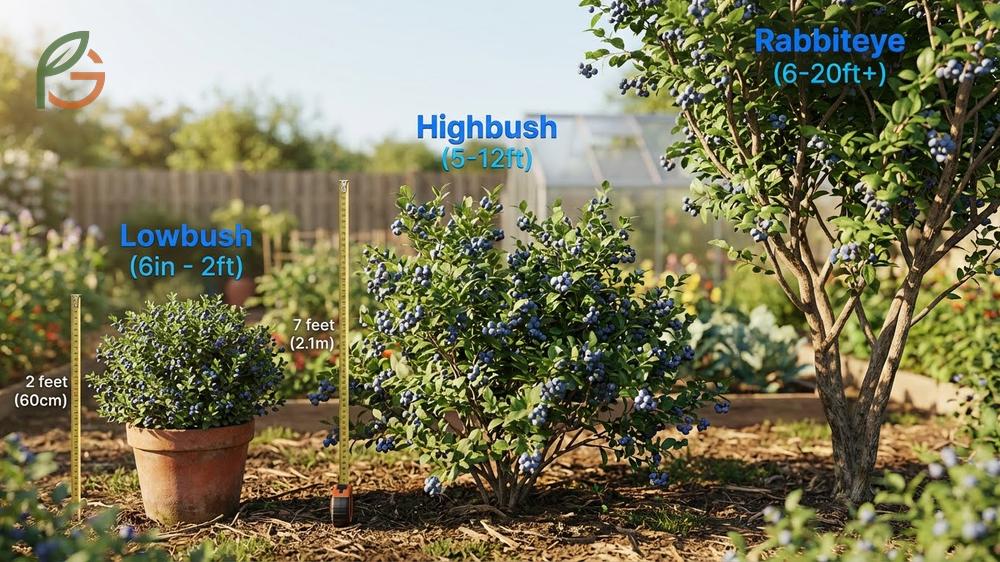
Blueberry height varies dramatically based on the variety you choose. Lowbush types might only reach 6 inches to 2 feet tall, making them perfect for ground covers and containers[3]. Highbush blueberries grow 5-9 feet tall in most gardens, though northern varieties can reach 6-12 feet when left unpruned. Rabbiteye blueberries are the tallest, reaching 6-15 feet and potentially exceeding 20 feet if never pruned.
Current research indicates that environmental factors significantly impact final height. Plants in raised beds with proper drainage often grow 15-20% taller than those in flat beds. Soil pH also matters—blueberries need acidic conditions between 4.5-5.5 to thrive, and plants struggling in alkaline soils rarely reach their full potential height.
Important Note: If you’re planting near structures or walkways, choose compact varieties or plan for annual pruning. Rabbiteye varieties can quickly outgrow small spaces and require aggressive pruning to maintain manageable heights.
Standard vs Dwarf Blueberry Size
Standard blueberry varieties include northern highbush (6-12 feet), southern highbush (2-4 feet), and rabbiteye (6-15 feet) types. These are the commercial varieties you’ll find in most garden centers, bred for fruit production and adaptability to different climate zones. They require adequate spacing of 4-6 feet between plants to prevent crowding as they mature.
Dwarf varieties encompass lowbush blueberries (6 inches to 2 feet) and hybrid half-high cultivars (3-6 feet). Half-high varieties are crosses between highbush and lowbush types, combining cold hardiness with moderate size. They’re ideal for smaller gardens, containers, and areas where you want to maintain sight lines across your landscape.
This table compares mature height ranges, spread dimensions, and recommended spacing for four main blueberry variety types from lowbush to rabbiteye
| Variety Type | Mature Height | Mature Spread | Recommended Spacing |
|---|---|---|---|
| Lowbush | 6 inches – 2 feet[3] | 1.5 – 3 feet | 2 – 3 feet |
| Half-High Hybrid | 3 – 6 feet[3] | 3 – 5 feet | 3 – 4 feet |
| Highbush | 5 – 12 feet[1] | 5 – 9 feet | 4 – 6 feet |
| Rabbiteye | 6 – 15 feet[3] | 6 – 10 feet | 5 – 6 feet |
Root Depth of Blueberry Bushes
Blueberry roots are relatively shallow compared to other fruit crops, with most concentrated in the top 12-18 inches of soil[5]. The finest absorbing roots measure only 20-75 micrometers in diameter—about the width of a human hair. This shallow root system makes blueberries sensitive to drought stress and explains why consistent moisture is critical for healthy growth.
Root distribution patterns change based on growing conditions. In sandy soils, roots penetrate deeper than in clay or silt loam. Plants in raised beds typically develop deeper root systems than those in flat beds, especially when grown with organic mulches like sawdust or pine bark. A flush of new root growth occurs immediately after harvest, making late summer an important time for maintaining soil moisture and fertility.
Japanese Blueberry Tree Pros and Cons
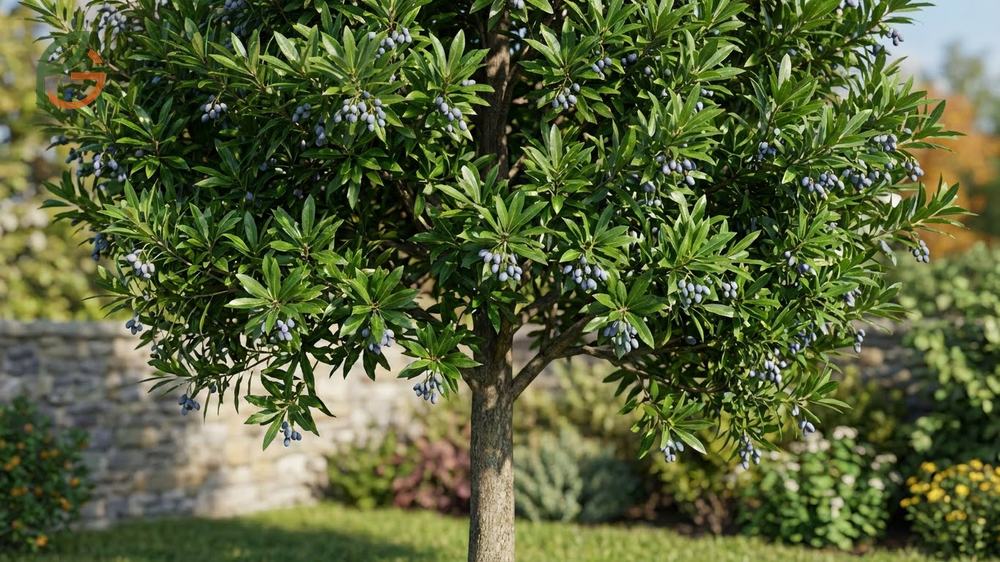
The Japanese blueberry tree (Elaeocarpus decipiens) is an evergreen tree native to temperate East Asia that grows 20-35 feet tall with a single trunk[4]. Despite its common name, it’s not related to true blueberries and doesn’t produce edible fruit. The name comes from its small oblong bluish-purple drupes that appear in fall, which resemble blueberries but aren’t suitable for eating.
This tree offers several advantages for landscaping. It’s an excellent privacy screen or hedge plant with dense, glossy evergreen foliage that provides year-round interest. The bronze new growth matures to dark green, and older leaves turn orange-red before dropping, creating attractive color variation throughout the year. Fragrant white to cream flowers bloom in late spring, though they’re often hidden beneath the canopy.
- Dense evergreen foliage provides excellent privacy screening
- Tolerates various soil types and moderate drought once established
- Fragrant spring flowers attract pollinators
- Attractive bronze new growth and fall color on older leaves
- Grows well in USDA zones 8-11, ideal for southern landscapes
However, Japanese blueberry trees come with significant drawbacks. They’re susceptible to leaf rust caused by the fungus Naohidemyces vaccinii, which spreads rapidly in warm, humid conditions. Chlorosis (yellowing leaves) commonly occurs in alkaline soils. The trees also attract aphids and scale insects that produce honeydew, leading to sooty mold growth that creates black patches on leaves.
Maintenance requirements can be demanding. You’ll need to prune carefully, limiting major cuts to late February through mid-March to avoid pest and disease issues during warm weather. The tree drops leaves continuously, creating ongoing litter that may bother some gardeners. If you’re looking for an actual blueberry harvest, this tree won’t provide it—stick with true Vaccinium shrubs for fruit production.
Watch Out: Don’t plant Japanese blueberry trees expecting to harvest fruit. If you want edible blueberries, choose Vaccinium varieties like ‘Bluecrop’, ‘Duke’, or ‘Tifblue’ instead.
Pruning Blueberries Into Tree Form
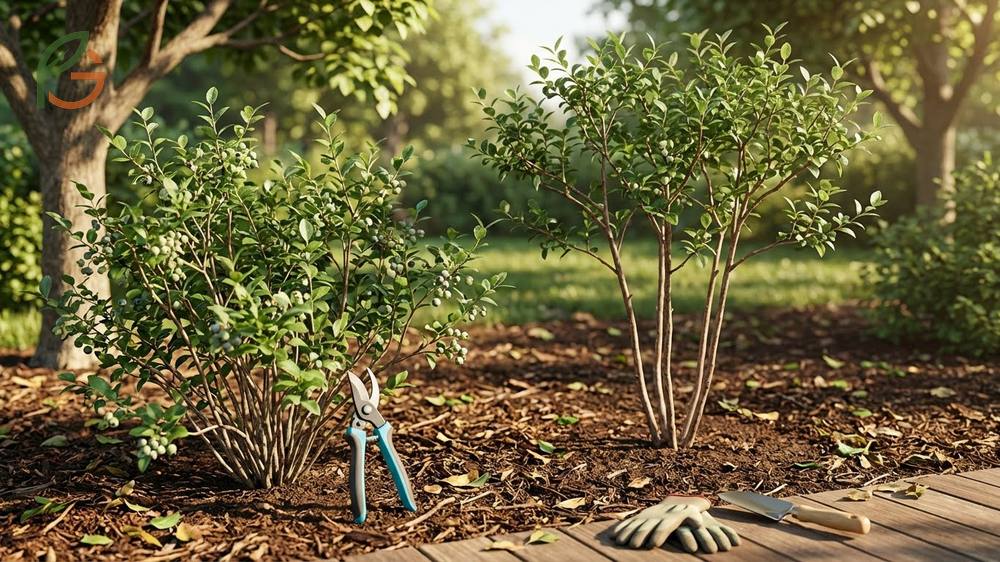
While blueberries naturally grow as multi-stemmed shrubs, you can train them into a more tree-like form through selective pruning. This technique works best with taller varieties like northern highbush and rabbiteye types. Start by selecting 3-5 of the strongest, most upright canes as your main “trunks” and removing all other shoots that emerge from the ground.
Annual dormant-season pruning maintains the tree form over time. Remove all new shoots from the crown that aren’t part of your selected main stems. “Head back” the tops of the main canes at your desired height, typically 6-8 feet for easier harvesting. Remove low-angled branches and any canes that cross through the center of the plant. This creates an open vase shape that improves air circulation and light penetration.
Most people find that tree-form blueberries look more formal in landscapes but require more consistent pruning attention than traditional bush forms. You’ll need to remove ground-level shoots several times during the growing season since blueberries naturally want to produce new canes from the crown. The payoff is easier harvesting at chest height and better integration into ornamental borders where you want a more structured appearance.
My friend in Oaxaca, Mexico trained three ‘Tifblue’ rabbiteye blueberries into tree form starting in 2022. By limiting each plant to four main canes and removing suckers monthly during the growing season, he created 7-foot specimens that produce well while fitting beautifully into his formal garden design.
Conclusion
The evidence is clear: blueberry tree or bush isn’t really a debate since true blueberries are definitively shrubs with multiple stems emerging from a crown at soil level. They can’t properly be called trees regardless of their height. Whether you choose compact lowbush varieties at 6 inches or towering rabbiteye types reaching 15 feet, you’re growing a shrub that’ll reward you with delicious fruit for decades.
Current guidance emphasizes matching variety selection to your climate zone, space availability, and harvest goals. Northern gardeners typically succeed with lowbush and half-high varieties, while southern growers get excellent results from rabbiteye and southern highbush types. Remember that Japanese “blueberry trees” aren’t edible-fruit producers—they’re ornamental Elaeocarpus trees that just happen to have blue fruit. For edible harvests, stick with true Vaccinium varieties and you’ll enjoy fresh blueberries straight from your garden.
Frequently Asked Questions
Do blueberries grow on trees?
No, blueberries grow on shrubs, not trees. True blueberries (Vaccinium species) produce multiple woody stems from ground level rather than a single trunk. Even the tallest varieties like rabbiteye blueberries that can reach 15-20 feet are still classified as shrubs due to their multi-stem growth habit.
What’s the difference between a blueberry bush and Japanese blueberry tree?
Blueberry bushes (Vaccinium) produce edible fruit, grow 6 inches to 15 feet tall as multi-stemmed shrubs, and thrive in acidic soils. Japanese blueberry trees (Elaeocarpus decipiens) are evergreen ornamental trees with inedible fruit that grow 20-35 feet tall with a single trunk. Despite the similar name, they’re completely different plants from different plant families.
How big do full-grown blueberry bushes get?
Full-grown blueberry size depends on variety. Lowbush types reach 6 inches to 2 feet, half-high hybrids grow 3-6 feet, highbush varieties reach 5-12 feet, and rabbiteye blueberries can grow 6-15 feet or taller if unpruned. Most varieties also spread approximately as wide as they are tall when given proper spacing.
Can you prune blueberry bushes to look like small trees?
Yes, you can train blueberries into a tree form by selecting 3-5 main upright canes and removing all other stems at ground level. This requires annual dormant-season pruning plus regular removal of new shoots during the growing season. Tree-form blueberries work best with tall varieties like northern highbush or rabbiteye types.
How deep do blueberry roots go?
Blueberry roots are shallow, with most concentrated in the top 12-18 inches of soil. The finest absorbing roots are only 20-75 micrometers in diameter. This shallow root system makes blueberries sensitive to drought and competition from weeds, so consistent moisture and good mulch coverage are essential for healthy growth.
What do blueberry leaves look like for identification?
Blueberry leaves are simple, elliptical (oval-shaped), 1-2 inches long, and arranged alternately along stems. They have a glossy upper surface with smooth or finely serrated edges. New leaves emerge bronze in spring, mature to dark green in summer, and turn brilliant red-orange in fall before dropping in winter.
Which blueberry variety grows fastest?
Rabbiteye blueberry varieties generally grow fastest, potentially adding 2-3 feet per year in ideal conditions and reaching 10-15 feet within 5-7 years. Highbush varieties grow more slowly, typically adding 12-18 inches annually. Growth rate depends heavily on soil conditions, climate, water availability, and whether plants receive adequate acidic pH and nutrients.