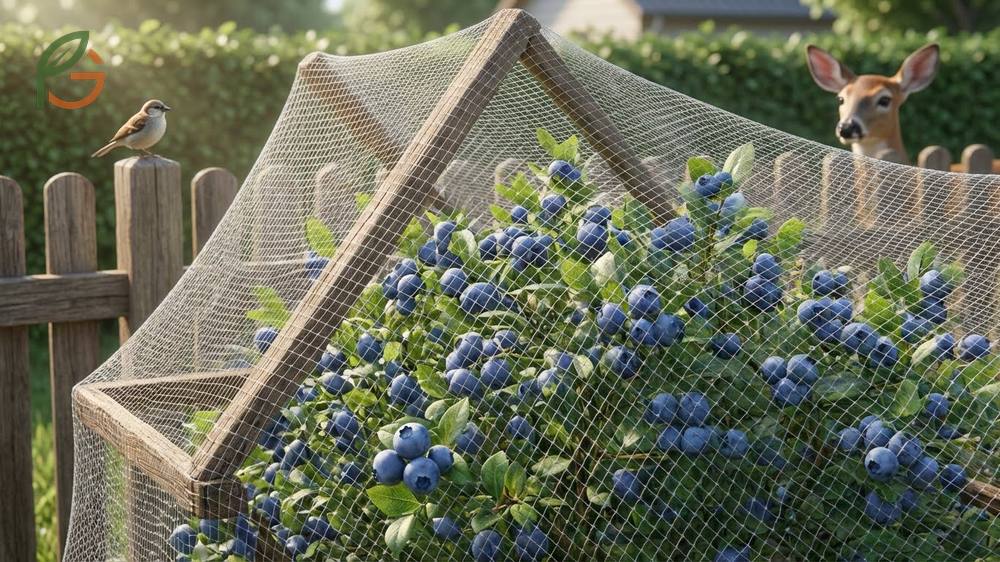
Bird netting for blueberries is the most effective protection method, reducing crop loss by up to 75% when properly installed[1]. Research shows that birds destroy more than 30% of unprotected berry crops annually, while deer can eliminate entire bushes by eating tender foliage and buds[2]. FruitGarden synthesizes current agricultural research and proven field-tested methods to help you safeguard your blueberry harvest using both netting barriers and complementary deterrents.
Quick Answer
- Use netting with 1/2 inch or smaller mesh[3] to block birds while allowing pollinator access
- Install netting when berries first change color, before full ripening begins[4]
- Build deer fencing at least 7.5-8 feet tall[5] to prevent jumping
- Combine reflective tape with netting for 50-75% additional protection[6] against persistent birds
Bird Netting for Blueberries
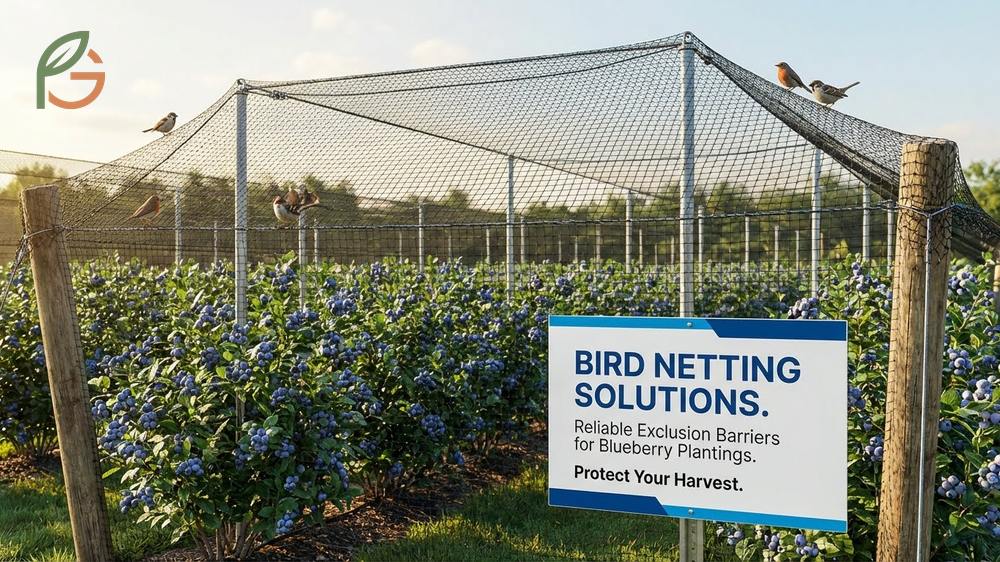
Research demonstrates that exclusion barriers using protective netting provide the most reliable defense against bird damage in blueberry plantings[1]. Studies across commercial and home gardens show that properly installed netting systems eliminate nearly all bird-related losses. The key lies in selecting appropriate materials and creating a structural framework that keeps netting elevated above plants.
Netting works by creating a physical barrier that birds can’t penetrate while maintaining airflow and light transmission for healthy plant growth. Unlike temporary deterrents that birds quickly adapt to, a well-designed netting system provides season-long protection. Most gardeners find the initial installation effort pays off through significantly higher yields at harvest time.
Current agricultural guidance emphasizes using multiple protection strategies rather than relying on a single method. While netting forms your primary defense, combining it with visual deterrents like reflective tape creates layered protection that addresses different bird behaviors and persistence levels.
From My Experience: My cousin near Guadalajara, Mexico tried protecting her six blueberry bushes with basic drape netting in May 2024. Birds pecked through within three days, taking 40% of ripening berries. She rebuilt with an elevated PVC frame in June—zero losses for the rest of the season.
Choosing the Right Mesh Size
Agricultural extension research indicates that mesh openings of 1/2 inch or smaller effectively block most berry-eating bird species while still allowing bees and other pollinators access during flowering[3]. Standard commercial bird netting typically comes in 3/4 inch mesh, which works for larger birds like crows and jays but may not stop smaller species such as house finches or cedar waxwings.
The trade-off with finer mesh involves increased material cost and slightly reduced airflow. However, for most home gardeners, the extra protection justifies the marginal price difference. Very fine mesh under 1/4 inch can interfere with pollination if applied too early, so timing your installation after berry set becomes critical.
Types of Netting Systems
You’ll encounter three main installation approaches depending on your garden size and budget. Drape systems simply lay netting over bushes and secure edges with stakes or weights—this works for small plantings but allows birds to peck through the material. Supported tunnel systems use wire hoops or PVC arches to elevate netting 12-18 inches above plants, providing better protection and easier berry access.
Permanent cage structures with rigid frames offer the most comprehensive protection for established blueberry patches. These require upfront construction time but last multiple seasons and make harvest tasks significantly easier. Data from commercial growers shows that supported systems reduce labor time by 30% compared to re-draping loose netting each year.
- Prevents bird contact with berries through the mesh
- Allows standing or kneeling for comfortable picking
- Reduces branch breakage from weighted netting
- Enables quick removal for maintenance tasks
- Provides multi-season durability when properly maintained
- Facilitates air circulation that reduces fungal disease risk
Important Installation Note: Never lay netting directly on blueberry branches. This creates perching spots where birds can peck through to reach berries, defeating your protection effort. Always maintain at least 6-8 inches of clearance between netting and the outermost foliage.
Do Birds Eat Blueberries
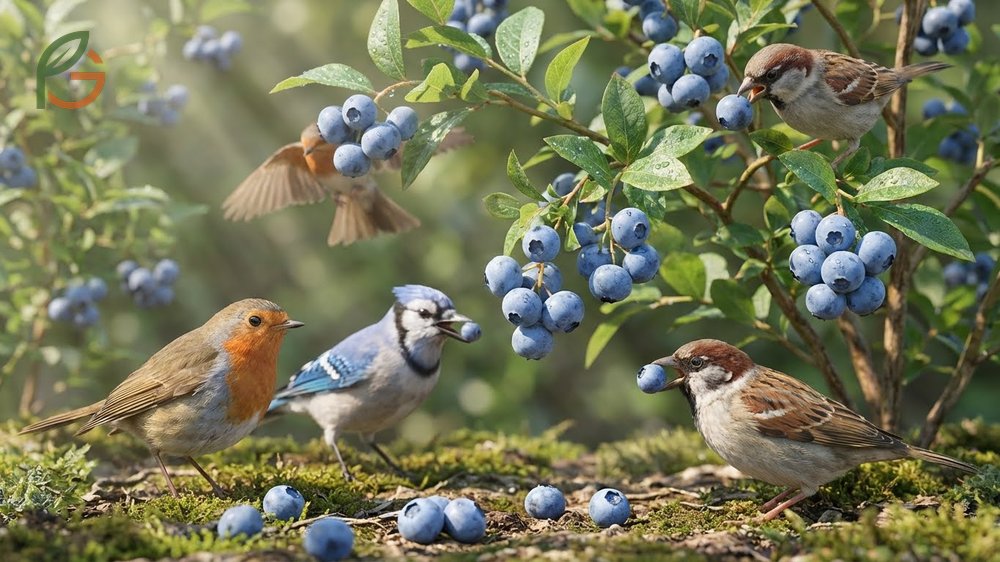
Birds consume blueberries with remarkable efficiency, often stripping entire bushes within days once berries reach peak ripeness. Field studies document that unprotected blueberry plantings lose 30-50% of their total yield to bird feeding, with losses reaching 70% in areas with high bird populations[2]. This damage represents both direct fruit consumption and berries knocked to the ground during feeding.
The high sugar content and bright blue coloration make ripe blueberries highly visible and attractive to numerous bird species. Birds quickly learn when berries reach eating stage and return repeatedly once they identify a productive food source. Some species like robins and cedar waxwings feed in flocks, causing concentrated damage in short periods.
Most bird activity occurs during early morning and late afternoon hours when light conditions help them spot ripe fruit. Understanding these feeding patterns helps you optimize protection strategies and recognize when you need enhanced deterrents beyond basic methods.
Bird Species That Target Blueberries
American robins rank as the most persistent blueberry consumers across most of North America, followed closely by cedar waxwings, blue jays, and various thrush species. Smaller birds including house finches, chickadees, and song sparrows also feed on berries but typically cause less total damage due to their size. Starlings and grackles present problems in suburban areas where they gather in large groups.
Each species exhibits different feeding behaviors that influence protection strategies. Robins boldly approach bushes and can hover briefly to pluck berries, while jays tend to land on branches and systematically work through clusters. Recognizing which birds frequent your area helps you predict damage patterns and adjust defenses accordingly.
Damage Patterns and Timing
Birds begin showing interest in blueberries when fruits transition from green to pink or light blue, well before full ripening. Early sampling by birds signals that you need to install protective netting within the next 3-5 days. Damage typically starts with the most exposed berries on south-facing branches where sunlight accelerates ripening.
Once birds establish a feeding pattern, they return daily and bring additional birds through behavioral communication. This escalation explains why a few missing berries one morning can turn into wholesale stripping by the following week. Acting quickly when you first notice bird activity prevents this progression from overwhelming your defenses.
- Berries showing color change from green to pink or blue
- Bird droppings appearing on ground beneath bushes
- Individual berries missing from otherwise full clusters
- Birds perching on or near blueberry plants during morning hours
- Pecked or partially eaten berries visible on branches
Will Deer Eat Blueberry Plants
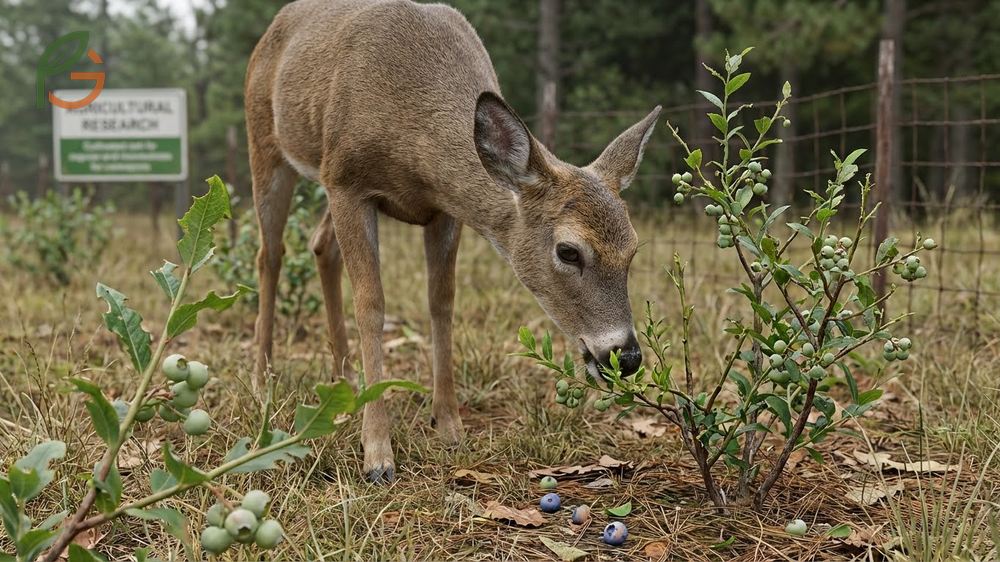
Deer readily consume blueberry plants, targeting tender leaves, new shoots, flower buds, and ripe berries depending on seasonal availability. Agricultural extension research confirms that deer cause significant damage to both wild and cultivated blueberries, particularly in regions where natural browse becomes limited during winter months[7]. Unlike bird damage that affects only fruit, deer can destroy entire plants by consuming foliage essential for photosynthesis and next year’s growth.
Young blueberry bushes face the greatest risk since deer can reach all branches and even pull up small plants while feeding. Newly planted bushes may suffer stunted growth or death after severe deer browsing removes most foliage. Mature bushes show more resilience but still experience reduced vigor and lower fruit production following heavy deer damage.
The challenge with deer protection differs from bird deterrence because deer possess greater strength and intelligence. They test fencing for weak points and can jump surprisingly high obstacles when motivated by hunger. Effective deer exclusion requires taller, more robust barriers than bird netting alone provides.
What Attracts Deer to Blueberries
Tender spring foliage on blueberry bushes offers high nutritional value when deer emerge from winter with depleted fat reserves. New leaf growth contains elevated protein and moisture levels compared to woody browse, making blueberries a preferred food source during April through June. The same nutrient density that makes blueberries healthy for humans appeals to deer metabolic needs.
Flower buds represent another attractant since deer consume them before berry formation begins. This pre-emptive feeding eliminates potential fruit production, causing damage that only becomes apparent weeks later when you notice reduced berry set. Ripe berries draw deer in late summer, though they cause less overall plant damage during this feeding phase.
Seasonal Vulnerability
Early spring presents the highest risk period for deer damage as blueberries push new growth ahead of many native plants. Winter browse scarcity makes your cultivated bushes particularly attractive during March through May. Installing protective fencing before spring growth emerges prevents deer from establishing feeding patterns on your plants.
Fall and winter bring secondary damage risk when deer seek any available green foliage as natural vegetation goes dormant. Blueberry leaves persist longer than many native species, maintaining their appeal into late autumn. Areas with harsh winters see increased deer pressure as animals forage more desperately for food sources.
Protection Priority: Focus deer deterrent efforts on newly planted blueberries first. Research shows that damage to small bushes creates lasting growth impacts, while mature plants can recover from moderate browsing. Protect all new plantings with fencing until they reach 4-5 feet in height.
How to Protect Blueberry Bushes from Birds
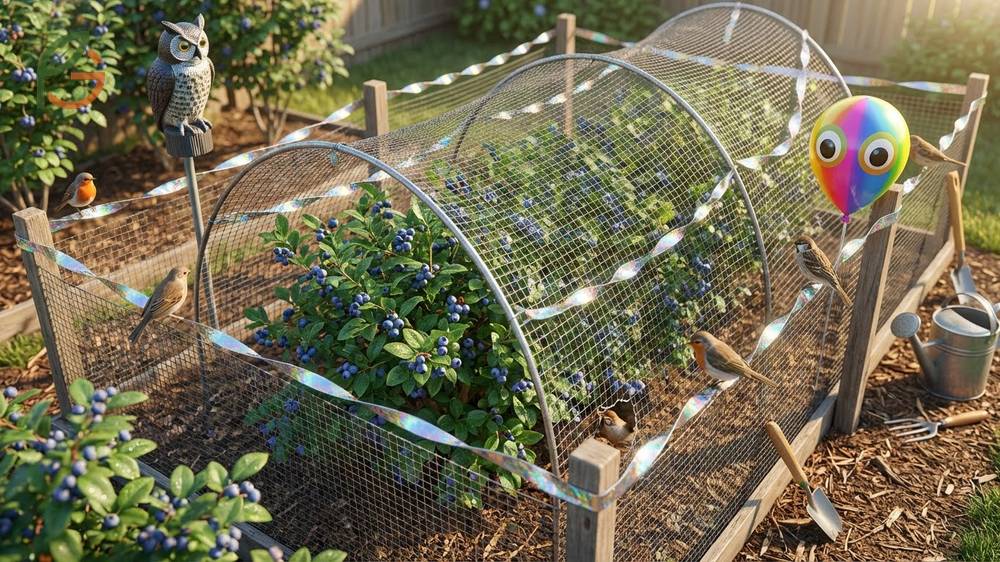
Studies demonstrate that combining multiple protection methods delivers better results than any single approach. Start with properly installed bird netting as your foundation, then add complementary deterrents like reflective tape or visual scare devices to address birds that probe for weaknesses in your system[6]. This layered strategy accounts for varying bird intelligence and persistence levels.
Successful protection requires action before birds establish feeding routines on your bushes. Once birds recognize your blueberries as a reliable food source, they return persistently and adapt to deterrents more quickly. Installing defenses when berries first show color changes gives you the best chance of preventing crop loss without constant intervention.
The effectiveness of your chosen methods depends heavily on proper execution. Loosely draped netting with gaps invites birds to find entry points, while reflective tape hung in stationary patterns loses deterrent value within days. Following proven installation techniques from agricultural research ensures your time investment produces actual protection.
Installation Best Practices
Begin by constructing a support framework using either metal conduit, wooden stakes, or PVC pipe that elevates netting 12-18 inches above your tallest blueberry branches. This clearance prevents birds from perching on the netting and pecking through to reach berries. Secure the framework firmly since wind can dislodge lightweight structures and expose plants.
Drape your netting over the support frame and extend it completely to ground level on all sides, leaving no gaps larger than 2 inches. Use landscape staples, wooden boards, or heavy stones to secure netting edges against the soil—birds will crawl underneath even small openings. Check the entire perimeter after installation to identify and close any entry points before birds discover them.
Create a manageable access point by overlapping two netting edges secured with clips or clothespins that you can easily open for harvesting. This entry door should face away from prevailing winds to prevent it from blowing open. Remember to fully close and secure your access point after each harvest session.
- Install support structure before draping netting to avoid damaging branches
- Secure netting to ground on all sides with no gaps or loose areas
- Inspect entire perimeter after installation to identify entry points
- Position access door away from wind direction to prevent accidental opening
- Remove low-hanging branches that might poke through mesh openings
- Check netting weekly for tears or displaced anchor points during berry season
Complementary Deterrent Methods
Reflective tape provides effective supplementary protection when installed correctly. Research shows properly deployed reflective tape reduced bird damage by 50-75% in controlled studies, though effectiveness varies by bird species and local conditions[6]. Hang tape strips in a grid pattern with strands 5-10 feet apart, ensuring they twist and flutter in the breeze to create maximum light reflection.
Move reflective tape locations every 2-4 weeks to prevent birds from acclimating to static patterns. The constant movement and changing light angles keep birds uncertain about whether the area is safe. Combine reflective elements with occasional sound deterrents like wind chimes for enhanced multi-sensory disruption.
Visual scare devices including plastic owls or inflatable predator eyes show mixed results in research studies. They work best when moved frequently and paired with other methods rather than used alone. Most gardeners find that combining these visual deterrents with physical netting provides psychological backup that discourages the most persistent birds from testing your defenses.
DIY Blueberry Cage
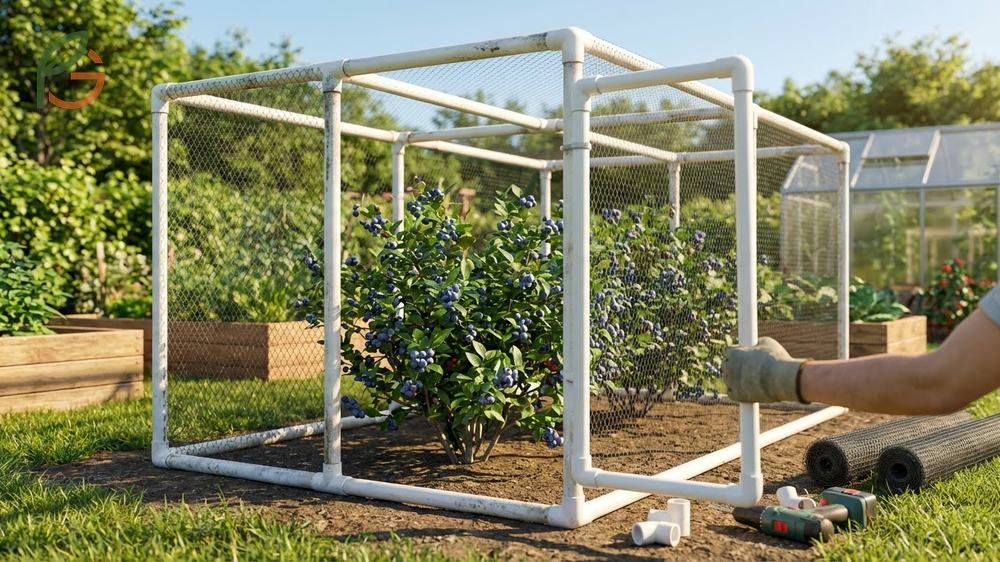
Building a custom protection cage using PVC pipe offers a cost-effective alternative to commercial systems while providing superior access and durability. Home garden documentation shows that well-constructed PVC frames last 5-8 seasons with minimal maintenance and adapt easily to expanding plantings[8]. The modular nature of PVC construction lets you start with a basic design and add sections as your blueberry patch grows.
The key advantage of a permanent cage structure lies in eliminating the annual hassle of draping and removing netting. You simply attach netting to your frame each spring and remove it after harvest, with the frame remaining in place year-round. This approach saves significant time compared to wrestling with tangled netting and damaged branches each season.
Most DIY cage designs accommodate bushes up to 6 feet tall, matching the height range of mature highbush blueberry varieties. Planning your frame dimensions around your bushes’ mature size prevents the need for reconstruction as plants grow. Add 2 feet of clearance above current bush height to allow for several years of growth.
PVC Pipe Frame Construction
Start with 3/4-inch or 1-inch diameter PVC pipe for structural elements, using the thicker option if your cage will exceed 10 feet in length. Cut vertical support posts 7-8 feet long and drive them 12-18 inches into the ground using a post driver or heavy mallet. Space posts every 4-5 feet along your blueberry row to provide adequate support for horizontal rails.
Connect posts with horizontal PVC rails using T-joints at each intersection. Create arched top supports by heating PVC pipe with a heat gun and bending it over a form, or simply use straight pipe with angled elbows to create a peaked roof shape. The arched design sheds rain and snow more effectively while providing maximum interior clearance.
Attach netting using large binder clips or zip ties at 2-foot intervals along all frame edges. Leave one side detachable by securing it with clips rather than permanent ties—this creates your entry door for harvesting and maintenance. The entire frame should feel rigid when complete, with no wobbling posts or loose connections.
Materials and Cost Breakdown
A basic cage covering a 10×15 foot blueberry patch requires approximately 150-200 feet of PVC pipe, 20-30 connector fittings, and 200-250 square feet of bird netting. Current prices place total materials cost around $80-120 depending on netting quality and PVC diameter chosen. This compares favorably to annual replacement of disposable netting at $30-50 per season.
Budget an additional $20-30 for securing hardware including clips, zip ties, and ground stakes. If you’re adding deer protection, increase your height budget to accommodate 8-foot posts and taller netting panels. The higher initial investment for a dual-purpose cage eliminates the need for separate deer fencing infrastructure.
This table compares material specifications, quantities, and estimated costs for building a blueberry protection cage covering a ten by fifteen foot area
| Material | Specifications | Quantity Needed | Estimated Cost |
|---|---|---|---|
| PVC Pipe | 3/4″ diameter, 10-foot lengths | 18-20 sections | $45-60 |
| T-Joints | 3/4″ three-way connectors | 12-16 fittings | $15-22 |
| Elbow Joints | 3/4″ 90-degree connectors | 8-12 fittings | $8-14 |
| Bird Netting | 1/2″ mesh, UV-stabilized | 250 sq ft | $35-50 |
| Securing Hardware | Clips, ties, stakes | Assorted | $20-30 |
- Lightweight design allows one person to install and modify structure
- Weather-resistant materials don’t rust or rot over multiple seasons
- Modular construction permits easy expansion or reconfiguration
- No special tools required beyond basic cutting and assembly equipment
- Disassembles for storage if you need to relocate or winter elsewhere
Best Time to Cover Blueberries
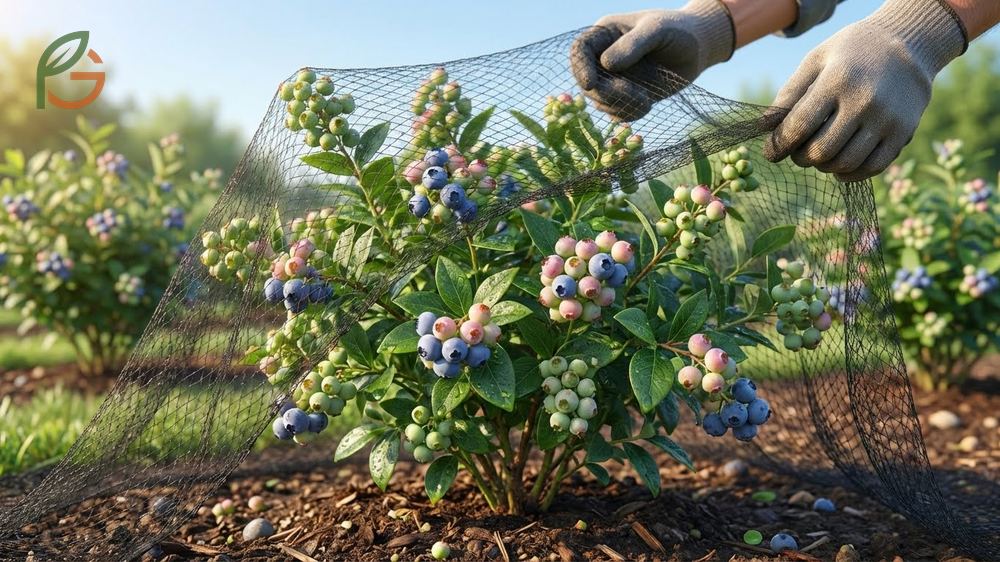
Install bird netting when berries first begin changing color from green to pink or light blue, typically 2-3 weeks before full ripening occurs[4]. This timing provides crucial protection during the transition period when birds start sampling fruit to assess ripeness. Waiting until berries turn fully blue results in significant losses before you complete installation.
Monitor your bushes daily once flowering ends and small green berries form. The shift from solid green to any hint of color signals that installation should happen within the next 3-5 days maximum. Different varieties ripen at varying rates, so check all your bushes rather than relying on calendar dates.
For dual-crop protection, maintain netting through your entire harvest period which typically spans 3-6 weeks depending on variety selection and climate. Remove netting only after you’ve picked all marketable fruit, as birds will quickly strip any remaining berries once protection disappears. Proper timing of both installation and removal maximizes your harvestable yield.
Regional climate influences ideal timing substantially. Warmer southern areas see earlier ripening from May through June, while northern gardens peak in July through August. Track the progression from bloom to color change during your first season to establish site-specific timing for future years.
Don’t cover bushes during peak flowering since this can interfere with pollinator access and reduce your eventual berry set. Wait until at least 75% of flowers have dropped and small green berries are visible. This balance ensures adequate pollination while providing early enough protection against bird damage.
Critical Timing Window: The 72-hour period after you first notice color change on any berry represents your optimal installation deadline. Birds begin increasing their visits during this window, and delaying beyond three days typically results in 15-25% fruit loss before full protection is established.
- Early spring: Inspect bushes for flower bud formation, prepare protection materials
- Flowering period: Allow full pollinator access, no netting installation yet
- Post-bloom phase: Watch for berry formation and initial green fruit development
- Color change onset: Install netting within 3 days of first pink or blue berries appearing
- Ripening period: Maintain netting coverage, access through entry door for harvesting
- Final harvest: Remove netting after picking all ripe berries, store for next season
Conclusion
The evidence is clear: combining properly installed bird netting for blueberries with complementary deterrents provides the most reliable protection against wildlife damage. Research across multiple growing regions demonstrates that netting with 1/2-inch or smaller mesh, elevated at least 12 inches above foliage, reduces bird losses by 75% or more while allowing normal plant growth and easy harvest access.
Current guidance emphasizes proactive installation before birds establish feeding patterns on your bushes. Act when you first notice color change on berries, construct robust support frameworks rather than draping netting directly on plants, and add deer fencing at 7.5-8 feet height in areas with browsing pressure. These evidence-based practices protect your investment in plants and ensure you harvest the full potential of your blueberry crop each season.
Frequently Asked Questions
What Size Mesh Should I Use for Blueberry Bird Netting?
Use netting with 1/2 inch or smaller mesh openings for maximum protection against all berry-eating bird species.While standard 3/4 inch netting stops crows and jays, smaller birds like finches and waxwings can often squeeze through larger gaps. Selecting the tighter weave ensures your crop remains secure against the full spectrum of avian pests.
When Should I Put Netting on My Blueberry Bushes?
Install netting immediately when the first berries begin to change color from green to pink or blue. Waiting until fruit is fully ripe often results in significant crop loss, as birds identify the food source early. Do not install during flowering to ensure pollinators can access blossoms.
Can I Lay Bird Netting Directly on Blueberry Plants?
No, draping netting directly on bushes is not recommended. Birds can perch on the netting and peck through the mesh to eat berries touching the outer layer. Additionally, the weight of the net can damage tender branches and snag on foliage. Always use a support frame to keep netting 6-12 inches away from the plant.
How High Does a Fence Need to Be to Keep Deer Out?
A deer fence must be at least 7.5 to 8 feet tall to be effective. White-tailed deer are capable jumpers and can easily clear standard 4-5 foot garden fences. For lower fences, consider a double-fence design or slanted top to confuse their depth perception, but height is the most reliable deterrent.
Does Reflective Tape Actually Keep Birds Away?
Reflective tape works best as a temporary or supplementary deterrent rather than a standalone solution. It can reduce bird activity by 50-75% initially, but birds often habituate to the visual stimulus within a few weeks. Combine tape with physical netting for the most effective long-term protection.
Will Bird Netting Stop Bees from Pollinating?
Yes, fine mesh netting can exclude bees and other pollinators if installed too early. To ensure proper fruit set, wait until 75-90% of the blossoms have dropped and small green berries have formed before installing your netting system.
How Long Does Blueberry Bird Netting Last?
High-quality, UV-stabilized polyethylene netting typically lasts 3 to 5 seasons or more if stored properly out of sunlight during the off-season. Cheaper nylon or non-stabilized plastics may become brittle and tear after just one summer of sun exposure.