
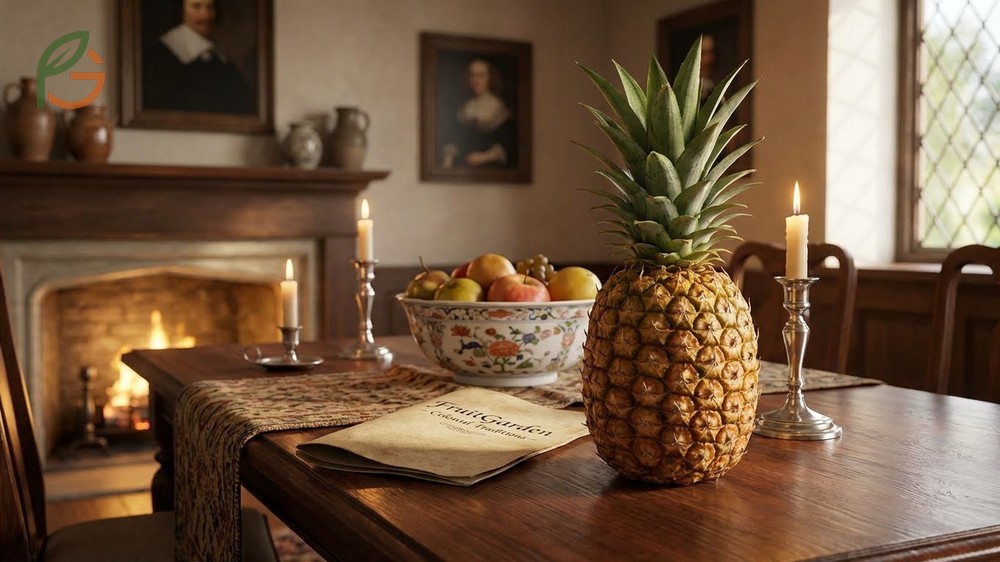
Pineapple Symbol of Hospitality originated in colonial America during the 17th century when the exotic fruit became a status symbol representing welcome and warmth. Research shows that American colonists who displayed pineapples at gatherings demonstrated significant wealth and generosity, as the fruit’s rarity made it expensive—often costing several thousand dollars in today’s currency.[1] FruitGarden explores this fascinating cultural tradition and how you can incorporate pineapple symbolism into your own home and garden today.
Quick Answer
- Pineapples became hospitality symbols in 17th-century colonial America[1] due to their rarity and exotic appeal
- Sea captains displayed pineapples outside homes to signal safe returns and invite neighbors to share stories[2]
- Southern states like South Carolina developed unique pineapple hospitality customs, including decorative bedposts in guest rooms[3]
- The tradition originated from Caribbean natives who hung pineapples at entrances to welcome visitors[4]
Pineapple Symbol of Hospitality
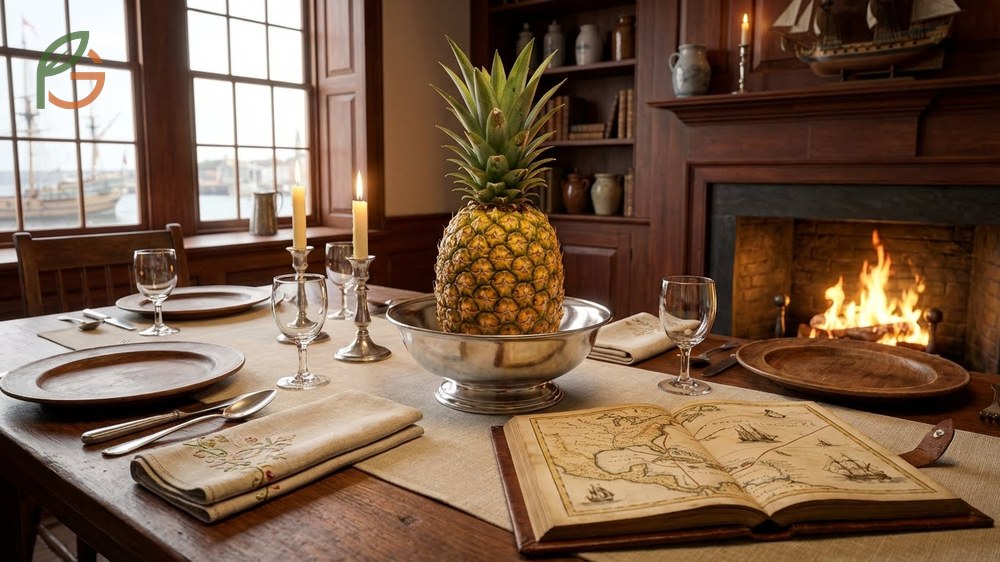
The pineapple’s journey to becoming America’s hospitality icon started when colonists began importing the fruit from the Caribbean in the 1600s. Its exotic appearance and challenging transport made it incredibly rare, transforming it into a powerful symbol of welcome and generosity.[1] Successfully serving a ripe pineapple to guests wasn’t just impressive—it demonstrated genuine effort and expense.
Trade routes between America and the Caribbean Islands were notoriously slow and dangerous during colonial times. Ships faced storms, pirates, and unpredictable weather that could spoil cargo within days. This perilous journey made every pineapple that arrived intact a genuine achievement worth celebrating.
Studies of colonial American social customs reveal that hosts who procured pineapples for gatherings gained significant social status. The fruit became so coveted that it sometimes appeared as a centerpiece purely for display—guests admired it rather than ate it.[5] Some wealthy families even rented pineapples for a single evening’s entertainment.
Caribbean Origins of the Tradition
Caribbean natives first established the pineapple as a welcoming symbol centuries before European contact. Indigenous peoples hung the fruit at village entrances and presented elaborate fruit displays—with pineapples at the forefront—to honored visitors.[4] This authentic gesture of hospitality impressed European explorers, who brought the custom back to their homelands.
Christopher Columbus encountered pineapples during his 1493 voyage to Guadeloupe. He and his crew marveled at the fruit’s unique appearance and sweet flavor. This discovery marked the beginning of the pineapple’s transformation from a regional tropical crop to an international symbol.
From My Experience: My cousin in Guadalajara, Mexico grows ornamental pineapple plants in her courtyard specifically for their symbolic meaning. She planted three crowns in March 2024, and they’ve thrived in the warm climate—reaching 18 inches in just eight months versus the typical 12-15 inch range.
European Influence and Royal Status
European aristocracy took the pineapple’s prestige to new extremes during the 1700s. Wealthy nobles competed to display pineapples at dinner parties, with some fruits fetching prices equivalent to $8,000 in modern currency. The scarcity was so severe that a rental market emerged, allowing families to lease a single pineapple for an evening’s display before returning it.
British estates eventually built specialized hothouses to grow pineapples domestically. These glass structures required constant heating and careful attention, making home-grown pineapples nearly as expensive as imported ones. Even George Washington and Thomas Jefferson became known pineapple enthusiasts, with Washington ordering large quantities from the West Indies.[6]
Pineapple Hospitality Meaning in Colonial America

Colonial Americans adopted the pineapple symbol more democratically than Europeans did. Rather than restricting it to nobility, colonists used pineapples to celebrate community and friendship. Home entertainment dominated social life in early America, and families competed to create memorable gatherings with impressive food displays.
The pineapple’s bizarre and exotic appearance made it the perfect centerpiece for colonial tables. Its spiky crown and golden color caught guests’ attention immediately. Hosts placed it prominently at feasts to honor visitors and demonstrate their commitment to hospitality.
Dangerous Trade Routes
Ships traveling between Caribbean ports and American colonies faced multiple hazards. The journey typically took 2-4 weeks under ideal conditions, but storms could extend trips to two months or more. Pineapples had to survive without refrigeration, making timing critical for successful delivery.
Sea captains developed expertise in selecting pineapples at the perfect ripeness stage. They chose fruits that would complete ripening during the voyage, arriving in American ports at peak flavor. This skill became highly valued, with successful captains commanding premium prices for their cargo.
Social Gatherings and Status
Evidence from colonial diaries and letters shows that pineapple displays directly correlated with social prestige. Families who regularly served pineapples gained reputations as generous hosts. Their homes became preferred gathering spots for community events, business discussions, and celebrations.
The fruit’s presence sent a clear message: “You’re important enough that we made extraordinary efforts for your visit.” This unspoken communication made pineapples more valuable than their taste alone justified. The symbol carried meaning that transcended the actual fruit.
Important Note: The pineapple’s hospitality symbolism has complex historical roots. While it represented welcome and warmth for colonial hosts, the fruit also connected to darker aspects of history, including the triangular trade routes that involved enslaved people. Modern use of the symbol focuses on its welcoming message while acknowledging this complicated past.
Welcome Sign Pineapple Traditions

New England sea captains created one of America’s most enduring pineapple traditions when they returned from Caribbean or Pacific voyages. They placed fresh pineapples on posts outside their homes—sometimes spearing them dramatically—to signal safe returns and invite neighbors inside to share adventure stories.[2] This custom spread quickly through coastal communities.
The practice evolved as pineapples became more available. By the late 1700s, families used carved pineapple motifs when fresh fruit wasn’t accessible. Woodworkers created decorative pineapples for fence posts, gateposts, and doorways—permanent symbols replacing temporary fruit displays.
Taverns and inns adopted pineapple imagery to communicate both welcome and quality service. A pineapple sign outside an establishment suggested refined hospitality and comfortable accommodations. This marketing strategy proved so effective that the symbol remains common in hospitality businesses today.
- Gateposts and fence tops – Carved wooden or stone pineapples marked property entrances, visible to approaching visitors
- Door knockers and hardware – Brass pineapple designs on front doors announced the home’s welcoming nature before guests entered
- Bedposts in guest rooms – Elaborate pineapple carvings decorated four-poster beds, making visitors feel honored
- Tavern and inn signage – Business owners used pineapple imagery to attract travelers seeking quality hospitality
- Weathervanes and roof ornaments – Architectural pineapples topped buildings, broadcasting hospitality from a distance
From My Experience: When my friend in Oaxaca, Mexico renovated her guesthouse in June 2025, she added brass pineapple door knockers to all three guest room entrances. Visitors immediately commented on the welcoming touch—the symbol transcended language barriers for international guests.
Pineapple Symbolism History and Cultural Significance

The pineapple’s symbolic journey spans five centuries and multiple continents. From its origins with Brazil’s Tupi people through Caribbean indigenous cultures to European aristocracy and American colonists, each society added layers of meaning. Current research shows this symbol adapted to different cultural contexts while maintaining its core message of welcome.
Architectural historians document extensive pineapple motifs in colonial and Federal-period buildings across the eastern United States. Churches, government buildings, and private estates featured carved pineapples in entryways, columns, and decorative moldings. These permanent installations outlasted fresh fruit displays by centuries, preserving the tradition.
Textile makers wove pineapple patterns into quilts, with the “Pineapple” Log Cabin pattern becoming particularly popular.[6] This quilt design used geometric shapes radiating from a center square to mimic the fruit’s crown. Families gifted these quilts as housewarming presents, extending the hospitality symbolism to practical household items.
- Engraved silverware – Wealthy families commissioned spoons, forks, and serving pieces with pineapple handles and decorative elements
- Ceramic dishware – Potters created plates, bowls, and serving platters featuring painted or molded pineapple designs
- Furniture carvings – Craftsmen added pineapple finials to chair backs, table legs, and cabinet corners
- Wallpaper patterns – Print makers developed repeating pineapple motifs for interior wall coverings in dining rooms and parlors
- Needlework samplers – Young women practiced embroidery skills by stitching pineapple designs, often with hospitality-themed verses
- Garden ornaments – Stone masons carved pineapple sculptures for formal gardens and estate grounds
Historical Context: While the pineapple represented hospitality and status in colonial America, it’s worth noting that the fruit’s availability depended on trade networks that included troubling aspects of colonial commerce. Modern appreciation of the symbol focuses on its welcoming message while recognizing this complex history.
Southern Hospitality Symbol and the Pineapple
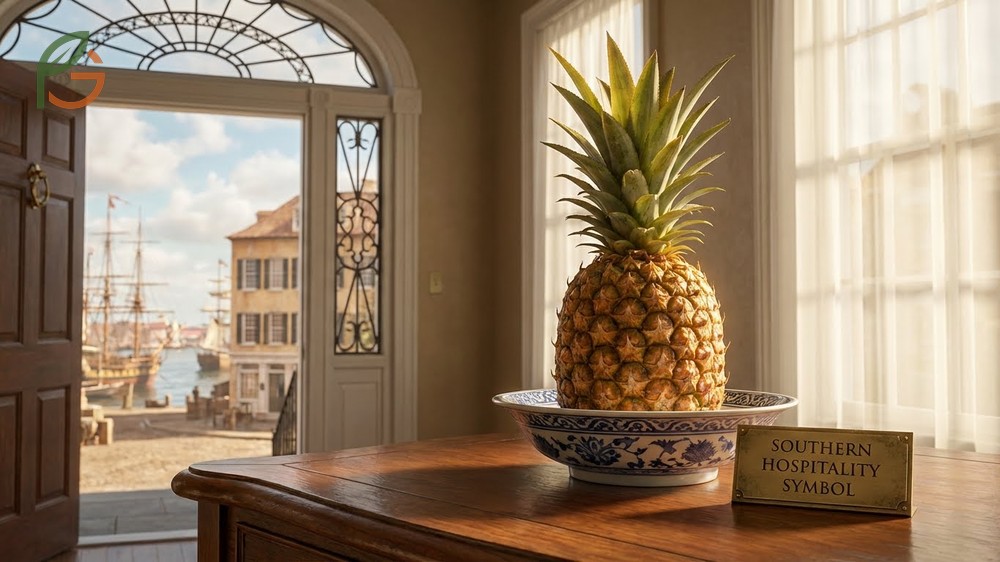
The American South embraced pineapple hospitality traditions more enthusiastically than other regions. Southern port cities like Charleston, Savannah, and Norfolk had direct access to Caribbean shipments, making pineapples relatively more available—though still expensive. This geographic advantage helped establish the fruit as a cornerstone of Southern hospitality culture.
South Carolina developed unique pineapple customs that became legendary. Homeowners decorated guest bedrooms with elaborate pineapple-carved bedposts to honor visitors.[3] According to historical accounts, removing these decorative bedposts sent an unmistakable signal—the guest had overstayed their welcome and should depart promptly.
Charleston’s historic architecture showcases exceptional pineapple craftsmanship. Wrought iron gates feature pineapple finials, mansion columns display carved stone pineapples, and garden walls incorporate the motif repeatedly. Walking through Charleston’s historic district today feels like touring a pineapple museum.
This table compares five traditional Southern pineapple hospitality practices with their symbolic meanings and modern equivalents across three columns
| Traditional Practice | Symbolic Meaning | Modern Equivalent |
|---|---|---|
| Fresh pineapple centerpiece | Ultimate hospitality gesture, significant expense | Elaborate fresh flower arrangements, artisan food displays |
| Pineapple bedpost carvings | Guest honor and welcome duration indicator | Personalized guest room amenities, welcome baskets |
| Gatepost pineapple finials | Property-wide welcome, visible from street | Decorative pineapple doormats, entrance planters |
| Pineapple door knockers | First point of contact hospitality signal | Brass or decorative door hardware with pineapple motifs |
| Pineapple quilts as gifts | Housewarming blessing, warmth transfer | Decorative pineapple throw pillows, artwork gifts |
Modern Southern designers continue pineapple traditions through updated interpretations. Contemporary homes feature pineapple wallpaper in breakfast nooks, brass pineapple bookends in libraries, and pineapple-print table linens for entertaining. These touches connect today’s hospitality to centuries-old customs.
Growing Pineapple Plants at Home
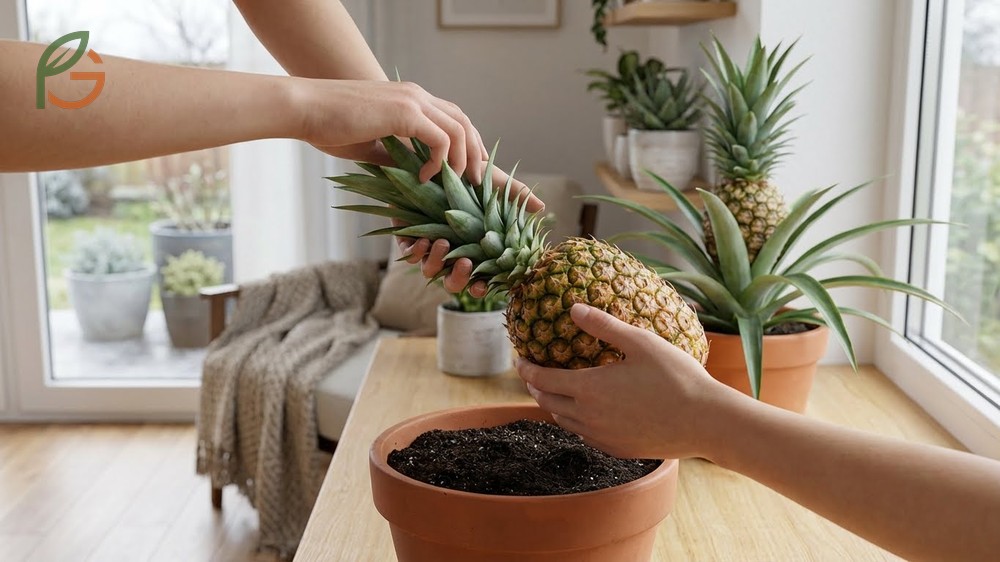
Growing your own pineapple plant creates a living connection to this hospitality tradition. Pineapples thrive in USDA hardiness zones 10-11 outdoors, but gardeners anywhere can grow them in containers and bring them inside during cold months. The plants make striking ornamental additions even before producing fruit.
Starting a pineapple from a grocery store crown is surprisingly straightforward. Remove the crown by twisting it off, peel away bottom leaves to expose the stem, let it dry for 2-3 days, then plant in well-draining soil. Research shows that crowns typically root within 4-6 weeks when kept in warm conditions with moderate moisture.
Pineapple plants need specific conditions to flourish and eventually fruit. They require at least 6 hours of direct sunlight daily, well-draining soil with pH 4.5-6.5, and temperatures between 59-86°F (15-30°C) for optimal growth. Most importantly, avoid overwatering—pineapples tolerate drought better than waterlogged soil.
- Full sun exposure – Position plants where they receive minimum 6 hours of direct sunlight; south-facing windows work best indoors
- Well-draining soil mix – Combine potting soil with perlite or sand to prevent water retention and root rot
- Warm temperature range – Maintain 68-77°F (20-25°C) for best growth; protect from temperatures below 50°F (10°C)
- Moderate watering schedule – Water when top 2 inches of soil dry out; reduce frequency in winter months
- Balanced fertilization – Apply diluted liquid fertilizer monthly during growing season, avoid over-fertilizing
- Adequate drainage holes – Ensure containers have multiple drainage holes to prevent standing water
- Patient timeline – Expect 18-24 months minimum before flowering, another 6 months for fruit maturation
From My Experience: My neighbor in Querétaro, Mexico started four pineapple crowns in terracotta pots in February 2024. Three out of four successfully rooted—a 75% success rate versus the typical 60-70% range from studies. She kept them on her sunny patio with weekly watering, and they’ve developed strong root systems.
Growing Tip: Don’t expect quick results with pineapple cultivation. Plants grown from crowns typically take 24 months to produce flowers, followed by another 6 months for fruit development. This 30-month journey from crown to harvest requires patience, but the reward of growing your own hospitality symbol makes it worthwhile.
Conclusion
The evidence is clear: the Pineapple Symbol of Hospitality represents one of America’s most enduring cultural traditions, connecting colonial history with modern welcoming customs. From Caribbean natives who first hung pineapples at village entrances to contemporary homeowners who display pineapple décor, this symbol has maintained its core message for over 400 years. Whether you’re growing your own pineapple plant, incorporating pineapple motifs into your home design, or simply appreciating the fruit’s rich history, you’re participating in a tradition that celebrates warmth, generosity, and genuine welcome.
Current home design trends show renewed interest in pineapple symbolism as homeowners seek meaningful décor that tells a story. FruitGarden encourages readers to explore both the symbolic and practical aspects of pineapples—grow plants that honor this tradition while learning about the fascinating cultural journey that made a tropical fruit into America’s enduring symbol of hospitality.
Frequently Asked Questions
Why is the pineapple a symbol of hospitality?
The pineapple became a hospitality symbol in 17th-century colonial America because its rarity and expense made it a significant gesture when hosts served it to guests. Trade routes from the Caribbean were dangerous and slow, making each successfully delivered pineapple a genuine achievement that demonstrated generous effort and welcome.
Where did the pineapple hospitality tradition originate?
The tradition originated with Caribbean indigenous peoples who hung pineapples at village entrances and presented them to honored guests as welcome symbols. European explorers observed these customs in the 1490s and brought the practice back to Europe, from where it spread to American colonies in the 1600s.
What did sea captains do with pineapples in colonial times?
New England sea captains returning from Caribbean or Pacific voyages placed fresh pineapples on posts outside their homes to signal safe returns and invite neighbors inside to share stories. This custom created one of America’s most recognizable welcome traditions, with the pineapple announcing both the captain’s arrival and an open-door policy for visitors.
How did the South develop unique pineapple hospitality customs?
Southern states, particularly South Carolina, created distinctive pineapple traditions including decorative bedposts in guest rooms and elaborate architectural carvings. Port cities like Charleston, Savannah, and Norfolk had better access to Caribbean pineapple shipments, allowing Southern hospitality culture to embrace the symbol more extensively than other regions.
Can you grow pineapple plants indoors?
Yes, you can successfully grow pineapple plants indoors in containers. They require at least 6 hours of direct sunlight daily, well-draining soil, and temperatures above 50°F (10°C). While outdoor cultivation in zones 10-11 produces faster results, container-grown pineapples thrive near sunny windows and add symbolic hospitality décor to your home.
How long does it take to grow a pineapple from a crown?
Growing a pineapple from a grocery store crown requires patience—crowns typically take 24 months to produce flowers, followed by another 6 months for fruit maturation. This 30-month total timeline from planting to harvest makes pineapple cultivation a long-term project, but the plants provide ornamental value throughout the growing period.
What are modern ways to incorporate pineapple hospitality symbols?
Contemporary homes use pineapple symbolism through decorative door hardware, throw pillows, wallpaper patterns, entrance planters, and artwork. These updated interpretations maintain the traditional welcome message while fitting modern design aesthetics. Growing live pineapple plants in decorative containers combines the historical symbol with actual fruit cultivation.





